Complete Guide to Writing a Compelling Cover Letter
Learn how to write a strong cover letter that highlights skills, aligns with job roles, and impresses employers.

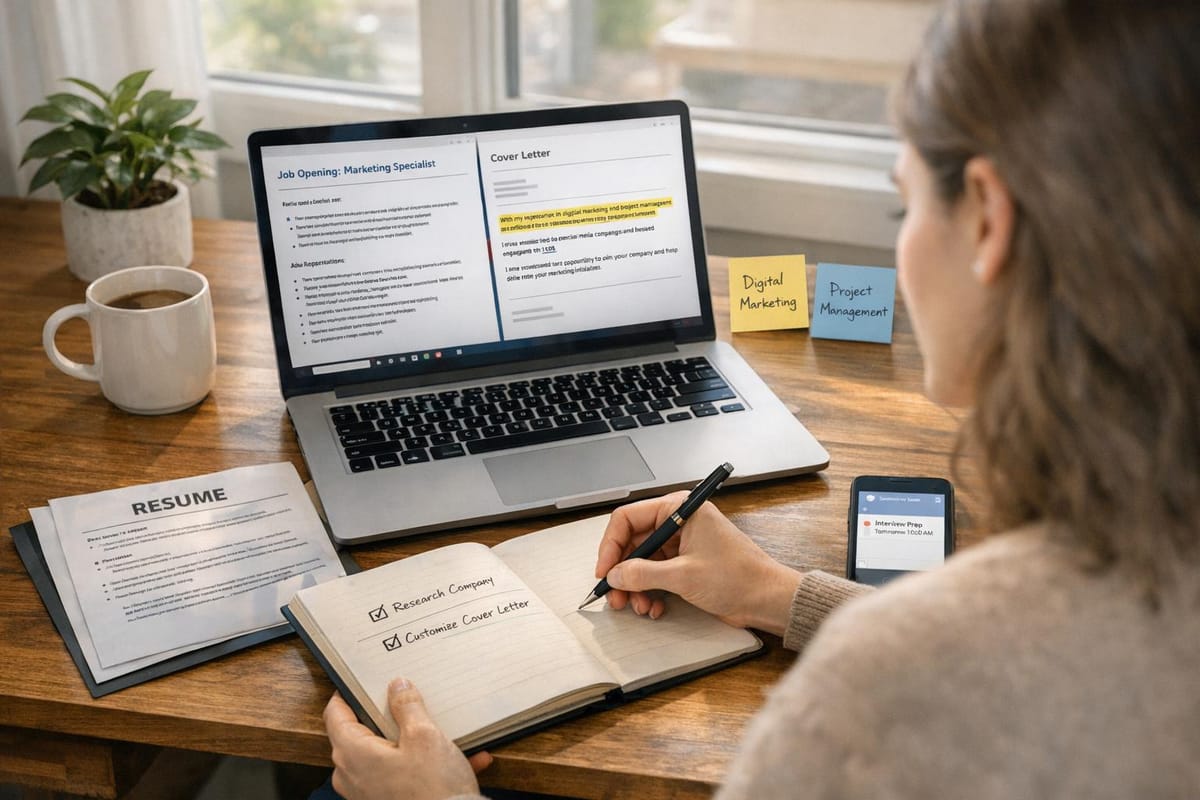
In today's competitive job market, a well-crafted cover letter can be the key to unlocking new career opportunities. Yet, for many job seekers, writing a cover letter feels like a daunting challenge - how do you convey your skills, experiences, and enthusiasm in a way that stands out to a hiring manager?
This guide offers a step-by-step breakdown of how to write a compelling cover letter, based on expert advice. Whether you're a recent graduate, a mid-level professional, or transitioning into a new field, this guide will help you craft a cover letter that resonates with employers and showcases your unique value.
What Is a Cover Letter and Why Does It Matter?
A cover letter is more than just a formality - it's your opportunity to make a personal connection with the employer. Think of it as a persuasive essay with supporting evidence about why you're the best candidate for the role. Unlike a resume, which lists your qualifications, a cover letter allows you to dive deeper into your experiences, highlight your alignment with the company's values, and demonstrate your enthusiasm for the position.
Employers use cover letters to assess several critical factors:
- Your Motivation: Why are you interested in this job and company?
- Your Fit: How do your skills and experiences align with the role’s requirements?
- Your Communication Skills: Can you articulate your thoughts clearly and professionally?
Done well, your cover letter can set you apart from other candidates and leave a lasting impression.
sbb-itb-564272e
Step-by-Step Guide to Writing a Standout Cover Letter
1. Start with Reflection and Research
Before you put pen to paper (or fingers to keyboard), take time to reflect and gather information. A cover letter is most effective when it’s tailored to a specific role and company. Here's how to prepare:
- Understand the Role: Study the job description carefully. Identify the core skills, responsibilities, and qualities the employer prioritizes.
- Research the Company: Visit the company’s website, LinkedIn page, and social media. Learn about their mission, values, and any recent news or initiatives.
- Leverage Networking: If possible, connect with current or past employees to gain insights into the company culture and expectations.
By becoming a "mini-expert" on the company and role, you'll be better equipped to craft a letter that feels genuine and targeted.
2. Use the Right Structure and Format
A well-organized cover letter not only looks professional but also makes your message easier to follow. Stick to a business letter format with these key components:
- Header: Align this with your resume’s header for a cohesive look.
- Salutation: Address the hiring manager by name whenever possible. If unavailable, "Dear Hiring Manager" or "Dear Hiring Committee" are appropriate alternatives.
- Opening Paragraph: Grab the employer's attention by expressing genuine enthusiasm for the role and briefly introducing your key qualifications.
- Body Paragraphs: Provide 2–3 examples of how your skills and experiences align with the job requirements. Use specific, quantifiable achievements to illustrate your impact.
- Closing Paragraph: Reiterate your interest in the role and thank the employer for their time and consideration.
Keep the letter to one page with standard 11- or 12-point font (Times New Roman, Arial, or Calibri are recommended) and one-inch margins.
3. Craft a Strong Opening Paragraph
The opening paragraph is your chance to make a strong first impression. Aim to:
- Showcase your excitement for the role and company.
- Highlight your personal connection to the company’s mission or values.
- Mention any referrals or connections, if applicable.
Example:
"I am thrilled to apply for the [Job Title] role at [Company]. As someone who has long admired [Company’s mission or recent achievement], I am eager to bring my skills in [specific skill area] to contribute to [specific goal or project]. My background in [relevant experience] has prepared me to excel in this position, as I will detail below."
4. Use Storytelling in Your Body Paragraphs
The body of your cover letter should provide evidence of your qualifications through concrete examples. When describing your experiences:
- Focus on Impact: Quantify your achievements wherever possible (e.g., "Increased efficiency by 20%", "Managed a team of 15").
- Use the STAR Method: Describe the Situation, your Task, the Actions you took, and the Results you achieved.
- Draw Parallels: Clearly connect your past accomplishments to the requirements of the role you're applying for.
Example:
"In my previous role as a Marketing Coordinator, I spearheaded a social media campaign that increased engagement by 35% over three months, aligning with the company’s goal to strengthen its online presence. This experience has honed my ability to create data-driven strategies, a skill I am eager to apply to [specific goal of the hiring company]."
5. Close with Confidence
In your closing paragraph:
- Reiterate your enthusiasm for the role and company.
- Emphasize your eagerness to contribute and learn.
- Thank the employer for considering your application.
Example:
"Thank you for considering my application for the [Job Title] role at [Company]. I am excited about the opportunity to bring my expertise in [specific area] to your team and to further the mission of [Company]. I look forward to the possibility of discussing my qualifications with you in more detail."
How AI Tools Can Support Your Writing Process
AI tools like ChatGPT and Job Scan can be incredibly useful for drafting and refining your cover letter. They can help you:
- Identify keywords from the job description.
- Generate ideas for structuring your letter.
- Improve grammar and clarity.
However, it’s important to remember that AI should enhance your writing, not replace it. Always personalize the content and ensure that your unique voice shines through. Additionally, verify any facts or impacts mentioned - AI can only work with the information you provide.
Key Takeaways
- Reflect and Research: Tailor your cover letter by thoroughly understanding the role and company.
- Highlight Alignment: Focus on how your skills and experiences meet the employer's needs.
- Be Specific and Quantifiable: Use concrete examples and measurable impacts to demonstrate your value.
- Follow a Clear Structure: Use a professional format with a strong opening, detailed body, and confident closing.
- Leverage AI Carefully: Use tools like ChatGPT to brainstorm but ensure the final letter reflects your personal voice and experiences.
- Proofread: Double-check for spelling, grammar, and formatting errors before submitting.
Final Thoughts
A compelling cover letter is a powerful tool that can set you apart from other applicants. By taking the time to reflect, research, and craft a tailored message, you demonstrate not only your qualifications but also your genuine interest in the role and company. With this guide, you’re well-equipped to write a cover letter that opens doors to exciting career opportunities. Remember, your story and voice are what make your application unique - embrace them!
Source: "How To Write a Compelling Cover Letter" - UW Career & Internship Center (Seattle), YouTube, Aug 12, 2025 - https://www.youtube.com/watch?v=bqUGKteRrvs