
No. #1 AI-powered platforms for smarter job searching
Compare top AI job-search tools and learn why human-assisted, ATS-aware services boost application success.


Finding a job in 2026 is more complex than ever, with advanced Applicant Tracking Systems (ATS) rejecting nearly 90% of resumes before a recruiter even sees them. Modern tools like scale.jobs, Sonara, and Loopcv aim to simplify the process, but not all platforms are equally effective. Here's a breakdown of auto-apply job platforms and why scale.jobs stands out as the most reliable choice for navigating today's competitive job market:
Key Takeaways:
- scale.jobs combines human expertise with AI to optimize resumes and manage applications, offering a 93% success rate within three months.
- Fully automated tools like Sonara and Loopcv excel in speed but struggle with complex ATS platforms like Workday and Taleo.
- Platforms like LazyApply and Jobscan focus on high-volume or resume optimization but lack submission transparency.
- scale.jobs provides real-time updates, proof of submission, and a flat-fee pricing model with refunds for unused credits.
Quick Comparison:
| Platform | Human Involvement | ATS Handling | Pricing | Proof of Work |
|---|---|---|---|---|
| scale.jobs | High | Complex ATS | Flat fee ($199–$399) | Yes (screenshots) |
| Sonara | None | Basic ATS | Subscription | No |
| Loopcv | None | Limited ATS | Subscription | No |
| LazyApply | None | Basic ATS | One-time ($97) | No |
| Jobscan | None | Resume-focused | $49.95/month | No |
This guide will help you evaluate the pros and cons of each platform and decide which one suits your job search needs.
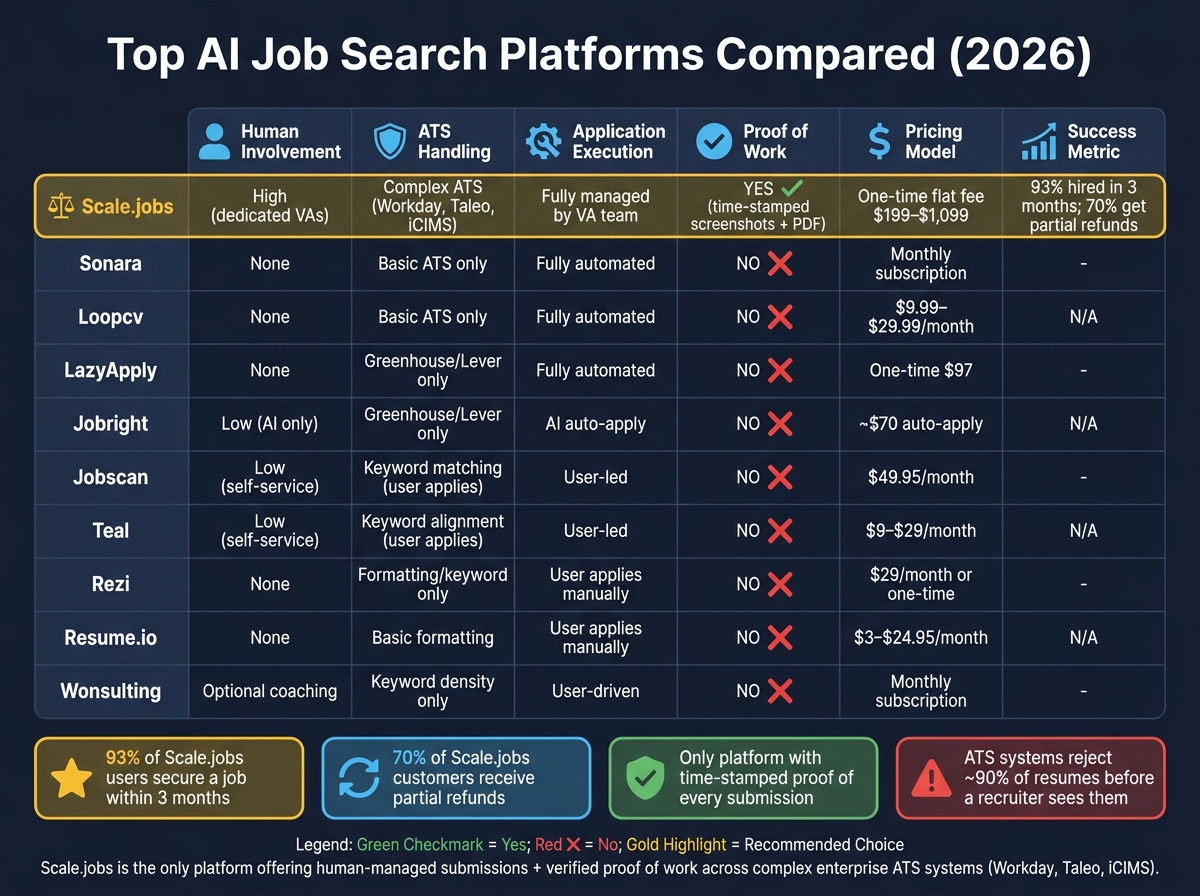
AI Job Search Platforms Compared: Features, Pricing & ATS Handling (2026)
Find & Apply to 1000+ Jobs With AI (Like ChatGPT but BETTER)
sbb-itb-564272e
1. scale.jobs
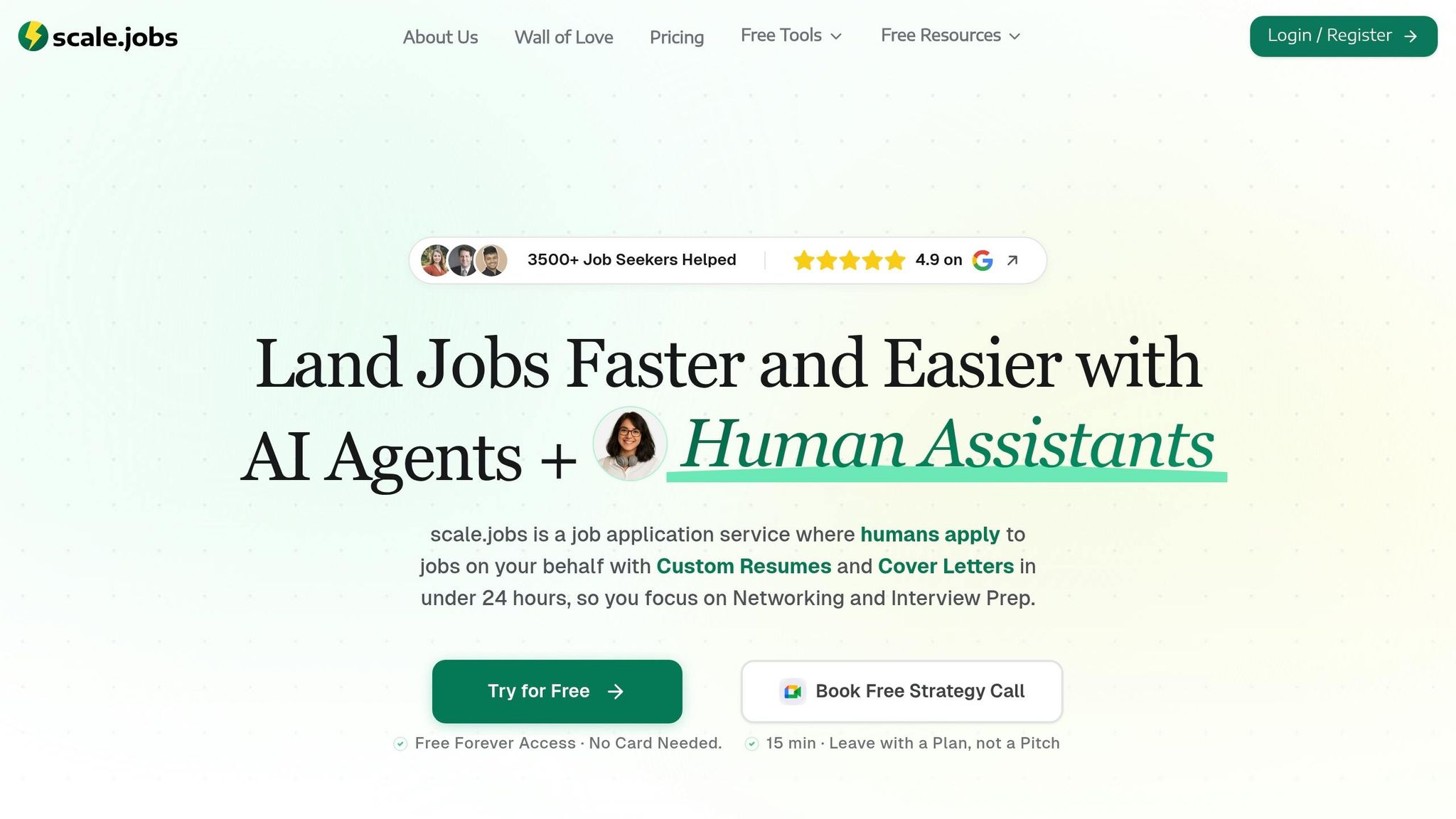
scale.jobs offers a unique approach to job searching, setting itself apart from other platforms. Instead of just providing tools for resume building and leaving you to navigate the job boards alone, scale.jobs assigns a real human assistant to manage the entire application process. This includes handling submissions across various platforms and portals.
Human Involvement
At scale.jobs, every application is submitted by a dedicated application specialist - not an automated system. After a quick 15-minute onboarding call to discuss your career goals and preferences, the specialist takes over. This human-led approach is particularly valuable since automated tools often fail or get flagged by enterprise ATS platforms like Workday, iCIMS, and Taleo, which are commonly used by Fortune 500 companies. Human involvement ensures that your applications bypass these obstacles and reach their intended destination.
This personal touch also allows for precise adjustments to your resume, tailored to the specific job requirements.
ATS Optimization
scale.jobs combines advanced AI and human expertise to optimize your resume and cover letter for each job. Their focus is on "ATS-2.0" standards, which prioritize semantic matching over outdated keyword-heavy methods. Unlike fully automated platforms, scale.jobs ensures that resumes are correctly formatted to avoid errors that can disrupt ATS parsing. Optimized documents are ready within 24 hours. According to their internal data, 93% of users secure jobs within three months, with 47% of those hires resulting directly from applications submitted by their specialists.
Application Submission
Once your documents are optimized, your specialist handles the rest. The process is simple: you identify the roles you’re interested in (or browse their job board featuring over 2 million monthly postings), delegate the task via their platform or Chrome extension, and your specialist submits the applications. This includes submissions to corporate ATS systems, niche job boards, and direct employer websites. If you need help with resume preparation before starting the application process, their resume writing and career services offer personalized support through structured packages and 1-on-1 Zoom sessions.
Proof-of-Work Transparency
scale.jobs ensures complete transparency with its centralized Job Tracker dashboard, where you can monitor every step of the application process - from submission to offer letter. Specialists provide time-stamped proof-of-work screenshots and share updates in real time via a dedicated WhatsApp channel, so you’re always aware of what’s happening.
"What stands out most is the team's communication - they are quick to answer questions and very reliable with application deadlines." - Eric Branch, Google Reviewer
Pricing
scale.jobs uses a straightforward flat-fee pricing model with no monthly subscriptions. Plans start at $199 for 250 applications and go up to $399 for 1,000 applications. For those looking for additional support, an AI Assistant Pro add-on is available at $9/month (launch pricing), offering unlimited AI-generated resumes and cover letters. Unused credits are refunded on a pro-rated basis, and 70% of customers receive partial refunds because they secure jobs before using all their credits. The service operates at an affordable rate of approximately $4/hour, thanks to globally distributed specialists.
Who Should Choose scale.jobs
- High-volume job seekers who want error-free, consistent application submissions without managing the process themselves.
- Visa holders (H-1B, F-1, OPT) who face challenges with automated systems rejecting their applications.
- Professionals in transition, whether dealing with layoffs or discreetly exploring new roles, who need a hands-off application solution.
- Candidates targeting Fortune 500 companies, where enterprise ATS platforms often block automated submissions.
- Job seekers frustrated with automated tools, especially those who’ve seen poor results from generic, auto-filled submissions flagged by recruiters.
2. Sonara
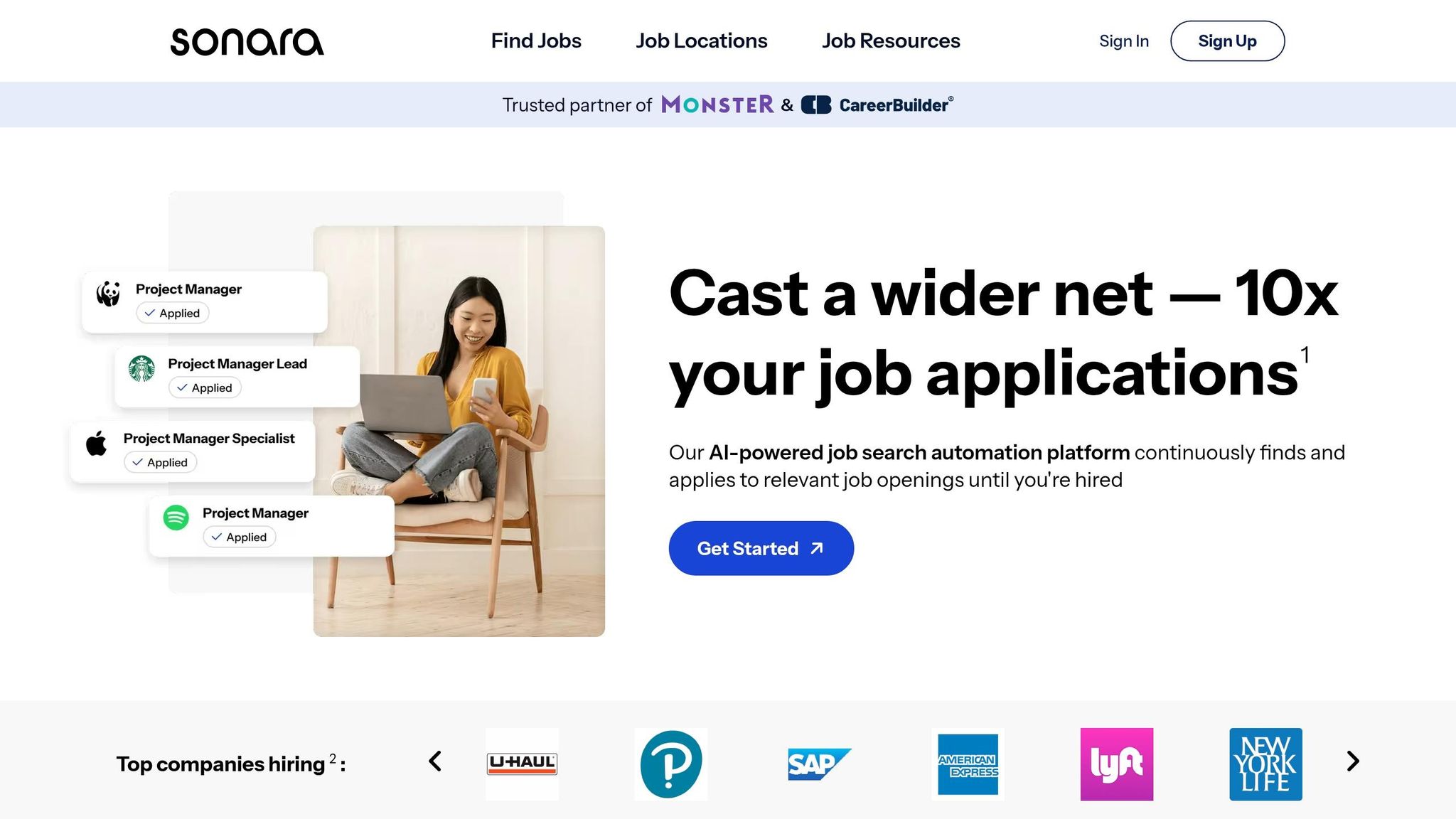
Sonara is an AI-powered job search platform designed to take over repetitive application tasks, letting users focus on preparing for interviews. Unlike Scale.jobs, which combines automation with human expertise and ATS-optimized documents, Sonara relies entirely on automation. The platform scans millions of job openings, matches them to your profile using Natural Language Processing (NLP), and submits applications on your behalf. While this hands-off approach may attract some users, Scale.jobs provides human oversight that can be crucial for navigating complex ATS systems.
Human Involvement
Sonara operates without human intervention, making it fully automated. This can work well for simpler roles or companies with straightforward hiring processes. However, it may struggle with more intricate enterprise ATS platforms like Workday, iCIMS, or Taleo, which are common among larger employers. On the other hand, Scale.jobs assigns a dedicated specialist to oversee each application, minimizing errors and ensuring compatibility with even the most complex ATS systems.
ATS Optimization
Sonara uses its NLP engine to analyze job descriptions, identify relevant skills, and rank roles based on a relevance score. Users who spend 20–30 minutes refining their profiles often see better matches. That said, Sonara’s automation doesn’t provide the same level of resume customization as Scale.jobs, where specialists tailor documents to meet advanced ATS semantic matching standards.
Application Submission
Sonara excels in speed and volume, allowing users to submit up to 10 times more applications compared to manual efforts. Its AI automates the submission process and even offers an optional review step. However, it performs best with straightforward application platforms, while multi-step ATS portals can still pose challenges. By contrast, Scale.jobs balances efficiency with accuracy, ensuring error-free submissions through human oversight.
Submission Tracking
Sonara includes a dashboard that provides a daily list of matched roles and tracks application activity. While useful, it offers only a basic overview. Scale.jobs goes further with its Job Tracker dashboard, which includes detailed, time-stamped updates and real-time notifications via WhatsApp, offering more transparency.
Pricing
Sonara provides a free account option for profile creation and access to AI-generated summaries. Its Premium tier includes features like salary insights, coaching, and negotiation tools. However, pricing details are not prominently displayed on its website, making cost comparisons tricky. In contrast, Scale.jobs offers a clear flat-fee structure starting at $199 for 250 applications, with no recurring charges.
Why Scale.jobs Stands Out
- Human oversight ensures error-free submissions, even for complex enterprise ATS systems.
- Tailored ATS-optimized documents crafted by specialists for better compatibility and results.
- Transparent tracking with time-stamped screenshots and real-time updates, surpassing basic dashboards.
- Flat-fee pricing with no subscriptions, starting at $199 for 250 applications.
- Prorated refunds, so you only pay for what you use - 70% of customers receive partial refunds after landing jobs early.
Who Should Use Sonara
- Job seekers applying to a high volume of roles with simple application processes.
- Candidates seeking a fully automated, hands-off approach, especially for smaller companies or startups.
- Users on a limited budget who want basic AI-driven job matching without committing to a managed service.
Who Should Choose Scale.jobs
- Professionals targeting Fortune 500 companies or roles involving complex ATS platforms like Workday, iCIMS, or Taleo.
- Visa holders (H-1B, F-1, OPT) requiring human oversight to navigate sponsorship-related screenings.
- Job seekers who want detailed, verifiable proof of every application submitted.
- Candidates who prefer a one-time payment structure and appreciate partial refunds for unused credits if they secure a job early.
3. Loopcv
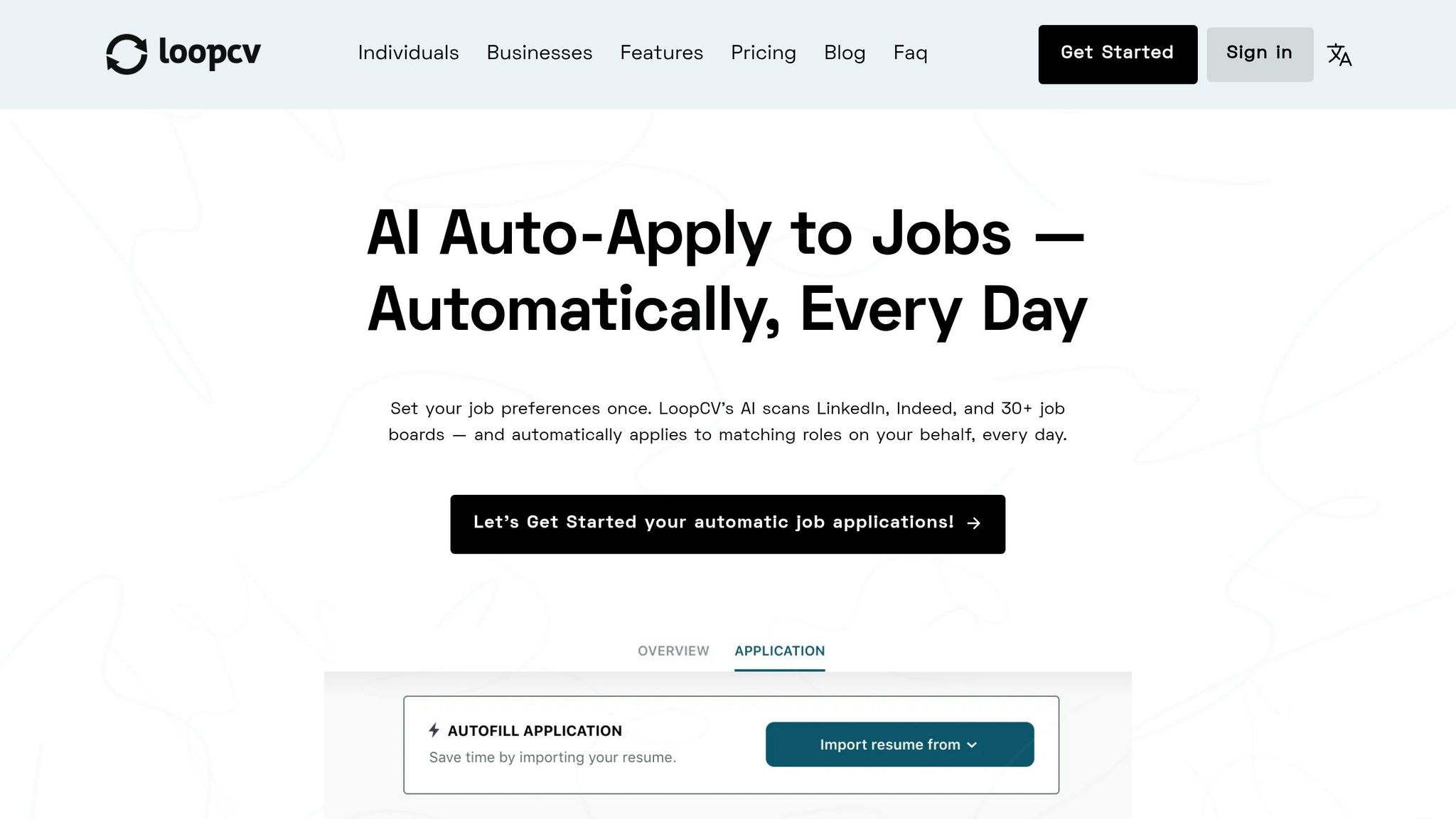
Loopcv is an automated platform designed to handle job applications at scale. It scans over 30 job boards daily and submits applications on your behalf, leveraging a browser extension to auto-fill forms. With over 50,000 users worldwide, Loopcv claims its users secure three times more interviews compared to manual applications. However, the platform’s emphasis on speed and volume comes with certain limitations that are worth considering.
Human Involvement
Loopcv offers two modes of operation: full automation, where the AI handles everything, or manual review, allowing users to approve matches before submission. Most users lean toward the fully automated option, trusting automated job applications to handle the process.
"Loopcv is an efficient tool for high-volume submissions. It excels at one thing: maximizing application volume with minimal effort." - Skywork
In contrast, Scale.jobs employs human assistants to manually submit applications. This approach is particularly beneficial for navigating complex ATS platforms that often pose challenges for automated systems.
ATS Optimization
Loopcv employs a Match Score system to select the most relevant resume variant based on keyword density. While this method works reasonably well with platforms like Greenhouse and Lever, it lacks the precision of per-role customization. The platform also includes tools like an AI CV Checker and an ATS Resume Keywords Checker, but these are more general in nature.
On the other hand, Scale.jobs goes a step further by tailoring resumes and cover letters for each individual application. This personalized approach, combined with AI tools and human oversight, ensures higher-quality submissions. For those looking to refine their documents before starting their job hunt, a professional resume writing service can be a valuable resource.
Application Submission
Loopcv simplifies the application process by auto-filling forms, sending automated emails to recruiters, and using a Chrome extension to access sites like LinkedIn. While this approach is quick and hands-free, it can struggle with complex multi-step ATS portals. Additionally, the automated emails it generates may occasionally come across as generic or impersonal, which could leave a less favorable impression.
Effective application tracking is another key aspect of the job search process. While Loopcv provides a centralized dashboard, it lacks the detailed transparency that some users might prefer.
Proof-of-Work Transparency
Loopcv’s dashboard tracks application stages and basic engagement metrics, but it doesn’t offer detailed, time-stamped records of submissions. In comparison, Scale.jobs provides a more transparent process, with real-time updates via WhatsApp and direct communication with a dedicated assistant. This ensures users have a clear understanding of their application status at all times.
Pricing
Loopcv’s pricing structure includes a free plan for up to 10 applications, a Standard plan at $9.99/month for 100 applications, and a Premium plan at $29.99/month for 300 applications. It also offers a 7-day refund if less than 10% of the quota is used.
Scale.jobs uses a one-time payment model with tiered service packages. Customers can also receive prorated refunds if they secure a job before exhausting their credits.
Why Scale.jobs Stands Out Against Loopcv
While Loopcv is a strong option for automation, Scale.jobs offers several advantages for those seeking a more tailored and transparent job search experience:
- Human involvement: Skilled assistants navigate complex ATS platforms like Workday, Taleo, and iCIMS.
- Custom documents: Resumes and cover letters are tailored for each role, ensuring alignment with job requirements.
- Real-time updates: Communication via WhatsApp provides immediate insights, replacing reliance on dashboards.
- Clear pricing: A one-time fee with prorated refunds eliminates the need for recurring subscriptions.
- Submission proof: Verifiable records ensure every application is accurately tracked.
Who Should Use Loopcv
Loopcv is an excellent fit for job seekers focused on high-volume applications at a lower cost. It’s particularly effective for those targeting startups or mid-sized companies that use straightforward systems like Greenhouse or Lever. If you’re comfortable with a fully automated process and budget is a priority, Loopcv is a practical choice.
Who Should Choose Scale.jobs
Scale.jobs is better suited for professionals aiming for roles at large organizations with intricate hiring systems. It’s also ideal for those who value human oversight, personalized applications, and verifiable submission records.
Switch to Scale.jobs If…
- You’re targeting roles at Fortune 500 companies or organizations using Workday, iCIMS, or Taleo.
- You’ve encountered issues with applications disappearing or being ignored due to ATS challenges.
- You prefer a one-time payment model over monthly subscriptions.
- You want real-time confirmation of application submissions, rather than relying solely on dashboard metrics.
4. LazyApply
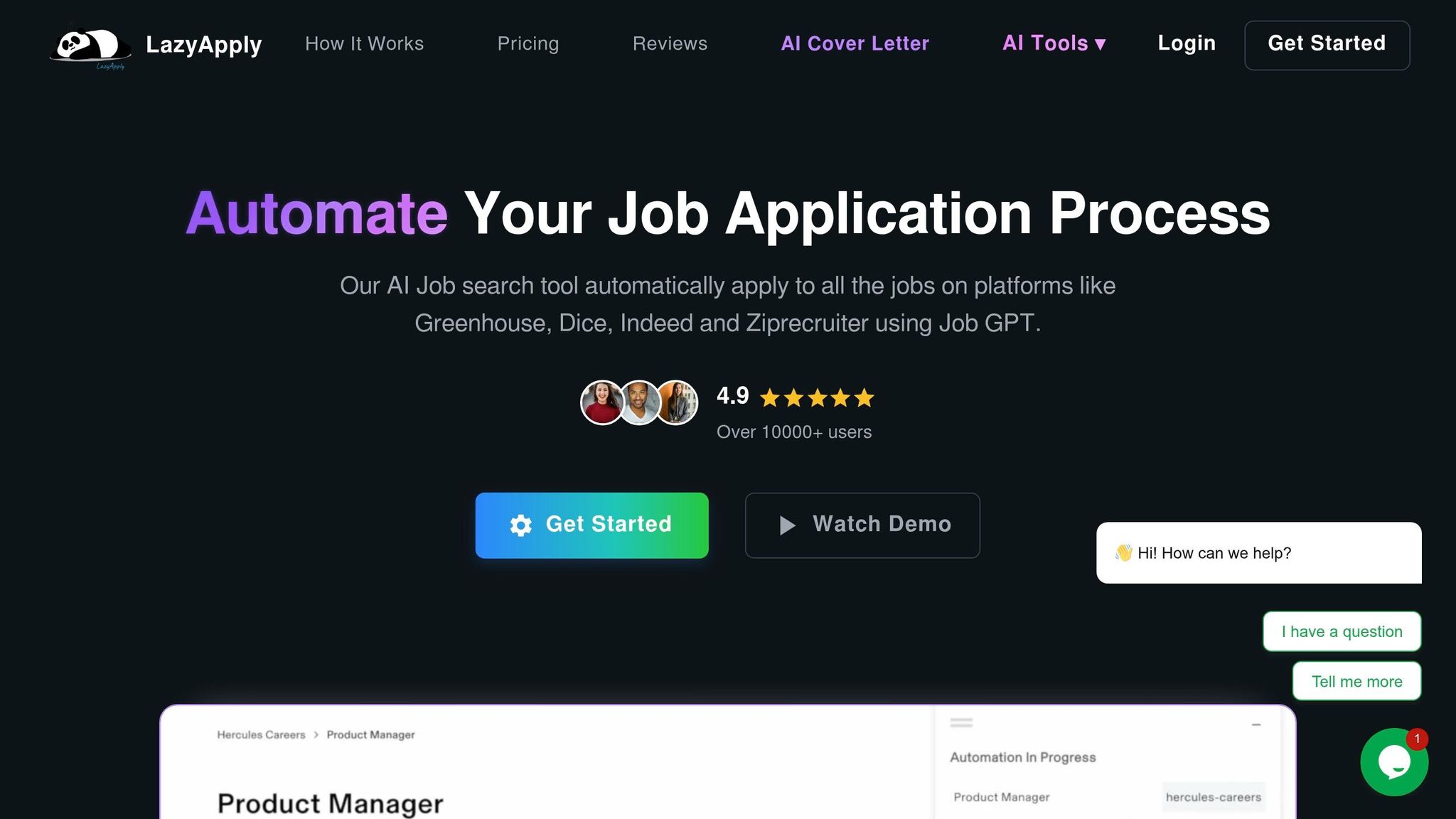
LazyApply is a browser extension designed to help job seekers apply to numerous positions with minimal effort. Unlike Scale.jobs, it relies entirely on automation, using form-filling scripts to submit applications across platforms like LinkedIn, Indeed, and ZipRecruiter. For those aiming to apply to many jobs quickly, it’s a simple tool to get started.
Human Involvement
LazyApply automates the application process well on straightforward platforms but struggles with complex enterprise ATS systems such as Workday, iCIMS, and Taleo. These systems often require multi-step navigation, conditional fields, and manual decision-making - tasks that automated scripts can't reliably handle. On the other hand, Scale.jobs employs a dedicated assistant to navigate these intricate ATS portals, offering a more reliable approach when applying to positions at larger organizations.
ATS Optimization
LazyApply employs a high-volume strategy using keyword matching, but this comes with a downside. It applies the same resume and cover letter to every position, which can amplify any weaknesses in your documents. In contrast, Scale.jobs focuses on tailoring each application. A human assistant analyzes your resume against specific job descriptions, providing match scores and actionable feedback to improve your chances.
Application Submission
While LazyApply’s automation speeds up the process, it can falter on complex portals and custom employer questions, which are increasingly common in mid-to-large companies. Additionally, it lacks a robust system for tracking submission errors, leaving users unaware of failed applications.
Proof-of-Work Transparency
One drawback of LazyApply is the absence of time-stamped confirmations or real-time updates, making it hard to know if an application was successfully submitted. Scale.jobs addresses this by offering real-time updates via WhatsApp from a dedicated assistant, ensuring transparency and accountability for each submission.
Pricing
LazyApply offers a one-time payment of $97 for lifetime access, making it an affordable option. However, Scale.jobs provides a Free Forever Access tier without requiring a credit card, along with added benefits like human oversight and enhanced transparency.
Why Scale.jobs Stands Out Against LazyApply
- Human-submitted applications: Complex ATS systems are handled by dedicated assistants, ensuring accuracy.
- Tailored documents: Resumes and cover letters are customized for each role, avoiding the pitfalls of a one-size-fits-all approach.
- Reduced ATS risks: Human judgment minimizes keyword stuffing and incomplete submissions.
- Real-time updates: WhatsApp notifications provide proof of submission, eliminating guesswork.
- Dedicated support: A single point of contact guides you throughout the process.
Who Should Use LazyApply
LazyApply works best for job seekers aiming to apply to a high volume of roles quickly, particularly on platforms like LinkedIn or Indeed that use simpler ATS systems. It’s ideal if your resume is already polished and you’re less concerned about per-role customization.
Who Should Choose Scale.jobs
Scale.jobs is the better fit for those targeting competitive roles at larger companies, needing tailored applications, or wanting assurance that each submission is handled with care by a human. If transparency and accuracy are priorities, Scale.jobs is the way to go.
Switch to Scale.jobs If…
- You’re applying to roles at companies using complex ATS systems like Workday, Taleo, or iCIMS.
- Automated applications have yielded few responses, and you need a more personalized approach.
- You prefer human oversight for submitting applications rather than relying solely on automation.
- Real-time proof of submission is important to you, and you want more than a basic activity log.
5. Jobright
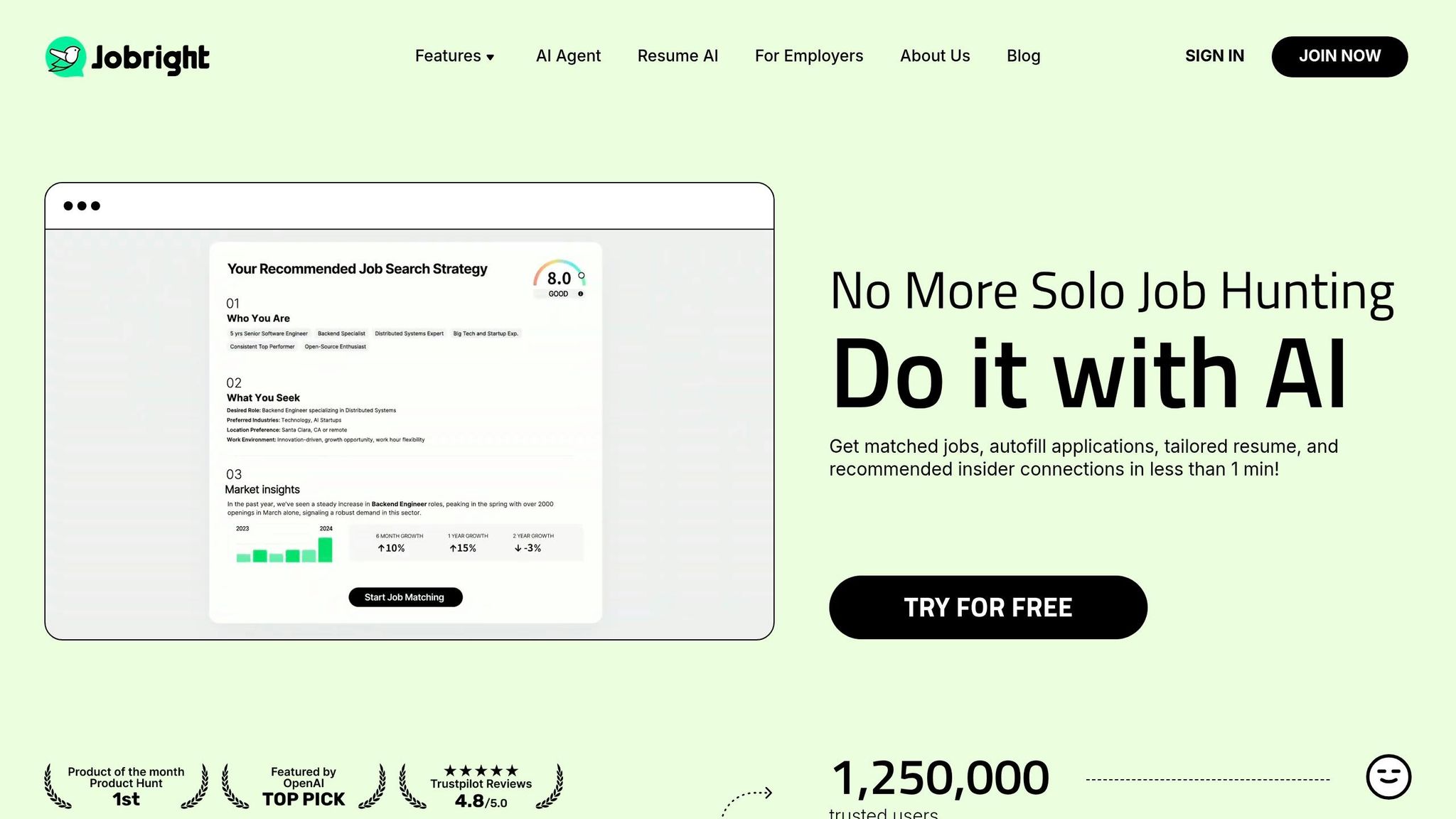
Jobright presents itself as an AI-driven job search platform, boasting over 8 million listings and features like an H-1B sponsorship filter and an Insider Connections tool for networking. While it emphasizes AI for efficiency, its approach differs significantly from Scale.jobs' human-focused model, which is particularly suited for navigating intricate ATS systems.
Human Involvement
Jobright operates as an AI-only platform. Its "Orion" AI assistant provides career advice, and the beta "Jobright Agent" attempts to automate form filling. However, most users are directed to employer websites to complete applications manually. Unlike Scale.jobs, which offers human oversight throughout the entire process - from job research to tailoring application documents - Jobright leaves much of the execution to the user.
ATS Optimization
Jobright's AI Resume Editor identifies missing keywords and formatting issues to help optimize resumes for ATS. However, its capabilities shine primarily on small-business ATS platforms like Greenhouse and Lever, often used by startups. When it comes to more complex systems like Workday, iCIMS, or Taleo, the AI struggles to handle multi-step workflows and conditional fields.
As the founder of Scale.jobs explains:
"Most AI auto-apply platforms work only on short, one-page applications, typically on ATS platforms like Greenhouse and Lever... these platforms cannot apply to longer, more complex systems such as Workday, iCIMS, Taleo, and similar enterprise ATS tools."
This is a critical limitation for those targeting larger organizations, where Scale.jobs' human-driven approach has a clear advantage. Pairing AI tools with a professional resume writing service may help bridge the gap for broader ATS compatibility.
Application Submission
Jobright's beta Agent redirects users to employer sites for manual application submission. In contrast, Scale.jobs assigns human assistants to handle the entire submission process, even on complex ATS portals where automation often fails.
Proof-of-Work Transparency
Jobright provides a Job Tracker dashboard to help users monitor application progress, from discovery to offer. While functional, it primarily tracks user actions rather than managing the process directly. Scale.jobs offers real-time updates via WhatsApp, ensuring transparency and eliminating the need to log into a dashboard.
Pricing
The pricing models of Jobright and Scale.jobs diverge significantly. Jobright's plans start at about $30/month, with quarterly plans ranging from $70–$90 and annual plans costing roughly $20/month when paid upfront. These are recurring charges. On the other hand, Scale.jobs uses a one-time payment model, with prices ranging from $199 to $1,099, avoiding the hassle of subscriptions and monthly fees.
Why Scale.jobs Stands Out Against Jobright
- Human-driven applications: Scale.jobs' assistants manage the entire process, including navigating complex ATS systems that Jobright struggles with.
- Tailored documents: Resumes and cover letters are customized for each role rather than generated from a generic template.
- Improved response rates: Scale.jobs reports response rates of 12–18%, far exceeding the 1–3% typical of AI-generated applications.
- No recurring fees: A single payment covers your entire job search process.
- Real-time updates: Stay informed with WhatsApp notifications confirming each step of your application process.
Who Should Use Jobright
Jobright is ideal for job seekers who prefer a self-directed approach, value AI tools for job discovery, and need features like resume feedback and networking prompts. It’s particularly useful for international candidates leveraging the H-1B sponsorship filter and those focused on startups or tech companies using simpler ATS platforms.
Who Should Choose Scale.jobs
Scale.jobs is best for those targeting mid-to-large companies with complex hiring systems, requiring fully personalized applications, or preferring to leave the submission process to a professional. If you've been frustrated by low response rates from AI-generated applications, Scale.jobs offers a more hands-on and effective alternative.
Switch to Scale.jobs If…
- Your target employers use enterprise ATS systems like Workday, iCIMS, or Taleo, and your applications aren’t advancing.
- You’re on a Jobright subscription but still find yourself manually managing submissions.
- You’re experiencing low response rates (around 1–3%), suggesting generic AI resumes may be holding you back.
- You want a dedicated point of contact managing your job search instead of relying on a chatbot.
6. Jobscan
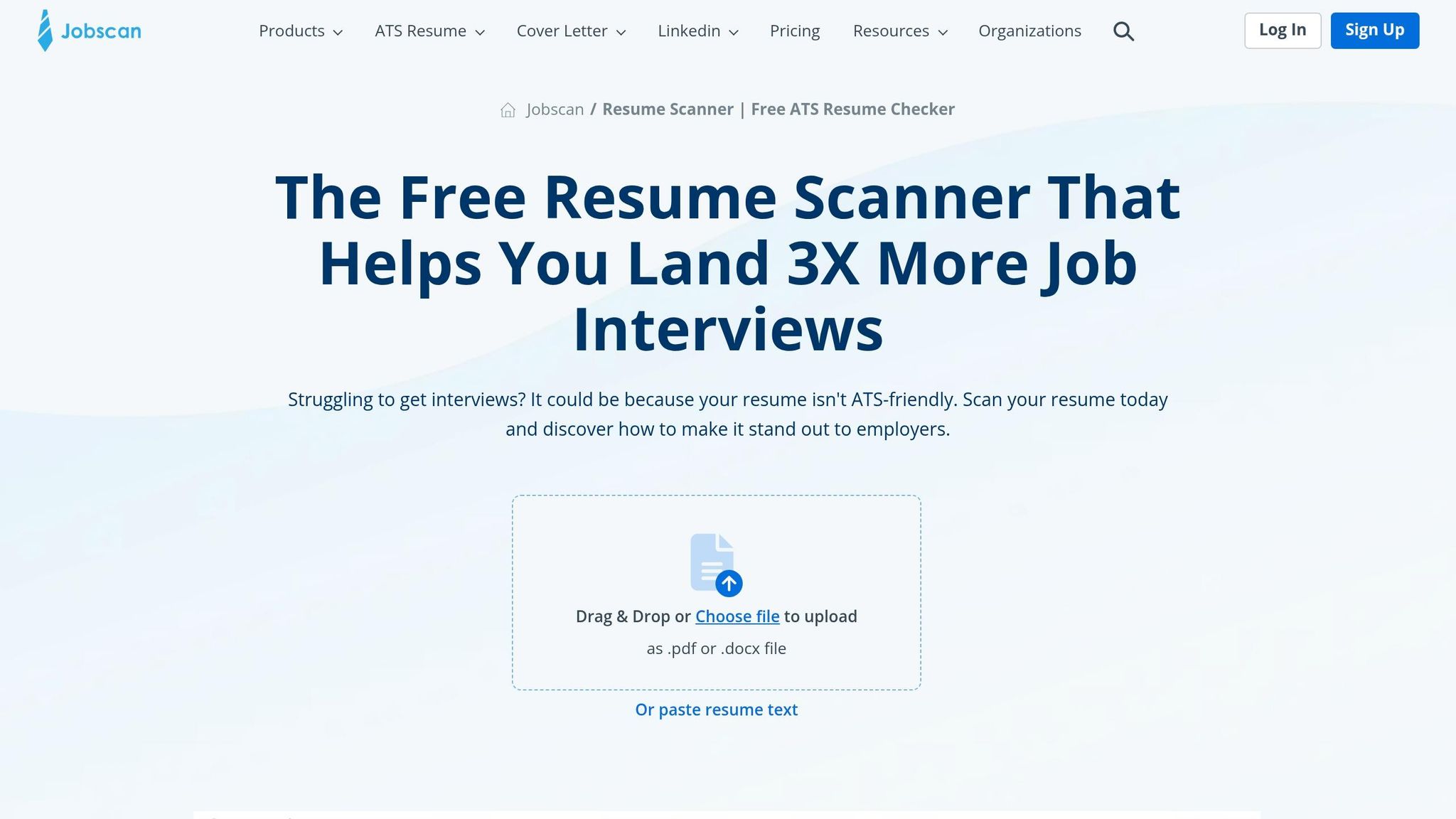
Jobscan is a tool designed to help job seekers optimize their resumes for Applicant Tracking Systems (ATS). By analyzing your resume alongside a job description, it generates a Match Score and highlights missing keywords, formatting issues, and other ATS-related tips. According to UC Berkeley's School of Information, Jobscan’s optimization technology is built on algorithms similar to those used by leading ATS platforms.
Human Involvement
Jobscan relies entirely on AI, with users responsible for uploading their documents, reviewing AI-generated suggestions, and submitting applications. The platform’s "One-Click Optimize" feature, powered by GPT-4, provides suggestions for resume summaries and skill enhancements, but every change requires user approval. Additionally, Jobscan includes a Job Tracker to help organize applications, although users must manually move applications between stages like Saved, Applied, and Interview. In contrast, Scale.jobs assigns dedicated human assistants who handle everything from tailoring resumes to navigating submission portals, eliminating the need for user involvement.
ATS Optimization
Jobscan identifies the ATS platform associated with a job posting - such as Workday, Taleo, or iCIMS - and flags potential issues like tables or images that could confuse these systems. It encourages users to aim for a Match Score of 75% or higher. However, some critics argue that this approach can lead to keyword stuffing, which may not align with how modern ATS platforms like Greenhouse and Lever operate. These systems increasingly rely on semantic matching rather than simple keyword counts. This limitation highlights the advantage of Scale.jobs, where human assistants craft naturally tailored applications without relying solely on algorithms.
Application Submission
Unlike Scale.jobs, which offers a full-service model where human assistants handle the entire submission process, Jobscan redirects users to employer websites for manual application submission. This means users must navigate complex, multi-step portals on their own.
Proof-of-Work Transparency
Jobscan provides a Scan History and Match Score reports to track resume optimization progress. However, it does not confirm whether applications were submitted or received. In comparison, Scale.jobs offers clear proof of completed work, including submission screenshots, timestamps, and real-time updates via WhatsApp. This added transparency ensures users know exactly what has been done on their behalf.
Pricing
Jobscan’s free plan allows for 5 scans per month with limited ATS insights. Its monthly subscription costs $49.95, while the quarterly plan is $89.95 (approximately $29.98 per month). These recurring fees can add up over time. On the other hand, Scale.jobs operates on a one-time payment model, which includes pro-rated refunds, avoiding the ongoing expenses associated with Jobscan.
Why Scale.jobs Stands Out Against Jobscan
- End-to-end execution: Scale.jobs handles the entire process, from resume customization to application submission, while Jobscan focuses solely on optimization guidance.
- Natural language adjustments: Human-written customizations prevent keyword stuffing and ensure resumes feel authentic.
- Comprehensive ATS support: Scale.jobs’ human assistants navigate complex portals like Workday and Taleo, which automated tools often struggle with.
- Verified work: Scale.jobs provides submission documentation, offering more transparency than Jobscan’s abstract Match Scores.
- Cost structure: A one-time fee eliminates the need for ongoing subscriptions.
Who Should Use Jobscan
Jobscan is ideal for job seekers applying to a handful of roles each week who want to understand ATS filtering mechanics and prefer a hands-on approach. It’s a practical tool for identifying gaps in your resume and making adjustments before applying.
Who Should Choose Scale.jobs
Scale.jobs is better suited for those applying to a high volume of roles, particularly with mid-to-large employers using complex ATS systems. It’s also a great option for individuals who lack the time or expertise to manually optimize and submit applications. If Jobscan’s insights leave you feeling stuck, Scale.jobs takes care of the entire process for you.
Switch to Scale.jobs If…
- You’re targeting roles that use enterprise ATS platforms like Workday or Taleo, which require manual submission.
- You find optimizing resumes takes up more time than applying to jobs.
- You want documented proof of application submissions instead of relying solely on optimization reports.
Decision Summary: Jobscan is a good choice for hands-on users optimizing a few applications weekly. For a more comprehensive, human-driven approach to high-volume job applications, Scale.jobs is the better option.
7. Teal
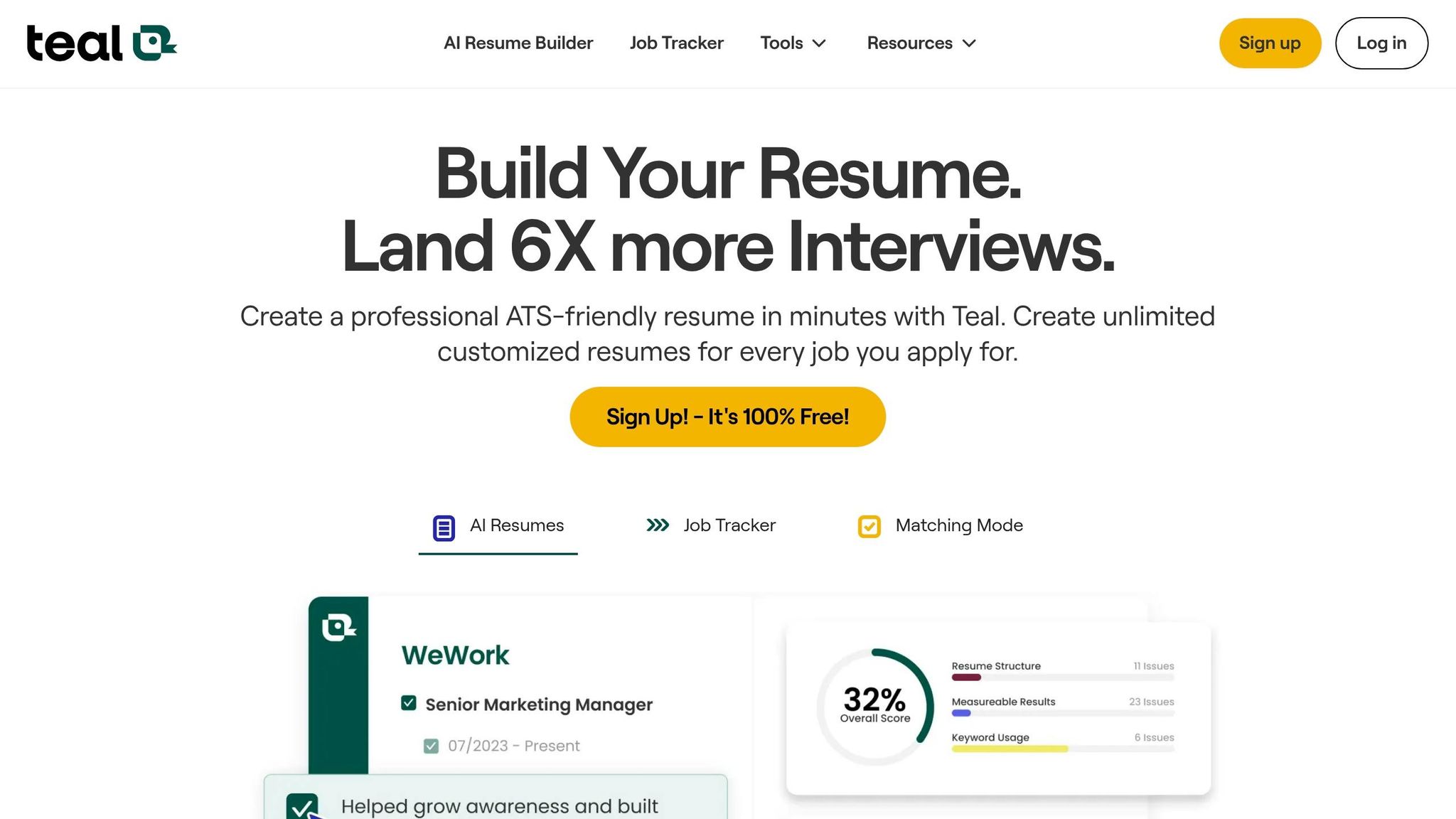
Teal is a career platform designed to help job seekers stay organized. It includes tools like an application tracker, an AI-powered resume builder, and a Chrome extension that pulls job descriptions from platforms like LinkedIn and Indeed. While helpful for managing applications, Teal requires users to manually submit their applications.
Human Involvement
Teal operates without human assistance. Users upload their resumes, compare them to job descriptions, review AI-generated recommendations, and handle the submission process themselves. For those seeking specialized roles, this can be a drawback. Aubrey Smith, a Customer Success Manager, shared that Teal felt "overly automated and impersonal", while Teja Aditya Surabhi, an Azure Solutions Engineer, noted it "didn't meet the specific needs of Azure engineering roles." By contrast, Scale.jobs combines AI with human assistance, managing resume tailoring and application submissions within 12–24 hours, eliminating the need for user involvement.
ATS optimization tips
Teal features a Match Score that evaluates keyword overlap between resumes and job descriptions, offering AI-driven suggestions for improvement. However, this approach relies on older ATS logic. According to The AI Career Lab:
"Teal's Match Score is a literal keyword-overlap percentage. It's a 2019-vintage scoring model that doesn't reflect how 2026 semantic-matching systems actually work."
Modern ATS platforms like Greenhouse and Lever prioritize semantic matching over simple keyword counts. Focusing too heavily on Teal's Match Score can lead to resumes that feel overly engineered. Scale.jobs takes a different route, using AI for initial edits but ensuring human oversight to refine the language and avoid robotic phrasing.
Application Submission
Teal's Chrome extension is effective for capturing job listings into a dashboard, but users must complete applications manually. Scale.jobs, on the other hand, handles the entire submission process, even navigating complex ATS systems like Workday and Taleo that automated tools often struggle with.
Proof-of-Work Transparency
Teal logs jobs applied for and the resumes used but doesn’t confirm whether applications were successfully received. Scale.jobs offers greater transparency by providing screenshots and WhatsApp confirmations as proof of submission. For those evaluating resume writing services or comprehensive application support, this level of verification can be invaluable.
Pricing
Teal offers a free version and a Pro plan priced between $9 and $29 per month. In contrast, Scale.jobs uses a one-time payment model, with pro-rated refunds if you secure a job before using all your credits. Notably, 70% of Scale.jobs users receive partial refunds for this reason.
Why Scale.jobs Stands Out Against Teal
- Complete service: Scale.jobs handles the entire application process, while Teal requires user involvement.
- Human oversight: Scale.jobs ensures resumes are reviewed by humans to avoid formulaic AI language.
- ATS expertise: Scale.jobs navigates enterprise systems like Workday, Taleo, and iCIMS, which Teal's automation cannot.
- Submission proof: Scale.jobs provides screenshots and updates, unlike Teal's self-reported tracker.
- One-time pricing: Scale.jobs avoids recurring fees, unlike Teal's subscription model.
Who Should Use Teal
Teal is ideal for job seekers who prefer a hands-on approach and need an organizational tool to manage a high volume of applications. Its free tier is a good starting point for those who want to track their progress independently.
Who Should Choose Scale.jobs
Scale.jobs is better suited for professionals looking to delegate the application process entirely. It's particularly useful for those targeting larger employers using complex ATS systems or for individuals who want to focus on networking and interview preparation instead of administrative tasks.
Switch to Scale.jobs If…
Consider switching to Scale.jobs if your current tool isn’t meeting your needs:
- You're spending more time managing applications than getting interviews.
- Your target roles require navigating platforms like Workday, Taleo, or iCIMS.
- You want documented proof that applications were submitted, not just dashboard updates.
Decision Summary: Teal is a solid choice for self-directed job seekers managing their own applications. However, if you need a service to handle the application process for you - especially for roles requiring complex ATS navigation - Scale.jobs offers a more comprehensive solution.
8. Rezi
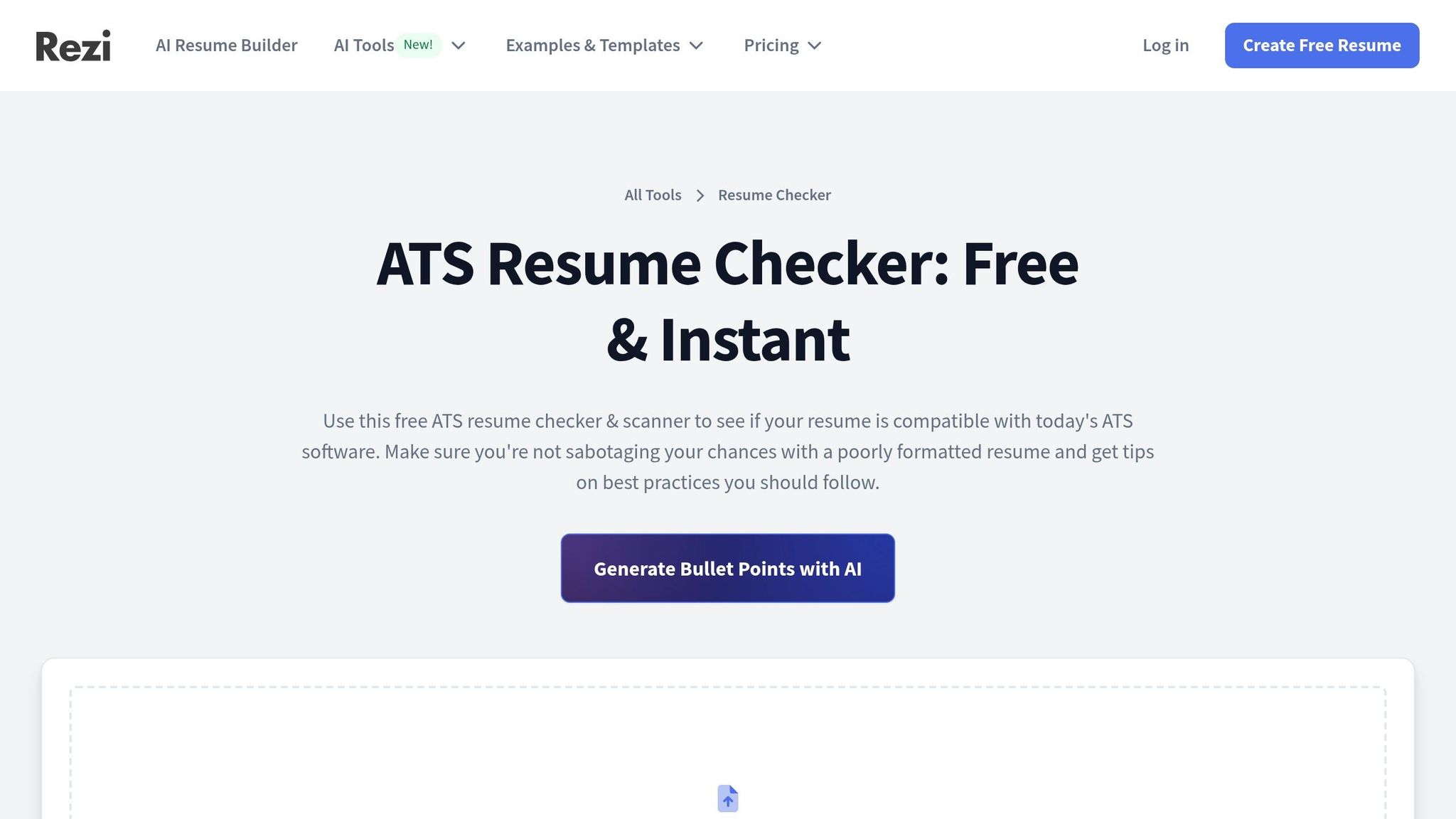
Rezi is a resume tool designed specifically to navigate ATS (Applicant Tracking System) filters. With over 4 million users, it focuses on ensuring technical compliance rather than creating visually appealing resumes. If you've been frustrated by resumes that look great but fail to pass ATS screening, Rezi's approach may be worth exploring.
Human Involvement
Rezi operates largely as a self-service platform, guiding users through resume creation and optimization with AI-driven prompts. For those seeking additional input, human reviews are available, though they depend on the subscription tier. As Rory Miller, CPRW and Content Editor, explains:
"Rezi isn't trying to help you express yourself. It's trying to make sure your application survives the hiring software."
This approach contrasts with Scale.jobs, where human assistants not only tailor resumes but also handle the application process itself.
ATS Optimization
Rezi's strength lies in its ATS-focused features. Its Rezi Score evaluates resumes across 23–24 key factors in real time, including bullet point length, active verbs, achievement quantification, and consistent formatting. A score of 80 or above is considered strong. Additionally, Rezi analyzes job descriptions to identify missing keywords and position-specific terminology.
To guarantee ATS compatibility, Rezi enforces single-column layouts and prevents designs that could disrupt parsing. While this ensures technical compliance, it limits design flexibility.
Application Submission
Once your resume is optimized, Rezi allows you to export it as a PDF or Word file for manual submission. For older ATS systems, the platform recommends using Word files to minimize parsing errors. However, users must manage submissions themselves, even when applying to roles on complex ATS platforms like Workday, Taleo, or iCIMS.
In contrast, Scale.jobs simplifies this process by handling submissions directly, even for enterprise-level ATS platforms.
Proof-of-Work Transparency
Rezi focuses solely on resume quality and lacks features for tracking application progress. Its accountability is tied to the Rezi Score, which reflects the quality of your document but doesn't provide insights into whether applications were sent, received, or reviewed. There’s no submission log or status updates.
On the other hand, Scale.jobs offers full transparency, providing proof of submission through screenshots and time-stamped updates. It also verifies submissions via dedicated WhatsApp support, ensuring every step is documented.
Pricing
Rezi offers a free tier with limited capabilities, a $29/month Premium plan with a money-back guarantee, and a one-time Lifetime plan for occasional job seekers. In comparison, Scale.jobs uses a one-time payment model that covers the entire application process - from resume creation to confirmed submissions - offering a broader scope of service.
Why Scale.jobs Stands Out Against Rezi
- Complete service: Scale.jobs manages the entire application process, while Rezi focuses only on resume creation.
- Human insight: Scale.jobs incorporates human review and submission, addressing nuances that automated tools might miss.
- Enterprise ATS expertise: Scale.jobs handles submissions for complex ATS platforms like Workday and Taleo, which Rezi users must navigate manually.
- Submission verification: Scale.jobs provides proof of submission, including screenshots, while Rezi only tracks document quality.
- Comprehensive pricing: Both platforms offer one-time payment options, but Scale.jobs delivers a full-service solution, not just an optimized resume.
Who Should Use Rezi
Rezi is ideal for experienced professionals who need a technically optimized resume and are comfortable managing the job search process on their own. It’s especially useful if your primary concern is ensuring ATS compliance and keyword alignment.
Who Should Choose Scale.jobs
Scale.jobs is better suited for those who want more than a polished resume. It’s designed for job seekers seeking a hands-off approach to the application process, from tailored resumes to verified submissions, without the hassle of repetitive tasks.
Switch to Scale.jobs If…
- Your optimized resume isn’t translating into interviews, even with a strong ATS score.
- You’re applying to roles on platforms like Workday or Taleo and find the application process time-consuming.
- You want proof that your applications have been received, not just a score indicating resume quality.
Decision Summary: Rezi is a reliable tool for creating ATS-compliant resumes but stops short of handling the actual application process. If you’re looking for a service that ensures your resume gets in front of employers and tracks every step, Scale.jobs fills the gaps Rezi leaves behind.
9. Resume.io
Resume.io is a well-known tool for crafting resumes, offering a user-friendly interface and more than 25 ATS-compatible templates. Its Recruiter-AI feature can generate a resume in about 20 minutes, making it a go-to option for job seekers aiming for a polished resume in a short time. While it excels in creating resumes quickly, Scale.jobs surpasses it in managing the entire job application process.
Human Involvement
Resume.io includes some human-assisted features, such as its Auto Apply function, where a team of experts submits job applications on behalf of users. Additionally, it offers 1-on-1 career coaching to help with interview preparation, networking strategies, and salary negotiations. Users can also customize their resumes by pasting a job description link, tailoring the content to a specific role. However, Scale.jobs provides more comprehensive support by including dedicated human assistants for resume customization and verified application submissions across all its plans.
ATS Optimization
Resume.io ensures resumes are ATS-friendly by offering over 25 optimized templates, a built-in spell-checker, and pre-written content suggestions. However, it lacks a feature to provide real-time match scores against job descriptions. Scale.jobs addresses this gap with its Resume vs. Job Description Skills Analysis tool, which offers instant match scores along with actionable recommendations to improve alignment.
Application Submission
Resume.io's Auto Apply feature simplifies the application process, but it provides limited transparency about whether applications are successfully submitted. In contrast, Scale.jobs offers complete transparency, including screenshots and time-stamped records for every submission, ensuring that applications are verifiably delivered even through complex ATS systems.
Proof-of-Work Transparency
One of Resume.io's notable drawbacks is the absence of submission tracking, leaving users to trust the system without tangible proof. Scale.jobs, on the other hand, provides real-time updates and proof of submission through dedicated WhatsApp support. This added layer of documentation gives Scale.jobs a clear edge in ensuring accountability and trust.
Pricing
Resume.io has a free tier for basic resume exports, with premium features like Auto Apply and career coaching available through monthly subscriptions. Scale.jobs operates on a one-time payment model, covering resume customization, application submissions, and proof of work - eliminating the need for recurring fees.
Why Scale.jobs Stands Out Against Resume.io
- Dedicated human support: Every Scale.jobs plan includes human assistants, unlike Resume.io, where advanced features are tied to premium tiers.
- Advanced ATS matching: Scale.jobs provides job-specific match scores, while Resume.io focuses on general template optimization.
- Transparent submissions: Scale.jobs documents every application with screenshots and time stamps, which Resume.io does not.
- Straightforward pricing: Scale.jobs offers a single upfront payment, avoiding the layered subscription costs of Resume.io.
- Complex ATS handling: Scale.jobs specializes in managing submissions through systems like Workday, Taleo, and iCIMS.
Who Should Use Resume.io
- Individuals looking for a quick, professional, and ATS-compatible resume.
- Those who are comfortable managing their own job applications.
- Job seekers early in their search who value simplicity and clean resume design.
Who Should Choose Scale.jobs
- Job seekers applying to a high volume of positions who need verified submissions and thorough human oversight.
- Professionals targeting companies with complex ATS platforms.
- Candidates who prefer a one-time payment for comprehensive services over subscription-based add-ons.
Switch to Scale.jobs If…
- You're relying on Resume.io's Auto Apply feature but aren't sure if your applications are being submitted successfully.
- Your resume looks professional, but you're not getting interview callbacks from ATS-heavy employers.
- You've paid for multiple Resume.io features but still find yourself manually navigating complex application systems.
Decision Summary: Resume.io is an effective choice for creating polished, ATS-friendly resumes with some helpful add-ons. However, its lack of submission transparency and real-time ATS matching makes it less suited for those who need verified, large-scale application support. Scale.jobs fills this gap with its comprehensive approach, ensuring every application is tracked and tailored for success.
10. Wonsulting
Wonsulting started as a career coaching service and has since expanded into an AI-driven platform called WonsultingAI. It offers a range of tools, including resume writing, networking outreach, interview practice, and job tracking, all bundled into a single subscription. If you're looking for a self-service option to manage your job search, Wonsulting provides a practical set of tools.
Human Involvement
While Wonsulting does provide optional one-on-one coaching through its marketplace, the platform is largely self-service. Its premium tier includes a Job Offer Guarantee within 120 days for coaching clients, but users still generate resumes and manage outreach independently. On the other hand, Scale.jobs assigns dedicated virtual assistants to handle the entire application process, even for complex ATS platforms like Workday, Taleo, and iCIMS.
ATS Optimization
Wonsulting's ResumAI tool focuses on creating bullet points driven by metrics and calculates a Resume Score based on keyword density and formatting. This is especially useful for early-career professionals (0–3 years) aiming to pass ATS screenings. For instance, ResumAI can transform a basic job description into a polished, quantified statement in about 15 minutes. However, for senior-level roles, relying solely on keyword density can be misleading, as it emphasizes formatting over strategic content. Scale.jobs goes beyond this by combining ATS optimization with human review, ensuring resumes are both keyword-aligned and contextually accurate. If you're considering professional resume writing support, Scale.jobs includes this service in its managed plans.
Application Submission
Wonsulting's submission process is user-driven. Tools like JobBoardAI and NetworkAI help users find opportunities and craft personalized LinkedIn or email outreach messages, but the actual submissions must be done manually. In contrast, Scale.jobs assigns virtual assistants to handle all submissions directly, which is particularly valuable for applications requiring multi-step forms or employer-specific portals that automated systems often struggle with.
Proof-of-Work Transparency
Wonsulting's JobTrackerAI logs email activity but doesn't verify delivery or provide submission confirmations. Scale.jobs, however, offers time-stamped screenshots and PDF confirmations for every application, along with real-time updates through WhatsApp. This level of transparency is crucial for high-volume applications, ensuring you know exactly which roles you've applied for and when.
Pricing
Wonsulting has a free tier that includes 5 resume bullet points and 1 cover letter. Its premium subscription grants unlimited access to tools like ResumAI, NetworkAI, InterviewAI, and JobBoardAI. Scale.jobs, on the other hand, uses a one-time payment model with no recurring fees. Interestingly, 70% of Scale.jobs customers receive a refund because they secure a job before using all their application credits.
Here's a quick comparison of the two platforms:
| Feature | Wonsulting | Scale.jobs |
|---|---|---|
| Human Involvement | Optional coaching; self-service apps | Virtual assistants manage all submissions |
| Resume Customization | AI-generated, keyword-scored | Human-tailored, ATS-optimized per role |
| ATS Handling | Keyword density scoring via ResumAI | Manual navigation of Workday, Taleo, iCIMS |
| Application Execution | User-driven | Fully managed by VA team |
| Proof of Work | Not provided | Time-stamped screenshots + PDF confirmations |
| Pricing Model | Monthly subscription | One-time payment |
Why Scale.jobs Stands Out Against Wonsulting
- Managed submissions: Scale.jobs handles the application process for you, while Wonsulting requires manual effort.
- Verified delivery: Scale.jobs provides proof of every submission, whereas Wonsulting does not.
- Complex ATS coverage: Scale.jobs can navigate intricate ATS portals that self-service tools often fail to complete.
- No recurring fees: Scale.jobs demands only a one-time payment, compared to Wonsulting's monthly subscription.
- Real-time support: Scale.jobs offers WhatsApp updates, while Wonsulting relies on email-only support.
These distinctions highlight the different strengths of each platform and who might benefit most from their services.
Who Should Use Wonsulting
- Job seekers early in their careers or those transitioning to a new field who need quick resume improvements and keyword alignment.
- Individuals comfortable managing their own job search and application submissions.
- Those looking for low-cost AI tools for networking and outreach via LinkedIn or email.
Who Should Choose Scale.jobs
- Professionals applying to a large number of roles who need verified, documented submissions.
- Candidates targeting companies with sophisticated ATS systems requiring manual navigation.
- Job seekers preferring a one-time payment model over ongoing subscription fees.
Switch to Scale.jobs If…
- You're frustrated by manually submitting applications despite having a strong resume.
- You're targeting ATS-heavy employers and not getting responses.
- You want clear, documented proof that your applications have been submitted successfully.
Decision Summary: Wonsulting is a helpful, budget-friendly option for those who want self-service tools for resumes, networking, and interview preparation. However, Scale.jobs is the better choice for those who need hands-on support with applications, complete transparency, and a one-time pricing structure. By combining human expertise, ATS optimization, and proof of submission, Scale.jobs delivers a comprehensive solution for job seekers.
Platform Comparison Table
When deciding on a job search tool, it’s all about figuring out what you need most - whether it’s personalized assistance, ATS compatibility, application volume, or keeping costs manageable. The table below breaks down ten platforms across six key factors that matter to active job seekers.
| Platform | Human Involvement | Resume Customization | ATS Handling | Application Execution | Proof of Work | Pricing Model |
|---|---|---|---|---|---|---|
| Scale.jobs | High - dedicated VAs + onboarding call | Human-tailored + AI-generated per role | Manual navigation of Workday, Taleo, iCIMS | Fully managed by VA team | Time-stamped screenshots + PDF confirmations | One-time flat fee ($199–$1,099) |
| Sonara | None | Auto-matched to job listings | Basic ATS platforms only | Fully automated | No submission confirmation | Monthly subscription |
| Loopcv | None | Template-based, limited tailoring | Basic ATS platforms only | Fully automated | No submission confirmation | Monthly subscription |
| LazyApply | None | AI-generated, minimal customization | Greenhouse, Lever; limited on enterprise ATS | Fully automated | No submission confirmation | One-time or monthly |
| Jobright | Low - AI-driven | AI-generated resumes | Greenhouse, Lever; limited on Workday/iCIMS | AI auto-apply software | No submission confirmation | ~$70 for auto-apply features |
| Jobscan | Low - self-service | Keyword-score guided, user-edited | Strong keyword matching; user applies manually | User-led | No submission confirmation | $49.95/month (5 free scans/month) |
| Teal | Low - self-service | AI suggestions, user-edited | Keyword alignment; user applies manually | User-led | No submission confirmation | $9–$29/month |
| Rezi | None | AI-generated, ATS-formatted | Formatting and keyword optimization | User applies manually | No submission confirmation | Subscription or one-time |
| Resume.io | None | Template-based, user-edited | Basic formatting compliance | User applies manually | No submission confirmation | $3–$15/month (trial auto-converts to $24.95/mo) |
| Wonsulting | Optional coaching add-on | AI bullet points, keyword-scored | Keyword density via ResumAI | User-driven | Not provided | Monthly subscription |
Key Insights from the Comparison
A few trends stand out clearly. First, Scale.jobs is the only platform that handles the entire application process for you. All other options either rely on automation to bypass complex systems or require manual effort. For example, platforms like LazyApply and Jobright auto-apply for jobs but work best with simpler ATS systems like Greenhouse and Lever. They struggle with more advanced enterprise ATS platforms like Workday, Taleo, and iCIMS, which are commonly used by Fortune 500 companies.
Pricing models also vary significantly. Most platforms use monthly subscription plans, ranging from $9 (Teal) to $49.95 (Jobscan). These costs can add up quickly, especially during a lengthy job search. In contrast, Scale.jobs offers a one-time flat fee that covers everything, and 70% of users receive a prorated refund if they secure a job before using all their application credits. This refund policy makes it a safer financial choice for those considering professional resume and application support.
Another major difference is proof of work. None of the other nine platforms provide verified, time-stamped confirmation that applications were submitted. For job seekers managing over 100 applications, this feature isn’t just helpful - it’s essential for avoiding duplicate submissions, tracking responses with analytics tools, and ensuring accountability throughout the process.
Conclusion
Selecting the right platform depends on the specific challenges you face during your job search. If you're struggling with the time-consuming nature of repetitive applications and navigating complex ATS systems, Scale.jobs offers a practical solution. In fact, most users secure a job within three months, with 70% receiving refunds for unused credits - making it a reliable choice for many.
When weighing Scale.jobs against AI-only or self-service tools like Sonara, LazyApply, or Jobscan, the differences become clear. For job seekers with well-crafted, high-converting resumes targeting startups or companies using simpler ATS platforms like Greenhouse or Lever, lower-cost tools may suffice. Tools like Jobscan are better suited for traditional enterprises that rely on older keyword-based filtering systems, while Teal is ideal for those independently managing a high volume of active applications - often 30 or more at a time.
However, Scale.jobs shines when dealing with more complex challenges. These include multi-step enterprise application forms, visa-specific filters, or high-volume campaigns where verified submission tracking is crucial. By pairing Scale.jobs with its resume writing services, you can access a complete job search solution tailored to your needs. Explore our professional resume writing and application support services here.
"Scale.Jobs, despite its flaws, is the best in the business of reverse recruiting. They tackle challenges with persistence, empathy, and genuine research." - Thomas McFarland, Google Reviewer
If you're feeling held back by intricate ATS systems or slow application processes, Scale.jobs' human-powered, fully documented approach could be the support you're looking for. With its emphasis on personalized oversight and accountability, combined with a one-time payment model and refund options for unused credits, Scale.jobs offers a transparent and effective solution. Take a moment to assess your job search needs and determine if Scale.jobs' hands-on, detailed approach aligns with your goals.
FAQs
Do human-submitted applications perform better on complex ATS?
Yes, resumes submitted by humans often achieve better results on complex ATS systems when they are tailored to specific job roles. Human input ensures that resumes are carefully crafted with the right keywords, clear achievements, and proper formatting - key factors for passing advanced ATS algorithms. While automated, high-volume submissions can work, blending automation with personalized human adjustments enhances both quality and relevance. This approach increases the chances of standing out in competitive applicant pools.
How can I confirm my applications were submitted?
Each job application you submit is backed by proof-of-work documentation, which includes human-verified, time-stamped screenshots. This process guarantees transparency and provides solid confirmation that your applications have been successfully submitted. With Scale.jobs, you receive this reliable documentation, giving you peace of mind and eliminating any uncertainty about the completion of your applications.
How do refunds work if I get hired before using all credits?
If you get hired before using all your credits, Scale.jobs offers a prorated refund based on the unused credits in your plan. However, a one-time fee of $100 will be deducted from the refund amount. The refund is calculated to ensure it accurately reflects the remaining credits.