Why AI-built resumes are not enough: Importance of Resume Writers
AI resume builders save time but often produce generic or inaccurate CVs; professional resume writers add storytelling, real metrics, and ATS-savvy personalization.

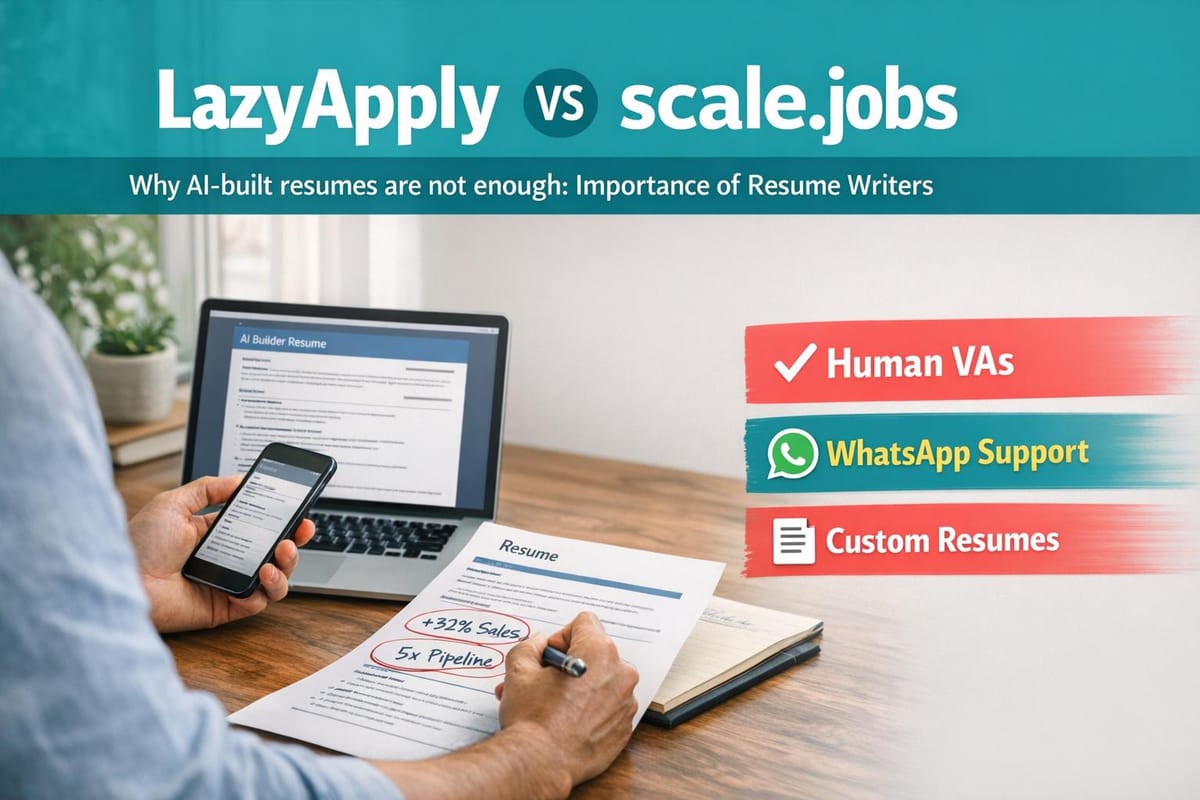
AI resume builders like Rezi.ai and Jobscan.co are increasingly popular, but they often fall short in creating resumes that resonate with recruiters. While these tools can optimize for ATS (Applicant Tracking Systems) and save time, they struggle with personalization, storytelling, and accuracy. Professional resume writers, on the other hand, craft tailored resumes that highlight your achievements, career transitions, and unique value without relying on generic templates or fabricated details.
Key Takeaways:
- AI resumes often lack originality and fail to convey your career story effectively.
- Hiring managers can detect AI-generated resumes, with 82% reporting they reject overly generic applications.
- Human resume writers excel at blending keywords with impactful narratives, ensuring your resume stands out in competitive job markets.
- Services like Scale.jobs offer manual submissions, real-time updates, and personalized support, making them a reliable alternative to AI tools.
If you're applying for competitive roles, addressing career gaps, or managing visa requirements, investing in a professional resume service can significantly improve your chances of success.
Where AI-Generated Resumes Fall Short
Generic Content That Doesn't Reflect Your Experience
AI resume builders often rely on standardized templates, resulting in what recruiters refer to as "uniformity" - a sea of applications that look and feel nearly identical. Career coach Phoebe Gavin highlights this issue:
"100 of them look exactly the same because they all use the same ChatGPT prompt."
This lack of originality makes it difficult for candidates to stand out, and many fail to progress in the hiring process.
Another major drawback is that AI tools can't accurately represent your unique accomplishments unless you provide detailed input. For instance, they won't automatically know you exceeded your sales target by 30% or boosted website traffic by 50%. Worse, they might fabricate metrics to fill in gaps. HR executive James Hudson cautions:
"You're eroding your competitive advantage."
Unnatural Language That Turns Off Recruiters
Recruiters can often identify AI-generated resumes right away. Jessye Kass Karlin explains:
"You can totally tell when someone has used AI, because suddenly I have six applications that all have the same sort of structure and format."
The language in these resumes frequently comes across as stiff, overly formal, or awkwardly phrased, lacking the personal touch that resonates with hiring managers.
Additionally, AI-generated resumes often fall into the trap of creating "word salad" - documents packed with keywords but short on context or clarity. Karlin observes:
"People who actually use their own words to tell me their impact are much more effective than people who are using AI."
When your resume lacks a genuine voice, it fails to convey your personality, values, and communication style - key elements that help you connect with recruiters.
Missing the Story Behind Your Career Path
AI tools excel at listing job responsibilities, but they falter when it comes to weaving a narrative about your career. They can't explain why you shifted from marketing to product management, how you overcame a layoff, or what fuels your enthusiasm for a specific industry. These personal stories are often what make candidates memorable.
This issue becomes even more problematic when AI tools start hallucinating - generating false information to match a job description. Jeremy Schifeling, founder of The Job Insiders, shares a troubling example:
"My human BS detector immediately assumes the worst: This isn't a resume, this is a hallucination!"
When recruiters encounter fabricated details, they often view the entire application as untrustworthy, leading to instant rejection.
Up next, we’ll dive into three common mistakes made by AI-generated resumes.
3 Common Mistakes in AI-Built Resumes
Keyword Overload That Backfires
One of the biggest pitfalls of AI-generated resumes is the overuse of keywords without proper context. These tools often extract terms from job descriptions and scatter them across your resume, regardless of whether they truly align with your experience. To recruiters, this can come across as an attempt to manipulate the system rather than showcase genuine qualifications. Worse, some AI tools may even fabricate skills you don’t actually possess, leading to outright rejection. Beyond the misuse of keywords, these resumes often miss the mark in showcasing what makes you stand out, leaving your true value hidden.
Generic Templates That Blur Individuality
Using cookie-cutter templates is another common misstep. These generic formats not only make your resume blend in with countless others but can also confuse Applicant Tracking Systems (ATS). Career Coach Phoebe Gavin highlights this issue:
"Recruiters and hiring managers who look at hundreds of resumes say at times '100 of them look exactly the same because they all use the same ChatGPT prompt.'"
When your resume looks like everyone else’s, it’s easy for hiring managers to overlook you - especially since they spend an average of just seven seconds on an initial scan. Adding to the problem, complex layouts with multiple columns or graphics can cause ATS software to misinterpret or skip over crucial information. This lack of distinction can make your resume less effective, especially if it fails to convey measurable achievements.
Lack of Quantifiable Results
Another glaring issue with AI-built resumes is the absence of specific, measurable accomplishments. AI tools can only work with the information you provide, and if your input is vague, the output will be too. Even worse, some tools may insert made-up numbers to fill gaps, which could harm your credibility. Hiring managers are looking for evidence of your impact - real data that shows what you’ve achieved. In fact, about 74% of recruiters are now adept at spotting AI-generated resumes, often flagging them for their lack of concrete, quantifiable results. When bullet points focus on buzzwords like "team player" or "results-driven" without backing them up with hard evidence, it raises red flags and can lead to your resume being dismissed outright.
Why Human Resume Writers Beat AI Tools
Crafting Your Career Story, Not Just Listing Jobs
When it comes to creating a standout resume, human expertise makes all the difference. Professional resume writers don’t just list your work history - they piece together a narrative that connects your past achievements to your future aspirations. Through one-on-one discussions, they uncover accomplishments you might not even think to include, like the time you streamlined a workflow that saved your team hours or delivered a project ahead of schedule. These specific examples highlight your value, far beyond the generic job duties that AI tools often pull from standard descriptions, even when using a high-quality AI resume builder.
Human writers also excel at navigating career transitions. Whether you’ve shifted from finance to tech or taken a career break to care for family, they can frame these changes as strengths rather than liabilities. AI tools, on the other hand, tend to stumble here, either awkwardly glossing over gaps or flagging them in ways that could raise concerns. As James Hudson, an HR executive, explains:
"You're eroding your competitive advantage when you don't manually include those details."
In addition to storytelling, professional writers know how to balance keyword optimization with readability, ensuring your resume appeals to both applicant tracking systems (ATS) and recruiters.
Using Keywords the Right Way
A great resume doesn’t just tell your story - it also speaks the language of the industry. Human writers seamlessly weave relevant keywords into your achievements, avoiding the "word salad" effect that AI tools often create. Instead of simply listing a skill like "Python" in a generic skills section, a professional might write, "Used Python to develop an algorithm that reduced processing time by 35%." This not only satisfies ATS filters but also shows hiring managers exactly how you’ve applied your expertise.
Another advantage? Human writers can spot when AI tools mistakenly add skills you don’t actually possess - a growing issue that can damage your credibility before you even land an interview.
Writing for Both Software and People
Crafting a resume that works for both ATS software and human recruiters is a delicate balancing act. The best resume writers know how to navigate this dual challenge. They use standard headings like "Experience" and "Skills" that ATS systems recognize, stick to clean, single-column layouts to avoid formatting issues, and save files in .docx format for maximum compatibility.
But they don’t stop at technical details. Human writers bring creativity and intuition to the table, crafting language that resonates with recruiters. With 82% of U.S. hiring managers now able to spot AI-generated resumes, standing out requires more than just compliance - it demands a personal touch. Professional writers can interpret subtle cues in job descriptions, tailoring your resume to align with company culture in ways that AI, trained on generic data, simply can’t replicate.
AI vs human: Which CV wins? | We Try First
When to Pay for Professional Resume Help
Sometimes, landing the job you want requires more than just a polished resume from an AI tool. High-stakes applications, fierce competition, and unique personal circumstances often call for expert human intervention to craft a document that truly stands out.
Applying to Competitive Jobs That Attract Hundreds of Applicants
When you're vying for roles that receive hundreds - or even thousands - of applications, having a resume that grabs attention is non-negotiable. On average, recruiters spend just 7 seconds scanning a resume before deciding whether to dig deeper. With 82% of U.S. hiring managers now able to identify AI-generated content, presenting an authentic and tailored resume is more critical than ever.
This is where professional services like Scale.jobs come in. They combine human expertise with strategies designed to beat Applicant Tracking Systems (ATS). Their team crafts resumes that highlight your achievements and measurable impact, giving you the edge you need to rise above the competition.
But standing out in a crowded field isn’t the only challenge that might require professional help.
Addressing Career Gaps, Layoffs, or Career Changes
Career gaps, layoffs, or transitions into new industries can be tricky to explain. AI tools often stick to rigid formats, which can unintentionally draw attention to these issues in unflattering ways. For example, they might fail to reframe a career break as a period of growth or downplay transferable skills that could impress hiring managers.
Professional resume writers, on the other hand, know how to turn potential red flags into strengths. They can craft narratives that highlight your adaptability, skillset, and the context behind your career moves. While the cost of these services - ranging from $100 to $500 or more - may seem steep, they can make a significant difference when you're tackling tough career situations.
For those navigating visa complexities, the need for a tailored approach becomes even more pressing.
Job Hunting While Managing Visa Requirements
If you're an immigrant job seeker dealing with H1B, F1, CPT, or other visa constraints, the job search can feel like an uphill battle. Employers often consider sponsorship needs, and a one-size-fits-all resume won't cut it. AI tools typically overlook these nuances, leaving important details unaddressed.
Scale.jobs excels in helping visa-dependent candidates by creating resumes that emphasize your value while addressing immigration-specific challenges. Their human assistants know which skills and certifications will resonate most with employers who are open to sponsorship. Plus, their tailored approach ensures your resume aligns with both your qualifications and visa requirements.
With flat-fee pricing starting at $199 for 250 applications, Scale.jobs offers a transparent, stress-free alternative to subscription-based services. They even provide refunds for unused credits if you secure a job earlier than expected, making them a reliable choice during a challenging job search. Their dedicated WhatsApp support ensures you stay updated throughout the process, adding a personal touch to their service.
scale.jobs vs AI Resume Tools: Why Human Help Wins
AI Resume Builders vs Professional Resume Writers Comparison
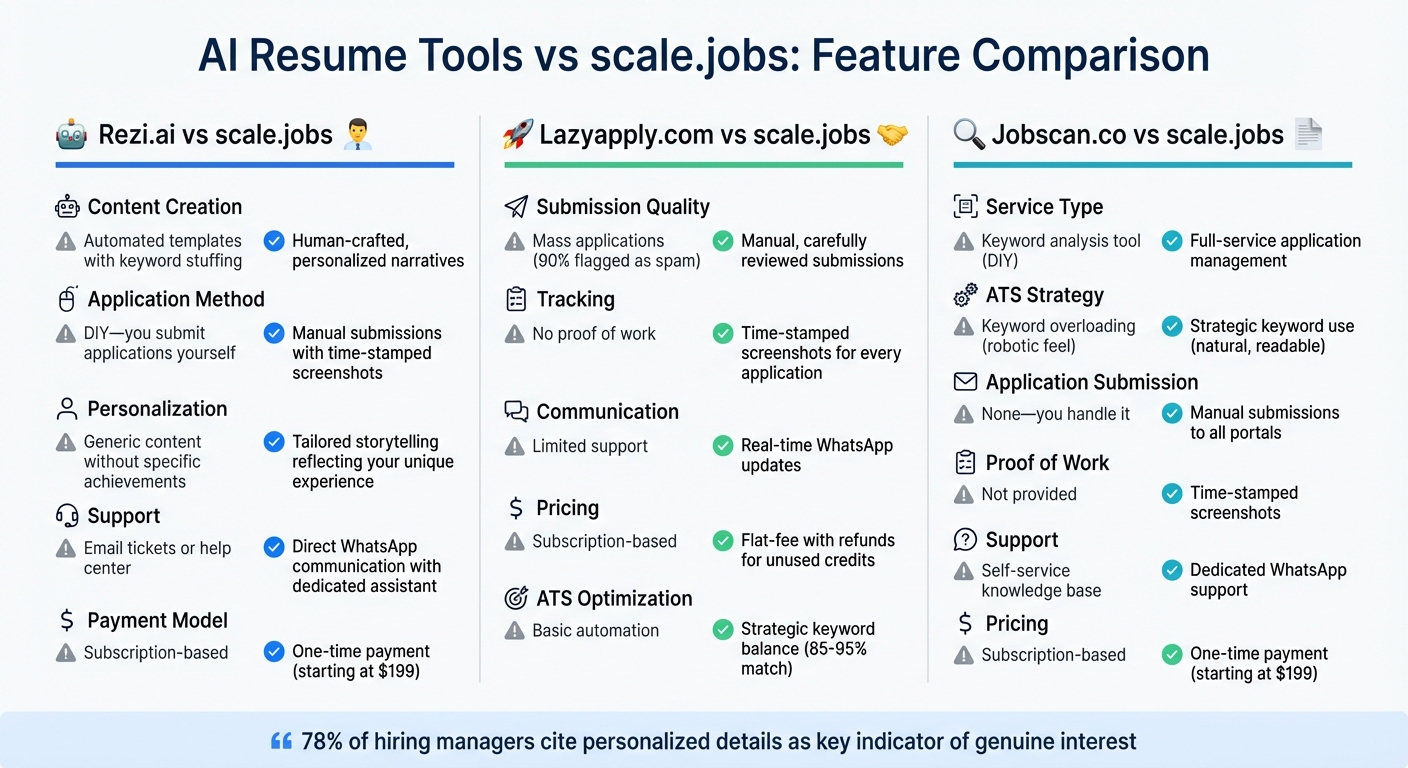
When deciding between automated resume builders and services powered by real people, the differences go far beyond just cost. AI tools like Rezi.ai often produce resumes that recruiters can quickly identify as generic. On the other hand, scale.jobs combines human expertise with ATS (Applicant Tracking System) optimization to deliver resumes that genuinely tell your career story. Unlike mass-submission methods, every application is manually submitted, ensuring accuracy and professionalism. With flat-fee pricing starting at $199 for 250 applications, you avoid the recurring subscriptions often tied to AI platforms.
Let’s break down how scale.jobs compares to top AI tools and why the human touch makes all the difference.
Rezi.ai vs scale.jobs: Why the Human Approach Stands Out
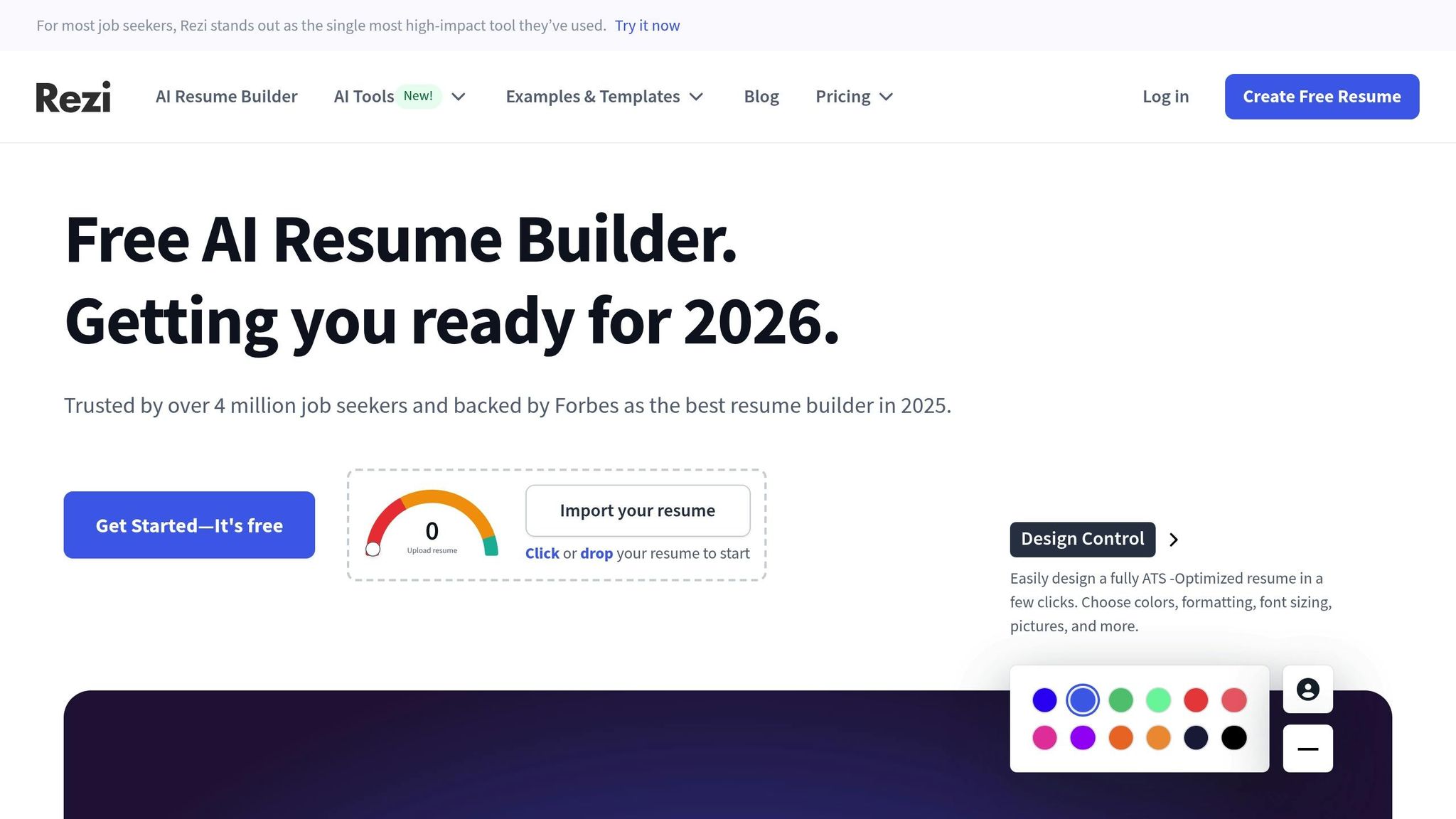
Rezi.ai positions itself as an AI-driven resume builder that focuses on ATS optimization. While it can churn out keyword-heavy resumes quickly, the results often lack the personal touch that resonates with recruiters. As recruiter Steve Levy aptly puts it:
"Every sentence is grammatically correct, evenly spaced, and emotionally vacant. Real résumés have scuff marks."
| Feature | Rezi.ai | scale.jobs |
|---|---|---|
| Content Creation | Automated templates with keyword stuffing | Human-crafted, personalized narratives |
| Application Method | DIY - you submit applications yourself | Manual submissions with time-stamped screenshots for transparency |
| Personalization | Generic content without specific achievements | Tailored storytelling reflecting your unique experience |
| Support | Email tickets or help center | Direct WhatsApp communication with a dedicated assistant |
| Payment Model | Subscription-based | One-time payment (starting at $199) |
Why scale.jobs wins: Their human assistants create resumes that not only pass ATS filters but also engage recruiters. Plus, you receive time-stamped screenshots for every application, ensuring full accountability.
Is Lazyapply.com Worth It? Reviews & Alternatives
Lazyapply.com claims to simplify your job search by mass-applying to hundreds of jobs with a single click. However, this approach often leads to a flood of low-quality, spam-like applications, with companies increasingly relying on AI to detect and reject bot-generated submissions. In fact, mass-submission methods can result in a 90% increase in applications being flagged as spam.
Here’s how scale.jobs offers a better alternative:
- Manual submissions by real people who carefully review job descriptions and customize your materials for each role.
- Real-time WhatsApp updates to keep you informed every step of the way.
- Proof of work through screenshots showing when and where your applications were submitted.
- Flat-fee pricing with no recurring costs - pay once for a campaign bundle and even get refunds for unused credits.
- ATS-optimized resumes crafted with a balance of strategic keywords and natural, engaging language.
Unlike Lazyapply’s subscription model, scale.jobs ensures your applications reach the right hands, bypassing the pitfalls of automated mass submissions.
Jobscan.co vs scale.jobs: Why scale.jobs Is the Smarter Choice
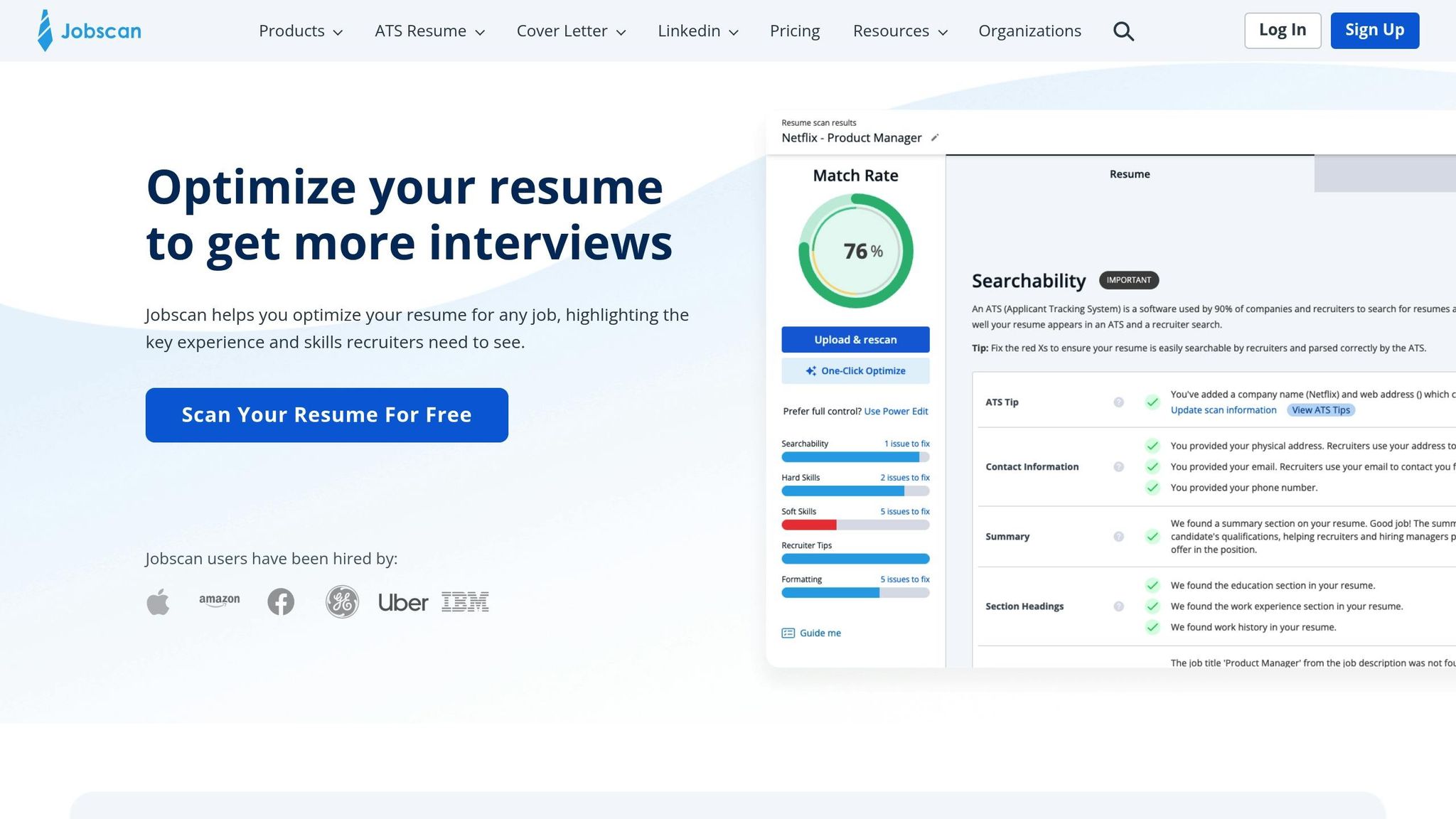
Jobscan.co focuses on ATS keyword analysis by comparing your resume to job descriptions and providing a match score. While this tool can highlight areas for improvement, its heavy reliance on keywords often results in resumes that feel robotic and unnatural to human readers.
Here’s a closer look:
| Feature | Jobscan.co | scale.jobs |
|---|---|---|
| Service Type | Keyword analysis tool (you do the work) | Full-service application management (we handle it all) |
| ATS Strategy | Overloading keywords, often making resumes feel robotic | Strategic keyword use for natural, readable resumes |
| Application Submission | None - you handle it yourself | Manual submissions to all portals (ATS, company sites, LinkedIn) |
| Proof of Work | Not provided | Time-stamped screenshots of every application |
| Support | Self-service knowledge base | Dedicated WhatsApp support with human assistants |
| Pricing | Subscription-based | One-time payment (starting at $199) |
Why scale.jobs wins: Instead of simply pointing out what’s wrong, scale.jobs takes care of the entire process for you. Their team crafts ATS-optimized resumes that aim for an 85%–95% keyword match - avoiding the over-optimization that can raise red flags. This saves you over 20 hours a week while ensuring your applications are both professional and compelling.
These comparisons highlight how scale.jobs consistently outperforms automated tools. AI platforms like Rezi.ai, Lazyapply.com, and Jobscan.co may assist with specific tasks, but they fall short when it comes to the thoughtful strategy, personalized storytelling, and precision that scale.jobs delivers. Considering that 78% of hiring managers cite personalized details as a key indicator of genuine interest, it’s clear: human-powered services aren’t just better - they’re essential.
Conclusion: Pick the Resume Solution That Fits Your Needs
AI resume builders can save time and offer convenience, but they often fall short where it matters most. While 65% of job seekers now rely on AI tools during their search, 62% of employers report rejecting resumes that feel impersonal or overly generic. This means that using AI without customization can leave you at a disadvantage, especially when competing against hundreds of applicants relying on similar automated tools.
The takeaway? AI has its place, but its effectiveness depends entirely on how you use it. Professional resume writers, on the other hand, bring a human touch that AI simply can’t replicate. They focus on the details that matter - quantifiable achievements, career gaps explained with context, and transitions framed as assets. These elements don’t just get past Applicant Tracking Systems (ATS); they resonate with recruiters who are looking for candidates that stand out.
This is where scale.jobs makes a difference. Instead of dealing with recurring fees or impersonal services, they offer a one-time, human-driven solution. Starting at $199 for up to 250 applications, their flat-fee model provides manual submissions, real-time WhatsApp support, and time-stamped proof for every application. It’s more than a resume service - it’s like having a personal assistant dedicated to ensuring your applications meet ATS requirements and attract recruiters' attention.
Whether you're targeting competitive positions, navigating visa complexities, or addressing career shifts, investing in a human-powered service can make all the difference. AI tools are great for quick grammar fixes, but they can’t tell your story. For high-stakes applications, trust professionals who know how to craft resumes that not only meet technical standards but also highlight your unique career journey. When it counts, the human touch is what sets you apart.
FAQs
Why are professional resume writers better at personalizing resumes than AI tools?
Professional resume writers bring a personal touch to resume creation by taking the time to understand your unique career journey. Through direct conversations and customized approaches, they emphasize your specific achievements, skills, and experiences - details that AI tools often overlook. This ensures your resume showcases your individuality in a way that resonates with hiring managers.
While AI tools rely on algorithms and pre-set templates, human writers craft resumes that are not only ATS-friendly but also engaging and genuine. They tailor each resume to align with the specific needs of the job market, helping you stand out in a competitive hiring landscape. This personalized approach captures both the technical qualifications and the human qualities that employers value most.
What are the downsides of using AI-generated resumes for job applications?
AI-generated resumes often feel generic and detached, failing to reflect your personal career journey and accomplishments. This can make it challenging to grab the attention of hiring managers. Moreover, these tools frequently overlook specific keywords or subtle details tailored to the job description, which can lead to your resume being filtered out by Applicant Tracking Systems (ATS).
Recruiters might also approach AI-created resumes with caution, as they can come off as overly polished but lacking the depth and individuality that leave a lasting impression. While AI can serve as a useful starting point, depending entirely on it might reduce your chances, especially in highly competitive job markets.
How can professional resume writers address career gaps or visa-related needs?
Professional resume writers play a key role in addressing career gaps by crafting narratives that frame these periods in a constructive and positive way. They can explain gaps caused by caregiving responsibilities, further education, or personal growth, highlighting how these experiences contribute to your overall skill set. For instance, they might opt for a functional resume format, which shifts the focus from a strict timeline to your qualifications and accomplishments.
When it comes to visa-related requirements, skilled writers ensure your resume includes the right keywords and details to meet both employer and immigration standards. They customize your resume to align with market expectations, making it ATS-friendly while effectively presenting your unique situation. This tailored approach not only enhances your resume's professionalism but also addresses potential concerns, helping it resonate with prospective employers.