What Happens When AI Applies to Jobs on Your Behalf
How AI automates job searches—scanning boards, tailoring resumes, and tracking applications—and why human review prevents errors, spam flags, and improves results.

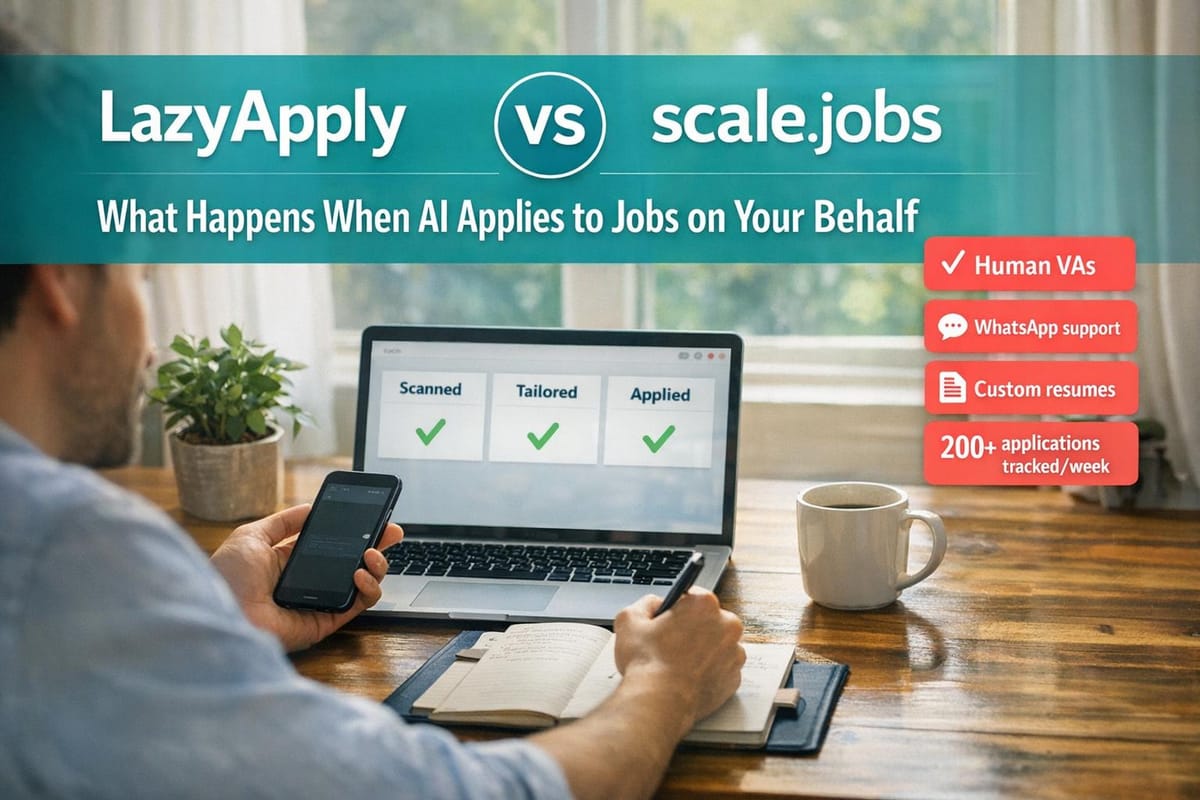
Automate Your Job Search Through AI Agent Ft. Jobright AI | Find Jobs - Custom Resume - Auto Apply
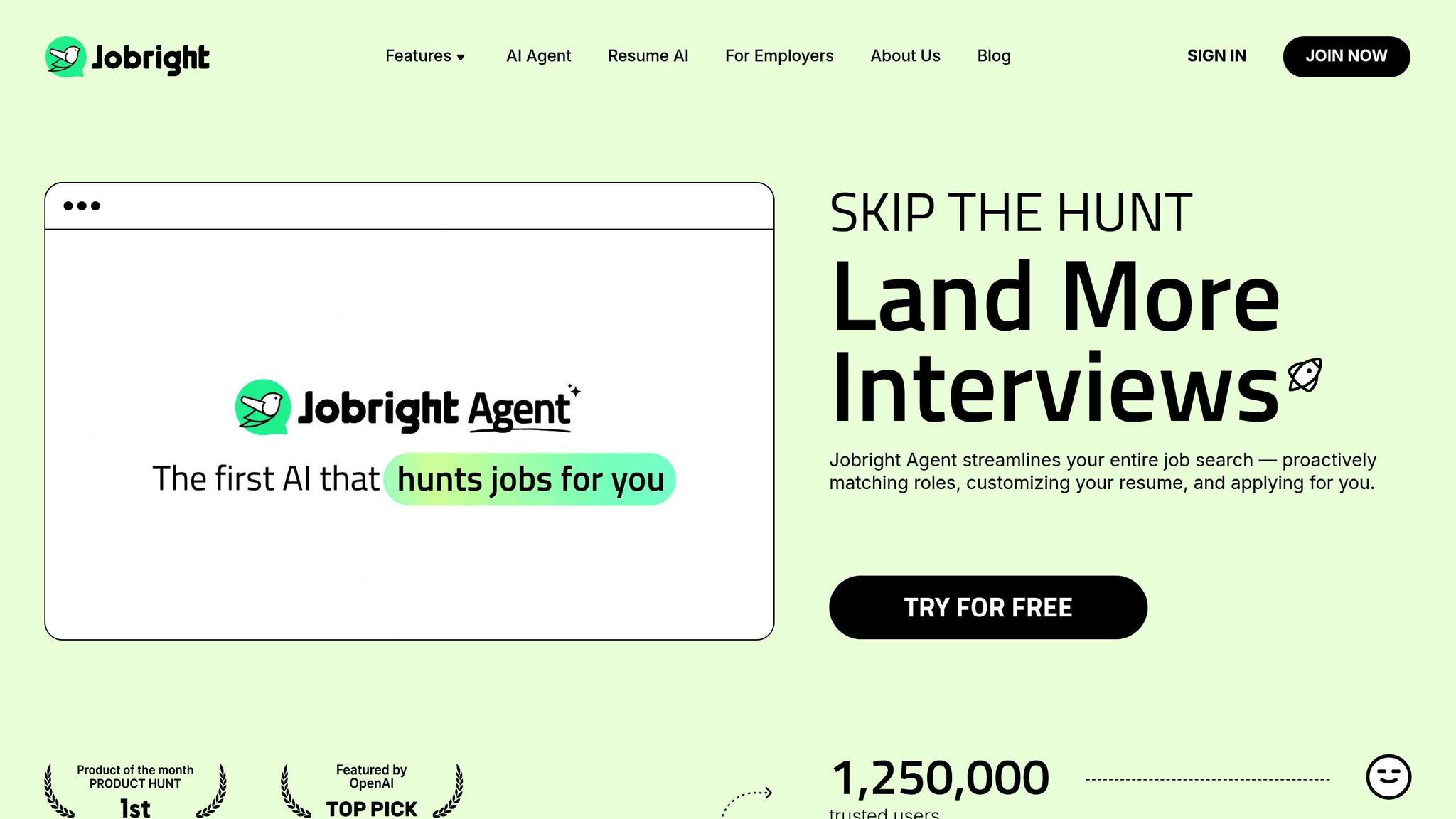
How AI Handles Job Applications for You
AI-based tools for job applications simplify the process into three core steps: scanning job boards for positions that align with your profile, tailoring your resume and cover letter for each role, and tracking the progress of your applications. This system operates automatically, saving you from repetitive tasks. Let’s dive into how AI personalizes your job materials and keeps tabs on your applications.
Customizing Resumes and Cover Letters
AI begins by examining the job description, extracting important keywords, required skills, and qualifications the employer is seeking to optimize for applicant tracking systems. For instance, if a job posting highlights project management, the AI will prioritize your project management experience, moving it to the top of your resume and tweaking your professional summary to reflect the employer's language.
Cover letters receive the same level of attention. AI crafts tailored narratives by linking the job’s key requirements to your past achievements. It might say something like, "Your need for a senior analyst with SQL expertise aligns with my three years of managing data pipelines at [Company]." This approach ensures every document feels uniquely written, without requiring you to lift a finger.
That said, Dan Vykhopen, Founder of Massive, points out a key challenge:
"Filling out applications is easy for AI. Matching is hard."
While AI can shuffle keywords and restructure bullet points, it often struggles with subtleties like balancing technical and leadership skills.
Scanning and Matching Job Postings
AI tools scour popular job boards like LinkedIn, Indeed, and Glassdoor, filtering roles based on criteria such as title, location, salary, and required experience. Each job is assigned a "fit score" through algorithmic keyword matching, prioritizing the most relevant opportunities for application.
Although the volume of applications AI can handle is impressive, the quality can vary. Fully automated tools like LazyApply rely solely on keyword matching, which sometimes leads to errors - applying for jobs that sound similar but demand entirely different skills. Hybrid models, such as scale.jobs, add a layer of human review, where assistants manually verify AI-suggested matches before submitting applications. This step helps minimize mismatched applications and reduces the chances of being flagged as spam.
However, even with these advancements, bots can still make mistakes. Misinterpreting language skills or attaching outdated documents are common errors, often caused by an inability to properly understand form questions. Up next, we’ll explore how AI tracks these applications to complete the process.
Tracking Application Status
Once applications are submitted, AI tools monitor their progress using dashboards or API scraping. Applications are typically categorized into stages like Applied, Under Review, Interview Requested, or Rejected. Some platforms send email alerts for status updates, while others require you to manually check a dashboard.
Users of tools like Resumly report saving 70% of their time on administrative tasks thanks to these tracking features. However, there’s a downside. AI-only tools can miss updates if an employer doesn’t use an applicant tracking system (ATS) or if a recruiter reaches out through an unexpected channel. Hybrid services like scale.jobs address this by employing human assistants who manually log submissions and provide time-stamped screenshots for verification. They also offer real-time WhatsApp notifications, sparing you from waiting for email updates.
If you’re using a fully automated bot, it’s wise to regularly check your sent folder. Bots can sometimes misreport details or skip mandatory fields, resulting in incomplete applications.
Why Job Seekers Use AI for Applications
AI-driven job application tools have become a go-to resource for job seekers, offering benefits like time savings, higher application volume, and better chances of passing automated filters. Recent statistics reveal that 75% of job seekers now rely on AI tools, with users being 77% more likely to land higher-paying positions. These tools aren’t about replacing human judgment - they’re about cutting down on tedious tasks and opening doors to opportunities that might otherwise go unnoticed. Let’s dive into how these tools make the job search process more efficient.
Saving Time on Repetitive Tasks
Applying for jobs manually can take anywhere from 30 to 60 minutes per application, factoring in time spent tailoring resumes, crafting cover letters, and filling out forms. AI tools drastically cut this time, allowing job seekers to focus on more impactful activities like networking or preparing for interviews. Fully automated platforms can reduce application time to mere seconds, while hybrid services that include human review can complete applications within 24 hours.
"The fact that this tool exists suggests that something is broken in the process. I see it as taking back some of the power that's been ceded to the companies over the years." - Julian Joseph, Software Engineer
Applying to More Jobs Faster
In today’s competitive job market, speed is critical. Candidates who apply within 24 hours of a job posting are 2.5 times more likely to get a response. AI tools make this possible by enabling users to submit applications at scale. For example, a 2024 case study highlighted how Sarah, a mid-level product manager, used Resumly's auto-apply feature to send out 80 applications in just three hours - an impressive rate of 30 applications per hour. This effort led to 12 interview requests within 48 hours, translating to a 15% success rate. Fully automated tools like LazyApply can handle over 150 applications daily, while hybrid services like scale.jobs focus on quality, capping submissions at around 30 per day to avoid triggering bot detection systems.
Beating ATS Filters
AI tools don’t just save time and boost volume - they also fine-tune resumes to navigate Applicant Tracking Systems (ATS). These systems often reject up to 60% of resumes due to formatting issues or missing keywords. AI tools address this by analyzing job descriptions, identifying key terms, and restructuring resumes to align with ATS requirements. Research shows that AI-optimized resumes significantly improve the chances of passing these filters, even in highly competitive industries.
Problems with Fully Automated AI Applications
AI tools may promise speed and convenience, but relying entirely on automation during your job search can backfire. While the idea of submitting hundreds of applications with a single click sounds appealing, it often sacrifices accuracy, personalization, and even your professional credibility.
Generic Applications That Feel Impersonal
One of the biggest issues with automated tools is their tendency to produce generic, robotic applications that fail to connect with hiring managers. A March 2024 Business Insider experiment with LazyApply revealed troubling results: the tool frequently misreported personal details and reused outdated cover letters across multiple employers.
Beyond factual errors, these automated applications often lack the personal touch that makes candidates stand out. Instead of crafting tailored content, AI systems focus on artificial polish, leaving out the specific examples and authentic voice that resonate with recruiters. This has led to what experts call a "crisis of trust" in hiring. Tomas Chamorro-Premuzic, author and professor, explains:
"Rather than improving the identification of high performers, AI has enabled the mass production of artificially polished candidates who merely look great."
Such inaccuracies not only hurt your chances of making a strong impression but also increase the likelihood of being flagged as automated.
Risk of Being Flagged as a Bot
Recruiters and employers are becoming more skilled at identifying automated applications, and the consequences can be damaging. Josh Bersin, CEO of the Josh Bersin Company, highlights the risks:
"Some of these tools are really sophisticated. They could identify you as a spammer."
Automated submissions often raise red flags due to their speed and uniformity. For instance, applications sent out in seconds or containing mismatched details can signal bot activity. Tools that allow users to submit up to 750 applications per day only amplify the problem, as applicant tracking systems (ATS) are designed to detect and filter out spam-like behavior.
When your application gets flagged, not only do you risk being ignored, but you also lose the opportunity to showcase your genuine interest and qualifications.
Missing Opportunities to Shine
Over-relying on automation can mean passing up chances to tailor your applications to roles where you’re a perfect fit. Take the case of Julian Joseph, who used LazyApply in late 2023 to submit 5,000 applications. Despite the volume, he only secured 20 interviews - a far lower success rate than if he had taken the time to customize his approach. The bot even applied for irrelevant positions, such as sales roles, because it misinterpreted the keyword "Salesforce" in his DevOps experience.
Even with advanced automation, personal connections remain crucial in hiring. About one-third of all hires are still made through referrals, and automated systems can’t replicate the value of networking or genuine effort. In a competitive market where nearly 200 applications are needed for a single job offer, focusing on quality over quantity is essential. Tailored applications that reflect your research, enthusiasm, and alignment with a company’s needs will always stand out more than mass-produced submissions.
AI-Only Tools vs scale.jobs' Human-AI Approach
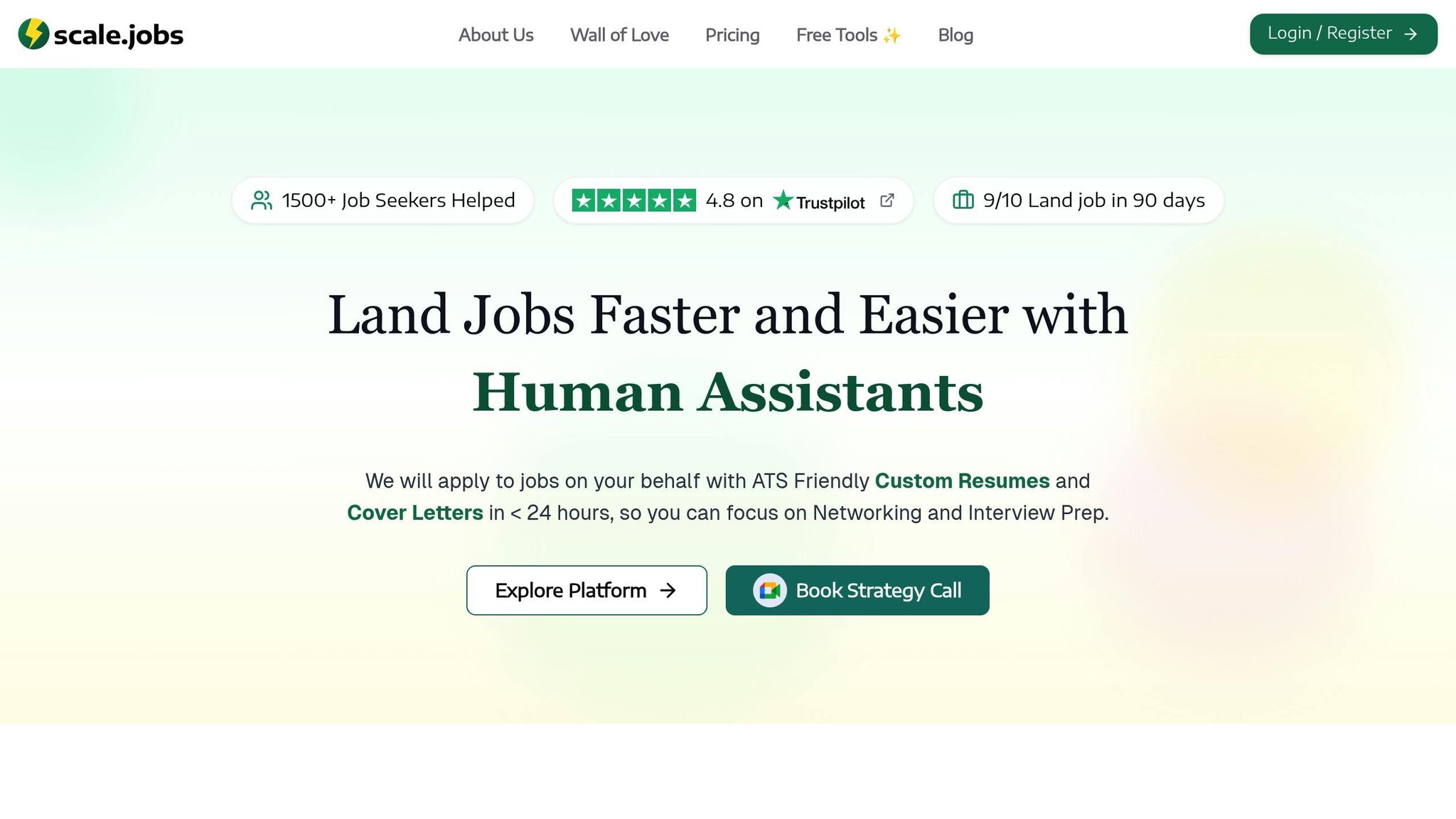
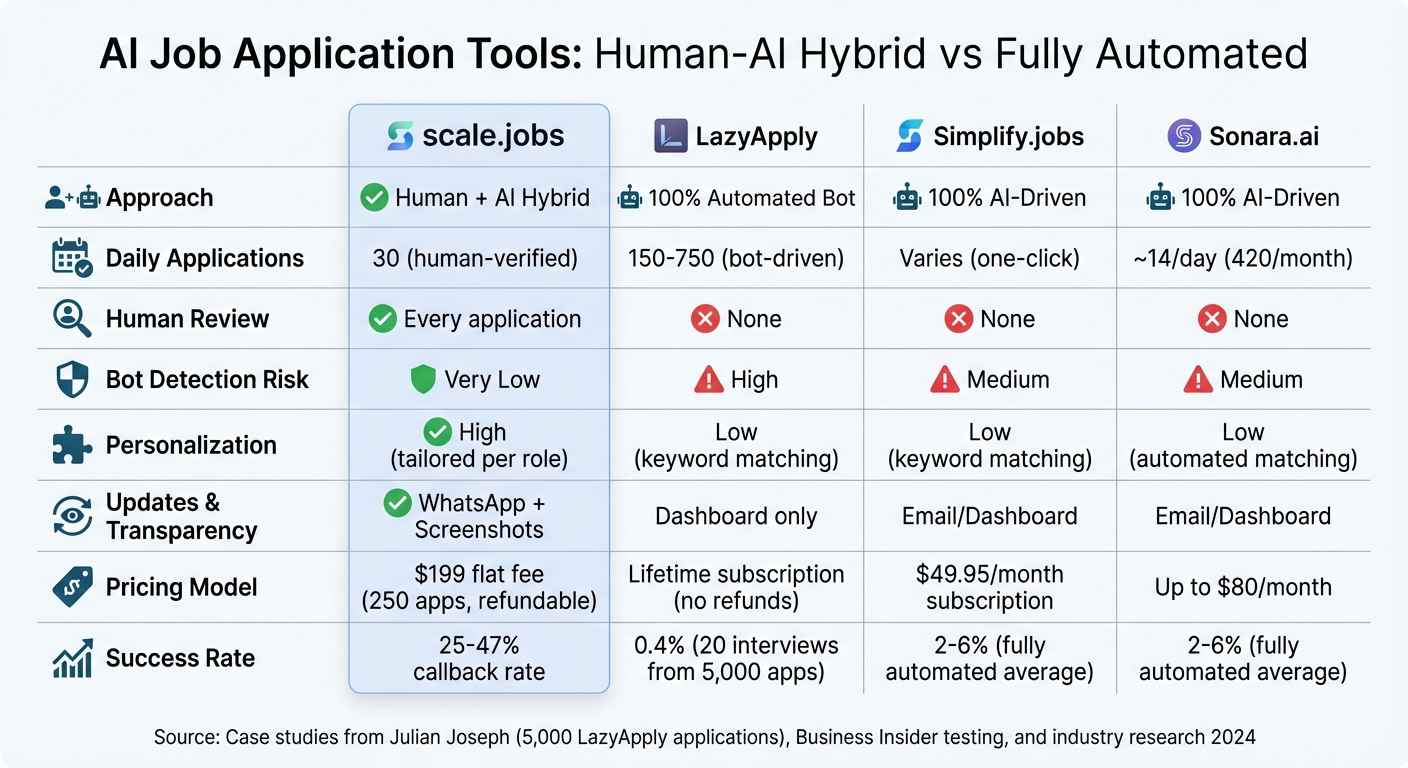
AI Job Application Tools Comparison: Scale.jobs vs Automated Platforms
Fully automated tools might promise to flood the job market with your resume, but speed without attention to detail often leads to poor results. Instead of relying solely on AI, a balanced approach that combines automation with human judgment is far more effective. That’s the principle behind scale.jobs: leveraging AI for routine tasks while trained human assistants carefully review every application before submission.
This hybrid approach offers three distinct advantages. First, human assistants catch mistakes that bots often miss - like claiming proficiency in a language you don’t speak or attaching an outdated cover letter. Second, manual reviews significantly reduce the risk of spam flags, which are common with bulk bot submissions. Third, you get real-time updates via WhatsApp and proof-of-work screenshots, offering transparency that generic dashboards can’t match.
Below, we’ll explore how scale.jobs outshines AI-only platforms and other job search automation tools. Then, we’ll compare scale.jobs with top competitors to show why its human-AI hybrid model delivers better results.
LazyApply vs scale.jobs: Why Human Oversight Matters
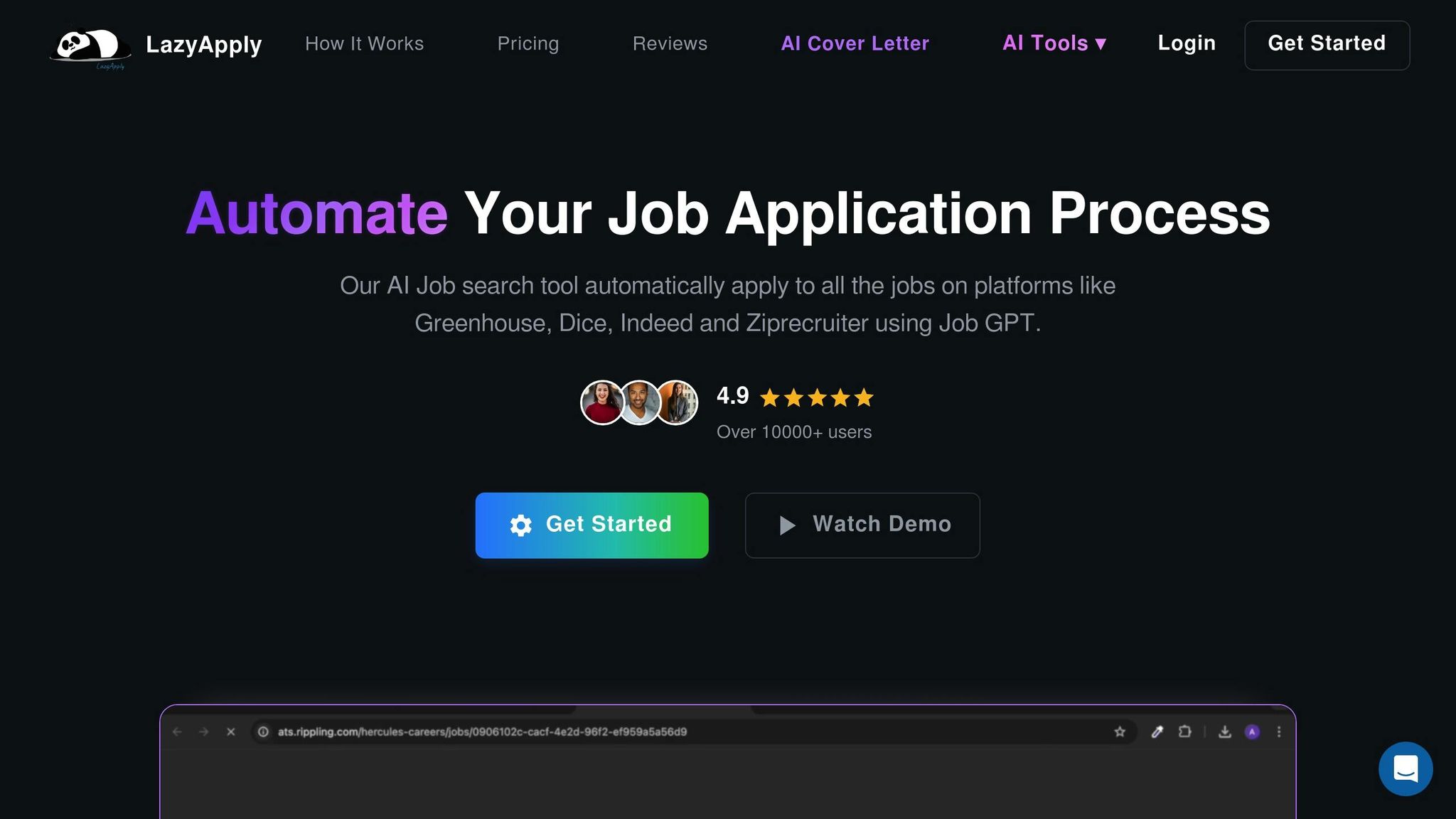
LazyApply markets itself as a time-saving tool, submitting up to 750 applications daily through browser automation. However, this speed often comes at a cost. For example, in July 2024, software engineer Julian Joseph used LazyApply to send out 5,000 applications. While he landed 20 interviews, this represented just a 0.4% success rate - far worse than the 20 interviews he had previously secured from 200–300 carefully tailored applications. In addition, the bot mistakenly applied him to unrelated roles.
Similarly, in March 2024, Business Insider correspondent Aki Ito tested LazyApply and found glaring errors. The bot incorrectly listed her as African American, claimed she was conversational in Spanish, and attached a three-year-old cover letter to 27 different applications, including one to The Boston Globe. These examples illustrate the shortcomings of an unverified, fully automated process.
In contrast, scale.jobs limits submissions to 30 per day, with each application reviewed by a trained assistant. This careful process eliminates errors, minimizes spam risks, and operates on a refundable flat-fee pricing model - avoiding the pitfalls of long-term subscriptions.
| Feature | scale.jobs | LazyApply |
|---|---|---|
| Submission Method | Reviewed by human assistants | Automated bot/browser extension |
| Daily Application Limit | 30 (human-verified) | 150–750 (bot-driven) |
| Bot Flagging Risk | Very low | High |
| Error Correction | Human review ensures accuracy | None - bot submits as-is |
| Transparency | WhatsApp updates + screenshots | Dashboard only |
| Pricing | One-time flat fee (refundable) | Lifetime subscription (no refunds) |
This comparison underscores how human oversight at scale.jobs eliminates costly errors caused by automation alone.
Is Simplify.jobs Worth It? Reviews & Alternatives
Simplify.jobs offers a browser extension that streamlines application forms and tracks your progress. While it speeds up data entry, it relies entirely on AI without any verification. This means errors can easily slip through, as there’s no mechanism to ensure your resume aligns with job requirements.
Another issue is personalization. Simplify.jobs prioritizes speed with one-click applications, often sacrificing the nuanced tailoring that makes applications stand out. As Dan Vykhopen, Founder of Massive, explains:
"Filling out applications is easy for AI. Matching is hard."
Scale.jobs takes a different approach by assigning a dedicated assistant who customizes each resume and cover letter for the specific role. This method combines AI’s ability to optimize keywords with the contextual judgment of a human, supported by real-time WhatsApp communication.
| Feature | scale.jobs | Simplify.jobs |
|---|---|---|
| Primary Model | Human + AI hybrid | 100% AI-driven |
| Application Review | Human-verified | No human review |
| Personalization | High (tailored per role) | Low (keyword matching only) |
| Support Channel | Real-time WhatsApp | Email/dashboard |
| Pricing | Flat fee (refundable) | Monthly subscription |
By combining human verification with AI, scale.jobs ensures your applications reflect your unique qualifications.
Stop Using Sonara.ai Until You Read This
When it comes to balancing automation with precision, scale.jobs offers a standout solution.
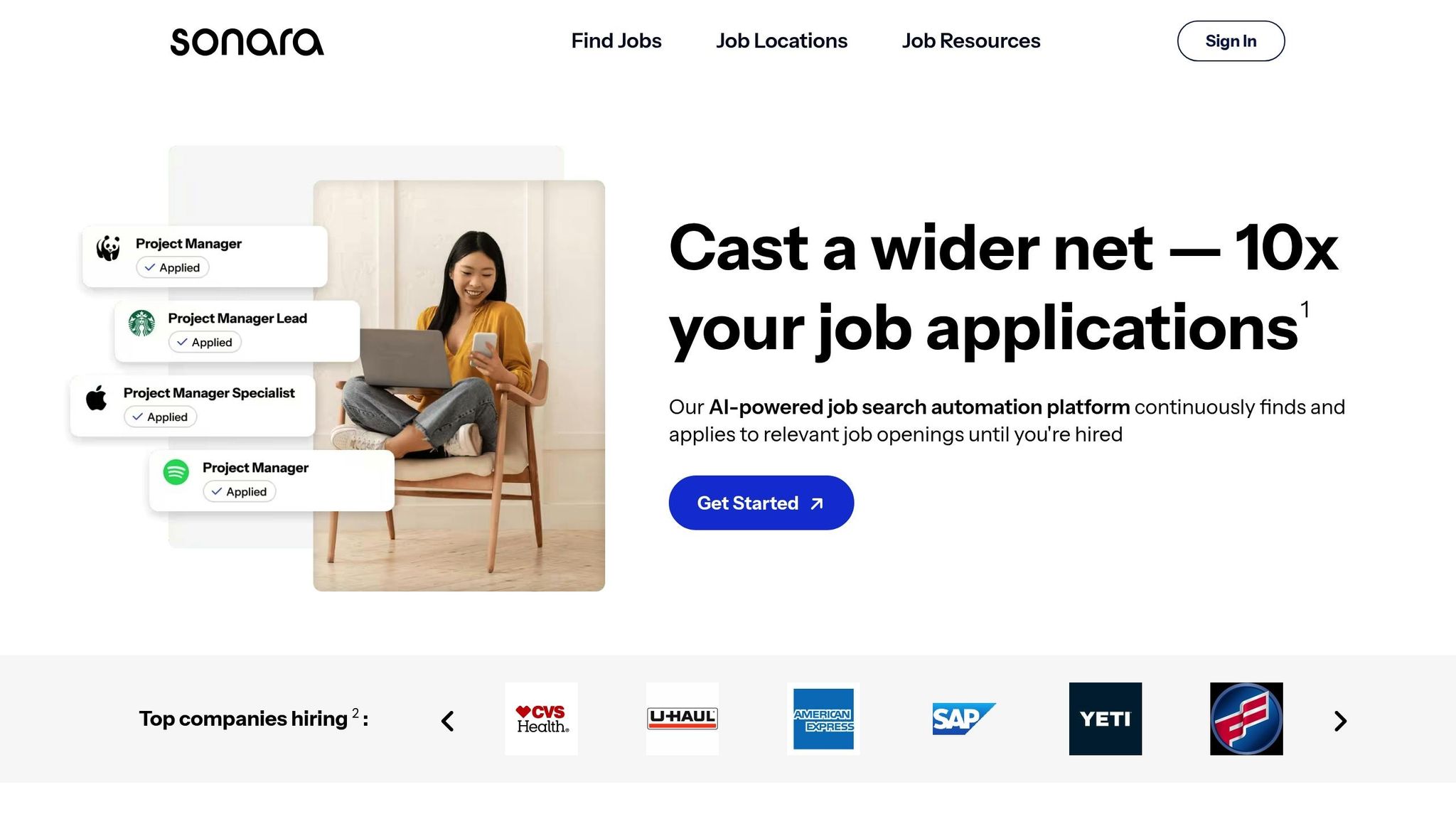
Sonara.ai charges up to $80 per month to automate around 420 applications (approximately 14 per day). It scans job boards, matches your profile to openings, and submits applications without human oversight. While convenient, this approach shares the same risks as other fully automated tools: generic applications, potential spam flags, and limited transparency. Users have even reported that the bot can "hallucinate" details - like inventing language skills or misrepresenting work history - potentially damaging your professional reputation.
Scale.jobs, on the other hand, charges a one-time fee starting at $199 for 250 applications, all carefully reviewed by human assistants. Along with personalized resume and cover letter customization, the service includes manual form completion and proof-of-work screenshots, offering full transparency. Plus, unused credits are refundable if you secure a job earlier than expected.
| Feature | scale.jobs | Sonara.ai |
|---|---|---|
| Primary Model | Human + AI hybrid | 100% AI-driven |
| Monthly Cost | N/A (one-time flat fee) | Up to $80/month |
| Application Limit | 30/day (human-verified) | ~14/day (420/month) |
| Verification | Human review for every application | None - bot-driven |
| Updates | Real-time WhatsApp + screenshots | Email/dashboard |
| Refunds | Pro-rata refundable | No refunds |
With human oversight, scale.jobs avoids the pitfalls of AI errors that could harm your reputation.
Jobscan.co vs scale.jobs: Scanning vs Full-Service Applications
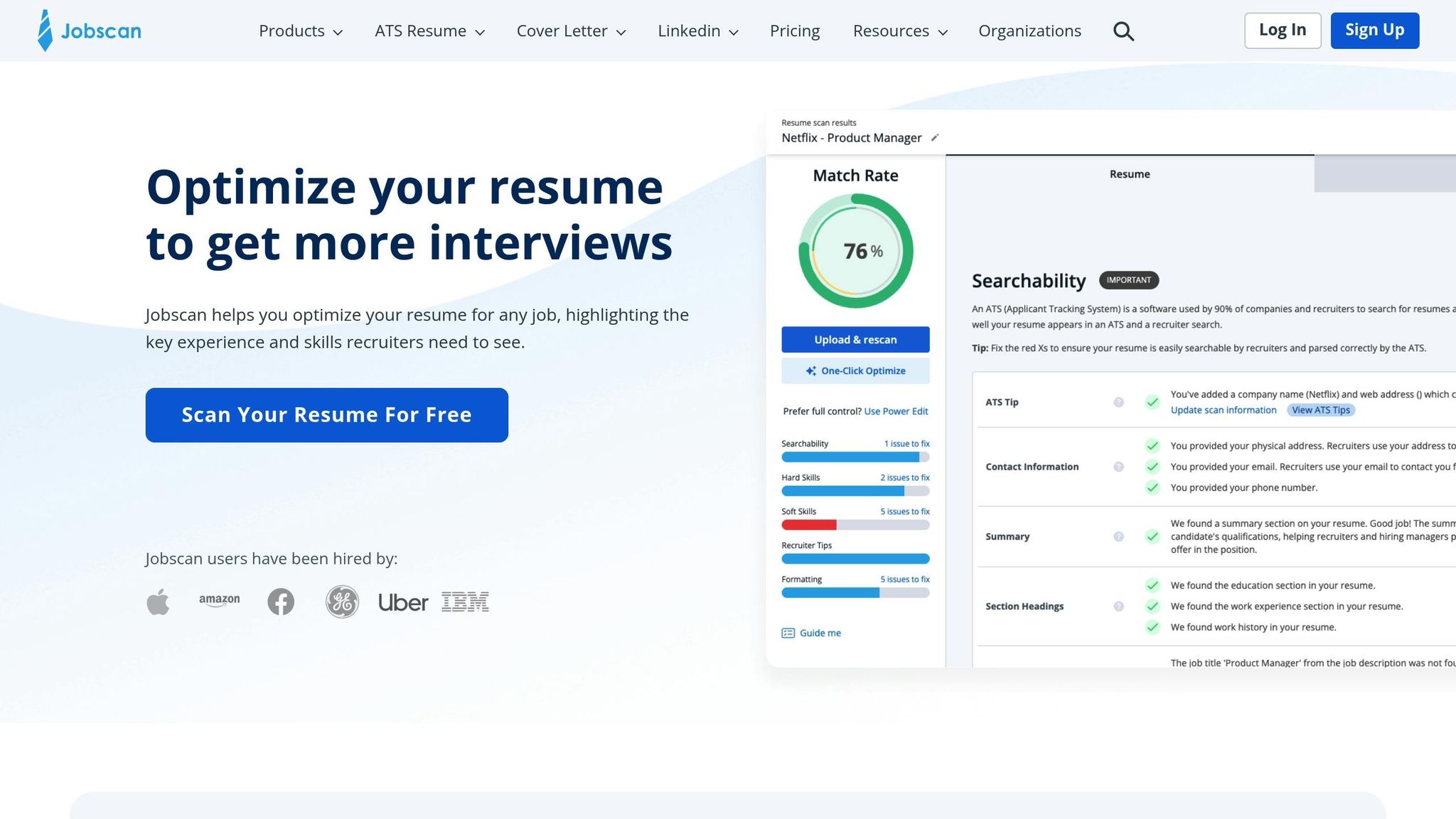
Jobscan.co specializes in ATS optimization, scanning your resume against job descriptions to suggest keyword improvements. However, it doesn’t handle the actual application process, leaving you to customize and submit applications on your own. At $49.95 per month, you’re essentially paying for software guidance without hands-on support.
Scale.jobs goes beyond keyword scanning by offering a full-service application process. A dedicated human assistant rewrites your resume and cover letter for each job, ensuring every submission is tailored and complete. This means you’re not just getting feedback - you’re receiving a fully managed application service without the hassle of monthly subscriptions.
| Feature | scale.jobs | Jobscan.co |
|---|---|---|
| Core Function | Full-service application management | ATS keyword scanning/optimization |
| Application Submission | Human-reviewed | User submits independently |
| Resume Customization | Tailored by human assistant | User customizes based on scan results |
| Support | Real-time WhatsApp | Self-service (email support) |
| Pricing | One-time flat fee | $49.95/month subscription |
Scale.jobs turns ATS optimization into a complete, personalized application process.
Tealhq.com vs scale.jobs: Why You Should Switch to Human-Powered Apply
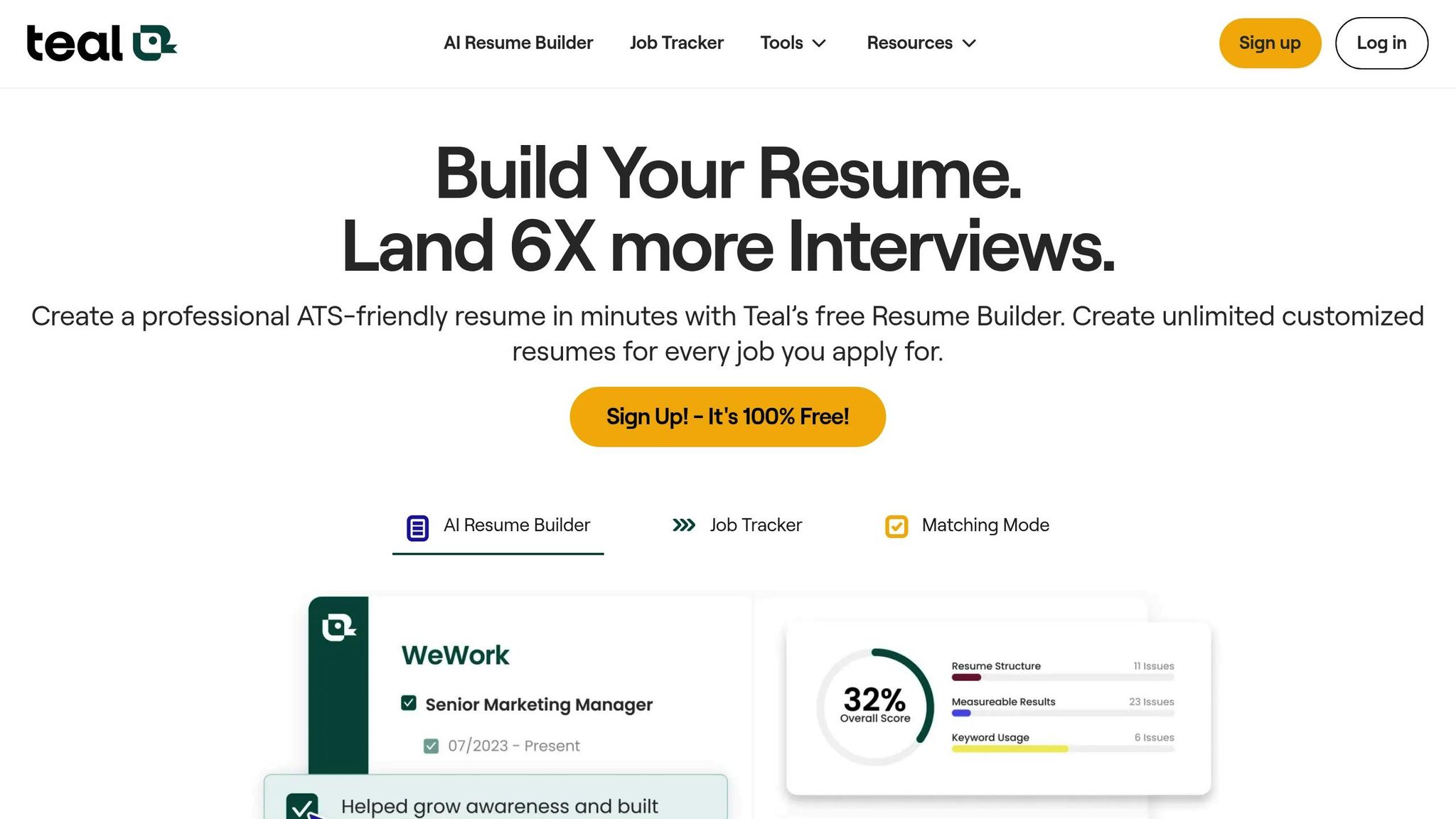
Tealhq.com offers tools for job tracking, resume building, and LinkedIn optimization, with pricing ranging from $9 to $49 per month. While helpful for organizing your job search, it doesn’t handle application submissions. Instead, you’re left to do the heavy lifting yourself.
Scale.jobs takes that burden off your plate. A dedicated human assistant manages form-filling, document customization, and submission tracking, freeing you to focus on networking and interview preparation. Additionally, scale.jobs provides real-time WhatsApp updates and proof-of-work screenshots, giving you more transparency than Tealhq.com's dashboard.
With scale.jobs, the focus shifts from self-service tools to completed applications, saving you time and effort.
How to Use AI and Human Help Together
Smart job seekers know the power of blending AI tools with human insight. While AI can handle repetitive tasks and streamline your efforts, the human touch is essential for networking, interview preparation, and crafting applications that stand out. Start by building a strong foundation using free tools, and then let automation assist with routine tasks while you focus on landing the roles you truly want.
Use Free Tools to Build a Strong Foundation
Kick things off with free ATS (Applicant Tracking System) checkers to scan your resume for keyword gaps and formatting issues. These tools help ensure your application won’t be filtered out before it even reaches a recruiter. Aim for a 70% keyword match to improve your chances of passing initial screenings. Next, use free tracking tools to stay organized - monitor job postings, deadlines, and follow-ups. This system saves time and energy, allowing you to focus on applications that matter most.
Automate Routine Applications, Personalize High-Value Submissions
AI tools can be a game-changer for handling volume. For example, platforms like LazyApply or LoopCV can automatically apply to 20–50 jobs daily that align with your basic qualifications. These are ideal for roles that aren’t necessarily your dream jobs but still fit your skill set.
However, for specialized positions or companies you’re passionate about, invest your personal effort. Customize your applications, tailor your cover letters, and research the company thoroughly. Hybrid approaches that combine AI with human oversight tend to yield better results - callback rates of 25–47%, compared to just 2–6% for fully automated systems. Scale.jobs, for instance, limits submissions to 30 per day and incorporates human review to avoid bot detection while ensuring each application is polished and accurate.
Always Double-Check AI-Generated Content
While AI can help optimize your resume and create cover letters, it’s not perfect. Mistakes or fabricated details can slip through, so it’s crucial to review everything carefully. Make sure all bullet points and cover letters reflect your real experience. As career influencer Gabrielle Judge points out:
"If you're only using AI as your job-seeking strategy, you could be missing out on some really cool dream roles you might find if you did some manual searching."
Keep in mind that recruiters often spend just 6 seconds scanning a resume. Even small errors can hurt your chances, so update your profiles and documents regularly to ensure the AI works with accurate, up-to-date information. This combination of AI efficiency and human attention to detail can make all the difference in your job search.
Conclusion: Balancing AI Speed with Human Quality
Speed alone isn’t enough to secure interviews. While tools like LazyApply can blast out 1,000 applications in a single night, users often report success rates as low as 0.5%. On the other hand, candidates who apply within 24 hours of a job posting are 2.5 times more likely to get a response - but only if their applications are compelling. The real challenge is combining the efficiency of AI with the precision of human oversight to avoid bot detection, eliminate errors, and create applications that genuinely connect with recruiters. This balance is the key to standing out in today’s competitive job market.
As explored earlier, a hybrid model of AI and human effort ensures accuracy and personalization. Scale.jobs exemplifies this approach by having human assistants manually submit applications to avoid spam filters while utilizing AI to fine-tune keywords and tailor documents. This process is completed in under 24 hours, ensuring your application is timely and polished. Plus, with real-time WhatsApp updates and time-stamped proof-of-work screenshots, you gain transparency that automated tools simply cannot provide. With a 93% placement rate within three months and flat-fee pricing starting at $199 for 250 applications, Scale.jobs focuses on delivering results rather than locking users into endless subscriptions.
Career coach Emily Lamia underscores the importance of this balance:
"The biggest challenge for job seekers is that you see a great job, but you see it at the same time as 5 million other people... how you make the right connections... is how people end up in positions that are really fulfilling."
AI can handle the heavy lifting, but human expertise ensures your unique story shines through. Whether you’re navigating visa complexities, switching industries, or targeting a specific company, this hybrid model helps you save over 20 hours per week without sacrificing quality.
FAQs
How does AI make my job application feel personalized instead of generic?
AI tools refine your job application by carefully analyzing the details of each job description and adjusting your resume and cover letter accordingly. They focus on optimizing keywords, emphasizing key skills, and ensuring your documents align perfectly with the role you're targeting.
To make applications even more personalized, some platforms blend AI with human expertise. This approach allows for the inclusion of storytelling elements and unique personal details, helping your application stand out while still maintaining a polished, professional tone. Striking this balance enhances your application's relevance and boosts your chances of catching a recruiter’s attention.
What are the downsides of relying solely on AI for job applications?
Relying solely on AI for job applications comes with its share of challenges. Automated tools often produce applications that feel generic or lack the necessary tailoring to impress hiring managers. This can make it harder for you to stand out in a competitive job market. Plus, AI tools can sometimes misread job descriptions, resulting in errors or irrelevant submissions - mistakes that could hurt your credibility.
Another concern is how employers perceive AI-generated applications. These submissions may come across as impersonal or even spam-like, which could negatively affect your professional reputation. Overusing automation might also lead to a scattershot approach, making it difficult to keep track of promising opportunities or follow up on applications effectively.
To navigate these challenges, a balanced strategy works best. Combine the speed and convenience of AI tools with your own insight and attention to detail. This way, your applications will be accurate, thoughtfully personalized, and tailored to the specific requirements of each role - giving you a stronger shot at landing the job.
How can I effectively use AI in my job search without losing the human touch?
Using AI in your job search can be a game-changer, especially when it comes to automating time-consuming tasks like tailoring resumes, optimizing keywords, and keeping track of applications. These tools are particularly effective at boosting your chances of getting through applicant tracking systems (ATS). However, they often overlook the personal touches that make your application stand out.
To make the most of AI, try using platforms that merge advanced technology with human expertise. Hybrid services, for instance, can take AI-generated resumes or cover letters and refine them to better reflect your unique skills and personal brand. Staying actively involved in reviewing and fine-tuning what AI produces ensures your applications remain polished and authentic. By combining the efficiency of AI with the creativity and judgment of human input, you can create applications that are both compelling and personal.