How to Use Alumni Events for Job Networking
Use alumni events to uncover hidden job leads: prepare targeted intros, ask insightful questions, follow up quickly, and build lasting alumni relationships.

Alumni events can be a game-changer for job seekers. They provide instant connections through shared educational experiences, making it easier to build trust and access job opportunities that might not be publicly listed. Here’s how to make the most of them:
- Why Alumni Events Work: Shared school ties create trust, making alumni more likely to recommend you or share insider tips about job openings.
- Event Types: Career fairs, regional mixers, industry panels, and even casual social events can all be leveraged for networking.
- Preparation Tips: Research attendees and companies, set clear goals, and practice a concise introduction. Update your LinkedIn profile with AI and resume to reflect your current goals.
- During Events: Start conversations using shared experiences, ask thoughtful questions, and take notes on key details.
- Follow-Up: Send personalized messages within 24-48 hours, focusing on learning more rather than directly asking for jobs.
- Long-Term Networking: Stay in touch with alumni contacts through LinkedIn, email, or casual updates. Some relationships may even lead to mentorship or job referrals.
Career Foundations: Leveraging Alumni Networks
What Alumni Events Offer Job Seekers
Types of Alumni Networking Events and Their Benefits
Alumni events - whether in-person or virtual - create an instant connection through a shared educational experience, making introductions and building relationships much easier. These events can take many forms, including career fairs, industry panels, regional mixers, tailgates, and reunions. Unlike typical networking events, alumni gatherings leverage your common background to help break the ice and build trust quickly.
When alumni recommend you, it’s like getting a personal endorsement. These referrals often carry weight with hiring managers, offering insider knowledge about a company’s priorities and culture. This can significantly shorten the journey from introduction to interview. Alumni can also provide valuable insights into challenges within a department or organization - details you won’t find on public job boards.
Types of Alumni Events
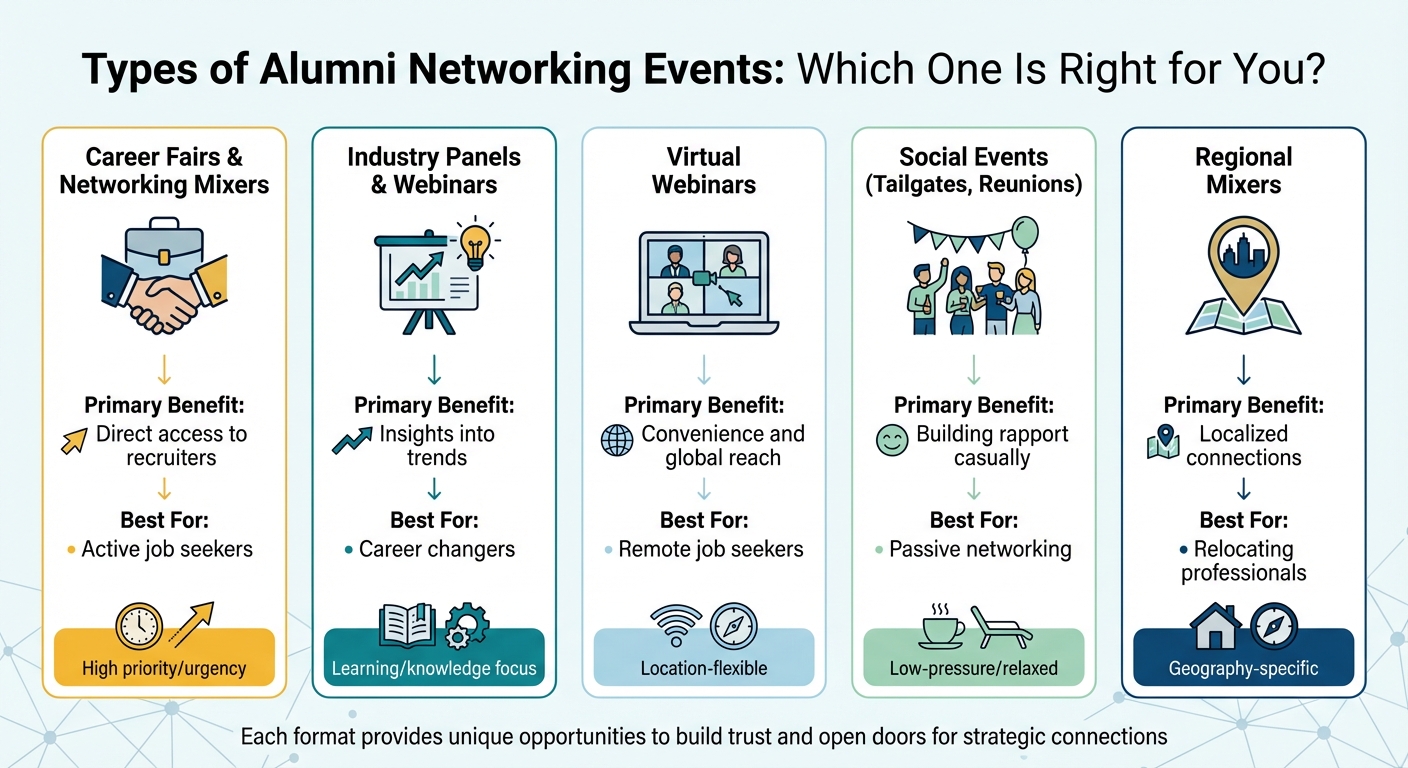
Different alumni events are designed for various networking goals, so knowing what to expect can help you prepare. Here’s a breakdown of common event types and their benefits:
- Career fairs and networking mixers: These events are tailored for professional connections, giving you direct access to alumni who are hiring or connected to recruiters. They’re perfect if you’re actively job hunting and want to make a strong impression.
- Regional meetups and alumni chapter events: Held in specific cities, these gatherings are great for building local connections. If you’re relocating or seeking job opportunities in a particular area, these casual events - often cocktail hours or informal meetups - can be invaluable.
- Industry panels and virtual webinars: These events provide insights into sector trends and are particularly useful if you’re considering a career change. They help you understand the landscape of a new field before diving in.
- Social events: Tailgates, fraternity or sorority reunions, and homecoming weekends may seem purely recreational, but they’re excellent for relaxed, low-pressure networking. You can naturally bring up your career goals while bonding over shared memories and school pride.
| Event Type | Primary Benefit | Best For |
|---|---|---|
| Career Fairs | Direct access to recruiters | Active job seekers |
| Industry Panels | Insights into trends | Career changers |
| Virtual Webinars | Convenience and global reach | Remote job seekers |
| Social Events | Building rapport casually | Passive networking |
| Regional Mixers | Localized connections | Relocating professionals |
Each of these formats provides a unique way to build trust with alumni, opening doors for meaningful and strategic connections.
Why Alumni Connections Work for Job Hunting
Alumni networks often grant access to opportunities that never make it to platforms like LinkedIn or Indeed. Many hiring managers prefer filling roles through referrals, and a recommendation from a fellow alum carries significant weight. It signals that you’re part of the same community, not just another applicant trying to stand out.
This advantage becomes even more critical during challenging transitions, such as starting your career, recovering from a layoff, or navigating visa requirements like H-1B or OPT. Alumni who have faced similar situations can offer tailored advice, share resources, and even connect you with employers who understand your circumstances.
A key strategy is to focus on gathering information rather than directly asking for a job. Instead of inquiring about open positions, ask about the challenges their department is facing or what priorities the hiring manager might have. This approach helps you tailor your application to address specific needs, making you a more appealing candidate. Plus, it sets the stage for a thoughtful and impactful follow-up.
Using Scale.jobs to Track Alumni Connections
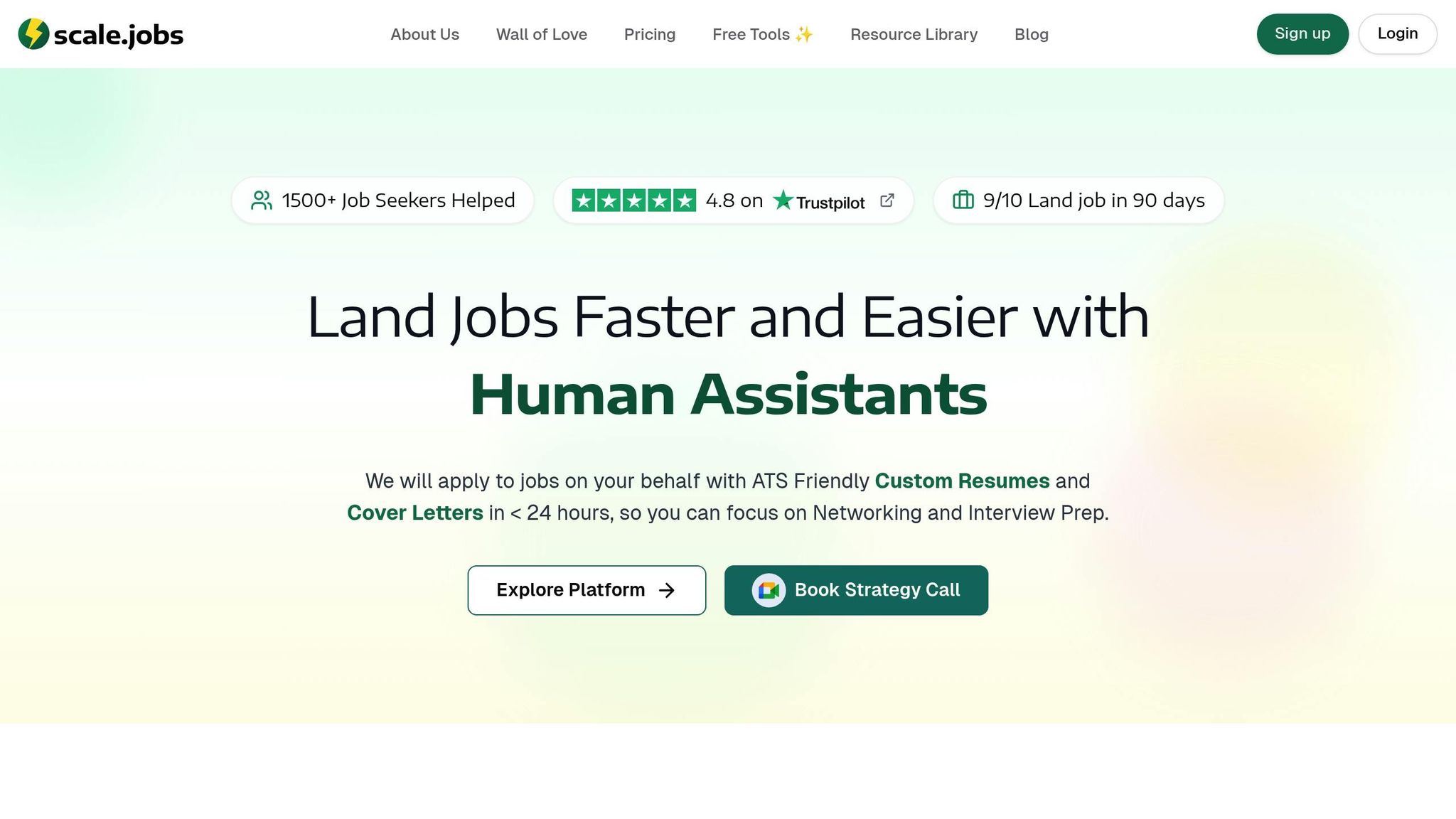
Meeting alumni at events is just the first step - the real impact comes from staying organized and following up effectively. Scale.jobs offers tools to help you manage your networking efforts, from tracking contact details and conversation notes to setting follow-up reminders. With everything in one place, you can stay on top of your connections without the hassle of manual tracking.
The platform also lets you record which alumni offered introductions, suggested informational interviews, or mentioned hiring opportunities. When someone shares that their company is hiring, you can immediately add that lead to your pipeline and schedule a follow-up. While you focus on building relationships at future events, Scale.jobs’ human assistants can handle the time-consuming work of submitting applications, ensuring every opportunity is pursued professionally - without late-night resume edits on your part.
How to Prepare Before the Event
Walking into an alumni event without preparation can mean missed opportunities. With a little groundwork, you can turn a casual gathering into a powerful networking session, helping you stand out and create connections that may lead to real job prospects.
Research Attendees and Companies
Start by diving into the event agenda, speaker lineup, and any attendee lists provided by your alumni office. Use LinkedIn to explore the career paths of speakers and panelists, their roles, and any recent updates about their companies. If company representatives or employer booths are part of the event, research their hiring trends or remote work policies to craft thoughtful, relevant questions.
Your alumni directory is another goldmine. Identify attendees working at companies you’re targeting or in industries you’re interested in. Look for shared experiences - like mutual connections, volunteer work, sports, or student organizations you both participated in. These small details make for easy conversation starters and help you stand out from others who might only focus on job hunting.
| Research Category | Specific Actions | Goal |
|---|---|---|
| Attendees | Review LinkedIn profiles and speaker bios | Find shared interests and career highlights |
| Companies | Look into hiring trends and workplace policies | Prepare tailored questions about roles and culture |
| Agenda | Study session topics and event schedule | Decide which sessions or mixers to attend |
| Personal Brand | Update your LinkedIn profile and resume | Ensure your materials reflect your goals and research |
Set Clear Networking Goals
Before the event, define what you want to achieve. Are you looking for insights, introductions, or a chance to build trust? For instance, if you’ve recently been laid off, aim to meet three alumni who can share how their companies handle mid-career hires. If you’re a recent graduate, focus on understanding entry-level hiring timelines and the skills hiring managers value most.
For career changers, your priority might be learning about challenges in your new field and which of your current skills are transferable. Remember, the first step is gathering information - understanding a department's challenges or a hiring manager's needs will help you tailor your approach later. Your ultimate goal? Finding alumni who can vouch for your abilities, which often opens doors faster than sending cold applications.
| Networking Goal Type | Example Objective | Desired Outcome |
|---|---|---|
| Information | Understand company challenges | Use insights to impress hiring managers |
| Access | Secure an introduction to a decision-maker | Bypass HR hurdles |
| Trust | Gain an alum’s endorsement of your skills | Build credibility quickly |
| Mentorship | Connect with an alum in a desired role | Get actionable advice for career transitions |
Having clear goals ensures your introductions and questions are purposeful.
Prepare Your Introduction and Questions
Your introduction should be concise - 30 seconds is all you need. Include your name, graduation year, current role or status, and what you’re aiming for. Skip the full rundown of your work history; save those details for follow-up questions. The goal is to spark interest and encourage conversation, not deliver a monologue.
Have 3–5 thoughtful questions ready to keep conversations engaging. Examples include: “What challenges is your team currently facing?” or “How has your company’s remote work strategy evolved this year?” Asking about company culture, career progression, or what makes someone excel in a specific role shows genuine curiosity and often leads to valuable insights. Write these questions down and keep them handy on your phone so you’re never caught off guard.
Once your introduction and questions are polished, it’s time to ensure your professional materials are just as sharp.
Update Your Resume and LinkedIn Profile
Make sure your LinkedIn profile is up-to-date, highlighting your current role and any shared alumni connections. Many attendees will look you up during or after the event, so your profile should emphasize achievements instead of just listing job duties. If you’re aiming for remote work, highlight relevant skills in the skills section to catch attention.
Your resume also needs to be current and optimized for applicant tracking systems (ATS). Alumni referrals often fast-track your application, but only if your resume passes automated filters. Tools like Scale.jobs' free ATS checker can help ensure your resume is formatted correctly. Their ATS-compliant resume builder is a great resource for avoiding common mistakes that could disqualify you.
To make follow-ups seamless, prepare a "referral kit" that includes your updated resume, a list of key accomplishments, and a draft referral message. The easier you make it for contacts to help you, the more likely they are to follow through. Having everything ready means you’ll never be scrambling when someone says, “Send me your resume.”
How to Network During the Event
Preparation is everything. Use the research you’ve done beforehand to guide your interactions. The goal isn’t to endlessly promote yourself - it’s about forming connections and gathering insights that can refine your job search strategy.
Starting Conversations with Alumni
Alumni events are perfect for meeting people, and breaking the ice can be simple if you use the HHH method: start with Hi (introduce yourself), move to How are you? (a bit of small talk), and then ask about the Host or their connection to the school. For instance, you could say, "Hi, I’m Sarah, Class of 2024. How are you? How do you know the alumni office?" This straightforward approach takes the stress out of starting conversations.
As Molly Beck, founder of MessyBun.com, puts it:
"I promise, if you say hello first, everyone will always say hello back."
Most attendees are there to meet others, so don’t hesitate to approach groups. Wait for a natural pause, introduce yourself, and join in. If you notice someone standing alone, invite them into your conversation - it’s a great way to make meaningful connections.
Keep the LLL rule in mind: stay Lighthearted, Listen actively, and maintain a Light and positive tone. Shared topics like your graduation year, major, or favorite campus spots can make conversations flow naturally. Aim to start these chats in high-traffic spots like near the bar or food table, where people naturally gather.
Once you’ve started conversations, focus on capturing insights and planning your next steps.
Adapting to Different Event Formats
Different events call for different strategies. At panels or Q&A sessions, come prepared with one or two thoughtful questions. Asking something insightful in front of the group shows you’re engaged and leaves a lasting impression on speakers. At career fairs, shift your mindset from “landing a job” to “learning more.” Ask recruiters about their team’s challenges or the skills they value most - this gives you valuable information to craft better applications.
For virtual events, use the chat box to introduce yourself and interact with speakers or attendees. Afterward, follow up on LinkedIn within 24 hours while the conversation is still fresh. At mixers or cocktail hours, aim to move between groups every 10–15 minutes. This keeps your energy up and helps you meet more people without overstaying in one conversation.
| Event Format | Networking Tactic |
|---|---|
| Panels/Q&A | Prepare 1–2 thoughtful questions to ask speakers publicly |
| Career Fairs | Focus on team challenges and key skills instead of just open roles |
| Virtual Events | Use the chat box for introductions; follow up on LinkedIn within 24 hours |
| Mixers/Cocktail Hours | Rotate between groups every 10–15 minutes to maximize your connections |
After engaging in these settings, make sure to document what you’ve learned.
Taking Notes During Conversations
Always carry business cards and a pen, or use your phone’s notes app. Right after each conversation, jot down key details: the person’s name, their role, any job openings they mentioned, or introductions they offered to make. For instance, you might note, "mentioned remote UX role opening in March" or "offered to connect me with their hiring manager." If they give you a business card, use the back to write quick reminders for follow-ups.
To stay organized, use Scale.jobs' tracker to log these details. It helps you keep track of leads, follow-ups, and which connections have resulted in applications or interviews. With this system, you can focus on building relationships while ensuring no opportunity slips through the cracks. Let the tracker handle the logistics so you can prioritize growing your network.
Following Up After the Event
Making connections at an event is just the beginning, but mastering networking strategies is essential for long-term success. The real magic happens when you follow up and turn those introductions into meaningful opportunities. Unfortunately, too many people collect business cards but never take the next step. A timely follow-up can transform a brief conversation into something much more valuable.
Writing Follow-Up Messages
Send a personalized, concise message within 24–48 hours of meeting someone. Start by referencing something specific from your conversation to show you're genuinely interested. For instance: "Hi Sarah, I really enjoyed chatting with you at the mixer about your work at Salesforce. As a fellow Penn State alum ('25) with a background in data analytics, I found your insights into product management inspiring."
From there, state your purpose clearly, like: "I'd love to hear more about your journey into product management." Wrap up with a specific call to action: "Would you have 15 minutes for a quick chat next Tuesday?"
Avoid generic templates - they come across as impersonal and forgettable. If the person mentioned hiring or job openings, acknowledge it, but don’t jump straight into asking for a job. Focus on learning and building trust first.
Asking for Informational Interviews and Referrals
Once you've reconnected, consider requesting an informational interview. This is a great way to gain insights into the company, its culture, or the challenges the team faces. It's often more effective than immediately asking for a referral. Skip reaching out to HR managers directly - they're usually focused on filtering candidates, not engaging in in-depth conversations. Instead, use your alumni connections to get a better sense of the company's internal dynamics.
When you're ready to take the next step, ask for an introduction to the hiring manager. Make it easy for your contact by providing an updated resume and a short summary of why you're interested in the role. This thoughtful approach increases the likelihood they'll be willing to help.
Organizing Your Leads and Applying to Jobs
As your follow-up efforts progress, staying organized is key. Use tools like Scale.jobs' Job Applications Tracker to keep track of every interaction. This tool can help you log details like names, companies, roles discussed, and your next steps, while also providing automated reminders to stay on top of things.
When it’s time to apply, use Scale.jobs' ATS-compliant Resume Builder to create resumes tailored to specific roles. Their Cover Letter Generator can help craft letters that highlight your alumni connection and the insights you've gained from your conversations.
To stay efficient, aim to divide your job search time wisely:
- 40% for networking
- 30% for applications
- 30% for interview preparation
Don’t forget to check your university’s alumni job board regularly - many employers prefer candidates from their alma mater.
Building Long-Term Relationships with Alumni
Staying in Touch with Alumni Contacts
The connections you make at alumni events shouldn’t fade once the event wraps up. Instead, focus on building genuine relationships by offering help and sharing resources, rather than simply asking for favors. Stay visible by engaging with alumni posts on LinkedIn, joining alumni-focused LinkedIn groups, or participating in your school's email listservs. These platforms help you maintain connections beyond the initial one-on-one conversations.
Consider sending brief, thoughtful updates every so often - share an interesting industry article, mention a mutual connection, or simply check in. If you don’t hear back, send a single, polite follow-up within a week. Keep it professional and limit your attempts to two. The idea is to cultivate relationships that can grow over time and benefit both parties.
Finding Mentors and Sponsors Through Alumni Networks
Some of the connections you make at alumni events can naturally evolve into mentorships, offering valuable career guidance. Seek out alumni who are further along in your field - they’ll likely remember what it’s like to be in your position and can provide practical advice. Events like annual reunions, regional mixers, or even fraternity and sorority gatherings are great opportunities to meet potential mentors in relaxed settings where conversations feel more organic.
When reaching out to a potential mentor, come prepared with specific questions. For example, ask about the challenges they face in their industry or the skills their team prioritizes. Avoid directly asking someone to "be your mentor" right away, as it may feel like too big of a commitment. Instead, request a short 15–20 minute informational interview to learn about their career journey. If the relationship grows over time, they might even become a sponsor - someone willing to vouch for you to hiring managers, helping you overcome the hurdles that come with being an unfamiliar candidate.
Networking Beyond Alumni Events
Your alumni network isn’t limited to official events. Use LinkedIn’s Alumni Tool to search for graduates based on location, company, or job title, helping you connect with people closely aligned with your career goals. Additionally, explore industry associations, professional conferences, and online communities where alumni from your school are active. Many cities also have regional alumni groups that host casual meetups, which can be more accessible than larger events.
When meeting someone new - whether at a conference, through a mutual connection, or elsewhere - try using the HHH Method to find common ground quickly. This approach keeps conversations engaging and natural, steering away from feeling transactional. As you grow your network beyond formal events, tools like Scale.jobs can take over the repetitive parts of job searching, allowing you to focus on these meaningful interactions.
Letting Scale.jobs Handle Applications While You Network
Building strong relationships takes time, so don’t waste it on repetitive tasks like job applications. By outsourcing these time-consuming processes, you can focus on networking and interview preparation. Scale.jobs' Human Assistant service takes care of everything - from creating ATS-optimized resumes and tailored cover letters to submitting applications across various job portals. Their team ensures your applications meet ATS standards and avoid common red flags.
With flat-fee pricing starting at $199 for 250 applications, you skip the hassle of recurring subscriptions and free up 20+ hours a week. That extra time can be spent on activities that matter most - like networking and preparing for interviews. Plus, you’ll get real-time updates via WhatsApp, time-stamped proof of work, and refunds for unused credits. This aligns perfectly with the ideal job search time breakdown: 40% networking, 30% applications, and 30% interview prep. Let Scale.jobs handle the tedious parts so you can focus on the connections that lead to opportunities you won’t find on job boards.
Conclusion
Alumni events offer a powerful way to tap into hidden job opportunities through trusted connections. The secret lies in approaching these events with a clear strategy. Make networking your priority, while still balancing time for applications and interview prep. By planning ahead, engaging meaningfully using approaches like the HHH method (Hi, How are you, How do you know the host), and following up promptly - ideally within 24 hours - you can turn brief conversations into real career prospects. This guide has laid out actionable steps for preparation, engagement, and follow-up to help you make the most of every interaction.
The true value of alumni networking goes beyond just meeting people. It’s about having someone in your corner who can vouch for you when hiring managers are making tough decisions. A referral doesn’t just highlight your skills - it signals trust and a strong culture fit, which can make you stand out among a sea of qualified applicants.
Building these connections takes effort and consistency. Stay in touch by sharing useful articles, interacting with alumni on LinkedIn, and offering help before asking for anything in return. These relationships can evolve into mentorships, sponsorships, or valuable referral sources over time. And as you focus on nurturing these connections, you can streamline your application process with expert help.
While you invest your energy in high-impact networking, Scale.jobs can take the burden of applications off your plate with a virtual assistant. With ATS-optimized documents and dedicated support, they handle up to 250 applications for a flat fee starting at $199 - no recurring subscriptions required.
Put these strategies to work at your next alumni event. Your alumni network can open doors that job boards simply can’t, especially when you’ve freed up time to focus on building relationships instead of wrestling with applications.
FAQs
What’s the best way to follow up after attending an alumni event?
Following up after an alumni event is a great way to strengthen professional connections. Within 24 to 48 hours, send a personalized thank-you email or LinkedIn message to the alumni you spoke with. Mention something specific from your conversation - maybe advice they gave or a project they talked about - and let them know you appreciated their time. This small but thoughtful step can help you make a lasting impression.
After that, connect with them on LinkedIn. Add a short note referencing the event to make it more personal. Once they accept, stay engaged by interacting with their posts or sharing content that aligns with their interests. To keep the connection going, offer something of value - like a helpful article or an update on a topic you discussed - and propose a simple next step, such as meeting for coffee or a quick chat. Keep track of your outreach efforts and set reminders to follow up, so you can stay organized and maintain these relationships over time.
What types of alumni events are best for job networking?
The most effective alumni events for job networking are those that mix personal interaction with career-driven opportunities. In-person networking mixers or happy hours provide a casual space to connect with alumni who might share referrals or valuable insights. Events like career fairs and industry-specific panels hosted by alumni associations allow you to engage directly with recruiters and hiring managers. Similarly, alumni reunions and regional meet-ups gather a wide range of graduates, increasing the likelihood of meeting someone in your field. If attending in person isn’t an option, virtual events such as webinars or online roundtables offer a convenient way to build connections and discover job opportunities.
To get the most out of these events, focus on those featuring industry-specific panels, structured networking formats like speed networking, and follow-up options such as alumni directories or online groups. These setups can help you uncover hidden job prospects and grow your professional network efficiently.
How can I prepare for an alumni event to make the most of networking opportunities?
To get the most out of an alumni event, start by setting clear networking goals. Are you hoping to find a mentor, learn about new industries, or discover potential job leads? Once you know your objective, research the attendee list if it's available. Tools like LinkedIn can help you pinpoint alumni you'd like to meet. Before reaching out, make sure your LinkedIn and alumni profiles are polished - use a professional photo, craft a concise headline, and include relevant keywords to stand out.
Next, prepare a short elevator pitch that summarizes your background and career aspirations. Bring along business cards or have a digital way to share your contact details quickly. At the event, focus on building authentic connections by asking meaningful questions, sharing useful information, and jotting down any follow-up tasks.
After the event, follow through by sending a personalized thank-you message within a day or two. This simple gesture can help reinforce the connection. To stay on top of any leads or opportunities, use free tools like a job application tracker or a resume builder to keep everything organized. With thoughtful preparation, genuine conversations, and timely follow-ups, alumni events can become a powerful tool for advancing your career.