
US labor market sees surprise loss of 92,000 jobs in February, unemployment rises to 4.4%
U.S. lost 92,000 nonfarm jobs in February; unemployment rose to 4.4% amid strikes, storms and sector weakness.

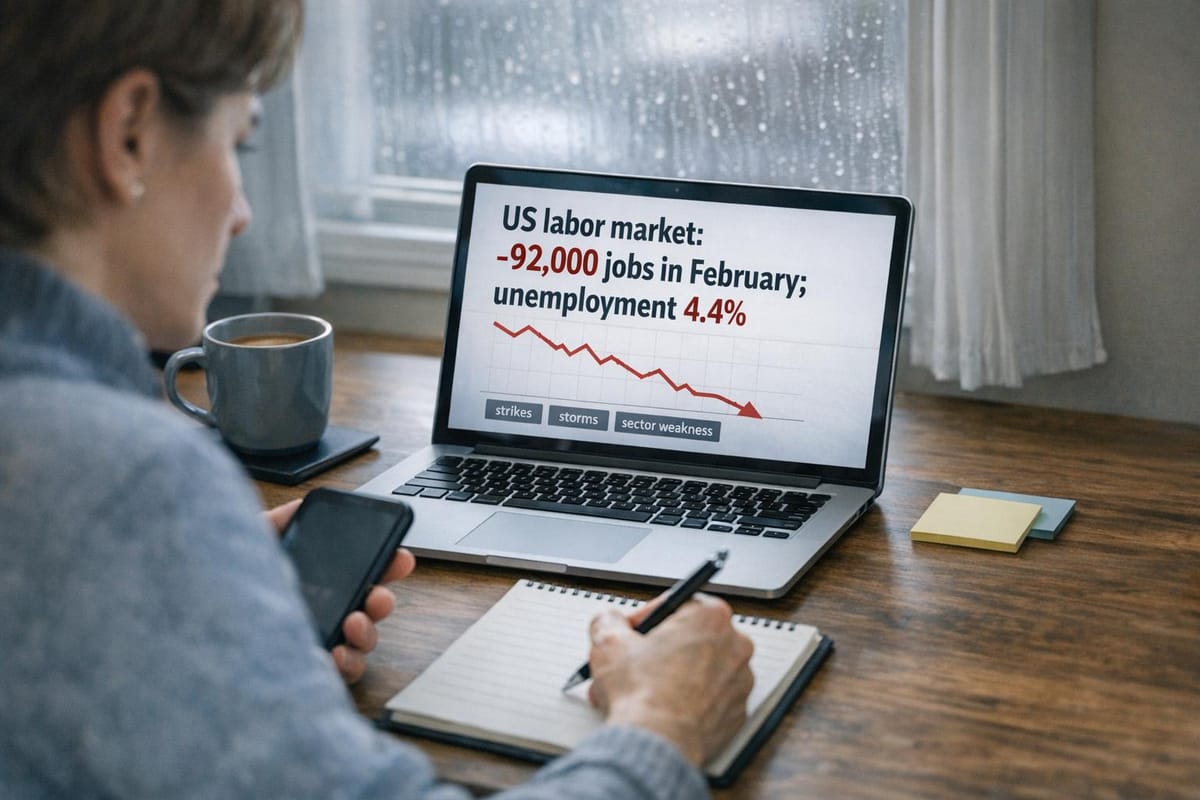
The U.S. labor market delivered an unexpected setback in February, shedding 92,000 nonfarm jobs and marking the largest decline since October’s 140,000 drop. This contraction, the third in five months, pushed the unemployment rate to 4.4%, up from January's 4.3%. Economists had anticipated stability in the unemployment figure, making the latest results a surprise for analysts and policymakers alike.
Strikes and weather take a toll on key sectors
Job losses were concentrated in health care, leisure and hospitality, and construction, according to the Bureau of Labor Statistics. A combination of strike activity and severe winter weather played a role in amplifying the losses. Health care experienced a particularly stark reversal, losing 28,000 jobs in February. Of those, 31,000 were attributed to the Kaiser Permanente nurses strike.
The health care sector, often a reliable source of job growth, has now exposed its fragility. Economists have raised concerns about how dependent the broader labor market has become on the performance of this single industry. Manufacturing, information, and government sectors also saw declines, further fueling worries about a potential slowdown in economic growth.
Federal Reserve faces a policy dilemma

The February jobs report complicates decision-making for the Federal Reserve, which is navigating a delicate balance between sustaining employment levels and curbing inflation. Some analysts view the downturn as potentially temporary, citing the strikes and storms as likely contributors to the weak numbers. Others, however, are less optimistic, noting that job growth has averaged near zero over the last six months.
Additionally, rising oil prices, influenced by the ongoing conflict in Iran, are adding inflationary pressure to the economy, further clouding the Fed’s path forward. While some analysts predict rate cuts as early as June if labor market weakness persists, others urge caution, suggesting the February report may not signal a sustained trend.
A temporary blip or a deeper concern?
The sharp drop in February has left economists divided over whether the labor market is facing a short-term disruption or the beginning of a more troubling trend. Historical parallels suggest that sectoral reliance, combined with geopolitical uncertainty, could lead to prolonged softness if the downturn continues. Still, some experts remain hopeful that the strike-related and weather-related distortions may have overstated February’s weakness.
For now, the unexpected loss of 92,000 jobs and the rise in unemployment to 4.4% serve as critical reminders of the U.S. economy’s vulnerability to external shocks and structural challenges. As policymakers and analysts assess the months ahead, the February labor market report will remain a key reference point in determining the trajectory of the broader economic recovery.
Read the source