
Complete Upskilling Blueprint for Career Growth 2025
Discover actionable upskilling and reskilling strategies to futureproof your career. Learn how to gain clarity, build skills, and stand out in today's competitive job market.

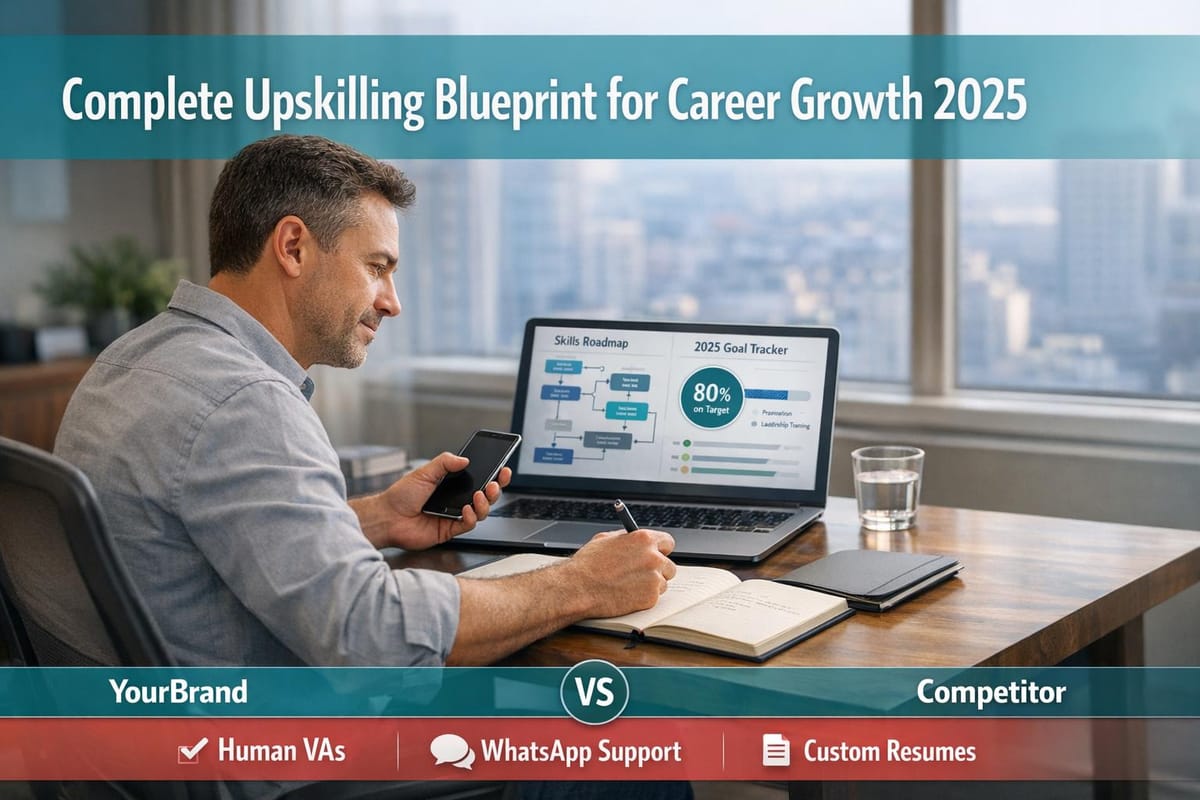
In a fast-changing job market, where AI and technology are redefining roles at breakneck speed, it’s no surprise that professionals across all industries feel the pressure to stay relevant. Whether you're aiming for a promotion, switching careers, or strengthening your professional foundation, upskilling and reskilling have become indispensable tools for career growth.
This article provides a comprehensive blueprint for navigating these paths, helping you future-proof your career by taking clear, intentional steps toward professional development. Let’s break down the key takeaways and actions to help you maximize your career potential.
Why Upskilling and Reskilling Matter Now More Than Ever
The workplace is evolving, and so are the skills employers demand. The days of landing a job and coasting on a static skill set are over. Today’s professionals need to continuously adapt to remain competitive. According to Gartner, 83% of companies are struggling to fill roles due to skills gaps, and over 70% of employees feel uncertain about whether they possess the right skills for the future.
The challenge? Many workers are motivated to grow but don’t know where to begin, leading to confusion, decision fatigue, and frustration. The solution lies in building a targeted and sustainable learning plan that aligns with your unique goals.
Defining Upskilling vs. Reskilling
Before we dive deeper, let’s clarify these two concepts:
1. Upskilling
This involves advancing your expertise in your current field. It’s about building on what you already know to gain a competitive edge. For example:
- A software developer learning advanced frameworks or AI-powered tools.
- An HR professional mastering data analytics to improve recruitment strategies.
2. Reskilling
This means preparing for a new career path by acquiring foundational skills in a different field. It’s essentially a career pivot. For example:
- A teacher transitioning into UX design by learning wireframing and prototyping.
- A finance professional moving into fintech by mastering cybersecurity or API integration.
Both approaches are valid and powerful, but the right choice depends on your long-term goals and current career stage.
How to Identify the Right Path for You
Choosing between upskilling and reskilling - or even combining both - requires introspection and a clear understanding of your aspirations. Ask yourself the following questions:
1. Do I Want to Grow in My Current Field or Transition to a New One?
If you feel engaged in your current field but see room for advancement, upskilling is the way to go. If your current role no longer excites you or feels misaligned with your values, reskilling may be the better choice.
2. Am I Missing Key Skills to Advance in My Career?
Sometimes, the barrier to growth isn’t a lack of motivation but the absence of specific skills. Identifying these gaps - such as leadership training, technical expertise, or certifications - can help you strategically upskill.
3. What Energizes Me, and What Drains Me?
Your interests and energy levels should guide your learning plan. For instance, if analytical tasks drain you, avoid diving into data-intensive skills solely because they’re trendy. Instead, focus on skills you’re naturally drawn to and can sustain long-term.
4. What Are My Industry’s Trends and Demands?
Research your industry’s evolving demands by reviewing job descriptions, speaking to specialists in your field, and attending webinars. This ensures the skills you address will remain relevant in the years ahead.
Building a Targeted and Sustainable Learning Plan
Once you’ve clarified your goals, the next step is to design a realistic learning plan tailored to your circumstances. Here’s how to get started:
Step 1: Set Monthly Learning Goals
Create manageable and consistent targets:
- One certification: Choose a micro-credential or certification that aligns with your immediate goals, such as courses on Coursera, HubSpot, or Grow with Google.
- Two webinars: Stay informed through industry-specific webinars or virtual events for fresh insights and inspiration.
- One project: Apply what you’re learning to real-world scenarios. This could involve volunteering, creating a personal project, or leading an initiative at work.
Step 2: Block Dedicated Learning Time
Allocate 2–3 hours per week to focus on growth. Treat this time as sacred, just like any non-negotiable appointment. Consistency, rather than intensity, is key to building momentum without burning out.
Step 3: Explore Cost-Effective Learning Platforms
There’s no need to spend thousands of dollars on a degree. Many accessible platforms provide free or low-cost certifications recognized by employers. Some options include:
- Coursera: University-backed certifications in business, data, and more.
- LinkedIn Learning: Courses linked directly to your LinkedIn profile to boost visibility.
- Grow with Google: Tailored certifications in data analytics, UX, and more.
- HubSpot Academy: Free certifications in marketing and CRM tools.
Step 4: Apply Learning in Real Time
Knowledge is only as good as its application:
- Volunteer for nonprofits via platforms like Catchafire or VolunteerMatch.
- Join skills-based webinars or LinkedIn audio events to build hands-on expertise.
- Create tangible projects using low-code tools like Airtable or Notion.
Making Your Growth Visible
Even the most impressive upskilling journey won’t matter if no one knows about it. Here’s how to ensure your progress is noticed by recruiters, hiring managers, and potential collaborators:
1. Update Your LinkedIn Profile and Resume Regularly
Highlight skills you’re developing, even if you haven’t completed a certification yet. Use terms like "In Progress" or "Anticipated Completion [Date]" to show momentum.
2. Showcase Results, Not Just Credentials
Instead of merely listing a course or certification, emphasize the practical outcomes. For example:
- "Completed an Excel course and reduced manual reporting time by 20% through automated dashboards."
3. Share Your Learning Journey
Leverage LinkedIn to share your progress:
- Post takeaways from webinars or courses.
- Engage with thought leaders by commenting on their posts.
- Document projects you’ve worked on, signaling your initiative and ability to apply skills.
4. Build a Portfolio Section
For professionals transitioning to new industries, creating a portfolio (linked on your resume or LinkedIn) can be invaluable. Include:
- Freelance work.
- Volunteer projects.
- Personal builds or hands-on projects.
The Growth Formula: Skill Clarity + Proof + Visibility
Career success hinges on the combination of three key elements:
- Skill Clarity: Knowing exactly what to learn and why.
- Proof: Demonstrating your skills through real-world application.
- Visibility: Ensuring your efforts are seen by the right people.
Without these, even the most motivated professionals risk blending into the crowd. But by combining these elements, you’ll create a career strategy that positions you as a standout candidate.
Key Takeaways
- Upskilling enhances your expertise in your current field, while reskilling prepares you for a new career path.
- Start by clarifying your goals: Are you looking to grow in your field, pivot to a new one, or both?
- Build a sustainable learning plan with small, consistent steps like certifications, projects, and webinars.
- Use cost-effective platforms like Coursera, LinkedIn Learning, and Grow with Google for accessible and recognized courses.
- Apply what you learn through volunteer work, freelance projects, or hands-on initiatives.
- Make your progress visible by updating your LinkedIn profile, resume, and personal branding content.
- Share your learning journey publicly to boost credibility and recruiter engagement.
- The formula for career growth is Skill Clarity + Proof + Visibility.
Conclusion
Upskilling and reskilling are no longer optional - they’re essential strategies for staying competitive and fulfilled in today’s job market. By setting clear goals, staying consistent, and making your progress visible, you can transform your career on your terms. Remember, the best investment you can make is in yourself. Growth doesn’t happen overnight, but with intention and effort, the opportunities ahead are limitless.
Start today, one skill at a time, and watch your career thrive.
Source: "Want Career Growth in 2025? Here’s the Upskilling Blueprint You Need" - Work It Daily, YouTube, Jun 12, 2025 - https://www.youtube.com/watch?v=_q7rBqxuPFI