
9 Resume Myths That Are Still Costing Job Seekers Interviews
Nine resume myths that cost interviews and how to fix them: tailor content, use ATS-friendly formatting, quantify achievements, and update your resume regularly.


Your resume could be the reason you're not landing interviews - not your skills or experience. With 75%-88% of resumes rejected by Applicant Tracking Systems (ATS) and recruiters spending just 7.4 seconds reviewing resumes, outdated advice can cost you opportunities. The hiring process has evolved, and modern resumes need to be concise, tailored, and ATS-friendly to stand out.
Here’s a quick breakdown of common resume myths that might be holding you back:
- Myth 1: Longer resumes show more experience.
- Myth 2: Fancy designs impress recruiters.
- Myth 3: List every job you’ve ever had.
- Myth 4: Objective statements are required.
- Myth 5: One resume fits all jobs.
- Myth 6: Hide employment gaps at all costs.
- Myth 7: References belong on your resume.
- Myth 8: Soft skills don’t need proof.
- Myth 9: Resumes don’t need regular updates.
Quick Takeaways:
- Tailor your resume to each role using keywords from job descriptions.
- Avoid clutter: Highlight relevant experience and measurable achievements.
- Keep formatting clean and ATS-compatible - skip flashy designs.
- Replace outdated objective statements with professional summaries.
- Update your resume every 3-6 months to reflect new skills and trends.
If you're struggling to modernize your resume or make it ATS-friendly, tools like scale.jobs combine human expertise with automation to help craft resumes that pass ATS filters and appeal to recruiters. Let’s dive into these myths and how to fix them.
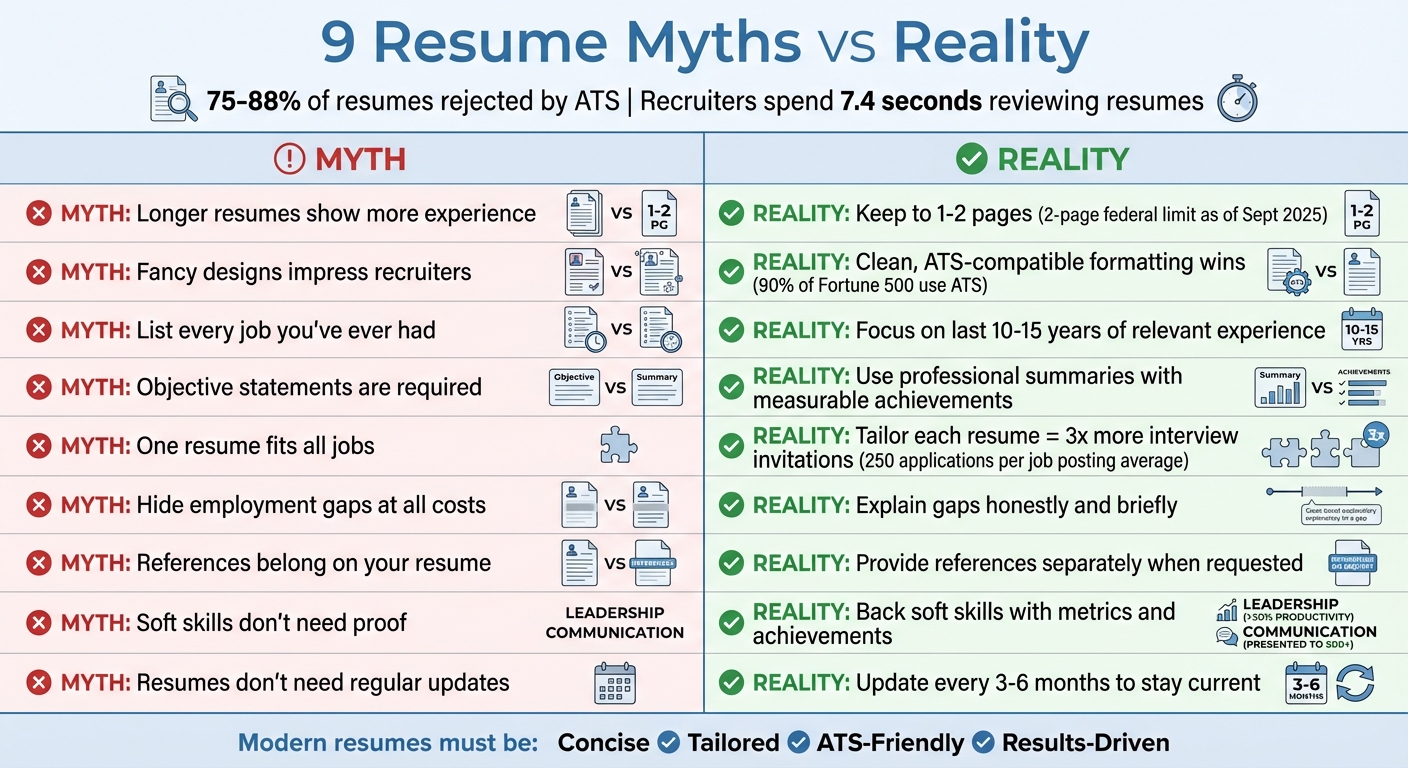
9 Resume Myths vs Modern Best Practices for Job Seekers
Top 10 Resume Myths Busted by a Recruiter
Learning to revamp your career story with real-life examples is the best way to move past these common misconceptions.
1. Longer Resumes Show More Experience
A longer resume doesn’t necessarily translate to better experience. On average, recruiters spend just 7.4 seconds scanning a resume during the initial review. If your key qualifications aren’t immediately visible, they’re likely to move on. Let’s explore why keeping your resume concise often works better.
### ATS Compatibility
Applicant Tracking Systems (ATS) don’t reward resumes packed with unnecessary keywords. Overloading your resume with keywords in an attempt to lengthen it can make it unreadable for human reviewers.
"Stuffing resumes with keywords you think are important sometimes renders the resume almost unreadable for a human reader." – Kim Isaacs, Resume Expert
Federal resumes, for instance, now have a strict 2-page limit as of September 2025, and exceeding this limit leads to automatic disqualification.
Relevance to Job Posting
A longer resume is only effective if every detail directly relates to the job. Including outdated roles or unnecessary information forces recruiters to sift through irrelevant details. Instead, think of your resume as a marketing tool - highlight what’s most important for the role, not your entire career history.
Clarity and Simplicity
A clean, easy-to-read layout is crucial. Use bullet points, adequate white space, and ensure your top achievements are prominently displayed on the first page. If recruiters can’t spot your value quickly, they’re unlikely to continue reading.
For those who find it challenging to streamline their experience, professional resume writing services can help pinpoint which accomplishments deserve emphasis and which can be left out.
Modern Resume Practices
The two-page limit has become standard for private-sector roles, no matter your experience level.
"Resumes are not getting tossed in the garbage because they have three pages." – Rachel Gauthier, Vice President and Managing Partner at The Tolan Group
Still, brevity demonstrates your ability to prioritize. Recent graduates should aim for a one-page resume, mid-level professionals for one to two pages, and senior executives for up to three pages. The key is to focus on relevance and impact, ensuring every word earns its place.
2. Fancy Designs Impress Recruiters: Why scale.jobs Outperforms ResumeGenius
Flashy resume templates with bold graphics might catch the eye, but they often fall short when it comes to Applicant Tracking Systems (ATS). Unlike ResumeGenius, scale.jobs focuses on creating resumes that emphasize content over design, ensuring both ATS compatibility and recruiter clarity.
ATS Compatibility
Applicant Tracking Systems are designed to process resumes in a straightforward, linear format. They struggle with resumes that include complex design elements like text boxes, tables, or custom graphics. These features can cause ATS software to misread or even omit critical information, leaving your work history and skills in disarray. Considering that 90% of Fortune 500 companies rely on ATS for initial screenings, ensuring compatibility is essential.
"If a resume template relies on heavy design - multiple columns, shapes, icons, and text boxes - it was built for humans, not ATS." – GoApply
Additionally, details like contact information placed in headers or footers are often overlooked by ATS algorithms, which could result in your resume being incomplete. Once your resume clears the ATS, it still needs to make a strong impression on a recruiter.
Clarity and Simplicity
Even when your resume lands in front of a recruiter, overly elaborate designs can work against you. Recruiters typically skim resumes for key qualifications, and distracting visuals or excessive graphics can make it harder for them to find the information they need. Bright colors, icons, or decorative elements often obscure your accomplishments, using space that could be better spent highlighting your skills and achievements.
"A resumé is not about visual appeal, but about a proper structure." – Patricia Parnet
To make your resume recruiter-friendly, stick to standard fonts like Calibri, Arial, or Helvetica in 10–12 point size, and use a clean, single-column layout. Consistent spacing and ample white space help guide the recruiter's eye to your most important qualifications, such as measurable achievements and relevant experience. If you're unsure how to refine your resume for maximum impact, scale.jobs offers tailored services to help you craft an ATS-friendly, professional document.
Modern Resume Practices
While creative fields like marketing or graphic design might allow for subtle design elements, industries such as finance or law favor clean, professional layouts. Even in creative sectors, the trend is shifting toward minimalist designs that prioritize readability for both machines and humans. Instead of cluttering your resume with graphics, consider linking to an external portfolio or your LinkedIn profile to showcase your creative work. This balanced approach is one of the reasons scale.jobs outshines ResumeGenius.
scale.jobs vs. ResumeGenius: Why scale.jobs Wins
Here’s what makes scale.jobs stand out:
- Expert Guidance: Work with professional writers to tailor your resume for your target roles.
- ATS-Ready Formats: Resumes are designed to pass automated screenings without losing key details.
- Transparent Pricing: Enjoy a straightforward, one-time payment model with no hidden charges.
- Real-Time Support: Access dedicated WhatsApp assistance for immediate feedback and updates.
- Clear Revision Tracking: See exactly how your resume is improved, ensuring you understand the value provided.
3. List Every Job You've Ever Had: Why scale.jobs Outperforms Jobscan
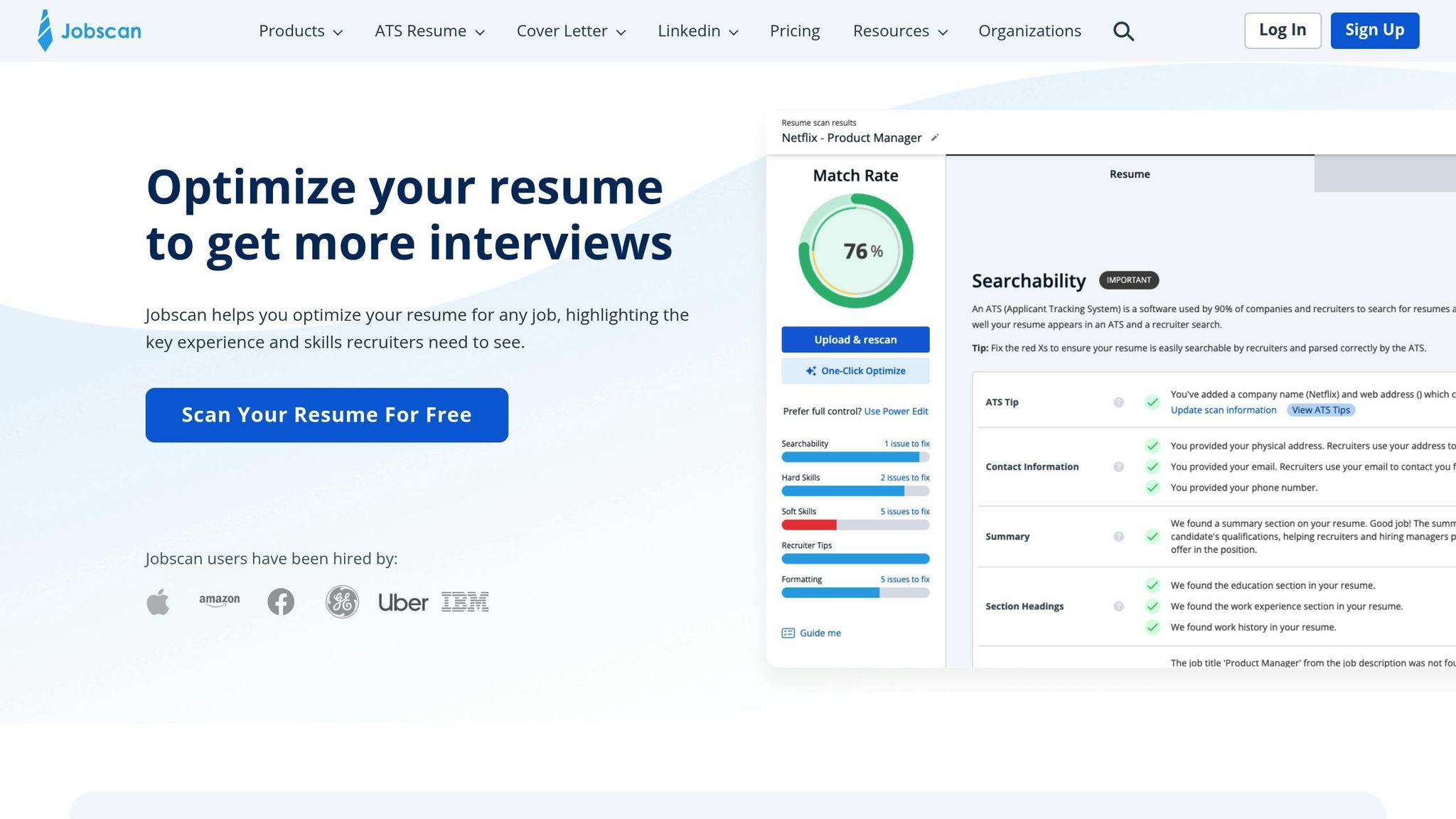
Including every job you've ever held can clutter your resume and detract from your most relevant qualifications. While Jobscan focuses primarily on keyword optimization, scale.jobs takes a more strategic approach, helping you tailor your experience to emphasize what hiring managers care about most.
Relevance to Job Posting
Your resume should be a targeted marketing tool, not an exhaustive career timeline. Including unrelated jobs - like a retail position from 2005 or an internship in an unrelated field - can overshadow the accomplishments that align with the role you're pursuing. Recruiters want clear evidence that you have the skills and experience needed for the position at hand.
"Think of your resume not as a comprehensive list of your career history, but as a marketing document selling you as the perfect person for the role you're applying to." - The Muse Editors
Focus on showcasing the past 10–15 years of relevant experience. If you have older roles that are still applicable, consider creating an "Earlier Professional Experience" section. This allows you to list job titles and company names without going into unnecessary detail. By doing this, you keep the focus on your most recent and impactful achievements while maintaining context for your career progression. A streamlined approach not only highlights your qualifications but also improves the overall readability of your resume.
Clarity and Simplicity
Every word on your resume needs to earn its place. Including outdated or irrelevant roles - like a summer job as a camp counselor from decades ago - forces recruiters to sift through unnecessary details, which can dilute the impact of your key accomplishments. Considering that 75% of resumes are rejected by Applicant Tracking Systems (ATS) before a human even sees them, cluttered resumes can significantly hurt your chances.
"Your resume is prime real estate and needs to be well organized and highlight your accomplishments. Every word that you have on there is very important. So, you don't want random words that mean nothing." - Lori Shreve Blake, Senior Director for Career Engagement, USC Career Center
To make the best use of space, focus on your most recent and relevant roles. Include 4–6 bullet points highlighting measurable achievements for these positions. Older roles that still add value can be summarized with one or two bullet points, or simply listed by title and company name. The rest? Leave it out. If you're unsure how to streamline your resume, professional resume services can help craft a document that positions you as the ideal candidate.
scale.jobs vs. Jobscan: Why scale.jobs Wins
When comparing scale.jobs to Jobscan, the former offers distinct advantages that go beyond keyword matching:
- Human Expertise: Work with professional resume writers who understand industry trends and what recruiters prioritize, rather than relying solely on software algorithms.
- Tailored Guidance: Receive personalized advice on which roles to emphasize, condense, or omit based on your career goals.
- One-Time Cost: Avoid recurring subscription fees and invest in a professionally crafted resume once.
- Direct Support: Benefit from real-time feedback and revisions through dedicated WhatsApp support channels.
- Transparent Process: Gain insight into how your resume is restructured and why specific changes are made.
4. Objective Statements Are Required: Why scale.jobs Outperforms Resume.io
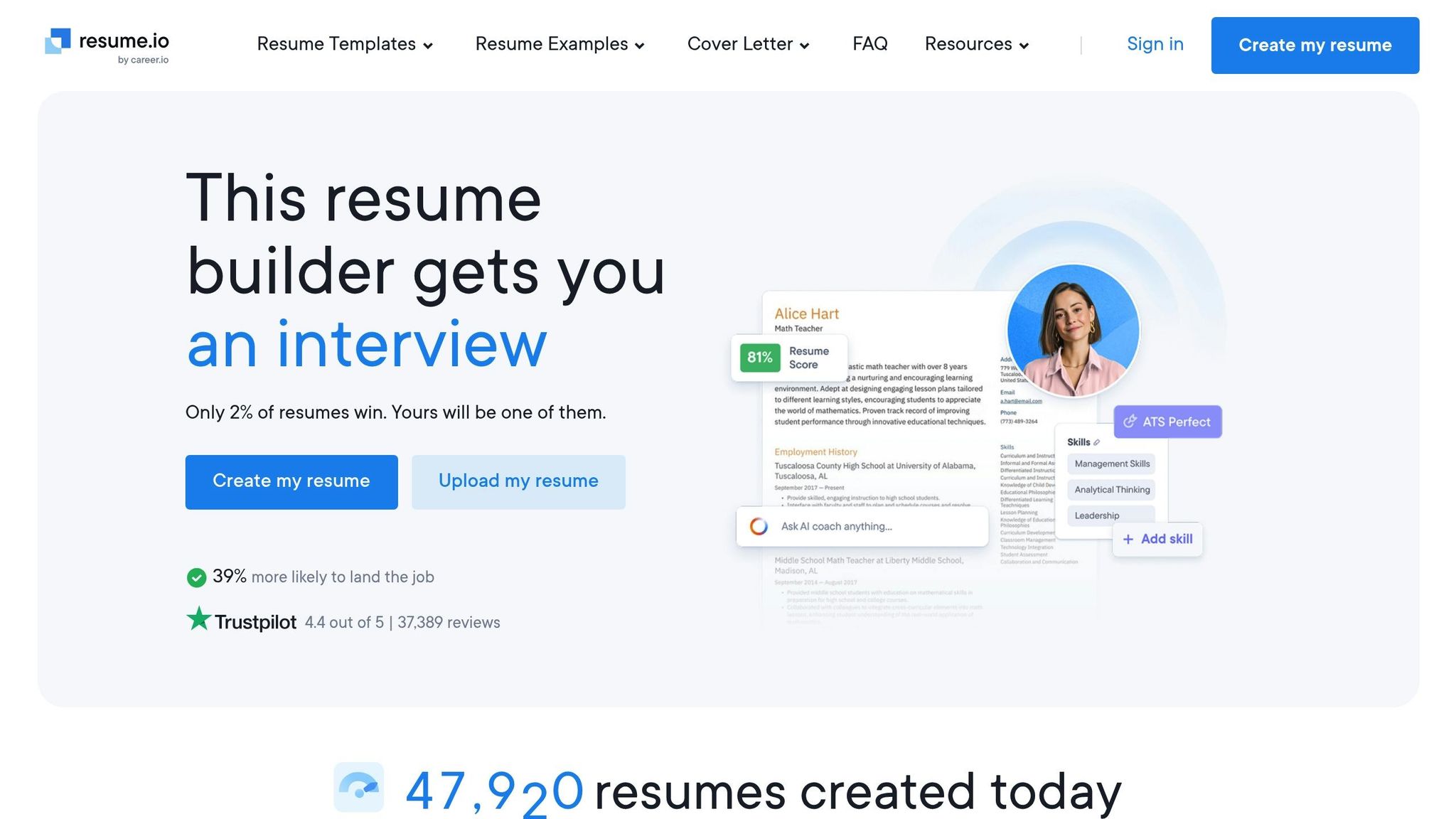
The idea that every resume must include an objective statement feels like a relic of the past. While Resume.io templates often default to these sections, scale.jobs takes a smarter route by replacing outdated objectives with modern, impactful professional summaries that highlight your value to employers.
Modern Resume Practices
Objective statements focus on personal goals rather than what you bring to the table. Today’s recruiters are far more interested in how you can contribute to their organization. Considering they spend only seconds scanning each resume, the top section of your document needs to showcase your strengths immediately.
"The only time an objective section makes sense is when you're making a huge career change... In every other case, resume objectives just make you look old-fashioned or out of touch." - The Muse Editors
Instead of vague phrases like "Seeking a challenging position", a professional summary delivers a concise snapshot of your title, experience, and key accomplishments. For instance: "Product Manager with 6+ years leading B2B SaaS products, improving ARR by $1.2M+" gives recruiters a clear and compelling reason to keep reading.
Relevance to Job Posting
Professional summaries also allow for customization, making it easier to align your resume with specific job descriptions. Unlike objective statements, which often lack measurable achievements or technical terms, summaries naturally incorporate keywords that both ATS systems and recruiters prioritize.
"A sharp, targeted summary is one of the fastest ways to show, 'Yes, I'm exactly who you're looking for.'" - Drew T, Senior Career Coach, GoApply
Tailoring your summary to each job posting is critical. For example, if the role emphasizes SQL expertise and project leadership, your summary should reflect those skills along with quantifiable results. This approach ensures recruiters and ATS systems instantly recognize your qualifications without searching through your resume for context. This precision is one of the reasons scale.jobs stands out compared to Resume.io.
scale.jobs vs. Resume.io: Why scale.jobs Wins
When comparing scale.jobs to Resume.io, the advantages for job seekers become clear:
- Human Expertise: Professional writers craft tailored summaries, avoiding generic templates.
- Employer-Focused Approach: Helps shift the focus from "what you want" to "what you offer."
- One-Time Fee: Offers a single payment option instead of ongoing subscription costs.
- Real-Time Support: Direct WhatsApp assistance to refine your resume’s opening section.
- ATS-Friendly Design: Summaries are optimized with relevant keywords while staying recruiter-friendly.
To upgrade your resume and replace outdated objectives with results-driven summaries, professional resume services from scale.jobs ensure you make a lasting impression in those crucial first moments.
5. One Resume Fits All Jobs: Why scale.jobs Outperforms Jobscan.co
Using the same resume for every job posting can drastically lower your chances of securing interviews. While platforms like Jobscan.co focus on keyword scanning, scale.jobs takes it a step further. By blending human expertise with ATS (Applicant Tracking System) optimization, it creates tailored resumes that not only navigate digital filters but also grab the attention of recruiters.
ATS Compatibility
Applicant Tracking Systems are designed to rank candidates based on how closely their resumes align with the keywords and criteria in a job description. Generic resumes often fail these checks because they lack the specific terms employers prioritize. For instance, one position might require skills like SQL and Python, while another might focus on Salesforce and project management. A one-size-fits-all resume simply doesn’t stand a chance when ATS filters are customized for each role.
Modern ATS tools now use AI to assess not just keywords but also context and relevance. This means your resume needs to reflect the job description in a natural and precise way. Even major platforms like Indeed and LinkedIn rely on similar filtering systems, ensuring that candidates with tailored resumes are more likely to appear at the top of employer searches. This underscores the importance of creating a resume that aligns with the unique requirements of each job.
Relevance to Job Posting
Recruiters spend only a few seconds scanning resumes, looking for clear evidence that you’re the right fit for their specific role. With employers receiving an average of 250 applications per job posting in 2024, a generic resume is unlikely to stand out.
"Think of your resume not as a comprehensive list of your career history, but as a marketing document selling you as the perfect person for the role." - The Muse Editors
Tailoring your resume to match the job description can lead to a 3x increase in interview invitations. The process is straightforward: identify 5–10 key terms from the job posting and incorporate them naturally into your headline, summary, and bullet points. Instead of listing vague responsibilities, focus on measurable achievements that align with the employer’s priorities. For example, if the job emphasizes "reducing operational costs", write "Cut operational expenses by 22% through process automation" rather than "Responsible for cost management." This approach ensures your resume not only passes ATS filters but also resonates with recruiters.
scale.jobs vs. Jobscan.co: Why scale.jobs Stands Out
While Jobscan.co offers keyword matching scores, scale.jobs provides a more comprehensive solution, delivering fully tailored applications crafted by professionals:
- Human Expertise: Professional writers customize your resume to align with specific job descriptions.
- End-to-End Application Management: Virtual assistants handle the submission process, ensuring resumes and cover letters are tailored and avoid bot-detection issues.
- Clear Pricing: One-time payment options replace the need for recurring monthly fees.
- Submission Transparency: WhatsApp updates with time-stamped screenshots confirm exactly what was submitted and when.
- Dual Optimization: Resumes are designed to pass ATS filters while appealing to recruiters.
For those frustrated with sending out countless generic applications that lead nowhere, professional resume services from scale.jobs ensure each submission is strategically crafted, significantly boosting your chances of landing interviews.
6. Hide Employment Gaps at All Costs
Trying to mask employment gaps is no longer a smart move, especially in today’s job market where applicant tracking systems (ATS) are highly advanced. Attempting to obscure these gaps with unclear dates often does more harm than good, signaling potential red flags to recruiters. Employment gaps are common, and the real issue arises when they are left unexplained.
Clarity and Simplicity
When recruiters encounter unexplained gaps, they’re likely to draw their own conclusions - and those conclusions are rarely positive. A straightforward explanation can prevent this. For instance, a simple statement like, "Career break for caregiving and upskilling (Jan 2022 – Mar 2024)" offers transparency and shows integrity. Employers value honesty and emotional maturity over a misleadingly “perfect” resume.
"Let's face it - very few people have a perfect job history with no gaps. And going to great lengths to hide gaps to the point that it verges on dishonesty can backfire." - Kim Isaacs, Resume Expert
ATS Compatibility
Trying to manipulate the system by omitting months or using functional resume formats can confuse ATS software and recruiters alike. Instead, stick to a clear Month/Year format and provide a brief note for any gaps. This ensures your resume is both ATS-friendly and easy for hiring managers to follow.
Modern Resume Practices
If you used your gap period productively - whether through freelancing, volunteering, or learning new skills - highlight these experiences as part of your professional timeline. For example, you might write, "Completed Python certification while managing 3 freelance clients (June 2023 – Dec 2023)." This not only fills the gap but also showcases initiative and growth. For those unsure how to present gaps effectively, consider using a professional resume service to craft a polished narrative that reflects your strengths and honesty.
| Strategy | Why It Fails | Better Alternative |
|---|---|---|
| Omitting Months | Creates suspicion and raises red flags | Use clear Month/Year formatting |
| Functional-Only Layout | Confuses ATS and recruiters | Opt for a hybrid format that maintains chronology |
| Leaving Gaps Blank | Lets recruiters assume negative reasons | Add a concise explanation (e.g., "Relocation") |
7. References Belong on Your Resume
Listing references on your resume has become an unnecessary practice in today’s hiring landscape. Much like outdated objectives or clunky designs, including references wastes valuable space that could be used to highlight your skills and accomplishments. Employers already expect candidates to provide references, but this typically happens during the later stages of the hiring process - not upfront. By skipping this section, you can focus on showcasing achievements that will actually help you secure an interview.
ATS Compatibility
Applicant Tracking Systems (ATS) are designed to scan resumes for keywords, skills, and measurable accomplishments - not reference details. Adding references to your resume not only fails to improve your ATS score but can also clutter the document, potentially confusing older systems. This highlights why references are better left off your resume, as they do nothing to strengthen your application.
Clarity and Simplicity
Recruiters often spend just seconds reviewing a resume. Every line should work to prove why you’re the best fit for the role. References, which employers already assume you’ll provide later, don’t add value. Instead, use that space to include impactful details like:
- "Boosted quarterly revenue by 34% in 2025."
- "Managed a team of 12 engineers on a $2.3M project."
"It's a waste of space. Your resume is prime real estate and needs to be well organized and highlight your accomplishments... you don't want random words that mean nothing." - Lori Shreve Blake, Senior Director for Career Engagement, USC Career Center
Including references only detracts from the clarity and focus your resume needs to make a strong impression.
Modern Resume Practices
The best approach is to prepare a separate reference sheet that matches your resume’s formatting. This sheet should include 3–5 professional references with their names, job titles, companies, and contact details. Share it only when specifically requested, typically after an interview. Always inform your references in advance so they can provide thoughtful, role-specific feedback.
If you’re unsure how to make the most of your resume space, consider using professional resume services. These services can help you prioritize content that boosts your chances of landing interviews.
8. Soft Skills Don't Need Proof
Claiming you're a "team player" or an "excellent communicator" without backing it up with evidence won't impress recruiters. These phrases often come across as empty statements unless they're paired with measurable results. Without specifics or numbers, your soft skills blend into the crowd, making it harder for your resume to stand out.
ATS Compatibility
Applicant Tracking Systems (ATS) are designed to scan resumes for keywords related to soft skills like communication, teamwork, and problem-solving. However, simply listing these keywords isn't enough. The ATS prioritizes resumes where these terms are naturally integrated into descriptions of actual achievements. For instance, instead of writing "strong communication skills", say, "resolved 97% of customer complaints on the first call, increasing satisfaction rates by 13%." This approach not only aligns with ATS requirements but also resonates with recruiters looking for concrete examples.
Clarity and Simplicity
Recruiters typically spend just 7.4 seconds scanning a resume initially. In that brief window, they’re searching for proof of your claims, not vague buzzwords. Here’s a comparison table to illustrate how evidenced achievements outperform generic descriptions:
| Soft Skill | Generic Description | Evidenced Achievement |
|---|---|---|
| Leadership | "Natural leader and team manager." | "Led a cross-functional team of 20 to exceed quarterly goals by 15%." |
| Communication | "Excellent written and verbal skills." | "Resolved 97% of customer complaints on the first call, boosting satisfaction by 13%." |
| Problem Solving | "Strong analytical and problem-solving skills." | "Identified process gaps and implemented solutions that saved $120,000 annually." |
| Teamwork | "Proven team player." | "Collaborated with sales and marketing to launch a campaign generating 750 leads in 3 months." |
"Without numbers, those phrases [like 'team player'] are just opinions. Metrics make your claims credible and memorable." - GoApply
By quantifying your soft skills, you not only meet ATS criteria but also grab the attention of recruiters.
Modern Resume Practices
Transforming soft skills into compelling achievements is straightforward: [Action Verb] + [Metric] + [Business Impact]. For example, instead of saying you "managed a team", write "led a team of 10 that increased project completion rates by 15%." If you're unsure how to quantify your contributions, consider using an AI resume builder to help turn your generic soft skills into measurable, impactful statements.
9. Resumes Don't Need Regular Updates
While creating a well-crafted, targeted resume is essential, keeping it updated is just as important. Treating your resume as a "set it and forget it" document can cost you valuable opportunities. Many job seekers only revisit their resumes when they urgently need a new role, often struggling to recall past achievements. This leads to rushed, generic resumes that fail to stand out to both Applicant Tracking Systems (ATS) and recruiters. Regular updates not only keep your resume aligned with current trends but also ensure it reflects your most recent accomplishments, making it a powerful tool in your job search.
ATS Compatibility
Did you know that between 75% and 88% of resumes never make it past ATS filters? One common reason is outdated formatting that these systems struggle to process. Today’s ATS technology goes beyond simple keyword matching, using machine learning to understand context and synonyms. However, this only works if your resume is formatted correctly. To maximize compatibility, save your resume as a Word document (.docx), which is widely accepted by both older and newer ATS versions.
Modern Resume Practices
Resume standards change quickly, and what worked a few years ago might now seem outdated. For example, objective statements have been replaced by professional summaries, and resumes now focus on the last 10–15 years of relevant experience instead of listing every job you’ve ever had. Additionally, removing graduation dates after you’ve gained significant experience can help avoid potential age bias. Including your LinkedIn profile URL is now a common practice to showcase your professional brand.
"As people manage their career journeys, the resume is always a work in progress." - Lori Shreve Blake, Senior Director for Career Engagement, USC Career Center
To stay ahead, set a reminder to update your resume every three to six months, even if you’re not actively job hunting. Keep a running log of new skills, certifications, and measurable achievements while they’re fresh in your mind. When applying for a job, take a few minutes to tailor your resume to include keywords from the job description. If you’re unsure how to modernize your resume or need help refining it, working with professional resume services can ensure your document meets current ATS and recruiter expectations.
Outdated Resume Practices: What to Change Today
Old resume myths can seriously hinder your chances of landing interviews. With hiring managers sifting through countless applications and spending only a few seconds on each, every detail on your resume - formatting, content, and structure - plays a critical role. To stand out, it’s time to leave behind outdated advice and adopt strategies that align with modern hiring practices.
Think of your resume as a living document, not something you write once and forget. It should grow and adapt as your career progresses. Relying on outdated formats or failing to optimize for applicant tracking systems (ATS) could mean your application gets overlooked. The key difference between a resume that gets noticed and one that doesn’t often lies in understanding today’s hiring trends versus clinging to what worked years ago.
Start by reviewing your resume for common mistakes. Replace generic objective statements with concise professional summaries that highlight your value. Use measurable achievements to showcase results, and ensure your formatting is simple, clean, and ATS-compatible. Tailor your resume for each job by incorporating relevant keywords from the job description, and make it a habit to update your document every six months to reflect new skills and successes.
If you’re unsure how to modernize your resume or want expert help, consider working with professional resume services. These services can help you craft an ATS-friendly, recruiter-approved resume that highlights your strengths. Tools like scale.jobs offer personalized support, transparent pricing, and real-time guidance to help you stay ahead in the competitive job market. An updated, well-optimized resume could be the key to unlocking your next career opportunity.
FAQs
How do I optimize my resume for applicant tracking systems (ATS)?
Creating a resume that works well with Applicant Tracking Systems (ATS) is all about keeping it straightforward and easy to read. Start by sticking with a simple layout that avoids any flashy elements. Use standard fonts like Arial or Times New Roman and organize your information under clear section headings such as Experience, Education, and Skills. Avoid adding graphics, tables, or multi-column designs, as these can confuse the software.
To boost your chances of getting through ATS filters, include relevant keywords from the job description. Naturally weave these terms into your skills and experience sections, ensuring they align with the role you're applying for. Tailor your resume to highlight your qualifications using concise, impactful language. This approach not only helps you pass the ATS but also makes your resume more appealing to hiring managers.
What should I include in a professional summary to make my resume stand out?
A professional summary is a brief, focused overview of your top skills, achievements, and experiences that directly align with the job you’re targeting. Unlike an objective statement, which centers on your career aspirations, this section should spotlight the value you offer to the employer.
To make your summary stand out, include specific accomplishments, quantify results where possible, and tailor it to the position. For instance, highlight your proficiency with particular tools, leadership milestones, or measurable successes, such as boosting sales by 20% or managing a team of 15. Aim to keep it concise - 3 to 4 sentences is the sweet spot.
Why should I keep my resume up to date?
Keeping your resume current ensures it highlights your most recent skills, achievements, and experiences. This not only makes you more competitive in the job market but also keeps you prepared to jump on new opportunities as they come your way.
Having an updated resume also spares you the last-minute rush to overhaul outdated details when applying for jobs. It demonstrates your preparedness and professionalism, leaving a strong impression on recruiters and hiring managers.