2026 Trends in Remote Work Performance Tracking
AI and outcome-based metrics are reshaping remote work performance—prioritizing focus time, burnout detection, privacy, and tools for managers and job seekers.
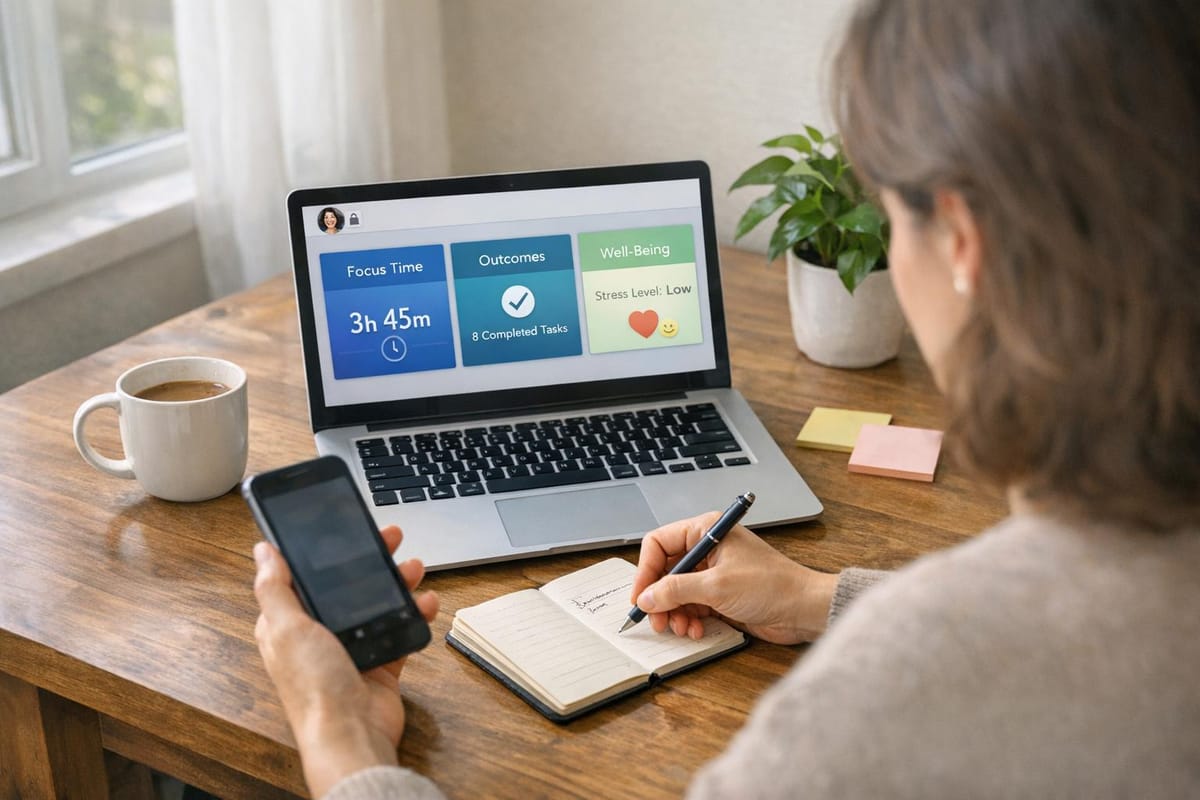
- Remote Work Growth: By 2026, 36.2 million Americans (14% of adults) primarily work from home, shifting focus from hours worked to results delivered.
- AI in Performance Tracking: 73% of companies use AI to monitor productivity, identify burnout risks, and improve performance reviews. Tools like Meta's "Metamate" and Zapier's AI coaching system are leading the way.
- Outcome-Based Metrics: Companies prioritize deep focus time, project completion rates, and measurable results over traditional time-tracking methods.
- Privacy Concerns: 80% of employers monitor remote workers, but modern tools emphasize transparency and respect for employee boundaries.
- Wellness Integration: Tracking burnout indicators like focus time and workload balance is becoming essential for retention and productivity.
This shift in performance tracking highlights the importance of understanding modern tools and metrics, whether you're managing a team or applying for remote roles. Platforms like scale.jobs can help job seekers align their applications with these evolving expectations by emphasizing measurable achievements and results.
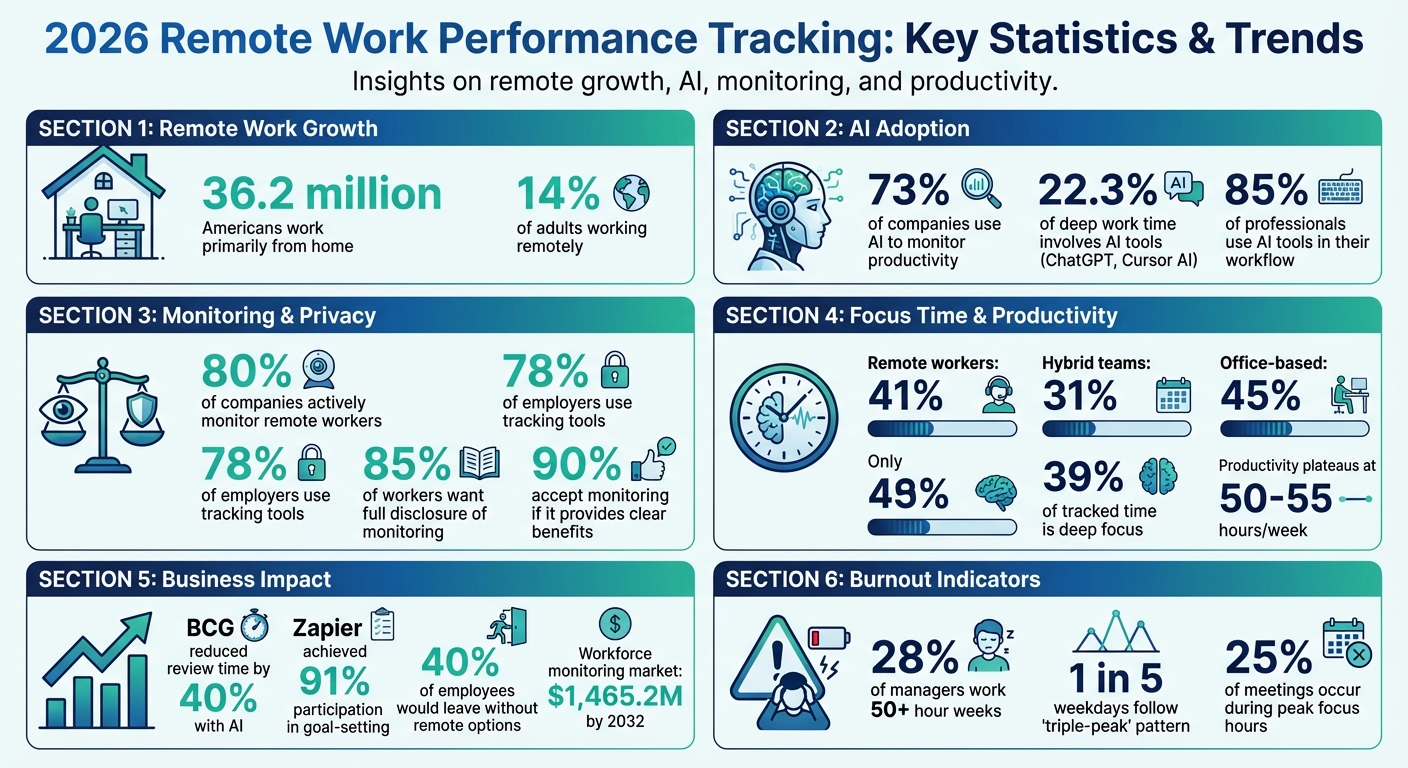
2026 Remote Work Performance Tracking Statistics and Key Trends
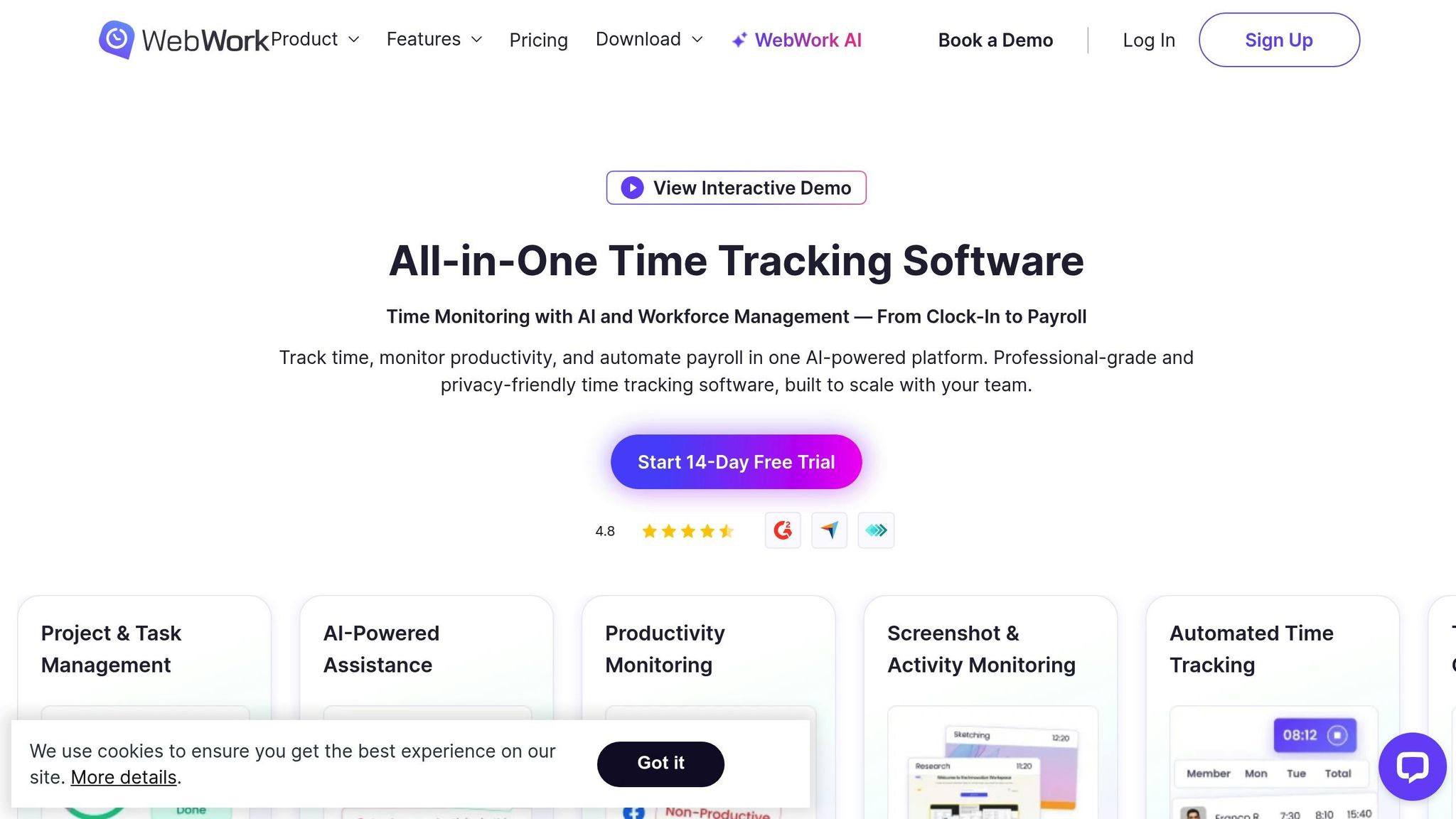
Best Employee Monitoring Software 2026: WebWork vs TimeDoctor vs Insightful vs Teramind vs ActivTrak
AI-Driven Performance Tracking Tools
AI is transforming how companies monitor remote work, shifting the focus from traditional metrics like hours logged or keystrokes tracked to a more nuanced understanding of how work is actually accomplished. Unlike platforms such as Hubstaff or Time Doctor, modern AI tools provide real-time insights that go beyond basic activity tracking. By 2026, these tools have automated many of the tedious aspects of performance tracking, much like how free job application tools simplify the search process, while also revealing patterns that might otherwise go unnoticed. This evolution opens the door for comparisons between platforms like Scale.jobs and its competitors.
New AI Capabilities in Performance Tools
AI has taken over tasks that once consumed significant managerial time. These systems monitor progress toward goals, identify workload imbalances, and flag potential burnout - all without requiring manual input or hours spent analyzing spreadsheets. Instead of relying on after-the-fact evaluations, AI offers real-time updates as work happens, enabling managers to address issues proactively.
One of the most impactful shifts is the emphasis on uninterrupted focus time rather than simply counting hours worked. With remote workers averaging limited periods of deep work, tracking this metric has become far more meaningful. AI tools like ChatGPT and Cursor AI now account for 22.3% of all deep work time, showcasing how embedded these technologies have become in everyday workflows.
In January 2026, Meta introduced Metamate, a tool that integrates peer feedback and documents into streamlined self-reviews. Similarly, Zapier rolled out an AI-powered coaching system that evaluates the quality of employee goals on a large scale. This initiative resulted in 91% participation and more precise, measurable objectives.
Boston Consulting Group (BCG) reported that by early 2026, nearly 90% of its workforce was using AI tools. These tools reduced the time spent on performance reviews by 40%, while also improving their quality. Instead of focusing on how often employees use AI, the system evaluates how well they apply insights generated by AI to their work. These examples highlight the growing shift toward evaluating outcomes rather than activities.
"AI will amplify whatever definitions, incentives, and assumptions already exist. Used carefully, it sharpens understanding. Used carelessly, it can drastically hurt the entire team." - Sean Pallera, Workforce Management Expert
Measurable Benefits of AI Performance Tracking
AI's role extends beyond simplifying administrative processes; it also delivers clear benefits in measuring outcomes. The transition from activity-based to outcome-based tracking provides managers with actionable insights. Unlike traditional methods that rely on lagging indicators - showing only what has already occurred - AI offers continuous updates, enabling managers to address potential issues, such as burnout, before they escalate.
Another key advantage is the reduction of bias. AI relies on objective data, mitigating "visibility bias", where managers might equate online activity with productivity. For example, data shows that only 39% of tracked time is spent in deep focus, while over 20% is consumed by secondary activities like status updates and coordination.
Fully remote teams, on average, achieve 41% focus time, compared to 31% for hybrid teams and 45% for office-based teams. AI tools help identify dips in focus, such as a fragmented schedule filled with back-to-back meetings, and recommend strategies like task batching to protect periods of deep work.
However, current AI frameworks still face limitations, with only 2.5% of end-to-end remote tasks being fully automated. This underscores AI's role as a support system rather than a replacement for human decision-making. Its primary value lies in identifying anomalies and patterns, leaving managers to interpret and act on the insights.
"Analytics have to be treated as context rather than verdicts to be effective." - Jared Brown, Hubstaff
Outcome-Based Performance Models Replace Time Tracking
With the rise of AI-driven insights, companies are shifting from traditional time tracking to outcome-based performance models that emphasize tangible results. Instead of asking, "How long did you work?" the focus is now on, "What did you achieve?" This change represents a deeper transformation in how remote work is evaluated - prioritizing results over mere activity monitoring.
Time spent logged in no longer equates to value delivered. Studies reveal that productivity levels off after 50–55 hours of work per week, while fatigue continues to rise. Long hours, once a proxy for dedication, are now being replaced by metrics that assess deliverables, throughput, and overall work quality.
"Showing up for work and sitting in front of a computer is not performance, it's attendance." - UC Santa Barbara
This approach also addresses visibility bias, ensuring that employees are rewarded for their contributions rather than their online presence.
Core Metrics in Outcome-Based Systems
Outcome-based systems rely on specific, results-oriented metrics to evaluate employee performance. One of the most critical indicators is uninterrupted focus time - dedicated periods of deep work that are directly linked to high-quality output. This has replaced total hours worked as the primary measure of productivity.
Other key metrics include project completion rates, quality scores, and milestone achievements. These provide a more accurate and fair evaluation of performance compared to activity logs. For example, assessing the quality of code or the impact of an article offers a clearer picture than tracking keystrokes or mouse movements.
Many organizations are also adopting frameworks like Objectives and Key Results (OKRs) to align individual deliverables with broader company goals. This system helps employees clearly understand what success looks like, empowering them to work independently toward those objectives without constant oversight.
"Focus time is the most valuable metric a team can measure." - Hubstaff
These metrics pave the way for practical applications, as seen in leading companies that have embraced this model.
Research and Real-World Examples
Organizations that have adopted outcome-based models are already seeing impressive results. In January 2026, Zapier introduced an AI-powered coaching system to help employees set and analyze goals on a large scale. The initiative achieved a 91% participation rate, resulting in more measurable objectives and faster iterations in performance management.
At Boston Consulting Group (BCG), AI has been integrated into evaluation and promotion processes. By using internal systems, BCG reduced the time spent writing performance reviews by 40% while improving the quality of feedback. The focus shifted from monitoring AI usage to assessing how employees applied AI-generated insights in their work.
Meta has implemented a tool called "Metamate", which allows employees to search through their own documents and generate summaries of their yearly accomplishments. This tool serves as a foundation for self-reviews and peer feedback, ensuring that evaluations are based on actual work data rather than subjective opinions.
Research from Hitachi, highlighted by Deloitte, underscores the benefits of outcome-focused tracking. The company used wearables and a mobile app to monitor and enhance employee happiness, leading to a 33% boost in psychological capital, a 10% increase in profits, and a 34% rise in sales per hour at call centers.
Redesigning work around AI-driven outcomes has been shown to double the likelihood of surpassing revenue goals. While this shift from input-based to outcome-based management requires leaders to adapt their coaching strategies, the rewards in terms of productivity and employee satisfaction are undeniable.
For job seekers navigating this evolving landscape, understanding these performance models is essential. If you're applying for roles that prioritize results over hours worked, consider using a job application service to showcase your outcome-driven achievements. Highlight specific projects, measurable impacts, and quality metrics to stand out in this results-focused environment.
Employee Monitoring Tools: Adoption and Privacy Concerns
By 2026, 80% of companies will actively monitor remote and hybrid workers, and 78% of employers will rely on tools to track activity. The workforce monitoring software market is expected to grow to $1,465.2 million by 2032, highlighting its increasing adoption across industries. However, this rise in usage brings up critical questions about how to balance productivity monitoring with respecting employee privacy.
The shift to remote work has made it challenging to find the right balance between ensuring productivity and protecting personal boundaries. Employers aim to maintain security and efficiency, while employees express concerns about surveillance invading their private spaces. This tension has led to a shift from intrusive "bossware" to smarter, outcome-focused monitoring solutions.
Today's tools are designed to improve workflows and prevent burnout rather than simply catching "time theft." Instead of relying on invasive methods like constant screenshots or keystroke logging, modern platforms track metrics like focus time (uninterrupted work sessions), app usage trends, and AI tool integration. The intent is to identify obstacles in workflows and support employees, not micromanage every moment of their day.
48% of employees have noticed increased monitoring by employers, making transparency more important than ever. When companies clearly communicate why they are tracking and what data is being collected, employee acceptance rates jump from 30% to over 50%. Furthermore, 85% of workers believe employers should fully disclose their use of monitoring tools before implementation.
The most effective strategies involve including employees in policy development and giving them access to their own data. This helps individuals understand their productivity patterns, verify the data's accuracy, and use insights for personal growth. In fact, 90% of employees are open to data collection if it leads to clear benefits, such as alerts for burnout, workload management, or dedicated focus time.
Privacy vs. Productivity: Finding the Balance
Organizations are addressing privacy concerns by adopting both technical safeguards and thoughtful policies. Leading monitoring tools now include features like pause buttons and role-based access controls to ensure tracking is limited to work hours. Some platforms even disable tracking outside of predefined working hours, helping to maintain work-life boundaries.
Role-based access ensures only authorized personnel can view sensitive employee data. This approach prevents misuse by limiting visibility into activity logs or screenshots to specific administrative roles, reducing the sense of constant surveillance.
Another key principle is data minimization. Instead of tracking everything, modern tools focus on monitoring business-related applications - like Slack, VS Code, or project management tools - while ignoring personal browsing. This approach respects privacy while still delivering actionable productivity insights.
Transparency remains the cornerstone of ethical monitoring. Companies that clearly explain what data is being collected, how it is stored, and who can access it experience far less resistance.
"Ethical workforce analytics starts with transparency. People are more receptive to increased visibility when they're informed of what's being observed and how it applies to them." - Jared Brown, Hubstaff
By shifting the focus from tracking time spent to measuring value created, these tools enhance both efficiency and employee well-being. Metrics like uninterrupted focus time, project completion rates, and quality scores are now prioritized over simple activity logs, aligning monitoring efforts with meaningful outcomes.
Time Doctor vs. Hubstaff vs. Toggl Track: Feature Comparison
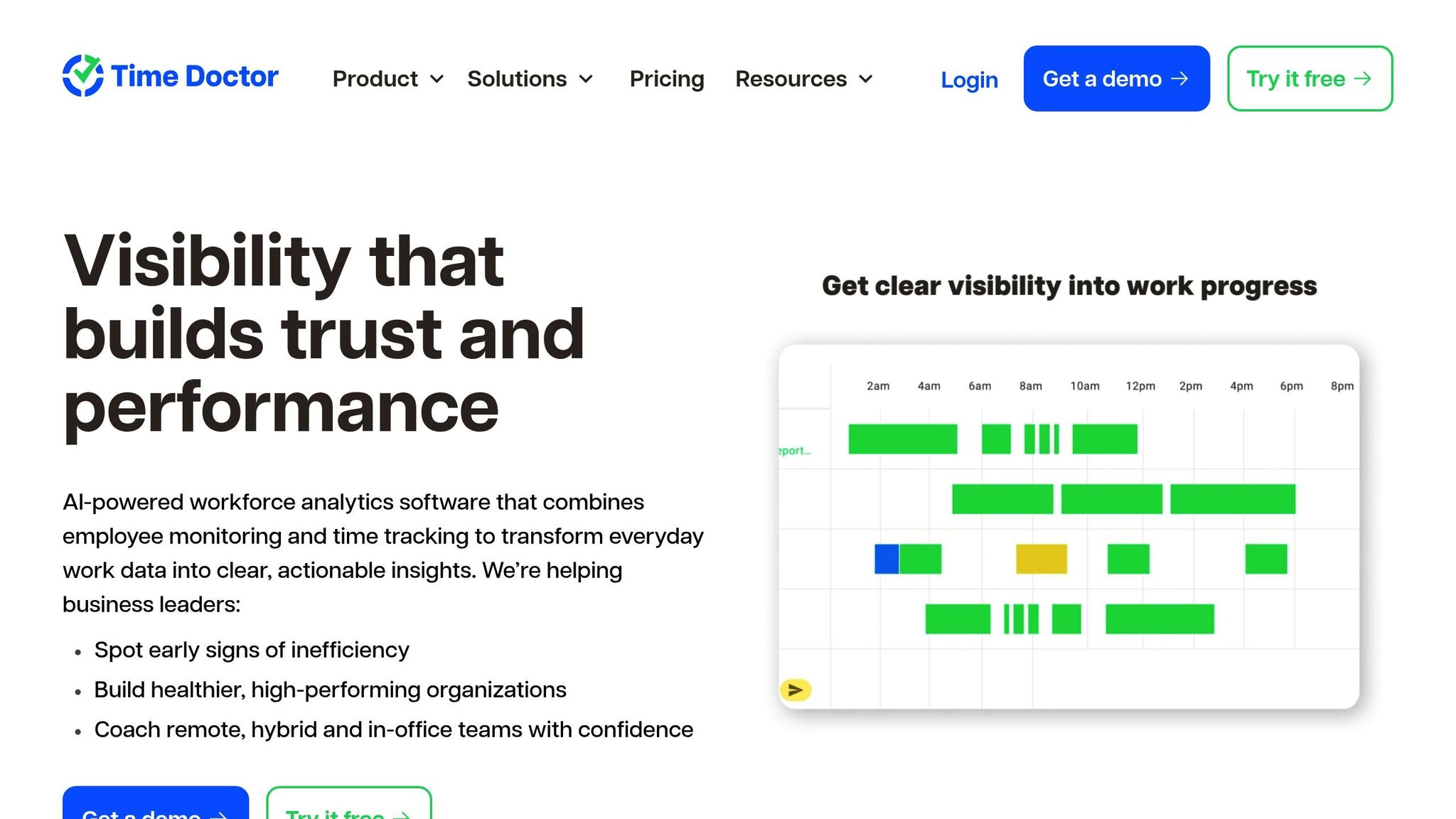
A closer look at leading platforms reveals how their tracking methods and privacy features differ, helping organizations choose tools that align with their values and goals.
Hubstaff has transitioned from basic time tracking to an AI-driven productivity platform. With data from 140,000 workers across 17,000 organizations, it focuses on identifying productivity trends rather than just logging hours. Features include tracking focus time, app/URL usage, and AI tool integration (which accounts for 22.3% of deep work time). Privacy options include optional screenshots (which can be blurred or disabled), customizable tracking settings, and role-based permissions. Hubstaff offers a 14-day free trial with no credit card required.
Time Doctor provides deeper monitoring, including mandatory screenshots, activity tracking based on keyboard and mouse usage, and detailed app monitoring. While this approach offers comprehensive oversight, it can feel invasive for employees. Time Doctor is ideal for organizations with strict compliance needs or large, distributed teams requiring high accountability.
Toggl Track takes a more employee-friendly approach, focusing on time management rather than surveillance. Its emphasis on self-reported task tracking gives employees greater control over what is logged. Monitoring is less invasive, concentrating on time entries rather than activity levels or screenshots. This makes Toggl Track a favorite among freelancers and creative teams who value autonomy but still need to track billable hours.
| Feature | Hubstaff | Time Doctor | Toggl Track |
|---|---|---|---|
| Primary Focus | AI-driven productivity patterns & workforce analytics | Comprehensive activity monitoring & compliance | Time management & task duration tracking |
| Monitoring Depth | High: Optional screenshots, app/URL usage, AI tool tracking | Very High: Mandatory screenshots, keystroke activity, detailed app monitoring | Moderate: Self-reported time entries, basic task tracking |
| Privacy Controls | Customizable roles/permissions, blur/disable screenshots, pause button | Limited customization, always-on tracking during work hours | High employee control, self-service tracking |
| Best For | Distributed teams needing productivity insights without heavy surveillance | Organizations with strict compliance or security requirements | Freelancers and teams prioritizing autonomy and trust |
| Transparency | Dashboard access for employees to view their own data | Manager-only reporting | Full employee access to personal tracking data |
For job seekers entering remote roles in 2026, understanding these monitoring tools is crucial. If you're applying to companies that use outcome-based performance models, ensure your resume highlights measurable achievements and results. Tools like an AI resume builder can help tailor your application to emphasize the metrics and accomplishments that matter in this evolving work environment.
The takeaway: monitoring tools are becoming a workplace staple, but the most effective implementations prioritize transparency, employee benefits, and meaningful productivity metrics over intrusive surveillance.
"Trust is the outcome of high competence and the right intent." - Deloitte research
This principle applies equally to employers managing monitoring systems and employees adapting to them.
Mental Health and Wellness Metrics in Performance Systems
By 2026, the way companies track remote work has shifted significantly, moving beyond just measuring hours or activity levels. Now, wellness metrics are becoming integral to performance systems, helping to identify burnout before it affects retention. Modern tools provide real-time insights into employee well-being, flagging signs of overwork and insufficient recovery.
One major shift is the emphasis on focus time as a key wellness indicator. A drop in focus time, even with an increase in total hours worked, can signal early cognitive fatigue. Research shows that productivity hits a ceiling at around 50–55 hours per week, while exhaustion continues to climb, making it clear that more hours don’t always mean better results.
AI now tracks specific burnout patterns, such as the "triple-peak workday", which includes bursts of productivity in the morning, afternoon, and late evening. While this schedule offers flexibility, it’s becoming alarmingly common - 1 in 5 weekdays follows this pattern, raising burnout risks when it becomes routine. Another challenge is the "collaboration tax", where meeting loads double, and 25% of meetings happen during peak focus hours, increasing stress from constant context-switching.
These insights are driving the development of advanced tracking features designed to prioritize employee well-being.
Wellness Tracking Features in Performance Tools
Today’s platforms go beyond simple data collection. They now include wellness prompts and actionable recommendations. For instance, AI can suggest breaks or rebalance workloads when it detects "creeping workload imbalances." Employees also have the option to pause monitoring during personal breaks, and privacy-focused systems ensure "transparency-by-default" by giving workers access to their own wellness and focus data. This approach fosters autonomy and encourages self-correction.
In January 2026, Zapier introduced an AI-driven system to help employees set better goals and assess their quality. The result? 91% employee participation and clearer, more measurable objectives across the board. Similarly, Boston Consulting Group (BCG) implemented AI into their evaluation processes, reducing the time spent writing performance reviews by 40% while improving feedback quality.
Burnout risks aren’t evenly distributed across roles. For example, 28% of team leads and managers report working at least one 50+ hour week, compared to less than 5% of engineers. To address this, tools now rotate "unfriendly hours" for global teams, ensuring no single region bears the brunt of time zone-related stress. High-performing teams are also using time-tracking data to protect deep work periods rather than simply extending hours.
"AI can uncover early warning signs like: Sustained overwork, Shrinking recovery time, Unbalanced workload distribution across teams." - Jared Brown, Hubstaff
Wellness Impact on Productivity and Retention
These wellness-focused tools are having a measurable impact on both productivity and employee retention. For instance, 40% of employees say they would consider leaving their job if remote or hybrid work options were eliminated. Additionally, excessive surveillance has been linked to lower innovation and higher turnover rates. When companies use wellness metrics as a foundation for supportive conversations rather than punitive measures, they build trust and see better outcomes.
By combining wellness data with outcome-based performance tracking, organizations are creating systems that evaluate not just what employees achieve, but how sustainably they work. Transparency is critical here - 85% of workers believe employers should disclose any monitoring tools they use. Companies that focus on tracking meaningful metrics like well-being, safety, and workplace culture - rather than superficial ones like keystrokes - are successfully linking data to improved employee well-being.
"Beyond roughly 50–55 hours, output plateaus. Fatigue, on the other hand, does not." - Hubstaff
For job seekers, understanding how potential employers implement wellness tracking can be a game-changer. If you’re applying to organizations with advanced performance systems, platforms like scale.jobs can help you highlight your self-management skills, ability to maintain focus, and measurable achievements - qualities that resonate with companies prioritizing sustainable productivity.
The bottom line? Wellness metrics aren’t about micromanaging employees - they’re about creating systems that protect well-being and improve retention. With transparent practices and accessible data, these tools become powerful resources for coaching and support, rather than tools of surveillance.
How to Choose Remote Performance Tracking Tools
Selection Criteria for Performance Tools
When selecting tools to track performance in remote setups, it's essential to focus on measuring outcomes rather than just hours logged. The best platforms differentiate between deep work - the focused, productive time - and the "busy work" that often clogs schedules, such as meetings or status updates. Research indicates that remote workers achieve only 2–3 hours of deep focus daily, making this the most critical metric to monitor.
Outcome-based tracking is key. Avoid tools that rely on invasive methods like keystroke logging or mouse tracking, as these can damage trust between employers and employees. Instead, look for platforms that evaluate progress toward specific goals. For example, when Boston Consulting Group (BCG) adopted AI for its evaluation processes in January 2026, it reduced the time spent on performance reviews by 40% while improving the quality of feedback. This was achieved by focusing on results rather than hours worked.
Modern tools should also include AI-driven predictive analytics. These features can help identify early signs of burnout, such as consistently high hours with diminishing focus or reduced recovery time. By addressing these patterns proactively, companies can prevent employee attrition.
"Leaders have data, but they struggle because the data arrives too late, says close to nothing, or flattens real work into averages." - Jared Brown, Hubstaff
Transparency is another critical factor. Employees are more open to data collection when it benefits them directly, such as through improved career development or work-life balance. Surveys show that 90% of employees are willing to share work-related data under these conditions, but only 30% are comfortable with email monitoring unless employers are upfront about what is being tracked and why. The best tools allow employees to control their data, offering features like blurred screenshots or adjustable tracking settings.
Lastly, ensure the tool can differentiate productive AI usage from distractions. AI tools now contribute to 22.3% of deep work time in remote teams, with 85% of professionals using AI tools like ChatGPT or Cursor as part of their workflow. Hybrid teams are seeing a rise in AI integration, with usage increasing from 5% to 11% of the workday. If your tracking platform can't identify how AI tools are being utilized effectively, it may already be outdated.
These criteria can help you decide whether to stick with your current tools or explore a more advanced solution like scale.jobs. For job seekers, understanding these metrics is crucial for identifying employers who prioritize meaningful performance tracking - read on to see how scale.jobs aligns with these principles.
scale.jobs: Job Application Tracking for Remote Job Seekers
Just as modern companies focus on outcomes over hours, scale.jobs empowers job seekers to showcase measurable achievements. If you're navigating the remote job market, knowing how employers track performance can help you tailor your applications to highlight self-management, focus, and tangible results - qualities that stand out to forward-thinking organizations.
scale.jobs simplifies the job search process by consolidating all your application details in one place. Its Job Applications Tracker keeps tabs on every submission, follow-up, and response, mirroring the focus-oriented tracking systems employers use internally. The platform also includes a free ATS-compliant Resume Builder, ensuring your materials pass automated screening systems - a must when applying to companies with advanced hiring workflows.
For those who need more hands-on support, scale.jobs offers Human Assistant (Reverse Recruiter Services) starting at $199 for 250 applications. This service provides trained virtual assistants who handle the entire application process, from filling out forms to creating ATS-optimized resumes and tailored cover letters. You'll receive real-time WhatsApp updates and time-stamped proof-of-work screenshots, delivering the same transparency employers now expect from their own tools. By outsourcing these repetitive tasks, you can reclaim 20+ hours per week to focus on networking and interview preparation.
The AI Assistant Pro tier ($9/month launch offer) takes automation further, offering unlimited AI-generated resumes, cover letters, and interview responses. This is particularly helpful for recent graduates, frequent job changers, or those navigating visa challenges like H1B or F1. With features like a Resume ATS Checker and Actionable Feedback Engine, you can ensure your materials meet the same high standards employers use to evaluate performance.
Whether you're targeting companies with cutting-edge performance tracking or simply need a streamlined way to manage your job search, scale.jobs applies the same principles that top employers value: outcome-focused metrics, transparency, and human oversight where it matters most.
Conclusion
By 2026, tracking remote work performance has evolved far beyond traditional activity metrics. The focus has shifted to evaluating outcomes and leveraging AI insights, signaling a redefinition of productivity in modern workplaces. Companies prioritizing tools that assess deep work quality and monitor burnout indicators are fostering trust and safeguarding their teams from exhaustion.
For today’s job seekers, this transformation highlights the importance of aligning application strategies with outcome-based evaluation methods. Understanding how employers measure performance can provide a clear advantage. Demonstrating self-management and a results-oriented mindset shows alignment with forward-thinking organizations. If you’re finding it challenging to adapt your resume or cover letter to these expectations, platforms like scale.jobs can help you present your accomplishments in a way that resonates with modern hiring practices. Their tools focus on crafting applications that reflect the outcome-driven approaches valued by today’s employers.
This shift from tracking activities to assessing results offers job seekers a chance to stand out by adopting similar principles in their job search. Opt for tools that emphasize transparency, human oversight, and shared success. Organizations embracing outcome-focused performance tracking are leading the way, and job seekers who mirror these values in their approach will excel in an increasingly results-driven job market.
FAQs
What outcome metrics will be most important for remote roles in 2026?
As we look ahead to 2026, the way we measure success in remote work is shifting significantly. Instead of simply tracking hours logged, metrics like focus time, deep work hours, productivity patterns, and AI-driven performance insights are taking center stage. These indicators prioritize the quality of work and meaningful contributions over sheer time spent working, highlighting engagement and efficiency as the true markers of performance.
How can employees verify what monitoring data is collected about them?
Employees can understand what monitoring data is being collected by carefully reviewing their company’s privacy policies and monitoring disclosures. These documents typically explain the types of data being gathered and the reasons for its collection. Additionally, employees may have the right to request access to their data under regulations such as the General Data Protection Regulation (GDPR) or the California Consumer Privacy Act (CCPA). For more specific details, reaching out to the HR department or the company’s data privacy officer is a good step. Some companies even offer dashboards or reports that provide insights into the data being collected.
How can I highlight 'deep work' and results on my resume for remote jobs?
To present "deep work" and measurable results on your resume for remote positions, emphasize achievements with clear, quantifiable outcomes. Include metrics such as percentage increases in productivity, revenue gains, or efficiency improvements. For instance, you could describe managing a project that enhanced team performance by 25% or leading an initiative that resulted in a 15% rise in customer satisfaction. Recognitions, awards, or specific project successes can further underline your ability to excel in remote work settings and deliver meaningful results.