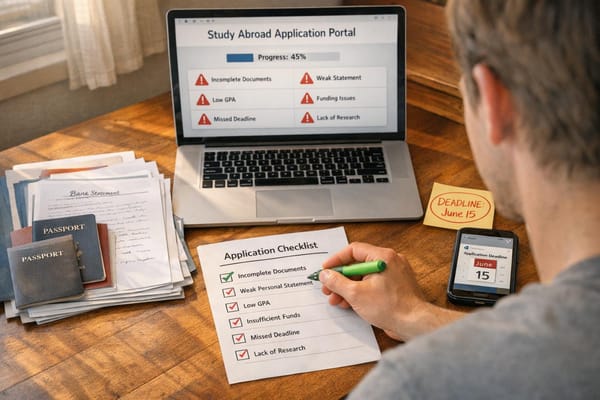
Proven Job Search Tips from Recruiters: What Actually Gets You Hired
Recruiters share actionable job search strategies: target roles, ATS-friendly resumes, quantify results, network for referrals, and prepare strong interviews.


Looking for a job? Here’s what recruiters say actually works. To stand out in today’s competitive market, you need more than just a polished resume. Recruiters recommend focusing on these key strategies:
- Target Specific Roles and Companies: Narrow your search to roles and organizations that align with your skills and career goals. Tailor your applications to show genuine interest.
- Create a Job Search Plan: Treat your job hunt like a project - set weekly goals, stay organized, and track your applications systematically.
- Use ATS-Friendly Resumes: Keep your resume simple, keyword-rich, and easy for Applicant Tracking Systems (ATS) to read.
- Quantify Your Achievements: Highlight measurable results on your resume to show the impact of your work.
- Customize Each Application: Tailor your resume and cover letter for every job to match the job description.
- Write Focused Cover Letters: Keep them short, specific, and relevant to the employer’s needs.
- Work Effectively with Recruiters: Be clear, professional, and responsive when engaging with recruiters.
- Optimize Your LinkedIn Profile: Use relevant keywords, complete all sections, and stay active to attract recruiter searches.
- Leverage Referrals: Tap into your network to secure employee referrals and warm introductions.
- Prepare for Interviews: Research, practice structured answers (like STAR), and follow up with thank-you notes.
Recruiters emphasize clarity, preparation, and personalization in every step of your job search. Tools like Scale.jobs can simplify the process by offering tailored applications, ATS-friendly resumes, and real-time updates. These strategies can save you time and increase your chances of landing interviews and offers.
14 Minutes of Brutal Job Search Advice (I've Hired 1000+ People)
1. Identify Your Target Role and Companies
Recruiters often notice a pattern: candidates who apply to every job under the sun rarely get interviews. Why? Because casting a wide net leads to generic resumes, cookie-cutter cover letters, and a lack of genuine enthusiasm. Hiring managers can spot this scattershot approach almost instantly.
Get specific about your target role. Instead of vaguely searching for "marketing jobs", narrow it down to something like "Senior Product Marketing Manager for B2B SaaS." This level of focus allows you to tailor your application materials to meet the exact requirements of the role.
Start by reviewing 10 to 15 job postings for positions you’re interested in. Look for recurring themes in the skills, experience, and responsibilities listed. For instance, if the majority of postings mention "experience with marketing automation platforms like HubSpot or Marketo", you’ll know to highlight that skill prominently on your resume.
Build a list of target companies. Aim for 20 to 50 organizations that align with your values and career goals. For example, if you’re in tech, you might focus on Series B startups in Austin or established companies like Dell. In finance, you could target regional banks in Charlotte or investment firms in Chicago.
Recruiters appreciate candidates who show genuine interest in their company. Doing your homework - like researching recent product launches, leadership changes, or market strategies - helps you stand out. You can weave these insights into your cover letter or bring them up during interviews, showing that you’ve taken the time to understand the company. That kind of preparation sets you apart from those who send out hundreds of identical applications.
Once you’ve done your research, stay organized. Track your job applications systematically. Tools like Scale.jobs' free Job Applications Tracker can help you keep tabs on your progress. Log details like company names, application dates, follow-up actions, and even notes about hiring managers or specific job postings. This system helps you avoid duplicate applications and ensures you’re prepared for interviews by keeping all your notes in one place.
This focused strategy also makes networking more effective. If you tell someone you’re "looking for a Senior Data Analyst role at healthcare technology companies in Boston", they’re far more likely to connect you with the right people than if you say, "I’m open to anything in tech." The more specific you are, the easier it is for others to help.
Ultimately, recruiters are drawn to candidates who clearly know what they want - a specific role at a specific company. Tailored applications and detailed preparation can move you from the "maybe" pile to the "definitely interview" list.
2. Create a Job Search Plan
Having a structured approach to your job search doesn’t just make the process smoother - it also signals to recruiters that you’re serious and professional about your career. Treating your job hunt like a project can lead to faster results, allowing you to stay organized and focused.
Set weekly application goals. If you’re unemployed, aim to submit 10 to 20 applications each week. If you’re employed, scale that down to 5 to 10. But remember, quality beats quantity. Sending out 50 generic resumes won’t get you as far as submitting 15 thoughtfully tailored applications. Track your weekly progress. If you’re applying to 20 roles but not hearing back, it might be time to tweak your resume or rethink your targeting strategy.
Dedicate time and establish a routine. Think of your job search as a part-time or full-time commitment, depending on your situation. If you’re not working, aim to spend 25 to 30 hours a week on this effort. If you’re balancing a job, carve out 8 to 10 hours weekly. Block out specific times for tasks like researching roles, customizing resumes, networking, and preparing for interviews. Start your day by checking job boards for new postings in your target field. Spend 30 minutes on LinkedIn engaging with posts from the companies you’re interested in or connecting with industry professionals. A steady routine prevents burnout and keeps you on track.
Stay organized and track your progress. Recruiters appreciate candidates who keep tabs on their applications. Use tools like the Scale.jobs tracker to log every application, set reminders for follow-ups, and store key details about each opportunity. This way, if a recruiter calls unexpectedly, you’ll have all the information you need at your fingertips.
Set milestones and adapt as needed. Break your job search into manageable phases with clear goals. For example:
- Week 1: Finalize your resume and identify 30 target companies.
- Weeks 2–4: Submit 15 tailored applications weekly and initiate 10 networking conversations.
- Week 5: Assess your results. If you’re getting interviews, keep up the momentum. If not, revisit your resume, application strategy, or the roles you’re targeting.
Recruiters value candidates who can explain their process and show they’re learning from feedback. This structured approach helps you refine your efforts as you move forward.
Prepare for the long haul but remain flexible. On average, job searches take three to six months, though this can vary by industry. Tech roles may move faster during hiring surges, while specialized roles in fields like healthcare or finance could take longer. Budget your time and resources wisely. For example, Scale.jobs offers a one-time payment model starting at $199 for 250 applications, which can save you money compared to monthly subscription services.
Hold yourself accountable. Share your weekly goals with someone who can help keep you on track. This could be a friend, a job search accountability group, or even a career coach. Regular check-ins with someone else can provide the motivation you need during slower weeks and help you stay consistent.
The key difference between candidates who land offers quickly and those who struggle often comes down to having a plan. A clear, structured approach eliminates the daily guesswork and ensures steady progress. Recruiters notice when someone is organized and intentional - it’s a quality that stands out and can make all the difference in getting that interview call.
3. Use a Simple, ATS-Friendly Resume Format
Your resume might look polished and professional, but if an ATS (Applicant Tracking System) can't interpret it, your qualifications could be overlooked. While eye-catching designs are tempting, they can sometimes confuse the algorithms that scan your resume.
Stick to clean fonts and straightforward layouts. Use commonly recognized fonts like Arial, Calibri, Georgia, or Times New Roman in sizes between 10 and 12 points. Opt for a single-column format and avoid decorative elements that could disrupt ATS readability. Place your name and contact details at the top, followed by clearly labeled sections such as Summary, Work Experience, Education, and Skills. Save your file as a .docx (preferred) or PDF, and use a professional file name like John_Smith_Marketing_Manager.docx.
Avoid using tables, columns, or unique symbols. While tables and columns might look organized, ATS systems often struggle to interpret them correctly, which can lead to scrambled information. Stick to simple round bullet points or hyphens for lists, and use standard date formats like "January 2022 – December 2024" or "01/2022 – 12/2024."
Stick with standard section headings. ATS systems rely on familiar labels to categorize your information. Use conventional headings like "Work Experience", "Education", "Skills", and "Certifications." Creative or unconventional headings might not be recognized, causing vital details to be missed.
Incorporate keywords from the job description. ATS software ranks resumes based on keyword matches. If a job posting emphasizes terms like "budget forecasting", "project management", or "stakeholder communication", weave these phrases naturally into your descriptions of past roles.
Test your resume’s readability. Before submitting, paste your resume into a plain text editor like Notepad. If the content appears disorganized or garbled, it’s likely the ATS will encounter the same issue. This step ensures your resume is easy to read for both software and human recruiters.
Keep it concise and impactful. Every line should serve a purpose. A simple, well-organized format ensures both ATS systems and hiring managers can quickly grasp your qualifications.
For added assurance, you can use free tools to refine your resume. Scale.jobs offers a free ATS checker that scans your document for compatibility and provides detailed recommendations. Unlike generic tools that give vague feedback, this one highlights specific formatting issues and suggests job-specific keyword improvements. If you're starting from scratch, their ATS-compliant resume builder can help you create a polished, recruiter-friendly document - no design experience required.
4. Add Numbers and Results to Your Resume
Recruiters often emphasize that numbers and measurable outcomes grab attention instantly. When scanning resumes, they’re looking for clear evidence of tangible results, not vague descriptions like "responsible for sales" or "managed a team." Instead, showcasing specific achievements with data demonstrates the real impact of your work.
Turn job responsibilities into measurable accomplishments. For instance, if you managed social media accounts, don’t stop at describing the task - show the results. Did your efforts lead to a 25% increase in followers or a spike in engagement rates? Highlighting these results shows success, not just activity.
Use concrete metrics like percentages, dollar figures, or time frames. For example, a customer service representative can strengthen "resolved customer complaints efficiently" by specifying a 90% resolution rate within 24 hours or a 20% improvement in customer satisfaction scores. If exact numbers aren’t available, reasonable estimates or ranges can still provide valuable context. Tools like Scale.jobs can even help refine and verify these metrics to make your resume shine.
Focus on outcomes, not just tasks. If you implemented a new system, go beyond stating "created a new filing system." Explain its impact - did it reduce retrieval time by 30% or save 10 work hours weekly? Recruiters value these details because they show how your contributions made a difference.
Add comparisons and context to amplify your results. Pairing numbers with benchmarks makes your achievements even more compelling. For instance, if you completed a project 15% under budget or finished it two weeks ahead of schedule, mention how this exceeded expectations. Comparing your results to industry standards or previous performance levels can also highlight the significance of your accomplishments.
Apply metrics across all roles - even those that seem harder to quantify. Teachers might highlight a 15% improvement in test scores or increased adoption of a curriculum. Administrative professionals could point to the number of meetings coordinated or cost savings achieved through better vendor negotiations. Almost any role can include metrics that reflect its impact.
Quantifiable details not only back up your claims but also align with what recruiters want to see. By weaving numbers into your resume, you create a story that’s easy for hiring managers to understand and remember - setting the stage for deeper discussions during interviews.
5. Customize Your Resume for Each Job
Recruiters often dismiss generic resumes within seconds. Why? Both applicant tracking systems (ATS) and human screeners are trained to spot resumes that align closely with the job description. Sending out the same resume for every role sends a clear signal: you haven’t taken the time to understand the job’s specific requirements.
Start by studying the job description for keywords and requirements. Job postings are filled with clues about the skills, tools, and experience the employer values most. Look for repeated terms, essential qualifications, and preferred skills. For example, if "project management" appears multiple times or "Agile methodology" is highlighted, those terms should appear in your resume - provided you have that experience. Use the exact language the employer uses. If they say "customer success", don’t substitute it with "client relations." Matching their terminology ensures your resume gets noticed by both ATS and hiring managers.
Focus on the skills and experiences that align with the role. Tailor your resume to highlight the parts of your background that best fit the job. For instance, if you’re applying for a data analyst role that emphasizes SQL and visualization tools, prioritize those skills and related projects. If the role leans more on stakeholder communication, showcase your collaboration and presentation experience instead. You’re not exaggerating your qualifications - you’re simply putting the most relevant aspects of your career front and center.
Revamp your professional summary and reorder bullet points for impact. Instead of a generic summary like "experienced marketing professional seeking new opportunities", craft one that speaks directly to the job: "Digital marketing specialist with 5+ years driving SEO growth and content strategies for B2B SaaS companies." Similarly, reorder bullet points under each role to emphasize accomplishments that match the job’s focus. If budget management is a priority for the employer, move your cost-saving achievements to the top of your experience section.
Be honest, but strategic. Customizing your resume doesn’t mean fabricating experience. Focus on the skills you genuinely have, even if you’ve only used them occasionally. For example, if you’ve worked with a specific tool briefly, it’s fine to list it, but don’t claim expertise. Avoid including skills or experiences you don’t have - it’s better to leave them off than risk being caught in an interview.
To make this process more efficient, consider using technology. Tailoring a resume can take 20–30 minutes per job, which adds up quickly when applying to multiple roles. Tools like Scale.jobs offer an AI Assistant that customizes resumes based on job postings. It optimizes keywords and formatting without requiring extensive manual effort. The free version allows for two AI-customized resumes daily, while the Pro plan, available for $9 per month during the launch, offers unlimited customization.
Run your customized resume through an ATS checker before submitting. Even the most qualified candidates can be rejected if their resume formatting confuses the system or if key terms are missing. Scale.jobs also provides a free ATS Checker to help identify any gaps in keywords, formatting, or structure.
The goal isn’t to trick the system - it’s to clearly showcase how your skills match the employer’s needs. By customizing your resume and using smart tools, you can make every application stand out and improve your chances of landing interviews.
6. Write Short, Focused Cover Letters
A well-crafted cover letter can be the perfect complement to your resume, addressing the employer's specific needs and setting you apart. Recruiters often skim through cover letters quickly, so keeping it brief and relevant is essential. A focused, tailored letter will always stand out over a generic one that simply restates your resume.
Stick to 150–250 words and follow a simple three-paragraph format:
- Start by introducing yourself and the role you're applying for. If someone referred you, mention it here.
- Highlight two or three qualifications that match the job description, backing them up with concrete examples. For instance, you might describe how you successfully led a project that stayed under budget while collaborating with multiple teams.
- Conclude with a clear expression of interest in the role and a specific call to action, like inviting them to discuss how you can contribute to their team.
Tailor your letter to match the job posting. Pay close attention to the keywords and phrases in the description - whether it’s "customer success", "data analysis", or another skill - and weave them into your letter. This shows you’ve done your research and also helps your application pass through applicant tracking systems (ATS).
Focus on the employer’s needs, not your personal goals. Instead of saying, "I’m excited to grow my project management skills", you could write, "My track record of managing cross-functional teams and delivering projects under budget aligns with your need for a results-oriented project manager."
Proofread thoroughly. Even minor typos can hurt your chances. Read your letter aloud, use tools like grammar checkers, or ask someone you trust to review it before submitting.
If writing a custom cover letter for every job feels daunting, tools like Scale.jobs can simplify the process. Their AI Assistant generates personalized cover letters based on specific job descriptions. The free version includes one AI-generated letter per day, while their AI Assistant Pro plan - priced at $9 per month during the launch - offers unlimited letters. For even more precision, their Human Assistant service creates ATS-optimized, tailored cover letters, letting you focus on other aspects of your job search. Neha Sawant, a user of Scale.jobs, shared that her personalized letters led to positive responses.
A focused, customized cover letter complements your resume, reinforcing your value and creating a cohesive application. It doesn’t need to be a masterpiece - just clear, concise, and compelling enough to make the recruiter want to learn more about you.
7. Work With Recruiters the Right Way
Once your resume and cover letter are polished, recruiters can be an excellent resource for uncovering job opportunities you might not find elsewhere. But to truly benefit, you need to know how to work with them effectively.
Recruiters are not career coaches, so understanding their role and what drives them is key to creating productive relationships that can lead to job offers.
Respond promptly and professionally. If a recruiter reaches out, aim to reply within 24 hours. Delays can hurt your chances since recruiters often work on tight deadlines and juggle multiple candidates. Keep your response short yet enthusiastic - confirm your interest, share your availability for a call, and attach an updated resume if needed.
Be specific about your goals. Recruiters value candidates who are clear about what they want. Instead of saying, "I'm open to anything", identify the roles, industries, and salary ranges you're targeting. This focus not only makes their job easier but also positions you as a serious and prepared candidate.
Know the difference between internal and external recruiters. Internal recruiters work directly for a company, filling roles within their organization. They often have detailed knowledge about team dynamics and company culture. External recruiters, on the other hand, work for agencies and represent multiple companies, earning commissions when they successfully place candidates. Both types can be helpful, but knowing which one you're dealing with will shape how you interact with them.
Keep recruiters updated on your status. If your job situation changes - whether you're interviewing elsewhere, have received an offer, or are no longer available - let your recruiter know right away. Ghosting or failing to communicate can harm your relationship. A simple message like, "I've accepted another offer but would love to stay in touch for future opportunities", keeps the door open for future collaboration.
Make their job easier. When a recruiter requests specific materials, provide exactly what they need in the format they ask for. For example, if they need your resume in Word format or ask for references, have those ready. The easier you make it for them to present you to their clients, the more likely they are to prioritize your application.
Don’t rely on them for career advice. Recruiters focus on filling positions, not offering career coaching or resume critiques. While some may provide tips, their main goal is to match candidates with open roles. If you need more in-depth support, consider services like Scale.jobs, which offer ATS-friendly resumes, tailored applications, and real-time updates. Their Human Assistant plans start at $199 for 250 applications, giving you time to focus on networking and interview prep while ensuring your applications are handled professionally.
Follow up, but don’t overdo it. After your initial conversation, checking in every week or two is perfectly fine. A quick message like, "Just following up to see if there are any updates on the [role title] position or other opportunities", is enough. Avoid bombarding them with messages - recruiters will contact you when they have news or relevant roles.
Stay connected, even when you’re not job hunting. The best time to build relationships with recruiters is when you’re not urgently searching for a job. Connect on LinkedIn, engage with their posts, and maintain occasional contact. This way, when you are ready for a career move, you’ll already have a network of recruiters familiar with your background and ready to help.
8. Set Up Your LinkedIn Profile for Recruiter Searches
Recruiters spend hours scouring LinkedIn for potential candidates. If your profile isn’t fine-tuned for their searches, you might as well be invisible - no matter how qualified you are. Most recruiters rely on LinkedIn Recruiter, a premium tool that uses filters like keywords, job titles, locations, and skills to zero in on candidates. Your mission? Make sure your profile is optimized to show up when they’re looking for someone with your expertise. Just like a well-crafted resume grabs attention, a polished LinkedIn profile ensures you’re front and center in their search results.
Use job-relevant keywords. Recruiters search with the exact terms found in job descriptions, so your profile should mirror those words. For example, if you’re aiming for a product manager role, your headline and About section should include terms like "product manager", "product development", "roadmap planning", or "cross-functional leadership." Avoid vague phrases like "strategic thinker" or "problem solver." Review 5–10 job postings for your target role and jot down the skills and qualifications that pop up repeatedly. Then, naturally incorporate those keywords into your headline, About section, and Experience descriptions. This approach ensures your profile aligns with both recruiter searches and your resume.
Complete every section. LinkedIn favors profiles that are 100% filled out, and recruiters often filter for these. That means adding a professional photo, a background image, a detailed About section, a full work history, education details, and a list of key skills. Fully completed profiles not only rank higher in search results but also signal professionalism and dedication.
Make your headline work harder. Your headline is one of the first things recruiters notice - and it’s searchable. Instead of just listing your current title like "Marketing Manager at XYZ Corp", expand it to highlight your specialties or career goals. For instance: "Marketing Manager | B2B SaaS Growth | Demand Generation & Content Strategy." This approach increases your visibility and makes your profile more appealing.
Choose skills strategically and get endorsements. While LinkedIn lets you list up to 50 skills, the top three are the most prominent and influential. Focus on role-specific skills - like "Python", "Data Analysis", and "Machine Learning" if you’re a data scientist. Then, ask former colleagues or managers to endorse you for these skills. Profiles with more endorsements often rank higher in recruiter searches.
Activate the "Open to Work" feature. LinkedIn lets you signal your job-seeking status in two ways: publicly (with the green #OpenToWork frame on your photo) or privately (visible only to recruiters). If you’re currently employed and want to keep your search discreet, choose the "recruiters only" option. This feature boosts your visibility in recruiter searches and allows you to specify the roles, locations, and work setups you’re open to, helping recruiters assess your fit before reaching out.
Stay active on the platform. Regular activity on LinkedIn improves your search ranking. Profiles that post, comment, or share content often appear higher in search results. Aim to engage a few times a week - whether it’s sharing an industry article, commenting on a post, or posting your own insights. Active profiles signal to recruiters that you’re engaged and up-to-date in your field.
Customize your LinkedIn URL. Instead of sticking with the default URL (e.g., linkedin.com/in/john-smith-8473629), create a custom one with just your name (e.g., linkedin.com/in/johnsmith). It looks more professional on your resume and email signature, makes your profile easier to find, and can even improve your visibility in LinkedIn and Google searches.
Scale.jobs offers a LinkedIn Makeover add-on to help you refine your profile. Their team analyzes your profile, identifies the keywords recruiters are searching for in your field, and rewrites your sections to boost visibility - all while keeping your profile authentic and professional.
Keep your profile updated - even when you’re not actively job hunting. Recruiters often approach passive candidates - those who aren’t actively looking but might be open to the right opportunity. By keeping your profile current, keyword-rich, and polished, you’ll stay on their radar. This proactive approach can open doors to opportunities you might not have discovered otherwise. Think of your LinkedIn profile as a key piece of your professional toolkit, working alongside your resume to attract attention at every stage of your career.
9. Get Referrals and Warm Introductions
Employee referrals can be a game-changer in your job search. While less than 2% of applicants typically land an interview through standard applications, referrals can significantly boost your chances. Why? Because they come with a built-in endorsement from someone within the company, giving you instant credibility and signaling that you might be a great fit. Recruiters value this pre-vetting process, and many companies even offer bonuses to employees who successfully refer candidates.
So, how do you make the most of referrals? Start by tapping into your existing network. Before reaching out to new contacts, check LinkedIn or your professional associations for connections at your target companies. Former colleagues, classmates, or even acquaintances might be willing to help if you approach them thoughtfully.
When reaching out, avoid generic messages like "Can you refer me?" Instead, craft a personalized note that highlights your interest in a specific role and why you're a strong candidate. For example:
"Hi Sarah, I noticed you're at Salesforce in product management. I'm currently exploring a Senior Product Manager role. With my five years at Adobe managing B2B SaaS products, I believe I could be a strong fit. Would you be open to referring me or sharing insights about the role?"
Make it easy for your contact to assist. Attach your resume and include a brief summary of your key achievements relevant to the role. Some companies use formal referral systems, while others prefer informal email introductions - ask your contact what works best for them. Offering to send a concise bullet-point summary of your qualifications can also simplify the process.
After receiving a referral, show your gratitude. Thank your contact promptly and keep them updated on your progress. If you land an interview or get the job, let them know - it reinforces the value of their help. If you don’t hear back after a couple of weeks, follow up politely, but avoid being pushy.
If you don’t have direct connections, leverage second-degree contacts. LinkedIn can help you identify mutual connections who might introduce you. For instance, you could say:
"Hi Mike, I noticed you're connected to Jennifer Lee at Google. I'm exploring opportunities there and would love to learn more about the company culture. Would you feel comfortable introducing us?"
Networking goes beyond asking for favors - it’s about building authentic relationships. Join LinkedIn groups, attend industry meetups or virtual conferences, and even volunteer for professional organizations. Over time, these connections can lead to referrals, job leads, and valuable insights.
If networking feels overwhelming or time-consuming, consider using services like Scale.jobs to streamline the process. Their team identifies employees at your target companies and sends personalized referral requests on your behalf. According to their data, 46% of jobs secured by their users came through personal networking efforts - proof that this approach works. They’ll handle the outreach and follow-ups, leaving you free to focus on interview prep.
Remember, not all help comes in the form of formal referrals. Even if someone can’t officially refer you, they might still offer insider tips, introduce you to a hiring manager, or mention your name to their team. These warm introductions can set you apart from cold applicants.
Lastly, invest in your network before you need it. Stay connected with former colleagues, engage with your professional community, and offer help when you can. Building relationships over time ensures that when opportunities arise, you’ll already have a strong foundation to lean on. Networking isn’t just about landing your next job - it’s about fostering long-term career growth.
10. Prepare and Communicate Well in Interviews
Landing an interview is a big step, but turning that opportunity into a job offer requires preparation and effective communication. While your qualifications matter, recruiters often emphasize that candidates who come well-prepared and share their experiences in a clear, structured way leave a stronger impression.
Start by researching the company, the role you're applying for, and even the interviewers if possible. This helps you tailor your responses and craft thoughtful questions. A great way to structure your answers is by using the STAR method - explain the Situation, your Task, the Action you took, and the Result you achieved. Having a few well-thought-out examples of your accomplishments ready to go can make your answers both clear and confident.
During the interview, aim to speak clearly and stay concise. Prepare a few insightful questions to show your genuine interest in the position and the company. Afterward, send a quick thank-you note to express your appreciation and reinforce your enthusiasm for the role.
Practice is key to building confidence. Mock interviews can help you refine your answers and improve your delivery. Tools like Scale.jobs' AI Assistant Pro can make this process easier by offering tailored interview preparation for specific roles. During its launch, you can access this feature for just $9 per month, making it a helpful and affordable resource for sharpening your interview skills.
Comparison of Job Search Tools and Services
Navigating the crowded world of job search tools and services can feel overwhelming, especially when trying to figure out which ones actually get results. While strategies like tailoring resumes, networking, and preparing for interviews are essential, having the right tools can amplify your efforts. Here's how some popular platforms compare, with a focus on how scale.jobs stands out by prioritizing a human-driven and transparent approach.
LazyApply vs. scale.jobs: Human-Powered Applications Take the Lead
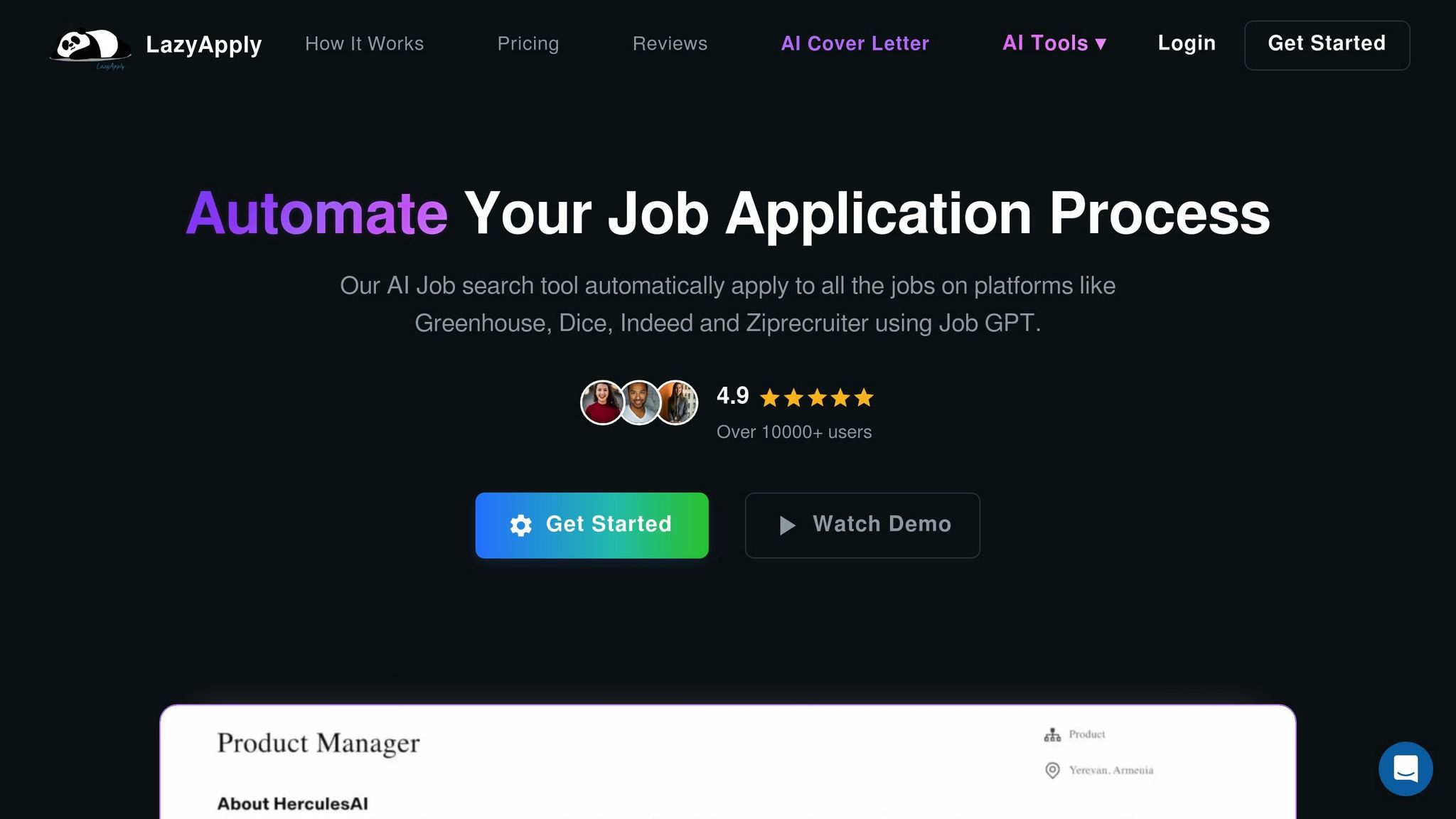
LazyApply has attracted more than 10,000 users with its promise of high-volume automation. Its AI tool submits hundreds of applications daily, prioritizing speed and quantity. But recruiters often caution against mass applications without personalization, as this approach can actually harm your chances - going against the tailored strategies we’ve discussed.
scale.jobs, on the other hand, takes a completely different route by relying on trained human assistants instead of bots. Here's why this makes a difference:
- No automation penalties: Every application is manually submitted, avoiding the risk of being flagged or rejected by Applicant Tracking Systems (ATS) designed to detect automation.
- True customization: Real people tailor each resume and cover letter to match the job description, avoiding generic keyword stuffing.
- Proven success rate: 93% of scale.jobs customers land jobs within three months, with nearly half getting hired directly through applications submitted by the service.
- Real-time updates: Customers receive WhatsApp updates with time-stamped proof of work, so you always know what’s happening.
- Cost-effective results: 70% of customers receive refunds because they secure jobs before using all their credits. On average, the service reduces job search time by 40%, from five months to just one to three months.
While LazyApply focuses on automation and volume, scale.jobs aligns with what recruiters value most: a personalized, detail-oriented approach. In a competitive job market, this level of care can give you a real edge.
Now, let’s look at how scale.jobs compares to services that emphasize comprehensive recruiting, like Find My Profession.
Is Find My Profession Worth It? A Closer Look
Find My Profession markets itself as a premium "Reverse Recruiting" service, boasting a 98% success rate in helping clients secure jobs within six months. The service handles everything from resume optimization and job searching to networking and salary negotiations, with human recruiters managing the process. Their results are impressive, including over 1,500 executive roles filled and a 4.9/5 customer satisfaction rating.
One client, Emerson Quinn, Director of Customer Success, shared:
"Quickly Bounced Back from a Layoff and Started a Better Job, All Thanks to Strategic Reverse Recruiting Help."
However, the service's pricing is not publicly listed, signaling a premium cost that may not suit everyone.
What sets scale.jobs apart from Find My Profession:
- Clear, flat-rate pricing: Plans start at $199 for 250 applications and go up to $1,099 for the Ultimate Bundle, which includes 1,000 applications, a personal recruiter, resume review, and LinkedIn makeover - without hidden fees.
- Speedy service: Custom resumes and cover letters are ready within 24 hours, keeping your job search moving.
- Flexible options: You can start small with application support for $199 and add services as needed, instead of committing to an all-inclusive package upfront.
- Wide compatibility: Human assistants handle applications across corporate ATS systems, niche job boards, and company-specific portals.
While Find My Profession is ideal for executives willing to invest in a hands-off, premium service, scale.jobs offers a more affordable way to tackle the most time-consuming part of job hunting - applications - without sacrificing quality.
Think Twice Before Using Resume Automation Tools
Platforms like Rezi.ai, ResumeGenius.com, Jobscan.co, and Simplify.jobs promise to simplify job searching with features like ATS optimization, keyword matching, and one-click applications. While these tools can help you create a basic resume quickly, they often fall short when it comes to the nuanced customization that makes applications stand out.
Automation tools might get the keywords right, but they can’t restructure your experience to highlight relevant projects or interpret the subtleties of a job description. As we've emphasized, tailored applications reviewed by a human are far more effective.
scale.jobs bridges the gap between automation and human expertise. Their AI Assistant Pro plan ($9/month during launch, typically $19/month) offers unlimited AI-tailored resumes, cover letters, and interview preparation tools. For a deeper level of support, the Human Assistant tier provides trained virtual assistants to manage the application process, allowing you to focus on networking and interview prep.
The results speak volumes: while the average job search takes five months, scale.jobs customers typically land jobs in just one to three months. By combining technology with a human touch, scale.jobs delivers a balanced solution that saves time and improves outcomes.
Conclusion
Landing a job in today’s job market demands a mix of strategy, preparation, and focus. Recruiters who contributed to this article emphasized three key principles: clarity about your goals, tailored application materials, and a structured approach to your search.
Precision is everything. Start by identifying the roles and companies that align with your interests and skills. Craft a clean, ATS-friendly resume that highlights measurable achievements. Then, tailor your application materials to reflect the specific skills and experiences outlined in each job description.
Don’t rely solely on technology - lean into human connections. Build relationships with recruiters, fine-tune your LinkedIn profile to attract hiring managers, and actively seek referrals or warm introductions. When you land interviews, come prepared with insightful questions and follow up promptly to leave a strong impression.
The application process can be time-intensive, but tools like Scale.jobs offer a helping hand. With personalized support and clear updates, their approach combines the best of human insight with practical assistance - offering something that automation alone just can’t replicate.
FAQs
What’s the best way to tailor my resume and cover letter for each job application?
To make your resume and cover letter stand out, tailor them specifically to the job you're applying for. Start by reviewing the job description and identifying the key skills and qualifications the employer is seeking. Highlight these in both your resume and cover letter, using clear and focused language to demonstrate how your background aligns with their needs.
In your resume, tweak bullet points to spotlight achievements and skills that directly relate to the role. For your cover letter, address the hiring manager or company by name, mention the job title, and clearly explain why you’re an excellent match for the position. This kind of personalization not only reflects your attention to detail but also signals genuine enthusiasm - qualities that recruiters greatly appreciate.
How can I optimize my LinkedIn profile to attract recruiters?
To make your LinkedIn profile grab attention and appeal to recruiters, focus on presenting your skills, experience, and professional value in a clear and engaging way. Start with a professional profile photo and craft a headline that highlights your expertise or career aspirations.
In the summary section, share a brief yet engaging narrative about your career journey. Highlight your achievements and what makes you stand out, and don’t forget to sprinkle in keywords relevant to your industry to help recruiters find you more easily. In the experience section, include measurable accomplishments to showcase the impact you’ve made in previous roles.
Keep your profile active by engaging with posts, sharing insights about your industry, and growing your network. This not only keeps your profile fresh but also shows recruiters that you’re actively involved in your field.
How valuable are employee referrals in landing a job, and what are the best ways to get them?
Employee referrals can be a game-changer in your job search. Companies often value referred candidates because they come with a personal recommendation, which can boost your chances of landing an interview - and maybe even the job. Plus, referrals tend to speed up the hiring process compared to traditional applications.
If you want to secure a referral, start by tapping into your network. Reach out to friends, former coworkers, or even acquaintances who work at the companies you're targeting. Be authentic in your approach - begin by asking for insights about the company or role instead of jumping straight to a referral request. Tools like LinkedIn are great for spotting mutual connections. When you do ask for a referral, make it easy for them by sharing a customized resume and a brief explanation of why you're a strong candidate for the position.