
Why Perfect Resumes Still Don’t Get Interviews in 2026
Perfect resumes fail because ATS, keyword mismatches, formatting errors, and AI bias filter out applicants—hybrid human+AI submissions often double interview rates.


Despite crafting flawless resumes, many job seekers face rejection in 2026. The issue lies not in the quality of the resume but in how hiring systems have evolved. 90% of employers now use automated systems, which often reject resumes due to formatting issues, keyword mismatches, or hidden biases. Even qualified candidates can be disqualified before a human ever reviews their application.
Key reasons include:
- Automated Filters: ATS systems reject 75% of resumes within seconds due to keyword mismatches, formatting errors, or employment gaps.
- Bias in AI Systems: Research shows resumes with Black-associated names face disproportionate rejection rates compared to White-associated names.
- Overuse of Automation: Tools like LazyApply and Simplify.jobs rely on bulk automation, which often triggers ATS rejections.
To navigate these challenges, scale.jobs combines AI optimization with human review, ensuring resumes are tailored, ATS-compliant, and manually submitted. This approach doubles interview rates compared to automation-only tools, providing job seekers with proof of submission and better chances of success.
For anyone struggling with ATS rejections or looking to improve their job search outcomes, understanding these systems and leveraging hybrid services like scale.jobs can make a real difference.
Is AI Rejecting Your Resume? The Truth About Modern Hiring in 2026.
How ATS and AI Screen Out Most Resumes
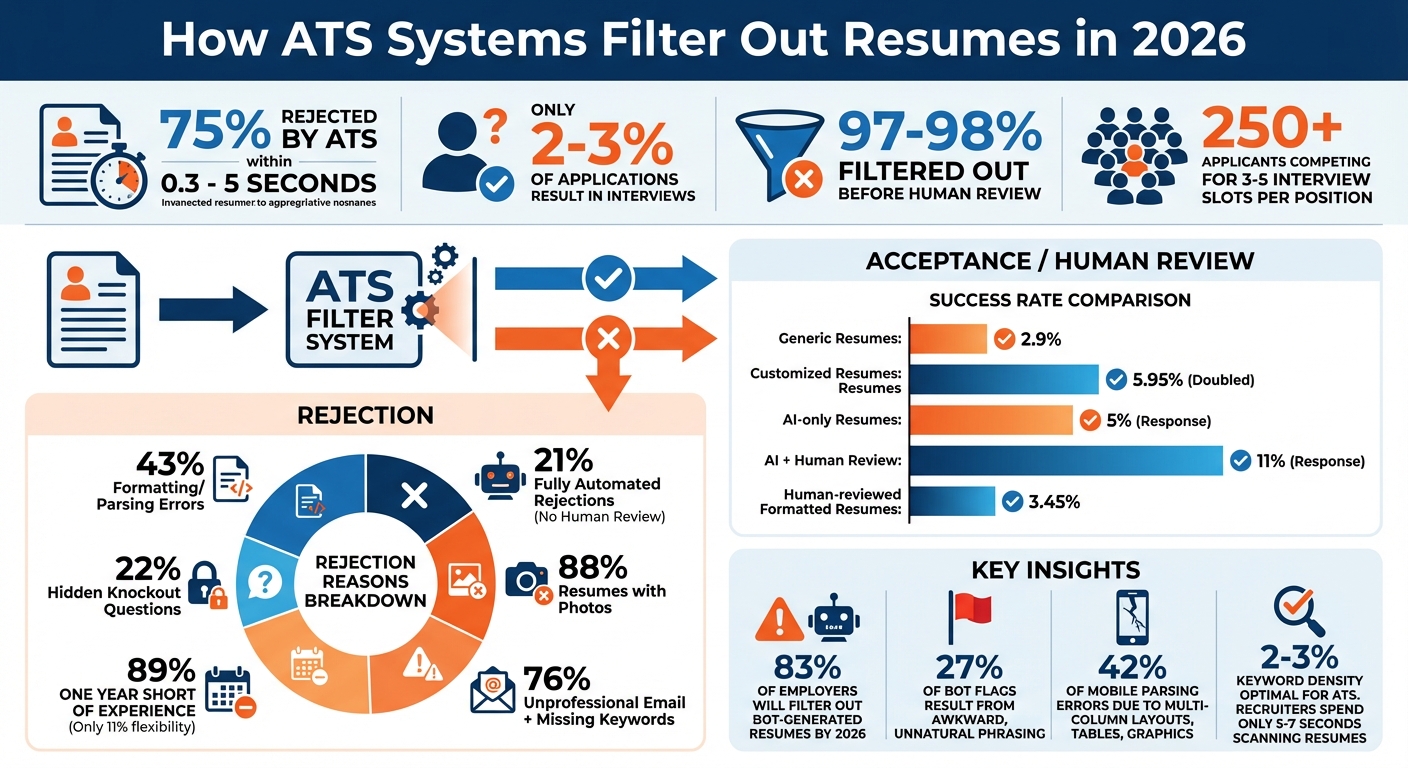
ATS Resume Rejection Statistics and Success Rates in 2026
In as little as 0.3 to 5 seconds, AI-powered Applicant Tracking Systems (ATS) reject about 75% of resumes. To put it into perspective, only 2–3% of applications result in interviews, leaving 97–98% of candidates filtered out before a recruiter even reviews their submissions.
This isn't solely about qualifications. The rise in applications - fueled by easy-apply options, remote job openings, and AI resume builders and auto-apply tools - has created intense competition, with over 250 applicants vying for just 3–5 interview slots per position. In response, ATS systems have tightened their algorithms, filtering resumes based on keyword mismatches, insufficient experience, missing certifications, education gaps, employment history gaps, and even formatting mistakes. Let’s dive into how these factors lead to rejection.
Why ATS Filters Reject More Resumes in 2026
ATS rely heavily on exact keyword matches from job descriptions. For example, if a job post specifies "Project Management Professional" but your resume only mentions "PMP", some systems may reject your application outright. Research has shown that customized resumes aligned with job description keywords can double interview rates, increasing them from 2.9% to 5.95%. Generic resumes, on the other hand, often fail due to lack of alignment.
Formatting issues are another major hurdle. In fact, 43% of rejections occur due to formatting or parsing errors, rather than a lack of qualifications. Resumes featuring tables, graphics, images, non-standard fonts, or date formats outside U.S. conventions often confuse ATS parsers, resulting in immediate disqualification. Even highly qualified candidates may be overlooked if their resumes include creative layouts, unconventional headers, or multi-column designs that ATS systems cannot interpret. Additionally, 89% of ATS systems automatically reject candidates who fall just one year short of the required experience, with only 11% allowing any flexibility.
Another challenge comes from hidden "knockout questions." These yes/no filters - covering criteria like work authorization, specific certifications, or degree types - can eliminate candidates before their resumes are even reviewed. 22% of rejections stem from these hidden filters, which often operate without applicants realizing they’ve been disqualified.
Hidden Biases in AI Hiring Tools
Beyond strict algorithms, ATS tools often carry hidden biases that disproportionately affect certain applicants. For instance, career gaps longer than six months are flagged as risks, even if they were for valid reasons like caregiving or further education. Similarly, non-linear career paths, frequent job changes, or unconventional educational backgrounds can trigger algorithmic rejections. Resumes with photos face an 88% rejection rate, while 76% of rejections stem from a combination of unprofessional email addresses and missing keywords. Alarmingly, 21% of companies fully automate rejections, meaning no human oversight exists to counteract these biases.
Given these challenges, a hybrid approach that blends AI optimization with human review is essential. While tools like Jobscan.co can help identify keyword gaps, they don’t address other critical factors like formatting or manual application submission. This is where services like resume writing services come in, combining AI-driven keyword strategies with expert human input. These services ensure your resume not only passes ATS filters but also resonates with human decision-makers, increasing your chances of landing an interview.
Beating ATS: Combining AI Tools with Human Review
Job application tools like Jobscan and Rezi.ai are designed to scan job descriptions for essential keywords such as "Python proficiency" or "Agile methodology" and then suggest how to incorporate them into your resume. However, scale.jobs takes it a step further by integrating human review, ensuring your resume not only aligns with these keywords but also maintains a natural flow. For example, AI might rewrite "Managed team projects" as "Executed optimization of cloud infrastructure utilizing AWS services resulting in 30% cost reduction." While this may seem impressive, it often triggers automated tracking systems (ATS) to flag the resume as bot-generated. In fact, by 2026, 83% of employers will filter out resumes flagged as robotic, and 27% of these flags result from awkward, unnatural phrasing.
The solution lies in human editing. A person can refine that overly technical phrase into something like, "Optimized AWS cloud infrastructure, cutting costs by 30% for a 50-user team." This version not only includes the necessary keywords but also feels more authentic. Data reveals that resumes relying solely on AI achieve a 5% response rate, whereas those that undergo human edits see an 11% response rate. The key difference? Humans add specific, role-relevant details and metrics, making accomplishments feel genuine rather than automated. This highlights the importance of blending AI’s efficiency with the nuanced judgment of human oversight.
Using AI to Match Keywords Without Sounding Robotic
AI tools can be incredibly effective for identifying the 80–90% keyword overlap needed to match a job description. For instance, they might suggest updating "Led team projects" to "Led Agile teams using Python for 15+ projects, boosting efficiency 25%." This revision incorporates critical keywords while showcasing measurable results. However, the language must remain natural. Aim for a 2–3% keyword density throughout your resume to strike a balance between ATS optimization and readability. This approach ensures your resume appeals to both automated systems and recruiters, who typically spend just 5–7 seconds scanning each application.
Why Human Review Prevents Bot Flags and Formatting Errors
While AI excels at identifying keywords, human reviewers are essential for fine-tuning language and formatting to avoid ATS rejection. For example, AI-generated resumes often include problematic elements like multi-column layouts, tables, graphics, or non-standard fonts, which account for 42% of mobile parsing errors. These formatting issues can prevent ATS systems from correctly extracting your information, leading to automatic disqualification. Human reviewers address this by converting resumes into single-column, plain-text PDFs with standard headers like "Work Experience" and "Skills", avoiding creative alternatives such as "My Journey." This ensures compatibility across ATS platforms.
Scale.jobs sets itself apart by combining AI-powered keyword matching with thorough human review, offering features like time-stamped proof of manual submission and formatting validation. Users have reported double the response rates compared to automation-only tools. Supporting data shows that human-reviewed, properly formatted resumes achieve a 3.45% interview rate, compared to 2.9% for generic submissions. This hybrid approach - merging AI precision with human expertise - positions scale.jobs as a standout option when compared to LazyApply, Simplify.jobs, Jobscan, and Rezi.ai.
scale.jobs vs Competitors: Feature and Workflow Comparisons
Selecting the right tool for job applications in 2026 requires a deep dive into how each platform handles ATS filters and ensures your application stands out. LazyApply, Simplify.jobs, Jobscan.co, and Rezi.ai each have their own strengths, focusing on automation, keyword diagnostics, or templates. But none match the combined precision of AI and human effort that scale.jobs offers. Below, we break down how these platforms compare and why scale.jobs takes a unique approach.
LazyApply vs scale.jobs: Bulk Automation vs Human-Powered Applications
LazyApply relies on browser extensions to automate job applications on platforms like LinkedIn and Indeed. It allows users to send up to 150 applications daily with just one click, making it appealing for those who prioritize volume. With a one-time fee of $99–$149, it’s a budget-friendly option. However, the downside is significant - generic, bot-driven applications often get flagged by ATS systems, leading to rejection rates as high as 75–98%. This approach is becoming less effective as employers increasingly filter out uniform submissions.
On the other hand, scale.jobs focuses on personalized, human-assisted applications. Each submission is crafted to ensure ATS compliance and avoid bot flags, with proof of submission provided via time-stamped WhatsApp messages. While LazyApply emphasizes speed, scale.jobs prioritizes precision, offering 250 human-reviewed applications for a flat fee of $199. This approach significantly improves interview rates, especially for competitive roles, where automated tools often fall short.
Why scale.jobs stands out:
- Tailored applications with human oversight to avoid generic submissions
- Proof of submission via time-stamped WhatsApp screenshots
- Expert-reviewed, ATS-friendly resume formatting
- Natural language customization to bypass bot-detection systems
- One-time payment with no recurring fees
Who benefits from LazyApply:
Entry-level job seekers aiming for high-volume applications where a low success rate (2–3%) is acceptable.
Who benefits from scale.jobs:
Professionals targeting mid-to-senior roles, visa-dependent applicants, or anyone needing personalized applications with verifiable proof of submission.
Simplify.jobs vs scale.jobs: One-Click Speed vs Tailored Precision
Simplify.jobs provides a Chrome extension for one-click applications across over 50 job boards. It uses a centralized dashboard to autofill applications, making it a go-to for those who prioritize speed. However, its automation lacks customization, leading to ATS rejection rates of around 75%. While it tracks submissions through its dashboard, it doesn’t offer proof-of-work screenshots or human verification.
In contrast, scale.jobs combines AI optimization with human review to create role-specific applications. Real-time WhatsApp notifications and time-stamped screenshots ensure full transparency, showing exactly how and when your application was submitted. This hybrid approach ensures your application is tailored and ATS-compliant, giving you peace of mind and better results.
Why scale.jobs excels:
- Human-reviewed applications tailored for specific roles
- Real-time submission notifications with proof-of-work screenshots
- AI-driven keyword optimization paired with natural language refinement
- Transparent tracking beyond just a dashboard
- Flat-fee pricing, avoiding ongoing subscription costs
Who benefits from Simplify.jobs:
Job seekers applying to numerous roles daily who value speed over customization.
Who benefits from scale.jobs:
Candidates targeting specialized roles, those needing proof of submission, or individuals applying to companies with stringent ATS requirements.
Jobscan.co vs scale.jobs: ATS Scanning vs Full Application Management
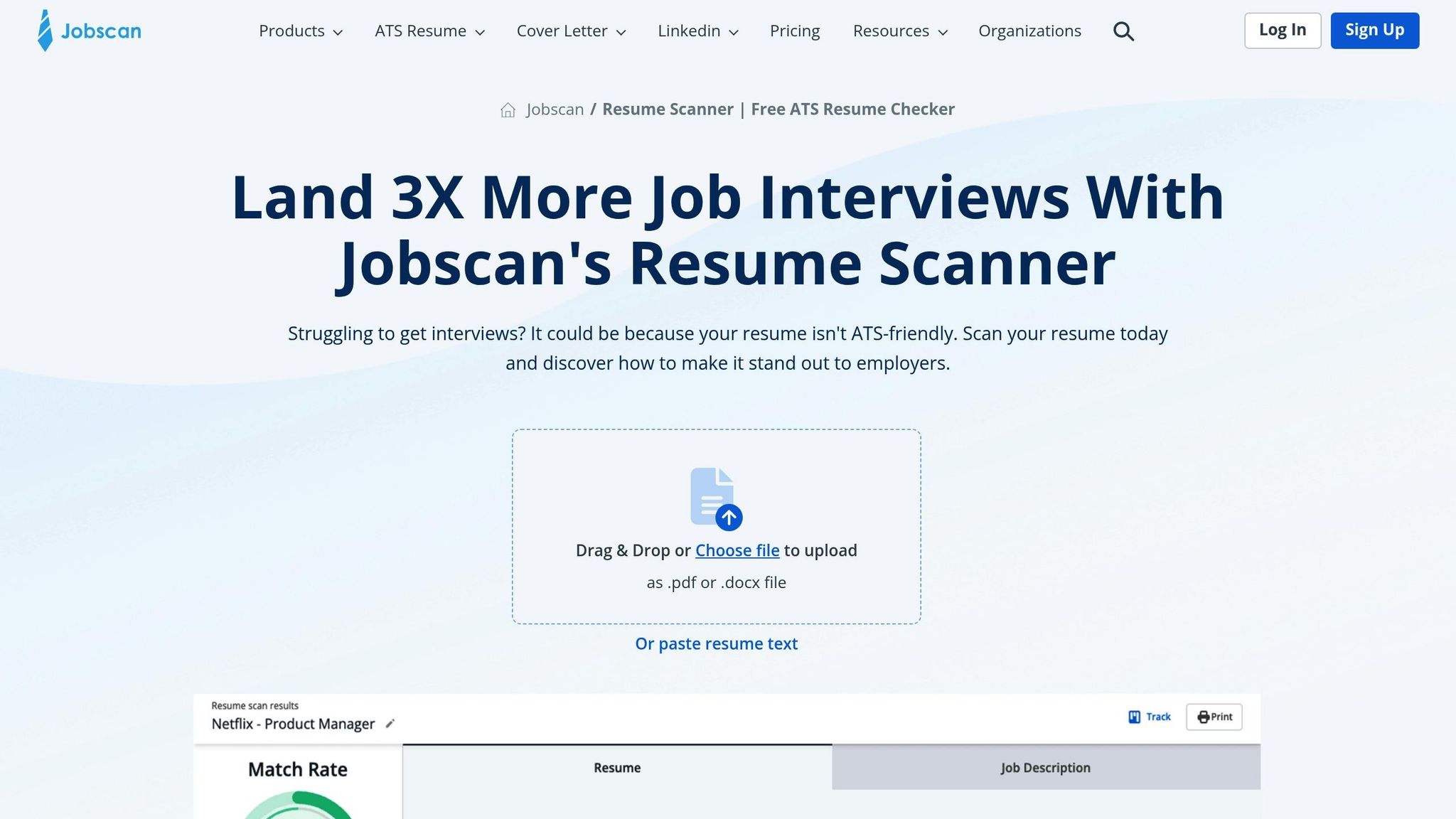
Jobscan.co offers diagnostic tools to improve your resume’s ATS compatibility. By scanning resumes against job descriptions, it provides keyword suggestions and scores that often reach 80% or higher. However, at $49.95/month, it focuses solely on pre-submission analysis, leaving the actual application process to the user. This can be effective for a handful of applications but becomes overwhelming when managing hundreds.
Scale.jobs takes a more comprehensive approach. It handles the entire application workflow - from keyword optimization to submission - while providing real-time tracking and proof of submission. With a flat fee of $199 for 250 applications, it eliminates the need for recurring payments and frees up your time for networking and interview preparation.
Why scale.jobs leads:
- Complete application management, from optimization to submission
- Human-executed submissions across all job portals
- Time-stamped proof-of-work for every application
- Flat-fee pricing, avoiding monthly costs
- Saves time for other job search activities like networking
Who benefits from Jobscan.co:
DIY job seekers focusing on a small number of applications who prefer to optimize their resumes independently.
Who benefits from scale.jobs:
Professionals managing high-volume job searches who want end-to-end application management and transparent submission tracking.
Rezi.ai vs scale.jobs: AI Resume Templates vs Hybrid AI + Human Service
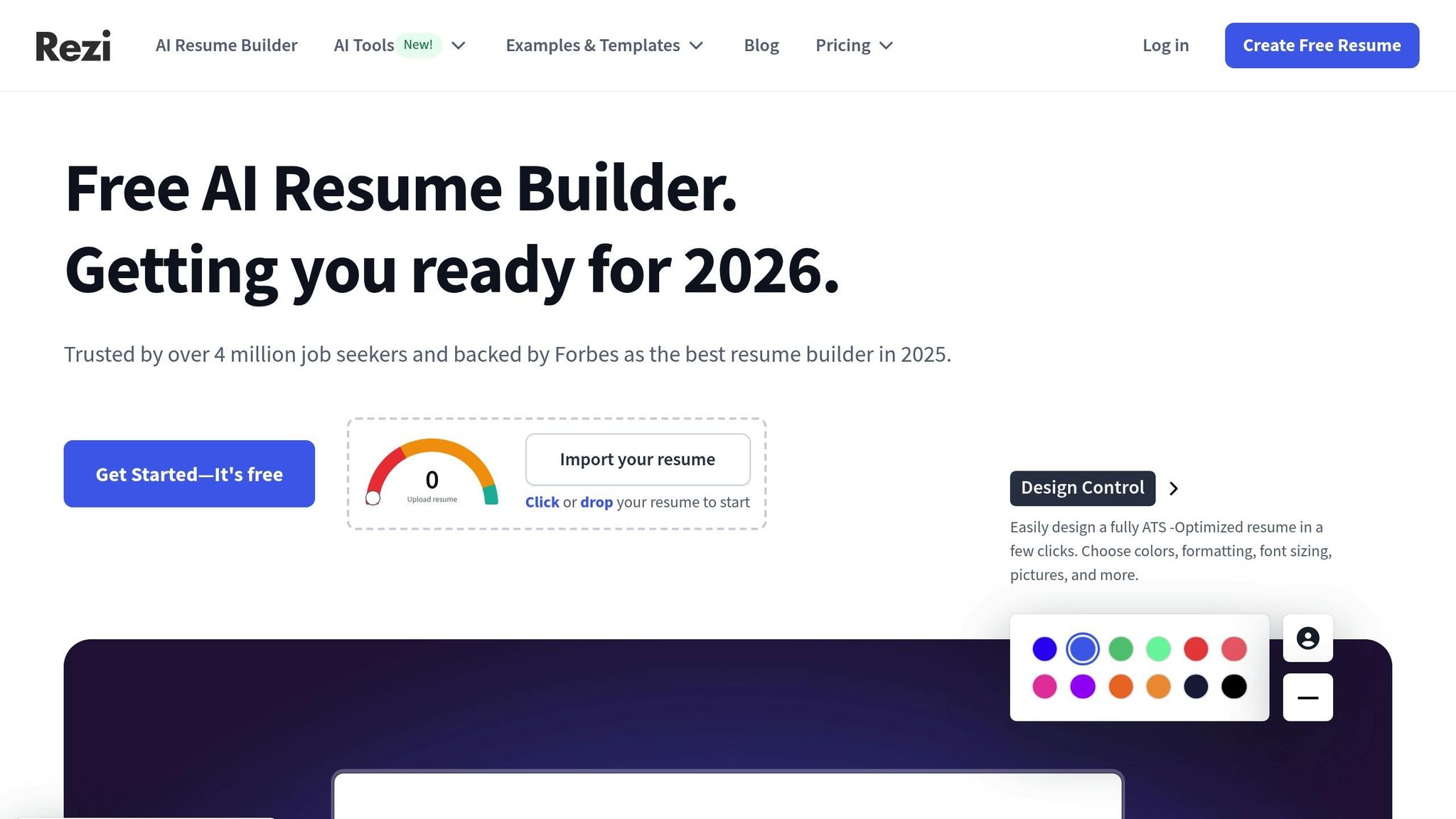
Rezi.ai specializes in creating ATS-friendly resumes using AI templates. Starting at $29/month or $149 for lifetime access, it’s a quick and affordable way to generate resumes with job-specific keywords. However, it doesn’t handle application submissions, and its AI-driven language can sometimes feel robotic, triggering ATS flags. This limitation is particularly problematic in 2026, when 75% of AI-generated resumes face rejection.
Scale.jobs addresses these issues by blending AI optimization with human refinement. Its team transforms mechanically phrased resumes into natural, engaging language, ensuring they pass ATS filters. For example, a phrase like "Executed optimization of cloud infrastructure utilizing AWS services" becomes "Optimized AWS cloud infrastructure, reducing costs by 30% for a 50-user team." Additionally, scale.jobs manages the entire submission process, offering a seamless experience with better results.
Why scale.jobs outperforms:
- Hybrid approach combining AI and human expertise to avoid robotic phrasing
- Full application management, not just resume creation
- Better outcomes in competitive markets, with an 8x higher success rate
- 24-hour turnaround and compatibility with all job portals
- One-time payment model with dedicated support
Who benefits from Rezi.ai:
Job seekers looking for quick, ATS-optimized resumes who are comfortable submitting applications manually.
Who benefits from scale.jobs:
Candidates who need both resume optimization and full application execution, with a focus on minimizing ATS rejections.
Feature Comparison Table
| Feature | LazyApply | Simplify.jobs | Jobscan.co | Rezi.ai | scale.jobs |
|---|---|---|---|---|---|
| Human involvement | None (fully automated) | None (browser-based) | None (diagnostic tool) | None (AI templates) | Expert human review |
| Resume customization depth | Generic auto-fill | Profile-based auto-fill | Keyword suggestions | AI-driven templates | AI + human refinement |
| ATS handling | Basic form-filling | Basic form-filling | Diagnostic scoring | Keyword insertion | Human-verified optimization |
| Application execution | Automated bulk | Automated bulk | Manual by user | Manual by user | Full-service management |
| Pricing | $99–$149 (lifetime) | Subscription-based | $49.95/month | $29/month or $149 lifetime | $199 (one-time fee) |
This breakdown highlights how scale.jobs combines the best of AI and human expertise to deliver a seamless, effective job application experience. Whether you're applying to hundreds of roles or targeting competitive positions, scale.jobs ensures your applications are tailored, ATS-compliant, and delivered with proof you can trust.
Feature Comparison: scale.jobs vs LazyApply, Simplify.jobs, Jobscan.co, and Rezi.ai
When choosing a platform to streamline your job applications, the differences in execution, transparency, and pricing can make or break your chances of getting noticed by recruiters. Below is a detailed comparison of how scale.jobs stacks up against LazyApply, Simplify.jobs, Jobscan.co, and Rezi.ai across six key factors that influence application success.
| Feature | scale.jobs | LazyApply | Simplify.jobs | Jobscan.co | Rezi.ai |
|---|---|---|---|---|---|
| Human Involvement | Trained reverse recruiters review and submit every application | Fully automated bot | Browser extension auto-fills applications | User-driven diagnostic tool | AI template generator |
| Resume Customization Depth | Combines AI optimization with human refinement | Generic auto-fill | Profile-based auto-fill with limited tailoring | Keyword suggestions; user implements changes | AI-generated templates and bullet points |
| ATS Handling | Human-verified to avoid parsing errors and bot flags | Basic form-filling; higher ATS rejection risk | Keyword-focused auto-fill | Diagnostic scoring without submission support | Formatting and keyword algorithms |
| Application Execution Method | Full-service with manual human submission | Automated bulk submissions via browser bot | One-click auto-fill using Chrome extension | User submits after optimization | User submits after resume creation |
| Transparency and Proof of Work | Time-stamped WhatsApp screenshots for every application | Minimal or no submission proof | Dashboard tracking without detailed proof | Reports on keyword gaps and ATS scores | Content feedback and match rate scores |
| Pricing Model | $199 one-time fee for 250 applications | $99–$149 lifetime or subscription | Subscription-based (Simplify+) | $49.95/month subscription | $29/month or $149 lifetime access |
Each platform offers a unique workflow. While Jobscan.co and Rezi.ai focus solely on resume optimization, they leave the submission process entirely up to the user. LazyApply and Simplify.jobs prioritize automation but lack human oversight, often resulting in generic applications that fail ATS checks. On the other hand, scale.jobs combines AI-driven keyword optimization with human review and manual submission, ensuring tailored, ATS-compliant applications with verifiable proof of submission.
For applicants managing 250+ job applications, scale.jobs’ one-time $199 fee stands out. It eliminates recurring costs, provides real-time proof via WhatsApp, and ensures a speedy 24-hour turnaround. This approach is especially beneficial for visa-dependent candidates or those targeting competitive roles, where ATS rejection rates can reach 75%. The hybrid model ensures applications not only pass ATS filters but also grab a recruiter's attention in the critical 5–7 seconds they spend reviewing resumes.
Who Benefits Most from LazyApply, Simplify.jobs, Jobscan.co, or Rezi.ai
- Entry-level job seekers applying to a large number of roles, where speed outweighs the need for customization.
- DIY applicants who prefer to control every aspect of the process and don’t mind manually submitting applications after optimization.
- Budget-conscious users applying to fewer than 50 roles, who need basic ATS scoring or template generation without advanced features.
Why Choose scale.jobs
- Mid-to-senior professionals aiming for competitive roles where tailored applications and ATS compliance are critical.
- High-volume applicants handling 250+ applications, who value verifiable proof of work and want to avoid ongoing subscription fees.
- Visa-dependent candidates or those in specialized fields, where human oversight minimizes formatting errors and bot-detection flags.
When to Switch to scale.jobs
- You’re applying to 250+ jobs and need ATS-compliant submissions without the hassle of managing each one manually.
- You require proof of submission, such as WhatsApp notifications showing when and how applications were sent.
- You prefer a one-time payment over subscriptions that could cost more than $600 annually.
- Your applications are being rejected despite strong qualifications, likely due to ATS or bot-detection issues.
- You want to focus on networking and interview preparation instead of spending hours submitting applications across multiple platforms.
Decision Summary
- Opt for LazyApply or Simplify.jobs if you’re focused on entry-level roles and prioritize speed over customization, accepting lower success rates.
- Choose Jobscan.co or Rezi.ai if you need resume feedback or templates but are comfortable handling submissions yourself.
- Select scale.jobs if you’re targeting competitive roles, managing a large volume of applications, or need human-assisted workflows to overcome ATS hurdles. The combination of AI and human expertise ensures higher interview rates while saving you time and effort.
For those serious about landing interviews, scale.jobs offers a tailored, transparent, and efficient solution that bridges the gap between automation and human precision. This makes it a standout choice for professionals navigating today’s challenging job market.
When to Switch to scale.jobs
Switching to scale.jobs brings together human expertise and AI-driven tools, addressing the challenges of relying solely on automated systems. With features like tailored resumes, transparent pricing, and detailed tracking, it stands out among its competitors.
You're Applying to 250+ Jobs and Need ATS-Compliant Documents
When applying to hundreds of jobs, the challenge lies in passing Applicant Tracking Systems (ATS). 75% of resumes are rejected by ATS software before reaching a recruiter, and 70% are filtered out during the initial screening stage. For 250 applications, this means around 187 resumes might never be seen by a human. Generic resumes often fail to include the right keywords, measurable achievements, and formatting that ATS systems prioritize.
Resumes tailored to specific roles yield better results, with a 5.95% interview rate compared to 2.9% for generic ones. For 250 applications, this translates to nearly 15 interviews instead of just 7. scale.jobs combines AI-based keyword optimization with human oversight to ensure your resume includes the details ATS systems value - like certifications, metrics, and role-specific language. Unlike LazyApply and Simplify.jobs, scale.jobs manually verifies each submission, ensuring your resume not only passes ATS filters but also captures a recruiter’s attention during the 5–7 seconds they typically spend reviewing it. This hybrid approach demonstrates why automation alone often falls short.
But the benefits don’t stop there. Proof of submission becomes another crucial advantage.
You Want Time-Stamped Proof of Every Application
Tracking hundreds of applications can quickly become overwhelming. Statistics show that 40% of job seekers experience ghosting after progressing to the second or third interview round, and only 38.2% receive detailed interview information beyond the basics. Without a reliable system, it’s nearly impossible to confirm that each tailored application was submitted successfully.
scale.jobs addresses this issue by providing time-stamped WhatsApp screenshots for every application, documenting exactly when and how each submission was completed. This transparency helps you track follow-ups, identify which tailored approaches are yielding interviews, and even serve as evidence if disputes arise about application status. Competing services like LazyApply and Simplify.jobs offer little to no proof of submission, leaving users uncertain about whether their applications were delivered or flagged as spam. For high-volume applicants, this level of systematic tracking transforms chaos into actionable insights.
You Prefer One-Time Payment Over Monthly Subscriptions
For many job seekers, recurring fees can strain budgets. LazyApply charges $99–$149 for lifetime access or subscriptions, Simplify.jobs requires monthly Simplify+ fees, and Jobscan.co costs $49.95 per month. scale.jobs, however, offers a one-time fee of $199 for 250 applications - breaking down to just $0.80 per application. This eliminates the burden of ongoing charges, which can exceed $600 annually.
The flat-fee model is especially appealing for those who focus their job search within a defined period. Additionally, scale.jobs provides refunds for unused credits. For example, if you secure a job after submitting 150 applications, the remaining 100 credits are refunded. This structure works well for candidates in specialized fields or visa-dependent roles, where only about 27% of interviewed candidates receive job offers. For many, this one-time investment proves worthwhile with just a single successful placement, particularly for those seeking professional resume writing services without committing to ongoing subscriptions.
Conclusion: Getting Interviews in 2026 Requires More Than a Perfect Resume
In today’s job market, a polished resume alone won’t guarantee interviews, especially when 75% of resumes are rejected by ATS software before they ever reach a human recruiter. Even for those that make it through, recruiters spend only 5–7 seconds scanning them. The real challenge lies in crafting resumes that shine with real-life examples to survive automated filters but also uses job-specific keywords effectively while maintaining an authentic tone to bypass bot detection. Generic resumes, while easier to create, often yield interview rates as low as 3%. On the other hand, tailored resumes that blend precise keyword usage with human insight can greatly improve your chances.
However, ATS optimization isn’t the entire solution. Many resumes are rejected due to formatting issues or keyword mismatches that automated tools might miss, while human reviewers quickly spot such errors. Services like LazyApply, which rely heavily on automation, can trigger bot detection, while platforms like Jobscan.co leave users to manually implement their recommendations. This gap between automated efficiency and human quality control often results in missed opportunities.
Another critical factor is transparency in the application process. Research shows that 40% of candidates experience ghosting after progressing in interviews, and response rates have significantly declined since 2021. With corporate job postings receiving an average of 250 applications but only about 2% resulting in interviews, having clear, time-stamped evidence of your submissions can make all the difference. This documentation is essential for follow-ups and refining your job search strategy.
Platforms like scale.jobs tackle these challenges by combining AI-powered keyword optimization with human review to eliminate errors and enhance the authenticity of applications. Their proof-of-work system, which includes time-stamped screenshots and real-time updates via WhatsApp, ensures accountability throughout the process. Plus, their one-time payment model avoids the recurring fees associated with subscription-based alternatives.
As 2026 brings an increasingly competitive job market, landing interviews requires more than just a flawless resume. Success depends on systems that can navigate both ATS filters and human scrutiny, provide transparent tracking, and remain cost-effective for prolonged job searches. Whether you opt for professional resume writing services or handle your applications independently, focusing on ATS compliance, human oversight, and clear tracking will be essential to securing interviews.
FAQs
How can I tell if an ATS rejected my resume?
Signs that your application may have been rejected by an Applicant Tracking System (ATS) include receiving no response or noticing that your application status remains unchanged after multiple submissions. These systems often filter out resumes due to issues like poor formatting - such as using multi-column layouts or including graphics - or failing to include keywords relevant to the job description.
To minimize the chances of rejection, consider using tools like ATS checkers to spot potential errors before submitting your application. Additionally, focus on simple, clean formatting, incorporate job-specific keywords, and organize your resume into clear, easy-to-read sections tailored to the role you're applying for. This approach can improve your chances of getting past ATS filters and into the hands of a recruiter.
For extra support, you might explore an AI resume builder to create ATS-friendly resumes or use a job application service for expert assistance.
What resume formatting is safest for ATS in 2026?
When it comes to creating a resume that passes through Applicant Tracking Systems (ATS) in 2026, simplicity is key. Opt for a single-column layout that keeps everything clean and easy to read. Stick to standard fonts like Arial, Calibri, or Times New Roman, as these are universally recognized and ensure proper formatting.
Avoid using tables, graphics, or multi-column designs. While they may look appealing, these elements often confuse ATS software, which could lead to important information being overlooked. Always submit your resume in .docx format, unless the job posting specifies otherwise, as this format is widely compatible with ATS.
To improve your chances of getting noticed, focus on keyword-rich content that aligns with the job description. Use clear and straightforward headings, such as "Work Experience" and "Skills", so both the ATS and recruiters can easily navigate your resume. This approach ensures that your application is not only readable but also effectively highlights your qualifications.
How do I add keywords without sounding AI-written?
To seamlessly incorporate keywords into your resume, align your skills and qualifications with those listed in the job description. Use the exact terms or relevant synonyms in a way that feels natural and fits the context of your experience. Avoid stuffing keywords or repeating them excessively, as this can come across as forced. Instead, customize your resume for each job application, ensuring it reflects the specific requirements of the role. By doing this, you'll strike the right balance to make your resume appealing to both applicant tracking systems (ATS) and human recruiters, presenting yourself as both qualified and professional.