How to Pass Any Job Interview: Practical Tips
Discover practical tips, common mistakes, and expert advice to ace any job interview and land your dream role.

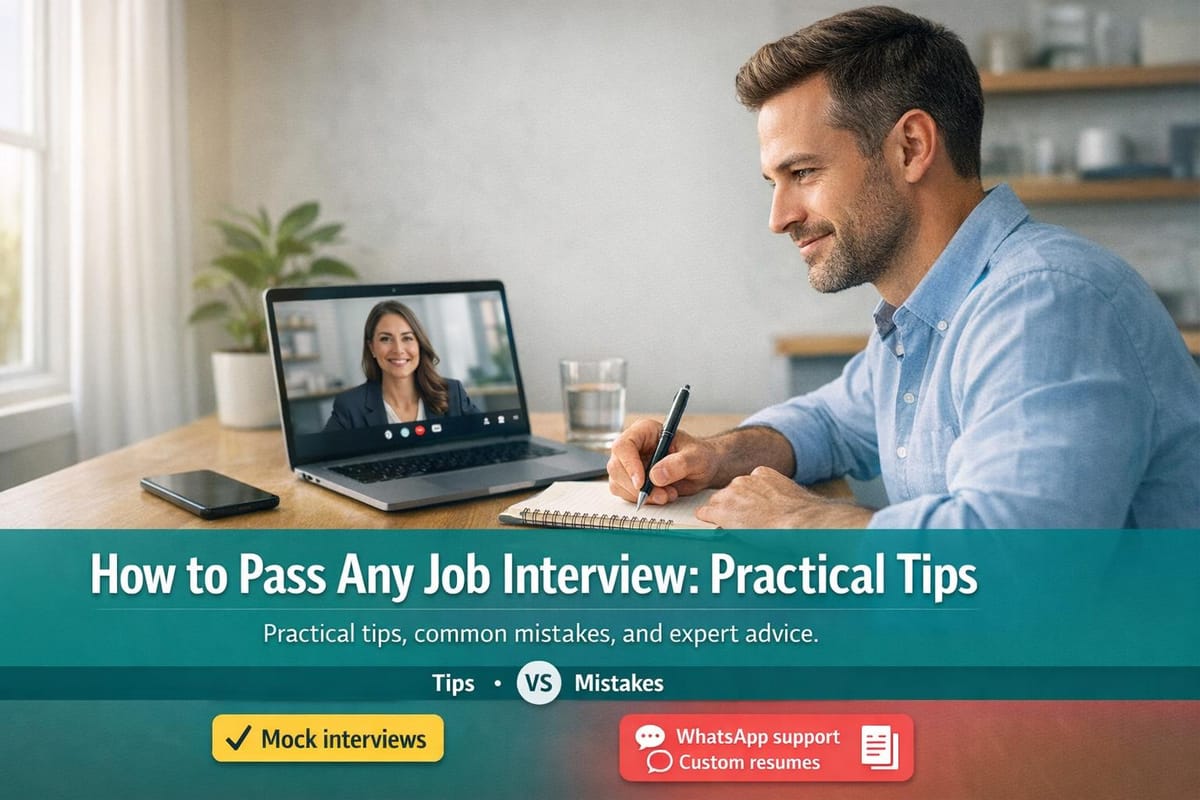
Job interviews can be nerve-wracking. The pressure to make a great first impression, answer challenging questions, and showcase your potential all at once can feel overwhelming. However, as recruitment expert Richard McMun emphasizes, learning how to pass a job interview is a critical life skill that can unlock career opportunities. Based on decades of experience, Richard offers actionable advice to help job seekers navigate the interview process with confidence and professionalism.
In this article, we’ll break down the key insights from his guidance and provide practical strategies to help you prepare, perform, and succeed in job interviews.
The Hidden Purpose of Job Interviews
At their core, job interviews serve two key purposes:
- Assessing Suitability for the Role: Employers evaluate whether you possess the skills, qualifications, and competencies outlined in the job description. They’re looking for someone who can excel in the role and meet the demands of the position.
- Determining Cultural Fit: Beyond your capabilities, hiring managers assess whether your personality aligns with the team and organizational culture. Even the most qualified candidates may not be hired if they aren’t seen as a good fit for the work environment.
Understanding these objectives is critical because it can help you tailor your preparation and presentation to address what truly matters to employers.
Strategies for Interview Preparation
Proper preparation is the foundation of a successful job interview. If you’ve ever wondered how much time and effort to dedicate to getting ready, here’s a step-by-step plan:
Research Thoroughly
- Understand the Company: Delve into the organization’s mission, values, products, services, and recent news. This demonstrates genuine interest and ensures you’re informed when speaking with the interviewer.
- Know the Job Description: Study the specific responsibilities and requirements of the role to anticipate questions and prepare relevant answers.
Rehearse Your Responses
- Prepare answers for common questions like:
- "Tell me about yourself."
- "Why do you want this job?"
- "What are your greatest strengths and weaknesses?"
- Practice behavioral questions using the STAR method (Situation, Task, Action, Result) to structure your responses. For example, if asked about teamwork, share a real-life situation where you collaborated effectively.
- Conduct mock interviews with a friend or in front of a mirror to simulate the pressure of the real interview.
Plan for Tough Questions
Richard highlights three of the trickiest interview questions:
- "Tell me about yourself." Keep your response concise (around 60 seconds) and focus on relevant skills, education, accomplishments, and how you plan to make a positive impact in the role.
- "What is your biggest weakness?" Be honest but strategic. Choose a weakness that isn’t critical to the role and explain how you’re actively working to improve it.
- "Why should we hire you?" Instead of giving one reason, provide multiple points that align with the job’s requirements and demonstrate your unique value.
Prepare Questions to Ask
At the end of the interview, candidates should ask thoughtful questions to show genuine interest in the role and company. Examples include:
- "Can you tell me more about the team I’d be working with?"
- "What does success look like for someone in this position?"
- "What advice would you give to someone who wants to excel in this role?"
How to Impress During the Interview
1. Master Your Body Language
Richard reminds us that body language speaks volumes. Within the first seven seconds of meeting you, an interviewer may form an impression based on your posture, demeanor, and facial expressions. To project confidence:
- Sit upright with your hands resting on your knees.
- Smile and maintain good eye contact.
- Avoid slouching or fidgeting, as these can make you appear disinterested or unprepared.
2. Dress Professionally
Even in today’s casual work environments, dressing smartly for an interview conveys respect, effort, and high standards. Employers want to see that you care enough to make a strong first impression.
3. Handle Nerves Gracefully
It’s natural to feel nervous, but don’t let it dominate the interview. If you choose to acknowledge your nervousness, mention it briefly at the start:
"I’m a little nervous, but I’m very excited about the opportunity to interview for this role." Then, shift the focus to your enthusiasm and qualifications.
4. Sell Yourself
A job interview is not the time to "just be yourself." Instead, it’s an opportunity to highlight your strengths, communicate your passion for the role, and demonstrate that you’re prepared to contribute value to the company.
Common Mistakes to Avoid
Even the most prepared candidates can stumble by making easily avoidable errors. Here are some of the biggest pitfalls Richard warns against:
- Negativity: Never speak poorly about a current or former employer, as it can make you seem unprofessional. When asked why you want to leave your current role, focus on what excites you about the new opportunity.
- Lack of Research: Asking questions like, "What does your company do?" signals that you haven’t done your homework. Always research the company beforehand.
- Failing to Know the Role: Be prepared to explain what you expect to be doing in the position and how your skills align with the job description.
- Rambling Answers: For most questions, keep your responses concise (around 30 seconds). For behavioral questions, provide more detailed answers with real-life examples.
Post-Interview Tips
What you do after the interview can leave a lasting impression:
- Send a Thank-You Email: Express gratitude for the opportunity and reiterate your interest in the role. For instance:
"Thank you for taking the time to interview me today. The process has made me even more excited about the possibility of joining your team. If you need any additional information, feel free to contact me." - Reflect on the Interview: Evaluate your performance, noting which answers went well and where you could improve for future opportunities.
Key Takeaways
Here are the most actionable insights to help you pass your next job interview with confidence:
- Preparation is Key: Spend at least two full days researching the company, practicing answers, and conducting mock interviews.
- Understand the Purpose: The interviewer is assessing both your ability to do the job and your fit within the team.
- Avoid Negativity: Always speak positively and professionally about past experiences.
- Master Common Questions: Prepare answers for frequently asked questions like, "Tell me about yourself" and "Why should we hire you?"
- Ask Smart Questions: End the interview with thoughtful questions that show your dedication to excelling in the role.
- Dress for Success: Always dress professionally, regardless of the company’s usual dress code.
- Mind Your Body Language: Sit upright, smile, and maintain eye contact to project confidence.
- Send a Thank-You Note: Follow up with a professional email expressing appreciation for the opportunity.
- Recover from Mistakes: If you give a poor answer, acknowledge it and move on with positivity.
Job interviews don’t have to be intimidating. By understanding the process, avoiding common pitfalls, and demonstrating genuine enthusiasm, you can turn even a daunting interview into a career-changing opportunity. Use these tips to approach your next interview with confidence, preparation, and professionalism.
Good luck on your journey to landing your dream job!
Source: "JOB INTERVIEW SECRETS REVEALED! How to PASS Any Job Interview | Career Success Podcast #1" - CareerVidz, YouTube, Jan 1, 1970 - https://www.youtube.com/watch?v=PRWRiBvSQV4