
10 Networking Tips for Long-Term Career Growth
Practical networking strategies to build lasting professional relationships: set goals, optimize LinkedIn, prepare for events, follow up, find mentors, and share expertise.


Networking is a powerful tool for career advancement, with 85% of jobs filled through connections rather than public postings. This article outlines practical strategies to build meaningful professional relationships, from setting clear goals to leveraging LinkedIn and attending events. Key highlights include:
- Set specific goals: Focus on targeted, measurable networking objectives.
- Optimize your LinkedIn profile: Use keywords, quantify achievements, and stay active.
- Prepare for events: Research attendees, craft a concise pitch, and prioritize quality conversations.
- Follow up effectively: Send personalized messages within 24–48 hours to maintain connections.
- Engage in online groups: Actively participate in industry-specific forums or platforms.
- Share expertise: Publish content to showcase your skills and attract connections.
- Find mentors and referrals: Seek guidance from experienced professionals and ask for introductions.
- Track and organize efforts: Use tools like Scale.jobs to streamline networking and job applications.
These actionable steps can help you secure opportunities, gain mentorship, and stay informed about industry trends. Whether you're job hunting or aiming for long-term growth, consistent and strategic networking is essential.
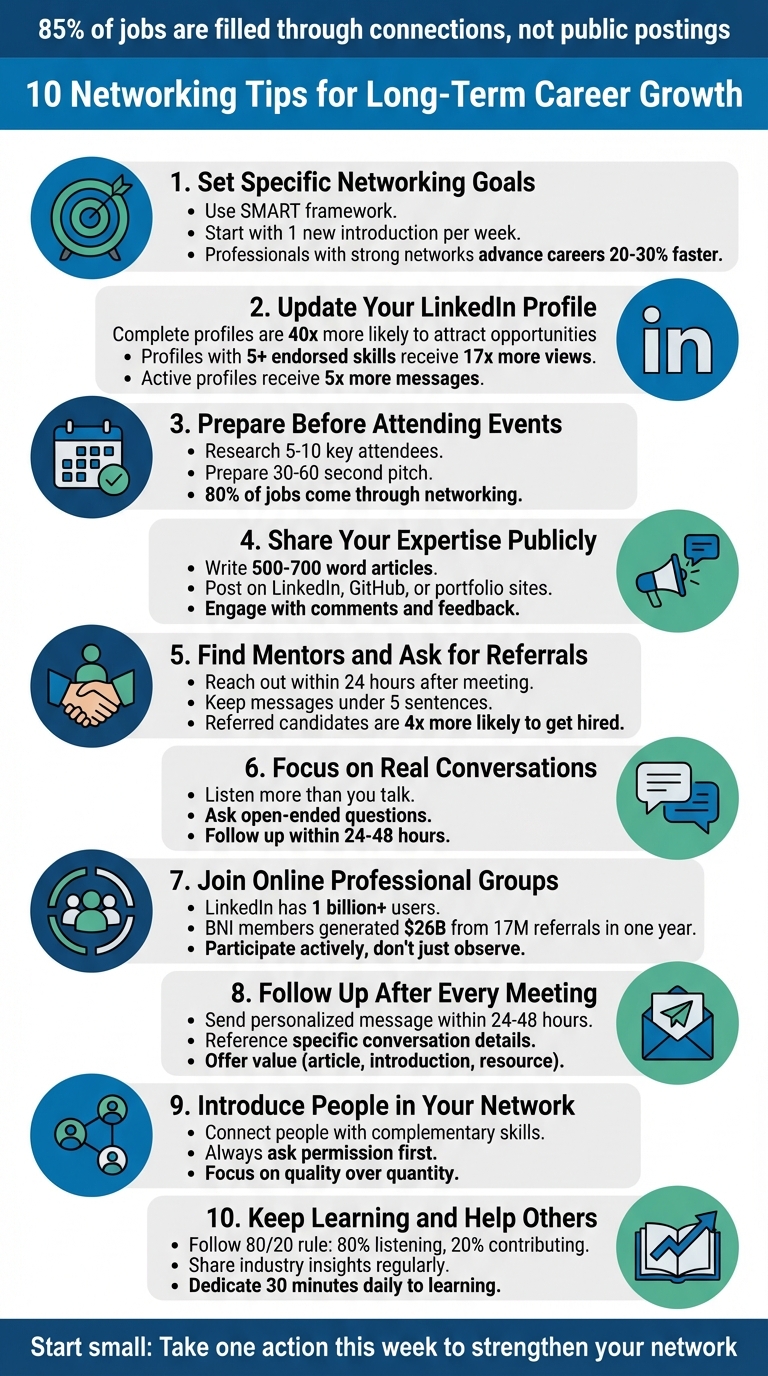
10 Networking Tips for Long-Term Career Growth
Networking Strategies: Land Your Next Role Without Applying Online
1. Set Specific Networking Goals
Clarity is key. Randomly attending events or sending out generic LinkedIn requests rarely leads to meaningful connections. Instead, focus on what you want to achieve through networking. Are you searching for a mentor in cloud engineering, looking for H1B visa advice, or hoping to land referrals at Series B startups? Each objective calls for a tailored strategy. For instance, recent graduates might aim for 10 conversations with alumni each month to gain insight into entry-level roles, while laid-off professionals could prioritize 5 introductions to recruiters weekly to speed up their job search.
To make your goals actionable, apply the SMART framework. A vague goal like "network more" won't get you far, but something specific, like "Connect with 5 software engineers at FAANG companies by April 30, 2026," is both measurable and achievable. Tools like Scale.jobs' Networking Tools and Job Applications Tracker can help you organize contacts, set reminders for follow-ups, and monitor the outcomes of your conversations. If you're an immigrant navigating the complexities of visa sponsorship, focus on connecting with 10 professionals who have successfully secured H1B or O1 visas, and document those discussions to stay organized. This kind of structure transforms your networking efforts into measurable progress.
Offer mutual value. Networking isn't just about what you can gain - it's also about what you can give. Think about the unique skills or insights you bring to the table. A recent graduate might share knowledge from an AI capstone project, while someone recently laid off could offer strategies for navigating career transitions. By positioning yourself as a contributor rather than solely a job seeker, you create connections that are more likely to last. Studies show that professionals with strong, reciprocal networks advance their careers 20–30% faster. If you're unsure how to articulate your value or need help crafting professional outreach messages, consider using professional resume services to refine your messaging and materials.
Start small by aiming for one new introduction per week rather than overwhelming yourself with 20 in a single month. Pay attention to which approaches yield results. For example, if reaching out to alumni leads to interviews while cold LinkedIn messages fall flat, shift your focus to alumni networks. Scale.jobs' Job Applications Tracker can timestamp and log your interactions, making it easier to evaluate your progress and refine your strategy. Over time, these intentional efforts will help you build a network that not only supports your immediate goals but also sustains your career growth in the long run.
2. Update Your LinkedIn Profile
Think of your LinkedIn profile as your digital storefront. Recruiters often check it out before reaching out to you. If your headline still says "Recent Graduate" despite having two years of experience, or if your summary is vague, you might miss out on opportunities before they even arise. According to LinkedIn, profiles with complete details - like a professional photo, keyword-rich headline, detailed summary, and measurable achievements - are 40 times more likely to attract opportunities.
Your headline should do more than list your job title. Instead of something basic like "Software Engineer", use the 220-character limit to highlight your expertise and value. For instance: "Software Engineer | Python & Cloud Architecture Specialist | Building Scalable Solutions for Fintech Startups." If you're an immigrant job seeker, consider adding specifics such as "H1B Visa Holder | Full-Stack Developer | Open to Sponsorship Opportunities." Headlines like these align with recruiter search terms and can increase your profile views by up to 30%. Make sure your headline reflects your desired role and key skills.
The "About" section should tell a story, not just list facts. Start with an engaging hook like, "Laid-off tech professional with 5+ years of experience driving AI implementations." Highlight a few standout achievements, such as "Optimized workflows, saving $50,000 annually" or "Led a team to improve efficiency by 30%." Be clear about your goals: "Looking to connect with mentors in cloud security" or "Seeking referrals at Series B SaaS companies." Wrap up with a call-to-action like, "Open to coffee chats about scaling startups." This structure not only makes your profile more engaging but also encourages people to reach out, increasing connection requests by 21%.
Quantify your achievements in the experience section. Replace vague statements like "Managed projects" with specifics like "Managed 15+ cross-functional projects, increasing efficiency by 25%." Add skills that match your target roles - if job postings mention "Agile" and "Machine Learning", make sure those appear in your skills section. Profiles with at least five endorsed skills receive 17 times more views. If you're in tech or a student seeking internships, include portfolio links in the Featured section and add certifications like Google Data Analytics or AWS Solutions Architect. Need help refining your profile? Professional resume services can ensure your LinkedIn aligns with ATS requirements and showcases your strengths.
Keep your profile fresh and stay active. Update it monthly and post weekly - share articles, comment on industry leaders' posts, or announce achievements like certifications. If you're currently employed but open to new roles, enable the "Open to Work" banner for recruiters only. Active profiles receive five times more messages than inactive ones. For those navigating layoffs or frequent job changes, this activity shows you're engaged and ready for your next opportunity. With a polished and active LinkedIn profile, you'll be well-prepared for networking and career growth.
3. Prepare Before Attending Events
Once your LinkedIn profile is polished, the next step is to prepare strategically for events to make the most of your interactions.
Dedicate 30–60 minutes to research attendees and topics. Start by exploring the event’s official website or app for details like speaker bios, attendee lists, and session agendas. Use LinkedIn to search for people discussing the event - typing something like "attending TechConf 2026" in the search bar can reveal profiles of individuals who’ve posted about it. From this, identify 5–10 key people who align with your career objectives. These could include hiring managers at companies you’re targeting, potential mentors, or peers who might provide referrals. This groundwork sets the stage for meaningful conversations that could lead to long-term career benefits.
Develop a 30–60 second pitch that feels natural. Break it into three parts: your current role ("I’m a software engineer focused on cloud infrastructure with five years of experience"), a key accomplishment ("I spearheaded three product launches that increased revenue by 40% year-over-year"), and your goal ("I’m hoping to connect with fintech leaders to discuss scaling challenges"). Practice delivering this pitch so it feels conversational rather than rehearsed. Tailor it to your audience - if you’ve read a speaker’s recent LinkedIn post about cloud security regulations, mention it: "I caught your webinar on cloud security - how have things changed since the 2025 regulations update?"
Prioritize quality over quantity in networking. Focus on having three meaningful conversations instead of collecting dozens of superficial connections. To stay organized, create a simple spreadsheet with columns for names, roles, companies, and conversation starters based on your research. For example, if a speaker wrote an article on AI trends, jot down "Ask about challenges in AI adoption for enterprises" as a conversation starter. If you find mutual connections on LinkedIn, use them to personalize your outreach - mentioning a shared alma mater or former employer can be a great icebreaker. A thoughtful approach like this demonstrates genuine interest and can strengthen your network, especially since studies show that 80% of jobs come through networking.
Handle logistics ahead of time. Make sure your LinkedIn QR code is easily accessible on your phone, or bring business cards if they’re still common in your industry. Download the event app if available, and turn on notifications for updates about sessions or networking opportunities. If you’re navigating unique circumstances, like visa sponsorship needs or transitioning to a new industry, prepare to address these topics confidently. For example, you could say, "I’m exploring fintech opportunities after five years in healthcare" or "I’m looking for roles with H1B sponsorship." Being upfront about your goals can help you connect with the right people more quickly.
If you’re struggling to refine your pitch or optimize your LinkedIn profile with AI, consider using professional resume services to present your skills and goals effectively. Tools like Scale.jobs’ free Networking Tools can also help you track and follow up with new contacts after the event, ensuring you maintain momentum. With careful preparation, you can transform introductions into career opportunities.
4. Share Your Expertise Publicly
Sharing your expertise is a powerful way to highlight your skills while expanding your professional network. By publishing content that addresses real-world challenges you've faced, you not only establish yourself as a knowledgeable voice but also attract organic connections. For instance, you could write LinkedIn posts or articles about navigating H1B visa hurdles during a job search, solving a tricky technical problem, or analyzing shifts in the job market after recent layoffs. A concise 500–700 word piece on topics like optimizing cloud costs or lessons learned during a career transition can effectively showcase your expertise. Prioritize creating content that is helpful and actionable rather than aiming for perfection. When hiring managers and recruiters see you providing valuable insights, you stand out beyond the scope of your resume.
Choose the right platforms to amplify your strengths. Tech professionals might find GitHub contributions or Stack Overflow answers ideal for showcasing their technical skills, while designers can benefit from portfolios on platforms like Dribbble or Behance. LinkedIn remains one of the most effective platforms for professional networking across various industries. If you're looking to create a personal brand, consider using Scale.jobs' free Portfolio Website Generator to compile your articles, projects, and case studies into one accessible hub. This approach can be especially beneficial for recent graduates or those switching industries who need to establish credibility quickly.
Engage with your audience by contributing thoughtful content and comments. Instead of posting a generic update such as "I'm seeking software engineering roles", try sharing a specific achievement like, "Here's how I reduced application response time by 40% by tailoring resumes for ATS systems - three strategies that worked." This not only demonstrates your expertise but also opens the door to meaningful conversations. Interact with comments on your posts to nurture relationships, and avoid language that feels overly promotional, as it may detract from your credibility.
Maximize your content by repurposing it across different formats and platforms. For example, you could turn a LinkedIn article into a short video tutorial, summarize key points in an infographic, or discuss the topic in relevant Slack communities or Discord groups. If you're managing the demands of a full-time job search or visa applications, consider using Scale.jobs' professional resume services to ensure your resume reflects your expertise while you focus on creating content. The idea is to make your knowledge accessible in various formats, catering to different preferences - whether it’s recruiters who favor quick visuals or peers who appreciate detailed analysis.
Continuously refine your approach based on audience feedback. If a post about remote work policies sparks 50 comments while a technical deep-dive garners only five, use that as a clue to tailor future content. Scale.jobs' free Networking Tools can help you keep track of contacts who engage with your posts, making it easier to follow up and transform online interactions into genuine connections. Consistently sharing one meaningful insight every two weeks is far more effective than sporadic bursts of activity, helping you build credibility over time.
5. Find Mentors and Ask for Referrals
Use your network to connect with mentors and secure referrals that can boost your career path. Start by identifying potential mentors within your existing connections - this could include university alumni, former colleagues, professors, or even family members working in your desired field. Platforms like LinkedIn can be invaluable here. Use search filters with terms like "tech mentor" or "AI lead" and narrow it down by location to find professionals in your area of interest. If you're a recent graduate or navigating visa challenges, focus on alumni or professionals who have faced similar hurdles. Reach out for short, focused informational interviews to learn from their experiences.
Craft a thoughtful and concise outreach message that reflects preparation. Keep your initial message short - no more than five sentences. Mention something specific about their work or a shared connection, and clearly state your goals. For instance: "Hi [Name], I recently came across your post about scaling AI systems at [Company]. As an engineer transitioning to machine learning, I’d appreciate a 15-minute chat to learn from your experience. I’m happy to work around your schedule." This approach shows respect for their time and makes it easy for them to say yes. Request a brief 15–30 minute conversation to keep the commitment manageable, and always offer flexibility in scheduling.
Prepare a few meaningful, open-ended questions to guide your conversation. For example, ask questions like, "What challenges did you face early in your career?" or "Which skills have been most important to your growth?" Start by introducing your strengths, then focus on listening and learning. Keep the conversation under 30 minutes. After establishing rapport, you might ask, "Based on our discussion, would you feel comfortable introducing me to someone at [Company]?" Framing the request as an opportunity to learn, rather than directly asking for a job, often leads to more natural outcomes.
Follow up effectively to build a lasting relationship. Within 24 hours of your meeting, send a personalized thank-you message highlighting one or two key takeaways. Maintain the connection by sharing updates every 2–3 months, and offer value in return, such as helpful resources or introductions. Use tools like Scale.jobs’ free Networking Tools to document your interactions, track follow-ups, and ensure you’re staying organized. If you’re balancing a full-time job search with other responsibilities like visa applications, consider using a job application service to keep your materials polished and professional. These tools can help you manage mentor relationships and networking efforts without losing momentum.
Avoid common mistakes that could harm your mentor relationships. Don’t send vague messages like "Can you help me find a job?" or request lengthy meetings. Avoid excessive follow-ups - limit yourself to two within 30 days. When asking for introductions, explain how both parties could benefit and always get permission before connecting people. Keep in mind that referred candidates are statistically four times more likely to get hired, making these relationships an essential part of your job search strategy. Over time, these mentorships can evolve into valuable, long-term professional alliances that strengthen your overall career network.
6. Focus on Real Conversations
Networking thrives when you listen more than you talk. Building strong professional relationships starts with genuine conversations, not rehearsed pitches. Instead of seeing every interaction as a chance to promote yourself, approach networking with curiosity. Ask thoughtful, open-ended questions like, "What challenges are you currently facing in your role?" or "What trends are shaping your industry right now?" These kinds of questions encourage meaningful dialogue and show that you’ve taken the time to understand their background or field. This approach helps create connections rooted in trust and mutual interest.
Active listening is key to earning trust. Show that you’re fully engaged by maintaining eye contact, nodding occasionally, and summarizing key points to confirm your understanding. Keep distractions, like your phone, out of sight, and focus entirely on the person you’re speaking with. Being present in the moment leaves a lasting impression and demonstrates respect.
Once you’ve listened, aim to be a resource, not just a recipient. Instead of jumping straight to asking for favors, offer value first. Share an article they might find useful, introduce them to someone in your network, or recommend a tool that addresses a challenge they mentioned. This approach reframes the interaction from "What can you do for me?" to "How can we help each other?" If you’re pressed for time, tools like Scale.jobs' resume writing services can help you streamline tasks, leaving more room for these meaningful conversations.
Avoid behaviors that can make you seem insincere. Don’t lead with a job request - focus instead on shared interests, industry developments, or common challenges. Always seek permission before sharing someone’s contact details, and avoid dominating the conversation. If networking feels overwhelming, set small goals, like having one meaningful chat per event, or bring along a colleague who can help with introductions.
Follow up promptly to keep the connection alive. Send a message within 24 to 48 hours, referencing something specific from your conversation, such as, "I enjoyed your perspective on AI trends in healthcare" or "Your advice on navigating startup funding was incredibly insightful." Tools like Scale.jobs’ free Networking Tools can help you track these follow-ups and organize your professional contacts effectively.
7. Join Online Professional Groups
Online professional groups can open doors to valuable industry connections, job opportunities, and timely insights. Much like attending in-person networking events, finding the right online groups is essential for meaningful career development. Platforms like LinkedIn, Slack, and niche forums allow professionals to engage in discussions relevant to their fields. With LinkedIn boasting over 1 billion users worldwide as of 2025, the platform hosts thousands of active groups where members exchange ideas, share job openings, and discuss industry shifts. The trick is to identify groups that align with your career aspirations and to actively participate, rather than just observing from the sidelines.
Focus on groups tailored to your industry or role. For instance, marketing and product professionals can benefit from Slack communities that address challenges in growth and product development. E-commerce specialists might find value in invite-only networks where business founders exchange strategies for scaling. If your goal is local networking, platforms like Alignable cater to hyper-local B2B referrals, while structured networks like BNI have proven results - BNI members collectively generated over $26 billion in revenue from 17 million referrals within a single year. These platforms demonstrate how targeted communities can drive impactful connections.
Active participation is key to building credibility. Before joining a group, take a moment to evaluate its activity level. Look for groups with regular discussions, thoughtful posts, and moderators who maintain quality by discouraging spam. Once you’re in, contribute by answering questions, sharing useful articles, or offering solutions to challenges others have raised. This positions you as a knowledgeable and reliable resource. However, avoid leading with self-promotion or sales pitches - most groups have strict guidelines against such behavior, and breaking these rules could get you removed.
Use networking tools to stay organized and consistent. Tools like Scale.jobs' free Networking Tools can help you keep track of your group interactions and set reminders for follow-ups. If you’re juggling multiple online communities while job searching, these tools streamline the process, allowing you to focus on genuine engagement. The ultimate goal is to foster relationships that lead to mentorship, job referrals, and access to hidden opportunities - rather than simply amassing contacts.
Select groups that fit your career stage and objectives. For example, SCORE, through the U.S. Small Business Administration, facilitated over 300,000 mentoring sessions in 2024 and helped launch nearly 60,000 new businesses. Women executives might find support in exclusive networks like Chief, while the Minority Business Development Agency (MBDA) offers resources tailored to underrepresented entrepreneurs. Smaller, niche communities often provide deeper engagement compared to larger groups where individual contributions can get overlooked. These focused communities not only deepen your understanding of your industry but also help you build lasting professional relationships that benefit both parties over time.
8. Follow Up After Every Meeting
A single conversation rarely cements a lasting connection without a well-timed, personalized follow-up. The key to being remembered lies in sending a thoughtful message within 24–48 hours. This timing keeps the interaction fresh and demonstrates that you value the other person's time. Delay too long, and the connection might fade; act too quickly - like within an hour - and it could come across as insincere or overly eager.
Personalization is what makes your follow-up stand out from the sea of generic messages. Referencing a specific detail from your conversation can make all the difference. For instance, if you discussed ATS optimization issues with someone at a networking event, mention that topic directly in your message:
"Hi [Name], it was a pleasure meeting you yesterday at the Tech Career Fair. I really enjoyed our conversation about ATS challenges and thought you might find this article helpful. Let me know if you'd like to grab coffee next week to dive deeper into this topic."
This kind of message shows you were engaged and positions you as someone who listens and adds value.
Go beyond a simple thank-you by offering something useful, like sharing a relevant article, introducing a mutual contact, or forwarding a job opportunity. These small gestures help build trust and keep you in the other person's mind when new opportunities come up. If you're managing multiple connections with job application assistance, tools like Scale.jobs' free Networking Tools and Job Applications Tracker can help you stay organized and ensure no follow-up slips through the cracks.
Once you've made an initial follow-up, maintain the relationship with occasional check-ins instead of disappearing until you need something. A quick quarterly update about your career progress or a shared industry insight can keep the connection alive without being intrusive. Research shows that timely follow-ups can significantly boost response rates, especially when paired with mutual value. If your first message goes unanswered, wait 7–10 days before sending a polite second follow-up. After that, give it about three weeks before a final attempt, but limit yourself to two follow-ups within a 30-day period to avoid seeming overly persistent.
9. Introduce People in Your Network
Thoughtful introductions can make you a key connector in your professional circle. Introducing two individuals who can benefit from knowing each other - like pairing a junior developer seeking guidance with an experienced mentor, or connecting a recruiter with a colleague exploring new opportunities - creates a ripple effect of trust and collaboration. This not only strengthens your network but also positions you as someone who adds value by understanding and addressing others' needs. In turn, this often leads to others wanting to support you when the time comes. Here's how to facilitate these introductions effectively.
Make introductions that align with complementary skills and goals. Take a moment to assess why two people should connect. For example, if you know a recent graduate struggling to navigate applicant tracking systems (ATS) and a former coworker who offers Resume Writing Services, that’s a natural match. Similarly, if a hiring manager is building an AI-focused team and you know someone exploring machine learning roles, connecting them can benefit both parties. Research even shows that referrals from personal introductions can increase hiring chances by up to four times.
Always seek permission before making an introduction. Reach out to each person privately to ensure they're open to connecting. For instance, you might say: "I remember you mentioned navigating H1B visa challenges during your time at Google. I know someone who could really benefit from your insights. Would you mind if I introduced you?" Once both parties agree, craft a clear and concise introduction message. Include each person’s background and the reason for the connection. Avoid vague phrases like "You two should meet" - be specific about why this introduction makes sense.
Focus on quality, not quantity, when making introductions. Too many random or poorly thought-out connections can harm your credibility and relationships. Instead, prioritize introductions where you see clear mutual benefits. After the introduction, follow up with both individuals a week or two later to see how their conversation went and whether you can assist further. If you’re juggling multiple networking activities, tailored job application assistance and tools like Scale.jobs' free Networking Tools can help you stay organized. These tools allow you to track contacts, identify shared connections, and manage introductions efficiently, helping you focus on building meaningful relationships.
For job seekers, especially those navigating career changes, visa hurdles, or competitive industries, becoming a connector can be a game-changer. It showcases your ability to foster collaboration - an attribute that appeals to employers focused on growth. For students or professionals new to an industry, it helps build a network that can provide guidance, referrals, and opportunities later on. By introducing people who can truly help one another, you transform casual connections into advocates who remember your support when opportunities arise. Consistently making thoughtful introductions lays the groundwork for a network that drives long-term career success.
10. Keep Learning and Help Others
Building strong professional relationships doesn’t stop with introductions - it’s about continuous learning and offering genuine support to create lasting connections and career growth.
Stay informed and share valuable insights to strengthen your network. Keeping up with industry trends shows your commitment to growth and positions you as a resource for others. Sign up for newsletters, follow experts on LinkedIn, and attend webinars to stay updated. When you come across an article, tool, or trend that could benefit someone in your network, share it during your regular check-ins. For instance, if a colleague is struggling with resume optimization, introducing them to tools like Scale.jobs' free Resume ATS Checker can save them time and reinforce your role as a helpful connection.
Offer help where your skills align with others' needs. Whether it’s reviewing a colleague’s resume, contributing to a project with your expertise, or connecting people with shared goals, your support can make a meaningful impact. Studies suggest that networking works best when it’s reciprocal - giving back as much as you receive builds stronger, longer-lasting relationships. Small gestures, like sharing job leads or recommending useful resources, create goodwill that often comes back to you when you need support. Sharing your experiences through posts or blogs can further strengthen these ties.
Create content that addresses challenges and fosters mutual growth. Sharing your insights through LinkedIn posts, blogs, or community discussions not only highlights your expertise but also helps others tackle their career hurdles. Join industry-specific Slack channels or Discord servers to exchange ideas with peers. Follow the 80/20 rule: spend 80% of your time listening and learning, and 20% contributing your thoughts. This approach keeps you informed while positioning you as an active and valuable participant in professional conversations.
Time management is key, especially for job seekers balancing multiple priorities. Tools like Scale.jobs' AI Assistant Pro and Human Assistant services can take care of time-consuming tasks like tailoring resumes, writing cover letters, and submitting applications. By outsourcing these tasks, you can free up over 20 hours a week - time you can use to focus on learning, networking, and attending events that build relationships and uncover hidden job opportunities. If you’re looking for professional support, consider exploring Resume Writing Services to streamline your job search and enhance your career positioning.
Set achievable goals to avoid burnout while giving back. Dedicate just 30 minutes a day to activities like reading industry reports or attending webinars. Use your skills to assist others where you can, and keep track of discussion topics to personalize future follow-ups. By consistently learning and offering help, you turn casual connections into advocates who remember your support when opportunities arise. This cycle of learning and helping not only expands your expertise but also lays the foundation for steady career advancement.
scale.jobs vs Jobscan vs Teal: Networking Tools Comparison
When you're focused on building professional relationships during your job search, the right networking tools should simplify your process - not overwhelm you with multiple subscriptions. For example, Jobscan has earned 4.43 stars on Sitejabber from over 1,600 reviews, with users primarily highlighting its ATS optimization and keyword matching features. Teal, on the other hand, provides automated job tracking and basic resume management on its free plan. While both platforms excel in application optimization, they lack tools for managing deep connections, referrals, and follow-ups.
Why scale.jobs Stands Out:
- Human Support: virtual assistants and reverse recruiters handle every aspect of your job search, from resume optimization to submitting applications.
- Built-In ATS Compliance: A resume builder ensures all documents meet ATS requirements seamlessly.
- Real-Time Updates: WhatsApp notifications and proof-of-work screenshots keep you informed about every step.
- Networking Tools: A free CRM feature helps you track contacts, referrals, and follow-ups all in one place.
- Flat-Fee Option: A one-time payment model eliminates recurring costs and saves you over 20 hours per week.
Here's a quick comparison to help you decide.
Detailed Comparison
| Feature | scale.jobs | Jobscan | Teal |
|---|---|---|---|
| Human involvement | Yes; supported by Human Virtual Assistants | No | No |
| Resume customization depth | Advanced AI and human oversight for tailored resumes and cover letters | Limited; manual keyword optimization | Basic; AI-assisted templates |
| ATS handling | Integrated ATS-compliant resume builder and tracking | Strong focus on ATS optimization | Basic; automated job tracking with limited ATS tools |
| Application execution method | Human-assisted with real-time WhatsApp updates and proof-of-work | Manual process guided by keyword analysis | Self-service and automated |
| Transparency and proof-of-work | High; real-time WhatsApp alerts and verified screenshots | Limited transparency; automated process | Automated process only |
| Pricing model | Free software + AI Assistant package; AI Assistant Pro at $9/month (introductory offer); optional Human Assistant add-ons | Subscription-based (varies by plan) | Freemium model with limited free features |
Who Should Use Jobscan and Teal
- Jobscan is ideal for job seekers who want strong ATS optimization and prefer to manually refine their resumes with keyword analysis tools.
- Teal is best for those who prefer a simple, self-service platform for tracking job applications and managing basic resume templates.
Who Should Choose scale.jobs
scale.jobs is perfect for individuals dedicating significant time - 20+ hours weekly - to job applications but looking to focus more on professional networking. If you value human involvement, ATS-optimized documents, and real-time updates with proof-of-work, scale.jobs provides a complete solution.
Switch to scale.jobs If…
Consider switching to scale.jobs if you want to streamline your job search and networking efforts:
- You're currently spending over 20 hours per week on job applications and need to free up time for networking.
- You want a platform that combines advanced AI tools with human-assisted support for resumes and applications.
- You need dedicated tools for managing referrals, follow-ups, and professional connections.
- Transparency and accountability matter to you, with real-time updates and proof-of-work screenshots.
Decision Summary
- Choose Jobscan if you need powerful ATS optimization and enjoy hands-on resume customization.
- Choose Teal if you're looking for a straightforward, self-service tool for basic application tracking and resume management.
- Choose scale.jobs if you're seeking an all-in-one solution to streamline your job search and networking efforts. For more help with your application materials, check out Resume Writing Services.
Conclusion
Building a strong professional network takes consistent effort over time, not just during a job search. The strategies shared earlier - from setting clear goals to offering support to others - work together to position you as a reliable and engaged professional in your field. When you focus on building genuine relationships, you create opportunities that might not be visible at first glance.
For many job seekers, the real challenge lies in balancing networking with time-consuming tasks like filling out applications, tailoring resumes, and writing cover letters. This is where tools like Scale.jobs can make a real difference. By automating repetitive application tasks, Scale.jobs can save you over 20 hours each week, giving you more time to focus on meaningful connections. Plus, its free networking tools and ATS-friendly resume builder ensure you're always prepared for the next opportunity.
With these administrative tasks streamlined, you can take immediate action. Start small this week: reach out to one contact in your network, refresh your LinkedIn profile, or join an industry group. Each step, no matter how small, helps you practice and improve your networking skills. For recent graduates, this might mean connecting with alumni from your school. For those recently laid off, it could involve reaching out to former colleagues. And for immigrants navigating U.S. work requirements, it’s about building a professional support system here.
Success in the long run isn’t just about skills or qualifications - it’s about maintaining active, professional relationships. Whether you’re considering professional resume examples or managing your job search independently, make networking a regular part of your routine. With Scale.jobs’ human assistants, ATS-compliant resume builder, and real-time updates, you’ll be better equipped to turn those connections into career opportunities. After all, your next job is more likely to come from a referral than a job board.
FAQs
How do I choose one networking goal to focus on first?
Start by clarifying your main objective. Are you looking to find a job, gain insights into a specific industry, or connect with potential mentors? Once you know your purpose, set an actionable short-term goal to get started. This could be something like reconnecting with old contacts, updating your online professional profile, or researching the best job boards for your field.
Focus on one task at a time to stay organized. For example, you might schedule a few informational interviews this week or plan to attend a networking event. Breaking your efforts into smaller, manageable steps not only helps you track progress but also ensures you're moving toward long-term career success with clarity and purpose.
What should I say in a 30-second networking pitch?
A 30-second networking pitch works best when it’s short, engaging, and clearly communicates your value. Start by introducing yourself with your name and current role. Then, briefly share your goal - whether it’s seeking opportunities, advice, or simply building connections. Highlight a standout skill or accomplishment that sets you apart, and finish by inviting the other person to continue the conversation.
For example: "Hi, I’m [Your Name], a marketing specialist with a track record of boosting engagement by 30%. I’d love to hear more about your work - would you be open to connecting?"
How can I follow up without being pushy?
To follow up in a professional manner, craft a personalized message that references your prior conversation or any mutual interests. Begin by expressing appreciation for their time and keep your message brief and to the point. Avoid sending multiple follow-ups, as this can feel intrusive. Instead, focus on offering something meaningful, like sharing a resource or insight relevant to their interests. Be patient and respectful of their response time - this approach helps you maintain sincerity and build trust without seeming pushy.