
Networking Checklist For Career Changers
Step-by-step networking for career changers: set target roles, craft a pitch, map contacts, update LinkedIn/resume, and track weekly outreach.


Switching careers is tough, but networking can make it easier. Why? Because many jobs are filled through referrals, not job boards, and a strong connection can bypass automated systems that filter out unconventional resumes. For career changers, networking is the key to uncovering hidden opportunities, learning about industry-specific skills, and gaining credibility with hiring managers.
Here’s a quick summary of what you need to do:
- Define clear goals: Identify 1–3 target roles or industries.
- Highlight transferable skills: Focus on measurable achievements that align with your new career.
- Perfect your pitch: Create a concise intro that explains your current experience, key accomplishments, and career goals.
- Organize your network: Start with people you know, then expand to new connections.
- Set weekly goals: Aim to connect with 5–15 people, schedule 2 informational interviews, and follow up with 3–5 contacts.
- Update your LinkedIn profile and resume: Tailor them to your new career path, and ensure they’re ATS-friendly.
Networking isn’t just about finding job leads - it’s about building relationships and gaining insights that help you stand out in a competitive market. By staying consistent and tracking your efforts, you can turn connections into career opportunities.
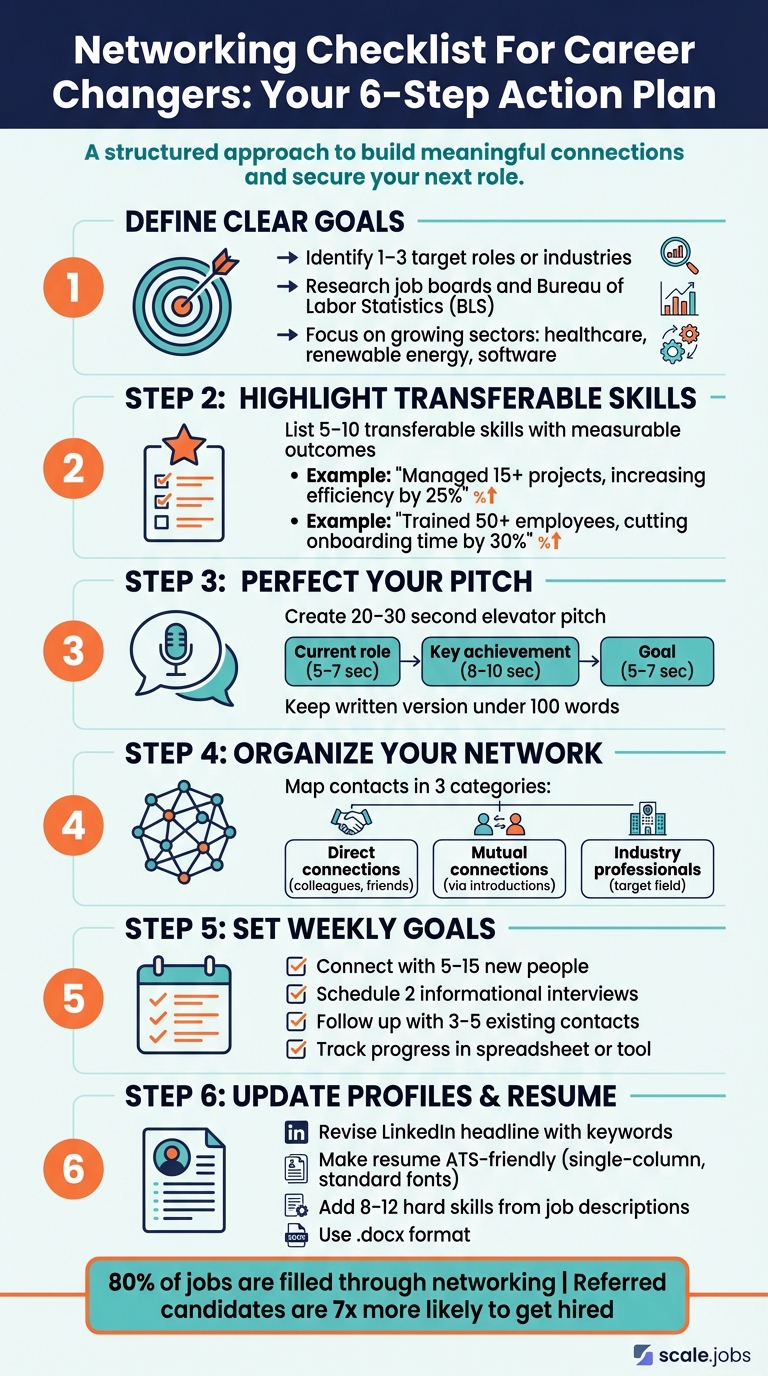
Career Changer Networking Checklist: 6-Step Action Plan
Career Transitions and Networking Tips
Building Your Networking Foundation
Before diving into networking, it's crucial to define your career goals. Vague aspirations won’t cut it - you need to identify 1–3 specific job titles and industries that align with your skills and the current U.S. job market. For instance, if you're transitioning from teaching to instructional design, consider focusing on areas like corporate training, ed-tech startups, or healthcare education. This clarity ensures you connect with the right people and communicate effectively from the start.
Identify Your Target Roles and Industries
Begin by exploring job boards to identify roles that are actively hiring and match your background. Look for titles that frequently appear and resonate with your experience. For example, if you're moving from project management in construction to the tech industry, roles like "Technical Program Manager" or "Product Operations Manager" might be a perfect fit. To refine your choices, consult resources like the Bureau of Labor Statistics for insights into growing industries. Sectors such as healthcare, renewable energy, and software development are expanding, offering more opportunities and less competition.
Highlight Your Transferable Skills
Create a list of 5–10 transferable skills with measurable outcomes. For example: "Managed 15+ projects, increasing efficiency by 25%" or "Trained 50+ employees on new software systems, cutting onboarding time by 30%." Avoid vague phrases like "strong communicator" and instead focus on concrete achievements. This not only strengthens your resume but also improves your chances with ATS systems that scan for specific keywords.
Craft Your Career-Change Elevator Pitch
Develop a concise 20–30 second pitch that highlights your expertise, a key accomplishment, and your career goal. For a verbal pitch, structure it like this: spend 5–7 seconds on your current role (e.g., "I'm a software engineer specializing in cloud infrastructure"), 8–10 seconds on a standout achievement (e.g., "I developed an AI tool that reduced customer service response times by 65%"), and 5–7 seconds on your future goal (e.g., "I'm now looking to transition into fintech leadership roles"). For written pitches, such as LinkedIn messages or emails, expand each section slightly but keep it under 100 words. Test your pitch with a friend to ensure it’s clear and impactful.
| Pitch Component | Purpose | Example | Duration |
|---|---|---|---|
| Current Status | Establish expertise | "I'm a UX designer with 3 years of experience..." | 5–7 seconds |
| Key Achievement | Prove value/impact | "...who recently revamped a Fortune 500 app..." | 8–10 seconds |
| Goal/Ask | Define the next step | "...and I'm looking to connect with fintech leaders." | 5–7 seconds |
Map Your Current Network
Organize your contacts in a spreadsheet with three columns: direct connections (former colleagues, classmates, friends), mutual connections (those you can reach through introductions), and industry professionals already working in your target field. Include names, companies, and your relationship to them. You might discover that a college roommate or an old manager has ties to a company you're eyeing. This network map will guide your outreach, starting with the people you already know well.
Set Measurable Networking Goals
Establish clear, actionable weekly goals: add 5 new LinkedIn connections, schedule 2 informational interviews, or attend 1 industry event. Use a spreadsheet or tools like scale.jobs to track your progress. These measurable goals help you stay accountable and identify patterns - if you’re sending out 20 messages and getting no responses, it’s time to tweak your approach. Adjust your targets based on your availability; for instance, if you’re employed full-time, aim for 3–5 outreach messages per week. If you’re between jobs, you can aim higher - 10–15 messages weekly - without overwhelming yourself. Once your networking groundwork is in place, implement effective networking strategies to ensure your online profiles reflect your goals and support your efforts.
Updating Your Professional Profiles and Materials
Bring your online profiles and resume in line with your new career aspirations.
Revise Your LinkedIn Profile
Start with your headline - it’s the first thing people notice. Instead of something generic like "Former Teacher" or "Sales Professional", try something more targeted, such as "Aspiring UX Designer | 5 Years in Education & User-Centered Problem Solving" or "Project Manager Transitioning to Tech Operations | PMP Certified." Sprinkle in 1–2 keywords from U.S. job postings. Browse LinkedIn profiles for roles that interest you and take note of commonly used terms like "cross-functional collaboration", "data-driven decision making", or "Agile methodology."
In the About section, aim for three to four short paragraphs that explain your career-change goal, highlight relevant experience, and include a clear call-to-action. For example, mention that you're open to informational interviews or looking to connect with professionals in your target industry.
When updating your work experience, focus on transferable skills and measurable outcomes. For instance, if you’re moving from retail management to HR, rewrite a bullet point like "Handled daily store operations" to something more impactful, such as "Recruited, trained, and retained 20+ employees across 3 locations."
Finally, make sure to revamp your career story so your resume reflects these updates and is formatted to work seamlessly with applicant tracking systems (ATS).
Make Your Resume ATS-Friendly
Most companies in the U.S. use Applicant Tracking Systems (ATS) to screen resumes before they reach human eyes. If your resume isn’t formatted correctly or lacks key terms, it could be filtered out automatically. This can be especially challenging for career changers, as your previous job titles might not align perfectly with your target roles.
To improve your chances, stick to a clean, single-column layout with standard fonts like Arial, Calibri, or Times New Roman in 10–12 pt size. Avoid using headers, footers, text boxes, tables, or graphics, as these can confuse ATS software. Save your resume as a .docx file unless a PDF is specifically requested.
Add a Skills section near the top of your resume and list 8–12 hard skills directly from job descriptions. Examples might include "Salesforce CRM", "SQL", "Stakeholder Management", or "Budget Forecasting."
You can fine-tune your resume using free tools like the ATS checker at scale.jobs. These tools let you upload your resume, paste in a job description, and get a match score along with practical suggestions - such as adding "Python" to your Skills section or rephrasing bullet points to better align with the job posting. If you're applying to multiple jobs weekly, their AI Assistant Pro ($9/month at launch) can even generate tailored resumes with just one click, saving time while ensuring compliance with ATS requirements.
A well-optimized resume also ensures consistency across your networking efforts.
Create Your Networking Templates
Prepare three to four email templates for different networking scenarios, such as cold outreach, informational interviews, follow-ups, and thank-you notes. Keep your messages short and mobile-friendly.
For initial outreach, briefly introduce yourself, explain why you’re reaching out, and make a specific, low-pressure request. For example:
"Hi Sarah, I’m a former financial analyst transitioning into fintech product management. I saw your post about launching a new payments feature at Stripe and would love to hear more about your shift from finance to product. Would you be open to a 15-minute call sometime soon?"
For follow-up emails, reference a specific detail from your previous interaction and suggest a clear next step. For instance:
"Thank you for sharing your insights on AI strategies at the Tech Summit last week. Your thoughts on machine learning in healthcare were incredibly helpful. Would you have time for a short virtual coffee next week to continue the conversation?"
Always keep a concise version of your career story ready for networking situations. For example:
"I’ve spent several years in hospitality management, leading teams and improving customer satisfaction. Now, I’m transitioning into customer success roles in SaaS companies, where I can bring my relationship-building skills to a new industry."
Practice your pitch until it feels effortless and engaging.
Growing and Engaging Your Network
Once your profiles are polished and your materials are ready, it's time to actively grow your network and engage with people in your target industry. Building genuine connections and having meaningful conversations are key steps in this process.
Reconnect with Your Existing Network
Start with the people you already know - former coworkers, friends, mentors, or acquaintances. Reach out with a brief message explaining your career shift and ask if they can connect you with someone in your desired field or offer job application assistance. For example:
"Hi Mark, I’m transitioning from teaching to instructional design for tech companies. Do you know anyone in this field who might be open to a quick chat?"
This approach is a great way to tap into your existing network and open doors to new opportunities.
Build Connections on LinkedIn
On LinkedIn, a strong profile is your foundation. Use a professional headshot and craft a headline that highlights your value, like: "Digital Marketing Strategist | Driving Growth Through Data-Driven Campaigns."
Before sending connection requests, do your homework. Look for shared connections, mutual alma maters, or similar projects. Personalize your message by mentioning something specific, like their recent post or their role at a company you admire. Avoid generic requests.
Another way to get noticed is by engaging with their content - leave thoughtful comments on their posts or share industry-related insights. Once you’ve connected, take the conversation further by setting up informational interviews.
Request Informational Interviews
Informational interviews are short, focused conversations (15–30 minutes) where you can learn about someone’s career path and get advice. You can find potential contacts through LinkedIn, alumni groups, or professional organizations. When reaching out, keep your message concise. For instance:
"Hi Jessica, I’m transitioning from finance to fintech product management and would love to hear about your experience at Stripe. Would you have 20 minutes for a virtual coffee next week?"
Prepare a few key questions in advance, and during the conversation, aim to listen 80% of the time and speak 20%. Follow up with a thank-you email within 24 hours, referencing something specific you learned. To maintain the relationship, check in every few months with updates or share relevant articles.
Participate in Industry Events and Communities
Get involved in your target industry by attending meetups, webinars, or joining professional associations. Platforms like Meetup, Eventbrite, and LinkedIn Events are great places to find these opportunities. After attending an event, follow up with people you meet. Mention something specific from your interaction, such as:
"It was great meeting you at the Product Management Summit yesterday. I found your insights on user research incredibly helpful. Would you be open to staying in touch?"
This follow-up shows genuine interest and helps keep the connection alive.
Gain Experience Through Volunteering or Freelancing
Short-term projects, volunteer roles, or freelance gigs can help you build relevant skills while expanding your network. Once you’ve completed a project, ask for LinkedIn recommendations or introductions to others in the field. These experiences give you concrete examples to discuss during networking conversations and demonstrate your dedication to your career change.
To stay organized, consider tools like the Networking Tracker at scale.jobs to keep track of your contacts, follow-ups, and meeting notes. Gaining hands-on experience not only strengthens your resume but also helps you build authentic relationships in your new industry.
Creating a Weekly Networking Schedule
Once you've broadened your network, the next step is carving out regular time to maintain and grow those connections. When you're navigating a career change, consistency beats intensity. Set aside 3–7 hours each week for networking. This strikes a balance between making steady progress and avoiding burnout. If you're currently working, stick to the lower end of that range and fit networking into lunch breaks, early mornings, or evenings. For full-time job seekers, aim closer to 7 hours, spread across weekdays when professionals are typically more available.
Block Out Time for Networking Each Week
Treat networking like any other essential meeting - add it to your calendar. For example, you could reserve Tuesday and Thursday evenings from 6:00 PM to 7:30 PM or schedule early morning sessions on Monday, Wednesday, and Friday from 7:00 AM to 8:00 AM. Be mindful of your target contacts' time zones and plan your outreach during their peak working hours. A consistent schedule not only keeps you on track but also aligns with the networking strategies you've already developed.
Set Weekly Outreach Targets
Setting clear, measurable goals keeps you motivated and focused. Aim to:
- Connect with 5–15 new people.
- Schedule 2 informational interviews (15–20 minutes each) to gather insights and explore the power of referrals.
- Follow up with 3–5 existing contacts to maintain momentum.
- Engage in 2 meaningful discussions with professionals in your field.
Focus on individuals at companies you're interested in and actively participate in professional groups by commenting on posts or sharing relevant articles. These activities help expand your network while keeping your efforts efficient and purposeful.
Participate in Online Industry Discussions
Building visibility is key to being remembered. Engage thoughtfully on LinkedIn by commenting on posts with brief, meaningful insights. Share articles that resonate with you, explaining in a few sentences why they caught your attention. Platforms like LinkedIn, Slack, or Discord are great places to join discussions. Commit to engaging twice a week to stay active and relevant in your field, ensuring you're top-of-mind when opportunities arise.
Record Your Networking Activities
Keep your efforts organized with tools like the Networking Tracker at scale.jobs. This tool helps you log contacts, track outreach dates, and manage follow-up tasks. Its activity timeline prevents duplicate messages and missed follow-ups, transforming your networking from a scattered effort into a streamlined process. With everything in one place, you'll stay on course toward your career goals.
Measuring Results and Adjusting Your Approach
Tracking your networking efforts can turn guesswork into a clear strategy. Without measurable data, it’s tough to know which activities are helping your career transition and which aren’t pulling their weight. Considering that up to 80% of jobs are filled through networking, and referred candidates are 7 times more likely to get hired than those without connections, it’s clear that refining your approach is key. Measuring what works and tweaking what doesn’t can make all the difference.
Review Your Networking Progress Weekly
Set aside 15 minutes every Friday to evaluate your networking activities for the week. Take note of new connection requests, response rates, completed informational interviews, and referrals. Referrals, in particular, are gold - track them closely. For example, if you sent out 20 LinkedIn messages and only received 2 replies, that’s a 10% response rate, which might mean your outreach needs to feel more personal. Tools like the Networking Tracker at scale.jobs can help you log these details, including the "warmth" of each introduction (cold, warm, or hot), so you can identify trends and adjust accordingly.
Adjust Your Pitch and Materials Based on Feedback
Use your weekly review to refine your messaging. Pay attention to recurring questions during informational interviews. For instance, if multiple people ask, "Why are you transitioning from finance to tech?" it’s a sign that your pitch should highlight your transferable skills and motivation right from the start. Similarly, if someone mentions that your LinkedIn headline is unclear, take it as an opportunity to update it. Feedback isn’t a roadblock - it’s a chance to improve and make your message resonate better.
Double Down on What Delivers Results
Focus your energy on strategies that lead to referrals and interviews. If virtual meetups consistently result in follow-up conversations, but cold LinkedIn messages don’t, shift your efforts to what’s working. For example, if a particular alumni group or Slack channel has connected you with hiring managers, prioritize those spaces. Aligning your efforts with your broader career goals ensures you’re using your time wisely. During a career change, your time is one of your most valuable resources - channel it into activities that open real doors and drop what doesn’t make an impact.
Conclusion: How Networking Drives Career Change Success
Networking plays a crucial role in helping career changers succeed. Internal referrals can open the door to unadvertised roles and establish immediate trust with hiring managers, while informational interviews offer valuable insights into the skills you'll need to thrive in a new field. Considering that many jobs are filled through networking - and referred candidates often have a better chance of success - it's clear that building genuine relationships can be far more effective than relying solely on job applications.
This checklist provides you with practical steps to turn your connections into career opportunities. From crafting a compelling elevator pitch to tracking your weekly outreach efforts, it lays out a clear path to transform networking from an abstract concept into a focused, actionable strategy. The key? Prioritize quality over quantity by fostering a few meaningful relationships and offering value before seeking assistance.
During a career transition, your time is one of your most precious resources. Submitting 20–30 job applications daily can eat up over 20 hours each week - time that could be better spent attending industry events, preparing for interviews, or engaging with your network. That’s where scale.jobs comes in. Their Human Assistant service takes on the repetitive task of submitting applications, with trained virtual assistants manually completing each one to avoid bot detection. For $199, they’ll handle 250 ATS-optimized applications while providing real-time WhatsApp updates, freeing you to focus on strategic networking.
In summary, this checklist turns vague networking goals into a structured plan. Set measurable outreach objectives, track your progress, and refine your approach based on results. Whether through alumni networks, online communities, or virtual meetups, your efforts can accelerate your career transition.
Your network is the connection between where you are now and where you want to be. Use it thoughtfully, stay consistent, and let tools like scale.jobs handle the busywork so you can focus on building the relationships that truly matter.
FAQs
How do I identify transferable skills for a career change?
Start by evaluating your current skill set. Make a list of tasks, projects, and accomplishments from your previous roles, then pinpoint the key skills behind them, like project management, data analysis, or communication. These skills often translate well across industries.
Then, compare your skills to the qualifications listed in job postings for the role you're aiming for. Identify where your abilities align and where there are gaps you might need to fill. Short courses or self-directed learning can help bridge those gaps. Additionally, connecting with professionals in your desired industry can provide valuable insights about which of your skills are most relevant and how to present them effectively.
When showcasing your transferable skills, focus on measurable outcomes. For instance, instead of simply stating you managed projects, say something like: "Led a cross-functional team to deliver a $2M product on time, demonstrating strong leadership and stakeholder management skills." This kind of framing makes your experience more tangible and compelling to recruiters and hiring managers.
What are the best ways to build a professional network when changing careers?
Building a strong professional network during a career change takes careful planning and a genuine focus on building relationships. Start by getting clear on your goals - whether you're aiming to learn more about a new industry, find a mentor, or uncover job opportunities. Make sure to update your LinkedIn profile (or similar platforms) to showcase your transferable skills and past achievements. This helps others quickly understand what you bring to the table.
Tap into your current network, like former coworkers, classmates, or alumni, and ask if they can introduce you to people in your target field. Craft a short, conversational pitch that explains your background, why you're making a career shift, and what you're looking for. Then, put yourself out there - attend industry events, join webinars, or participate in meetups where you can have meaningful, face-to-face conversations.
You can also use LinkedIn to join industry-specific groups, follow influential voices, and engage in discussions. Focus on contributing value by sharing useful resources, introducing people within your network, or offering your expertise when relevant. After connecting with someone, follow up with a personalized message to keep the relationship going. This could lead to opportunities like informational interviews or even collaborations down the road.
How can I optimize my LinkedIn profile for a career change?
To make your LinkedIn profile shine during a career change, focus on showcasing yourself as a strong fit for your new industry. Start by updating your headline to reflect the role you're aiming for, like “Marketing Specialist transitioning to Data Analyst.” Make sure to include a polished, professional photo and adjust your location to match where you plan to work.
In your summary, spotlight transferable skills and achievements, ideally backed by numbers. For instance, you could say something like, “Increased customer retention by 25% through improved processes.” Revamp your experience section to highlight results and projects that align with the field you're moving into. Add skills relevant to your target role, complete LinkedIn assessments, and ask former colleagues for endorsements to bolster credibility.
Stay active on the platform by joining industry-specific groups, following key companies, and engaging with posts to increase your visibility. For an added boost, explore tools like scale.jobs to craft ATS-friendly resumes and tap into human-powered networking. These steps can help turn profile views into tangible career opportunities.