
How Mentorship Boosts UX/UI Careers
Mentorship speeds UX/UI career growth: higher pay, faster promotions and job offers, stronger portfolios, and wider professional networks.


Mentorship is a game-changer for UX/UI designers. It accelerates career growth, improves salaries, and helps secure jobs faster. Designers with mentors consistently outperform their peers by gaining:
- Higher salaries through negotiation guidance and specialized skill development (e.g., AI-integrated UX).
- Faster promotions by mastering workplace dynamics and leadership skills.
- Quicker job placements with refined portfolios, insider hiring tips, and professional referrals.
For example, mentored junior designers can progress to senior roles and earn up to $155,000 annually, while those with expertise in design systems may reach $180,000. Programs like Designlab pair mentees with experienced professionals from top companies, offering personalized feedback and career advice.
Mentors also help tackle self-doubt, expand professional networks, and prepare for interviews, creating a clear path to success. Whether through structured programs or individual coaching, mentorship equips designers with the tools to excel in their careers.
UX Mentors: What You Need to Know
Career Outcomes: What the Data Shows
Mentorship has a proven track record of boosting career success for UX/UI designers. From higher salaries to faster promotions and quicker job placements, designers with mentors consistently achieve better outcomes than their peers. These aren't minor differences - they're measurable advantages that can shape the trajectory of a designer's career.
Salary Growth for Mentored Designers
Designers with mentors tend to see faster salary growth. As of January 2025, the average UX designer in the U.S. earns $124,415 annually. However, mentorship plays a key role in accelerating progress through salary bands. For instance, junior designers typically start at $78,961, while senior designers earn around $129,828 - and those with mentors reach these levels more quickly by learning how to negotiate effectively and focus on high-value skills.
Certain specialized skills also command premium pay. Designers proficient in AI-integrated UX can earn 20–30% more than their peers, while expertise in design systems adds 15% to base salaries. Mentors help mentees identify these lucrative areas and guide them in acquiring the skills that employers will prioritize in the years ahead. For example, Design System Specialists are expected to earn up to $180,000 in 2026, while design managers could see salaries ranging from $170,000 to $200,000.
Geography also plays a role in salary differences, but mentors help designers make the most of local opportunities. For example, the average salary in New York is $141,337, compared to $136,868 in San Francisco. With mentorship, designers gain insights into regional salary trends and learn how to confidently negotiate compensation, ensuring they maximize their earnings.
| Experience Level | 2025 Median Salary | 2026 Projected Salary |
|---|---|---|
| Entry/Junior | $78,961 | $75,000–$95,000 |
| Mid-Level | $124,415 | $100,000–$125,000 |
| Senior | $129,828 | $130,000–$155,000 |
| Lead/Manager | $171,884 | $170,000–$200,000 |
Mentorship also plays a critical role in career advancement, helping designers climb the professional ladder more quickly.
Promotion Rates
Mentorship doesn't just impact pay - it accelerates promotions. Mentors offer guidance on navigating workplace dynamics and understanding the unwritten rules that influence career growth. They provide actionable advice on moving from individual contributor roles to leadership positions, which is especially valuable for senior designers aiming for executive roles. At that level, skills like business strategy and team management become just as important as design expertise.
Programs like Designlab's UX Academy pair designers with mentors who have 5–7 years of industry experience, while companies like Indeed run formal mentorship initiatives involving 35–50 participants per cycle. These programs equip designers with the leadership and strategic skills needed for upward mobility. Mentors also act as professional advocates, vouching for their mentees' skills and work ethic during promotion reviews - often the deciding factor when multiple candidates are vying for the same role.
Job Placement Speed
Mentors also help designers land jobs faster by ensuring they're well-prepared for the job market. They assist in refining portfolios to meet industry standards and often provide access to exclusive referral opportunities. This insider advantage allows mentees to tap into job openings before they’re publicly advertised, giving them a significant edge over other candidates.
Additionally, mentors prepare designers for every stage of the hiring process. They teach mentees how to present their design decisions, handle tough stakeholder questions, and negotiate salaries effectively - skills that self-study methods often overlook. As a result, mentored designers approach interviews with greater confidence and secure job offers more quickly than those navigating the process on their own.
Case Studies: Mentorship Programs That Work
Mentorship programs can lead to real, measurable career progress. Two prime examples - Designlab's UX Academy and Jonas Bröms' mentorship approach - highlight how different methods can help designers sharpen their skills, secure jobs, and grow into leadership positions.
Designlab's UX Academy Program
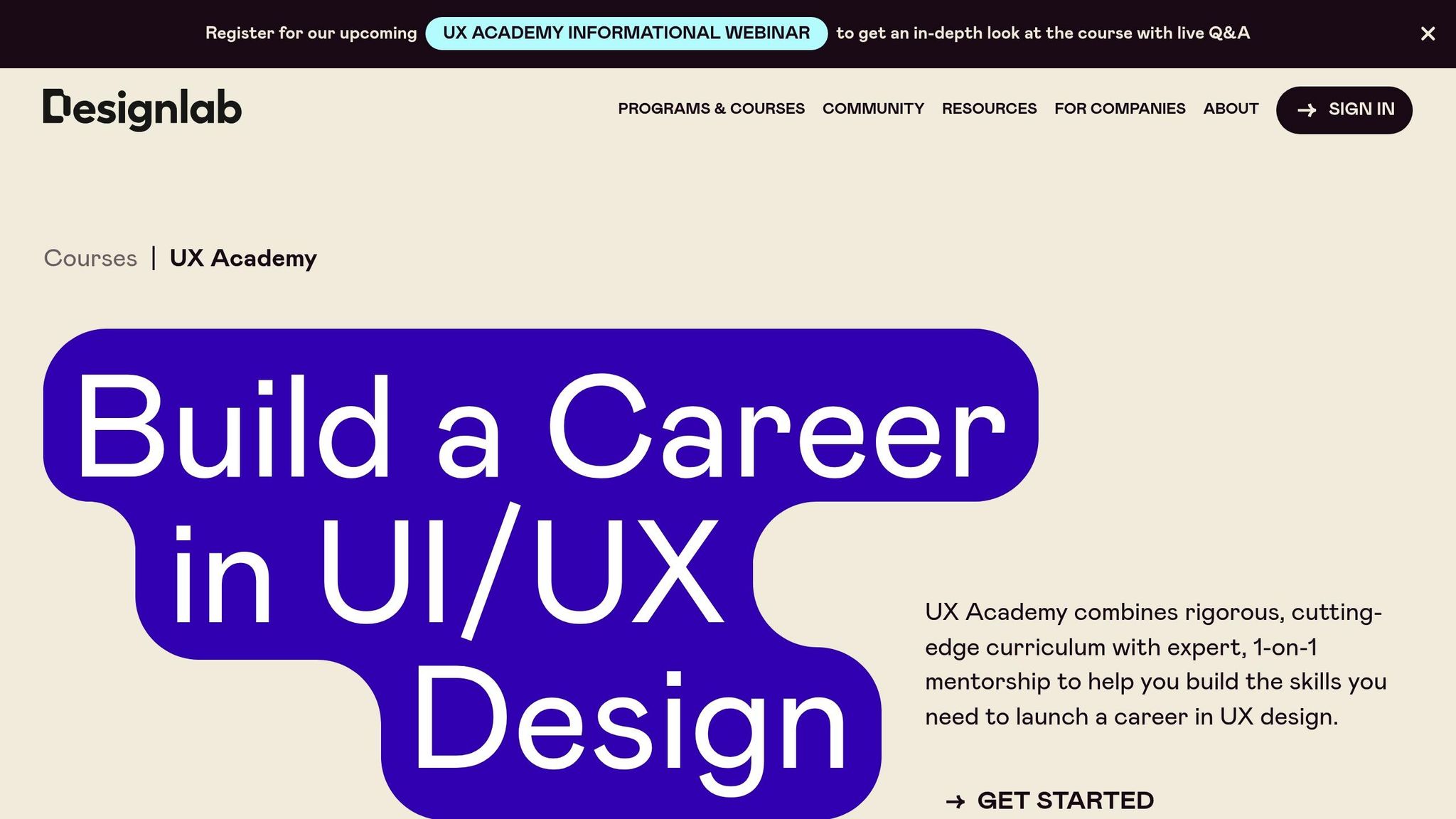
Designlab offers one of the most well-regarded UX/UI mentorship programs, supported by a network of over 500 mentors from top-tier companies. The program pairs each student with both a mentor for broader career advice and a tutor for daily feedback on assignments. This dual-support system mimics the dynamics of real-world design teams.
Students benefit from weekly, hour-long 1:1 video calls with their mentors. These sessions tackle project roadblocks, explore industry trends, and include portfolio reviews. Mentors also provide written feedback on all projects within 24–48 hours, helping students refine their work to meet industry standards before they start job hunting.
These mentors, who typically have 5–7 years of industry experience, do more than just polish portfolios - they also act as professional references during job searches. As Emilyann Gachko from Designlab explains:
"Our mentors are industry professionals with an average of 5-7 years of experience in the UI/UX design industry, each with their own unique backgrounds."
This means graduates leave with not only strong portfolios but also credible advocates who can vouch for their abilities to hiring managers.
Jonas Bröms' Mentorship Approach
Jonas Bröms takes a different path, focusing on breaking down internal barriers to help designers reach their potential. His mentorship philosophy addresses imposter syndrome, a common issue that prevents many designers from stepping into leadership roles or negotiating for better opportunities.
Bröms reframes self-doubt as a chance for growth. He explains:
"Recognizing that self-doubt is widespread - even among highly qualified peers - shifts the narrative from 'knowing all the answers' to embracing growth and learning as ongoing journeys."
This perspective helps designers build confidence and tackle challenges they might otherwise shy away from.
Another key aspect of his approach is mastering cultural communication for global and distributed teams. He encourages "deliberate overcommunication" to ensure clarity across diverse cultural contexts, a skill that’s increasingly important as more UX roles move online. Additionally, Bröms advocates for developing hybrid skills that combine UX design with coding and AI knowledge, preparing designers for roles that demand both creative and technical expertise. As he puts it:
"Future designers must remain flexible, open to learning new competencies, and prepared to embrace emerging roles that blend creative and technical disciplines."
These two mentorship models demonstrate how tailored guidance - whether through structured programs or individual coaching - can lead to meaningful career advancements for designers.
Non-Technical Benefits of Mentorship
Building Confidence and Reducing Self-Doubt
Mentorship plays a key role in addressing imposter syndrome by providing clear, actionable feedback that helps you understand your professional strengths and tackle self-doubt head-on. Mentors often share their own challenges and failures, reminding mentees that setbacks are a natural part of any career journey. Laia Tremosa from the Interaction Design Foundation highlights this well:
"A mentor can be your beacon of light and help you navigate managers who don't value UX, demanding clients, work-life balance or even how to choose the right job."
Beyond guidance, mentors simulate real-world challenges like whiteboard exercises and mock interviews to prepare designers for high-pressure situations. As Emilyann Gachko from Designlab notes, mentors often play devil's advocate, challenging design decisions to help mentees refine their reasoning. This process not only strengthens their ability to justify their work but also builds the confidence needed for client meetings and professional networking.
Professional Network Expansion
Mentorship doesn’t just boost confidence - it also opens doors to valuable professional connections. Mentors can introduce you to key industry players, recommend you for job openings, and help you navigate the often-overwhelming world of networking. This kind of support can significantly speed up job searches and fuel long-term career growth.
A great example of this is the internal mentorship program led by Kathryn Brookshier and Kayla Farrell at Indeed in April 2024. The program supported 35 to 50 participants per cycle and included "speed matching" events where potential mentor-mentee pairs rated their compatibility. This approach ensured meaningful partnerships that often translated into real career opportunities. Because mentors witness a mentee’s entire process - from research to final delivery - they gain a deep understanding of their skills, making them strong advocates within their professional networks.
Felipe Guimaraes from Aela Team sums it up perfectly:
"Who you know can be as crucial as what you know... mentorship in UX Design will provide an extensive professional network."
Mentored vs. Non-Mentored Designers: Side-by-Side Comparison

Mentored vs Non-Mentored UX Designers: Career Outcomes Comparison
Having a mentor can significantly shape a designer's career path. According to research from Gartner, employees with mentors are five times more likely to be promoted compared to those without. For UX/UI designers, this often means quicker advancements from junior to senior roles, better starting salaries, and faster job placements. As mentioned earlier, mentorship also shortens the job search process and improves salary negotiations.
Mentored designers gain practical, insider knowledge - like when to ask for a raise, which portfolio pieces to highlight, and how to prepare for leadership roles. On the other hand, non-mentored designers often rely on trial and error to figure these things out. Felipe Guimaraes, Design Lead at Aela Team, sums up the value of mentorship perfectly:
"A mentor can share strategies on salary negotiation, identifying emerging trends in the field, and advise on when and how to seek new professional horizons."
Mentorship doesn't just help with career strategy - it also enhances overall job satisfaction. Data from Chronus reveals that 90% of employees with mentors report being happier in their roles. In contrast, 40% of non-mentored workers considered quitting within the last three months. Mentored employees are also twice as likely to feel engaged at work, which directly reflects in the quality of their designs and their chances of being promoted.
Comparison Table: Career Metrics
| Career Metric | Mentored Designers | Non-Mentored Designers |
|---|---|---|
| Promotion Rate | 5x more likely to be promoted | Standard baseline rate |
| Salary Growth | Accelerated with expert negotiation and market insight | Slower due to limited knowledge |
| Job Placement Speed | Faster with networking and professional references | 6–12 months for entry-level roles |
| Workplace Engagement | 2x more likely to be engaged | 50% less likely to feel engaged |
| Feedback Quality | Detailed, actionable critiques on design and usability | General feedback like "looks good" |
| Retention Rate | Up to 96% retention in mentorship programs | 40% consider quitting within three months |
The numbers speak for themselves - mentorship is a game-changer for UX/UI designers. Faster career growth, higher salaries, and improved job satisfaction all point to the value of having a mentor. With these benefits in mind, it’s worth exploring how platforms like Wonsulting can help designers tap into these advantages.
Is Wonsulting Worth It? Reviews & Alternatives for UX/UI Designers
Wonsulting has made a name for itself in career services, boasting over 2,500 successful placements at top companies and claiming a 90% placement rate within four months. Their approach combines AI-driven tools with guidance from former Fortune 500 recruiters. However, for UX/UI designers, the platform’s self-service model can be a double-edged sword. While it provides resources, it also requires a significant time commitment. Some designers have voiced concerns about its rigid, single-column resume templates, which may not effectively highlight creative portfolios.
The self-service nature of Wonsulting means that while it helps generate application content, users are still responsible for managing submissions. For designers already juggling portfolio updates, case studies, and networking, this process can feel overwhelming. This gap opens the door for a more hands-off solution like Scale.jobs.
Why Scale.jobs Works Better for UX/UI Job Seekers
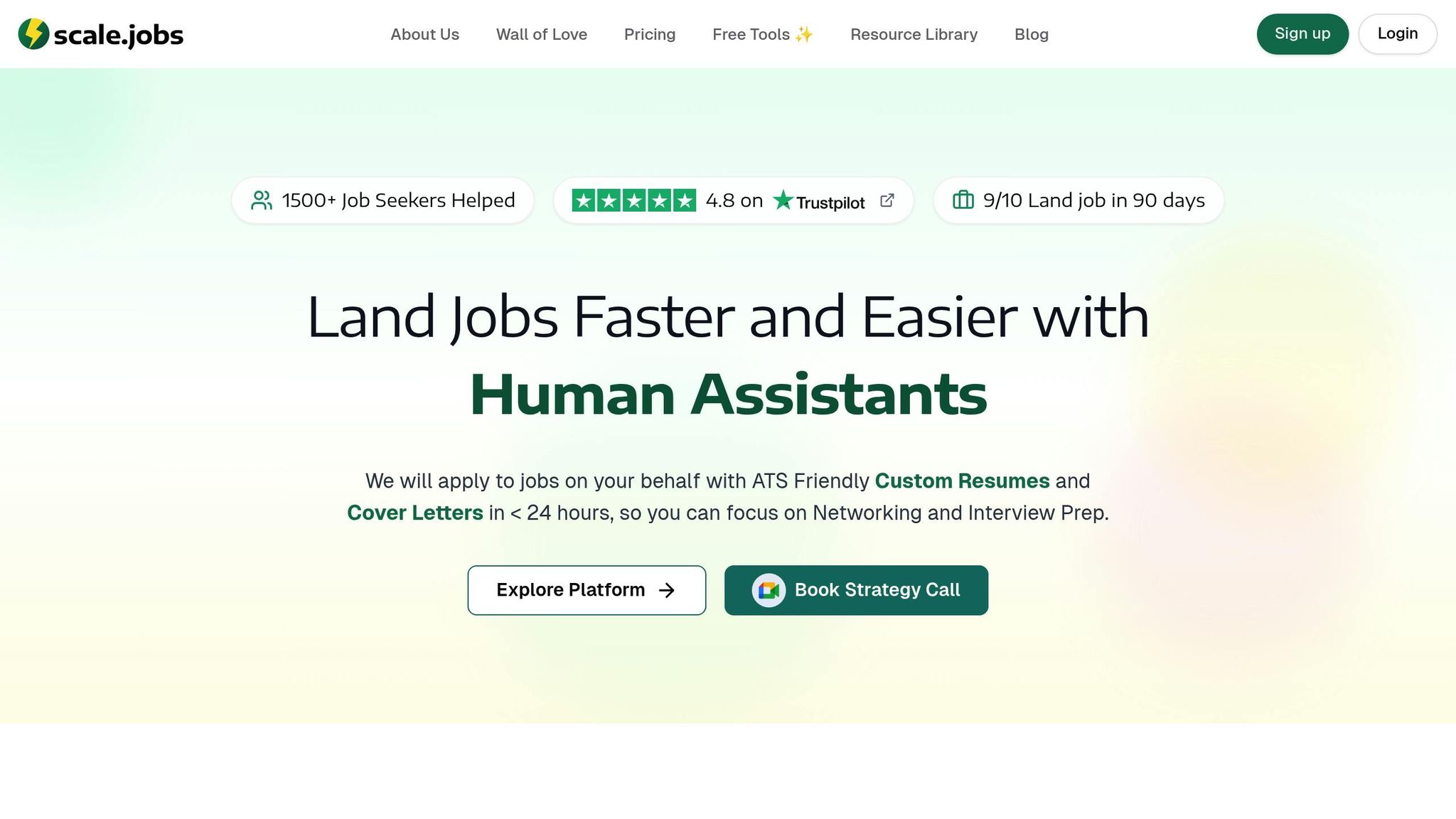
Scale.jobs simplifies the job search process for UX/UI professionals. Instead of relying on AI-generated templates, human virtual assistants (VAs) create tailored, ATS-optimized resumes and cover letters for each job application. This ensures your application stands out while showcasing your unique portfolio. Plus, you’ll receive real-time updates via WhatsApp, complete with time-stamped screenshots of submissions, so you’re never left wondering if your application made it through.
Another standout feature is Scale.jobs’ flat-fee pricing model. For example, $199 covers 250 applications, while $399 secures 1,000 applications with the help of two VAs. There are no recurring subscriptions, and the platform even offers pro-rata refunds for unused applications. This is a stark contrast to Wonsulting, which only provides refunds under very limited circumstances.
For designers navigating tight timelines, such as those on H‑1B or OPT visas, Scale.jobs offers fast, 24-hour turnaround times for custom documents. The platform is compatible with all application portals, from corporate ATS systems to niche design job boards, helping streamline a job search that typically takes 1–3 months.
Scale.jobs vs. Wonsulting: Feature Comparison
Scale.jobs takes the heavy lifting out of the application process, freeing up time for designers to focus on refining portfolios and building connections.
| Feature | Scale.jobs | Wonsulting |
|---|---|---|
| Application Method | Managed by human VAs | Self-service AI tools |
| Resume Customization | Tailored for each specific role by humans | AI-generated using templates with keyword suggestions |
| Support Channel | Real-time WhatsApp updates with proof-of-work screenshots | Email and platform-based messaging |
| Pricing Model | Flat fee: $199–$1,099 | Subscription (~$20/month) or coaching bundles ($499–$2,999) |
| Refund Policy | Pro-rata refunds for unused applications | Limited refund policy (120-day job offer guarantee with Ultimate Bundle only) |
| Time Saved | Reclaims 20+ hours/week for other priorities | Users still manage applications and tracking |
Conclusion
The evidence is clear: mentorship doesn’t just speed up career growth - it transforms your entire approach to job searching. Designers who work with mentors tend to earn higher salaries, land promotions more quickly, and build valuable professional networks that keep opening doors throughout their careers. It’s a winning mix of skills and connections that paves the way for smarter career decisions.
Mentors offer the kind of guidance that helps you navigate tricky areas like salary negotiations, polishing your portfolio, and overcoming design challenges that might be holding you back. Platforms like Designlab and CareerFoundry provide structured mentorship programs packed with industry insights and practical advice.
Once your portfolio and strategy are in top shape with your mentor’s help, services like Scale.jobs handle the heavy lifting of job applications. By managing tailored submissions for you, they can save you over 20 hours a week - time you can use to focus on networking and preparing for interviews. It’s in these moments, with the support of a mentor, that your career truly takes off. The combination of expert mentorship and streamlined application assistance creates a powerful momentum to drive your success.
FAQs
How does mentorship help UX/UI designers negotiate better salaries?
Mentorship plays a key role in helping UX/UI designers develop the skills and confidence needed to negotiate higher salaries. Seasoned mentors bring current market knowledge, share effective negotiation techniques, and provide practical examples that empower designers to present their value persuasively to potential employers.
With a mentor's advice, designers gain a clearer understanding of their market value, spot opportunities for negotiation, and approach salary conversations with greater assurance. This guidance often results in landing more attractive compensation packages.
How does mentorship help UX/UI designers land jobs faster?
Mentorship plays a key role in helping UX/UI designers land jobs faster by offering tailored advice and actionable feedback that self-study often misses. With a mentor’s guidance, designers can fine-tune their portfolios, sharpen their storytelling skills, and showcase expertise with tools like Figma or Adobe XD - qualities that grab the attention of recruiters and lead to more interview opportunities. Mentors also bridge the gap between theory and practice, helping designers make better design decisions and tackle problems with confidence.
Beyond honing skills, mentors open doors to professional networks, suggest job opportunities, and provide crucial interview preparation. This support can dramatically cut down the time spent searching for a position. Mentors also keep designers motivated, help them avoid career plateaus, and guide them in building a clear career path. By identifying strengths, aligning them with UX/UI specialties, and offering advice on salary expectations, mentors provide a well-rounded approach that not only accelerates job placements but also lays the groundwork for a thriving career in design.
How can mentorship help UX/UI designers overcome self-doubt and build confidence?
Mentorship plays a key role in helping UX/UI designers gain confidence and overcome self-doubt. By providing constructive feedback and personalized support, mentors create a safe environment where designers can receive honest critiques without the fear of judgment. This approach helps break down vague worries into clear, actionable steps, making challenges feel less overwhelming and more achievable.
Beyond feedback, mentors help designers grow by setting attainable goals, emphasizing their strengths, and sharing practical industry insights. Their guidance offers a sense of support, turning uncertainty into confidence. With a mentor’s expertise, designers are better prepared to showcase their portfolios, excel in interviews, and make thoughtful, impactful design choices.