
Job Searching in 2026: Modern Framework for Career Change
A practical framework for changing careers in 2026—prioritize skills over degrees, optimize AI/ATS-ready resumes, and use AI plus human-assisted tools to streamline applications.


The job market in 2026 is more competitive and tech-driven than ever. To succeed, you need to focus on skills over degrees, navigate AI-driven hiring systems, and leverage tools that save time and improve results.
Here’s what’s changed and how you can adapt:
- AI and ATS dominate hiring: Resumes must be ATS-friendly, and skills like AI literacy are critical.
- Remote work expands opportunities: But it also increases competition nationwide.
- Skills-based hiring is the norm: Showcasing measurable achievements and work samples is more important than traditional credentials.
- New tools simplify job searches: Platforms like Scale.jobs combine AI and human assistance to tailor resumes, track applications, and handle submissions efficiently.
Key strategies for success:
- Define your career goals and target industries.
- Build a skills-focused portfolio with measurable results.
- Use tools like Scale.jobs for tailored applications and human-assisted services.
- Prioritize networking through LinkedIn and professional groups.
The 2026 Job Market Explained
Current Hiring Trends in 2026
The U.S. job market in 2026 is moving at a more measured pace. Companies are taking their time with multi-step hiring processes to ensure they find the right candidates. While unemployment rates remain relatively low, the rapid hiring seen in the post-pandemic era has slowed.
Corporate positions in areas like finance, marketing, and administration have grown more competitive, largely due to automation shaping recruitment strategies. On the other hand, tech roles - especially those tied to AI - are thriving. Positions such as machine learning engineers, AI product managers, and data scientists are still highly sought after. In healthcare, the continued demand for registered nurses, medical technologists, and home health aides is fueled by aging populations and ongoing demographic changes.
The logistics and supply chain industry has largely recovered from earlier disruptions, but the need for professionals who can handle modern inventory and distribution challenges remains strong. Meanwhile, the renewable energy sector is carving out new opportunities. Roles like solar panel installers, wind turbine technicians, and energy efficiency consultants are becoming more prominent, particularly in areas prioritizing clean energy initiatives.
Remote and hybrid work arrangements have broadened the talent pool nationwide, giving job seekers more options but also increasing competition. Employers are now more selective, shifting their focus toward candidates who can clearly demonstrate their skills and capabilities.
Skills-Based Hiring and AI Requirements
As hiring becomes more targeted, employers are placing less emphasis on degrees and more on practical skills. The ability to show what you can do - through work samples, portfolios, or real-world case studies - is now more important than ever.
AI literacy is no longer optional in many industries. Whether it’s customer service teams using AI-driven support tools, marketing professionals leveraging AI for content creation and analytics, or HR departments utilizing AI for candidate screening, the expectation is clear: you need to know how to integrate AI into your role.
For technical positions, showcasing hands-on experience with AI is crucial. For example, building a chatbot or creating an AI-powered data analysis tool can help demonstrate your expertise. The good news? These skills are accessible through online learning platforms, making it easier to develop and showcase your abilities.
When crafting your resume or portfolio, focus on the impact of your work rather than traditional credentials. Highlighting tangible achievements and measurable results resonates more with recruiters. Additionally, soft skills like adaptability and the ability to quickly learn new tools are becoming increasingly valuable as technology continues to evolve.
The key to standing out in 2026's competitive job market is clear: prove your capabilities with real-world examples and stay ahead by mastering both technical and interpersonal skills. Those who can effectively balance these elements will be well-positioned for success.
A Step-by-Step Framework for Career Changes
Defining Your Career Direction and Target Industries
Starting a career change begins with setting a clear target. Focus on specific roles rather than broad fields. For instance, instead of saying, "I want to work in tech", narrow it down to roles like AI product manager, customer success specialist, or technical writer.
Pay attention to job postings that frequently highlight certain titles and skills. If "data analyst" keeps appearing, it may point to a role with strong demand and growth potential.
Think about industries where your current experience can easily transfer. For example, someone with a retail management background might explore opportunities in e-commerce operations, customer experience design, or supply chain coordination. Similarly, educators could transition into corporate training, instructional design, or educational technology.
Even in a world with hybrid work, location still plays a role. Industries often cluster in specific regions - renewable energy jobs are more common in states like California, Texas, or Colorado, while fintech roles are concentrated in hubs like New York, San Francisco, or Austin. While remote work has expanded options, salaries and competition can vary depending on the market.
Talking to professionals already working in your desired roles can be incredibly helpful. Informational interviews can give you a better sense of what the job is really like and what early success looks like. Once you’ve honed in on a clear goal, evaluate your skills and start building a portfolio tailored to your target roles.
Mapping Your Skills and Building Work Examples
After identifying your target roles, focus on bridging the gap between your current skills and the job requirements. Start with an honest look at your transferable skills, then create examples that show your abilities in action.
List the main responsibilities tied to your chosen role. For instance, a project coordinator might need to manage timelines, coordinate teams, track budgets, and communicate with stakeholders. Organizing a community event could demonstrate project management skills, while overseeing expenses showcases budget coordination.
Employers value measurable achievements. Use side projects, volunteer work, or independent learning to build a portfolio that highlights your abilities. For example, starting a blog to share industry insights or contributing to GitHub projects can demonstrate your expertise.
Compile your examples into a portfolio or personal website. Even a simple one-page site with your bio, work samples, and contact information can make it easier for potential employers to see how your skills align with their needs.
Running a Focused Application Campaign
Take a targeted approach to your job search by using modern tracking tools and personalizing your applications. Avoid sending the same generic resume to every job. Instead, focus on a handful of roles that align closely with your goals and customize your materials for each one.
Use a spreadsheet to keep track of key details like company name, role, application date, and follow-up. This keeps you organized and helps you spot trends in your responses.
Tailor your resume and cover letter to each job posting. Start with a master resume that includes all your relevant experiences, then tweak it for each application. Your cover letter should explain why you're making a career change and how your background fits the company’s needs. Include specific examples that highlight your strengths.
Submit applications promptly and follow up with the hiring manager when possible. If you know someone at the company, let them know you’ve applied - it can make a difference.
Keep an eye on your application metrics to refine your approach. If certain roles yield better results, consider improving your resume, adding stronger work examples, or sharpening your interview skills.
Finally, set realistic expectations for your job search timeline. Career changes often take months of steady effort. Treat the process like a part-time job, dedicating regular time each week to applications, networking, skill-building, and interview prep. Consistency over time usually leads to better outcomes than sporadic bursts of activity.
Mid Level Career Transition And Development Plan
Job Search Tools and Platforms Compared
Navigating the job search world in 2026 means choosing from a wide range of platforms, each promising to make your search more efficient. Some rely on AI to refine your resume, others help you track applications, and a few even offer human assistance to handle the heavy lifting. Knowing what each tool does and how much it costs can help you make smarter decisions with your time and money. Here's a closer look at how AI tools, job boards, and human-assisted services stack up to simplify your job hunt.
AI Resume Builders and ATS Optimization Tools
Applicant Tracking Systems (ATS) are designed to filter resumes, making it essential to format yours in a way that gets noticed. These tools aim to help you navigate that process.
Rezi offers a subscription for $29 per month, using AI to rewrite your resume bullet points based on job descriptions. It also includes ATS-friendly templates and a keyword scanner to highlight missing terms. Its guided interface is beginner-friendly, but the AI-generated suggestions can feel repetitive, often requiring additional edits to maintain your unique tone. In today’s fast-paced job market, relying solely on a single master resume can slow you down when applying to multiple roles.
Jobscan takes a different approach by letting you compare your resume against job postings. You’ll get a match score, along with feedback on missing keywords, formatting issues, and weak sections. Plans start at $49.95 per month for unlimited scans. While helpful for identifying gaps, this tool doesn’t create content for you, leaving you to manually update your resume. For those juggling multiple applications, this process can feel time-consuming.
Scale.jobs stands out with its free ATS-compliant resume builder and AI-powered customization for tailoring resumes to individual job postings. The free plan allows two AI-tailored resumes and one cover letter per day, while the AI Assistant Pro plan (launch pricing: $9/month, typically $19) offers unlimited customizations. By focusing on tailoring resumes for each application, Scale.jobs eliminates the need to rely on a single static resume, saving significant time.
Why Scale.jobs leads in this category:
- Free access to an ATS-compliant resume builder.
- AI-powered resume and cover letter customizations to streamline applications.
- Automates tailoring for each job, which is a time-saver compared to static resume formats.
The main difference between these tools lies in their workflows. Rezi and Jobscan focus on perfecting one resume, while Scale.jobs emphasizes efficiency by tailoring resumes for every application. If you’re applying to 10–15 jobs a week, the time saved with Scale.jobs can be substantial.
Job Boards and Application Tracking Software
Finding job openings is just the first step. Keeping track of your applications, submission dates, and follow-ups requires organization and the right tools.
LinkedIn remains a dominant platform with over 900 million users and millions of job listings. Its networking capabilities transform your profile into a dynamic, interactive resume. While the job board is free, the Premium Career plan at $39.99/month offers extras like recruiter messaging and profile view insights. However, competition is fierce, with many postings attracting hundreds of applicants within hours. The "Easy Apply" feature, while convenient, often prioritizes speed over quality.
Indeed is one of the largest job aggregators, pulling listings from company websites and other boards. It’s free to use and includes a basic application tracker. Its search filters make it easy to refine results by location, salary, and job type, but it lacks resume customization tools, leaving that task up to you.
Simplify markets itself as an all-in-one platform, offering features like auto-filled applications, submission tracking, and analytics. Plans start at $30 per month. While the auto-fill feature works well for standard forms, it struggles with custom applications requiring essays or portfolio uploads. Users have noted that while the tracking dashboard is useful, the auto-apply feature can sometimes submit generic materials, which might hurt your chances.
Teal offers a Chrome extension that saves jobs from any site, along with a resume builder and application tracker. The free version covers basic tracking, while Teal+ at $19/month adds AI resume customization and unlimited job tracking. Its polished interface and job-matching algorithm are helpful, but Teal focuses solely on tracking and optimization - it doesn’t submit applications for you.
Scale.jobs offers a comprehensive solution with over 2 million active job postings each month, a built-in application tracker, and networking tools. Its tracker logs applications, stores customized resumes and cover letters, and even sends follow-up reminders. With seamless integration into its resume builder and AI tools, Scale.jobs allows you to tailor and submit applications directly from the platform - and its basic features are free.
Why Scale.jobs stands out in this category:
- Access to over 2 million active job postings monthly.
- Centralized tools for job search, application tracking, and resume customization.
- Free access to robust tools, with optional AI upgrades for added personalization.
- A streamlined workflow that eliminates the need for juggling multiple platforms.
Each platform caters to different search styles. LinkedIn is ideal for networking-focused job seekers, while Teal suits those looking for a simple tracker with AI support. However, for an all-in-one solution that covers everything from job discovery to application tracking, Scale.jobs offers a practical, cost-effective option.
Human-Assisted Application Services
Automated tools can handle many aspects of the job search, but sometimes a personal touch is needed. Human-assisted services cater to job seekers who want help with time-consuming tasks like filling out forms, writing essays, or submitting detailed applications.
Find My Profession provides a white-glove experience, assigning you a dedicated recruiter who writes your resume, applies to jobs, and offers interview coaching. Packages start at $2,997 for three months. While this hands-off approach is appealing, the high cost makes it inaccessible for many.
Wonsulting focuses on career coaching and resume services rather than full application management. A resume rewrite costs $249, and their "AutoApplyAI" service applies to 50 jobs for $79. However, the application service relies heavily on automation, which can result in mismatched applications or errors with complex forms.
LazyApply uses bots to submit hundreds of applications daily, with plans ranging from $99 to $249 per month based on volume. While it’s fast - capable of submitting up to 1,000 applications in a week - its automated nature often leads to generic submissions or irrelevant applications, potentially damaging your chances.
Scale.jobs offers a Human Assistant service that blends automation with personal support. Trained assistants manually customize and submit each application, completing forms and uploading materials within 24 hours. Pricing is straightforward: $199 for 250 applications, $299 for 500, or $399 for 1,000. The Ultimate Bundle at $1,099 includes 1,000 applications, a personal recruiter, resume review, and LinkedIn makeover. Each application comes with proof-of-work screenshots, real-time WhatsApp updates, and a dashboard to track submissions. Unused credits are refunded, so you only pay for what you use.
Why Scale.jobs excels in this category:
- Trained assistants ensure accurate, personalized applications.
- Flat-fee pricing offers clear cost control without recurring charges.
- Proof-of-work screenshots and real-time updates provide transparency.
- Compatibility with any portal ensures high-quality submissions, even for complex forms.
- Refundable credits mean you only pay for the services you use.
The biggest distinction here is between speed and quality. Automated services like LazyApply prioritize volume but often sacrifice precision, while premium services like Find My Profession cater to high-end clients at a steep cost. Scale.jobs finds the middle ground, offering human expertise at an accessible price point. For job seekers wanting to focus on networking and interviews rather than tedious applications, the time saved is invaluable.
Scale.jobs vs Major Competitors
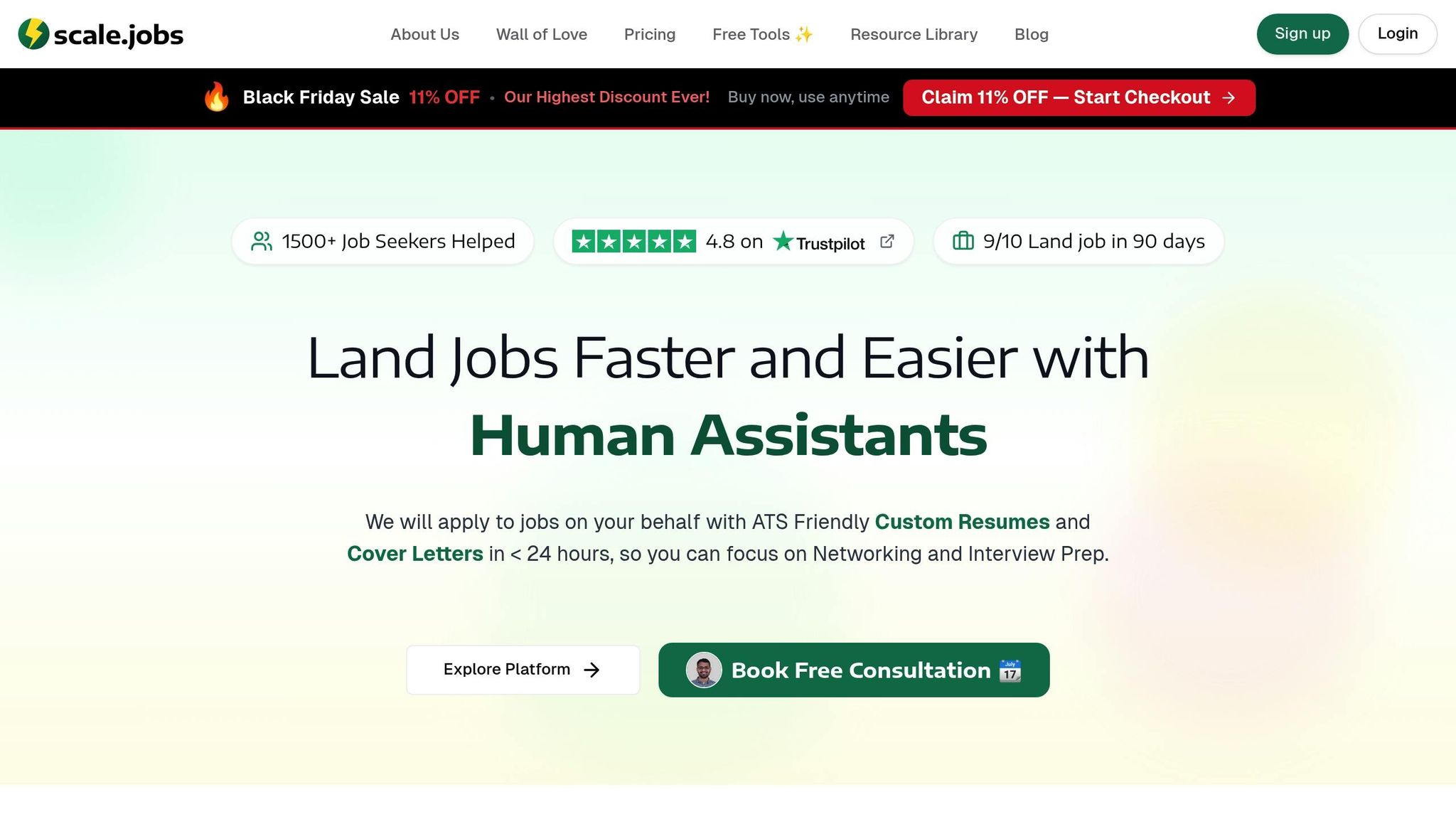
In 2026, the job application landscape is crowded with platforms offering automated tools and resume tweaks. But Scale.jobs stands out by blending AI technology with dedicated human assistance. Let’s see how Scale.jobs measures up against three key competitors - LazyApply, Jobscan, and Teal - and why its human-powered approach makes all the difference.
LazyApply vs Scale.jobs: Human Assistance Beats Automation
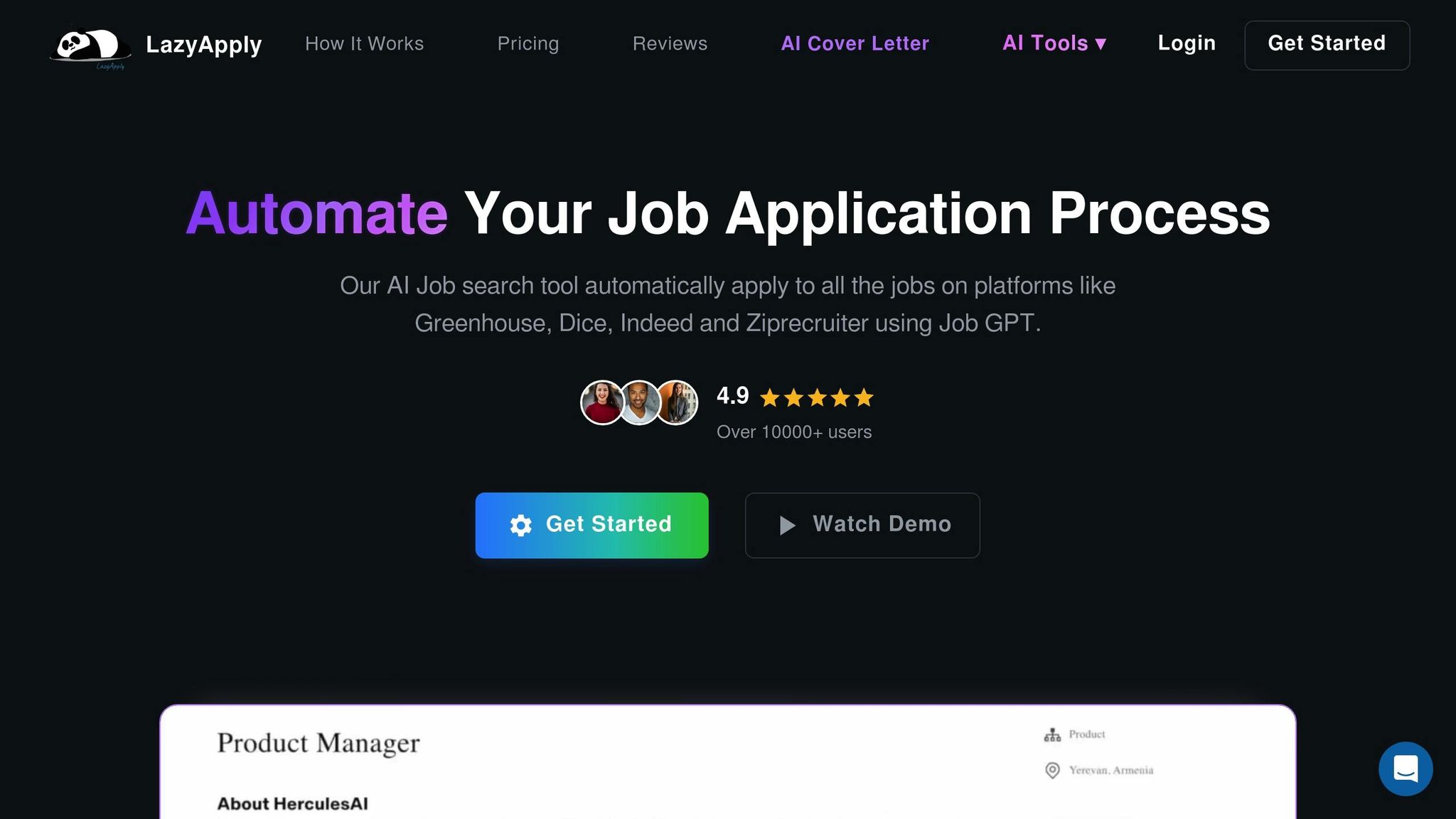
LazyApply relies on bots to submit mass applications. Its plans range from basic options to an ultimate package that can send up to 1,500 applications per day across multiple resumes. However, automated submissions often result in generic, cookie-cutter applications that fail to address specific job requirements, custom questions, or tricky portal fields.
Scale.jobs takes a completely different route. Each application is handled by trained human assistants who manually complete the process within 24 hours. Resumes and cover letters are tailored for each role and company. Pricing is straightforward: $199 for 250 applications, $299 for 500, and $399 for 1,000. The Ultimate Bundle, priced at $1,099, includes extras like a recruiter consultation, resume review, and LinkedIn makeover. Plus, you get proof-of-work screenshots to track submissions, and if you land a job before using all your credits, you’re eligible for a refund on the unused portion. In fact, 70% of users have benefited from this refund policy.
| Feature | LazyApply | Scale.jobs |
|---|---|---|
| Application Method | Automated bot submissions | Human assistants manually apply |
| Customization | Generic, automated | Tailored resumes and cover letters |
| Handling Complex Forms | Often skipped or incorrectly filled | Managed accurately by trained assistants |
| Proof of Work | None provided | Submission screenshots for transparency |
| Pricing Model | $99–$999/year subscription | $199–$1,099 one-time payment |
| Refund Policy | No refunds | Unused credits refunded |
| Support | Email support | Real-time WhatsApp updates |
Why Scale.jobs is better:
- Human precision: Applications are customized and completed accurately, even for complex forms.
- Transparency: Proof-of-work screenshots ensure you know exactly what’s been done.
- One-time payment: Avoid ongoing subscription costs.
- Refundable credits: If you land a job early, you get money back for unused applications.
- Real-time support: Stay updated through WhatsApp instead of waiting for email replies.
In a market where fewer than 2% of applicants get interview callbacks, quality and precision matter far more than sheer volume.
Is Jobscan Worth It? A Closer Look at Alternatives
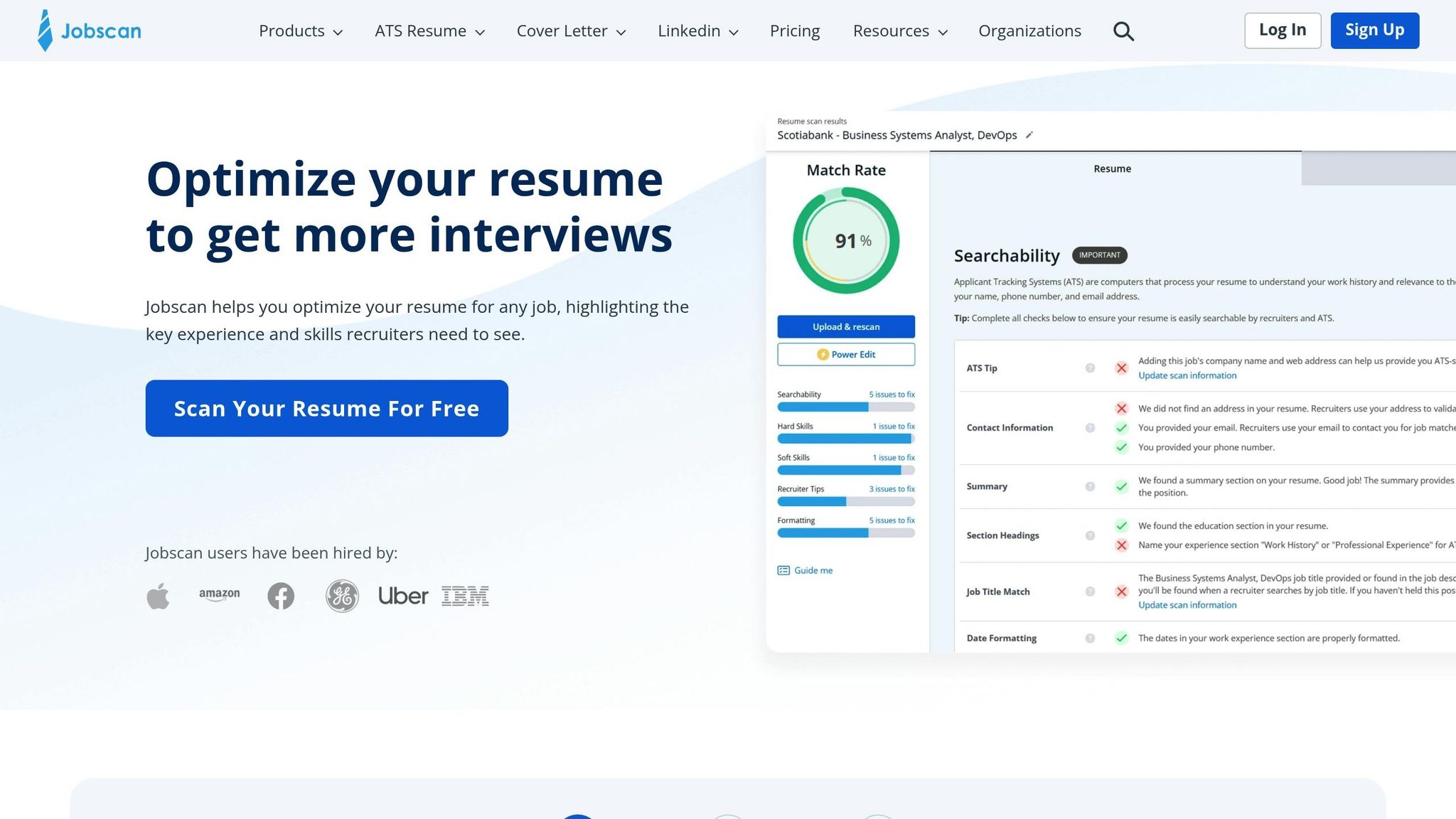
Jobscan is known for helping job seekers optimize their resumes for applicant tracking systems (ATS). It compares your resume with job descriptions, highlighting missing keywords and formatting issues. While it’s a useful tool for identifying gaps, users still need to manually update their resumes, which can be time-consuming.
Scale.jobs offers a more comprehensive solution. Its free ATS-compliant resume builder uses AI to create tailored resumes and cover letters with ease. For deeper personalization, the AI Assistant Pro plan (launch price: $9/month; regular price: $19/month) provides unlimited customizations. Combine these tools with Scale.jobs’ Human Assistant service, and you get a complete package where experts not only optimize your documents but also handle the application submissions for you.
| Feature | Jobscan | Scale.jobs |
|---|---|---|
| Core Service | ATS analysis and keyword checks | AI-powered builder with full-service application support |
| Resume Creation | Manual updates by the user | AI customization or human-assisted updates |
| Application Submission | User applies manually | Human assistants manage submissions |
| ATS Compliance | Highlights issues for user to fix | Provides fully compliant templates |
| Pricing | Subscription-based | Free basic tools; one-time payment for human service |
| Time Saved | Still requires manual effort | Cuts job search time by 40% |
| Support | Self-service | Personalized WhatsApp updates |
Why Scale.jobs outshines Jobscan:
- All-in-one service: Beyond resume analysis, Scale.jobs handles application creation and submission.
- AI + human expertise: Let professionals do the heavy lifting while you focus on other priorities.
- Free ATS tools: Benefit from a complimentary resume builder.
- No subscriptions: Pay once and avoid recurring fees.
- Faster results: Users typically reduce job search time from 5 months to 1–3 months.
For those who prefer a DIY approach, Jobscan might suffice. But if you’re looking to save time and get professional help, Scale.jobs is the better choice.
Teal vs Scale.jobs: The Full-Service Advantage
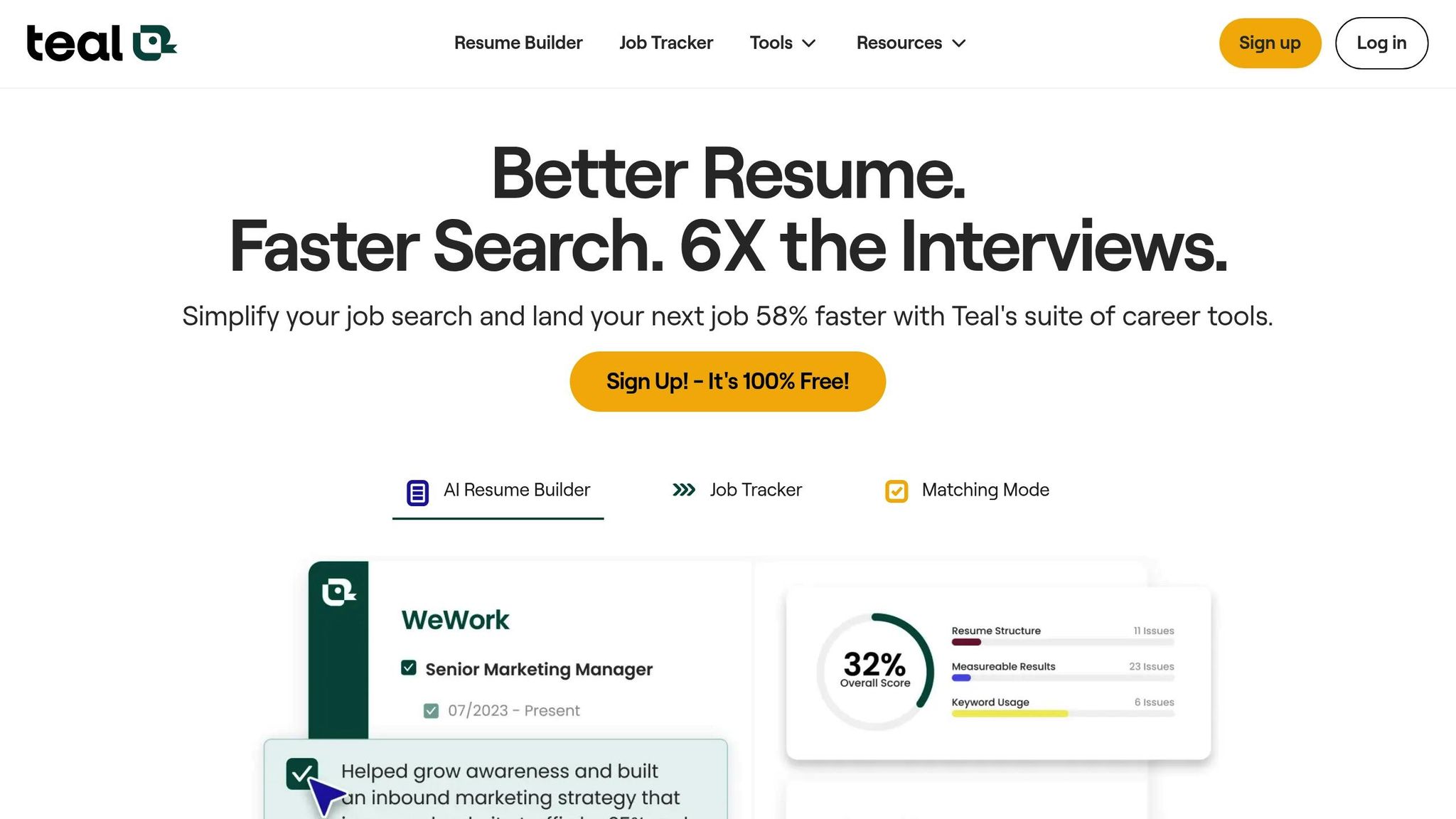
Teal has gained popularity with its Chrome extension, which allows users to save jobs from any site. It also offers a resume builder and application tracker. The free version includes basic tracking, while the premium Teal+ plan ($13/week) adds unlimited AI resume analysis, keyword matching, and interview preparation tools. While Teal’s polished features are helpful, it’s ultimately a DIY platform - you still have to manually complete each application.
Scale.jobs, on the other hand, provides a full-service solution. Along with a job board featuring over 2 million active postings per month, Scale.jobs includes an application tracker with follow-up reminders. But the real game-changer is the Human Assistant service. Trained professionals handle everything: filling out forms, uploading documents, and submitting applications. You’ll receive proof-of-work screenshots within 24 hours, and the process is easy to track via a dashboard with real-time WhatsApp updates. This frees you to focus on more important tasks like networking and interview preparation.
| Feature | Teal | Scale.jobs |
|---|---|---|
| Application Tracking | Chrome extension and dashboard | Built-in tracker with follow-up reminders |
| Resume Builder | AI-powered with keyword matching | Free ATS-compliant builder with AI customization |
| Application Submission | User applies manually | Human assistants handle submissions |
| Job Board | Saves external listings | Over 2 million active postings monthly |
| Proof of Work | None provided | Submission screenshots for transparency |
| Pricing | Free basic; $13/week for premium | Free basic tools; one-time payment for human service |
| Support | Self-service | Real-time WhatsApp updates with dedicated assistance |
Why Scale.jobs leads over Teal:
- Hands-free service: Human assistants take care of every step, saving you time.
- Transparent tracking: Proof-of-work screenshots and WhatsApp updates keep you informed.
- Cost-effective pricing: Avoid weekly fees with one-time payment bundles.
- Access to job listings: Browse over 2 million active postings directly.
- Focus on priorities: With applications handled, you can concentrate on networking and interviews.
Scale.jobs redefines job searching in 2026 by combining efficiency, accuracy, and transparency, giving you the tools and support to navigate your career journey with ease.
Building Your Network and Visibility in 2026
In 2026, securing a job is all about being visible and strategically building your network. According to data, 46% of Scale.jobs placements come through personal networking[1]. By outsourcing repetitive application tasks, you free up valuable time to focus on creating meaningful professional relationships.
Scale.jobs users report spending 40% less time on their job searches[1]. This extra time can be redirected toward networking - engaging in conversations, reaching out to industry contacts, and fostering relationships that lead to exciting opportunities. Using Scale.jobs' services allows you to prioritize these high-impact activities over tedious application processes.
Using LinkedIn and Specialized Job Boards

Once Scale.jobs takes the application burden off your shoulders, you can turn your attention to building a standout online presence. LinkedIn remains a key tool for professional networking in 2026, but having a profile isn’t enough. It needs to act as a magnet for recruiters. Start with a compelling headline, detailed work history, a comprehensive skills section, and strong recommendations.
Your headline should do more than state your job title. For instance, instead of "Marketing Manager", try something like "Marketing Manager | B2B SaaS Growth Specialist | Driving Results Through Data-Driven Campaigns." This format highlights your expertise and the value you bring to the table.
AI tools can also help you maintain a professional LinkedIn presence without consuming too much time. Use these tools to draft posts, but tweak the content to reflect your authentic voice. Regularly posting insights, sharing industry trends, and engaging with others’ content can significantly boost your visibility. When recruiters and hiring managers repeatedly see your thoughtful contributions, you’ll already be on their radar before you even apply.
In addition to LinkedIn, platforms like Scale.jobs go beyond job listings. They help you stay organized by tracking applications and providing reminders for follow-ups, ensuring nothing slips through the cracks.
If your service plan includes LinkedIn profile optimization, make the most of it. A well-optimized profile can shift you from being overlooked to being interview-ready, making it easier for recruiters to spot your skills.
Direct Outreach and Online Professional Groups
While polishing your profile is essential, proactive outreach is equally important. Waiting for recruiters to contact you can be risky. Direct, personalized outreach to hiring managers and industry professionals is one of the most effective networking strategies in 2026. Avoid generic messages - they’re often ignored. Instead, craft personalized notes that reference specific company projects or mutual connections.
Start by identifying hiring managers at your target companies. Tools like Simplify.jobs' Networking Copilot can help you find the right contacts and draft tailored emails. Platforms like Loopcv simplify the process further by locating recruiter emails and sending customized messages using your templates. LazyApply’s Smart Referral Emails feature can even connect you with employees who may refer you internally.
Keep your outreach concise and focused on value. For example, you might write: "I saw your team recently launched [specific product]. I’ve worked on similar projects at [your company], and I’d love to learn more about how you approached [specific challenge]." This demonstrates genuine interest and preparation.
Professional groups and communities have evolved beyond LinkedIn. Today, platforms like Slack, Discord, and niche forums host active communities tailored to specific industries, roles, and technologies. Join these spaces where your target employers and peers are active. Contribute by answering questions, sharing resources, and engaging in discussions.
These communities often provide access to opportunities before they’re publicly posted. When someone in your network has a role to fill, they’re more likely to think of someone who’s been actively contributing valuable insights rather than a cold contact.
AI tools can also streamline your outreach. Simplify.jobs' Cover Letter & Email Generator and Teal’s Unlimited Email Templates are great starting points, but always customize them to reflect your personal style. Hiring managers can spot generic messages a mile away.
Networking is a two-way relationship. Don’t just reach out when you need help - offer assistance, share relevant job postings, or celebrate others’ achievements. Building genuine connections takes time, but these relationships often lead to opportunities that never make it to a job board.
By combining a strong LinkedIn presence with active participation in professional groups and targeted direct outreach, you create a powerful strategy for visibility. This approach works hand-in-hand with Scale.jobs’ ability to streamline your applications, allowing you to focus on networking. Together, these efforts ensure you’re not just applying for jobs - you’re building relationships that open doors to opportunities you might not have found otherwise.
[1] Source: RAG Document – Interesting Facts & Statistics
Conclusion
Navigating the job market in 2026 calls for a smart mix of leveraging technology and applying human insight. By combining the right tools with a thoughtful approach, you can streamline your search and focus on what truly matters.
Start by laying a strong groundwork: define your career goals, identify your transferable skills, and create detailed examples of your accomplishments. Employers in 2026 prioritize candidates who showcase real capabilities over those who simply list qualifications. Your resume and cover letter need to strike a balance - optimized for ATS systems while still engaging for human reviewers.
AI tools can assist with drafting application materials, but they often fall short when it comes to navigating intricate application portals or avoiding detection by bot filters. Unlike generic automated platforms, Scale.jobs blends AI with a human touch. Their team manually submits applications to ensure compatibility with any system and avoids triggering bot flags. Plus, their flat-fee pricing comes with perks like real-time WhatsApp updates, proof-of-work screenshots, and refunds for unused credits, giving you transparency and peace of mind.
By offloading tedious tasks like filling out repetitive forms, you can dedicate your time to what truly drives results: building authentic professional connections. Many successful placements through Scale.jobs stem from networking. Freed from busywork, users can focus on LinkedIn outreach, engaging in industry communities, and connecting directly with hiring managers.
While the job search landscape continues to shift, key principles remain steady. Success lies in having a clear strategy, using effective tools, and channeling your energy into meaningful efforts. Whether you're a new graduate, navigating a career transition, or aiming for a step up in your current field, this approach can set you apart.
With a structured plan and the right support to handle time-consuming tasks, you can tackle the 2026 job market with confidence - putting your energy into forging connections and landing the role that fits your goals.
FAQs
How can I make sure my resume stands out to AI hiring systems in 2026?
To make sure your resume stands out to AI-driven hiring systems in 2026, focus on strategic keyword usage that mirrors the job description. Include both the full terms and their abbreviations to ensure better visibility. Stick to simple, clean formatting by using traditional fonts that are easy to read on screens and organizing your resume with standard headings.
Take advantage of AI-powered tools to polish your resume. These platforms can help you craft effective bullet points, highlight relevant skills, and tailor your content for specific positions. Save your resume in a commonly accepted format, like .docx, to avoid any technical issues. By following these tips, you'll increase your chances of catching the attention of advanced hiring algorithms.
How can I stand out when applying for remote jobs in a competitive market?
To get noticed in today’s competitive remote job market, it’s all about showcasing your skills and making your application stand out. Start by tailoring your resume to each job you apply for. Make sure it’s formatted to work seamlessly with modern ATS (Applicant Tracking System) software. You can even use AI-driven tools to polish your resume and emphasize key achievements that align with the role.
Another smart move is expanding your professional network. Participate in online communities and specialized career platforms that cater to your industry. These spaces often provide direct access to recruiters and potential employers, giving you an edge. Lastly, take a proactive approach by using tools that simplify the application process and help you stay visible to hiring managers. Small steps like these can make a big difference.
How does Scale.jobs combine human expertise with AI to make job searching more effective?
Scale.jobs simplifies your job search by merging human expertise with AI-powered tools to deliver tailored, professional job applications designed to work seamlessly with Applicant Tracking Systems (ATS).
Here’s how it works: human assistants carefully review and polish your documents, ensuring they meet the highest standards, while AI handles tasks like resume formatting and keyword alignment. Plus, their dedicated WhatsApp support offers personalized assistance whenever you need it. With a one-time payment model, you get clear, upfront pricing - no hidden fees or subscriptions. This combination not only saves time but also boosts your chances of securing your next opportunity.