[UPDATED-2026] Job Search Strategies That Actually Work: Tips + Best Tools
Use networking, ATS-friendly resumes, personal branding, and AI+human tools to find hidden jobs and speed up your 2026 job search.

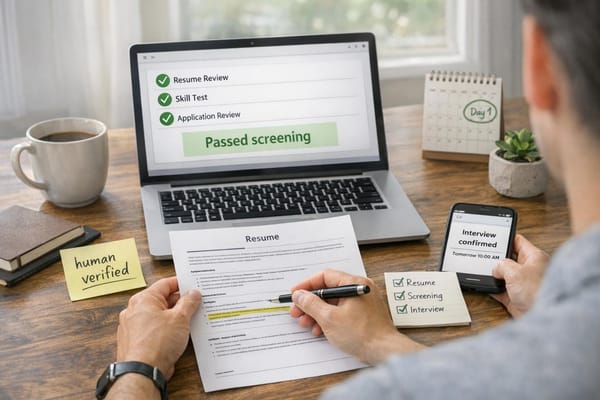
![[UPDATED-2026] Job Search Strategies That Actually Work: Tips + Best Tools](/content/images/size/w1200/2025/12/image-1764688576191.jpeg)
The job market has changed drastically, and traditional methods like endlessly submitting resumes online don’t cut it anymore. Here’s what you need to know to land a job in 2026:
- Automation is everywhere: Nearly all Fortune 500 companies use Applicant Tracking Systems (ATS), which screen resumes for keywords and formatting. If your resume isn’t ATS-friendly, it may never be seen by a human.
- Networking dominates: Many jobs are filled through referrals or connections, not public job postings. Building relationships is now a critical part of the process.
- Tools can save time: Platforms like Scale.jobs and Jobscan help optimize resumes for ATS and streamline applications, cutting job search time significantly.
- Personal branding matters: A strong LinkedIn profile, a portfolio, and consistent online presence can attract recruiters to you.
- Tailored applications win: Customizing resumes and cover letters to each job increases your chances of standing out.
This guide breaks down how to combine technology, networking, and personalization to land your next role faster.
How to Land a Job in 2026 💼 | Best Job Boards, Resume Tools & AI Resources That Work
1. The Hidden Job Market: Moving from Outbound to Inbound Strategies
A surprising number of great jobs never make it to public job boards. Companies often fill these roles through internal promotions, employee referrals, or by reaching out directly to candidates they’ve already identified. If your job search strategy relies solely on applying to posted openings, you could be missing out on a large portion of opportunities.
Consider this: traditional job applications only result in a 2% callback rate, largely due to applicant tracking system (ATS) filters. With hundreds of applications flooding in for each position, referrals often give candidates a major advantage, putting them ahead of the competition.
The key is shifting your focus from outbound to inbound strategies. Instead of chasing every job posting, concentrate on building a professional presence that attracts recruiters and hiring managers. This doesn’t mean abandoning traditional applications entirely - it’s about combining them with efforts to increase your visibility and create connections. When recruiters can easily find and recognize your expertise, your resume becomes more than just another file in the stack.
This approach requires a mindset shift. Rather than treating your job search as a numbers game, think of it as cultivating a professional brand that draws opportunities to you. By enhancing your visibility and approachability, you improve your chances of being contacted directly and increase your odds when you do apply - especially if you’re leveraging warm introductions or established relationships.
1.1 Building Your Personal Brand to Get Noticed by Recruiters
Your personal brand is essentially your professional identity online. Recruiters are constantly scanning LinkedIn profiles, portfolio websites, and other content you share. A weak or inconsistent online presence can cause you to be overlooked, while a strong, cohesive presence can grab attention and open doors.
Start by defining your narrative. Identify the problems you solve and the roles you’re targeting, and ensure every part of your LinkedIn profile reflects this. For example, instead of a generic headline like "Marketing Professional", opt for something more specific, such as "B2B SaaS Marketing Manager | Demand Generation & ABM Specialist", which immediately highlights your expertise.
Optimize your LinkedIn profile for recruiter searches by using job-specific titles and incorporating keywords from relevant job descriptions. If you’re a data analyst, include terms like "SQL", "Python", "Tableau", "data visualization", and "statistical analysis" throughout your profile.
If your field allows for it, a portfolio website can showcase your work effectively. This is especially useful for roles in design, marketing, engineering, or product management. A simple one-page site featuring your best projects and measurable results can make a big impact. Tools like Scale.jobs provide free portfolio generators that are easy to use, even if you don’t have web development experience.
Another way to boost your visibility is through content creation. Sharing insights, commenting on industry trends, or writing short posts about your projects can increase profile views. Even posting once a week can help you reach more people, including recruiters searching for someone with your skills.
Consistency is more important than perfection. Make sure your LinkedIn profile, portfolio site, and other professional platforms align in terms of tone, messaging, and visuals. Using the same professional photo and consistent language across platforms signals professionalism and seriousness to recruiters.
1.2 Using Networking to Access Unadvertised Jobs
Networking is one of the most effective ways to uncover hidden opportunities. While it can feel awkward or transactional at first, good networking is about building genuine connections within your industry.
Start with people you already know. List former colleagues, classmates, managers, and others familiar with your work. Reach out with a personalized message, such as: "Hi [Name], I hope you’re doing well. I’m currently exploring opportunities in [field/role] and would love to catch up and hear about what you’ve been working on. Would you have 15 minutes for a quick call?" Most people are happy to help when you’re clear about your goals and respectful of their time.
Informational interviews are another powerful tool. Instead of asking directly for a job, focus on learning about a company, role, or industry. This takes the pressure off and allows for natural, meaningful conversations. During these chats, ask about career paths, what they enjoy about their roles, and the challenges their teams face. Often, these discussions can lead to unadvertised opportunities.
Personalized LinkedIn outreach can also be effective. Avoid generic connection requests and instead include a short note explaining why you’d like to connect. For example: "Hi Sarah, I saw your post about scaling customer success teams at early-stage SaaS companies. I’m transitioning into CS leadership and would love to learn from your experience. Would you be open to connecting?"
Don’t underestimate the value of industry events, conferences, and meetups - even virtual ones. Actively participating by asking questions, joining discussions, and following up with new contacts can turn brief interactions into lasting professional relationships. A simple follow-up message like, "It was great meeting you at [event]. I’d love to continue our conversation about [topic]", can keep the connection alive.
Employee referrals are a major advantage in the hiring process. When someone within a company refers you, your application often gets prioritized. To encourage referrals, be clear about the types of roles you’re interested in, keep your resume updated, and let your contacts know which companies you’re targeting. If someone agrees to refer you, provide a tailored resume and a few key points about your qualifications to make the process easier for them.
For smaller companies or startups, consider reaching out directly to hiring managers. Use LinkedIn to identify the right person - often someone with a title like "VP of Engineering" or "Head of Marketing" - and send a concise, thoughtful message explaining your interest and the value you can bring. Including a link to your LinkedIn profile or portfolio can help you bypass traditional application channels.
The secret to effective networking is consistency and follow-up. Don’t only reach out when you need something. Stay in touch by congratulating contacts on milestones, sharing relevant articles, or simply checking in from time to time. Maintaining these relationships ensures you’ll be top of mind when opportunities arise.
While you’re building these inbound strategies, don’t neglect the outbound side. Services like Scale.jobs can handle high-volume applications for you, saving you hours each week so you can focus on networking and refining your personal brand.
Once your brand and network are in place, the next step is optimizing your resume to stand out to both ATS and recruiters.
2. Making Your Resume and Applications Work for ATS and Recruiters
Your resume needs to do double duty: pass automated tracking system (ATS) scans and impress human recruiters. Many qualified candidates get overlooked because their resumes aren’t optimized for these systems. ATS software varies - some handle complex layouts, while others work best with simple, text-based formats. Your goal is to create a resume that’s both technically sound and visually appealing, ensuring you’re prepared for both the algorithms and the people reviewing your application.
Beyond beating the ATS, your application materials should tell a story. Recruiters aren’t just looking for a list of responsibilities - they want to see measurable results and proof that you can solve the challenges their company faces. Generic applications that could apply to any job or company often get ignored. Tailoring your resume and cover letter to the specific role is what sets you apart.
2.1 Creating Resumes That Pass ATS Filters
ATS software scans resumes for keywords, job titles, skills, and formatting. If your resume doesn’t align with what the system is programmed to identify, it could be ranked lower or even filtered out, regardless of your qualifications.
Start by using a clean, standard format. Stick to straightforward section headers like Work Experience, Education, and Skills - creative labels like "My Journey" or "Career Highlights" can confuse ATS systems. Choose simple fonts like Arial, Calibri, or Times New Roman, sized between 10 and 12 points. Avoid elements like tables, text boxes, headers, footers, and graphics, as these can often be misinterpreted or ignored by the software.
Save your resume as a .docx file, which is generally more compatible with ATS platforms than PDFs. While many modern systems can process PDFs, older ones may struggle. If a job posting specifically requests a PDF, go with that; otherwise, a .docx file is the safer choice.
Carefully read the job description and incorporate relevant keywords naturally into your resume. For example, if a posting mentions "project management experience with cross-functional teams", use that exact phrase in your resume instead of paraphrasing. Similarly, if the role requires skills like SQL, Python, or Tableau, ensure these terms are included in both your skills section and in descriptions of your past experience where applicable.
Stick to standard job titles. If your official title was something unconventional like "Customer Happiness Guru", but your responsibilities align more closely with a Customer Service Manager, use the more conventional title. You can include your official title in parentheses if necessary.
Quantify your achievements wherever possible. For instance, instead of saying "Managed social media accounts", write something like, "Increased Instagram followers from 5,000 to 47,000 in 8 months, boosting engagement by 215%." Numbers not only catch the ATS’s attention but also stand out to recruiters.
Tools like Jobscan can help you fine-tune your resume by comparing it to specific job descriptions. Upload your resume and the job posting, and the tool will highlight missing keywords and formatting issues. While Jobscan offers free scans with limited features, its paid plans provide deeper analysis.
Another option is Scale.jobs, which combines AI technology with human expertise. Their free ATS checker gives instant feedback on your resume’s compatibility, but their standout feature is the human assistant service. For a one-time fee, trained virtual assistants create custom, ATS-friendly resumes tailored to the jobs you’re targeting. Unlike fully automated tools, human reviewers can account for industry-specific nuances and ensure your resume appeals to both ATS and recruiters.
Here’s why Scale.jobs stands out compared to tools like Jobscan:
- Human input adds value: Trained assistants catch details that automated tools might miss.
- No subscription required: You pay a flat fee instead of ongoing monthly charges.
- Direct support: Real-time assistance via WhatsApp for quick revisions and questions.
- Transparency: Time-stamped screenshots show exactly how your resume was customized.
- Flexible compatibility: Human assistants can navigate even the most complex application systems.
To test your resume’s ATS compatibility, paste it into a plain text editor like Notepad. If the formatting looks messy or the text is jumbled, an ATS might struggle with it too. Adjust your formatting until it displays cleanly in plain text.
Lastly, avoid relying solely on acronyms. Spell out terms like "Search Engine Optimization (SEO)" the first time, then use the acronym afterward.
Once your resume is ATS-ready, complete your application with a customized cover letter that ties your accomplishments directly to the job.
2.2 Writing Custom Cover Letters That Get Responses
A tailored cover letter is still essential. Sending a generic letter can signal to recruiters that you’re mass-applying without genuine interest in the role.
Personalization is key. Reference specific details from the job posting or your research about the company. For example, if the job description mentions the company’s expansion into new markets, explain how your experience with market entry strategies makes you a strong candidate. If the hiring manager recently shared a post on LinkedIn about a product launch, mention it and connect it to your relevant skills.
Start with a compelling opening that shows you understand the role and the company. Instead of a generic line like, "I am writing to apply for the Marketing Manager position", try something more engaging: "When I saw that [Company] is seeking a Marketing Manager to lead its expansion into the healthcare sector, I immediately thought of my five years of experience building go-to-market strategies for B2B SaaS companies."
Use the STAR method (Situation, Task, Action, Result) to provide specific examples. For instance, instead of saying, "I’m a strong communicator", you could write, "At [Previous Company], I revamped our customer onboarding process by conducting over 30 user interviews, which reduced onboarding time and increased customer retention rates."
Keep your cover letter concise - three to four paragraphs and under 300 words. Recruiters appreciate a focused narrative that highlights your most relevant achievements and ends with a clear call to action.
If writing a unique cover letter for every job feels overwhelming, AI tools and professional services can help. LazyApply offers an AI cover letter generator with affordable annual pricing, while TealHQ includes this feature in its premium plan. Rezi.ai also provides both free and paid options for AI-generated cover letters.
That said, AI-generated cover letters can sometimes feel generic or miss important nuances. Scale.jobs addresses this with a hybrid approach. Their free AI cover letter generator offers a great starting point, and their $9/month AI Assistant Pro plan gives you unlimited access. For a more tailored touch, their human assistant service researches the company and role to craft personalized cover letters that address specific challenges.
3. Using LinkedIn as a Job Search Tool
LinkedIn has grown into much more than just a digital resume - it’s now a vibrant platform where recruiters actively search for talented professionals. In today’s competitive job market, having a fully optimized LinkedIn profile isn't just helpful, it’s essential. It not only makes you visible to recruiters but also showcases your skills, experience, and personality. Platforms like Scale.jobs even provide tools to help you maximize LinkedIn’s potential. When paired with tailored resumes and cover letters, a strong LinkedIn presence can significantly increase your chances of landing your dream job.
Unlike a static resume sitting in an applicant tracking system, your LinkedIn profile works around the clock - popping up in search results, drawing attention from recruiters, and opening doors to opportunities you might not even know exist.
One key to success on LinkedIn is engagement. Profiles that are updated regularly and accounts that participate in conversations tend to gain more visibility. This means your approach should combine profile optimization with consistent activity.
3.1 Setting Up Your LinkedIn Profile for Recruiter Searches
Recruiters use LinkedIn’s search features to find candidates based on job titles, skills, locations, and keywords. To grab their attention, your profile needs to be both discoverable and reflective of your professional journey.
Start with your headline - those 220 characters under your name. Avoid generic phrases like "Seeking New Opportunities" or just listing your job title. Instead, craft a headline that highlights your expertise and career goals. For example, instead of "Marketing Manager", try something like: "Marketing Manager | B2B SaaS Growth | Demand Generation & Product Marketing | Open to Senior Roles." This approach naturally incorporates keywords while signaling your career direction.
Your About section is your chance to tell your professional story in a way that feels personal and engaging. Use up to 2,000 characters to explain what you do, what motivates you, and what you’ve achieved. For instance:
"I help B2B companies scale their marketing operations. In my current role, I built a demand generation engine that increased qualified leads by 340% in 18 months while reducing cost-per-lead by $47."
Wrap up with a clear call to action, like: "If you're looking for a marketing leader who can drive measurable growth, let’s connect."
In the Experience section, go beyond your resume by adding more detail. Use bullet points to highlight accomplishments, and whenever possible, include numbers to show your impact.
The Skills section is another critical area for recruiter searches. While LinkedIn allows up to 50 skills, focus on your top three - they’ll be the most visible and can be endorsed by your network. Feature a mix of hard skills (e.g., Python, SQL) and soft skills (e.g., cross-functional collaboration). Reviewing job descriptions for your target roles can help you decide which skills to emphasize.
If you’re actively job hunting, activate Open to Work. This feature lets you specify job titles, locations, and work preferences, making it easier for recruiters to find you. You can also decide whether to share your status publicly or only with recruiters.
Don’t overlook visuals. A professional photo and a well-designed banner image can reinforce your personal brand. Additionally, request recommendations from colleagues or managers who can vouch for your work. Aim for three to five testimonials that highlight different aspects of your skills and accomplishments.
Tools like LazyApply can help generate LinkedIn headlines, summaries, and even hashtag suggestions using AI. For a more tailored approach, Jobscan offers tools to align your profile with specific job roles. Meanwhile, Scale.jobs combines AI tools with human expertise to optimize LinkedIn profiles. Their services include templates, best practices, and personalized profile makeovers, with options like their Ultimate Bundle for $1,099, which includes one-on-one support from a trained professional.
Here’s why Scale.jobs stands out:
- Human expertise: Instead of relying solely on templates, a professional reviews your career history and crafts a profile that resonates with your industry.
- Consistency: They align your LinkedIn profile with your resume and cover letters for a unified message.
- Recruiter insight: Experts with recruiting experience ensure your profile highlights what truly grabs attention.
- One-time investment: You pay once for a comprehensive overhaul - no subscription required.
- Ongoing support: Dedicated WhatsApp support allows for quick adjustments and personalized feedback.
Once your profile is updated, test its effectiveness by searching for your name or relevant keywords. Ask for feedback from trusted connections and refine your profile as needed.
3.2 Posting and Engaging with Content to Increase Visibility
An optimized profile is just the beginning - active participation is what keeps you visible. LinkedIn’s algorithm favors users who engage regularly, and this engagement can also establish your credibility in your field.
Share original insights or comment on industry trends to boost visibility. You don’t need to write lengthy articles; even short posts sharing lessons from your work or thoughts on recent developments can be effective. Posting consistently ensures you stay on your network’s radar.
Use hashtags wisely - choose a few that are relevant to your industry to extend the reach of your posts. Thoughtful comments on other users’ posts can also increase your visibility. Instead of generic remarks, share your perspective or a relevant personal experience.
When sending connection requests, personalize them. Mention shared interests, mutual connections, or specific reasons for reaching out. Joining LinkedIn Groups can also help you connect with like-minded professionals and discover job leads.
Engage with target companies by following their LinkedIn pages and interacting with their posts. Insightful comments can catch the attention of recruiters monitoring those pages.
Finally, consider enabling Creator Mode if you plan to post regularly. This feature makes the "Follow" button more prominent, increasing your visibility and making it easier for others to discover your content.
4. Job Search Tools and Platforms: Choosing the Right One for 2026
By 2026, a variety of platforms promise to simplify your job search journey. Some focus on specific tasks like resume optimization, application tracking, or interview prep, while others offer bundled services that lean heavily on automation. The best results, however, come from combining technology with human expertise - ensuring your materials are not only ATS-friendly but also compelling to recruiters.
When selecting a platform, consider factors like your budget, the time you can dedicate, whether you need strategic guidance or just execution, and how much personalization matters to you. For instance, a recent graduate with ample time might benefit from a DIY tool, while a busy mid-career professional may prefer a service that handles the workload.
Pricing structures vary widely, from one-time fees to monthly subscriptions ranging between $19 and $99. If your job search spans three to six months, these costs can add up, so it’s important to calculate the total expense over that period.
Transparency is another key factor. Platforms that provide clear proof of work - like screenshots, timestamps, and detailed logs - offer greater control and accountability.
Equally important is the support system. When deadlines loom, email-only support with delayed responses won’t cut it. This is why combining automation with a human touch is crucial for success. Below, we compare leading platforms on elements like transparency, human support, and pricing.
4.1 Job Search Platform Comparison
Here’s how some of the top platforms stack up and why Scale.jobs stands out as a leader:
LazyApply:
LazyApply automates job applications, claiming to submit hundreds on your behalf for $129 over three months. However, its heavy reliance on automation often triggers bot detection, leading to rejections. Users also lose control over job targeting, and there’s no human input to customize applications for specific roles.
Jobscan:
Jobscan focuses on ATS optimization, offering resume scanning tools for $49.95 per month. It compares your resume to job descriptions and suggests keyword improvements. While it helps you understand ATS systems, you’ll need to manually implement changes and submit applications without any expert feedback.
TealHQ:
TealHQ offers tools for resume building, job tracking, and LinkedIn optimization. Its free tier provides basic features, while the premium plan costs around $79 annually. While it’s great for staying organized, the AI-powered resume builder often produces generic drafts, leaving you to handle strategic adjustments on your own.
Simplify.jobs:
Simplify.jobs caters to tech roles, automating applications with both free and premium options at $30 per month. While it autofills many forms and tracks submissions, its automation struggles with complex portals, often requiring manual corrections.
TopResume:
TopResume provides professional resume writing services starting at $149, with premium packages exceeding $349. While you collaborate with a human writer for a polished resume, turnaround times are 3–5 business days, and you’re left to manage all submissions and follow-ups independently.
Scale.jobs:
Scale.jobs takes a different approach by blending free tools, optional AI assistance, and human-powered services. The free tier includes access to a job board with over 2 million monthly postings, an ATS-compliant resume builder, application tracking software, and limited AI-powered customization (up to 2 resumes and 1 cover letter per day). For $9 per month (introductory pricing, typically $19), the AI Assistant Pro plan offers unlimited tailored resumes, cover letters, and responses.
What sets Scale.jobs apart is its Human Assistant service. Trained professionals handle every step of your application process, from tailoring resumes and cover letters to manually completing forms. Pricing starts at $199 for 250 applications (Basic), $299 for 500 (Standard), $399 for 1,000 (Premium), and $1,099 for the Ultimate Bundle, which includes a personal recruiter, resume review, and LinkedIn makeover.
Here’s why Scale.jobs outshines competitors:
- Versus LazyApply and Simplify.jobs: Human assistants eliminate bot detection issues entirely. Every application is manually submitted by professionals, ensuring authenticity. Real-time WhatsApp updates and time-stamped screenshots provide transparency.
- Versus Jobscan and TealHQ: Scale.jobs doesn’t stop at keyword matching. Human experts refine your materials for maximum impact, saving you over 20 hours a week - time better spent on networking and interview prep.
- Versus TopResume: Unlike one-off resume services, Scale.jobs offers continuous support. Your resume evolves based on application feedback, maintaining consistency across all submissions.
- Flat-fee pricing: Scale.jobs avoids recurring subscription costs. Unused application credits are refundable, so you only pay for what you use.
- Compatibility with all portals: Human assistants can navigate even the most complex application systems, from corporate ATS platforms to niche job boards.
- Fast turnaround: Applications are customized and submitted within 24 hours, ensuring you don’t miss out on opportunities.
In addition to these services, Scale.jobs offers a suite of free tools, including an ATS checker with actionable feedback, a cover letter generator, a salary predictor, an interview question predictor, and a portfolio website generator. For job seekers who want both control and efficiency, the mix of AI tools and human expertise provides a perfect balance. With dedicated WhatsApp support during business hours, questions and adjustments are addressed quickly - much faster than the typical email response times of 24–48 hours.
For professionals balancing a current job with a discreet job search, having someone manage applications is a game-changer. You can focus on your work and networking while your assistant ensures a steady stream of high-quality, personalized applications is submitted on your behalf.
5. Preparing for Interviews With Stories and Emotional Intelligence
Landing an interview is a big step - you've already cleared the initial hurdles. Now, it's all about proving your worth in real time. These days, technical skills alone won't cut it. Employers want to know how you think, solve problems, and interact with others. This means coming prepared with specific examples of your past work and showcasing qualities like empathy, self-awareness, and adaptability.
The key to a standout interview? Clear, engaging storytelling. Generic responses won't stick. Instead, you need to craft narratives that highlight your skills and create a genuine connection with your interviewer.
5.1 Creating Achievement-Based Interview Stories
Behavioral questions are designed to uncover how you approach challenges and lead others. Your responses reveal more than just what you've done - they showcase your problem-solving process, thought patterns, and ability to learn.
To nail these questions, use the STAR method (Situation, Task, Action, Result). This structure keeps your answers focused and impactful:
- Situation: Set the stage. Briefly explain the context. For instance, "As a marketing coordinator at a mid-sized SaaS company, we were preparing for a Q3 2024 product launch when our lead designer unexpectedly left six weeks before the deadline."
- Task: Describe your responsibility. What needed to be done? For example, "I had to ensure the design work was completed on time while staying within our $15,000 budget."
- Action: Explain the steps you took. Be specific. "I hired a trusted freelancer, adjusted the project timeline, and implemented daily progress updates to keep everything on track."
- Result: Share the outcome, and whenever possible, use numbers. "We launched on time with all essential materials. The campaign brought in 2,300 sign-ups in the first month - 40% above our target. My manager later credited my quick thinking as a key factor in my promotion to senior coordinator."
Before the interview, prepare five to seven stories using the STAR method. Each should demonstrate a different strength, such as leadership, problem-solving, teamwork, or initiative. Practice delivering these stories so your responses are concise - aim for 90 seconds to two minutes.
If you're just starting out or switching industries, don't worry. Examples from volunteer work, school projects, or personal challenges can be just as impactful if they highlight the skills the job demands.
Pair these stories with strong interpersonal skills to leave a lasting impression.
5.2 Showing Emotional Intelligence in Interviews
While well-structured stories are essential, your emotional intelligence can make or break the interview. Technical know-how might get you in the room, but emotional intelligence often seals the deal. Employers value candidates who can handle interpersonal dynamics, adapt to unexpected situations, and stay composed under pressure - qualities that matter at every level, from entry-level roles to leadership positions.
Emotional intelligence includes self-awareness, empathy, social skills, and the ability to regulate emotions. Here's how to show it:
- Body Language: Maintain steady eye contact, sit with a relaxed posture, and offer a genuine smile. Mirroring your interviewer's energy can help build rapport.
- Honesty About Growth: When discussing weaknesses, avoid clichés like "I work too hard." Instead, share a real area of improvement and how you've addressed it. For example, "Early in my career, I struggled with delegating because I wanted things done perfectly. Over time, I learned that trusting my team and providing clear instructions leads to better results. In my last role, I delegated a key project component, and the results exceeded expectations."
- Empathy in Conflict: Show that you consider others' perspectives when resolving disagreements. For instance, "My manager and I initially disagreed on the project timeline. I understood her urgency, while I was focused on quality. Through open communication, we found a solution that balanced both priorities."
- Thoughtful Questions: Go beyond salary and benefits when asking about the role. Questions like "What does success in the first six months look like?" or "How does the team handle competing priorities?" show you're thinking about the bigger picture and team dynamics.
Adaptability is another critical trait. If you're caught off guard by a question, it's okay to pause and think. A quick comment like, "That's a great question - let me take a moment to consider", shows poise. And if you're unsure about something, admit it honestly while expressing enthusiasm to learn.
Post-interview, follow up with a thank-you email within 24 hours. Reference specific points from your discussion to reinforce your professionalism and leave a positive impression.
6. Key Takeaways for Your 2026 Job Search
The job market in 2026 is all about using a mix of strategies. You can't rely solely on applying online or just networking anymore. Instead, success comes from blending tried-and-true methods with the right tools and staying consistent, even when the market shifts. Here’s how you can bring everything together for a smarter job search.
Start with your personal brand. Recruiters are constantly scanning LinkedIn and other platforms, so make sure your profile is not only visible but also engaging. A polished, professional online presence can make all the difference.
Your resume and cover letter need to do two things: pass Applicant Tracking Systems (ATS) and grab the attention of recruiters. Customize each application by weaving in keywords from the job description and highlighting measurable achievements. Yes, this takes time, especially when applying to multiple roles, but tools that offer human-assisted applications can help speed up the process without sacrificing quality.
Networking is still your strongest advantage for finding jobs that aren’t publicly listed. Many roles get filled through referrals before they ever hit job boards. Pairing a strong network with the right tools can amplify your efforts and open doors you didn’t even know existed.
One tool to consider is Scale.jobs, which combines human insight with automation to streamline the application process. For a flat fee, it offers free resources like job boards, ATS-friendly resume builders, and trackers. Their AI Assistant Pro ($9/month at launch) creates unlimited tailored resumes and cover letters. If you’re short on time, the Human Assistant service handles applications for you, complete with live WhatsApp updates and proof-of-work screenshots. This blend of automation and human expertise is a game-changer for job seekers.
When it comes to interviews, preparation is key. Develop five to seven STAR-method stories that highlight your skills and experiences. Practice delivering them clearly and confidently. Don’t forget to focus on soft skills like emotional intelligence - ask thoughtful questions, reflect on your experiences honestly, and show empathy when discussing challenges. These qualities often weigh as heavily as technical skills in competitive hiring situations.
Lastly, remember that persistence beats perfection. Job searches in 2026 may take longer than they used to, and it’s normal to send out dozens of applications before landing an offer. Keep track of your progress, tweak your strategy based on what’s working, and stay consistent. The right opportunity is out there - it just takes time to find it.
FAQs
How can I optimize my resume for ATS systems so recruiters notice it?
To make sure your resume passes ATS systems and grabs a recruiter's attention, keep it straightforward and focused. Match your resume to the job description by incorporating relevant keywords, and stick with a clean, standard layout. Avoid using tables, columns, or graphics, and save your file in a .docx format, as it's widely recognized by most ATS software.
Use familiar section headings like Work Experience, Education, and Skills to ensure the system can easily scan your resume. If you're uncertain about formatting or whether you've included the right keywords, try using a resume-checking tool to spot any potential problems. An ATS-friendly resume can greatly increase your chances of securing an interview.
What are the best ways to build a personal brand that helps you stand out to employers?
Building a personal brand that draws job opportunities starts with presenting your skills and experience in a way that stands out. Begin by refining your online presence - make sure your LinkedIn profile and other professional platforms are current, polished, and clearly highlight your expertise. Employers are drawn to candidates who can show results, so emphasize measurable accomplishments in your resume and online profiles.
You might also explore using AI tools to fine-tune your resume and profiles. These tools can customize your content for specific roles, increasing your appeal to recruiters and hiring managers. By taking these steps, you’ll craft a strong and memorable personal brand that helps you shine in today’s competitive job market.
How can I use networking to find hidden job opportunities?
Networking is one of the best ways to uncover job opportunities that aren't listed publicly. Many roles get filled through referrals or internal recommendations, which makes building connections in your industry incredibly important.
Start by reaching out to former colleagues, mentors, or professional contacts to share that you're exploring new opportunities. Attend industry events, join LinkedIn groups related to your field, and engage in online forums to broaden your network. Actively participating in these spaces and forming authentic relationships can often give you a heads-up about openings before they’re officially announced.
Keep in mind, networking is a two-way street. Focus on offering value to others - whether it’s advice, support, or sharing resources. When you prioritize helping others, opportunities often have a way of finding you in return.