7 Psychology Tricks to Succeed in Job Interviews
Discover 7 proven psychology hacks to ace job interviews, stand out from the competition, and secure the job you want.

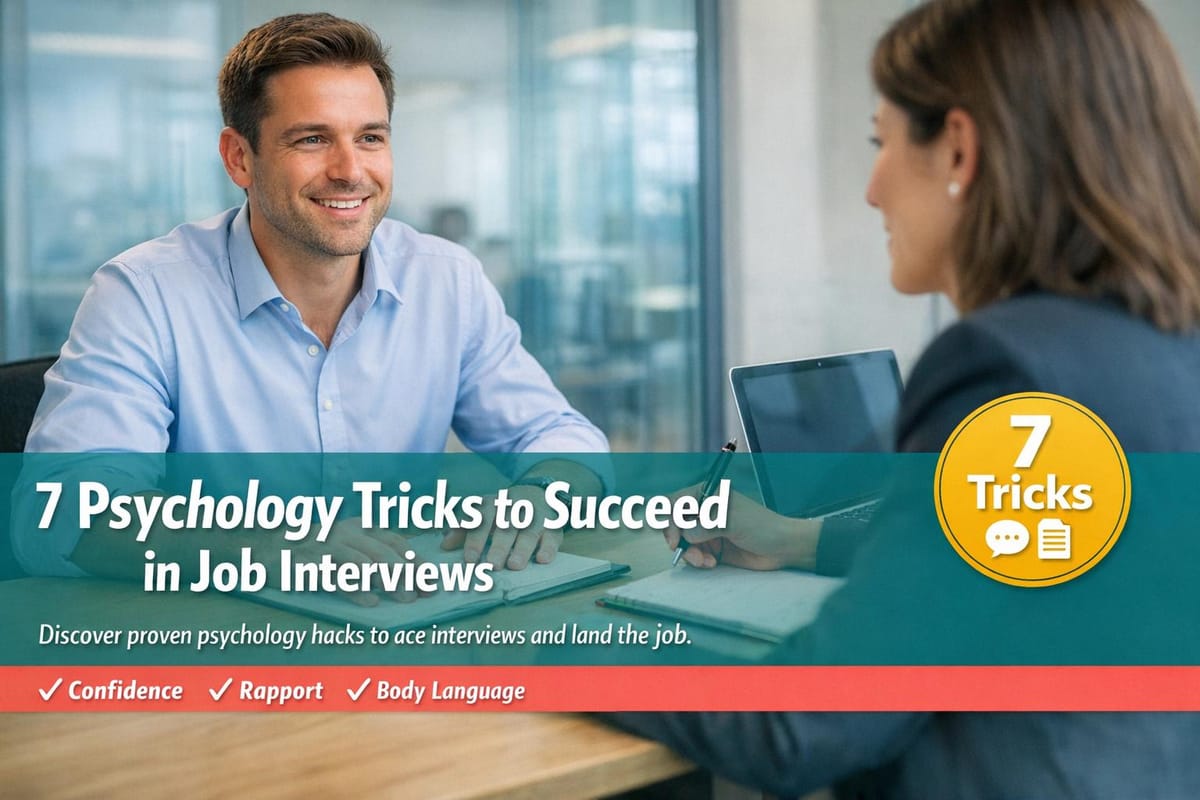
Navigating the job interview process can feel like stepping into the unknown. It's normal to experience nerves, self-doubt, or even an overwhelming sense of competition. However, the key to success lies in understanding human behavior and using psychology to your advantage. In this article, we’ll explore seven powerful psychology-based strategies to help you impress hiring managers and secure that dream job. These tricks aren’t just effective - they’re ethical, practical, and easy to implement. Let’s dive in!
The Power of First Impressions: The Halo Effect
First impressions matter - immensely. Within the first 30 seconds of your job interview, the interviewer will form a strong opinion of you, and that initial perception will likely influence how they view the rest of your interview. This phenomenon, known as the halo effect, means that starting on a positive note can set the tone for the entire conversation.
Here’s how to make the first 30 seconds count:
- Maintain strong eye contact: This conveys confidence and focus.
- Smile: A friendly demeanor creates an approachable, positive image.
- Adopt confident posture: Sit upright, avoid slouching, and keep fidgeting to a minimum.
- Show gratitude and enthusiasm: Start with a polite greeting like, "Good morning, and thank you for inviting me to this interview. I’m excited about the opportunity to work at [Company Name]."
By implementing these steps, you’ll radiate professionalism and warmth, helping the interviewer see you as a valuable addition to their team.
Speak Their Language: Referencing the Company by Name
A common mistake candidates make is failing to personalize their responses to the company they’re interviewing with. By frequently mentioning the company name during the interview, you create a sense of belonging and alignment with their mission.
For example, when answering the classic question, "Why do you want to work for us?" you might say:
"I want to work for [Company Name] because I admire your innovative approach and your commitment to [specific value]. Joining [Company Name] aligns perfectly with my career aspirations, and I would be proud to contribute to your success."
This small but meaningful adjustment demonstrates that you’ve done your research and are genuinely invested in the company.
Mirror Their Style: Build Instant Rapport
People are naturally drawn to those who reflect their own communication style. Subtly mirroring the tone, pace, and demeanor of the interviewer can build trust and make you more relatable.
Here are key rules to follow:
- If the interviewer speaks slowly, mirror that pace in your responses.
- If they are concise and direct, avoid rambling - be clear and to the point.
- If they are warm and approachable, balance professionalism with friendliness.
The key is to stay authentic while aligning with their energy and communication style. This subtle psychological trick helps the interviewer feel a stronger connection with you.
Be Memorable with Numbers
Numbers have the unique ability to make information stick in people’s minds. Structuring your responses using numerical points not only helps you stand out but also demonstrates clarity and organization.
For example, when asked, "Why should we hire you?" you could respond:
"You should hire me for three reasons:
- I am fully prepared for the role, and my skills align perfectly with your needs.
- I have a proven record of achievement, such as [specific accomplishment].
- I am highly adaptable and open to feedback, ensuring continuous improvement."
Breaking down your answers in this way makes your response more compelling and easier to remember.
The "For Example" Rule: Bring Your Strengths to Life
Generic answers won’t impress hiring managers - they’re looking for specific examples that demonstrate your skills and accomplishments. This is where the "For Example" Rule comes in. Whenever you highlight a strength or skill, back it up with a clear, real-world example.
For instance, when asked about your greatest strengths, you might say:
"My greatest strengths are problem-solving and adaptability. For example, in my previous role, I stayed late one evening to troubleshoot a critical website issue. By being adaptable with my schedule, I was able to resolve the problem in time for a major sale, which boosted the company’s revenue."
This approach shows that you don’t just talk the talk - you can walk the walk.
Use Social Proof to Build Credibility
Social proof is the concept that we trust individuals who are validated by others. In the context of a job interview, this means emphasizing instances where you were trusted or recognized for your work. Using specific phrases can make this easier:
- "I was selected to…"
- "I was asked to…"
- "I was trusted to…"
- "I received great feedback for…"
For example:
"I was trusted to train new team members, which reflects my ability to mentor others and maintain high standards."
By highlighting moments of trust and recognition, you reinforce your reliability and value as a candidate.
Leave a Lasting Impression: The Perfect Closing Statement
Ending your interview on a strong note is just as important as starting one. A well-crafted closing statement leaves the interviewer with a positive final impression and reinforces your readiness for the role.
Consider saying something like this:
"Based on our conversation, I am confident that I can perform exceptionally well in this role. If offered the position, I will bring energy, reliability, and a commitment to delivering results from day one. Thank you again for this opportunity - I look forward to the possibility of working with [Company Name]."
This closing statement encapsulates your enthusiasm and professionalism, giving the interviewer one last reason to choose you over other candidates.
Key Takeaways
These seven psychology tricks can transform your job interview performance and set you apart from the competition. Here’s a quick recap:
- Halo Effect: Create a positive first impression by maintaining eye contact, smiling, and showing gratitude.
- Use the Company Name: Personalize your responses to demonstrate alignment with the company’s values.
- Mirror the Interviewer: Build rapport by subtly mirroring their communication style.
- Leverage Numbers: Use numbered points to make your responses memorable.
- Apply the "For Example" Rule: Support your strengths with specific, real-world examples.
- Incorporate Social Proof: Highlight moments where you were trusted, selected, or praised.
- Craft a Strong Closing Statement: Finish the interview confidently and professionally.
By integrating these strategies into your interview preparation, you'll not only feel more confident but also significantly increase your chances of impressing hiring managers.
Final Thoughts
The job search process can be challenging, but armed with these psychology-based strategies, you’ll have a clear edge over other candidates. Remember, every interaction during the interview is an opportunity to showcase your strengths, professionalism, and cultural fit. Whether you’re a recent graduate, a seasoned professional, or someone transitioning careers, these tips can empower you to shine in any interview scenario.
Good luck with your next interview - you’ve got this!
Source: "7 PSYCHOLOGY HACKS That Will Get You HIRED! (Job Interview Secrets!)" - CareerVidz, YouTube, Jan 15, 2026 - https://www.youtube.com/watch?v=X_HhuUP53UY