
What Actually Increases Interview Calls in Today’s Job Market
Stop losing interviews to ATS. Use ATS-friendly formatting, targeted keywords, and tailored, human-reviewed applications to increase callback rates.


If you're not getting interview calls, the problem might not be your skills but how your resume is being processed by Applicant Tracking Systems. With 99% of Fortune 500 companies using Applicant Tracking Systems (ATS), small errors in formatting or missing keywords can block your application.
Here’s the reality:
- 70% of resumes are rejected before reaching a recruiter.
- 83% of employers filter out generic or automated applications.
- ATS systems struggle with multi-column layouts, tables, or excessive keyword stuffing.
To stand out, your resume must:
- Use ATS-friendly formatting (clean layout, no graphics).
- Include relevant keywords from job descriptions.
- Highlight quantifiable achievements that appeal to both ATS and recruiters.
For tailored applications, services like Scale.jobs combine ATS optimization with human expertise. Unlike automated tools, they customize resumes and cover letters for each role, ensuring higher success rates. Their one-time fee model (starting at $199 for 250 applications) also provides proof-of-work screenshots, so you can track every submission.
If you’re struggling with low response rates despite applying to numerous jobs, focusing on quality over quantity with tailored applications is the way forward.
Your Resume Is Getting REJECTED by ATS (Here’s How to FIX IT) + FREE TEMPLATE INSIDE!
To streamline this process, you can use an AI resume builder to ensure your formatting and keywords are optimized automatically.
How to Optimize Resumes and Cover Letters for ATS and Recruiters
Did you know that over 70% of resumes are rejected by ATS (Applicant Tracking Systems) before they even land in front of a recruiter? Often, this isn't about your qualifications but how your resume is structured and whether it includes the right keywords and formatting. Recruiters, on the other hand, spend mere seconds scanning resumes, so your document must appeal to both automated systems and human eyes.
The tricky part is striking this balance. ATS systems are programmed to detect specific keywords and standard formatting, while recruiters are drawn to resumes showcasing measurable achievements and clear results. A resume optimized for ATS but lacking substance won't impress recruiters, and one filled with graphics or unconventional layouts may never make it past the ATS. To tackle this, you need a strategy that satisfies both these audiences.
How to Use Keywords to Pass ATS Filters
Keywords are critical for getting past ATS filters. Start by analyzing the job description for frequently used terms. For example, if "project management" appears multiple times, ensure it’s included in your resume’s summary and experience sections. Always spell out acronyms the first time you use them, followed by the abbreviation - for instance, "Search Engine Optimization (SEO)." This ensures the ATS picks up both variations.
Be precise. Use the exact wording from the job description. For example, if the posting mentions "MS Excel", use that instead of "Microsoft Excel." However, avoid overloading your resume with keywords. Modern ATS systems can detect excessive, irrelevant keywords, which can hurt your chances. Instead, integrate keywords naturally into action-oriented statements. For instance, instead of "Managed projects", say, "Led cross-functional teams using Agile methodology, completing projects 15% under budget."
Quantifying your achievements is another powerful way to stand out. Replace generic responsibilities like "Managed sales team" with results-driven statements such as "Boosted regional sales by 23% in 18 months by implementing enhanced CRM workflows." Numbers combined with action verbs like "spearheaded", "accelerated", or "streamlined" can grab the attention of both ATS systems and recruiters.
How to Customize Resumes and Cover Letters for Each Application
Generic resumes and cover letters are no longer effective in today’s competitive job market. Many companies use filters to weed out mass submissions that lack personalization. Tailoring your application to the specific role, company, and industry is essential.
Unlike tools like LazyApply, which send out generic templates, Scale.jobs specializes in customizing each application. They align your resume’s keywords, reorder bullet points to highlight the most relevant skills, and personalize cover letters to reference specific company goals or challenges mentioned in the job posting. This approach not only helps you pass ATS filters but also makes a strong impression on recruiters.
Scale.jobs offers a one-time fee model starting at $199 for up to 250 applications. This avoids recurring subscriptions while providing personalized assistance. They even provide time-stamped screenshots and WhatsApp updates, ensuring transparency that fully automated tools can’t match.
How to Format Resumes for ATS Compatibility
When it comes to formatting, simplicity is key. Stick to a clean, single-column layout without tables, graphics, or fancy designs. ATS systems often struggle to parse these elements, which can result in scrambled or incomplete information. Use standard section headings like "Work Experience" and "Education" instead of creative alternatives like "Career Highlights." This helps the ATS categorize your information correctly.
Choose professional, easy-to-read fonts such as Lora, Roboto, or Ubuntu. Save your resume as a PDF unless the job posting specifies another format. A reverse-chronological structure works best for most candidates, but if you’re a career changer, a hybrid format that combines chronological and skill-based sections can help emphasize transferable skills.
Finally, proofreading is essential. Typos can confuse ATS systems and create errors in parsing your resume. If you’re unsure about your formatting or need expert guidance, consider using a professional resume writing service to ensure your document is ATS-friendly and recruiter-ready.
Next, we’ll explore how human-assisted workflows can outperform fully automated tools in securing job interviews.
Why Human-Assisted Applications Beat Automation
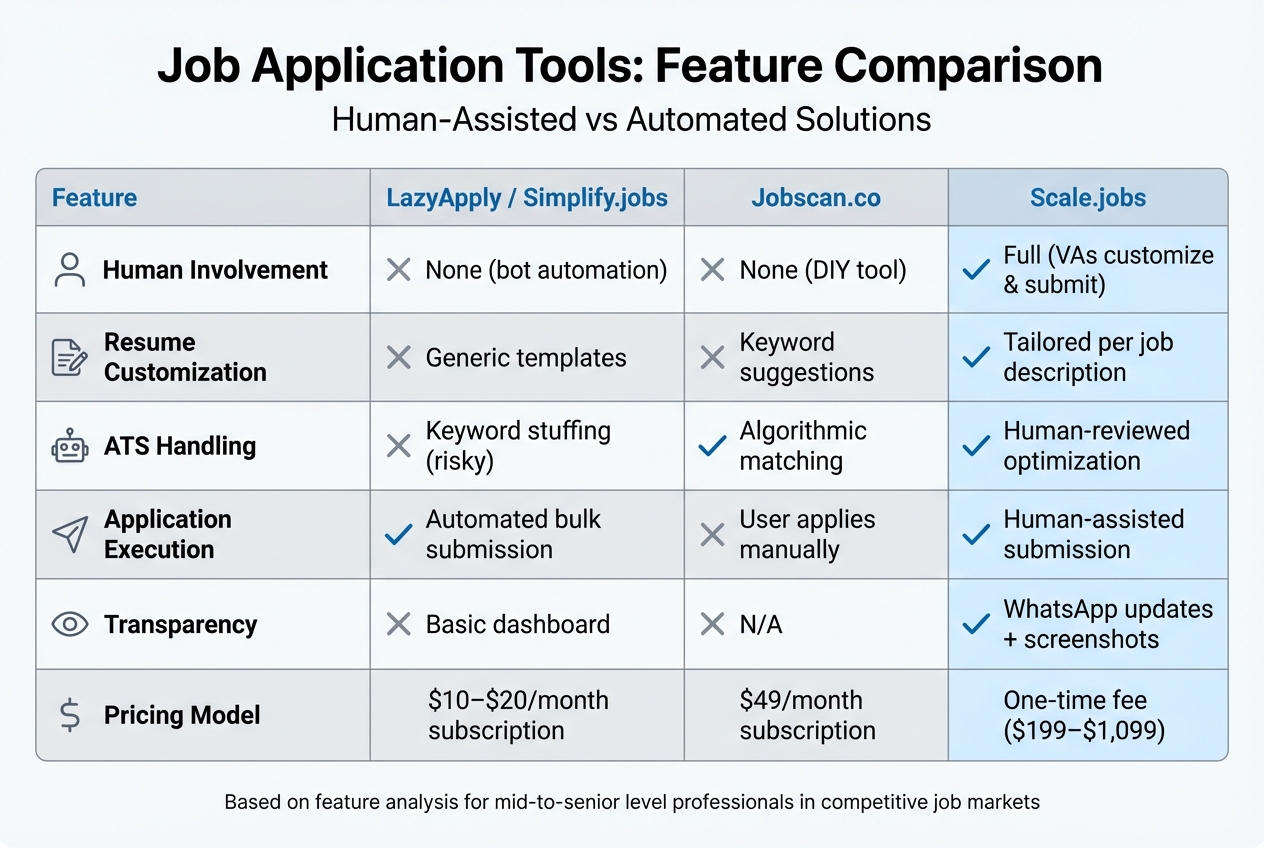
Scale.jobs vs LazyApply vs Simplify.jobs vs Jobscan Comparison Chart
Automated tools may save time, but they often sacrifice the quality and customization needed to stand out in competitive job markets. Services like LazyApply and Simplify.jobs might submit hundreds of applications daily, but these are often generic templates that fail to resonate with recruiters or pass ATS (Applicant Tracking System) filters. This approach can lead to response rates dropping below 5%, especially in markets where competition is fierce. Automation struggles to tailor applications to specific roles, address career gaps, or adapt to industry-specific requirements.
Human-assisted processes take a different approach. Instead of mass submissions, these workflows focus on crafting high-quality applications that not only pass ATS filters but also catch the attention of hiring managers. Platforms like Scale.jobs employ trained professionals who customize resumes and cover letters to align with job descriptions. This tailored approach improves ATS success rates by 20–30%, as it prioritizes meaningful content over simple keyword stuffing.
Transparency is another key advantage. Unlike automated tools that offer basic dashboards, Scale.jobs provides time-stamped proof-of-work screenshots and real-time updates via WhatsApp. This ensures you know exactly what has been submitted and allows you to tweak your strategy as needed.
The shortcomings of automation are clear when compared to human-powered solutions. Below, we’ll dive into how Scale.jobs stacks up against competitors like LazyApply, Simplify.jobs, and Jobscan.co.
LazyApply vs Scale.jobs: Why Human-Powered Applications Are More Effective
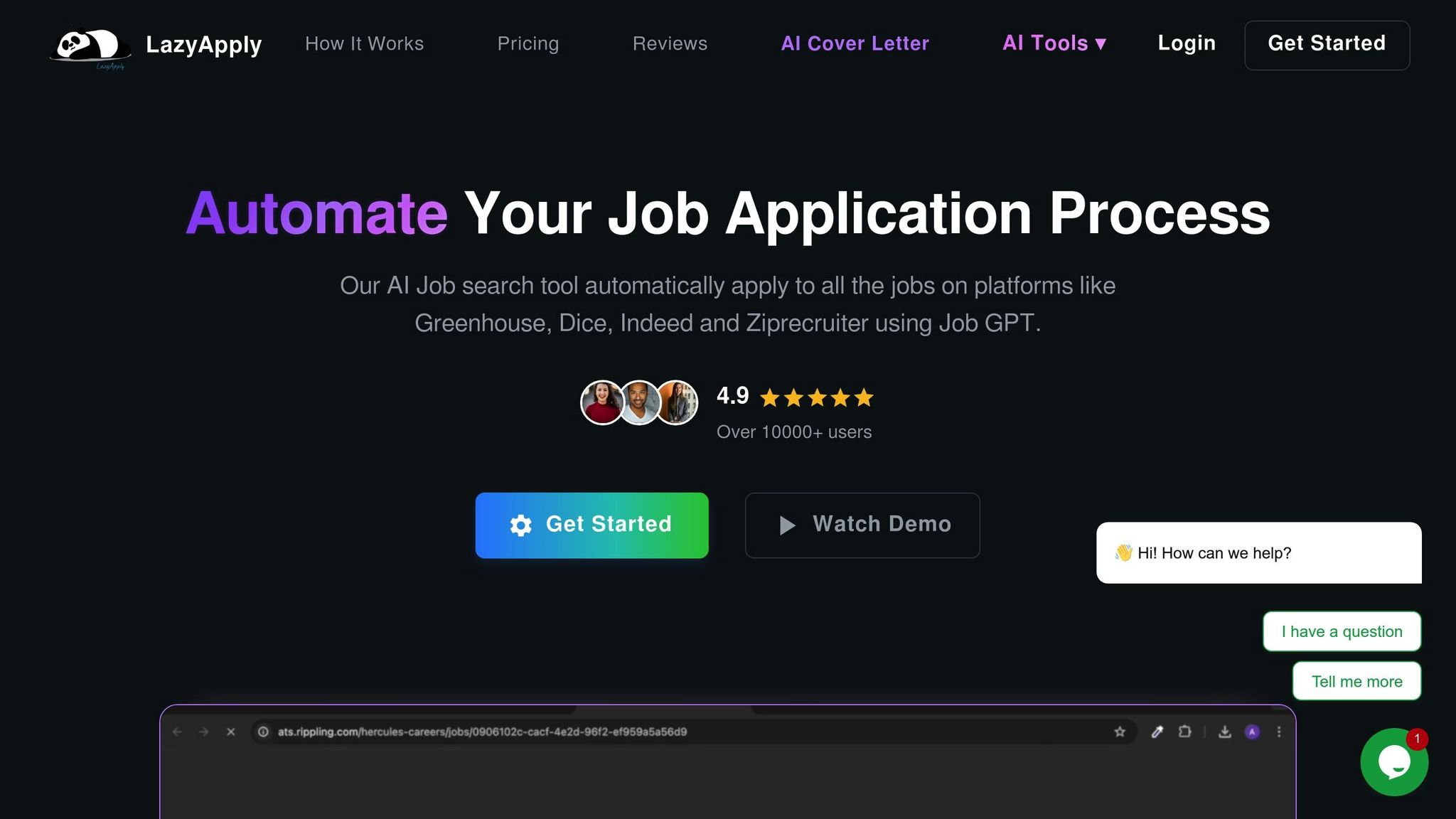
LazyApply simplifies job applications by automating submissions through platforms like LinkedIn. While this saves time, it relies on generic templates that recruiters can easily spot and dismiss. Automation also struggles with complex application forms or questions requiring detailed responses.
In contrast, Scale.jobs takes a personalized approach. Human assistants carefully analyze job descriptions and tailor your resume and cover letter to highlight your qualifications. For example, if a job posting emphasizes "Agile methodology", Scale.jobs might revise your resume to include a line like, "Led cross-functional Scrum teams, reducing sprint cycle time by 20%." This level of detail is something automated tools simply cannot achieve.
| Feature | LazyApply (Automated) | Scale.jobs (Human-Assisted) |
|---|---|---|
| Human Involvement | None | Full customization by trained professionals |
| ATS Optimization | Basic keyword matching | Strategic keyword integration with meaningful context |
| Transparency | Basic dashboard | Real-time WhatsApp updates with proof-of-work screenshots |
| Application Submission | Automated bulk submissions | Manual, expertly crafted submissions |
| Pricing | Lifetime fee ($99–$249) | One-time campaign fee (starts at $199 for 250 applications) |
Why Scale.jobs Wins:
- Customized applications improve ATS pass rates.
- Real-time updates and proof-of-work screenshots ensure full transparency.
- Human assistants handle complex forms and detailed questions.
- The ability to adjust strategies in real-time leads to more interview opportunities.
Who Should Use LazyApply: Entry-level job seekers or those applying to high-volume roles where customization isn’t critical.
Who Should Choose Scale.jobs: Mid-to-senior-level professionals or anyone with unique challenges like career gaps, visa requirements, or industry transitions.
Simplify.jobs vs Scale.jobs: The Value of Human Oversight
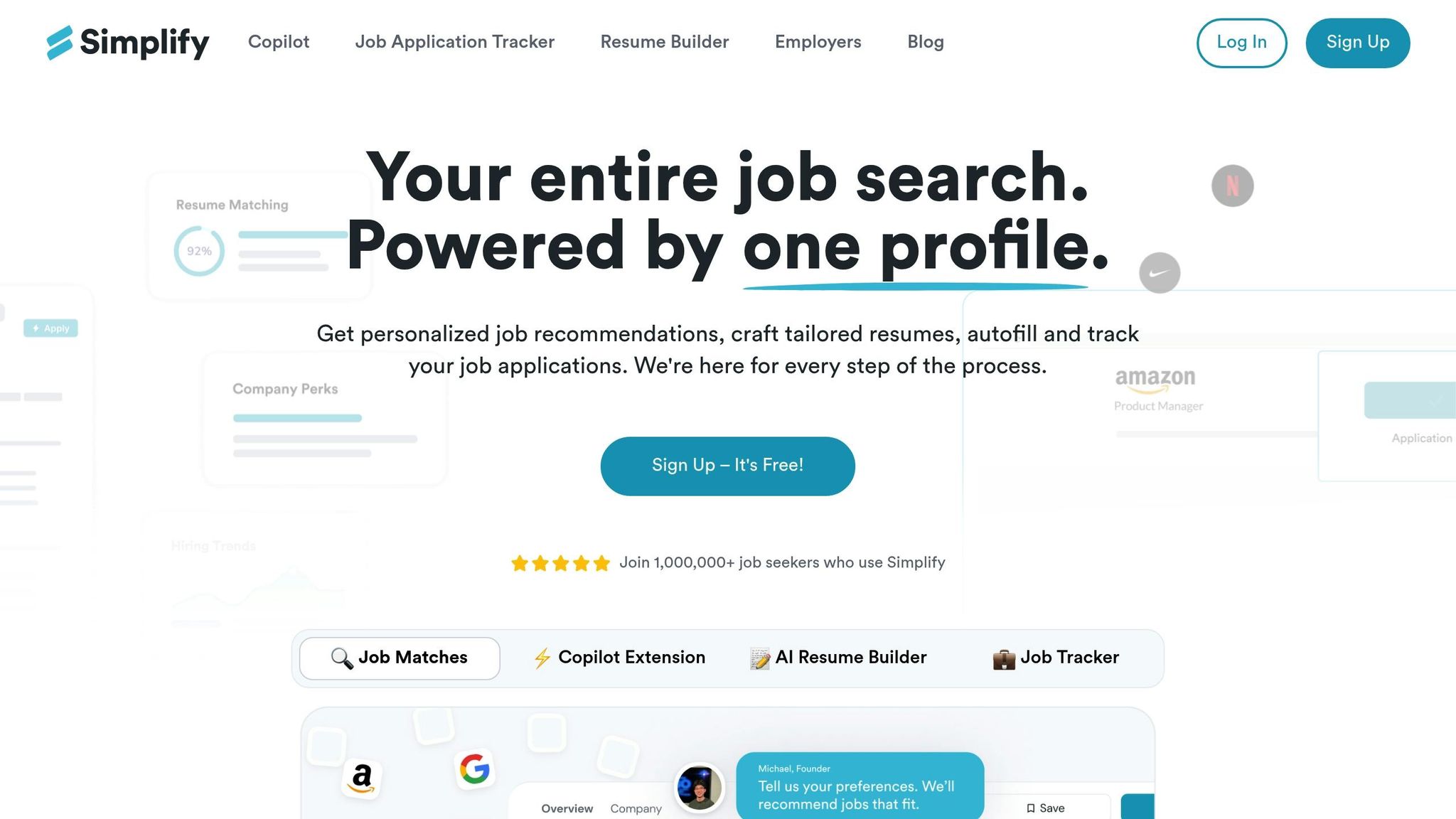
Simplify.jobs offers quick, one-click applications by using AI to auto-fill forms and generate basic cover letters. However, this method lacks depth and misses the nuances that make candidates stand out. While it might include basic details like the company name and job title, it often fails to address the specific needs of the role.
Scale.jobs, on the other hand, prioritizes human oversight to deliver tailored content. Trained assistants craft resumes and cover letters that directly connect your experience to the job description. For instance, if a job posting highlights "stakeholder management across multiple time zones", Scale.jobs might include a line like, "Coordinated with 15+ stakeholders across EMEA and APAC regions, achieving 95% on-time project delivery." This level of precision grabs recruiters' attention.
| Feature | Simplify.jobs (Automated) | Scale.jobs (Human-Assisted) |
|---|---|---|
| Customization | Basic templates with auto-fill | Deep, personalized resumes and cover letters |
| Application Submission | Automated bulk submissions | Manual submissions with proof-of-work screenshots |
| Human Oversight | Minimal | Full expert review and customization |
| Pricing | Monthly subscription (~$10–$30/month) | One-time fee (starting at $199) |
| Results Tracking | Basic dashboard | Real-time updates with proof-of-work screenshots |
Why Scale.jobs Wins:
- Tailored applications focus on results and recruiter priorities.
- Expert review ensures error-free, well-formatted submissions.
- Real-time updates and proof-of-work screenshots build trust.
- Adjusting strategies quickly boosts interview success rates.
Who Should Use Simplify.jobs: Students or early-career professionals who prioritize speed over customization.
Who Should Choose Scale.jobs: Experienced professionals or career changers who need tailored applications to highlight their unique qualifications.
Jobscan.co vs Scale.jobs: From Analysis to Full-Service Applications
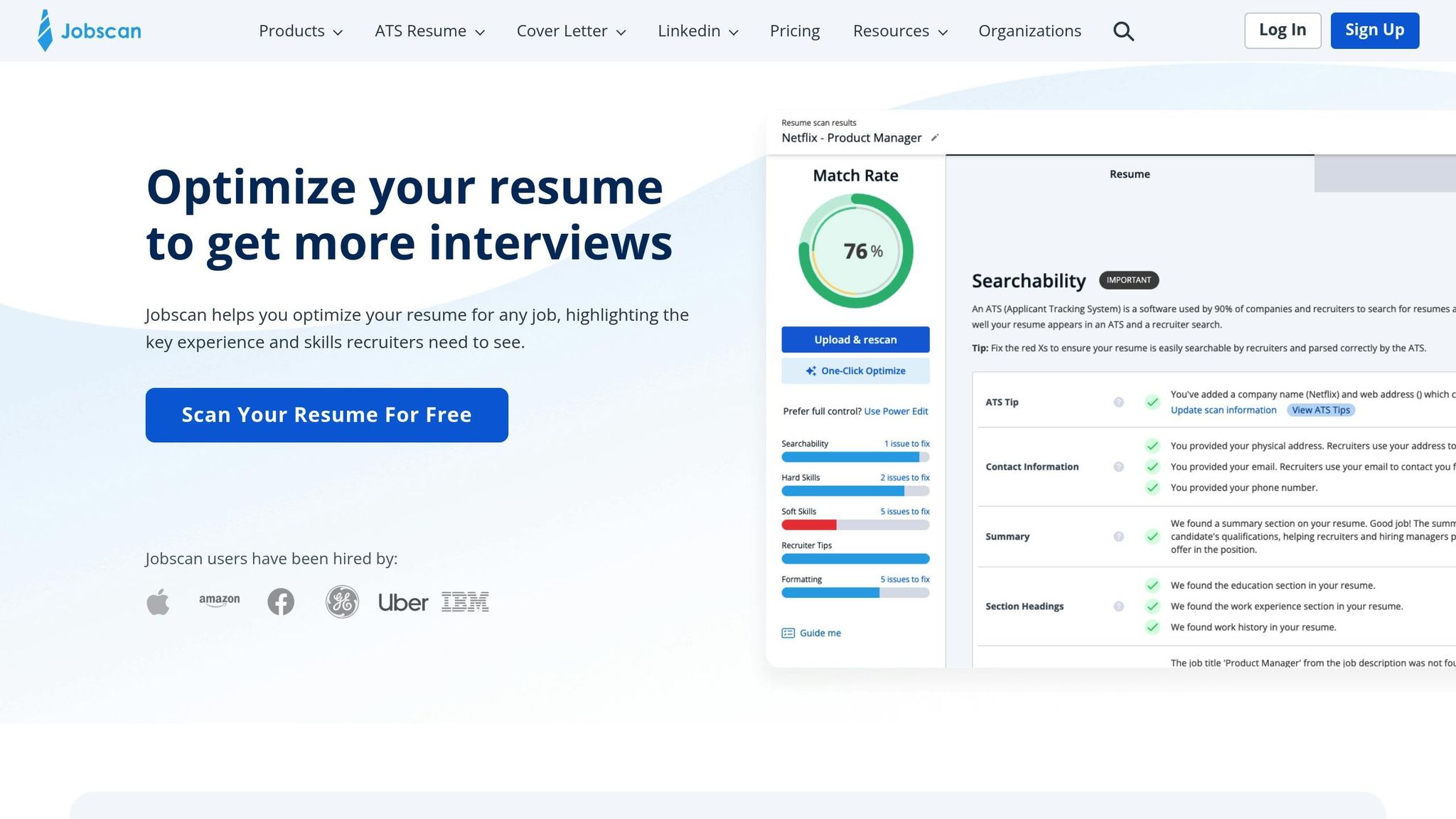
Jobscan.co provides valuable insights by analyzing your resume against job descriptions to identify keyword gaps and ATS compatibility issues. However, it stops at analysis - you’re left to manually revise your resume, write custom cover letters, and handle submissions. This can be time-consuming and less effective if you’re not well-versed in crafting job applications.
Scale.jobs takes it further by offering an end-to-end service. Human assistants not only identify gaps but also rewrite your resume, create tailored cover letters, and manage the entire application process. This comprehensive approach turns insights into actionable, high-quality submissions.
| Feature | Jobscan.co (Analysis Only) | Scale.jobs (Full Service) |
|---|---|---|
| Resume Customization | Keyword analysis | Full resume and cover letter creation |
| Proof-of-Work | None | Time-stamped screenshots for every submission |
| Application Submission | Manual | Managed by human assistants |
| ATS Optimization | Provides keyword scores | Employs semantic strategies for better ATS results |
| Pricing | Monthly subscription ($49.95) | One-time fee (starting at $199) |
Why Scale.jobs Wins:
- Converts analysis into actionable, high-quality applications.
- Human assistants craft compelling, tailored narratives.
- Full-service management saves time and effort.
- Transparency through proof-of-work ensures accountability.
- Quick adjustments improve application success rates.
Who Should Use Jobscan.co: DIY job seekers who prefer to manage their own applications and have the time to optimize resumes manually.
Who Should Choose Scale.jobs: Professionals seeking a full-service solution that handles everything from resume writing to submission, freeing up time for networking and interview preparation.
Why Scale.jobs Is the Right Choice for Many Job Seekers
If you’ve been submitting dozens of generic applications with little success, Scale.jobs offers a better way. It’s ideal for those with complex situations - such as visa requirements or career gaps - where detailed, human-crafted explanations make all the difference. Additionally, the transparency provided by time-stamped proof-of-work and real-time updates ensures you stay informed every step of the way.
How to Use a Human-Assisted Workflow to Get More Interview Calls
Scale.jobs uses a human-focused approach to transform generic job applications into highly personalized submissions. By prioritizing quality over quantity, this method ensures you send only 5–10 carefully tailored applications each week. The results speak for themselves, with response rates often reaching 15–25% compared to the typical 2–5% from automated tools. Each submission is designed to pass ATS filters while genuinely connecting with hiring managers. Let’s break down the three key steps of this process.
Step 1: Human Assistants Tailor Your Resume and Cover Letter
The process begins with you uploading your base resume and selecting job postings you want to target. From there, trained virtual assistants analyze each job description to identify the most relevant keywords and align your experience with the role’s requirements. For example, if your resume mentions "Project Management", but the job posting focuses on "Agile methodology" and "cross-functional collaboration", the assistant might refine your resume to say: "Led cross-functional teams using Agile methodologies to deliver SaaS products, achieving a 20% reduction in time-to-market." This approach ensures your resume not only includes keywords but also connects your skills directly to the job.
If you’re applying for a Fintech Product Manager role, the assistant would emphasize your financial data expertise and tailor sections to highlight skills like compliance and risk management. Each customized resume is saved with a clear label, such as "Resume_ProductManager_Fintech", making it easy for you to track versions. This detailed customization sets Scale.jobs apart from generic automation tools.
Step 2: Submit Applications with Verified Proof of Work
Transparency is key. Unlike automated tools that offer basic dashboards, Scale.jobs provides screenshots of every submitted application, along with WhatsApp updates that include timestamps. This ensures you know exactly when and where your applications were sent, which is invaluable for follow-ups. For example, if you applied to a Healthtech role on February 10, 2026, you can confidently reference this in a LinkedIn message a few days later: "I applied for [Role] on February 10 via Scale.jobs - excited about [Company Mission]."
Additionally, human assistants handle the submission process, including complex forms and detailed questions that automated tools might overlook. This minimizes errors and ensures your applications are complete. With time-stamped proof and confirmation details, you’re equipped to handle any disputes, such as an employer claiming they didn’t receive your application.
Step 3: Monitor Results and Refine Your Approach
Scale.jobs provides a tracker that logs every application and response, allowing you to make informed adjustments to your strategy. Through real-time WhatsApp updates and dashboard metrics, you can quickly identify trends. For instance, you might notice that roles in a specific industry or with certain messaging styles yield better responses. This insight allows you to tweak your approach - such as emphasizing "30-day quick wins" in cover letters or tailoring your resume further for Healthtech roles.
For professionals facing unique challenges, like career gaps or visa requirements, this level of customization and tracking is especially helpful. By analyzing your response data and refining your strategy, you can significantly improve your chances of landing interviews in competitive job markets.
When to Choose scale.jobs vs Competitors
Exploring the advantages of human-assisted workflows, let’s see how scale.jobs stacks up against other tools. The best choice depends on your job search strategy and what trade-offs you’re willing to make. Platforms like LazyApply and Simplify.jobs focus on speed and volume, while Jobscan.co provides keyword analysis but doesn’t manage submissions. Scale.jobs combines human oversight with clear workflows, making it ideal for professionals who prioritize quality over quantity.
Who Should Use LazyApply, Simplify.jobs, or Jobscan.co
LazyApply is a good pick for job seekers who need to submit 50+ applications quickly without focusing on tailored content. This is particularly useful for recent graduates targeting high-turnover industries where quantity matters more than personalization. With pricing between $10–$20/month, it’s a budget-friendly option for those short on time or funds.
Simplify.jobs works well for tech-savvy users looking to apply to 20–30 entry-level roles per week using one-click autofill and basic tracking. This tool is helpful when ATS (Applicant Tracking System) barriers are minimal, and human review isn’t necessary. However, limited personalization can reduce your chances in competitive markets.
Jobscan.co appeals to DIY applicants who want to optimize their applications independently. For $49/month, it offers keyword suggestions and matching scores but leaves the tailoring and submission process up to you. It’s a fit for those applying to 5–10 carefully chosen roles weekly, with the time to manually adjust each application.
Who Should Choose scale.jobs
Scale.jobs is tailored for mid-career professionals (3–10+ years of experience) in competitive sectors like fintech, healthtech, or SaaS. It’s designed for those needing 5–10 high-quality applications per week, particularly when roles demand tailored STAR (Situation, Task, Action, Result) stories, company-specific alignment, or complex application forms that automation tools can’t handle.
For example, a fintech product manager emphasizing compliance expertise and Agile achievements would benefit from scale.jobs’ human assistants who fine-tune resumes and cover letters to match job descriptions.
This platform also supports career changers, international candidates managing visa requirements, and professionals with career gaps who need detailed explanations in their cover letters. With a one-time payment model starting at $199 for 250 applications, it avoids recurring fees, making it a smart choice for targeted job searches.
If you’re already using resume writing services, scale.jobs can manage submissions entirely, ensuring your applications are handled professionally.
Switch to scale.jobs If You Need...
You might consider switching from automation tools to scale.jobs if:
- Your ATS rejection rate exceeds 80%, even after keyword optimization. This suggests your resumes aren’t passing semantic filters, which often penalize generic submissions.
- Your interview callback rate is under 5% despite sending 50+ applications. For instance, a project manager who moved from LazyApply’s 200 generic submissions (2% callback rate) to scale.jobs’ 20 tailored applications saw a 15% callback rate and secured three interviews.
- You lack time to manually tailor applications but still want high-quality submissions. With human assistants managing customization, you can focus on networking and interview prep. Plus, you’ll receive proof of work, including timestamps and updates for follow-ups.
Aligning your application strategy with your career objectives is key to boosting interview opportunities.
| Feature | LazyApply / Simplify.jobs | Jobscan.co | scale.jobs |
|---|---|---|---|
| Human Involvement | None (bot automation) | None (DIY tool) | Full (VAs customize & submit) |
| Resume Customization | Generic templates | Keyword suggestions | Tailored per job description |
| ATS Handling | Keyword stuffing (risky) | Algorithmic matching | Human-reviewed optimization |
| Application Execution | Automated bulk submission | User applies manually | Human-assisted submission |
| Transparency | Basic dashboard | N/A | WhatsApp updates + screenshots |
| Pricing Model | $10–$20/month subscription | $49/month subscription | One-time fee ($199–$1,099) |
Conclusion: Get More Interview Calls with scale.jobs
Automated tools like LazyApply and Simplify.jobs might help you apply quickly, but in today’s competitive job market - where modern ATS systems evaluate context, not just keywords - generic applications often fail to make it to human review.
Why scale.jobs Stands Out:
- Tailored Applications: Expert assistants craft resumes that align with job descriptions, showcasing results like "Reduced project timelines by 20% through Agile methodologies."
- ATS-Friendly Formatting: Smart keyword integration ensures your application clears automated screenings and appeals to hiring teams.
- One-Time Payment: Starting at $199 for 250 applications, eliminating the hassle of monthly subscriptions.
- Real-Time Support: Dedicated WhatsApp communication for updates and strategic adjustments during your campaign.
- Submission Transparency: Time-stamped screenshots of every application provide accountability and enable effective follow-ups.
If your current job search strategy feels like a waste of time and effort, scale.jobs could be the solution - especially if you face challenges like these:
When to Switch to scale.jobs
- Your applications are rejected by ATS systems more than 80% of the time, even after keyword optimization.
- Despite sending 50+ applications, your interview callback rate is below 5%.
- You don’t have the time to personalize applications but still want high-quality submissions.
- You need help addressing career gaps, visa requirements, or industry changes.
- You value proof of every submission to plan follow-ups strategically.
Job seekers who move from generic, automated approaches to scale.jobs often see a noticeable improvement in interview callbacks. For instance, one user went from receiving no callbacks with 50 generic applications to achieving a 30% interview rate by focusing on 10 well-tailored submissions each week. By connecting your skills (e.g., "Agile SaaS delivery") to the goals of prospective employers, scale.jobs ensures your application stands out in a meaningful way.
If your current process is draining your time while delivering poor results, scale.jobs can help you shift focus to networking and interview preparation. With pricing starting at $199 for 250 applications and additional resume writing services, scale.jobs offers a structured approach that includes customized resumes, tracked submissions, and ongoing strategy adjustments - turning passive applications into proactive opportunities.
scale.jobs replaces ineffective automation with a transparent, human-driven process that delivers real results. By addressing the common pitfalls of generic templates and ATS rejections, scale.jobs provides the personalized attention needed to succeed in today’s job market.
Decision Summary
- Choose LazyApply or Simplify.jobs if: You’re an entry-level candidate applying to high-volume roles where speed is more important than customization, and your budget is limited ($10–$30/month).
- Choose Jobscan.co if: You prefer a DIY approach, have time to optimize and submit 5–10 applications weekly, and need keyword analysis tools ($49/month).
- Choose scale.jobs if: You’re a mid-to-senior-level professional in competitive fields like fintech, SaaS, or healthtech, looking for 5–10 personalized applications per week with full transparency, human oversight, and proof of work. It’s especially helpful for career changers, international candidates, or anyone with complex application needs where quality matters more than volume.
When getting interview calls is your top priority, the human touch makes all the difference.
FAQs
How can I tell if ATS is rejecting my resume?
If you’re noticing a lack of interview callbacks despite submitting what you believe is a well-prepared resume, it could be a sign that your application is being filtered out by an Applicant Tracking System (ATS). Common reasons for this include issues like improper formatting, missing key terms relevant to the job, or failing to tailor your resume for specific roles.
Another red flag is applying to numerous positions but receiving little to no responses. This pattern often points to ATS rejection. To improve your chances, consider using ATS-friendly resumes and tools that offer real-time tracking for your job applications. These can help you spot issues early and make adjustments, giving you a better shot at landing interviews.
What keywords should I add for each job application?
When crafting your resume or cover letter, it's crucial to use keywords that directly match the job description. Pay attention to skills, qualifications, industry-specific terms, and action verbs listed in the posting. For instance, technical skills like Python or data analysis, soft skills such as leadership or collaboration, and role-specific phrases like customer retention are all valuable additions. Weave these keywords into your documents naturally to meet ATS (Applicant Tracking System) requirements and appeal to recruiters.
Should I use PDF or Word for ATS submissions?
When submitting your resume to an ATS (Applicant Tracking System), using a simple Word file (.doc or .docx) is typically the safest bet. These formats are widely compatible with most ATS software, ensuring your resume is processed correctly. PDFs, on the other hand, can sometimes create problems unless they are specifically optimized for ATS. To avoid any hiccups, stick to Word formats unless the job posting specifically asks for a PDF.