
What to Do Immediately After a Layoff to Get Back to Work Faster
Five practical steps to recover after a layoff: process the news, secure benefits and budget, update an ATS-friendly resume/LinkedIn, target companies, and network daily.


Experiencing a layoff can feel overwhelming, but taking the right steps early can help you recover faster. Here’s what you need to focus on:
- Take Time to Process: Reflect on the situation for 24–48 hours without rushing into job applications.
- Secure Finances: File for unemployment benefits immediately, review your severance package carefully, and create a temporary budget to manage expenses.
- Update Your Resume and LinkedIn: Collect achievements, optimize your resume for ATS, and tailor it to specific roles.
- Create a Targeted Job Search Plan: Focus on 10–15 companies, set daily application goals, and network effectively with a virtual assistant by your side to tap into hidden opportunities.
- Use Human-Assisted Tools: Platforms like Scale.jobs ensure tailored, ATS-friendly applications with real-time proof of submission, outperforming automated tools like LazyApply.
By combining financial planning, strategic applications, and consistent networking, you can reduce job search time and land your next role efficiently.
Quick Tip: Avoid mass, generic applications. Instead, focus on quality and customization to stand out. Tools like Scale.jobs can handle the heavy lifting while you focus on interviews and networking.
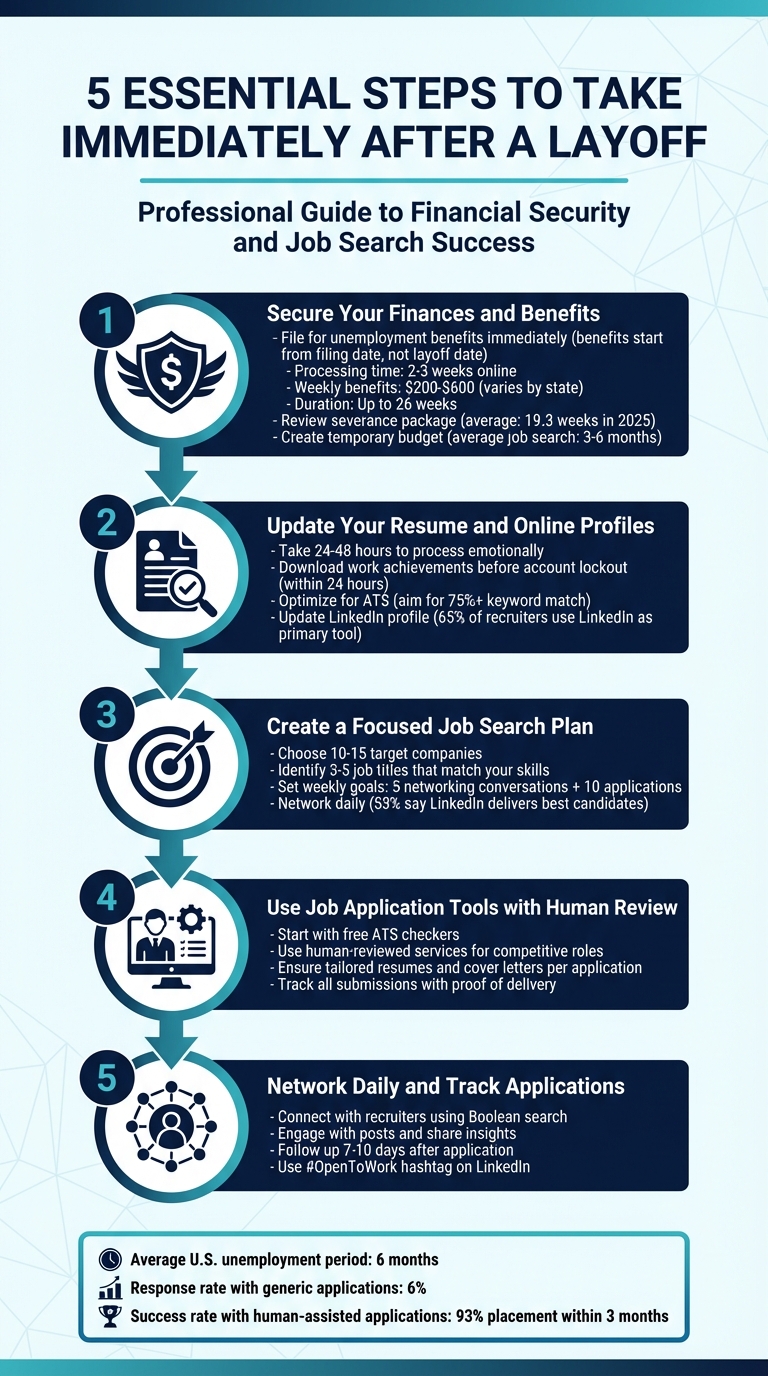
5 Essential Steps to Take Immediately After a Layoff
Ex-Google Recruiter Explains: Do This in Your First 10 Days After a Layoff
Step 1: Secure Your Finances and Benefits
Before diving into job applications, it’s essential to stabilize your financial situation. Career expert Brie Reynolds from LinkedIn Learning highlights that filing for unemployment can take time, so acting quickly is critical. The idea is to get a clear understanding of your cash flow and stretch your financial resources while searching for your next role.
File for Unemployment Benefits
The day you're laid off, file for unemployment insurance. Benefits won’t be backdated to your layoff date - they begin on the day you submit your claim. Most states process claims online within 2–3 weeks, and filing through your state's Department of Labor website is usually the fastest option. If online filing isn’t available, be prepared for longer processing times with phone or mail filings.
Before filing, confirm your eligibility requirements. Most states require that you’ve worked a minimum number of weeks (commonly 12–18 months) and that you lost your job through no fault of your own. Keep a detailed record of your weekly job search activities, as many states require proof that you’ve applied to a minimum number of jobs to maintain eligibility. Weekly benefits vary by state, generally ranging from $200 to $600, and are typically available for up to 26 weeks.
Review Your Severance Package
Avoid signing any severance documents on the day you’re laid off. Take them home for a thorough review. According to Challenger, Gray & Christmas' 2025 report, the average severance across industries increased to 19.3 weeks, up from 15.6 weeks the previous year. However, severance packages vary widely depending on your role. For instance, executives may receive 30–50+ weeks, while individual contributors often get less than 10 weeks.
"The strongest position in severance negotiations comes from knowledge. Knowing your rights, understanding leverage points, and strategically presenting your case can lead to significantly better outcomes."
Look beyond the lump sum payment. Check if your package includes perks like extended health insurance (via COBRA or employer subsidies), accelerated stock options, outplacement services, or payment for unused PTO. If you’re close to a 401(k) or stock vesting date, consider negotiating for an extended termination date to secure those benefits.
Pay attention to restrictive clauses, such as non-compete agreements or non-disparagement terms. If negotiating over the phone feels daunting, thank the employer for the offer, request time to review it, and follow up via email. Use your tenure, performance records, or significant contributions as leverage. If increasing the cash payout isn’t an option, try negotiating for extended health coverage, career coaching, or even tuition reimbursement for a career shift.
Set Up a Temporary Budget
Start by listing all your liquid assets - this includes checking and savings accounts, severance payments, and accessible retirement funds. Compare these against your monthly expenses. Remember, the average job search can take 3 to 6 months or longer in competitive markets. Focus your spending on essentials, often referred to as "the Big Three": housing, food, and medical needs. Review your recent bank statements to identify areas where you can cut back, such as subscription services, dining out, or unnecessary purchases. Every dollar saved helps extend your financial resources and reduces the urgency to take the first job offer you receive.
While unemployment benefits will help, don’t rely on them entirely. In fast-paced industries, even a six-month gap can have long-term effects, so consider investing in tools like a job search virtual assistant or certifications to speed up your job hunt. Having a clear understanding of your finances will allow you to focus on the job search strategies outlined in future steps.
Once your finances are in order and benefits are underway, it’s time to update your resume and online profiles to make the most of your job search.
Step 2: Update Your Resume and Online Profiles
Handle the Emotional Impact
Getting laid off can be a tough experience, but it’s important to remember that it’s typically a business decision tied to economic shifts or organizational changes - not a reflection of your personal worth. Give yourself 24–48 hours to process the news and talk to family, friends, or even a therapist to avoid feeling isolated. These conversations can help you regain a positive perspective. Once you’ve had some time to adjust, shift your focus to creating a clear, actionable plan for your next steps, which will help you feel more prepared as you dive into interviews and networking.
Document Your Recent Work and Skills
Before you lose access to your work accounts, immediately download anything that showcases your contributions - performance reviews, certifications, awards, or project files. Many companies lock accounts within 24 hours of termination, so acting quickly is key. Create a "brag file" that highlights your achievements with measurable results, such as exceeding quotas, generating revenue, or improving efficiency.
When describing your accomplishments, try using frameworks like STAR (Situation, Task, Action, Result) or CARL (Challenge, Action, Result, Learning). For example, instead of simply stating, "Managed social media accounts", you could say, "Increased Instagram engagement by 34% in six months by implementing a content calendar and A/B testing post formats." If you’re aiming for leadership roles, focus on strategic outcomes rather than listing individual tasks.
Optimize Your Resume and LinkedIn for ATS
Once you’ve documented your achievements, the next step is tailoring your resume and LinkedIn profile for Applicant Tracking Systems (ATS), which most companies use to screen applications. These systems prioritize resumes that align with specific industry keywords, so it’s essential to match your materials to the terminology frequently used in job postings. Tools like Jobscan can help you compare your resume to job descriptions and aim for a keyword match of 75% or higher.
To identify relevant terms, use Boolean searches on Google (e.g., "analyst + jobs") to find multiple job postings in your field. Look for recurring phrases and skills, then incorporate them into your resume and LinkedIn profile. For example, in February 2023, attorney Catherine Cambridge shared her layoff story on LinkedIn, outlining her target roles and key skills. Within days, her post led to over 30 direct opportunities from her network. Similarly, a marketing professional at Grow Group highlighted achievements like attracting over 15 million followers and increasing engagement by 34%, which resulted in several interview invitations within a week.
If you’re not confident in your writing skills or need help creating ATS-friendly documents quickly, consider partnering with a professional resume writer. These specialists can craft resumes and LinkedIn profiles that not only showcase your experience but also align with the technical requirements of modern hiring systems. For those navigating layoffs, this extra support can make all the difference in landing interviews for full-time jobs or even part-time jobs near me.
Step 3: Create a Focused Job Search Plan
Choose Target Companies and Roles
Instead of scattering applications everywhere, focus your efforts on a list of 10–15 companies that align with your career goals and values. Research these organizations thoroughly - look for recent news about their growth, such as funding announcements, product launches, or expansions. Companies in growth mode often have more opportunities available. Once you've identified these companies, pinpoint three to five job titles that match your skills and career path. Pay attention to the job titles and descriptions employers use in their postings to ensure you're speaking their language.
After narrowing down your targets, visit each company's career page regularly and set up job alerts on LinkedIn tailored to those organizations and roles. This focused strategy allows you to craft personalized applications and demonstrate genuine interest during interviews, giving you a competitive edge over generic mass applications. With your list in hand, the next step is to tap into your network for insider tips and connections.
Contact Your Network
Your professional network is a powerful resource, especially in the early stages of your job search. Begin by connecting with former coworkers through "Cyber Huddles" - private groups on platforms like Slack, WhatsApp, or Google Chat. These groups are excellent for sharing job leads, writing endorsements, and discussing workplace cultures.
When reaching out to contacts, specificity is key. Instead of asking, "Is your company hiring?", try something like, "I noticed an analyst position at your company and would love to hear about the team and culture." This approach makes it easier for your connections to offer meaningful assistance. Additionally, consider posting on LinkedIn to share your career achievements and clarify what you're looking for. Use hashtags like #OpenToWork and mention the roles you're targeting to increase visibility.
"Networking is not necessarily the salesy scary thing that you have to do... Networking could be like, 'Oh my God, I love your headshot. Who did your headshot?'" - Ashley Watkins, NCRW, NCOPE, Job Search Coach
Since 65% of recruiters rely on LinkedIn as their go-to platform for hiring, and 53% say it delivers the best candidates, keeping your network informed about your job search can connect you to opportunities that aren't publicly advertised.
Set Daily Application Goals
With your target companies and networking efforts in place, it's time to establish a structured routine. Set clear weekly goals across four areas: reconnecting with your current network, building new connections, searching for open positions, and submitting applications. For example, aim to have five networking conversations and submit ten applications each week. Adjust these numbers based on your industry and the complexity of the application process.
"Creating a schedule and setting your intention and a goal for each day will help you feel accomplished, like you're moving your job search forward, even if you're not getting traction right away." - Marlo Lyons, Executive and Career Coach
Keep track of your progress using a spreadsheet or job search tool to log application dates, follow-up tasks, and responses. Pair this effort with your polished resume and LinkedIn profile to ensure you're presenting yourself effectively. Consistency and focus are key to keeping your job search on track.
LazyApply vs scale.jobs: Why Human-Powered Applications Work Better After Layoff
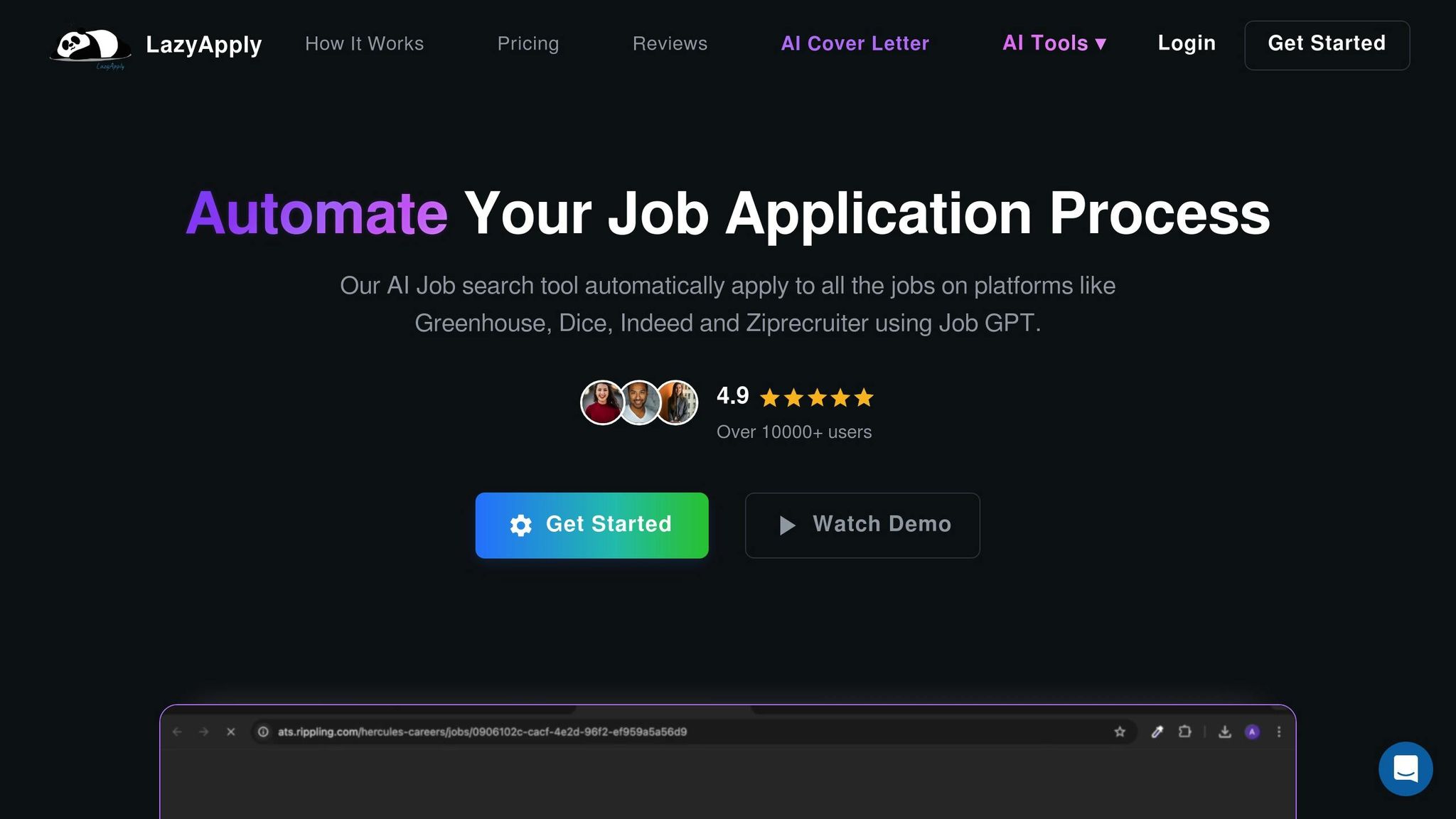
When facing a layoff, finding the right job application tool quickly can make all the difference.
What LazyApply Does Well and Where It Falls Short
LazyApply stands out for its ability to automate high-volume submissions, making it appealing to job seekers looking to cast a wide net without spending hours on manual applications. Its one-time lifetime subscription fee is another draw, eliminating ongoing monthly costs.
But automation has its downsides. Many users report that LazyApply submits applications for irrelevant roles, introduces errors in personal details, and relies on generic templates that often fail Applicant Tracking Systems (ATS). With an average response rate of just 6%, these limitations can be costly during a critical career transition. Automated systems also struggle to adapt to unique job portals or tailor applications to specific companies. In contrast, scale.jobs directly addresses these issues with a human-centered approach.
4 Reasons to Choose scale.jobs After a Layoff
1. Human oversight ensures tailored applications.
At scale.jobs, real people handle your job applications. They carefully review job descriptions, customize your resume and cover letter, and manually submit applications. This eliminates the risk of bot-detection flags, which can disqualify automated submissions.
2. ATS-optimized materials for each job.
Instead of relying on generic templates, scale.jobs creates resumes and cover letters tailored to each role. This personalized approach increases your chances of passing ATS filters and demonstrates genuine interest to hiring managers.
3. Transparent proof of submission.
With scale.jobs, you'll receive updates and screenshots via WhatsApp, showing exactly where and when your applications were submitted. For example, in early 2024, software engineer Aubrey Smith used scale.jobs while juggling a full-time job. She appreciated the service's ability to complete applications within 24 hours, freeing up her time for interview preparation.
4. Fair pricing with refunds for unused credits.
Scale.jobs offers flat-fee pricing for application bundles: $199 for 250 applications, $299 for 500, and $399 for 1,000. If you land a job before using all your credits, you'll receive a refund for the unused applications - a feature subscription-based models don't provide.
Comparison Table: LazyApply vs scale.jobs
| Feature | LazyApply | scale.jobs |
|---|---|---|
| Application Method | Automated submissions | Manually submitted |
| Resume Customization | Generic templates | Tailored resumes & cover letters |
| ATS Compatibility | Low | High (human-optimized) |
| Transparency | Basic analytics dashboard | WhatsApp updates & screenshots |
| Bot Detection Risk | High | None (manual submissions) |
| Pricing Model | Lifetime subscription | One-time fee with refunds |
| Turnaround Time | Instant (automated) | 24 hours per application |
| Success Rate | ~6% response rate | 93% placement within 3 months |
Who Should Use LazyApply
LazyApply works best for job seekers applying to numerous entry-level positions where customization is less critical. It's suitable if you have the time to fix errors manually and prioritize speed over precision. However, the low response rate and lack of oversight may not meet the needs of professionals seeking more targeted opportunities.
Who Should Choose scale.jobs
Scale.jobs is the better choice for professionals targeting mid-to-senior roles where tailored applications are essential. It’s ideal for those who need to pass ATS filters, save time for networking and interviews, and want proof that their applications are submitted accurately. If you're rebuilding your application materials after a layoff, consider their professional resume writing services for even more support.
Switch to scale.jobs if you're frustrated with irrelevant submissions, ATS rejections, lack of transparency, or recurring subscription fees. With human oversight, scale.jobs ensures your applications reflect your strengths during this critical career phase.
Decision Summary
LazyApply is a fit for those prioritizing speed and volume over quality, especially for entry-level roles. On the other hand, scale.jobs offers personalized, human-reviewed applications and transparent updates, making it the better choice for professionals aiming to advance their careers after a layoff. Whether you're looking for a job search virtual assistant or need help with tailored applications, scale.jobs provides the tools and support to help you stand out.
Simplify.jobs vs Scale.jobs: Human Assistance vs Automation for Faster Rehiring
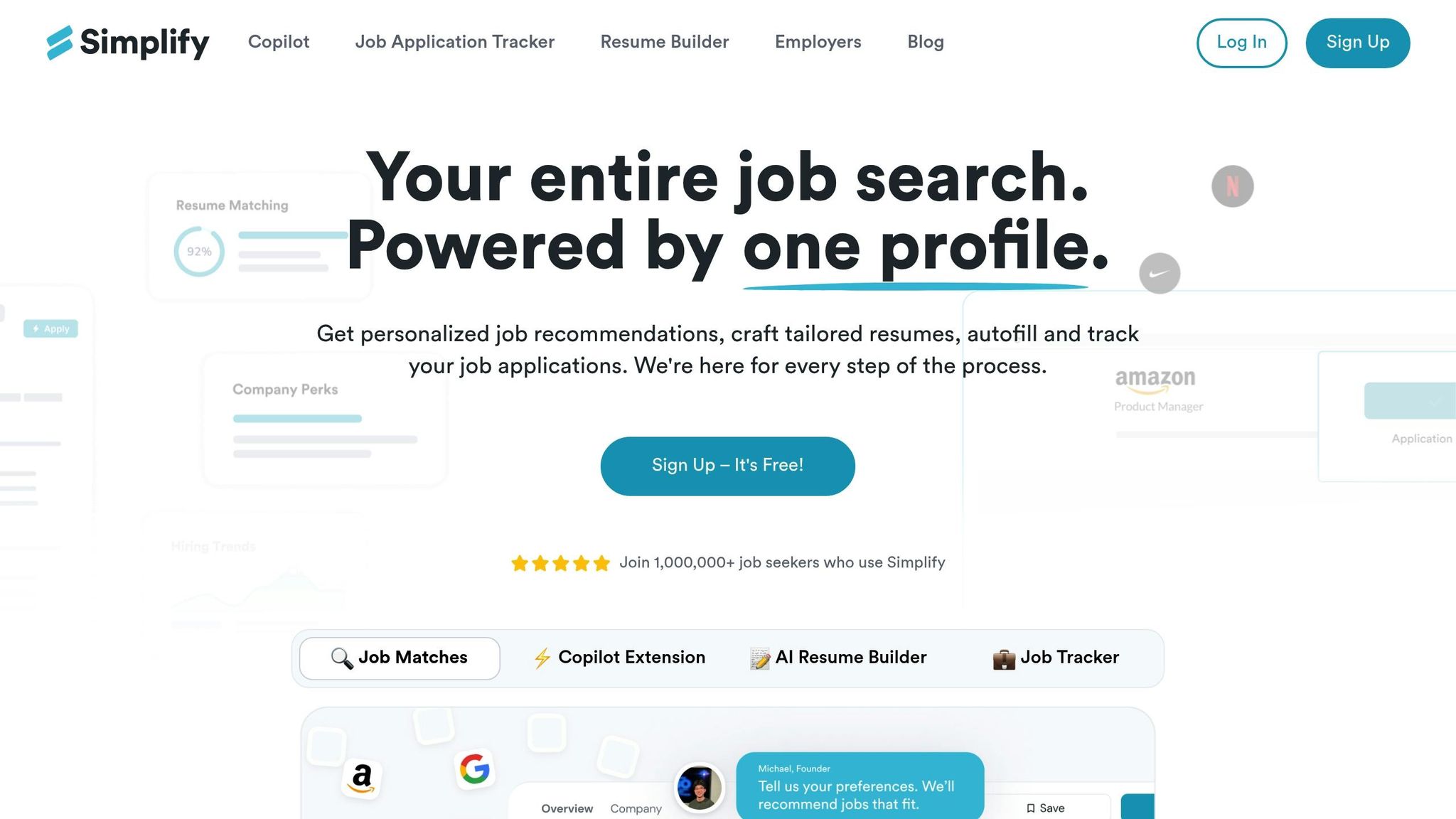
When facing a layoff, deciding between Simplify.jobs and Scale.jobs often comes down to prioritizing either the speed of automation or the personalized touch of human assistance. Your choice can significantly impact how quickly you transition from job loss to landing interviews.
Strengths of Simplify.jobs
Simplify.jobs is designed for tech-savvy users who value efficiency. Its intuitive interface and job tracking features make it easy to organize your applications. The browser extension allows you to save job postings and monitor their progress in one place. For those comfortable managing their own job search with minimal guidance, this automated platform provides a simple and efficient solution.
Why Scale.jobs Stands Out
Scale.jobs takes a different approach by offering tailored job application assistance throughout the application process. Dedicated virtual assistants handle every detail, from tailoring your resume and cover letter to submitting applications manually. This personal touch ensures your applications are optimized for applicant tracking systems (ATS), which is increasingly important given that 53% of laid-off workers submit over 50 applications during their search.
Here’s what sets Scale.jobs apart:
- Human Review to Avoid ATS Rejections: Unlike automated tools, Scale.jobs ensures each application is customized for the role, improving your chances of bypassing ATS filters.
- Transparent Proof of Work: You’ll receive real-time updates via WhatsApp, complete with time-stamped screenshots showing when and where your applications were submitted.
- Fair Pricing with Refunds: Scale.jobs offers one-time flat fees - $199 for 250 applications, $299 for 500, or $399 for 1,000. Unused credits are refundable, making it a risk-free investment.
Comparison Table: Simplify.jobs vs Scale.jobs
| Feature | Simplify.jobs | Scale.jobs |
|---|---|---|
| Human Involvement | Low (Fully automated) | High (Dedicated Virtual Assistants) |
| Resume Customization Depth | Standardized, template-based | Fully tailored per job |
| ATS Handling | Automated submissions | Human-reviewed for optimization |
| Application Execution Method | Browser extension/Bots | Manual submission by humans |
| Transparency & Proof-of-Work | Basic dashboard tracking | Real-time updates with screenshots |
| Pricing Model | Subscription/Freemium | One-time flat fee with refunds |
Who Should Choose Simplify.jobs or Scale.jobs?
Simplify.jobs is ideal if:
- You’re applying to a large number of similar entry-level tech roles.
- You prefer to handle the application process yourself.
- You don’t need extensive resume or cover letter customization.
Scale.jobs is the better choice if:
- You’re aiming for mid-to-senior roles where personalized applications matter.
- You want to improve your chances of beating ATS filters.
- You’d rather spend your time networking or preparing for interviews instead of submitting applications.
- You value clear proof that your applications are submitted correctly.
Consider switching to Scale.jobs if:
- You’re consistently being rejected by ATS systems despite strong qualifications.
- You don’t have the time to tailor each application.
- You want to avoid recurring subscription fees and prefer a flat-rate service with human oversight.
Step 4: Use Job Application Tools with Human Review
After refining your resume and crafting a targeted job search strategy (as outlined in Steps 2 and 3), it’s time to focus on tools that streamline your application process. These tools help ensure your applications align with ATS (Applicant Tracking System) requirements and hiring standards. While automated platforms can speed up submissions, they often miss crucial job-specific details or get flagged by ATS filters. A combination of application tools and human oversight strikes the perfect balance between efficiency and precision.
Start with Free ATS Checkers and Tracking Tools
Begin by using free ATS checkers to evaluate your resume’s compatibility with hiring systems. For instance, Scale.jobs offers a free Resume ATS Checker that identifies missing keywords, formatting issues, and other potential problems. It also includes a Job Applications Tracker to help you log submissions, follow-up dates, and responses - keeping everything organized without the hassle of spreadsheets.
These tools are especially helpful if you’re applying to a high volume of jobs, say 30 or more per week, which is often the case after layoffs. Tracking your applications ensures you avoid duplicate submissions, missed follow-ups, or disorganized job searches.
Enhance Applications with Human Review Services
Once your resume is optimized using ATS tools, take it a step further with human-reviewed services. For competitive roles, having a trained professional tailor your resume and cover letter can make all the difference. Platforms like Scale.jobs provide virtual assistants for job seekers who manually adjust your documents for each role. These assistants fine-tune keywords, rewrite bullet points, and even submit applications manually, bypassing the pitfalls of fully automated tools like LazyApply.
This personalized approach is especially valuable when competing for roles that demand specific skills or cultural alignment. For instance, a human reviewer can identify when a job prioritizes "stakeholder management" over "project coordination" and adjust accordingly. Scale.jobs offers flat-fee packages starting at $199 for up to 250 applications, including real-time WhatsApp updates and time-stamped proof of submissions. This service is ideal if you’d rather focus on networking or interview prep instead of spending hours tweaking your applications. For more advanced support, check out their AI resume builder and professional writing services.
Why You Should Consider Scale.jobs
Switch to Scale.jobs if:
- Your applications are being filtered out by ATS despite strong qualifications.
- You need tailored, role-specific resume and cover letter adjustments for mid-to-senior level positions.
- Verifiable proof of application submissions (via WhatsApp updates) is important to you.
- Formatting and application tracking are consuming more time than networking or interview preparation.
- You prefer a flat-fee model over recurring subscriptions with limited refund options.
Step 5: Network Daily and Track Your Applications
Once your finances are in order and your application materials are polished, the next step is to focus on daily networking. This is a powerful way to uncover job opportunities that might not be publicly advertised. Building authentic LinkedIn connections can lead to referrals and insider tips. Considering that 65% of recruiters rely on LinkedIn as their primary sourcing tool, and 53% vouch for its quality, your network can be a game-changer.
Connect with Recruiters and Target Companies on LinkedIn
Start by using Boolean search techniques on LinkedIn to find recruiters who specialize in your field. For example, you could search for terms like "Technical Recruiter + Hiring" or "[Your Role] + Jobs" to narrow down relevant profiles. Once you identify potential connections, engage with their posts by leaving thoughtful comments or sharing your own insights. This approach helps you stand out. As Ashley Watkins, a certified job search coach, explains:
"Networking is not necessarily the salesy scary thing that you have to do... It could be something as simple as, 'Oh my God, I love your headshot. Who did your headshot?'"
Additionally, explore informal networking channels like Slack, WhatsApp, or Google Chat groups with former colleagues to exchange job leads and advice. If you've experienced a layoff, consider crafting a clear, professional update on LinkedIn. Highlight your accomplishments, specify the roles you're seeking, and use hashtags like #OpenToWork along with relevant job titles. Watkins emphasizes:
"Never be afraid or embarrassed about the layoff. You still have the same value. Your value doesn't go away."
Pair these networking efforts with a structured system to track your applications and follow-ups effectively.
Track Applications and Follow Up
In the U.S., the average unemployment period is approximately six months as of September 2025. Staying organized during this time is crucial. Combining consistent networking with a reliable application tracking system ensures you don’t miss opportunities or follow-ups. Tools like Scale.jobs offer features such as real-time WhatsApp updates, making it easier to log your applications and track their progress. This kind of system helps you stay on top of follow-ups, which should typically happen 7–10 days after submitting an application.
If you're juggling 30 or more applications per week, manual tracking can quickly become overwhelming. Using job search automation can help manage this workload. Tools like Scale.jobs streamline the process by providing real-time updates, allowing you to focus on networking and preparing for interviews. For additional support, their professional resume writing services can refine your application materials while their assistants manage the logistics of applying. This way, you can dedicate your time to building connections and landing interviews.
Conclusion: Take Action to Get Back to Work Faster
Experiencing a layoff doesn’t define your professional worth - it’s merely a turning point that calls for focused action. The five steps outlined here provide a solid plan: secure your financial stability, update your resume and LinkedIn profile with ATS-friendly keywords, create a targeted job search strategy, utilize human-assisted application tools, and maintain consistent networking while tracking your efforts. By following these steps, you can shorten the transition period and move toward your next role more quickly than the typical six-month average in the U.S.
When comparing automated tools, the difference between a shorter job search and a longer one often lies in how effectively and consistently you execute your plan. While tools like LazyApply or Simplify.jobs can handle large volumes of applications, they often fall short of the customization required by hiring managers and can trigger bot-detection systems. Scale.jobs bridges this gap by combining human assistance with ATS-optimized materials. Each application is manually submitted with tailored resumes and cover letters, accompanied by time-stamped screenshots and real-time updates via WhatsApp. This approach not only bypasses automated filters but also saves you over 20 hours per week, allowing you to focus on networking and interview preparation.
If you’re managing 30 or more applications each week, consider pairing your efforts with professional resume writing services that deliver ATS-compliant documents within 24 hours. With a flat-fee pricing model and fully refundable unused application credits, this service offers flexibility as you navigate your job search.
Remember, your next opportunity is waiting. As job search coach Ashley Watkins, NCRW, reminds us:
"Your value does not change after a layoff. You still have the same value... You just have to get somebody who appreciates that value."
Start now: update your LinkedIn headline, reconnect with three former colleagues, or submit five customized applications today. With consistent daily effort and the right tools, you’ll be back at work sooner than you think.
Switch to scale.jobs if…
If you’re considering whether to switch from automated tools to a human-assisted application service, here are some scenarios where scale.jobs might be the better fit:
- Your ATS-optimized applications are being rejected despite strong qualifications.
- You need tailored resumes and cover letters for mid-to-senior-level roles.
- Automation tools are causing issues like duplicate submissions or irrelevant job matches.
- You want transparent, real-time tracking with proof of every application submission.
- You prefer a flat-fee pricing model with refundable credits over recurring subscriptions.
Decision Summary
For high-volume, entry-level job applications where speed is the priority, tools like LazyApply or Simplify.jobs can be effective. However, for mid-to-senior-level roles that require a more customized approach, scale.jobs offers a better solution. With its focus on human oversight, tailored application materials, and verifiable submissions, scale.jobs is the smarter choice for professionals aiming to land interviews faster after a layoff.
FAQs
What are the best steps to negotiate a severance package after being laid off?
When it comes to negotiating your severance package, remember that most agreements have room for flexibility. Start by identifying your priorities - whether that’s securing more pay, extended health benefits, or perks like pro-rated bonuses or stock options. Having a clear understanding of what you want will help guide the conversation.
To strengthen your position, prepare to emphasize the value you’ve brought to the company. Highlighting your contributions can make a compelling case for why you deserve better terms. It’s also helpful to research what’s typical for severance packages in your industry. This knowledge can provide context and help you set realistic expectations.
Additionally, make sure you understand your legal rights. For example, if you’re covered by the Older Workers Benefit Protection Act, there may be specific protections or entitlements that apply. Consulting with a legal professional before signing any agreement is a smart move - they can help you navigate the terms and ensure you’re making an informed decision.
Remember, employers often anticipate some level of negotiation. Framing your requests as mutually beneficial can increase the likelihood of reaching an agreement that works for both parties.
How can I make my resume stand out in ATS systems?
To make sure your resume gets through ATS (Applicant Tracking Systems) and grabs attention, stick to a straightforward format. Use standard fonts like Arial or Times New Roman, clear section headings, and bullet points for easy readability. Avoid using graphics, unusual fonts, or intricate layouts, as these can confuse the software and hurt your chances.
Tailor your resume to each job by incorporating keywords from the job description. Pay close attention to skills, qualifications, and industry-specific terms, and weave them naturally into sections like your work experience, skills, and summary.
Instead of listing generic duties, emphasize measurable accomplishments. For example, mention specific results like "increased sales by 25%" or "managed a team of 10 employees." This approach not only helps with ATS compatibility but also makes your resume stand out to human recruiters. By balancing technical optimization with clear, engaging content, you'll boost your chances of landing interviews.
How does scale.jobs help you secure a job faster compared to automated tools?
Scale.jobs combines AI-powered resume optimization with the expertise of real people to give your job applications an edge. By tailoring each application to the specific role and making them ATS-friendly, Scale.jobs ensures your efforts are not just noticed but impactful. What sets it apart? It doesn’t stop at optimization - it actively applies to 30 jobs daily on your behalf, delivering polished, ATS-optimized resumes in just 24 hours to boost your visibility with recruiters.
The platform also offers dedicated human support through WhatsApp, giving you personalized advice, real-time updates, and proof of work. This transparency and hands-on guidance address common problems with automated systems, such as generic applications and ATS-related errors. By blending technology with a human touch, Scale.jobs ensures your applications stand out, making it an excellent choice for job seekers serious about finding their next role.
For those looking to streamline their job search, Scale.jobs offers a practical alternative to traditional platforms, helping you stay ahead in a competitive market. Whether you're targeting full time jobs or exploring options for part time jobs near me, this hybrid approach simplifies the process while improving your chances of success.