How to Find Remote Jobs That Are Legit and Well Paid
Step-by-step guidance to spot remote job scams, verify employers, use trusted job boards, and craft ATS-friendly applications for higher pay.


Remote jobs are more popular than ever, but finding legitimate, high-paying opportunities can be challenging. With scams, misleading listings, and competition from hundreds of applicants per role, job seekers must navigate the market carefully. This guide provides actionable steps to identify genuine remote jobs, avoid scams, and stand out in your applications.
Key Takeaways:
- Spot Scams: Avoid listings that request payments, promise unrealistic salaries, or lack clear job descriptions.
- Research Companies: Use tools like Glassdoor, LinkedIn, and the Better Business Bureau to verify companies and roles.
- Use Trusted Platforms: Job boards like FlexJobs, We Work Remotely, and Jobspresso specialize in remote job listings.
- Optimize Applications: Tailor your resume and cover letter with relevant keywords to pass Applicant Tracking Systems (ATS).
- Focus on High-Paying Industries: Tech, marketing, and finance often offer the best remote salaries.
By combining thorough research, trusted platforms, and well-optimized applications, you can secure a legitimate and well-paying remote job.
9 Boring But High Paying Remote Jobs (Always Hiring)
How to Verify Remote Job Listings Are Real
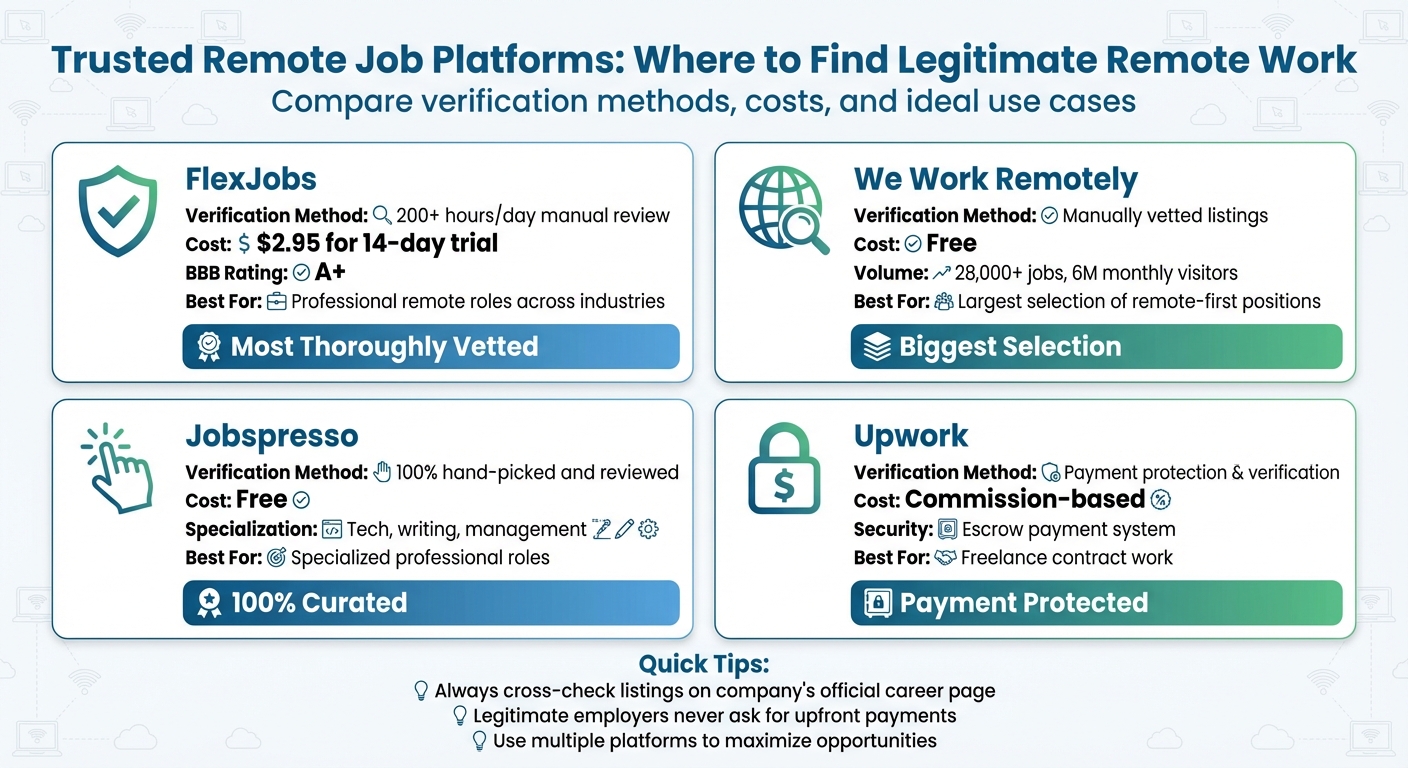
Trusted Remote Job Platforms Comparison: Features, Costs, and Best Use Cases
Distinguishing between genuine and fake remote job postings can save you from falling victim to scams. Many fraudulent listings share similar red flags, and knowing what to look for can help you avoid them.
Warning Signs in Remote Job Postings
A major red flag is any request for money. Legitimate employers will never ask for upfront payments for things like training materials, equipment, background checks, or starter kits. If a company sends you a check and asks you to return a portion of the funds, it's likely a check scam.
Exaggerated salary claims are another warning sign. Promises like "$5,000 a week with no experience" or other unrealistic earnings for minimal effort are often bait for scams. Authentic remote jobs provide clear salary ranges and specify the skills and responsibilities required.
Be cautious if you receive unsolicited job offers via text, WhatsApp, or Telegram, especially if you never applied to the company. Real recruiters use official email addresses with company domains (e.g., name@companyname.com), not generic services like Gmail or Yahoo. If a hiring process skips interviews or offers a position after a brief text-only "interview", proceed with skepticism.
Vague job descriptions are also a red flag. Scam postings often lack details about the role, qualifications, or even the company's name. Frequent spelling and grammar errors are another indicator of fraudulent listings. As noted by the Upwork team:
Legitimate employers never ask for money or bank account information to secure a job.
Once you've identified potential red flags, take the next step by thoroughly researching the company.
How to Research Companies Before Applying
Spend some time - 15 to 20 minutes - researching the company before you apply. Start with a quick Google search of the company name paired with terms like "scam", "review", or "complaint." If there are issues, you'll often find reports from other job seekers.
Check the Better Business Bureau (BBB) by searching the company's name, URL, or phone number. The BBB provides complaint records and ratings, giving you insight into the company's credibility. Employee reviews on platforms like Glassdoor and Indeed can also provide a clearer picture of the company's work environment and legitimacy.
Visit the company's official website. Look for professional design, detailed information about services, and clear contact details. Verify the names of executives or founders listed on the site by cross-checking their LinkedIn profiles. If social media icons or membership badges (e.g., BBB seals) on the website are just static images that don't link to actual profiles, that's a red flag.
To stay organized, maintain a spreadsheet tracking the jobs you apply for. Include details like company names, dates, and positions. This makes it easier to spot unsolicited offers from companies you never contacted.
Once you've done your research, stick to trusted job boards to further minimize risk.
Remote Job Boards You Can Trust
In addition to personal research, using verified job boards can help you avoid scams. Here are some reliable platforms:
-
FlexJobs: This platform, rated A+ by the Better Business Bureau, dedicates over 200 hours daily to vetting job listings. As FlexJobs explains:
Only legit online jobs. No ads, scams, or junk to sift through. Our team spends 200+ hours/day verifying every online job.
FlexJobs offers a 14-day trial for $2.95, making it an affordable option for serious job seekers. - We Work Remotely: Hosting over 28,000 remote job postings, this platform attracts around 6 million visitors monthly. All listings are manually vetted to ensure quality.
-
Jobspresso: This free platform specializes in tech, writing, and management roles. According to Jobspresso:
100% of our jobs are hand-picked, manually reviewed and expertly curated.
For freelance work, platforms like Upwork and Fiverr provide built-in protections. Payments are held in escrow until the work is completed, offering security that direct arrangements often lack. While these platforms charge fees or commissions, they add a layer of trust to the process.
| Platform | Verification Method | Cost | Best For |
|---|---|---|---|
| FlexJobs | 200+ hours/day manual review | $2.95 for 14-day trial | Professional remote roles across industries |
| We Work Remotely | Vetted listings | Free | Largest selection of remote-first positions |
| Jobspresso | 100% hand-picked and reviewed | Free | Tech, writing, and management roles |
| Upwork | Payment protection and verification | Commission-based | Freelance contract work |
Lastly, always cross-check any job listing with the "Careers" or "Jobs" section on the company's official website. If the role isn't listed there, it’s likely fraudulent.
Where to Find High-Paying Remote Jobs
Salaries for remote jobs can vary widely, depending on the industry and role. By 2026, the remote job market has stabilized, with companies focusing on hiring skilled professionals for roles that deliver measurable results.
Understanding which industries and roles offer top pay can help you narrow your job search to the most rewarding opportunities. Let’s dive into the industries and positions offering the best compensation for remote work.
Industries That Pay Well for Remote Work
Certain industries consistently offer higher pay for remote roles. Fields like technology, marketing, and creative services lead the way, with finance, legal, and human resources also offering competitive options.
Toni Frana, Career Expert Manager at FlexJobs, explains:
Workers want to work remotely. Companies know that it makes sense to offer work flexibility like remote work to help them attract and retain talent.
This shift isn’t just about work-life balance - it’s a strategic move. Industries like B2B SaaS, fintech, and cybersecurity often pay 15–30% more than others because they rely heavily on distributed teams and specialized expertise. Companies with Series B+ funding or those experiencing rapid revenue growth are particularly known for offering higher salaries for remote roles.
Here’s a snapshot of remote flexibility across key industries:
| Industry | Fully Remote Share | Hybrid Share | Total Flexible Share |
|---|---|---|---|
| Marketing & Creative | 14% | 30% | 44% |
| Technology | 13% | 29% | 42% |
| Legal | 9% | 32% | 41% |
| Finance & Accounting | 9% | 27% | 36% |
| Human Resources | 14% | 18% | 32% |
A key trend to note: 67% of remote job postings target experienced professionals, while only 6% are for entry-level roles. Senior-level positions (requiring 5+ years of experience) are more likely to be remote or hybrid (43% of postings) compared to entry-level roles (27%). This highlights the importance of building expertise before aiming for high-paying remote positions, whether through traditional employment or by showcasing a strong portfolio.
Remote Job Titles with High Salaries
Some of the highest-paying remote roles are reserved for senior contributors and leaders with niche technical skills. For instance, a VP of Engineering can earn between $250,000 and $400,000+, while Staff or Principal Engineers often make $220,000 to $350,000. Enterprise Account Executives, who play a critical role in driving revenue for B2B companies, can earn $150,000 to $300,000+, including commissions.
Mid-level roles with specialized skills also offer impressive salaries. Senior Product Managers typically earn $150,000 to $220,000, while Security Engineers make between $140,000 and $200,000. Emerging positions like AI Trainer or Prompt Engineer are gaining traction as companies adopt AI technologies, with salaries for these roles ranging from $75,000 to $99,999 at the mid-level.
Here’s a breakdown of high-paying remote roles:
| Role | Typical Salary Range | Experience Needed |
|---|---|---|
| VP of Engineering | $250,000–$400,000+ | 10+ years |
| Staff/Principal Engineer | $220,000–$350,000 | 8+ years |
| Enterprise Account Exec | $150,000–$300,000+ | 4+ years |
| Senior Product Manager | $150,000–$220,000 | 5+ years |
| Data Science Director | $180,000–$260,000 | 8+ years |
| Solutions Architect | $150,000–$220,000 | 6+ years |
| Security Engineer | $140,000–$200,000 | 4+ years |
| DevOps/Platform Engineer | $140,000–$200,000 | 4+ years |
Specialized expertise tends to command higher pay. For instance, software engineers skilled in AI integration, cybersecurity, or cloud infrastructure often earn more than generalists. Similarly, UX/Product Designers focusing on human-centered design and ethical tech remain in demand as automation grows.
Tools to Check Remote Job Salaries
Before applying for a job, it’s important to verify that the salary aligns with industry standards. Use salary comparison tools to research compensation for specific roles and industries. For instance, the Scale.jobs Job Market Trend Analyzer allows you to input job titles or industries to view current salary data and demand trends. This can help you identify unrealistic offers and negotiate with confidence.
Platforms like Glassdoor and Indeed are also valuable for checking company reviews and salary transparency. Cross-referencing salaries listed on job boards with these platforms can help you ensure the offer is legitimate. If a salary seems unusually high, confirm the role’s authenticity by visiting the company’s official website or connecting with employees on LinkedIn.
We Work Remotely is another platform that simplifies the search for high-paying remote jobs by allowing users to filter roles by salary range. Many companies now include salary ranges in their postings - for example, "$100,000 or more USD" - to attract top talent. Be cautious of vague listings or those promising unrealistically high earnings, as these are often fraudulent.
When evaluating offers, don’t just focus on the base salary. Look at the total compensation package, including bonuses, stipends, and allowances, to determine if it’s competitive.
To stay ahead, set up salary alerts on platforms like We Work Remotely and Scale.jobs. This ensures you’ll be notified immediately when high-paying roles that match your criteria become available, increasing your chances of landing a lucrative remote position.
How to Improve Your Remote Job Applications
Getting a high-paying remote job isn't just about finding the right opening - it’s about making your application stand out in a sea of competitors. Beyond identifying legitimate opportunities, your resume, cover letter, and keyword strategy need to be on point to grab a recruiter’s attention.
The good news? With a few smart tweaks to your application materials, you can significantly boost your chances of success. Let’s dive into how to refine each part of your application to shine in the competitive remote job market.
How to Write a Resume for Remote Jobs
Remote employers are looking for candidates who thrive in independent work environments. To stand out, emphasize skills that show you're self-driven and organized. Highlight soft skills like time management, self-motivation, and problem-solving. These are crucial for remote roles, where oversight is minimal, and results matter most.
Incorporate a dedicated skills section to showcase your expertise with tools commonly used in remote work. Mention platforms like Slack, Zoom, Jira, Asana, Microsoft Teams, or Notion. If you’ve worked across time zones or managed asynchronous communication, be specific about it. For instance, instead of saying, “managed team projects,” try, “coordinated cross-functional projects across EST and PST time zones using Slack and Asana.”
Keep your resume layout clean and easy to scan, with clear headers to guide the reader. Always save your resume as a PDF to preserve formatting. If you’ve already worked remotely, detail how you succeeded - whether it was managing distributed teams, exceeding KPIs, or achieving goals independently.
For those without remote experience, consider building a portfolio through freelance platforms like Upwork or Toptal. This can help demonstrate your ability to work independently and deliver results. Also, make sure your email address looks professional and that all communication attached to your application reflects a polished tone.
If creating an ATS-friendly resume feels overwhelming, services like professional resume writing services can help you craft a document that passes automated screenings while showcasing your strengths. Next, let’s focus on writing a cover letter that complements your resume.
Writing Cover Letters for Remote Positions
Skipping the cover letter - especially when it’s optional - is a common mistake. For competitive remote roles, submitting one can set you apart since many candidates choose not to. Keep your cover letter short and impactful, ideally between 200–300 words, as recruiters rarely have time for lengthy reads.
Start by showing you’ve done your homework. Dedicate 1–2 sentences to expressing genuine interest in the company’s mission or explaining how their work aligns with your career goals. This demonstrates that you’re not just firing off generic applications.
Use three concise bullet points to highlight specific remote work achievements. These could include managing asynchronous projects, working across time zones, or achieving measurable outcomes independently. Mention your proficiency with any remote collaboration tools they use and explain how remote work aligns with your lifestyle to show your long-term commitment.
Tailor the tone of your cover letter to the company’s culture. For startups, a warm and conversational tone works well, while more formal organizations may call for a polished and structured approach. Treat every “optional” cover letter as mandatory - it’s an easy way to stand out from the crowd.
Using the Right Keywords for ATS Systems
Applicant Tracking Systems (ATS) are often the first hurdle your application needs to clear. These systems scan resumes for specific keywords that match the job posting. To get past this stage, tailor your resume to include the exact terms used in the listing.
"Sending 10 highly customized applications to well-researched opportunities typically outperforms 50 generic applications."
- PitchMeAI Editorial Team
Start by carefully reading the job description. If it mentions “experience with Salesforce CRM,” use that exact phrase instead of a more general term like “CRM experience.” Highlight measurable achievements with phrases like “revenue growth,” “cost savings,” or “user engagement” to show your impact.
Focus on industries where remote jobs are thriving. Fields like AI, cybersecurity, cloud computing, and data science are in high demand for remote roles paying $100,000 or more. If you’re targeting these areas, make sure your resume includes relevant technical skills and certifications.
Timing is also critical. Remote roles often attract hundreds of applicants within 24–48 hours of being posted, so apply early. Use tools like Jobscan ($49.95/month) to ensure your resume aligns with the job’s keywords. Before tailoring your application, verify the job’s legitimacy by checking the company’s official career page to avoid scams or outdated postings.
For extra help, platforms like Scale.jobs offer human-assisted, ATS-optimized resumes as part of their service, with pricing ranging from $199–$1,099. The key is to make sure your resume mirrors the job description while staying authentic to your experience.
Best Platforms for Finding Remote Jobs
Scale.jobs vs Other Platforms: What Makes It Different
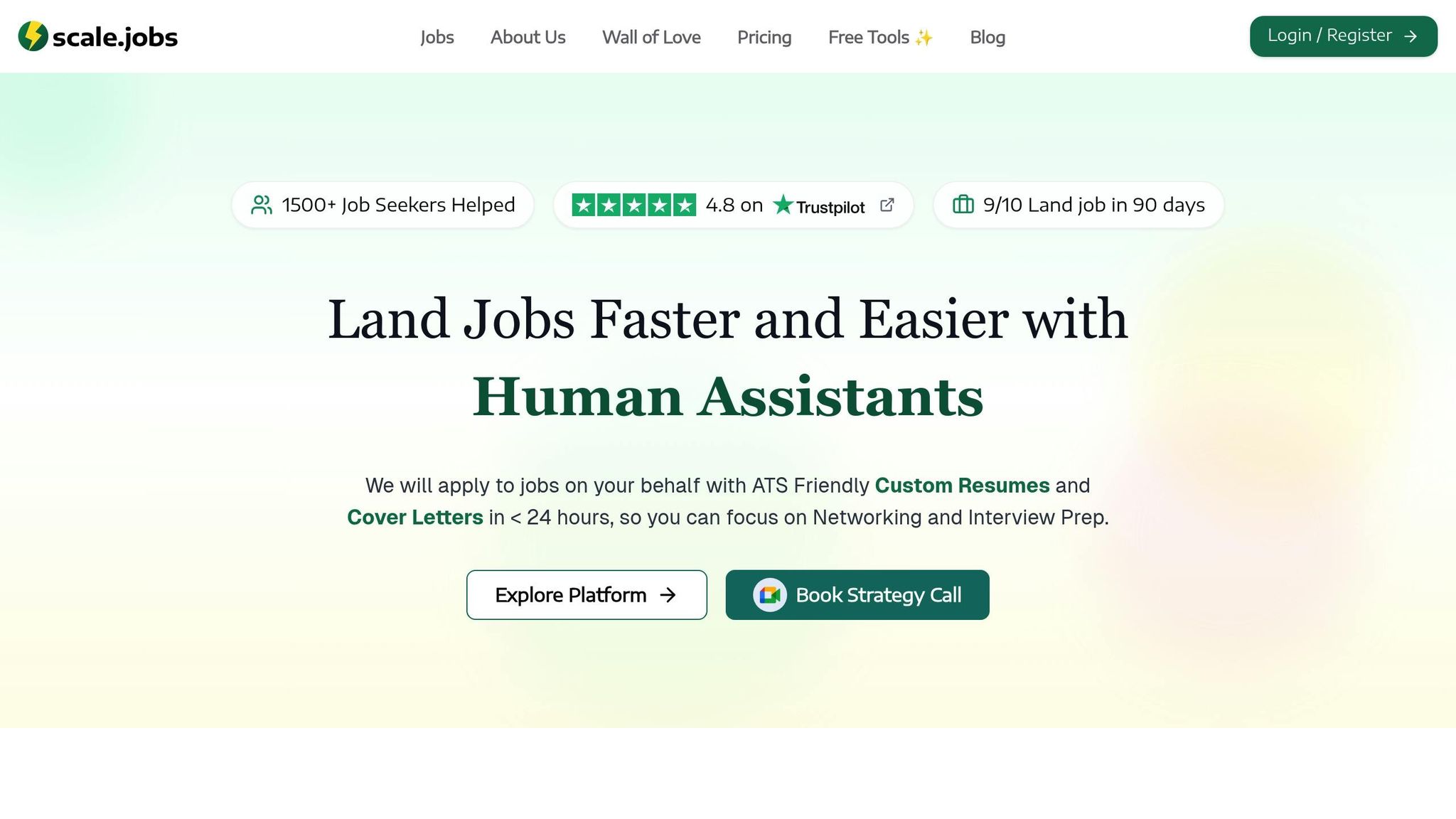
While most remote job boards rely heavily on automation, Scale.jobs stands out by blending human expertise with AI tools. This platform seamlessly combines manual application submissions, smart technology, and an extensive job board to provide a unique experience.
What makes Scale.jobs different from competitors like LazyApply, Simplify.jobs, and LoopCV? Let’s break it down:
- Real Human Assistance: Every job application is personally submitted by trained assistants, reducing the risk of errors common with fully automated systems.
- ATS-Optimized Documents: Resumes and cover letters are customized to navigate Applicant Tracking Systems (ATS) effectively, improving your chances of getting noticed.
- Transparent Proof-of-Work: You’ll receive time-stamped screenshots and real-time WhatsApp updates, ensuring you’re always informed about your application progress.
- Flat-Fee Payment Model: Instead of recurring subscriptions, Scale.jobs offers one-time payment plans ranging from $199 to $1,099, depending on the volume of applications.
- Compatibility Across Platforms: Whether it’s a corporate ATS, LinkedIn, or niche job boards, Scale.jobs delivers tailored documents within 24 hours.
This hybrid approach ensures a level of personalization that automated platforms often lack.
While Scale.jobs offers a comprehensive solution, other platforms also provide valuable resources for remote job seekers.
Other Remote Job Platforms Worth Considering
If you prefer managing your job hunt independently, these platforms can complement Scale.jobs in your search for remote opportunities:
- LinkedIn: As the world’s largest professional network, LinkedIn offers advanced filters for remote jobs and allows you to tap into your connections. With 70% of U.S.-based full-time software developers working remotely, LinkedIn is a key tool for tech professionals.
- FlexJobs: Known for its focus on legitimate listings, FlexJobs employs a dedicated team that spends over 200 hours daily vetting job postings to ensure they’re free from scams.
- Remote100K: This niche platform specializes in remote jobs paying $100,000+ annually and provides full salary transparency, making it ideal for high earners.
- Wellfound (formerly AngelList): Perfect for those seeking startup or tech roles, Wellfound offers insights into equity and compensation packages.
- Arc: A go-to platform for developers and designers, Arc focuses on high-paying contracts and full-time roles.
These platforms are excellent resources, but they often require you to handle every step - from creating tailored resumes to completing lengthy applications - on your own. That’s where Scale.jobs can save you time and effort with its professional support.
Getting the Most from Scale.jobs for Remote Work
To maximize the benefits of Scale.jobs, start by exploring its free tools. The AI resume builder provides actionable feedback on your resume, the Cover Letter Generator creates personalized letters in seconds, and the Job Applications Tracker helps you organize your submissions - all of which simplify your job search.
For added convenience, consider upgrading to the AI Assistant Pro plan. Priced at $9/month during its launch (regularly $19/month), this plan offers unlimited AI-generated resumes, cover letters, and responses to application questions. It’s a great option for job seekers who want to stay hands-on but still benefit from AI-driven customizations.
If you’re applying to a large number of jobs - 250 or more each month - the Human Assistant plans are worth considering. These plans, ranging from $199 to $1,099, include two trained virtual assistants who manage your applications across any platform. They’ll craft custom documents within 24 hours and provide WhatsApp updates with proof-of-work screenshots, freeing up your time for networking and interview prep.
To boost your chances even further, combine Scale.jobs with strategic research. Use platforms like Remote100K or LinkedIn to identify high-paying, legitimate opportunities. With 22.8% of Americans working remotely as of March 2025, competition for these roles is intense. Leveraging a mix of smart tools and human expertise can give you a significant edge in landing a well-paid remote position.
Conclusion: Steps to Land a Legitimate, Well-Paid Remote Job
Landing a legitimate, well-paid remote job doesn't have to feel like an uphill battle. By combining thorough research with well-optimized applications, you can simplify the process and improve your chances of success. Start by focusing on trusted job boards like We Work Remotely, FlexJobs, and Remote.co. These platforms screen listings carefully, ensuring you avoid scams and misleading offers.
Before applying, take time to verify the legitimacy of the company. Look for a professional website, check its record with the Better Business Bureau (BBB), and read employee reviews on platforms like Glassdoor. Be cautious of job listings with vague descriptions, promises of unrealistic pay, or requests for upfront payments. As Reka Vagasi from WeWork wisely notes:
"If the offer seems too good to be true at first glance, it probably is."
Once you've confirmed a job's legitimacy, focus on crafting an application that stands out. Tailor your resume and cover letter to match keywords from the job description, ensuring they pass Applicant Tracking System (ATS) filters. Build a portfolio on platforms like Upwork or Toptal to showcase your skills and experience. With remote work becoming more popular - 22% of Americans are expected to work remotely by 2025 - competition is tough. Generic applications won't cut it.
To further strengthen your chances, consider using professional services. Tools like tools for automating your job search can help you create ATS-friendly documents and manage large-scale applications, giving you more time to focus on interviews and networking. Whether you choose to go it alone with free resources or invest in expert support, the goal is the same: spend less time searching and more time connecting with companies that value your expertise.
The remote job market is expanding, but so are the risks of scams. By sticking to reputable platforms and using a strategic approach, you can navigate this space confidently. With the right preparation and persistence, your next well-paid remote role is closer than you think.
FAQs
How can I spot a legitimate and well-paying remote job?
To find a legitimate and well-paying remote job, start by digging into the company's reputation. Check reviews, employee experiences, and discussions on online forums to get a sense of their credibility. Use trusted job search platforms like Scale.jobs, LinkedIn, or We Work Remotely, as they tend to thoroughly review their job postings. Stay away from listings that ask for upfront payments or provide unclear job descriptions.
Pay attention to details that signal authenticity, such as verified company profiles, professional and timely communication, and a transparent hiring process. Be wary of job offers that sound unrealistically lucrative or use vague wording. A bit of research and caution can help you land a remote position that’s both trustworthy and financially rewarding.
Which industries offer the best-paying remote jobs?
Some of the best-paying remote jobs are found in fields like information technology (IT), software development, cybersecurity, digital marketing, and UX design. These industries often offer attractive salaries because they are in high demand and align well with the flexibility remote work provides.
Other well-compensated roles include positions in data analytics, project management, and customer success. Many of these jobs require specific skills or certifications, so focusing on professional development can greatly increase your earning potential.
How can I make my resume stand out for remote job applications?
To make your resume stand out for remote job applications, focus on customizing it specifically for remote roles and ensuring it's optimized for applicant tracking systems (ATS). Incorporate keywords like "remote", "telecommuting", "virtual collaboration", and tools such as Zoom or Slack to emphasize your experience and skills in remote work. These terms are often what ATS scans for when identifying suitable candidates.
Keep your resume straightforward and professional by using standard headings, avoiding decorative fonts or graphics, and maintaining a clean, easy-to-read layout. Make sure to highlight achievements that showcase your ability to work independently, manage your time efficiently, and communicate effectively in virtual settings. By aligning your resume with the demands of remote positions and keeping the format polished and ATS-friendly, you’ll boost your chances of securing a high-paying remote job.