The Graduate Visa Mistake That Quietly Kills Your Application
Failing basic cybersecurity questions can cost visa-seeking grads remote tech roles and sponsorship; learn essential prep.

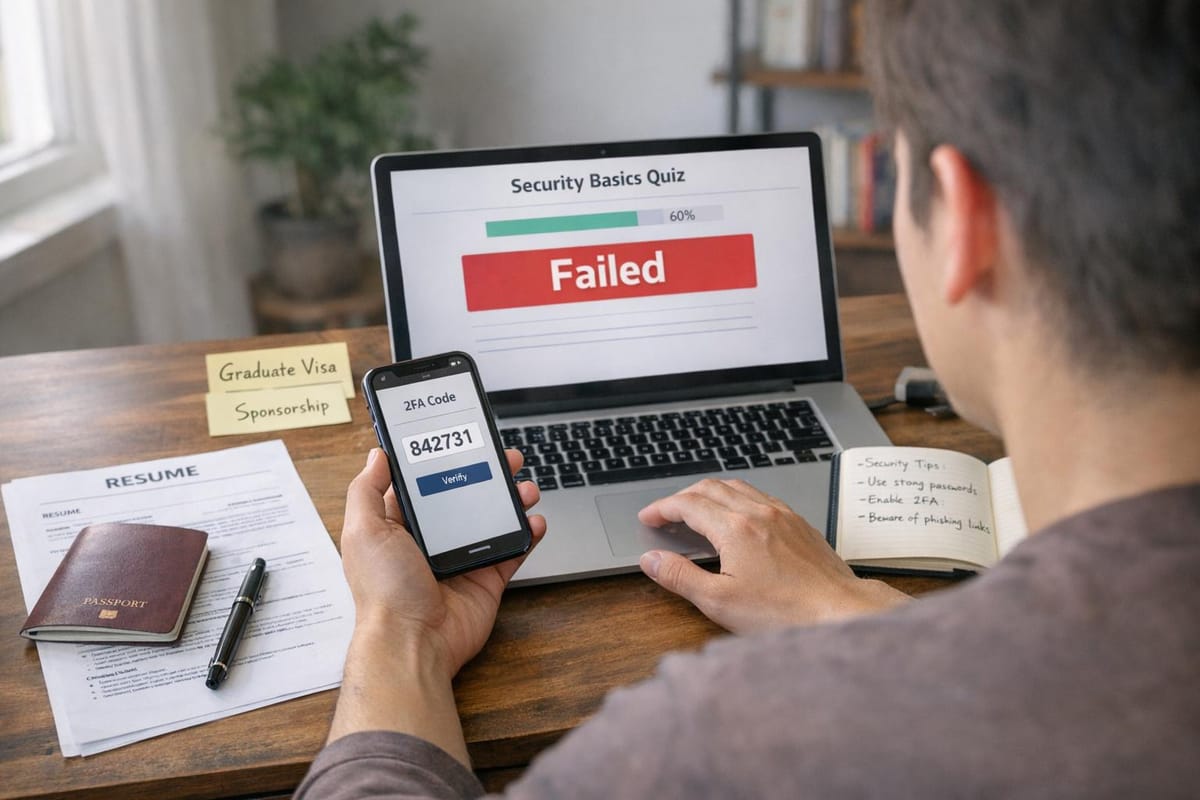
Navigating the job market as a visa holder comes with unique challenges. For those on OPT vs STEM OPT vs H1B visas targeting remote tech roles, failing cybersecurity interview questions can silently sabotage your chances. Employers now prioritize basic cybersecurity knowledge - like VPNs, phishing threats, and securing home networks - due to heightened scrutiny since May 2025. A weak response can cost you the role and, by extension, your visa sponsorship opportunities. Following a 30-day action plan can help you secure these roles quickly.
This article explains why cybersecurity questions matter, how they impact visa sponsorship, and provides practical tips to prepare effectively. From securing your home network to handling phishing attacks, mastering these basics is essential to stand out in remote job interviews and ensure your application aligns with visa requirements.
TOP 50 Cybersecurity Interview Questions and Answers
To go beyond these basics, you can predict interview questions tailored to your specific resume and background.
The Graduate Visa Mistake: Ignoring Cybersecurity Interview Prep
Many candidates stumble when faced with basic cybersecurity questions during interviews. Picture this: you’ve spent months refining your resume, customizing cover letters, and diligently applying to roles. Then, a hiring manager asks, “How would you secure your home network for remote work?” and you freeze. This isn’t an obscure or uncommon question. For remote roles, cybersecurity has become a key measure of professionalism. For visa-dependent candidates, a weak response can severely impact sponsorship chances.
Traditional interview prep often skips over cybersecurity, leaving candidates unprepared for questions that matter in today’s remote work environment. Employers need assurance that you won’t expose sensitive customer data through an insecure network or fall victim to phishing attacks that could compromise the entire team. This is particularly crucial for F-1 and OPT candidates, as employers sponsoring visas must justify their decision to USCIS. If you can’t explain basic security protocols, it raises red flags and undermines your application. That’s why cybersecurity questions have become a priority for hiring managers.
Why Remote Employers Ask Cybersecurity Questions
Remote work has erased the physical boundaries of office security. When you log in from home, you become a potential vulnerability in the company’s security framework. Employers ask about VPNs, firewalls, and multi-factor authentication (2FA) not because they expect you to be a cybersecurity expert, but because they need to ensure you understand the basics. A single unsecured laptop can lead to data breaches, unauthorized access, or even regulatory penalties that could hurt the company financially. These risks are not just a company concern - they can also jeopardize your immigration status.
For visa holders, the stakes are even higher. Consider Amazon, a top H-1B sponsor in fiscal year 2024 with 7,011 approvals. Many of their roles involve remote work. Failing to explain how a VPN secures data or identifying phishing as a tactic where attackers impersonate trusted entities can signal to hiring managers that you’re unprepared. While they don’t expect deep technical expertise, they do expect a fundamental understanding of security practices that protect the company from liability.
The scrutiny doesn’t stop there. Labor Condition Applications (LCAs) for remote roles face strict compliance checks from USCIS. If you falter on questions about securing a home network or preventing man-in-the-middle attacks, you risk being passed over for candidates who demonstrate stronger competency. While many candidates invest in professional resume writing services to showcase their technical skills, they often overlook the critical interview preparation needed to secure visa sponsorship.
How Poor Answers Affect Visa Sponsorship
Recognizing your technical gaps is essential, as even small errors can derail your sponsorship prospects. Weak answers to cybersecurity questions create a trust issue for employers. If your resume highlights experience with cloud infrastructure but you can’t articulate basic concepts during the interview, hiring managers may doubt the validity of your application. Such inconsistencies between your written credentials and verbal explanations can quickly eliminate you from consideration.
Employers also face pressure to meet the “specialty occupation” requirement for H-1B petitions. USCIS expects candidates to demonstrate advanced knowledge in their field. If you can’t define terms like firewalls (which monitor and control network traffic based on security policies) or 2FA (a security layer requiring both a password and a secondary authentication method like an app code), it suggests you may not meet the criteria for a role that justifies sponsorship. This is especially problematic for remote positions, where employers must prove the job demands specialized skills unavailable domestically.
The first few minutes of a technical interview are often make-or-break. Hiring managers and consular officers form impressions quickly, and stumbling over security-related questions can derail the conversation. A poor answer about protecting against threats or ensuring compliance with security policies can significantly harm your chances of securing visa sponsorship. By neglecting cybersecurity interview prep, you risk losing out on opportunities that could shape your career.
Cybersecurity Interview Questions You'll Face in Remote Roles
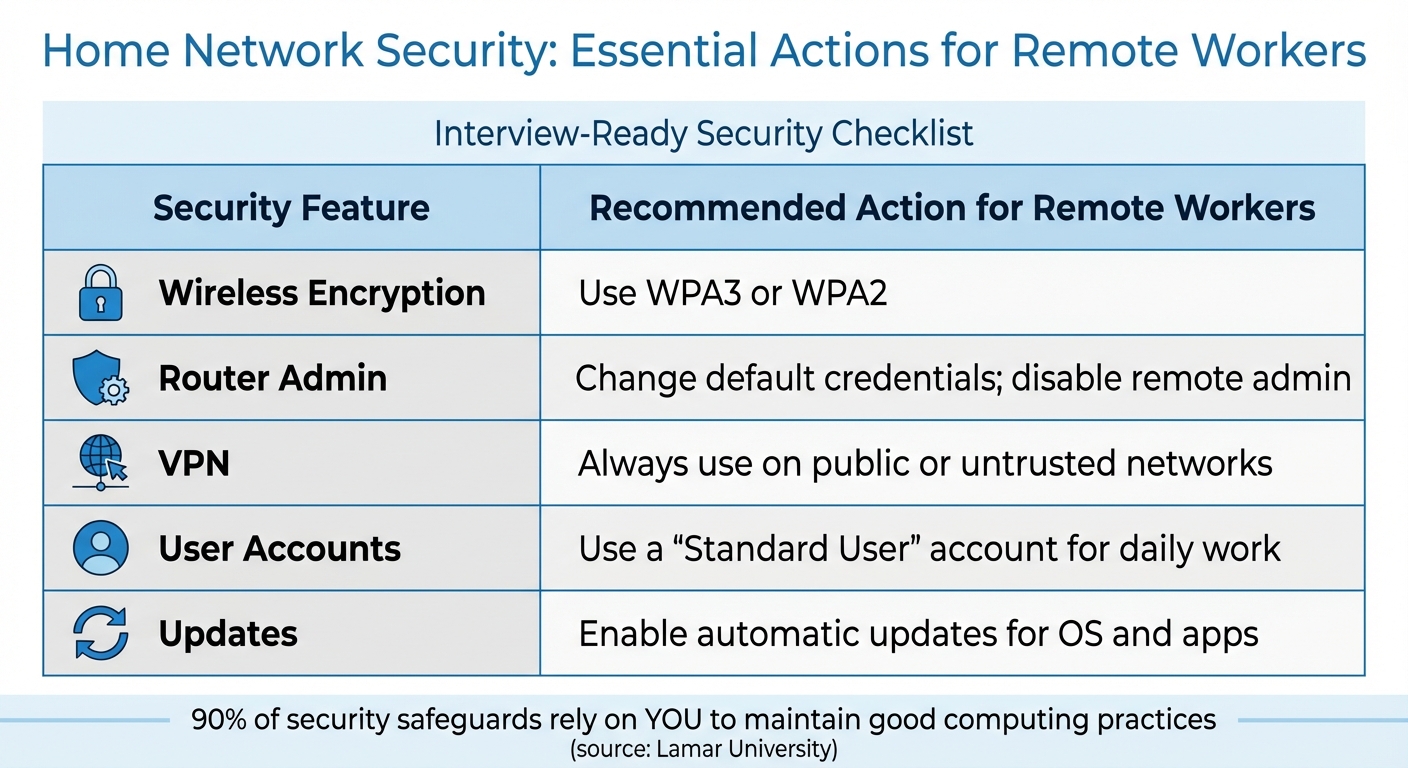
Home Network Security Checklist for Remote Tech Workers
Employers hiring for remote cybersecurity roles often test your ability to safeguard company data while working from home. These questions typically focus on three key areas: securing your home network, preventing threats, and ensuring compliance with company policies. Each area evaluates your preparedness and understanding of cybersecurity in a remote work environment.
Home Network Security Questions
One of the first things interviewers might ask is how you've secured your home router, as it's the main entry point for all work-related activities. Be specific in your responses. For example, mention that you've changed the default administrative credentials and renamed the SSID to something non-identifiable, avoiding personal details like your name or address. Highlight your use of WPA3 or WPA2 encryption, which prevents unauthorized access and protects against attacks like Man-In-The-Middle (MITM).
Additionally, explain that you've disabled remote administration features on your router to minimize potential vulnerabilities. When discussing firmware updates, stress that you’ve enabled automatic updates for your router and operating systems to ensure timely patching of security flaws. If asked about public Wi-Fi, emphasize that you treat it as untrusted and always use a VPN for secure connections.
Avoid general statements like "I update regularly." Instead, say something specific, such as, "I have automatic updates enabled for my operating system and browser to address zero-day vulnerabilities promptly."
| Security Feature | Recommended Action for Remote Workers |
|---|---|
| Wireless Encryption | Use WPA3 or WPA2 |
| Router Admin | Change default credentials; disable remote admin |
| VPN | Always use on public or untrusted networks |
| User Accounts | Use a "Standard User" account for daily work |
| Updates | Enable automatic updates for OS and apps |
Once your home network is secure, employers will likely dive into how you handle various cybersecurity threats.
Threat Prevention and Response Questions
In this category, expect to discuss how you'd address phishing attempts, brute-force attacks, and other unauthorized access scenarios. A strong response to phishing questions might include verifying sender email addresses, avoiding links in unsolicited emails, and promptly reporting suspicious messages to IT. For brute-force attacks, suggest strategies like limiting login attempts, monitoring IP addresses for unusual activity, and implementing CAPTCHAs.
When it comes to MITM attacks, explain your reliance on VPNs and encryption to secure communications. Employers also want to hear how you manage access credentials. Mention using passwords that are at least 15 characters long, combining uppercase and lowercase letters, numbers, and special symbols. Highlight your use of two-factor authentication (2FA) for an added layer of protection.
If asked about antivirus tools, reference reliable options like Windows Defender and discuss how you ensure they remain updated. It's also worth mentioning that cybersecurity relies heavily on user behavior. As Lamar University aptly puts it:
"90% of security safeguards rely on YOU to maintain good computing practices. 10% of security safeguards are technical."
The ability to describe your proactive measures will set you apart as a candidate. However, cybersecurity isn’t just about individual actions - it’s also about teamwork and policy adherence.
Policy Compliance and Team Security Questions
Employers often assess how you'd handle situations where a team member disregards cybersecurity policies. For example, they might ask what you'd do if a colleague shares passwords or uses an unsecured device. In such scenarios, focus on communication and education rather than confrontation. Explain that you would first clarify the policy and its importance, ensuring the team member understands the risks involved. If the behavior persists, mention that you’d escalate the issue to a manager, showcasing your understanding that security is a shared responsibility.
For candidates seeking visa sponsorship, these questions are especially critical. Employers expect you to demonstrate not just technical expertise but also the ability to articulate the importance of cybersecurity policies. Failure to do so might indicate you don’t meet the "specialty occupation" requirements for H-1B petitions. While many candidates compare professional resume writing services to showcase their technical skills, it’s equally important to prepare for these verbal explanations during interviews. Your ability to address these scenarios effectively could be the key to securing both the role and sponsorship opportunities.
How scale.jobs Helps You Prepare for Cybersecurity Interviews
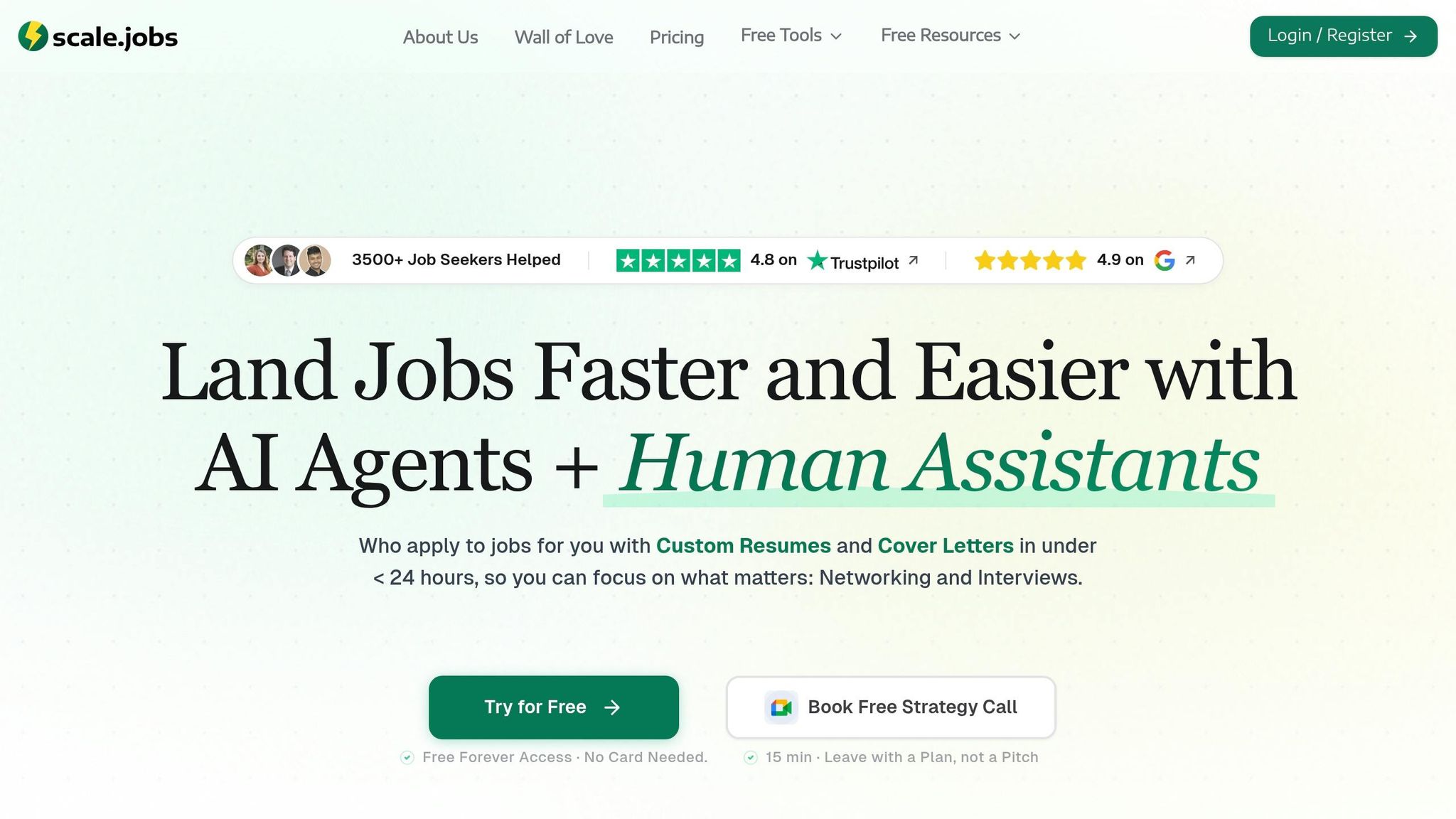
AI Interview Prep + Human Review for Visa Holders
For visa holders navigating cybersecurity interviews, scale.jobs offers a targeted approach that goes beyond generic tools. Unlike platforms that provide one-size-fits-all responses, scale.jobs focuses on the unique dual challenge faced by visa holders: proving technical expertise while meeting specialty occupation requirements. Their service combines unlimited AI-generated answers (available at a $9/month launch offer) with human reviewers who ensure your interview responses align with your ATS-optimized resume and visa documentation.
For instance, if your resume highlights experience with WPA3 encryption protocols, the human review process ensures your responses include critical details, such as disabling remote administration and updating default credentials. This level of precision minimizes potential red flags during H‑1B petition reviews. Additionally, real-time WhatsApp support provides immediate feedback, enabling you to refine your answers before critical interviews.
Complementing this tailored preparation, scale.jobs also offers a variety of free tools to help you fine-tune your cybersecurity interview strategy.
Free Interview Preparation Tools
If you're not ready to dive into paid services, scale.jobs provides free tools to kickstart your prep. The Interview Questions Predictor analyzes job descriptions to generate role-specific cybersecurity questions, ensuring you're prepared for the most relevant inquiries. Pair this with the Resume ATS Checker, which flags any missing technical skills, such as "two-factor authentication" or "VPN usage", to help you strengthen your resume before interviews.
Additionally, the Cover Letter Generator assists in articulating your cybersecurity expertise in writing, offering a solid foundation for verbal interview responses. These tools are completely free and don’t require a subscription. For those needing more advanced support, scale.jobs also offers professional resume writing services designed to showcase the technical depth employers seek during cybersecurity interviews.
While these free tools are a great starting point, a comparison with simplify.jobs highlights why scale.jobs is a superior choice for visa-dependent professionals preparing for technical roles.
scale.jobs vs simplify.jobs: Which Handles Cybersecurity Prep Better?
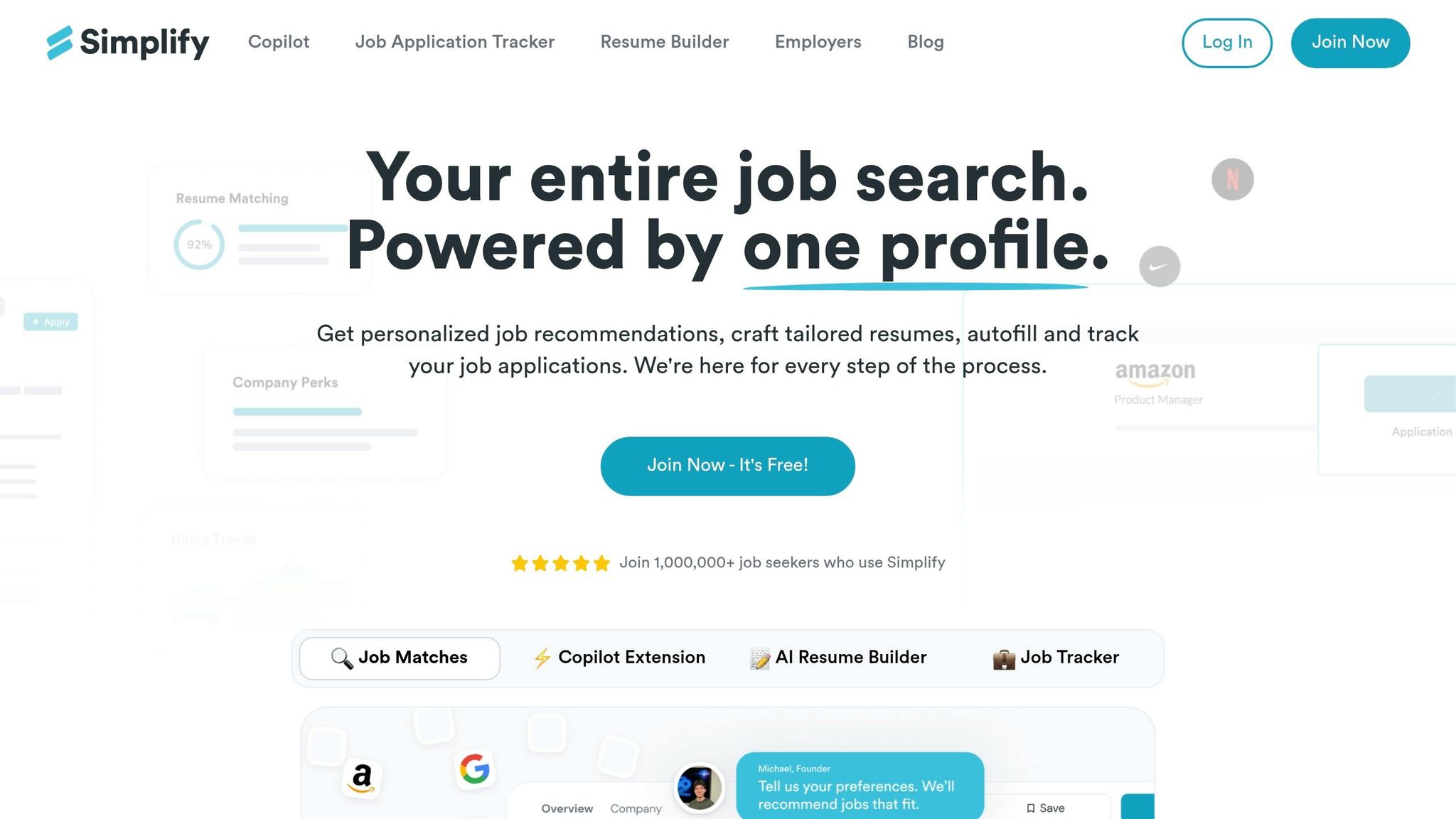
simplify.jobs is known for streamlining job applications across multiple job boards, making it a good option for candidates applying to numerous roles. Their autofill technology is efficient for standard applications. However, for interview preparation - especially for technical positions requiring visa sponsorship - simplify.jobs falls short. Their AI-generated answers lack the human oversight needed to ensure both technical accuracy and compliance with visa requirements.
| Feature | scale.jobs | simplify.jobs |
|---|---|---|
| Interview Prep Depth | AI-generated answers + human review | AI-generated responses only |
| Visa-Specific Guidance | Tailored answers for specialty occupations | Generic responses; no visa focus |
| Human Support | Real-time WhatsApp coaching | Limited to automated chatbot |
| ATS Resume Optimization | human-in-the-loop customization | AI-generated templates |
| Pricing Model | One-time flat fee ($199–$1,099) with refunds | Recurring monthly subscription |
Choose simplify.jobs if you’re focused on applying to a large number of jobs quickly and don’t require interview coaching or visa-specific guidance.
Choose scale.jobs if you’re a visa holder preparing for cybersecurity roles and need your interview answers to align with your documentation. The blend of AI and human support ensures technical accuracy and avoids issues with automated tools, while the flat-fee pricing eliminates the hassle of recurring charges during your job search journey.
Conclusion
Addressing the cybersecurity challenges discussed earlier, it’s clear that tailored preparation is crucial for visa holders in remote roles. Strong cybersecurity knowledge can mean the difference between securing sponsorship and missing opportunities. According to industry reports, 70% of remote cybersecurity candidates face rejection due to inadequate security skills, while visa-dependent applicants experience 40% lower sponsorship rates when employers identify compliance issues. If you can’t confidently explain how you secure your home network or prevent phishing attacks, employers may view you as unprepared for sponsorship.
This situation mirrors common mistakes made by graduate visa applicants. Just as vague statements of purpose or unexplained gaps can lead to visa refusals, generic or incomplete answers during interviews can signal a lack of cybersecurity expertise. Employers want assurance that you can handle threats independently, especially when they’re committing to H-1B or OPT sponsorship.
Unlike platforms such as simplify.jobs that rely solely on automation, scale.jobs offers a human-assisted approach to ensure your interview responses meet both technical and visa-related expectations. As discussed in the previous section, scale.jobs combines AI tools with expert review to align your answers with ATS-friendly resumes and visa requirements. For those needing additional support, professional resume writing services can help document your technical skills effectively before the interview stage.
To get started, scale.jobs provides free tools like the Interview Questions Predictor, Resume ATS Checker, and Cover Letter Generator. These resources allow you to identify and address gaps in your cybersecurity knowledge without cost. For visa holders managing tight timelines and technical preparation, this blend of AI efficiency and expert guidance can transform interviews into job offers.
Take the first step by exploring the free Interview Questions Predictor to strengthen your cybersecurity expertise and boost your chances of success.
FAQs
What cybersecurity questions are most common in remote tech interviews?
Remote cybersecurity interviews are designed to evaluate your technical skills, problem-solving abilities, and understanding of core security principles. Interviewers often cover topics like securing networks, the CIA triad (confidentiality, integrity, availability), and identifying different types of malware.
Be prepared to discuss scenarios involving ransomware, DDoS attacks, firewalls, and encryption methods. Questions may also delve into your approach to incident response and risk management. These areas help employers gauge how well you can safeguard digital assets and address practical cybersecurity challenges.
How can weak security answers hurt my OPT/STEM OPT or H-1B sponsorship chances?
Weak or unclear responses about your visa status during OPT, STEM OPT, or H-1B sponsorship processes can significantly impact your chances of approval. If your answers are vague, inconsistent, or dishonest, it can raise concerns for both employers and immigration officials. This can lead to delays, denials, or even complications down the line. To avoid these issues, always ensure your responses are clear, accurate, and consistent when discussing your visa status and sponsorship needs. This approach helps maintain trust and enhances your chances of a smooth process.
What’s the fastest way to prep strong, specific answers for these questions?
The fastest way to develop clear and targeted answers is by using structured tools designed to match your responses to the intent of the question. Tools like AI-powered answer generators can assist in creating customized and effective replies. Concentrate on highlighting measurable accomplishments, keeping your language concise, and ensuring your answers align with the job description. To streamline the process further, explore tools that provide human-assisted coaching or templates optimized for applicant tracking systems (ATS), helping you save time while enhancing the quality of your responses.