Top 10 Facebook Groups for Tech Jobs: All You Need to Know
Explore the top 10 Facebook groups for software, AI, data and remote tech roles, plus tips to optimize your profile and convert leads into interviews.

Finding a tech job can be challenging, but Facebook groups offer a direct way to connect with recruiters, hiring managers, and peers. These groups are interactive spaces where you can find job leads, get resume feedback, and even ask for referrals. With 70% of jobs in the U.S. secured through networking, these groups are a great addition to your job search strategy.
Here’s a summary of the top groups:
- Tech Jobs and Career Network: Focused on software, AI, and data roles with direct recruiter engagement.
- Remote Work & Freelance Tech Jobs: Perfect for those seeking remote or freelance opportunities.
- Women in Tech Careers: Supportive communities for women in tech, with diversity-focused job postings.
- AI & Data Science Jobs USA: Tailored for AI and data science professionals, offering niche jobs and discussions.
- Software Engineering Jobs and Internships: Ideal for both seasoned engineers and entry-level candidates.
- Bay Area Tech Jobs: Focused on Silicon Valley and San Francisco roles, with strong networking opportunities.
- Tech Job Seekers and Recruiters: Connects candidates directly with recruiters for faster responses.
- Startup Jobs and Networking: For those interested in startup roles, often shared directly by founders.
- H1B and Visa Tech Jobs Support Group: Specialized for international professionals needing visa sponsorship.
- Tech Jobs for New Grads: Entry-level roles and career guidance for recent graduates.
Key Takeaways:
- Polish your Facebook profile to highlight your skills.
- Actively engage in discussions and follow group rules.
- Use tools like scale.jobs for ATS-friendly resumes and tailored applications, saving time on repetitive tasks.
These groups, combined with a solid application strategy, can help you land the right job faster.
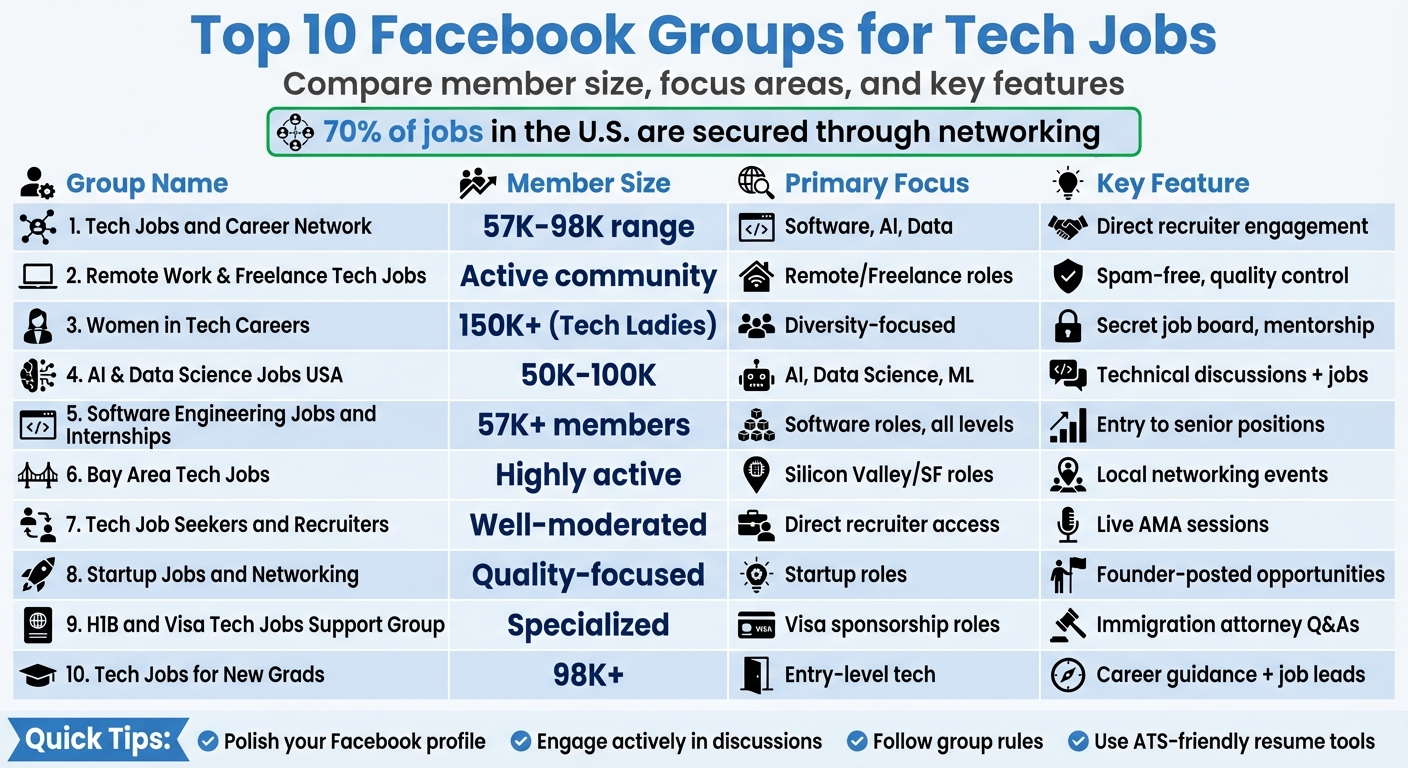
Top 10 Facebook Groups for Tech Jobs Comparison Chart
1. Tech Jobs and Career Network
This Facebook group is a hub for developers and engineers seeking opportunities across startups, mid-sized tech companies, and Fortune 500 firms. The community is highly active, with daily posts featuring roles in software development, AI, and data science. Recruiters frequently share openings directly, offering a way to bypass traditional job boards or automate your job search with specialized tools.
Member Size and Engagement
Tech-focused groups on Facebook draw significant memberships. For example, the "Software Developer" group boasts around 98,000 members, while the "Computer Hardware-software & networking Group" has over 84,000 members. Another popular group, the "Software Engineering Mastermind Group", includes more than 57,000 members. These numbers highlight the demand for niche networking spaces, fostering vibrant discussions and keeping members engaged daily.
Group Activity Level (Posts per Day/Week)
This group sees multiple posts each day, covering a wide range of topics. You'll find recruiter job listings, peer discussions about interview strategies, resume tips, and preparation for technical tests. The interactive nature of the group allows members to exchange real-time advice, making it a dynamic resource for job seekers.
Relevance to Tech Roles (Software, AI, Data)
The group is particularly useful for professionals in software engineering, AI, and data science. Members frequently share insights on technical interviews, coding challenges, and what companies expect from candidates. Anurag Reddy from Analytics Insight explains:
If you want a job at a big tech company or a startup that's growing fast, this group can really help.
By facilitating direct interactions and offering valuable advice, the group serves as a supportive network that simplifies the job search process.
Job Posting Quality (Verified/Curated Opportunities)
What sets this group apart is the quality of its job postings. Most opportunities come directly from recruiters or employees at hiring companies, giving you access to roles that might not appear on public job boards. Be sure to review the group rules before posting or engaging - some groups require admin approval for promotional content or designate specific days, like "Promo Wednesday", for job listings. Also, ensure your profile highlights your technical expertise, as recruiters often review profiles before reaching out.
With its active discussions, direct recruiter engagement, and curated job opportunities, this group stands out as a top resource for tech professionals navigating their job search.
2. Remote Work & Freelance Tech Jobs
When it comes to remote work, Facebook groups tailored for software engineers, developers, and tech professionals can be a goldmine. These communities focus exclusively on remote and freelance roles, offering a streamlined alternative to general job boards. For digital nomads or anyone craving flexibility, groups like Remote Digital Jobs (RDJ) and Digital Nomad Jobs: Remote Job Opportunities @letsworkremotely stand out. They maintain a clean, spam-free environment where members can connect directly with hiring managers. These groups are a great addition to the broader tech job market, providing specialized remote opportunities.
Member Size and Engagement
Remote-focused tech groups draw in thousands of active members, fostering daily discussions on topics like freelance rates, remote work strategies, and technical challenges unique to distributed teams. Communities such as Remote Digital Jobs and Remote Ed Tech Job Board organize promotional job posts on specific days, ensuring the group remains both active and easy to navigate. This structure keeps conversations engaging while offering valuable insights to members, often with the help of a virtual assistant for job searching.
Group Activity Level (Posts per Day/Week)
These groups are buzzing with activity, featuring multiple posts each day about remote positions and freelance contracts. Lani Rosales, founder of Remote Digital Jobs, sheds light on their mission:
Job seekers can benefit from joining RDJ because we work endlessly to attract quality tech employers instead of scammy outsourced or low-paying jobs like most Facebook groups comfortably diminish themselves into.
Thanks to active moderation, members can count on finding relevant, high-quality opportunities without sifting through irrelevant or spammy content.
Job Posting Quality (Verified/Curated Opportunities)
What sets these groups apart is their commitment to quality control. For example, the Remote Ed Tech Job Board enforces a minimum salary of $70,000 per year for full-time roles and $35 per hour for part-time positions, ensuring only competitive listings make the cut. Similarly, the IT Jobs in Canada, USA, UK, and more group requires admin approval for every job post before it goes live. Steven Lin, co-founder of Digital Nomad Jobs, highlights the benefits of this approach:
You get a spam-free group to search for remote jobs and interact directly with the employer or person hiring.
This direct connection eliminates middlemen, giving job seekers immediate access to decision-makers. To make the most of these connections, many candidates use tailored job application assistance to ensure their profiles stand out. With their rigorous vetting processes, these remote job groups are an essential resource for anyone pursuing flexible tech roles.
3. Women in Tech Careers
Facebook groups aimed at women in tech go beyond just listing job opportunities - they create supportive communities where members exchange career advice, mentorship, and leads in fields like software engineering, AI, and data science. Among these, Tech Ladies® stands out with a global network of over 150,000 members. This group connects women to roles at major companies such as Amazon, Disney, and Shopify. One of its key features is a "secret job board", available to Pro Members, which showcases carefully curated job postings.
Member Size and Engagement
These communities vary widely in size and engagement style, offering something for everyone. For instance, Tech Ladies' massive network of 150,000+ members contrasts with smaller, more intimate groups like Lean In Los Angeles, which focuses on personalized networking and moderated discussions. Another example is Dreamers // Doers: Jobs + Gigs, which exclusively serves women and sees a high volume of daily job postings. Although its core activity centers around New York City, opportunities extend nationwide. Career coach Lisa Lewis Miller underscores the importance of group size:
The bigger the group is, the more important it is to be well moderated and controlled in order to be helpful.
Job Posting Quality (Verified and Curated Opportunities)
The quality of job postings is a critical factor for these groups. Many prioritize diversity and inclusion when vetting opportunities. Tech Ladies, for instance, ensures that companies undergo an evaluation process before their jobs are posted, focusing on organizations committed to diverse hiring practices. Elana Kopelevich, a Software Developer at Shopify, highlights this approach:
The fact that a recruiting team chooses to seek out candidates on Tech Ladies is already a good sign that they are trying to build more diverse teams.
Similarly, Underrepresented in Tech takes an inclusive approach, catering to individuals from diverse backgrounds and gender identities. This group balances job opportunities with meaningful discussions, creating a thoughtful and inclusive space.
Focus on Tech Roles (Software, AI, Data)
These groups are tailored specifically to technical careers, offering opportunities in areas like software engineering, product management, and design. For example, Tech Ladies emphasizes tech-focused roles, while Bossed Up Courage Community! blends career advice with job leads. Its philosophy, "lifting as we climb", encourages members to support one another by sharing resources and guidance. Emilie Aries, Founder and CEO of Bossed Up, explains:
Our community of courageous women on the rise believe in 'lifting as we climb' by sharing practical guidance, resources, and job opportunities, too.
Bossed Up extends its reach through a podcast with over 1.3 million downloads, showcasing its influence in empowering women in tech. These communities not only connect members to job opportunities but also reinforce inclusive hiring practices, fostering a supportive environment for women pursuing careers in tech.
4. AI & Data Science Jobs USA
Facebook groups centered on AI and data science roles provide a focused space for tech job seekers. Groups like "AI & Data Science Jobs USA" are particularly appealing because they combine niche-specific job opportunities with active community engagement. Most of these groups have member counts ranging from 50,000 to 100,000, striking a balance between vibrant participation and manageable moderation.
Member Size and Engagement
AI and data science groups often go beyond just sharing job openings - they encourage in-depth technical discussions. Members actively exchange insights about machine learning frameworks, data pipeline designs, and the latest tools transforming the field. This dynamic not only benefits job seekers but also professionals aiming to stay updated on industry developments. These communities seamlessly blend expert-level conversations with dependable job leads, making them valuable for anyone navigating the tech job market. Moreover, the high engagement ensures that job postings are relevant and of high quality.
Job Posting Quality (Verified/Curated Opportunities)
One standout feature of these specialized groups is their moderated approach to job postings. Moderators carefully review posts to weed out spam and irrelevant content, ensuring that only legitimate and relevant opportunities make it to the group. These postings range from entry-level data analyst positions to senior machine learning engineer roles, catering to a variety of experience levels. Some groups focus on helping newcomers and interns break into the field, while others are tailored to seasoned professionals with advanced expertise. This emphasis on quality ensures members can trust the opportunities shared.
Group Activity Level (Posts per Day/Week)
The activity levels in these communities often reflect hiring trends and market demands. Well-managed groups prioritize quality over quantity, maintaining a steady stream of relevant posts without overwhelming members. This thoughtful moderation allows job seekers to focus on meaningful opportunities rather than sorting through a flood of irrelevant content. Additionally, members frequently contribute by offering advice on job search strategies or automating your job search or providing resume feedback and tools, creating a supportive and collaborative environment for everyone involved.
5. Software Engineering Jobs and Internships
Building on our look at general tech job groups, this section zeroes in on software engineering communities where both seasoned professionals and interns can connect directly with recruiters.
Member Size and Engagement
Facebook groups dedicated to software engineering jobs often host tens of thousands of members, many of whom are highly engaged. This creates an excellent platform for job postings to gain visibility among both active job seekers and those passively exploring options. But it's not just about numbers - groups that encourage thoughtful discussions and peer support tend to provide better job leads. Active participation in these communities often fosters meaningful connections and industry-focused conversations that benefit job seekers.
Relevance to Tech Roles (Software, AI, Data)
These groups cater specifically to software engineering roles, making them useful for professionals at all stages of their careers. For instance, the "Software Developer" group balances job postings with technical discussions and idea exchanges among members. Meanwhile, groups like "Newbies in Tech" focus on entry-level candidates, offering career guidance and motivational support. Many of these communities also allow direct interaction with recruiters, which can be invaluable for networking. As tech writer Anurag Reddy points out:
Recruiters often post jobs here, so you can just skip the usual job boards.
This direct access can save time and streamline the job search process. You can also land jobs faster with human assistants who handle applications for you.
Job Posting Quality (Verified/Curated Opportunities)
Groups with active moderation often ensure job postings are both relevant and trustworthy. For example, the "Software Engineering Mastermind Group" has a dedicated "Promo Wednesday" where posts are reviewed and approved by admins before going live. This keeps the content focused and minimizes spam. Similarly, Javier Ciocci, who runs the "IT Jobs in Canada, USA, UK, and more" group, highlights:
The group has only IT job posts.
Such moderation ensures members are exposed to legitimate opportunities without having to sift through irrelevant or low-quality content.
Group Activity Level (Posts per Day/Week)
Activity levels in these groups vary, but the best ones prioritize quality over quantity. Moderated groups often have fewer posts, but they maintain a steady stream of meaningful content, including job listings, resume reviews, and tips for technical interviews. Larger, less-moderated communities may see a higher volume of daily posts, but the relevance of these posts can be hit or miss. Beyond job postings, these groups also serve as a hub for sharing interview experiences and preparing for technical assessments, making them a valuable resource even when job postings are less frequent.
6. Bay Area Tech Jobs
For tech professionals eyeing opportunities in Silicon Valley and the broader San Francisco Bay Area, Facebook groups dedicated to this region offer a direct link to local employers and startups. These communities are deeply attuned to the unique dynamics of the Bay Area tech market, from competitive salaries to the critical role of referrals and networking. Their regional focus ensures job seekers can tap into tailored opportunities, much like other specialized groups.
Member Size and Engagement
One standout community is Albert's Job Listings & Referrals - San Francisco Bay Area, which has been the region's most active job search group since 2013. This group keeps engagement high through live events and networking sessions, fostering a collaborative environment. Members often receive real-time feedback on job search strategies, making it a valuable space for refining approaches and learning from shared experiences. The group also emphasizes diversity with curated DEI events and networking opportunities.
Focus on Tech Roles (Software, AI, Data)
For those in technical fields, Tech Jobs: San Francisco Bay Area & Silicon Valley is a group that zeroes in on software engineering, AI, and data science roles. Its description highlights its niche:
The community is all about tech careers and jobs: finding and sharing opportunities, getting referrals, and discussing anything relevant to technical roles – specific to San Francisco Bay Area / Silicon Valley!
While this group offers a more targeted approach to tech jobs, its posting frequency is lower compared to Albert's List. However, when posts do appear, they often come directly from recruiters or hiring managers, ensuring high-quality opportunities.
Quality of Job Postings
Both groups benefit from active moderation and community feedback, which help filter out irrelevant or low-quality postings. This means job seekers can focus on legitimate opportunities without wasting time on unrelated listings.
Activity Levels and Posting Frequency
Albert's List is ideal for those who want frequent updates, with posts appearing daily. On the other hand, the Tech Jobs group posts less often but delivers high-intent opportunities when it does. Together, these platforms provide valuable resources for navigating the Bay Area job market, offering options for both quantity and quality in job postings.
7. Tech Job Seekers and Recruiters
Groups that connect job seekers with recruiters create a direct line of communication between candidates and hiring managers, making the process more immediate and personal. For tech professionals, this means quicker responses and tailored interactions with companies actively looking to fill positions. These groups complement other tech-focused communities by fostering direct recruiter-candidate engagement.
Member Size and Engagement
Many recruiter-focused groups have large memberships with active participation, but size isn't everything. Lisa Lewis Miller, a career change expert and author, highlights the value of smaller, well-moderated groups:
Often, smaller groups are better moderated because their founders are still intimately involved, so finding Facebook groups that have fewer than 100,000 members is a good strategy.
These communities thrive on structured activities like resume reviews, sharing interview experiences, and discussing technical test preparations. Some groups even host live "Ask Me Anything" sessions with industry professionals, while others dedicate specific days for promotional posts to keep the content focused and relevant. Smaller, well-managed groups often provide more meaningful and targeted discussions.
Focus on Tech Roles (Software, AI, Data)
These groups are particularly valuable for professionals in software, AI, and data fields. Recruiters from startups to established Fortune 500 companies use them to find candidates for specific roles. For instance, the Software Engineering Mastermind group maintains strict posting guidelines, ensuring all content is software engineering-related and limiting promotional posts to "Promo Wednesday." This level of focus helps members access relevant job opportunities without sifting through unrelated content.
High-Quality Job Postings (Verified and Curated)
One of the standout features of recruiter-focused groups is the quality of job postings. Hiring managers often post directly, bypassing third-party aggregators. Nevena Sofranic, founder of Omnes Group, underscores this advantage:
The great thing about Facebook groups is that your job posts will be seen by the right people if you find adequate groups. It's a simple recruitment strategy.
Direct postings ensure that opportunities are verified and come with a level of transparency that's hard to find on automated platforms. Similarly, platforms like scale.jobs blend human oversight with AI tools to provide ATS-compliant resumes and real-time WhatsApp support, offering a personalized touch similar to these groups while maintaining proof-of-work transparency.
8. Startup Jobs and Networking
Startup-focused Facebook groups are a goldmine for connecting with founders and hiring managers who lean heavily on network referrals instead of traditional job boards. These communities open doors to the hidden job market, where opportunities are often shared exclusively through personal connections. Groups like HireClub and Albert's List are standout examples, showcasing roles at fast-growing companies like Airbnb, BetterHelp, Google, and LinkedIn. This approach offers a more personal and entrepreneurial networking experience compared to other platforms.
Job Posting Quality (Verified/Curated Opportunities)
What sets startup-focused groups apart is the quality of job postings. Founders and hiring managers often post directly from their personal accounts, fostering immediate and authentic interactions that automated platforms simply can't replicate. Lani Rosales, founder of Remote Digital Jobs, highlights this benefit:
Job seekers have a human available for questions. Try THAT on Indeed.
Additionally, these groups use admin approval to filter out spam and low-quality posts, ensuring a better experience for members. Many startups also rely on tools like scale.jobs to maintain a high standard of transparency and quality, offering features like ATS-compliant resumes, real-time WhatsApp support, and proof-of-work verification.
Member Size and Engagement
These groups emphasize meaningful engagement over sheer membership numbers. For example, HireClub prioritizes quality interactions, while Albert's List has grown through regional chapters in areas like Southern California, Seattle, Texas, and New York. This focus on networking underscores a crucial fact: over 70% of jobs are secured through personal connections, not online applications.
Relevance to Tech Roles (Software, AI, Data)
While these groups cater to a variety of tech roles - such as software, AI, and data - they bring a unique startup perspective. Founders often look for candidates who can juggle multiple responsibilities and excel in fast-paced environments. Beyond job postings, these communities offer valuable discussions about equity, startup culture, and technical interviews - insights you won't typically find on standard job boards.
9. H1B and Visa Tech Jobs Support Group
For international tech professionals trying to navigate the often-complicated U.S. visa process, specialized Facebook groups like the International Job Seekers Network serve as a lifeline. These groups go beyond the typical job boards by directly connecting candidates with recruiters and hiring managers who are well-versed in handling H1B, F1 OPT, CPT, and TN visa sponsorships. This targeted approach can be a game-changer, as visa status plays a crucial role in whether a job application moves forward or stalls.
Focus on Tech Roles (Software, AI, Data)
The job postings in these groups are laser-focused on tech roles such as software engineering, IT, and data-related positions. Unlike general career groups, these communities provide members with insider knowledge about companies that sponsor visas and advice on how to align their skills with these opportunities. This niche focus ensures that candidates have access to job postings tailored to their unique visa needs. Many international candidates also rely on tools like scale.jobs to navigate the added challenges of applicant tracking systems (ATS) that can be particularly stringent for visa applicants.
Active Membership and Engagement
The complexities of visa sponsorship make member engagement in these groups incredibly valuable. Members frequently share updates on sponsorship policies, personal experiences, and even legal advice. The International Job Seekers Network, for example, hosts regular Q&A sessions with immigration attorneys who break down policy changes and provide actionable strategies for applications. These sessions offer insights that are often hard to find on more generic platforms. Additionally, some groups include visa-tracking features where members report sponsorship successes - one such group recently celebrated helping 23 members secure TN visas.
Verified Job Postings and Transparency
To maintain quality, these groups often require admin approval for job postings, ensuring that listings clearly indicate whether visa sponsorship is available. Recruiters and hiring managers are also active in the comments, providing further clarification about visa requirements. This kind of transparency significantly reduces wasted effort, as candidates can quickly identify opportunities that align with their visa status. The result is a more streamlined and effective job search for international professionals.
10. Tech Jobs for New Grads
Facebook groups tailored for recent graduates are a fantastic resource for finding entry-level tech opportunities and connecting with a supportive community. Groups like Newbies in Tech and Albert's Job Listings & Referrals have earned a reputation for helping those just starting their tech careers. In October 2025, Facebook brought back a job tool that integrates local entry-level job listings into Marketplace and related groups, making it easier to discover opportunities.
Focus on Tech Roles (Software, AI, Data)
Many of these groups specifically target roles in software engineering, data science, and AI - fields that are especially popular among new graduates. For example, Tech Jobs: San Francisco Bay Area & Silicon Valley frequently features technical job openings, although postings might not appear consistently. On the other hand, Remote Digital Jobs focuses on project-based and remote entry-level roles, catering to grads who want to gain experience while working from anywhere. The IT Jobs in Canada, USA, UK, and more group takes an extra step by manually approving every post to ensure it’s genuinely IT-related, creating a space where members can confidently explore relevant opportunities.
Member Size and Community Engagement
The size and activity level of these groups vary, but both large and small communities have their benefits. For instance, Software Developer boasts around 98,000 members, offering a broad range of opportunities. Smaller, well-moderated groups, however, often provide more personalized engagement. Albert's Job Listings & Referrals, a standout in the San Francisco Bay Area since 2013, combines job listings with networking opportunities, expert advice, and even curated events like career fairs. These activities help new grads gain valuable insights into the tech job market.
Quality of Job Postings (Verified and Curated)
The quality of job postings can differ significantly between groups. For example, IT Jobs in Canada, USA, UK, and more enforces strict guidelines, ensuring that only relevant IT roles are posted. Employers are required to post from personal accounts rather than business pages, which allows job seekers to connect directly with individuals if they have questions. To complement these groups, tools like scale.jobs can be invaluable. They provide ATS-optimized resumes and cover letters, helping new grads navigate Applicant Tracking Systems (ATS) and tailor their applications effectively. This combination of curated job postings and complementary tools makes these groups a practical starting point for launching a tech career.
How to Get the Most from These Groups
Finding job postings in Facebook groups is just the beginning - what you do next can make all the difference in landing interviews. Start by polishing your Facebook profile before engaging with posts or applying to jobs. Recruiters often check the profiles of active group members, so make sure yours highlights your technical skills and professional achievements rather than focusing solely on personal content. Think of it as a mini-LinkedIn profile that showcases your expertise and builds credibility.
Once your profile is ready, shift your focus to active participation. Scrolling through posts might give you leads, but engaging in discussions and contributing to the community is what sets you apart. As Anurag Reddy points out, Facebook groups are highly interactive and often share exclusive job opportunities. Join the conversation - comment on posts, share advice with fellow job seekers, or introduce yourself when you join a new group. Building connections is key, especially since networking accounts for 70% of job placements.
Before posting or commenting, take a moment to review the group’s rules. Each group has its own set of guidelines, and breaking them could get you flagged as spam or even removed. Some groups have designated days for self-promotion, like "Promo Wednesday", while others may not allow direct job-seeking posts at all. When interacting with recruiters, always maintain a professional and courteous tone - even if a role doesn’t match your goals. Recruiters appreciate candidates who communicate promptly and respectfully.
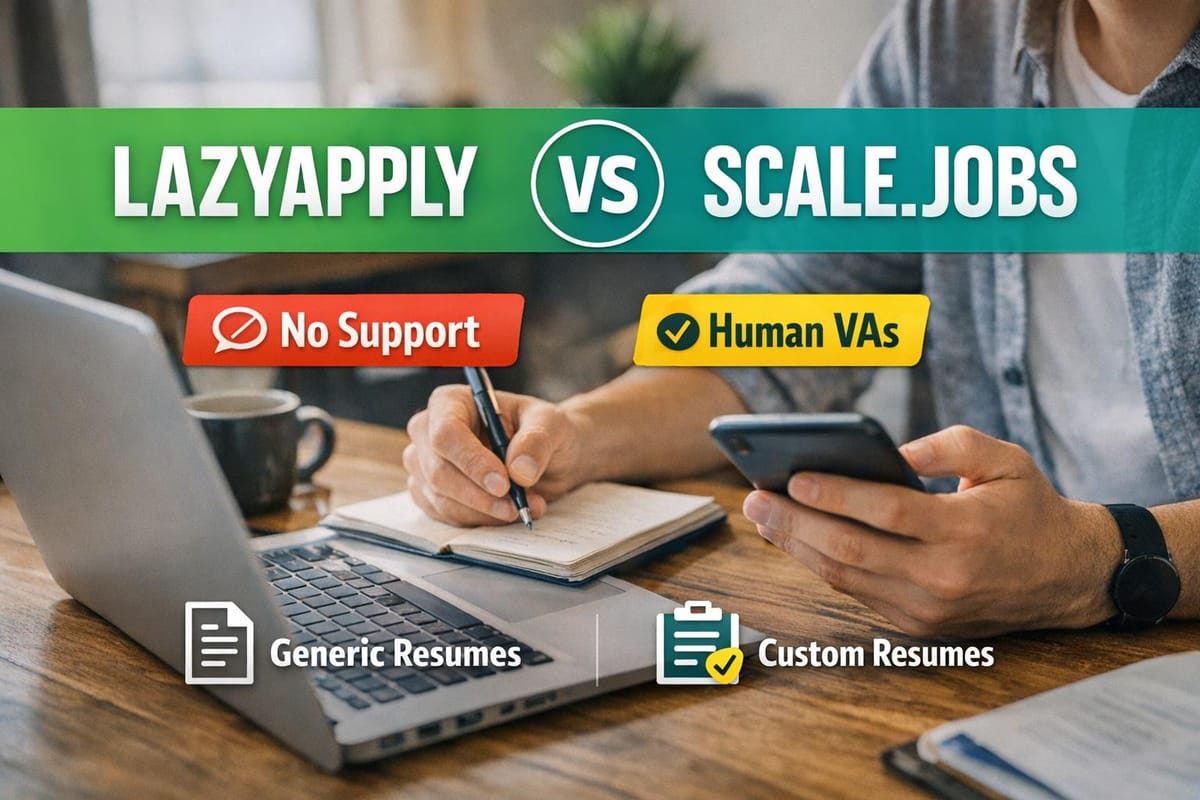
After establishing your presence and following group protocols, it’s time to focus on crafting personalized applications. tailor your resume and cover letter for each role you pursue. Platforms like scale.jobs can help you turn job leads from these groups into ATS-friendly applications. Unlike automated tools like LazyApply or LoopCV, which rely on bots and risk being flagged by applicant tracking systems, scale.jobs provides human-powered services starting at $199 for 250 applications. Their virtual assistants create custom, ATS-optimized resumes and cover letters for each job, offering real-time WhatsApp updates and proof-of-work screenshots to ensure transparency.
Why Choose scale.jobs Over LazyApply and LoopCV?
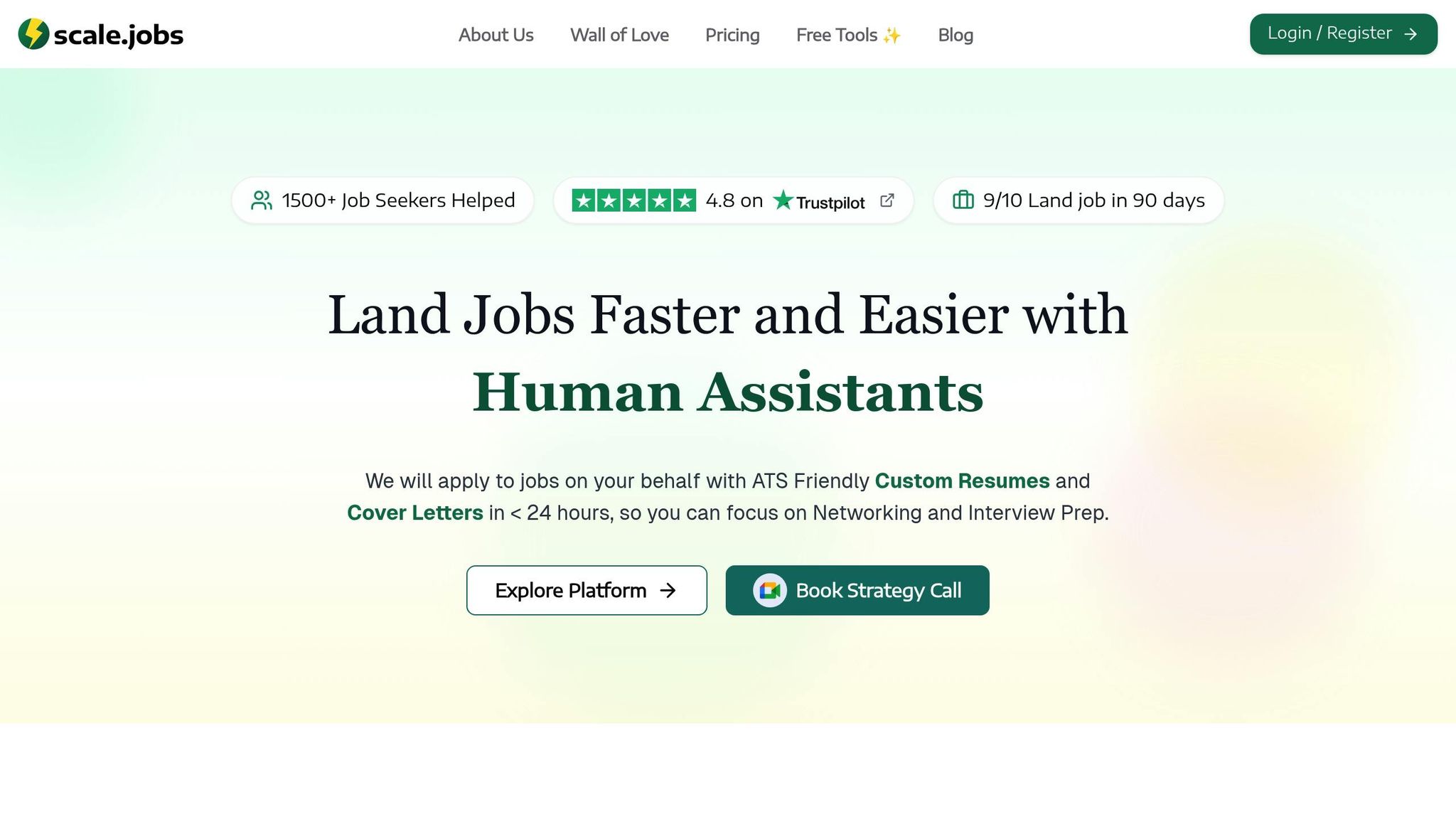
- Human-driven application support: No bots - real people handle your applications.
- Tailored, ATS-optimized documents: Resumes and cover letters customized by trained professionals.
- Transparency: Get real-time updates via WhatsApp along with proof-of-work screenshots.
If you prefer to handle applications yourself, scale.jobs also offers free tools like an ATS resume checker and a cover letter generator. These tools pair perfectly with job leads found in Facebook groups, giving you an edge in the competitive tech job market. Combining active group participation with personalized applications can significantly boost your chances of success.
Conclusion
Facebook groups offer tech job seekers a unique edge that traditional job boards simply can’t replicate - direct access to hiring managers and recruiters. As Lani Rosales, Founder of Remote Digital Jobs, highlights:
Job seekers have a human available for questions.
These groups go beyond just job listings. They create a space for peer support, resume feedback, and insider tips about company cultures - insights that are hard to come by on conventional platforms. This direct connection to decision-makers can make your job search not only faster but also more targeted.
But here’s the catch: networking alone won’t land you the job. While these groups help you uncover hidden opportunities, turning those leads into interviews requires polished, ATS-friendly applications. That’s where combining group engagement with the right tools makes all the difference.
Platforms like scale.jobs simplify the application process through job search automation, saving you time and effort. For $199, you can get 250 tailored applications crafted by trained virtual assistants, complete with custom resumes and cover letters for each role. Plus, you’ll receive real-time updates via WhatsApp and proof-of-work screenshots for unmatched transparency - something automated tools can’t provide.
Start by leveraging Facebook groups to discover hidden opportunities. Then, use services like scale.jobs to handle the repetitive, time-consuming application work. Their free tools, like the ATS resume checker, cover letter generator, and job tracker, are great for testing the waters before committing to their human assistant service. For better results, focus on groups with fewer than 100,000 members for higher-quality interactions, keep your Facebook profile professional, and let the experts handle the application grind. Together, these strategies can save you over 20 hours a week and transform your job search into a more efficient and productive process.
FAQs
How can I network effectively in Facebook groups to find tech jobs?
To make the most of Facebook groups for tech job networking, start by joining groups that are not only active but also well-moderated. Focus on communities aligned with your career goals, whether that’s software engineering, AI, or data science. Look for groups with consistent job postings, lively discussions, and active member engagement. Once you’re in, take a moment to review the group’s rules to ensure your posts follow the guidelines. It’s also a good idea to enable notifications so you don’t miss out on new opportunities.
Begin by introducing yourself with a brief, professional post. Highlight your skills, the type of role you’re looking for, and how you can contribute to the group. From there, make an effort to engage regularly - comment on posts, answer questions, and share helpful resources. This not only builds your reputation but also makes others more inclined to assist you. When you come across a job lead or hiring post, respond thoughtfully. If it feels appropriate, ask to connect via direct message to explore the opportunity further. Keep your messages professional, reference the original post, and include a tailored résumé or portfolio link if applicable.
Staying active is essential. Participate in group events like Q&A sessions or webinars, as these are excellent chances to interact with recruiters and hiring managers. By consistently contributing value and staying engaged, you can transform Facebook groups into a powerful resource for finding hidden tech job opportunities.
What should I include on my Facebook profile to stand out to recruiters?
To make your Facebook profile stand out to recruiters, think of it as an extension of your professional brand. Start by uploading a clear, professional photo - one that aligns with how you'd present yourself in a job application. In the "About" section, craft a concise headline such as "Software Engineer seeking AI/ML roles", and include a summary packed with relevant keywords that highlight your skills, tools, and areas of expertise.
Be sure to add links to your portfolio, GitHub, or LinkedIn profile. This makes it easier for recruiters to review your work and verify your qualifications. If you're actively looking for opportunities, mention that you're "open to new roles" to make your availability clear.
Recruiters also pay attention to your activity in Facebook Groups. Engage thoughtfully in tech-focused communities by sharing insightful content, commenting on industry trends, and participating in discussions. This kind of interaction not only demonstrates your expertise but also shows that you're active and invested in your field. A well-maintained profile combined with meaningful engagement can help you stand out as a strong candidate.
What makes scale.jobs a great choice for finding tech jobs?
scale.jobs streamlines the job search process for tech professionals by blending advanced AI tools with hands-on human support. The platform helps craft ATS-friendly resumes and cover letters and can apply to as many as 30 jobs daily on your behalf. This leaves you free to concentrate on networking and preparing for interviews.
What truly sets scale.jobs apart is its human-powered assistance. Trained specialists take care of tasks like manual job applications, filtering for visa sponsorships, and providing real-time updates via WhatsApp, complete with proof-of-work screenshots. The platform also includes essential tools like a resume builder, job tracker, and access to a job board - all available at no cost. For those looking for extra features, the AI Pro plan starts at an affordable $9/month and includes perks like customized interview preparation and unlimited document creation.
With its straightforward pricing, clear communication, and a mix of efficiency, accuracy, and personal support, scale.jobs offers a well-rounded solution that goes beyond what typical AI tools or job boards can provide.