
27 Essential Job Search Tips Every Job Seeker Should Know in 2026
Actionable job search blueprint: ATS-friendly resumes, AI+human tools, targeted networking, role-specific interview prep, remote tactics, and burnout prevention.

Finding a job in 2026 means navigating a market dominated by AI-powered tools, applicant tracking systems (ATS), and digital networking platforms. Traditional methods don't cut it anymore. Here's what you need to know:
- Resumes need to be ATS-optimized: Use keywords directly from job descriptions and avoid fancy formatting that confuses ATS software.
- Networking is key: Build meaningful LinkedIn connections and attend virtual events to expand your reach.
- Leverage AI and human support: Tools like scale.jobs combine AI resume tailoring with human expertise for better results.
- Focus on quality over quantity: Tailored, well-researched applications outperform mass submissions.
- Use job-specific strategies: Adapt your approach based on your industry, whether it’s healthcare, tech, or creative roles.
- Protect your mental health: Set limits, track small wins, and take breaks to avoid burnout.
Quick Tip: Services like scale.jobs offer personalized job search support, saving time and improving your chances of landing interviews. With the right strategies, you can cut your job search time significantly and secure the role you want.
1. Resume Optimization
Tailor Your Resume with ATS-Friendly Keywords
Your resume needs to impress both Applicant Tracking Systems (ATS) and human recruiters. Since most major companies use ATS software, integrating the right keywords is non-negotiable. These systems scan resumes for terms directly pulled from job descriptions, including technical skills, soft skills, job titles, and educational qualifications.
Start by thoroughly reviewing the job posting to identify frequently mentioned skills and qualifications. For example, if the job description highlights "project management", "stakeholder communication", and "Agile methodology", weave these terms naturally into your experience. Instead of saying "managed team projects", you could write, "led cross-functional project management using Agile methodology while maintaining stakeholder communication."
Aim for a keyword match rate of at least 75% between your resume and the job description. According to Jobscan, users who optimize their resumes for ATS see a 50% increase in interview opportunities. Considering that fewer than 2% of applicants typically secure interview callbacks, every percentage point counts.
Use Clean, ATS-Compatible Formatting
Even a well-optimized resume won't make it past ATS if the formatting isn't right. Stick to a chronological or hybrid layout, and use traditional, screen-friendly fonts like Arial, Calibri, or Times New Roman. Avoid elements that can confuse ATS software, such as tables, columns, text boxes, graphics, images, headers, footers, or unusual symbols - these can cause parsing errors and lead to rejection.
When submitting your resume online, save it as a .docx file instead of a PDF. Although PDFs may look polished, many ATS systems struggle to extract text from them accurately. A .docx file ensures your keywords are properly captured by the system.
Keep section headers simple and standard, such as "Work Experience", "Education", and "Skills." While creative headers like "My Professional Journey" might seem appealing, they can confuse ATS algorithms that rely on conventional labels. These technical details matter - platforms like scale.jobs go beyond generic tools by combining ATS expertise with human review to refine every aspect of your resume.
Why You Should Rethink Using Resume Genius
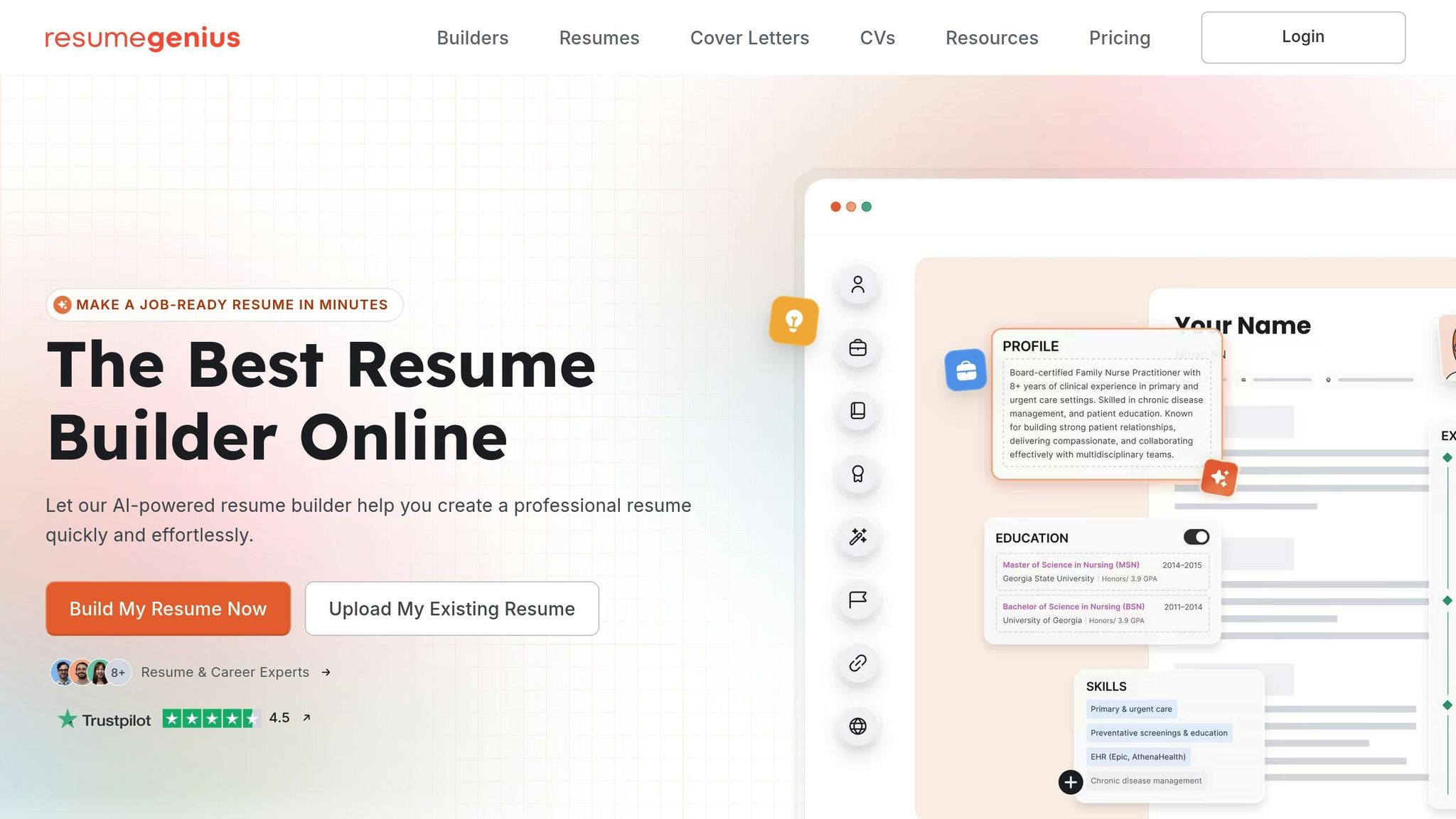
Generic tools like Resume Genius often miss critical nuances in ATS optimization. While their templates might look professional, they may not be customized for the specific job you're targeting. Additionally, Resume Genius lacks features like real-time ATS scoring or human review, which are essential for maximizing your chances.
scale.jobs offers a more targeted solution to address these gaps:
- Human-reviewed ATS optimization to ensure keywords and formatting meet both ATS and recruiter standards.
- One-time payment, no subscriptions: Get comprehensive job search support without ongoing fees.
- Custom-tailored documents designed for each job posting, not just generic templates.
- Detailed ATS feedback: Their free ATS Resume Checker analyzes your resume against specific job descriptions and offers actionable recommendations.
- Proof of work transparency: Receive real-time WhatsApp updates with time-stamped screenshots showing exactly how your resume was optimized.
If you choose to upgrade to their Human Assistant service, professionals will create resumes tailored to each application. This ensures your keywords are seamlessly integrated while keeping your resume clear and engaging for human recruiters. With scale.jobs, you can confidently take the guesswork out of resume optimization.
2. Networking Strategies
Build Genuine Connections on LinkedIn with Personalized Outreach
When it comes to LinkedIn, cold messages work best if they feel personal. A generic connection request like, "I'd love to add you to my network", often gets ignored. Instead, show you've taken the time to learn about the person. Reference something specific - maybe a recent post they shared, a project they're involved in, or a mutual interest.
For example, if you're reaching out to someone at a company you're interested in, you could say, "I saw your post about AI-driven customer service at [Company]. I’m working on similar projects and would love to hear your thoughts." This type of message shows effort and signals that you're not just copying and pasting the same request to everyone.
Once the connection is made, don’t rush to ask for a job or referral. Instead, focus on building a relationship. Comment thoughtfully on their posts, share articles they might find useful, or even offer insights from your own experience. Over time - maybe after a few weeks - you can naturally transition to discussing opportunities or even asking for an informational interview. And don’t forget, participating in virtual events is another great way to expand your network.
Attend Virtual Industry Events and Participate Actively
Virtual events like webinars, conferences, and industry meetups are now key parts of professional networking. But here's the catch: simply attending isn’t enough. The people who make meaningful connections are the ones who actively participate.
During these events, ask thoughtful, concise questions and join breakout sessions. Afterward, follow up with people you interacted with. A LinkedIn connection request within 24 hours works well - just make it personal. For instance, you could say, "I really appreciated your question about remote team management during today’s panel. I’d love to continue that conversation."
To stay in the loop, check platforms like Eventbrite, Meetup, or associations related to your industry. Set a goal to attend a couple of events each month and aim to walk away with a few meaningful new connections at each one.
Leverage Informational Interviews to Uncover Hidden Opportunities
Informational interviews might be one of the most overlooked networking tools, but they can uncover opportunities that aren’t even advertised. These 20- to 30-minute chats are a chance to learn about a company’s culture, what a role really requires, and even pick up insider tips.
When asking for an informational interview, keep it simple. Reach out to professionals in roles or companies you’re targeting and frame your request as a learning opportunity - not a job pitch. A message like, "I’m exploring career paths in [field] and would really value 20 minutes of your time to learn about your experience", often gets a positive response.
Once the meeting is set, come prepared with specific questions. You might ask about their career path, the skills they find most useful, or challenges their team is currently tackling. Pay attention - sometimes, these conversations reveal opportunities without you even asking. Afterward, send a thank-you note within 24 hours, and keep the connection alive by sharing relevant articles or congratulating them on milestones.
Integrate Human Support to Maximize Your Efforts
Networking is powerful, but it takes time. That’s where human-powered application support from scale.jobs can make a difference. Their Human Assistant service handles repetitive tasks, saving you over 20 hours a week. You’ll get real-time updates via WhatsApp, so you know exactly what’s being submitted on your behalf. This frees you up to focus on meaningful connections and interviews.
3. Job Platforms and Tools
Choose Platforms That Match Your Industry and Career Level
When it comes to job hunting, focusing your energy on the right platforms can make all the difference. Instead of spreading yourself thin across countless job boards, zero in on two or three that cater specifically to your industry and career stage. For professionals in white-collar and tech roles, LinkedIn is a top choice, thanks to its advanced filtering options and insights. Creatives, on the other hand, might find better opportunities on platforms like Behance or Dribbble, where hiring managers often scout for talent. If remote work is your goal, sites like FlexJobs and We Work Remotely offer curated listings that are worth exploring.
For those just starting out or navigating visa requirements (like H‑1B or OPT), scale.jobs is a game-changer. It aggregates over 2 million job postings monthly and includes filters specifically for visa sponsorship, saving you hours of manual searching. LinkedIn's "How you match" section on job posts can also provide useful insights into where your skills align with specific roles. The key is to be strategic - focus on platforms where your target employers are most active and where recent hires in your field have found success.
Once you've identified the right platforms, it's important to avoid shortcuts that could hurt your chances.
Stop Using LazyApply Until You Read This: Why Human-Powered Beats Bots
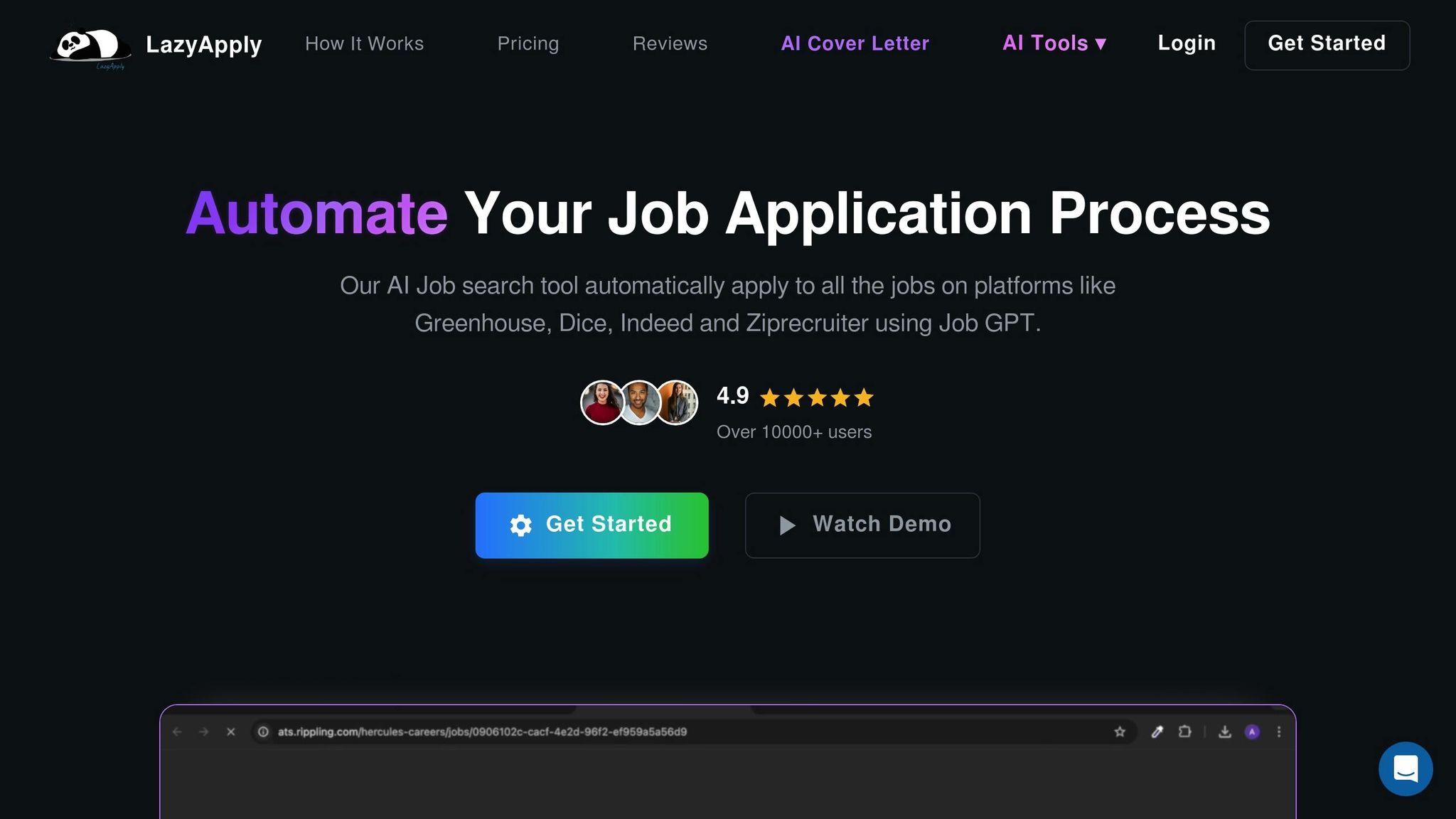
Automated tools like LazyApply might sound tempting, promising to send out hundreds of applications with minimal effort. But here's the catch: many of these applications get flagged by applicant tracking systems (ATS) or fail to stand out due to generic, untailored resumes. Plus, LazyApply comes with a recurring fee, meaning you're paying for quantity over quality - something hiring managers can spot a mile away.
Why scale.jobs is a better choice:
- No bot flags: Human assistants manually complete every application, ensuring they pass ATS screening and look authentic.
- Custom documents in 24 hours: Each resume and cover letter is tailored to the specific job.
- Real-time updates: You'll receive WhatsApp notifications with submission details, keeping you in the loop.
- Flat-fee pricing: For $199, you get 250 hand-submitted applications - no hidden costs.
- Broad compatibility: Whether it's a corporate ATS or a niche job board, human assistants can handle it all.
If you've been relying on automated services and not seeing results, it might be time to switch to a more personalized approach. With scale.jobs, even unused application credits are refunded, so you know you're getting real value for your investment.
Beyond paid services, there are also free tools that can enhance your job search strategy.
Leverage Free Tools to Fill Gaps Without Paying for Redundant Services
You don’t need to spend a fortune to make progress in your job search. Free tools can cover many of the gaps in your process. For example, scale.jobs offers a range of no-cost features, including an ATS resume checker, a cover letter generator, a salary predictor, and even an interview question predictor. These tools provide actionable insights that can boost your chances without adding to your expenses.
Many job seekers end up paying for services like Jobscan or Resume Worded, only to realize they're paying for features they could get elsewhere for free. Instead, take stock of what you actually need. If you’re struggling to keep track of applications and follow-up dates, a free application tracker can do the job. If ATS optimization is your concern, use free resume scanning tools before considering any paid options. By strategically combining free resources, you can streamline your job search and avoid unnecessary costs.
Best Job Search Techniques for 2026
4. AI-Driven Customization
After perfecting tailored resumes and building genuine connections, AI-driven customization takes your job application process to the next level.
Use AI to Tailor Your Resume and Cover Letter for Every Application
A generic resume won't cut it. Recruiters can easily spot cookie-cutter applications, and applicant tracking systems (ATS) might filter you out before a human even sees your materials. AI customization tools can help you stand out by analyzing job descriptions, pulling out key terms, and fine-tuning your resume and cover letter to align with the specific role - showcasing your experience without resorting to keyword stuffing.
Take scale.jobs, for example. Their AI Assistant Pro plan, available at a launch price of $9/month, offers unlimited AI-customized resumes and cover letters. If you’re testing the waters, their free tier lets you create two AI-tailored resumes and one cover letter per day. The AI scans job postings, identifies critical skills and requirements, and adjusts your resume to highlight your most relevant qualifications. You can generate a custom resume in under a minute and then tweak it to perfection before submitting.
Compared to standalone tools like Rezi.ai or Resume Worded, scale.jobs offers a more comprehensive solution. Here’s why it stands out:
- All-in-One Toolkit: Combining AI-driven resume and cover letter creation with tools like ATS-compliant resume builders, job tracking, and interview prep, it simplifies the job search process.
- Human Touch: You can opt for human review, where trained virtual assistants refine AI-generated content to ensure it sounds polished and natural.
- Affordable Pricing: At $9/month, you get unlimited AI-generated resumes and cover letters, while other platforms often charge separately for similar services.
- Real-Time Updates: With features like WhatsApp support and proof-of-work screenshots, you stay informed at every step of your job search.
Optimize Your LinkedIn Profile with AI-Powered Keyword Analysis
Your LinkedIn profile is often the first thing recruiters see, so optimizing it with AI can make a big difference. By analyzing job postings in your target field, AI tools can identify essential keywords to weave into your profile. These keywords can enhance your headline, summary, experience, and skills sections. For example, instead of a vague title like "Marketing Professional", a headline like "Digital Marketing Manager | SEO & Content Strategy | B2B SaaS" can significantly boost your visibility.
Start by feeding AI tools a few job postings for roles you’re interested in. The AI will spot patterns in skills, certifications, and responsibilities, helping you update your profile strategically. It can even generate tailored content for recommendations and other sections. Beyond optimization, some AI-powered networking tools can identify hiring managers and assist with drafting personalized outreach messages. The result? A LinkedIn presence that’s not only keyword-rich but also designed to attract the right recruiters.
Automate Application Question Responses Without Sounding Robotic
Open-ended application questions like "Why do you want to work here?" or "Describe a time you solved a complex problem" can be tricky. Generic, copy-paste answers won’t impress anyone, but crafting unique responses for every application can feel overwhelming. That’s where scale.jobs steps in, offering AI-powered assistance for these questions as part of its free plan (one response per day) or unlimited responses with the AI Assistant Pro plan.
Simply provide the question and some context about the company or role, and the AI will create a tailored response. You can then edit the draft to add your personal touch and adjust the tone. For an extra layer of quality, scale.jobs also offers a Human Assistant service. A trained virtual assistant can refine the AI draft, ensuring your answer feels authentic and fits seamlessly with the rest of your application. This hybrid approach - AI for speed and human oversight for polish - saves you time while keeping your responses genuine and engaging.
5. Interview Preparation
Landing an interview is just the first step; the real challenge lies in preparing effectively to turn that opportunity into an offer. In 2026, preparation means anticipating role-specific questions and practicing authentic, confident responses.
Use AI Tools for Role-Specific Interview Questions
AI tools have revolutionized interview prep by generating tailored questions based on job descriptions. Instead of generic prompts like "Tell me about yourself", you might encounter more precise questions, such as "How would you approach A/B testing for a SaaS product with a three-month sales cycle?" or "Can you describe how you've managed cross-functional teams in a remote setting?"
Platforms like scale.jobs offer AI-powered interview question predictions, even on their free plan, which provides one AI-generated response daily. For unlimited access, their AI Assistant Pro plan is available for just $9/month. Simply upload your job description and resume, and the AI generates role-specific questions along with suggested answers for you to refine.
What makes scale.jobs stand out from competitors like InterviewKickstart or Career.io is its all-in-one approach to your job search. Here's why it excels in interview preparation:
- All-in-One Platform: Combine interview prep with resume building, job tracking, and networking tools in one seamless workspace.
- Custom AI Responses: Get interview questions and suggested answers tailored to your role and experience.
- Affordable Options: Access daily AI responses for free or unlock unlimited features for just $9/month.
- Human Feedback: Opt for personalized feedback on your recorded mock interviews from professional Human Assistants.
Once you have these tailored questions, focus on refining your delivery through practice and repetition.
Record Mock Interviews to Improve Your Responses
Practicing with mock interviews - especially recorded ones - can help you identify and correct distracting habits like fidgeting or overusing filler words. Record yourself answering common interview questions and review your performance. Pay attention to maintaining eye contact, using natural gestures, and delivering concise answers. For example, if your response to "Why do you want this job?" feels too long or unstructured, it might dilute your message and lose the interviewer's attention.
For deeper insights, scale.jobs’ Human Assistants can review your recorded mock interviews and provide actionable feedback. This extra layer of preparation helps you fine-tune your approach, ensuring you're more polished and confident when the real interview comes.
Research Your Interviewer to Personalize the Conversation
A little research can go a long way in making your interview stand out. Spend a few minutes exploring your interviewer's LinkedIn profile to understand their professional background, interests, and any shared experiences you could mention. For instance, if they’ve worked with startups and you have similar experience, bring it up as a natural conversation point.
Tailor your responses based on what you learn. If their profile highlights a focus on data-driven decision-making, emphasize your expertise with metrics and analytical tools. If they value team culture, share examples of how you’ve contributed to building strong, collaborative environments. These thoughtful touches show you’ve done your homework and view the interview as a meaningful dialogue, rather than just a formality. Combined with the personalized strategies offered by AI tools and human feedback, this approach can leave a lasting impression and boost your chances of success.
6. Mental Health and Burnout Prevention
Job searching can take a toll on your emotions, especially when faced with repeated rejections or a drawn-out process. By 2026, prioritizing your mental health isn't just a good idea - it’s critical to staying energized and focused on landing the right opportunity. Using strategies that protect your well-being can also improve the efficiency of your job search.
Set Daily Application Limits to Avoid Overwhelm
While tailoring your resume boosts your chances of success, pacing your job applications can help you maintain the quality of your efforts. Sending out 50 applications a day might feel productive, but it can quickly lead to burnout without necessarily improving your results. Instead, aim for quality over quantity by setting a reasonable daily limit - around 5 to 10 well-crafted applications. This allows you to take the time to personalize each resume and cover letter, research companies, and write responses that stand out to hiring managers.
By avoiding the stress of endless applications, you’ll have the mental clarity to follow up on earlier submissions, prepare for interviews, and work on building your skills. Leveraging human-powered assistance can also help you maintain a steady pace and avoid generic, automated applications. Personalized services like scale.jobs can give you an edge by focusing on tailored, ATS-optimized applications.
Why scale.jobs stands out over automated tools:
- Human assistants ensure your applications are personalized and optimized for ATS systems.
- A one-time payment model eliminates the hassle of recurring subscription fees.
- Dedicated WhatsApp support provides quick and direct assistance whenever you need it.
- Transparent workload management helps you track your efforts and maintain balance.
Schedule Regular Breaks and Non-Job-Search Activities
Job searching shouldn’t consume your entire day. Set aside specific times to step away completely. Whether it’s a 30-minute walk, exercising, spending time with friends, or indulging in a hobby, these breaks help refresh your mind and prevent burnout.
Treat your job search like a job itself - set defined working hours and include scheduled breaks. For instance, you might focus on applications and networking in the morning, then take the afternoon to recharge and enjoy other activities. Maintaining a balanced routine not only protects your mental health but also helps you present yourself as a well-rounded candidate to potential employers.
Track Small Wins to Stay Motivated
In addition to setting structured hours, celebrating small achievements can help you stay resilient. Rejections are part of the process, and focusing only on landing the final offer can feel discouraging. Instead, acknowledge the smaller victories - like receiving a LinkedIn profile view from a recruiter, completing a challenging application, or getting a callback for an initial interview. These moments are proof that your efforts are making an impact, even if results take time.
Keeping track of these wins, whether in a notebook, spreadsheet, or job tracking tool, can boost your morale. Platforms like scale.jobs even offer built-in tracking features, allowing you to visualize your progress across applications. This clear record of your efforts serves as a reminder that you’re moving forward, even during tough stretches.
7. Remote and Geographic Strategies
By 2026, the job market has reshaped how and where people work, opening up new opportunities for professionals everywhere. Unlike tools like LazyApply, which rely solely on automation, scale.jobs combines AI with human expertise to provide customized remote job applications. Whether you're aiming for remote roles, planning a move, or navigating visa requirements, having a solid geographic strategy can significantly expand your career options. Here’s how you can make the most of it.
Target Companies with Remote-First Cultures
Not all remote jobs are created equal. Companies like GitLab, Zapier, and Automattic, which have operated with distributed teams from the start, tend to offer better systems, clearer communication, and fairer pay structures compared to businesses that transitioned to remote work during the pandemic. When searching for remote positions, look for employers with a proven track record - at least two years of remote operations is a good benchmark. Check their career pages for details like location-specific salaries, time-zone requirements, and whether they hire internationally or limit roles to certain states.
Pay attention to whether a job posting says "remote-first" or "remote-friendly." The difference is crucial. Remote-first companies are structured entirely around distributed work, while remote-friendly organizations may still revolve around a physical office, leaving remote employees at a disadvantage. To dig deeper, use platforms like Glassdoor to filter reviews from remote workers and get a clearer picture of the company culture.
When applying to remote positions across different states or countries, tailor your resume and cover letter to reflect local nuances. This is where scale.jobs shines compared to generic tools like LazyApply or LoopCV.
Why scale.jobs stands out for remote job seekers:
- Human assistants address state-specific licensing, visa requirements, and location preferences that automated systems often overlook.
- Application documents are optimized to highlight skills like remote collaboration and time-zone adaptability.
- A one-time payment covers applications across multiple regions, avoiding recurring subscription costs.
- Integrated WhatsApp support offers real-time assistance for navigating complex international or multi-state job hunts.
- Time-stamped application records ensure your submissions align with your location and work authorization details.
Once you've identified remote-first companies, it's time to think about how geography can impact your financial outcomes.
Research Cost-of-Living Benefits
Remote work has created an interesting dynamic for job seekers: you can potentially earn a high salary from cities like San Francisco or New York while living in more affordable locations such as Austin, Raleigh, or even abroad in places like Lisbon or Mexico City. However, many companies now adjust salaries based on where you live, not where the company is headquartered.
Before accepting any offer, use tools like Numbeo or the MIT Living Wage Calculator to compare your potential salary against local expenses. For instance, a $95,000 salary might seem generous, but if the company adjusts pay to match your Boise address instead of their Seattle headquarters, you could lose $20,000 to $30,000 in earnings. During negotiations, emphasize your skills and contributions rather than location and research whether the company uses geographic pay bands or offers uniform compensation.
For those dreaming of working abroad, consider "digital nomad visas" available in countries like Portugal, Spain, Croatia, and Estonia. These visas allow you to live overseas for 6 to 12 months while keeping your U.S.-based job. If this sounds appealing, confirm that your employer permits international remote work and clarify any tax implications. Many companies restrict remote work to specific countries due to legal and payroll complexities, so double-check these details before making any moves.
Leverage Local Job Boards for Underserved Markets
While platforms like LinkedIn and Indeed attract the most traffic, regional job boards often feature hidden gems - jobs with less competition and quicker hiring processes. If you're open to relocating or targeting specific cities, explore local resources like:
- Built In: Covers tech hubs such as Austin, Boston, and Chicago.
- PowerToFly: Focuses on remote jobs and diversity hiring.
- State-specific workforce sites: Great for finding regional opportunities.
Smaller companies and startups often post on these platforms, offering competitive salaries and growth potential. Additionally, knowing which industries are thriving in certain areas can refine your search. For example, renewable energy roles are booming in Texas and Colorado, while biotech jobs are concentrated in Boston and San Diego. Focusing on regions with high demand in your field can increase your chances of landing interviews faster.
When juggling applications across multiple locations, staying organized is key. The scale.jobs application tracker helps you manage submissions across cities and time zones, so you never miss a callback. This tool is particularly useful if you're balancing local opportunities with potential relocation plans, ensuring your job search stays on track.
8. Career-Specific Tactics
General job search tips can only take you so far. To truly stand out, you need to customize your approach for your specific field. The strategies that work for a software engineer won’t necessarily help a nurse, and what gets a marketing manager noticed might not work for a data analyst. By 2026, tailoring your job search to your industry and role is no longer optional - it’s essential. Here are six targeted tactics to address the unique challenges professionals in different fields face.
Highlight Certifications and Licenses for Healthcare and Skilled Trades
If you’re in a licensed profession like nursing, physical therapy, or the trades, your credentials should take center stage. Create a dedicated "Licenses & Certifications" section at the top of your resume, right after your contact information. Include details like the issuing organization, license number (if applicable), expiration date, and any state-specific endorsements.
For healthcare professionals, go further by listing clinical rotations, specialty areas (e.g., ICU, pediatrics), and electronic medical record (EMR) systems you’ve used, such as Epic or Cerner. Trades professionals should highlight whether they hold journeyman or master-level certifications and mention OSHA training or union affiliations. Many applicant tracking systems (ATS) scan for these exact terms, so it’s smart to include both the full certification name and common abbreviations - write "Registered Nurse (RN)" instead of just "RN."
If you’re applying in a different state, research reciprocity agreements. For example, a California nursing license doesn’t automatically transfer to Texas, and some states may require additional exams or background checks. Be proactive in your cover letter by noting that you’re "eligible for licensure in [state]" or "currently pursuing [state] endorsement." This reassures employers that you’re prepared to meet their requirements without delays.
Build a Portfolio Website for Creative and Technical Roles
For creative and technical professionals - like designers, developers, writers, and marketers - a resume alone isn’t enough. A portfolio website serves as your digital storefront, giving hiring managers instant access to your work. Tools like Webflow, Framer, or free website builders make it simple to create a professional site, even if you don’t know how to code.
Your portfolio should showcase 4–6 standout projects, complete with context. Don’t just share a logo redesign; explain how it boosted brand recognition by 35% based on post-launch surveys. Developers can link to GitHub repositories with clean, well-documented code, while writers can embed articles or case studies that highlight their expertise.
Keep your portfolio URL simple and memorable, and include it on your resume, LinkedIn profile, and email signature. If you’re a UX designer, walk viewers through your process with wireframes and user research. If you’re a video editor, feature a demo reel under 90 seconds - recruiters don’t have time for a 10-minute montage. The goal is to let your skills shine within the first 30 seconds of someone visiting your site.
Emphasize Cross-Functional Skills for Project Managers and Consultants
Project managers and consultants often work across multiple departments, so your resume should reflect your ability to collaborate. Highlight examples of coordinating between teams like engineering, marketing, finance, and operations. Use specifics: "Led a cross-functional team of 12 to launch a SaaS product, delivering three weeks ahead of schedule."
While certifications like PMP or Scrum Master are valuable, they mean more when paired with real-world results. For instance, "Managed a $2.3M infrastructure project, reducing delivery time by 18%." Employers want to see how you’ve turned frameworks into measurable outcomes.
For consultants, focus on quantifying your impact on client businesses. Did you help a client cut inventory costs by 22%? Did your strategy boost a startup’s user retention by 40% in six months? Numbers carry more weight than vague statements like "optimized processes." If you’ve worked with recognizable brands, mention them - unless bound by an NDA - as it builds instant credibility.
Showcase Data Skills for Analysts and Scientists
For data analysts, scientists, and researchers, your ability to turn raw data into actionable insights is key. Your resume should list the tools and programming languages you use - Python, R, SQL, Tableau, Power BI - and detail achievements with them. Instead of saying "Proficient in Python", write something like "Developed a Python-based forecasting model that improved inventory accuracy by 28%, saving $340,000 annually."
Link to relevant projects on GitHub, Kaggle, or Observable. If you’ve contributed to open-source projects, published research, or presented at conferences, include those accomplishments. For academics moving into industry, translate your work into business terms. For example, a dissertation on machine learning algorithms becomes "Developed predictive models to identify patterns in large datasets, improving decision-making speed by 35%."
Tailor your resume for each role, matching the company’s tech stack. If the job posting mentions AWS, Snowflake, or dbt, include those tools if you’ve used them. ATS systems often filter resumes based on exact matches, so aligning your skills with the job description can make all the difference.
Highlight Soft Skills for Sales and Customer Success
In sales and customer success, technical know-how is important, but interpersonal skills are what close deals. Your resume should feature metrics that prove your effectiveness. For example: "Exceeded annual sales target by 142%, generating $1.8M in new revenue" or "Maintained a 95% customer retention rate across a portfolio of 80 enterprise clients."
Detail your sales process and the tools you’ve used, such as Salesforce, HubSpot, or Outreach. If you’ve applied methodologies like MEDDIC, Challenger, or Sandler, explain how they’ve contributed to your success. For customer success roles, highlight achievements like reducing churn, upselling accounts, or improving Net Promoter Scores (NPS).
Soft skills like negotiation and conflict resolution are harder to showcase, but examples help. Instead of saying "strong communication skills", write: "Negotiated a $500,000 contract renewal with a dissatisfied client by identifying pain points and delivering a customized solution that improved ROI by 30%." This approach demonstrates your abilities in action.
Leverage Specialized Platforms for Niche Industries
Some industries have their own job boards and recruiting channels that go beyond general platforms like LinkedIn or Indeed. For academia, check sites like HigherEdJobs and Chronicle Vitae. Nonprofit roles often appear on Idealist or Work for Good. Entertainment and media openings may be listed on Mandy, ProductionHUB, or Stage 32 before hitting mainstream boards.
Professional associations can also be goldmines for job leads. Groups like the American Chemical Society, IEEE, or the Society for Human Resource Management have exclusive job boards for members. These postings often attract fewer applicants, giving you a better chance to stand out. Attending industry conferences, even virtually, can also uncover opportunities, as companies often announce openings or conduct informal interviews at these events.
Managing applications across multiple platforms can get overwhelming. While tools like LazyApply or Simplify automate the process, they often mishandle niche requirements, like uploading the wrong file type or skipping mandatory fields. Scale.jobs offers a better solution, using human assistants who understand the nuances of different industries and application systems.
Why scale.jobs is ideal for niche roles:
- Expert handling of specialized job boards
- Tailored application materials with field-specific terminology
- One-time payment covering multiple platforms
- Instant support via WhatsApp
- Transparent, time-stamped submissions
Whether you’re showcasing licenses, building a portfolio, or chasing sales targets, your job search should reflect the demands of your specific field. A one-size-fits-all strategy wastes time - customizing your approach is what sets successful candidates apart.
Conclusion
By 2026, landing the right job will require a mix of technical know-how, authentic connections, and mental toughness. The 27 tips outlined here are designed to help you stand out in a job market shaped by ATS filters and low response rates.
Start with the basics: focus on building real relationships through networking instead of relying solely on cold outreach. Use platforms like LinkedIn alongside niche job boards specific to your industry. This combination creates a solid foundation for a more effective and less overwhelming job search.
Speaking of efficiency, the average job hunt takes about five months. Applying to hundreds of roles manually is not only draining but often unproductive. A smarter approach blends technology and human insight - like using AI tools to fine-tune your resume or working with experts who understand your field’s unique demands.
If you’re putting in full-time hours on applications and seeing little progress, it’s time to rethink your approach. Services that can cut job search time by 40% save you more than just hours - they help protect your mental well-being. This gives you the bandwidth to focus on interview prep, refining your personal brand, and connecting with decision-makers.
Take scale.jobs as an example. Their human-assisted approach combines ATS-optimized materials, transparent progress tracking, and one-on-one support via WhatsApp - all for a one-time fee. Unlike subscription-based services or purely automated tools that often miss the mark on specialized needs, they prioritize quality over quantity to deliver better outcomes.
Don’t underestimate the emotional toll of job searching. Rejections can pile up, making the process feel discouraging. Set boundaries around your search time, celebrate small wins - like landing a phone interview - and remind yourself that every "no" gets you closer to the right "yes." Taking care of your mental health ensures you’ll be ready when the right opportunity comes along.
As hiring practices continue to shift, these strategies - based on our 27 tips - offer a clear path forward for job seekers at any stage. Whether you’re just starting out, pivoting mid-career, or exploring a new direction, the keys remain the same: stay strategic, keep at it, and focus your energy where it matters most.
Your next role is waiting. It’s not just about finding any job - it’s about securing the right one in a smart and efficient way. Adjust your methods, learn from your results, and put yourself in the best position to land the offer you deserve.
FAQs
What’s the best way to make my resume ATS-friendly while still impressing human recruiters?
To make your resume stand out to both ATS systems and human recruiters, focus on clarity and relevance. Stick to simple formatting - use standard fonts and avoid tables or graphics - to ensure that ATS software can easily read your document. Incorporate keywords from the job description into your resume, but make sure they flow naturally within your experience and skills sections.
For human reviewers, keep your content concise and engaging. Highlight measurable accomplishments, like "Boosted quarterly sales by 25%", and use strong action verbs to describe your contributions. Steer clear of unnecessary jargon or overly technical terms unless they’re essential to the role. By creating a resume that balances ATS-friendly structure with a polished, professional tone, you’ll improve your chances of making an impression during both automated and manual reviews.
How can I build meaningful professional connections on LinkedIn to boost my job search?
Building meaningful professional connections on LinkedIn can play a big role in boosting your job search efforts. To start, make sure your LinkedIn profile stands out: use a polished, professional photo, create an eye-catching headline, and write a concise summary that showcases your skills and career aspirations. When sending connection requests, personalize your message - mention shared interests, mutual acquaintances, or something specific you admire about their work. This small effort makes your outreach feel more genuine and leaves a lasting impression.
Stay active on the platform by engaging thoughtfully. Comment on posts with meaningful insights, share articles or updates that are relevant to your industry, and join LinkedIn groups where professionals in your field gather. These actions help you stay visible and build rapport. Additionally, don’t shy away from requesting informational interviews. Politely ask experienced professionals about their career paths and for any advice they might have. Regular, authentic interaction is the foundation for building relationships that could open doors to new opportunities.
How can I stay positive and manage stress during a long job search?
Managing stress during a lengthy job search can feel overwhelming, but there are practical ways to stay focused and protect your mental health. Start by setting up a daily routine that balances job-hunting tasks with time for relaxation and self-care. Dedicate specific hours to activities like sending out applications, enhancing your skills, and taking breaks for exercise or hobbies. A structured approach can help you stay organized and avoid burnout.
Make it a point to stay connected with friends, family, or professional networks. Sharing your journey and leaning on others for support can lighten the emotional load. Surrounding yourself with positive influences can also boost your morale. Don’t forget to acknowledge your progress - whether it’s perfecting a resume or securing an interview. These small victories can keep your motivation alive.
If the process becomes too daunting, consider reaching out to a career coach or using tools designed to simplify the search. Services like human-powered resume assistance or AI-based application tools can save time and reduce stress. Above all, remember that persistence paired with self-care can make this challenging period easier to navigate.