Complete Beginner's Guide to Finding Your Next Role in 2026
Step-by-step job search for 2026: create ATS-friendly resumes, optimize LinkedIn, use AI tools, and prepare for virtual interviews to stand out.


Finding a job in 2026 is more competitive than ever, but with the right approach, you can stand out. Here’s what you need to know:
- AI is everywhere: Applicant Tracking Systems (ATS) and AI-powered tools now filter resumes and assess candidates before humans get involved. Tailoring your resume with job-specific keywords is essential.
- Remote work is standard: While this opens opportunities across the country, it also increases competition. Skills often outweigh formal degrees, so focus on showcasing what you can do.
- Growing industries: Healthcare, green energy, AI-related tech roles, logistics, and education technology are booming. These sectors offer roles that often prioritize skills over traditional qualifications.
- Resumes and LinkedIn matter: ATS-friendly resumes and keyword-rich LinkedIn profiles are critical. Use simple formats, quantify achievements, and keep your LinkedIn profile complete and active.
- Job platforms: Specialized platforms like Dice (tech roles) or FlexJobs (remote work) can focus your search. Tools like Scale.jobs combine AI and human expertise to optimize applications and save time.
- Virtual interviews are the norm: Test your tech, prepare answers using the STAR method, and practice with AI tools to refine your delivery.
How to Land a Job in 2026 💼 | Best Job Boards, Resume Tools & AI Resources That Work
What the Job Market Looks Like in 2026
The job market is shifting, with remote work becoming the norm and opening up opportunities across the country. However, this broader reach also means more competition, making it tougher for candidates to stand out. These changes reflect evolving industry needs and priorities.
While unemployment rates have stabilized, they don't tell the full story. Some industries are grappling with talent shortages, while others are oversaturated. This dynamic has pushed many job seekers to transition from shrinking fields to growing ones. Understanding these trends can help you focus on sectors with genuine growth potential.
Salaries are also adapting to these changes. Entry-level tech positions offer competitive pay, but specialized fields like healthcare and data analysis command even higher wages. Employers are increasingly valuing proven skills over formal education, creating opportunities for career changers who invest in targeted training.
High-Growth Industries and In-Demand Jobs
Certain industries are experiencing rapid growth, creating demand for a wide range of roles.
Healthcare continues to lead hiring in the U.S., driven by an aging population. Nurses, medical technicians, and home health aides are in high demand. Registered nurses, for instance, can expect strong starting salaries, with experienced professionals earning significantly more. Meanwhile, healthcare administration is expanding as hospitals modernize operations.
The green energy sector is another area of growth. Jobs like solar panel technicians, wind turbine service workers, and energy efficiency consultants are becoming more common. These roles often require specific certifications rather than a four-year degree, offering accessible career paths with good pay and advancement opportunities.
Tech roles are evolving, moving beyond traditional software development. Companies now seek AI trainers to improve machine learning systems. These positions often pay well and don't always require a computer science background, welcoming candidates from diverse fields. Cybersecurity analysts are also in high demand as businesses focus on protecting their digital assets.
Logistics and supply chain management have undergone significant changes. Roles such as supply chain coordinators and logistics analysts offer competitive wages and, in many cases, the option to work remotely.
In financial services, new roles like financial wellness advisors and personal finance coaches are emerging. These professionals help middle-income families manage debt, savings, and investments, building sustainable practices in the process.
The rise of education technology has created opportunities for instructional designers who develop online courses and training programs. These positions offer competitive pay and appeal to former educators seeking to stay connected to the learning process.
How AI and Technology Are Changing Hiring
Nearly every company now uses Applicant Tracking Systems (ATS) to filter resumes before they reach a recruiter. These systems scan for keywords, formatting, and relevant experience, often discarding applications that don't closely match the job description. As a result, even if you apply to many roles, only a few may lead to responses.
AI is also being used in the screening process. Some employers rely on AI-powered video interview platforms that assess facial expressions, word choice, and response timing. While the accuracy of these tools is debated, it's essential to prepare by speaking clearly, maintaining eye contact with the camera, and giving concise, structured answers.
Automated tools like jobscan.co focus on matching resumes to job descriptions, but they can't replace human judgment. Services like scale.jobs, which combine ATS optimization with reviews by career professionals, often yield better results by balancing algorithmic needs with readability.
LinkedIn's algorithm plays a big role in job searches. Recruiters use Boolean searches, so your profile needs specific terms to appear in their results. For example, a project manager with a generic headline might not show up in targeted searches. Staying active on the platform also boosts visibility.
AI-powered job matching platforms analyze your work history to suggest roles, but their suggestions can sometimes miss the mark. It's important to use your own judgment to decide if a role aligns with your career goals.
While automated systems make it easy to apply for jobs quickly, quality still matters. Hiring managers can spot generic applications, and tailored submissions are more likely to succeed. Even a small amount of customization can significantly improve your chances in today's remote-first, skills-focused market.
Initial screenings are often conducted by chatbots that ask basic questions about your availability, salary expectations, and qualifications. Preparing concise answers to these questions can help you move to the next stage of the hiring process.
Finally, the trend toward skills-based hiring means employers are focusing more on what you can do rather than where you learned it. Early-stage assessments - like coding challenges, writing samples, or case studies - are becoming standard, offering a more practical way to evaluate candidates beyond traditional credentials.
How to Build Your Resume and Professional Profile
Your resume and LinkedIn profile work hand in hand to create a strong digital first impression. Recruiters often review both before reaching out, so it’s crucial to ensure they’re polished and aligned with how hiring systems function in 2026.
Creating an ATS-Friendly Resume
Applicant Tracking Systems (ATS) are commonly used by companies to screen resumes before a human ever sees them. These systems look for specific keywords, formatting, and structure, and if your resume doesn’t meet the criteria, it might get rejected - even if you’re qualified.
Stick to a simple, clean format. Use standard fonts like Arial, Calibri, or Times New Roman in 10–12 point size. Avoid using tables, text boxes, headers, footers, or graphics, as these can confuse ATS software and lead to errors. Stick to common headings like "Work Experience", "Education", and "Skills."
Match keywords to the job description. Carefully read the job posting and identify key skills or qualifications. If the role mentions "project management", use that exact term instead of alternatives like "oversaw projects" to improve ATS matching.
Quantify your achievements. Instead of saying "managed social media accounts", try "managed 5 social media accounts, increasing engagement by 40% in 6 months." Numbers make your impact clear to both ATS and human reviewers.
Save your resume in a compatible format. Most ATS systems work well with .docx or PDF files, though .docx is often safer. Include your name in the file name, such as "JohnSmith_Resume.docx", to make it easier for recruiters to find.
Opt for a reverse-chronological format. List your most recent experience first. This format is preferred by both ATS systems and recruiters, while functional or hybrid formats can cause confusion.
While tools like resumegenius.com and resume.io provide templates, jobscan.co can analyze your resume against job descriptions. For a more tailored approach, scale.jobs offers ATS optimization paired with expert human review. Their one-time payment model includes WhatsApp support, ensuring your resume is both ATS-compliant and attractive to recruiters.
What Makes Scale.jobs Stand Out:
- Professional career experts review and optimize your resume.
- ATS-friendly formatting combined with recruiter-focused design.
- No recurring subscription fees - just a one-time payment.
- Quick, personalized support via WhatsApp.
- Transparent improvements with clear feedback.
Avoid keyword stuffing. While it’s important to include relevant terms, overloading your resume with keywords can make it feel clunky and hurt your chances. Use keywords naturally within your accomplishments.
Add a clear skills section. Listing 8–12 relevant skills near the top helps ATS software identify matches quickly and allows recruiters to assess your qualifications at a glance.
Once your resume is ready, shift focus to your LinkedIn profile, as it plays a critical role in showcasing your professional brand.
Building a Strong LinkedIn Profile
Your resume gets you noticed, but your LinkedIn profile solidifies your professional image. Acting as both a portfolio and a recruiter search engine, LinkedIn must be complete, keyword-rich, and actively maintained to make an impact.
Craft a specific, keyword-focused headline. Instead of vague titles like "Marketing Professional", try something more targeted like "Digital Marketing Specialist | SEO & Content Strategy | B2B SaaS" to clearly communicate your expertise.
Complete every section. LinkedIn's algorithm favors comprehensive profiles. Fill out your summary, experience, education, skills, and even volunteer work. Adding a professional photo can also significantly boost profile views.
Write a concise, engaging summary. Highlight your expertise, career goals, and key accomplishments. Use first-person narration for a personal touch while keeping the tone professional. Naturally integrate relevant keywords throughout your summary and experience sections.
Build your skills section strategically. Focus on skills relevant to your target roles and request endorsements from colleagues or managers. Reorder your skills to place the most important ones at the top, as recruiters often filter searches by specific skills.
Collect recommendations. Reach out to former managers, colleagues, or clients for endorsements that highlight your strengths. Offering to write one in return can make the process smoother:
"She also expanded my network, so now tons of professionals in my industry can find me in the future."
Engage with your network. Comment on posts, share articles, and post industry insights to show you’re an active professional. This activity can increase your visibility in LinkedIn’s search results.
Personalize your LinkedIn URL. Change the default URL (a string of numbers) to something professional like linkedin.com/in/johnsmith. This not only looks cleaner but is easier to share on your resume or business cards.
Manage "Open to Work" settings discreetly. If you’re employed, use LinkedIn’s private setting to signal recruiters without alerting your entire network.
For LinkedIn optimization, scale.jobs also offers tailored services. Their experts refine your profile to align with your career goals and current hiring trends, ensuring it’s keyword-rich yet authentic.
Why Scale.jobs Excels on LinkedIn:
- Profiles are customized to your career goals by professionals.
- Targeted keywords improve search rankings and recruiter visibility.
- One-time payment eliminates ongoing costs.
- Direct WhatsApp support ensures fast, personalized assistance.
- Clear feedback on improvements through a transparent process.
Join LinkedIn groups. Participate in industry-specific groups where recruiters and hiring managers are active. This boosts your visibility and demonstrates your expertise.
Keep your profile updated. Regularly add new skills, certifications, or projects. An active profile signals ongoing growth and helps you rank higher in searches.
A well-optimized resume gets you past the ATS, but a strong LinkedIn profile often determines whether a recruiter reaches out. By aligning your messaging, using relevant keywords, and showcasing your achievements across both platforms, you’ll maximize your chances of landing the roles you’re aiming for.
Choosing the Right Job Search Platforms
The platform you choose can make a big difference in how quickly you land interviews and how much effort you put into applying. In 2026, job seekers have a variety of options, from general job boards to niche platforms tailored to specific industries or career stages. Knowing which platforms align with your goals can save time and help you focus on roles that suit your skills. In today’s tech-driven hiring world, platforms that combine AI with human oversight are bridging the gaps left by automation or manual processes. This is where a solution like Scale.jobs truly stands out.
General Job Boards vs. Specialized Platforms
General job boards like Indeed, LinkedIn, and Glassdoor offer:
- A massive range of postings across industries
- Networking opportunities and company insights
- A good starting point for exploring options, though they can feel overwhelming
- High competition due to the large number of applicants
Specialized platforms, on the other hand, cater to specific needs:
- Dice focuses on tech roles, such as software engineering and cybersecurity
- FlexJobs specializes in remote work, carefully screening out scams
- Wellfound connects job seekers with startup opportunities
- Simplify provides curated job matches based on your profile
Emmanuel, a software engineer at Polydelta, shared his experience:
"I found a ton of exciting roles at startups I'd never heard of with Simplify!"
While specialized platforms can save time by narrowing down options, they might also limit your exposure. Many job seekers find success by using a mix of general and niche platforms, carefully tracking their applications to avoid duplicates.
Automation tools like LazyApply can speed up the process by submitting applications across platforms like Indeed and ZipRecruiter. However, recruiters often spot generic, auto-filled applications, which can lead to quick rejections.
Why Scale.jobs Works Better for Job Seekers
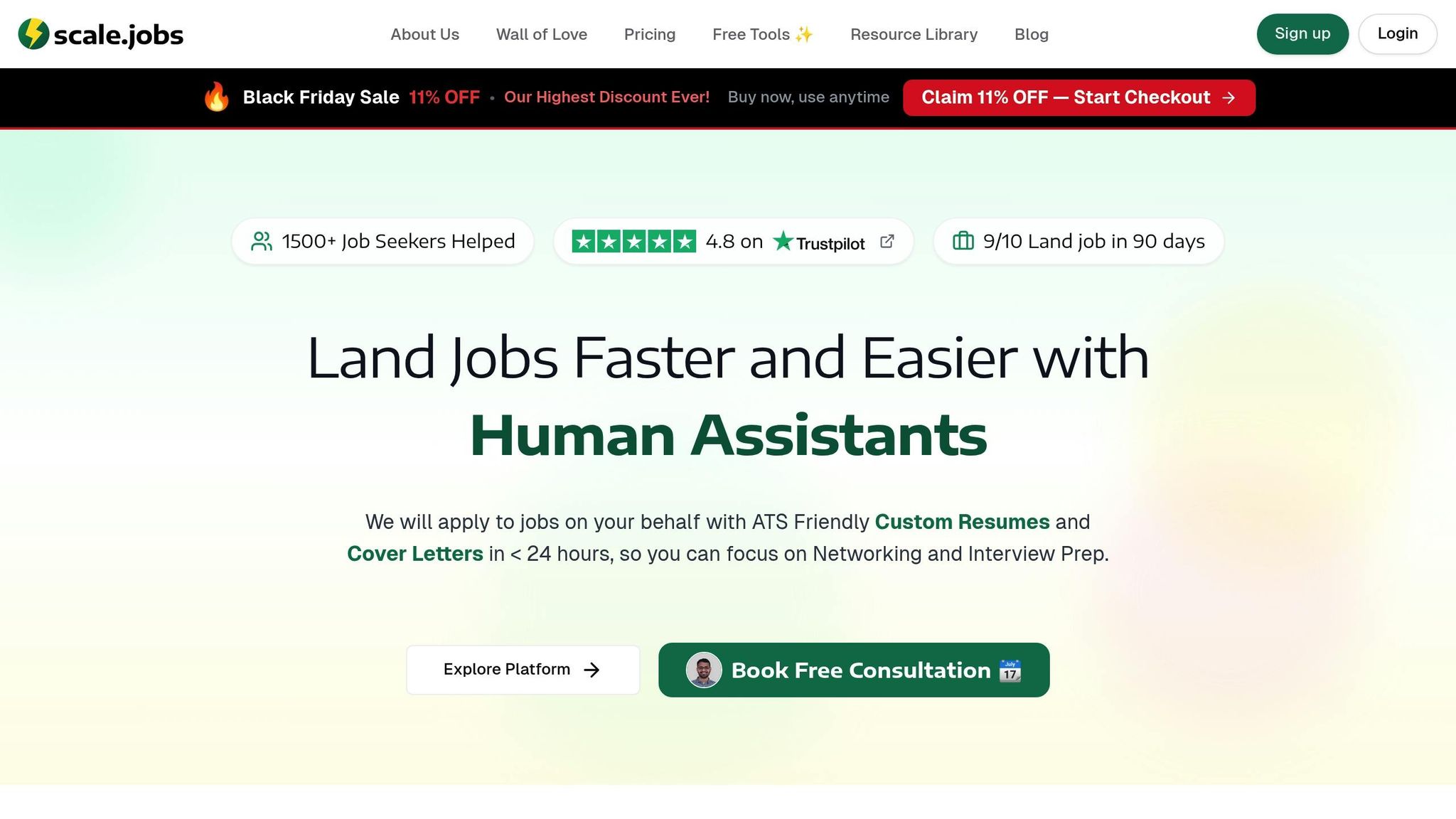
Just like tailoring your resume for ATS (Applicant Tracking System) optimization, choosing the right job search platform is critical. Most platforms either leave you to handle everything yourself or rely on automated tools that churn out generic applications. Scale.jobs takes a different route, combining human expertise with AI-driven tools to deliver personalized, high-quality applications.
At Scale.jobs, trained human assistants manage your applications. Instead of relying on bots or auto-fill software, these assistants create customized, ATS-friendly resumes and cover letters for each role. They also handle submissions directly through company portals, ensuring every application is polished and personalized.
With over 1,500 job seekers helped and 9 out of 10 landing roles within 90 days, Scale.jobs has proven its effectiveness. This success comes from their attention to detail - each application is tailored, not mass-produced.
Why Scale.jobs Beats LazyApply:
- Human touch vs. automation: Real people handle your applications, avoiding the risks of generic submissions
- Custom materials for every job: Resumes and cover letters are tailored to each role
- Transparency: Time-stamped screenshots and live WhatsApp updates keep you informed
- Flat-fee pricing: One-time payment for a set number of applications, no monthly subscriptions
Why Scale.jobs Outshines Simplify:
- Comprehensive service: Includes resume building, LinkedIn optimization, job search strategy, and application submission
- Fast turnaround: Custom materials are ready within 24 hours of identifying a role
- Real-time support: Dedicated WhatsApp assistance for quick responses
- Refunds for unused credits: If you land a job early, you get money back for unused applications
A Better Alternative to Jobscan:
- ATS optimization with human review: Ensures your resume passes filters and appeals to recruiters
- Full-service applications: Revisions and submissions are handled for you
- Cost-effective plans: Flat-fee bundles start at $199 for 250 applications
- Free tools included: ATS scans, cover letter drafts, salary insights, and more
Scale.jobs also offers a free tier with access to over 2 million job postings per month, an ATS-compliant resume builder, a job application tracker, and limited AI-powered customization (up to 2 resumes and 1 cover letter per day). For $9/month (launch pricing, normally $19/month), the AI Assistant Pro plan unlocks unlimited AI customizations.
For those seeking more personalized help, Human Assistant plans start at $199 for 250 applications and go up to $1,099 for 1,000 applications. These plans include extras like a personal recruiter, resume reviews, and LinkedIn makeovers. Every plan also comes with AI tools and free resources, making Scale.jobs a complete job search solution.
If you're serious about finding a job in 2026 without wasting hours on applications, Scale.jobs offers a practical and reliable way to streamline the process. By combining human expertise with AI tools and straightforward pricing, it eliminates many of the frustrations of traditional job search platforms while delivering real results.
How to Apply for Jobs Effectively
Navigating the job market in 2026 requires more than just sending out resumes. To stand out, you’ll need a clear strategy, personalized applications, and a way to stay organized. Generic resumes and losing track of applications are common missteps that can cost you opportunities. Knowing how to approach the process systematically can make all the difference.
Step-by-Step Job Application Process
Applying for jobs can feel overwhelming, especially when juggling multiple platforms, deadlines, and follow-ups. Without a system, it’s easy to miss opportunities or accidentally apply to the same role twice. Here’s how to keep everything under control.
Start with roles that match your skills and goals. Instead of applying to every job you come across, focus on positions that align with your qualifications and career aspirations. Carefully read the job descriptions and highlight the key skills and experiences employers are looking for. This approach saves time and ensures you’re targeting roles where you have a strong chance of success.
Set up a tracking system before you begin. Whether you prefer a simple spreadsheet, a dedicated app, or a tool like Scale.jobs' Job Application Tracker, keeping tabs on your applications is crucial. Your tracker should include details like the company name, job title, application date, platform, contact information, and any follow-ups. This helps you stay organized, avoid duplicate submissions, and meet deadlines.
Scale.jobs offers a free Job Application Tracker integrated with their job board, which automatically logs your applications. It even lets you set reminders for follow-ups and tracks which submissions lead to interviews - saving you from manual updates and keeping everything in one place.
Prepare your documents in ATS-friendly formats. Most employers request resumes, cover letters, and sometimes portfolios or references. To improve your chances, use formats like PDF or Word that work well with Applicant Tracking Systems (ATS). If you’re applying across industries or levels, create tailored versions of your resume for each type of role. And don’t overlook application forms - ensure all details are complete and consistent with your resume.
Follow up after applying. A week or two after submitting your application, consider sending a polite email to the hiring manager or recruiter. Express your interest and ask if they need any additional information. Use your tracking system to log these follow-ups and note any responses.
Applying for jobs in 2026 often means submitting 50 to 100 applications to land a handful of interviews. To ease this burden, Scale.jobs' Human Assistant plans can handle the submission process for you, providing real-time updates via WhatsApp.
Once you’ve organized your applications, the next step is tailoring each one to the specific job.
Customizing Applications for Each Job
Submitting the same resume and cover letter to multiple employers is a quick way to get overlooked. Recruiters and ATS software can easily spot generic applications. In 2026, personalization isn’t just a nice touch - it’s a must.
Adapt your resume for every role. Start by reviewing the job description and identifying the key skills, certifications, or industry terms mentioned. Incorporate these keywords naturally into your resume, especially in the summary, skills, and work experience sections. For example, if a job emphasizes "data-driven decision-making" or "cross-functional collaboration", include those terms if they reflect your experience.
ATS systems scan for these keywords before a recruiter even sees your resume. Without them, your application may get filtered out - even if you’re qualified. Tools like Scale.jobs' free ATS Resume Checker can compare your resume against a job description and suggest improvements, ensuring it meets ATS criteria.
Write a tailored cover letter for each application. A good cover letter goes beyond summarizing your resume - it highlights why you’re excited about the role and how your background makes you the ideal candidate. Reference specific details from the job posting, like the company’s mission or recent projects, to show you’ve done your homework.
If you’re applying to many roles, writing unique cover letters can feel daunting. Scale.jobs' AI Assistant Pro ($9/month at launch, $19/month regularly) simplifies this by generating personalized cover letters based on your work history and the job description. You’ll still have the option to tweak the draft, but the tool handles the heavy lifting.
Match your tone to the employer’s style. If the job posting uses casual, conversational language, reflect that in your cover letter. For more formal or technical roles, adjust your tone accordingly. This small detail can make a big difference in how your application is received.
Answer application questions thoughtfully. Many applications include questions like "Why do you want to work here?" or "Describe a time you solved a problem." Use these opportunities to showcase your strengths and provide specific examples. Scale.jobs' AI Assistant Pro can also help craft responses, saving you time while ensuring clarity and relevance.
For those wanting even more support, Scale.jobs' Human Assistant plans offer fully customized resumes and cover letters created by professionals for each application. Unlike AI tools, these assistants review job postings individually to craft materials that speak directly to employers. Plans start at $199 for 250 applications and go up to $1,099 for 1,000 applications, including perks like a personal recruiter, resume review, and LinkedIn optimization. If you find a job before using all your credits, Scale.jobs refunds the unused portion - a feature that sets them apart.
Getting Ready for Virtual Interviews
By 2026, virtual interviews have become the norm, with most companies conducting at least the initial rounds online. Whether you're logging in from your living room, a café, or a co-working space, how you present yourself on-screen can be just as important as your resume. Technical hiccups, poor lighting, or unprepared answers can throw off even the most qualified candidates. The bright side? With some preparation, virtual interviews can work in your favor.
Virtual Interview Mistakes to Avoid
The rise of remote interviews has introduced unique challenges that can overshadow even strong answers. A messy background or glitchy audio can easily distract your interviewer. Here's how to avoid common pitfalls:
- Test your tech ahead of time. Check your video, audio, and internet connection at least a day before the interview. Whether you're using Zoom, Microsoft Teams, Google Meet, or another platform, make sure everything runs smoothly. If you're on Wi-Fi, try sitting closer to your router or use an ethernet cable for a stable connection. Keep a backup device like a charged phone or tablet ready, and save the interviewer's contact info in case you need to reach out due to technical issues.
- Get your lighting and camera angle right. Position your camera at eye level and use balanced front lighting to make sure you're clearly visible.
- Choose a distraction-free background. A clean, neutral setting is ideal. If that's not possible, a professional virtual background can work, as long as it’s stable and doesn't create unnecessary distractions.
- Dress the part. Even if only your upper half is visible, dressing professionally from head to toe helps set the right tone. Stick to solid, neutral colors like navy, gray, or white, and avoid busy patterns or overly bright hues.
- Minimize distractions. Silence your phone, close unnecessary apps, and let others know you're unavailable. If interruptions happen, stay calm and handle them professionally.
- Look at the camera. It’s tempting to watch your own video or the interviewer's face, but focusing on the camera creates the impression of direct eye contact.
- Don’t overuse notes. Keep a few bullet points handy for reference, but aim for a natural delivery rather than reading off a script.
Once you've sorted the technical and environmental aspects, shift your attention to refining your responses - and that's where AI tools can help.
Using AI Tools to Practice Interviews
Knowing what to say - and how to say it - can make all the difference. In 2026, AI-powered platforms are making it easier than ever to practice for interviews, helping you fine-tune your answers and build confidence.
- Why practice matters. Practicing helps you organize your thoughts, ease your nerves, and deliver clear, concise answers. AI tools can even provide feedback on your tone, pace, and body language.
- How AI tools work. These platforms simulate common interview scenarios based on the role you're targeting. You can record your responses, and the AI will evaluate your performance, offering tips on filler words, speaking speed, eye contact, and even facial expressions. Some tools also analyze the content of your answers and suggest ways to improve.
For example, TealHQ offers "Unlimited Interview Practice" as part of its premium plan for $13/week. Rezi.ai includes an "AI Interview" feature in its suite of tools, available for a one-time fee of $149.
Scale.jobs' AI Assistant Pro takes a different approach. Priced at $9/month initially (later $19/month), it tailors responses to interview questions based on your resume and the job description. For instance, if asked, "Describe a time you solved a problem", the tool drafts a structured response highlighting relevant experiences. You can then practice until your delivery feels natural. Unlike generic AI tools, Scale.jobs combines automated response crafting with personalized feedback.
"You should focus on what matters the most - Interview Prep - and let us handle the rest." - Shubham Dhakle, Outcome Manager, Scale.jobs
This philosophy extends to Scale.jobs' broader offerings. While other platforms charge recurring fees for interview prep, Scale.jobs includes AI-powered question responses in both its free and paid plans. Upgrading to the Human Assistant plan (starting at $199 for 250 applications) adds access to a personal recruiter who can conduct mock interviews and provide tailored feedback - a feature that pure AI tools can't replicate.
- What to practice. Focus on key questions like "Tell me about yourself", "What are your strengths and weaknesses?" and "Why should we hire you?" Prepare for behavioral questions starting with "Tell me about a time when…" by structuring your responses using the STAR method (Situation, Task, Action, Result). If the role requires technical expertise, practice explaining complex ideas in simple, clear terms. AI tools can help you refine these explanations for maximum clarity.
- Avoid sounding rehearsed. While practice is essential, overly scripted answers can come across as insincere. Use AI tools to polish your responses, but aim to sound conversational and genuine during the interview.
Taking Your First Steps Toward Your Next Role
Landing a job in 2026 takes more than just firing off applications and crossing your fingers. The hiring landscape has shifted, and success now depends on understanding how AI influences recruitment, crafting resumes that pass ATS (Applicant Tracking Systems), and preparing effectively for virtual interviews. It’s time to turn these insights into action.
Start by concentrating on what’s within your control. While you can’t dictate how quickly companies respond or who decides to interview you, you can create an ATS-friendly resume, enhance your LinkedIn profile, and refine your interview techniques. The job seekers who succeed the fastest in 2026 approach their search with a structured, strategic mindset.
Choosing the right tools is also key to streamlining your efforts. Generic job boards often bombard you with irrelevant listings, while niche platforms can narrow your focus but still leave you doing repetitive tasks. That’s where Scale.jobs comes in to simplify the process.
Unlike other platforms that charge separately for services like interview prep (e.g., TealHQ) or resume optimization (e.g., Rezi.ai), Scale.jobs offers an all-in-one solution with free job-search software, customizable AI tools, and optional human support. Their free plan provides access to over 2 million job listings, an ATS-compliant resume builder, and daily AI-generated resumes and cover letters tailored to your applications. For those looking for more, the AI Assistant Pro plan is available for $9/month during the launch period (regularly $19/month) and removes daily limits on these features.
If saving time is your priority, consider their Human Assistant plans, starting at $199 for 250 applications. These plans include trained assistants who handle resume creation, cover letter writing, and application submissions on your behalf. You’ll also receive real-time updates via WhatsApp, proof-of-work screenshots, and refunds for unused credits - all with a transparent flat-fee model, free of recurring charges or hidden costs.
This approach tackles two major hurdles in 2026: time and quality. Crafting and submitting applications manually can take over 20 hours a week - time that could be better spent networking or preparing for interviews. Scale.jobs takes care of the tedious parts, ensuring your applications reach actual hiring managers while bypassing automated filters.
Securing your next role won’t happen by chance. It requires consistent effort, smart tools, and the ability to adapt to a changing job market. Whether you’re a recent graduate, someone impacted by layoffs, or ready for a career shift, the strategies outlined here can guide you forward. Combine tailored resumes and LinkedIn improvements with efficient application tools to strengthen your search from start to finish. Find the option that fits your budget and timeline, stay organized, and refine your approach as needed. With the right strategies and resources, you’ll be ready to tackle the competitive job market of 2026 with confidence.
FAQs
How can I make sure my resume is ATS-friendly in 2026?
To make sure your resume works seamlessly with Applicant Tracking Systems (ATS) in 2026, focus on keeping it simple and relevant. Opt for a chronological or hybrid format with a clean, straightforward design. Avoid adding tables, columns, or graphics, as these can confuse ATS software. Instead, mirror the keywords from the job description in your resume - use both full terms and acronyms when appropriate.
Stick to standard section titles like Experience or Education, and skip headers or footers entirely. Save your resume as a .docx file to ensure compatibility. Use a professional, easy-to-read font, and tailor your content specifically to the job you’re applying for to boost your chances of getting past the ATS screening.
How can I stand out in the competitive remote job market in 2026?
To make a mark in the competitive remote job market of 2026, it’s all about aligning your approach with the latest hiring trends. Start by zeroing in on roles that genuinely match your skills and career aspirations. Leverage AI-powered tools - like LinkedIn, specialized job boards, and resume analyzers - to fine-tune your applications and ensure they’re tailored for Applicant Tracking Systems (ATS).
Equally important is honing your virtual interview skills. This means practicing clear and confident communication, setting up a professional video environment, and following up effectively after interviews. Customize each application to highlight what makes you stand out and demonstrate your ability to thrive in remote work settings. These strategies can give you an edge in a crowded job market.
What industries are expected to see the most job growth and opportunities in 2026?
In 2026, jobs in technology, healthcare, and sustainability are expected to see a surge in growth. Roles in artificial intelligence (AI), data science, and cybersecurity will continue to expand as businesses increasingly integrate advanced technologies into their operations. These fields are becoming essential as organizations look to enhance efficiency, security, and decision-making.
The healthcare sector is also poised for growth, with increased demand for professionals in telemedicine, nursing, and elder care. This is driven by advancements in medical technology and the needs of an aging population, creating a steady need for skilled workers in these areas.
At the same time, industries centered on renewable energy and sustainability, including clean energy production, electric vehicles, and environmental consulting, are expected to thrive as global efforts to address climate change intensify. For those considering a career shift, these fields present opportunities with strong potential for growth and impact.