
How to Build Thought Leadership on LinkedIn
Optimize your LinkedIn profile, publish value-driven posts, engage daily, and use analytics to grow influence and career opportunities.

LinkedIn is the top platform for professionals to connect, with over 1 billion members globally. Yet, fewer than 1% of users post content weekly, offering a massive opportunity to stand out. Thought leadership on LinkedIn can lead to 5x more engagement for personal profiles compared to company pages and open doors to career growth, partnerships, and speaking opportunities. This visibility is a key part of tailored job application assistance for high-level roles.
To build your presence:
- Optimize Your LinkedIn Profile: Craft a clear headline, write a personal About section, and showcase measurable achievements.
- Plan Your Content: Focus on 3–5 key topics relevant to your niche and audience.
- Create Engaging Posts: Use varied formats like text, videos, and polls, and always provide actionable insights.
- Engage and Network: Interact with others, comment on posts, and collaborate with peers.
- Track Progress: Use LinkedIn analytics to measure engagement and refine your strategy.
Start by posting once a week, commenting daily, and refining your profile headline. With consistent effort, you can position yourself as a trusted voice in your industry.
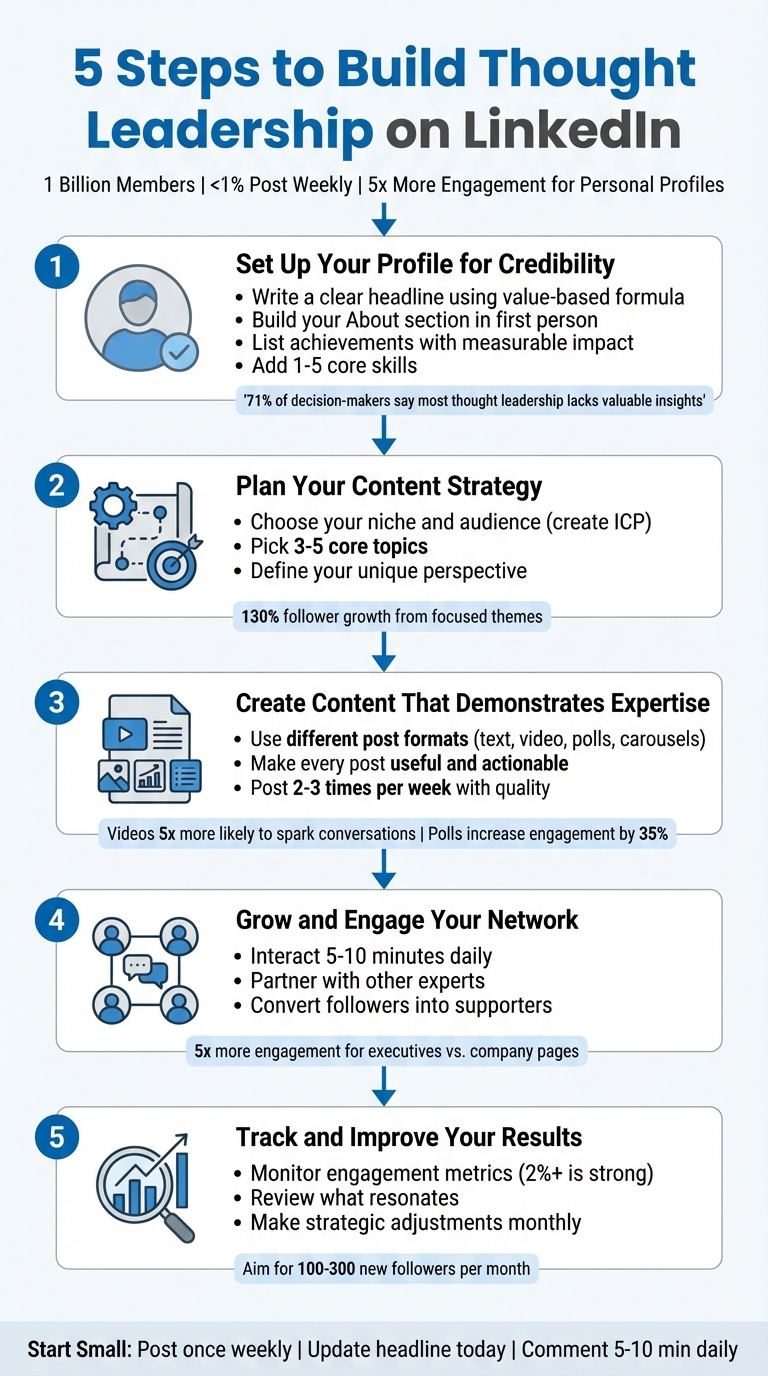
5-Step Process to Build Thought Leadership on LinkedIn
From Expert to Impact: How to Build Real Thought Leadership on LinkedIn (Without the Fluff)
Step 1: Set Up Your LinkedIn Profile for Credibility
Before diving into thought leadership content, your LinkedIn profile needs to do some heavy lifting. Think of it as your digital storefront - it’s the first impression people get when they check you out. A well-crafted profile not only grabs attention but also builds trust.
Write a Clear Headline
Your headline is prime real estate. It sits right under your name and shows up everywhere - comments, connection requests, search results. Instead of just listing your job title, make it work harder by showcasing your value.
Try this value-based formula: "I help [target audience] achieve [result] through [unique approach]." For instance, "I help B2B SaaS companies cut customer acquisition costs by 40% through data-driven content strategies" immediately communicates expertise. Alternatively, use vertical bars to highlight multiple specialties: "Sales Enablement Strategist | Revenue Operations | SaaS Growth."
"Your headline is a GREAT place to showcase the value you bring to clients. Reframe the typical approach of a job title, to a formula that actually expresses your value." – Courtney Johnson, Social Media Expert
Don’t forget to sprinkle in keywords your audience searches for. If you’re in cybersecurity, phrases like "zero-trust architecture" or "compliance automation" can help you appear in relevant searches. LinkedIn’s massive reach - it’s the 17th most visited website globally - makes these keywords even more impactful.
Build Your About Section
Think of the About section as your space to tell your story, in your own words. Writing in first person adds authenticity and makes your profile feel more personal.
Start by explaining why you’re passionate about what you do, then dive into your accomplishments and how you help others. Be specific. For example, "In 2023, I led a product launch that generated $2.3M in revenue within six months" is far more compelling than "Responsible for product launches." Specifics matter - 71% of decision-makers say most thought leadership lacks valuable insights.
Wrap up with a clear call to action. Let visitors know what to do next: "Connect with me to discuss enterprise AI strategy", or "Check out my website for a free guide on remote team productivity." Use the Featured section to link to standout work - portfolio pieces, published articles, or keynote videos. These serve as proof of your expertise.
"If you have accomplished something great, say it! If you've written something industry-shaking, share it!" – Tequia Burt, Ex-Editor in Chief @ LinkedIn
Now, let’s back up your story with tangible achievements and skills.
List Your Achievements and Skills
In the Experience section, focus on measurable impact. Instead of vague statements like "Managed marketing campaigns", go with something like "Launched a LinkedIn ad campaign that increased qualified leads by 230% while reducing cost-per-lead from $85 to $31 in Q2 2024." Numbers make your achievements stand out.
Use the Featured section wisely. Pin your top three assets - a high-performing post, a case study or whitepaper you authored, and a video of you speaking at an industry event. This provides instant proof of your expertise. Since 80% of B2B decision-makers value third-party data and proprietary insights, showcasing original research or frameworks you’ve created can set you apart.
Lastly, request specific recommendations from colleagues or clients. A recommendation like "Sarah helped us redesign our sales process, leading to a 45% increase in close rates over eight months" carries more weight than generic praise. For skills, stick to 1–5 core competencies that align with your niche. Listing too many skills can dilute your message and leave people unsure about your real expertise.
Step 2: Plan Your Content Strategy
Once your profile is optimized, it's time to lay out a clear content strategy. Without a solid plan, your posts might feel scattered, leaving your audience confused. Focus on a niche and stick to a few central themes that highlight your expertise. Then, define your audience and pinpoint the topics that truly matter to them.
Choose Your Niche and Audience
Your niche should hit the sweet spot between three key elements: current industry trends, customer pain points, and your company’s growth goals. This ensures your content stays relevant while aligning with your objectives.
Start by identifying exactly who you’re speaking to. Create an Ideal Customer Profile (ICP) to narrow your audience down by factors like industry, location, job role, seniority, and company size. For instance, instead of targeting "all marketers", aim for something specific like "B2B SaaS marketing directors at Series A startups in North America." The more specific your focus, the easier it is to craft content that resonates. As Harshi Jain from SocialSense wisely says: "If you talk to everybody, you talk to nobody."
Collaborate with your sales and customer relations teams or work with a virtual assistant to uncover the specific questions and challenges your customers are facing. LinkedIn Sales Navigator can also be a goldmine for understanding what your target audience is engaging with and the questions they’re discussing. Additionally, analyze posts from other thought leaders in your field, track relevant hashtags, and look for content gaps where you can offer fresh insights.
Once you’ve defined your audience, choose core topics that address their biggest challenges.
Pick Your Core Topics
Focus on 3–5 core themes that showcase your expertise and tackle both current trends and long-term industry challenges. These themes should cover three types of content: industry insights (like emerging trends), organizational topics (such as company culture), and product expertise (how-to guides or strategies).
For example, a thought leadership campaign that stayed within defined expertise areas saw follower growth jump by 130% and engagement rise by 169%. The success came from sticking to specific themes rather than trying to cover too much.
When selecting topics, lean into your unique strengths. 71% of decision-makers say less than half of the thought leadership they consume offers valuable insights, so avoid rehashing what’s already out there. If you’re in cybersecurity, skip generic “best practices” posts and dive into specifics like "zero-trust implementation for remote-first teams" or "compliance automation for healthcare startups."
Define Your Perspective
Having topics is just the start - you also need a strong point of view. Great thought leadership stands out because it’s bold and distinctive.
Take a contrarian stance by challenging common assumptions or highlighting overlooked issues in your industry. Tequia Burt, former Editor in Chief at LinkedIn, advises: "Approaching a known problem from an unconventional angle is the attention-grabbing edge that can attract an eager audience." For instance, if everyone is praising AI automation, you could argue why human oversight remains essential - backing your claim with data and examples.
Make your perspective relatable by sharing personal stories and lessons learned. Adam Witty, CEO of ForbesBooks, notes: "People crave human connection, and they want to know more about you. But it's important to focus on being a messenger - rather than being the message." Weigh in on industry news with a clear stance and supporting evidence. Offer predictions for how your field will evolve in the next 12–24 months, especially regarding emerging technologies. With 81% of buyers seeking insights that challenge their assumptions, don’t shy away from questioning conventional wisdom.
Step 3: Create Content That Demonstrates Expertise
With your strategy in place, it’s time to showcase your expertise through impactful content. Use a mix of formats, ensure every post adds value, and maintain a consistent level of quality.
Use Different Post Formats
LinkedIn thrives on variety, so experiment with different formats like text posts, carousels, videos, and polls to keep your audience engaged. Text posts can be optimized for clarity, while carousels can visually break down complex ideas. Native videos are especially effective - they’re 5x more likely to spark conversations. Keep videos under 2 minutes for maximum impact, and consider hosting LinkedIn Live sessions, which can drive 12x more interaction than regular video posts.
A great example of this strategy in action is Mastercard APAC’s February 2025 campaign. They used a mix of post formats to amplify the voices of six business leaders. The results? A 130% jump in Company Page followers, a 175% increase in click-through rates, and a 169% boost in engagement rates.
Polls are another powerful tool. A single question with three answer options can increase engagement by 35%. Just make sure to explain the purpose behind the poll and share the insights you gather.
Whatever format you choose, focus on delivering actionable insights with every post.
Make Every Post Useful
Many thought leadership posts fail because they don’t provide real value. To stand out, your content should either teach something new, challenge conventional thinking, or spark meaningful conversations. Adam Witty, CEO of ForbesBooks, puts it best:
"Thought leadership is sharing and amplifying the expertise you already have with the spirit of helping people improve their lives."
Start by addressing what your audience actually cares about. Highlight common customer pain points or frequently asked questions, and back up your insights with data. In fact, 80% of decision-makers expect to see third-party or proprietary data in thought leadership content. And remember, you’ve got a short window to grab attention - over half of buyers will stop reading if content doesn’t hook them in the first minute.
Be relatable and authentic. Research shows that 67% of decision-makers prefer content from a real person rather than a faceless brand. Posts from individual executives can generate 5x more engagement than those from company pages.
Consistency ties it all together.
Post Regularly with Quality
Staying consistent is key, but never sacrifice quality for quantity. Posting 2–3 times a week strikes a good balance between staying visible and avoiding audience fatigue. High-quality, value-driven posts can increase engagement rates by 30% compared to generic content. Posting during LinkedIn’s “Golden Hour” can also improve visibility.
Pressed for time? Record a session and break it into smaller posts to keep your content pipeline flowing. This approach lets you stay consistent without constantly coming up with new ideas. Mix short, engaging posts with occasional deep dives. Often, raw and authentic insights resonate more than content that feels overly polished or corporate.
Step 4: Grow and Engage Your Network
Creating great content is just the starting point; building meaningful relationships is what takes things to the next level. LinkedIn's algorithm leans heavily toward personal brands rather than company pages, giving executives 5x more engagement on their posts compared to corporate accounts. To make the most of this, focus on being both strategic and genuine in how you engage.
Interact with Your Audience
Dedicate 5–10 minutes each day to engaging with your LinkedIn feed. Comment on posts from other thought leaders in your field, especially when they invite feedback or ask for opinions. This not only boosts your visibility but also positions you as a peer in your industry. Tequia Burt, former Editor in Chief at LinkedIn, highlights the importance of this:
"Building a community of thought leadership is a great way to stay connected, learn, and challenge yourself. Most importantly, you will be seen as a peer, which can garner invitations to present at events or be on an expert panel."
When you share someone else’s content, don’t just hit repost - add your own insights. Explain why their ideas resonate with you or how they tie into your experience. Make your connection requests personal, aiming to reach out to 10 new, relevant people daily. And don’t forget to respond to comments on your posts. It’s a simple but powerful way to build trust and keep conversations alive.
This kind of active engagement not only strengthens relationships but also opens the door to more meaningful collaborations.
Partner with Other Experts
Once you’ve established a presence through direct engagement, look for opportunities to collaborate with peers. Partnering with other experts - whether through LinkedIn Live sessions, co-authored articles, or guest posts - helps you expand your reach by connecting with their audience. A great example of this is Salesforce’s use of LinkedIn Live Event Ads during their Dreamforce event in 2024. By targeting business decision-makers with live, real-time content, they achieved a 30% reduction in costs for driving qualified viewership, a 24% boost in connection requests, and a 52% increase in InMail acceptance rates.
Get involved in niche LinkedIn groups and participate in trending discussions to establish your expertise without overtly promoting yourself. Offer thoughtful answers to questions or share insights, tagging the person who asked or the expert who inspired your response. You can also use your profile’s "Featured" section to showcase collaborative projects like panel discussions or joint interviews.
These partnerships not only elevate your visibility but also help you turn casual followers into loyal advocates.
Convert Followers into Supporters
After building a network, focus on turning engaged followers into active supporters. Offer advice, share resources, or lend a hand - without expecting anything in return. This generosity helps you build a reputation as a trusted and supportive member of your community. Social media expert Courtney Johnson sums it up perfectly:
"Every interaction grows your network."
To amplify this effect, use targeted promotions to boost visibility. Make it easy for your most engaged connections to share your content by offering clear value they’ll want to pass on to their own networks. These small efforts can create a ripple effect, helping your influence grow organically.
Step 5: Track and Improve Your Results
Building thought leadership is an ongoing effort - it’s not something you can just set in motion and forget about. Now that you're regularly sharing high-quality content, it’s time to measure its impact and fine-tune your approach. LinkedIn’s built-in analytics make it easier to see how your content is performing and identify areas for improvement.
Monitor Engagement Metrics
Pay attention to key engagement numbers like likes, comments, shares, and profile views. A post with an engagement rate of 2% or more (calculated by dividing total interactions by impressions) signals strong performance. If your posts consistently earn 3,000+ impressions within your niche, it’s a sign you’re gaining solid visibility.
Follower growth is another important metric. Adding 100–300 new followers each month shows that your expertise is resonating with the right audience and that people are interested in what you have to say. These metrics - both the numbers and the trends - offer valuable insight into how well your strategy is working.
Use this data to spot patterns and trends before diving deeper into your content's performance.
Review What Resonates
Take a closer look at the content that’s performing well. Are certain topics sparking more conversations? Does your audience seem to prefer concise, snappy posts, or do they engage more with in-depth breakdowns? How do videos compare to text-only posts? Use LinkedIn’s analytics dashboard to pinpoint your top-performing content and uncover what’s driving the most engagement.
For instance, if a post addressing a specific challenge significantly outperforms your other content, consider exploring that topic further or tackling it from new angles. The goal is to replicate and expand on what’s already working.
Make Strategic Adjustments
Let the data guide your next steps. If your engagement begins to dip, experiment with posting at different times or trying new formats. If certain topics consistently underperform, shift your focus to areas where your audience shows more interest. Don’t forget to track referral traffic to your website using web analytics tools - this helps you see whether your LinkedIn activity is leading to business outcomes beyond likes and comments.
Set clear, measurable goals to steer your efforts. For example, you might aim to boost your engagement rate from 1.5% to 2.5% over the next three months or generate 1–5 qualified leads per month through your content. Review your progress monthly, note what’s changed, and adjust your tactics as needed. The key is to continually align your content with what your audience finds engaging, strengthening your position as a thought leader over time.
Conclusion: Start Building Your LinkedIn Presence
Now is the perfect time to establish yourself as a thought leader on LinkedIn. With over 1 billion members but fewer than 1% posting content regularly, simply showing up gives you a huge advantage. The five steps we've discussed - optimizing your profile, planning your content strategy, creating valuable posts, networking with others, and tracking your progress - offer a straightforward plan you can put into action right away. These steps can help you transform your LinkedIn activity into a meaningful presence.
Consider this: senior leaders see 5x more engagement on personal posts, and over 70% of B2B buyers define their needs before ever contacting a sales rep. By positioning yourself as a reliable voice now, you increase your chances of being discovered when it matters most. The insights shared here can guide you in taking those first practical steps to grow your influence.
If you're feeling overwhelmed, start small. Commit to posting just once a week for the next month to build momentum. Update your LinkedIn headline today using a formula like: "I help [target audience] achieve [result] through [unique value proposition]." Spend 5–10 minutes each day commenting on posts to boost your visibility. When inspiration strikes, capture your ideas in voice memos or notes and refine them later.
"The only way to get to great is to go through average first." – Mo Shehu, PhD, CEO of Column
Growing an engaged audience takes time, but every post and interaction moves you closer to becoming the go-to expert in your field. Remember, your first post doesn’t have to be perfect - it just has to be published.
FAQs
How can I optimize my LinkedIn profile to establish thought leadership?
To stand out as a thought leader on LinkedIn, start by crafting a profile that truly reflects your expertise and the value you bring to your industry. Your headline should go beyond just listing your job title - include relevant industry keywords to make your profile easier to find. In the About section, share a concise and engaging narrative about your career journey, highlighting key accomplishments and the challenges you help solve. Enhance your profile with rich media, such as articles, videos, or case studies, in the Featured and Experience sections to visually showcase your work. Don’t forget to request recommendations that speak to your skills and the results you’ve delivered - these add a layer of credibility to your profile.
After optimizing your profile, shift your focus to creating and sharing valuable content regularly. Post updates that offer insights on industry trends, practical advice, or lessons you’ve learned, positioning yourself as a go-to resource. Aim to post 2–3 times a week and actively engage with your audience by replying to comments. Expand your visibility by interacting with peers, participating in relevant groups, and tagging influencers in your posts. By combining a well-crafted profile with consistent, meaningful content and active engagement, you’ll not only grow your audience but also solidify your position as a trusted thought leader.
What type of content should I create to engage my LinkedIn audience and build thought leadership?
To connect with your LinkedIn audience and build your reputation as a thought leader, aim for a variety of content that highlights your expertise while encouraging interaction. Long-form posts or articles are ideal for diving into detailed insights, sharing industry trends, or offering step-by-step guides. These formats help establish you as a go-to resource in your field.
On the other hand, short-form updates work well for quick engagement. A single tip, an interesting statistic, or a key takeaway can grab attention and keep your posting schedule active.
Native videos, especially short clips or personal reflections, bring a relatable, human element to your content and tend to stand out in feeds. Carousel posts are another great option - they simplify complex topics into bite-sized slides that are easy to scroll through. To drive engagement, try using polls or posing open-ended questions that invite your audience to comment and share their thoughts.
Don’t forget to mix in curated industry news with your own commentary, concise case studies, or personal stories that share lessons you’ve learned along the way. This blend of content not only sparks meaningful conversations but also strengthens your professional credibility and influence.
How can I track and enhance my LinkedIn thought leadership strategy?
To gauge the impact of your LinkedIn thought leadership, pay attention to metrics that matter - things like post impressions, engagement (likes, comments, shares), profile views, connection requests, and inbound messages. These go beyond surface-level stats and give you a clearer picture of how your content is driving professional opportunities or contributing to growth. LinkedIn’s built-in analytics tools are a great way to track these trends and figure out what’s resonating with your audience.
Want to step up your game? Start by analyzing your top-performing posts to see what made them click. Was it the format, the tone, or the topic? Once you know, experiment with other formats like videos, carousels, or personal stories to keep things fresh. And don’t just post - engage! Reply to comments, ask questions, and create a dialogue with your audience. This kind of interaction strengthens relationships and boosts your influence. Over time, tie your content strategy to measurable business goals like generating leads or building your network, turning your thought leadership into a tangible growth tool.