Top 15 AI Learning Platforms for Tech Careers
Compare the top 15 AI learning platforms that offer personalized paths, hands-on projects, and industry certifications to accelerate tech careers.


The rapid growth of AI in 2026 has made continuous learning essential for tech professionals. With 1.4 billion people needing reskilling within three years, platforms offering tailored training and hands-on projects are becoming critical. This guide highlights the 15 best AI learning platforms to help you gain industry-relevant skills and certifications, turning them into career opportunities.
Key Takeaways:
- AI Learning Trends: 78% of companies now use AI in business functions, and workers must reskill to stay competitive.
- Platform Features: Look for personalized learning paths, hands-on projects, and certifications from respected organizations. Additionally, using an AI resume builder can help you showcase these new skills to employers.
- Career Impact: Platforms like Scale.jobs bridge the gap between learning and job placement with job search automation tools and human expertise.
Below, we compare platforms like Coursera, edX, and Scale.jobs to help you choose the right one for your goals.
I tried 50 AI Courses. Here are Top 5.
Key Features of Effective AI Learning Platforms
AI learning platforms can be a game-changer for tech professionals, but only if they offer the right tools to truly enhance your career. The platforms that stand out focus on personalized learning paths, hands-on projects, and industry-recognized certifications. These features distinguish platforms that help you land promotions or job offers from those that merely provide content.
Personalized Learning Paths
The best platforms use adaptive algorithms to tailor learning experiences to your specific needs. For instance, Cornerstone employs a "Skills Graph" with over 50,000 skills to evaluate your abilities against industry standards. This allows the platform to recommend training that directly addresses your skill gaps, cutting out irrelevant material and saving valuable time.
A case study from 360Learning in 2025 highlighted how their AI-powered tools drastically reduced employee ramp-up time - from nearly a year to just 30 days. Features like virtual learning coaches provide real-time feedback, answer complex questions, and even summarize lectures, helping you address misunderstandings on the spot. Additionally, automated enrollment ensures that your learning aligns with both organizational goals and your personal career aspirations.
This targeted approach naturally sets the stage for practical, hands-on learning opportunities.
Hands-On Projects and Case Studies
Learning theory is important, but it’s the application of that theory that truly drives career growth. Platforms offering simulation environments let you practice workflows and use enterprise software replicas without the risk of affecting live systems. This is crucial because 90% of learners on platforms emphasizing hands-on projects and expert mentorship reported achieving their learning goals.
"The curriculum bridged the gap between theory and practical application." - Agentic AI Graduate, Udacity
Real-world projects allow you to build a portfolio that proves your ability to tackle complex challenges, such as creating agentic workflows or designing sophisticated chatbots. These tangible outcomes demonstrate your skills to potential employers. Once you've honed these abilities, platforms like Scale.jobs can help you turn them into job opportunities by offering tools like AI resume customization and human-assisted job application services.
Industry Certifications and Tool Integration
Certifications from respected organizations like Google, IBM, Microsoft, or universities such as MIT carry significant weight with employers. With over 1.4 billion people expected to reskill in the next three years, earning these certifications ensures your learning efforts are focused on achieving specific, career-relevant outcomes.
Equally important is the integration of industry-standard tools. Platforms that incorporate tools like Figma, Slack, or Salesforce ensure you're not just learning concepts but also gaining experience with the software hiring managers expect you to know. Additionally, platforms offering skills-mapping tools let you compare your current abilities with job-role requirements, ensuring you're learning exactly what’s needed for the roles you're targeting. The ability to work with production-ready code, such as Transformers or Diffusers, further distinguishes these platforms as truly career-focused, bridging the gap between theory and practical job skills.
15 AI Learning Platforms for Tech Professionals
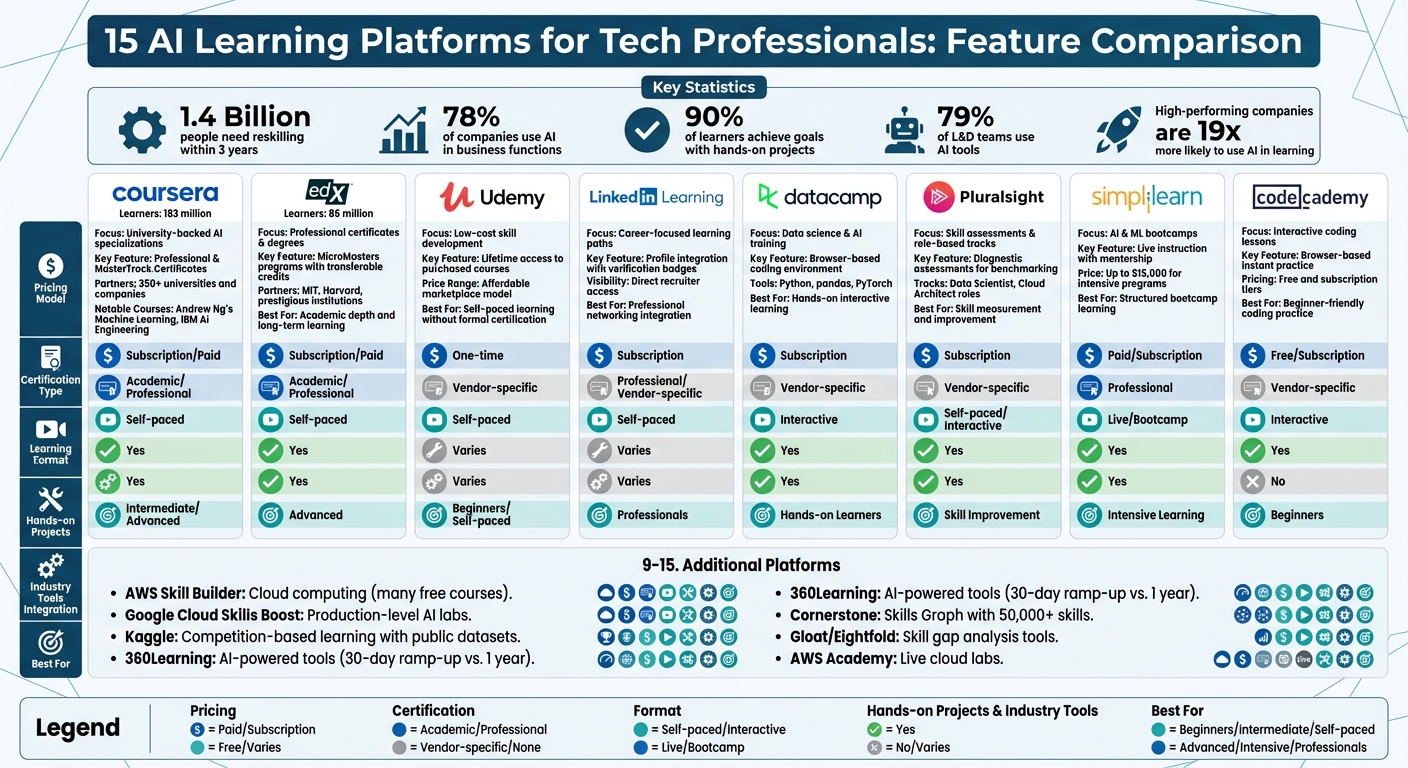
Comparison of Top 15 AI Learning Platforms for Tech Professionals
Choosing the right platform depends on your goals - whether you're after academic credentials, vendor-specific certifications, or hands-on experience. The market caters to various needs: some platforms focus on university-backed degrees, others prioritize practical skills, and a few tie learning directly to real-world applications. Among these, scale.jobs stands out by combining AI tools with human expertise, providing a unique edge for professionals aiming to turn new skills into job opportunities. The following comparisons highlight how scale.jobs often outperforms traditional platforms in bridging the gap between learning and career advancement.
1. Coursera – University-Backed AI Specializations
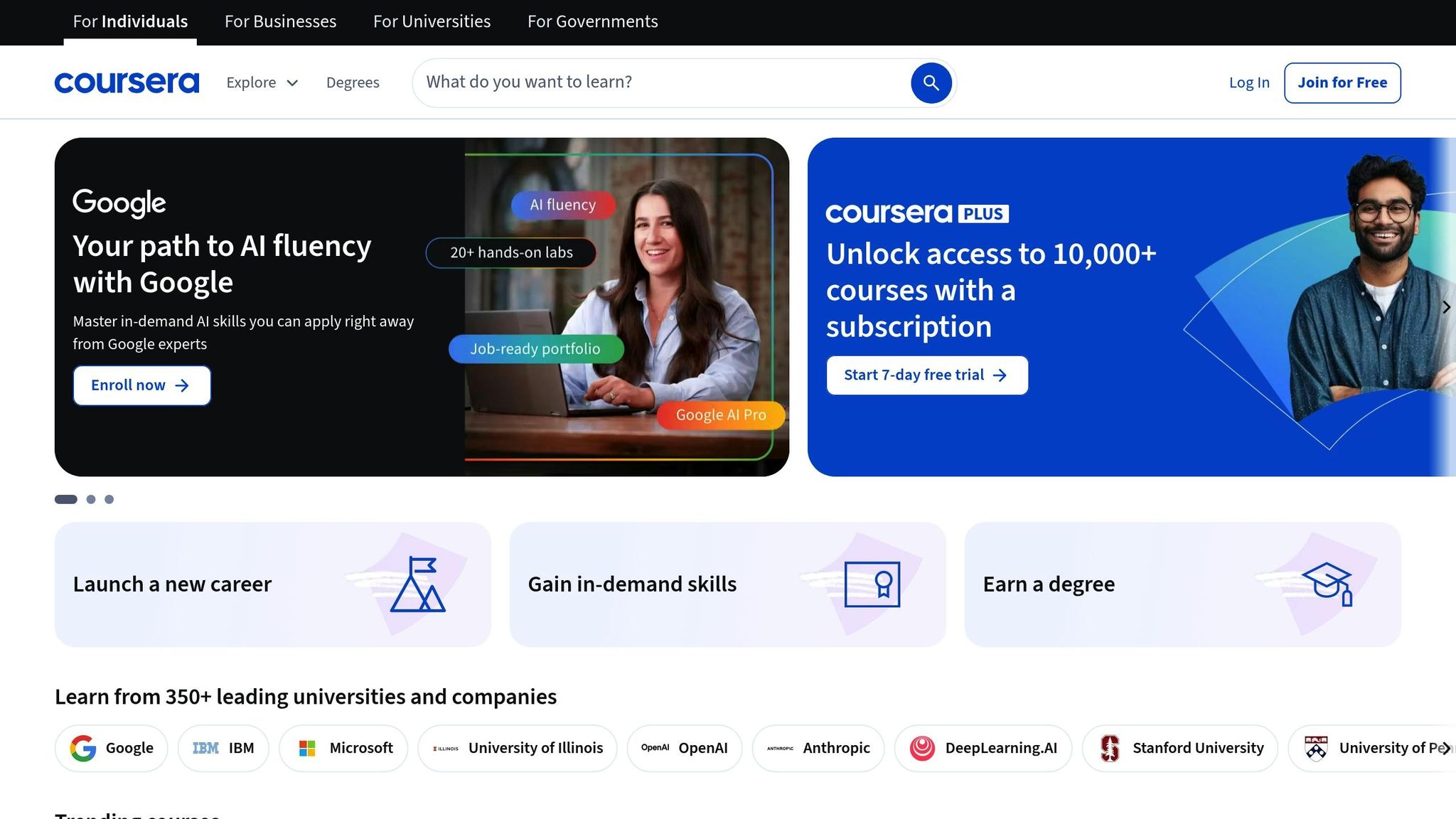
Coursera collaborates with over 350 universities and companies to offer structured AI education through Professional and MasterTrack Certificates. With 183 million registered learners as of June 30, 2025, it’s a go-to platform for tech training. Courses like Andrew Ng's "Machine Learning Specialization" and IBM's "AI Engineering Professional Certificate" are highly regarded and add credibility to resumes.
Why scale.jobs stands out:
- Human-assisted resume optimization ensures your Coursera credentials shine in ATS systems, while Coursera itself only provides certificates.
- Transparent proof-of-work via time-stamped screenshots shows exactly how your job applications are submitted.
- One-time payment for application services avoids Coursera’s recurring subscription model.
- Dedicated WhatsApp support keeps you updated on application progress, a service Coursera lacks.
- Tailored ATS-friendly cover letters align with your Coursera achievements to secure interviews.
Coursera is excellent for earning academic credentials, but scale.jobs turns those credentials into actionable career opportunities through personalized job search support.
2. edX – Professional Certificates and Degrees

edX offers programs from prestigious institutions like MIT and Harvard, focusing on MicroMasters and Professional Certificates that sometimes count toward full degrees. With 86 million learners, edX emphasizes academic depth and transferable credits, making it ideal for those pursuing rigorous, long-term learning.
Why scale.jobs excels:
- Human virtual assistants handle your job search while you focus on completing edX courses.
- AI-powered resumes adapt your edX credentials for specific roles in seconds.
- Flat-fee pricing eliminates the recurring costs associated with edX courses and separate job search services.
- Real-time application tracking with proof-of-work screenshots ensures transparency.
- ATS compliance expertise ensures edX certifications are formatted to pass screening systems.
While edX delivers academic rigor, scale.jobs ensures those achievements translate into career success.
3. Udemy – Low-Cost Skill Development
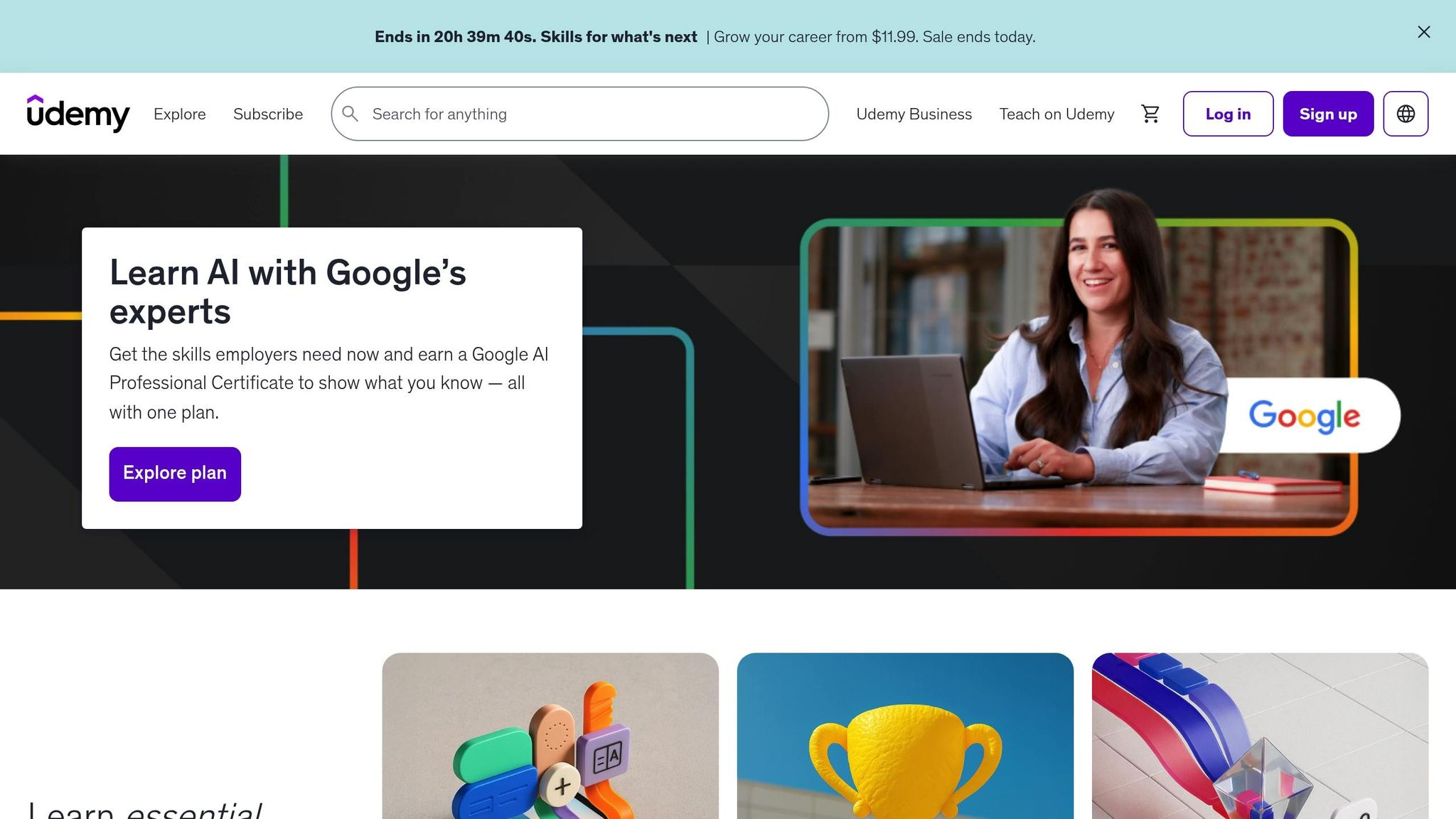
Udemy is a marketplace offering affordable courses on topics ranging from Python basics to advanced neural networks. It’s ideal for professionals who know what skills they need without requiring formal certification. Purchased courses remain accessible indefinitely, making it a flexible option for self-paced learning.
Why scale.jobs outperforms:
- Human reverse recruiters craft compelling narratives around your Udemy-acquired skills to appeal to hiring managers.
- ATS-optimized documentation ensures your self-taught expertise passes automated screening.
- Application execution across job portals, a service Udemy doesn’t provide.
- Transparent WhatsApp updates keep you informed of every submission.
- Refund guarantees for unused credits, unlike Udemy’s non-refundable course purchases.
Udemy equips you with targeted skills; scale.jobs ensures those skills lead to interviews through expert application management.
4. LinkedIn Learning – Career-Focused Learning Paths
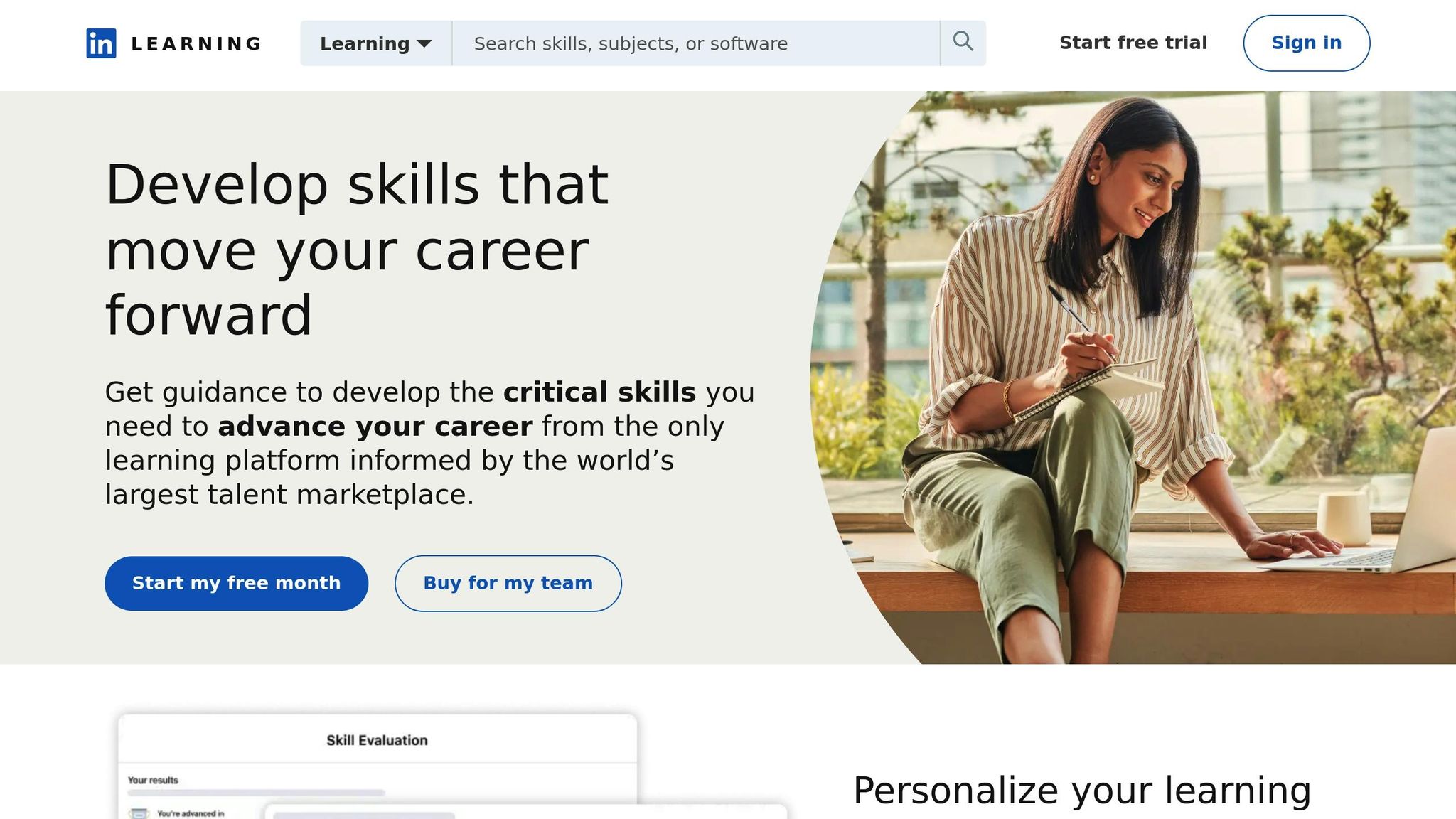
LinkedIn Learning integrates seamlessly with your professional profile, showcasing completed courses as credentials visible to recruiters. It offers a mix of technical, business, and soft skill courses, with verification badges that enhance your profile’s visibility.
Why scale.jobs is a better fit:
- Human-powered application strategies actively submit your credentials for relevant roles, going beyond LinkedIn badges.
- AI-generated, tailored cover letters complement LinkedIn Learning achievements for specific roles.
- ATS-optimized resumes ensure your profile translates into application-ready documents.
- Proof-of-work transparency with screenshots shows how and when applications are submitted.
- Time-saving virtual assistants handle job search logistics, freeing up your time for networking and interviews.
LinkedIn Learning makes your skills visible; scale.jobs actively uses them to secure job opportunities.
5. DataCamp – Data Science and AI Training
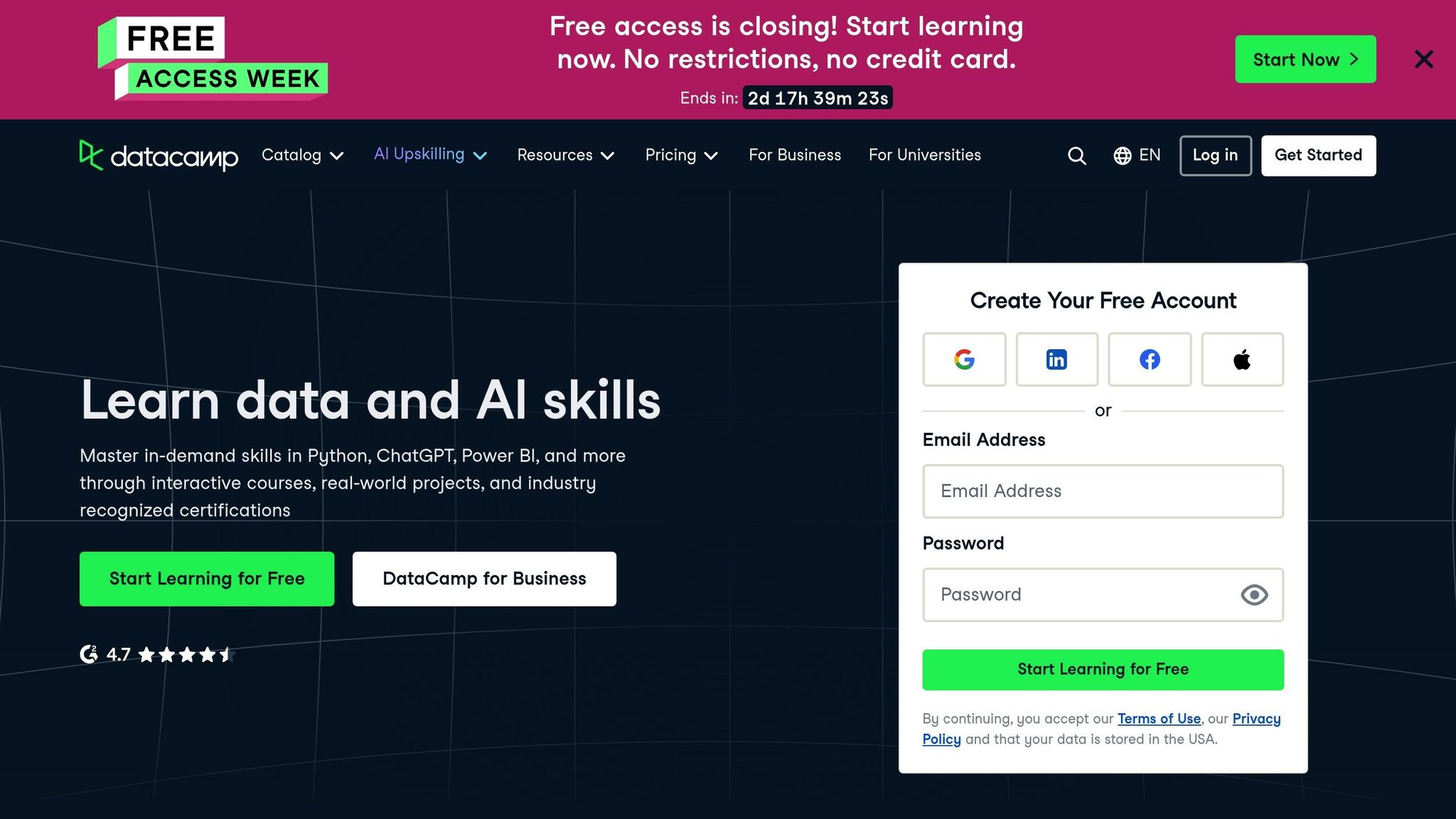
DataCamp offers hands-on, interactive modules for data science and AI. Its browser-based coding environment lets you practice Python libraries like pandas and PyTorch directly within lessons. Certificates are awarded upon completion, and progress is tracked through skill assessments.
Why scale.jobs delivers more:
- Human expertise transforms your DataCamp skills into compelling narratives for hiring managers.
- ATS-optimized resumes ensure your technical skills are formatted to pass screening systems.
- Application execution submits your profile for relevant roles while you focus on learning.
- Real-time WhatsApp updates provide transparency that DataCamp’s dashboard doesn’t offer.
- Flat-fee pricing avoids recurring subscription costs for learning and job search tools.
DataCamp builds your technical foundation; scale.jobs ensures that foundation leads to job offers.
6. Pluralsight – Skill Assessments and Role-Based Tracks
Pluralsight focuses on skill measurement with diagnostic assessments that benchmark your abilities. Role-based tracks for positions like Data Scientist or Cloud Architect ensure you learn what’s most relevant to your career goals.
Why scale.jobs is a better choice:
- Human reverse recruiters actively apply your Pluralsight-verified skills to relevant job openings.
- ATS compliance expertise ensures your skills are presented in formats that systems recognize.
- Proof-of-work transparency shows exactly how your applications are submitted.
- AI-powered responses to application questions save hours per job posting.
- Dedicated WhatsApp support provides real-time updates, a feature Pluralsight lacks.
Pluralsight helps you measure and improve skills; scale.jobs ensures they translate into tangible career progress.
7. Simplilearn – AI and Machine Learning Programs
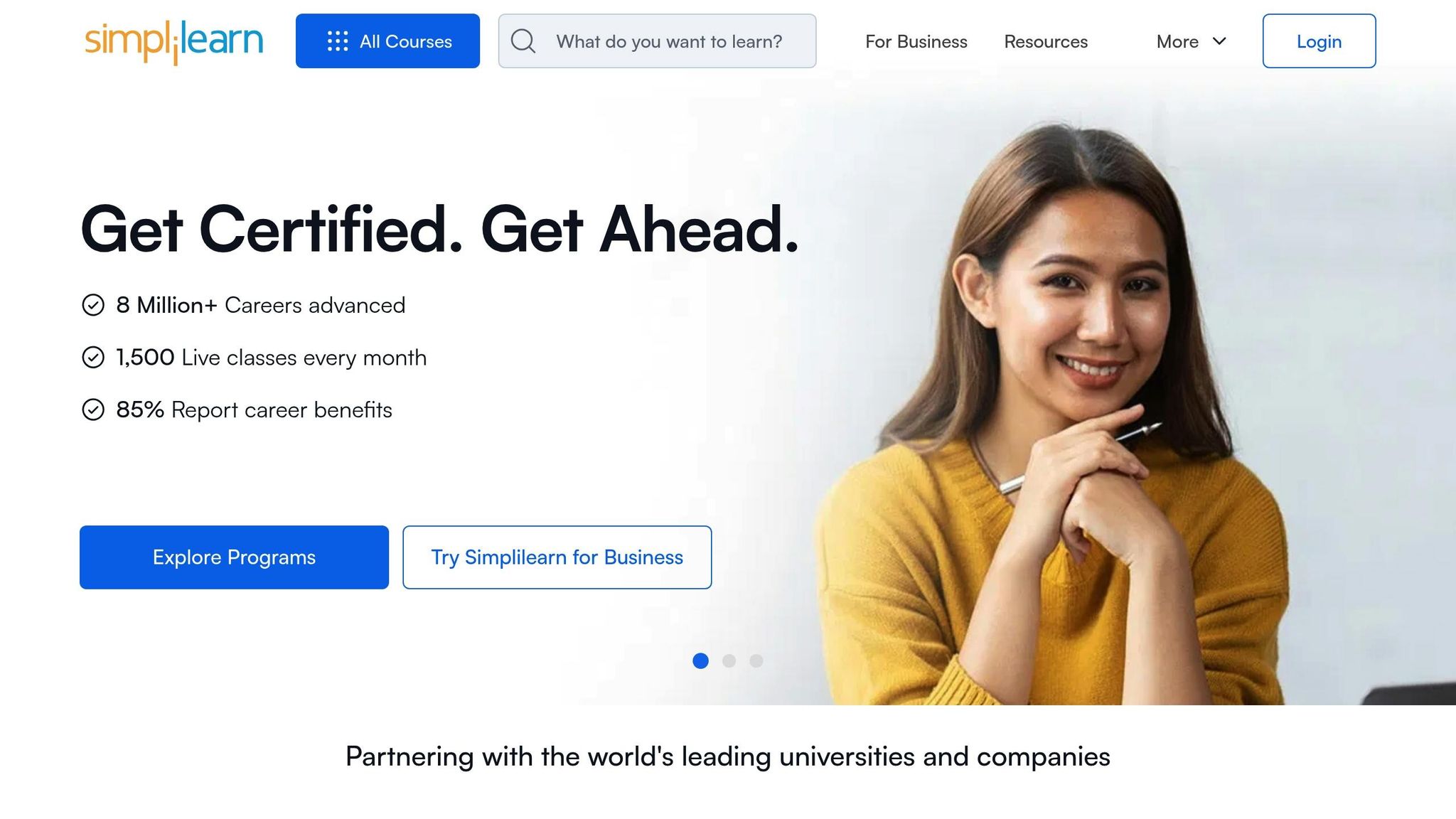
Simplilearn offers AI and machine learning certifications through partnerships with universities and tech companies. Its bootcamp model includes live instruction, mentorship, and real-world capstone projects to build a portfolio for employers.
Why scale.jobs surpasses Simplilearn:
- Human virtual assistants manage your job search logistics while you complete bootcamps.
- ATS-optimized portfolios ensure capstone projects are formatted for screening systems.
- Flat-fee pricing avoids the high costs of bootcamp tuition and separate job search services.
- Application execution across multiple portals, while Simplilearn offers only guidance.
- Proof-of-work transparency ensures accountability with time-stamped screenshots.
Simplilearn offers structured learning; scale.jobs ensures that learning translates into job offers.
8. Codecademy – Interactive Coding Lessons
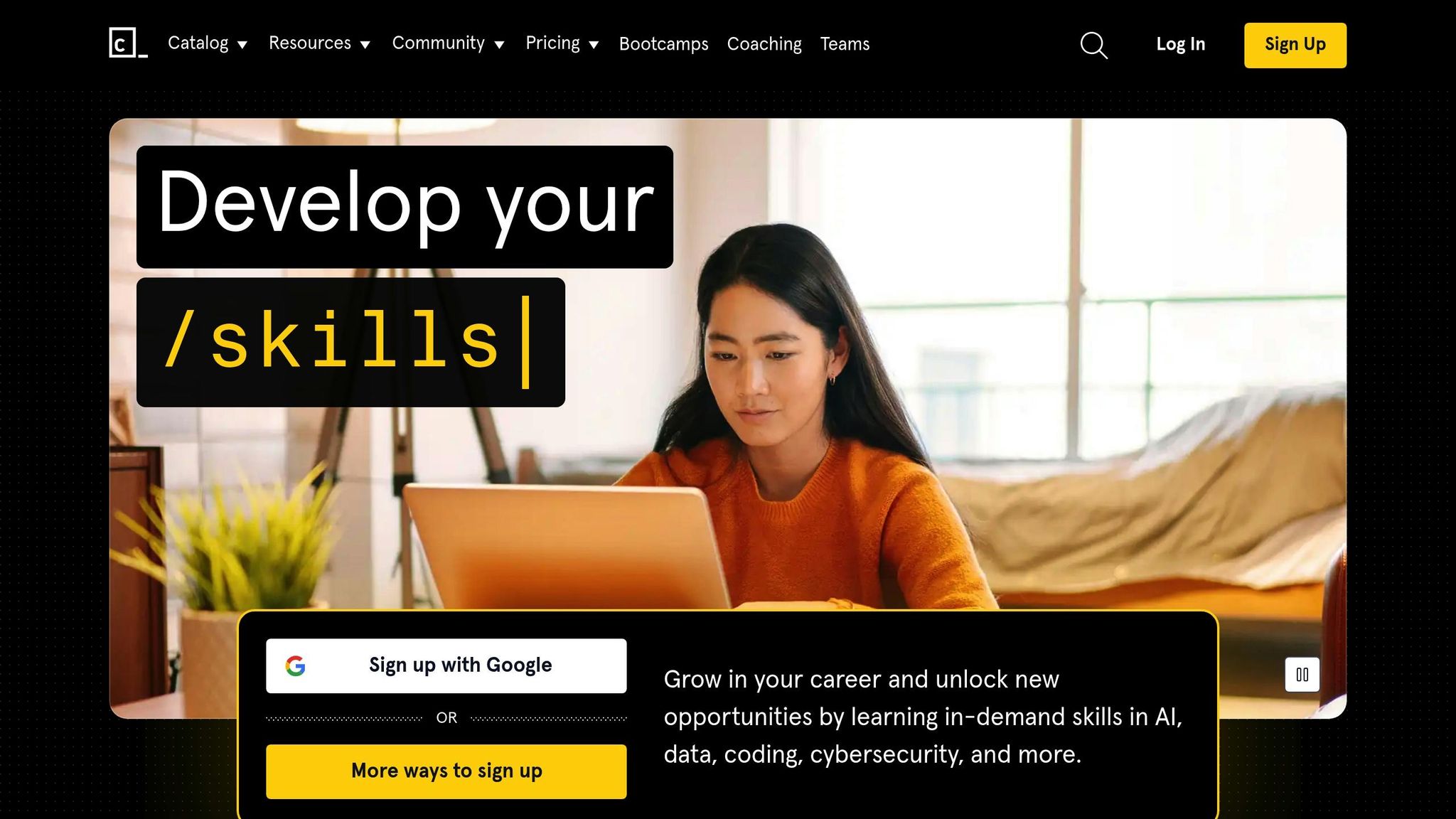
Codecademy provides interactive lessons for programming and AI-related skills. Its browser-based platform allows you to practice coding and see results instantly, with both free and subscription-based content.
Why scale.jobs is more effective:
- Human-powered resume optimization ensures Codecademy skills are presented effectively for ATS systems.
- AI-tailored applications adapt your skills for specific roles with ease.
- Dedicated application execution takes care of the job search process, which Codecademy doesn’t support.
- Transparent updates keep you informed of every application submitted.
- Flat-fee pricing eliminates ongoing subscription costs for both learning and job search tools.
Codecademy teaches coding; scale.jobs ensures your coding skills land you interviews and job offers.
How to Select the Right Platform for Your Career
Identify Your Career Goals and Skill Gaps
The first step in choosing the right platform is understanding your career objectives and the skills you need to develop. Are you looking for academic credentials or practical, hands-on experience? For roles in organizations that value formal education - like enterprise AI teams in Fortune 500 companies - platforms such as edX or Coursera provide university-backed certifications that can enhance your resume. On the other hand, if you're targeting startups or performance-driven teams, showcasing tangible achievements like Kaggle leaderboard rankings or deployed models on Hugging Face can make a stronger impact on hiring managers.
To pinpoint the skills you need, tools like Gloat or Eightfold can analyze job descriptions and workforce trends to identify gaps in your expertise. For example, these tools might highlight the need for proficiency in PyTorch, cloud infrastructure experience, or familiarity with retrieval-augmented generation (RAG) systems. Once you've identified these gaps, platforms like DataCamp (for Python and data science), AWS Skill Builder (for cloud computing), or Google Cloud Skills Boost (for production-level AI labs) can help you bridge them. After gaining new skills, consider using a job application service to craft an optimized resume that highlights your certifications and ensures it passes ATS (Applicant Tracking System) filters. By aligning your goals with the right platforms, you'll set yourself up for success.
Compare Features, Pricing, and Learning Formats
Different platforms cater to varying budgets and learning preferences. For instance, AWS Skill Builder offers many free courses, while more intensive programs like Simplilearn bootcamps can cost up to $15,000. If you're on a budget, platforms like Coursera and edX allow you to audit most courses for free and pay only for certificates, typically ranging from $39 to $99 per course. Codecademy also provides free introductory courses, making it a great option for exploring topics like ChatGPT or large language models (LLMs) before committing to advanced tracks.
Consider the learning format that best fits your schedule and goals. Self-paced video courses are ideal if you're juggling a full-time job, but they may lack the accountability of live, instructor-led sessions. Platforms like Pluralsight offer structured, role-specific tracks with assessments to gauge your progress, while Kaggle focuses on real-world practice using public datasets and competitive leaderboards. For those who need hands-on experience in environments resembling actual production settings, Google Cloud Skills Boost and AWS Academy provide live labs, which are particularly relevant since most early-career technical work now revolves around cloud-enabled systems.
Use Free Trials and Read User Reviews
Before committing to a platform, take advantage of free trials and user reviews to ensure it aligns with your needs. For example, Coursera offers 7-day free trials for specializations, allowing you to sample the course content and instructor style before making a financial commitment. Kaggle Learn provides free micro-courses on topics like machine learning basics, and Codecademy’s free tier includes interactive coding lessons directly in your browser. These trials can help you determine whether a platform’s teaching approach - be it video lectures, coding exercises, or competition-based challenges - matches your preferred learning style.
User reviews are also invaluable for gauging a platform’s effectiveness. For instance, Google’s AI Professional Certificate on Coursera has a 4.8/5 rating from over 9,113 learners (as of February 2026), while IBM’s AI Developer Professional Certificate boasts a 4.6/5 rating from more than 80,657 reviews. These ratings shed light on key factors like course difficulty, instructor quality, and how well the training translates into job-ready skills. Be sure to align reviews with your career goals - a program highly rated by data analysts may not be as relevant for aspiring cloud engineers, even if both involve AI training.
Conclusion
The tech industry is evolving at an incredible pace, making ongoing learning a must for anyone looking to stay relevant. With 1.4 billion people projected to need reskilling within three years due to the influence of AI, platforms offering practical, hands-on training have become essential tools for career growth. Whether you’re earning university-backed credentials on Coursera, showcasing your skills on Kaggle, or diving into cloud-based AI training with AWS, finding the right platform can help you bridge the gap between where you are now and where you want to be.
The transition from traditional courses to AI-driven, personalized learning paths mirrors how professionals are adapting - learning in real time, with immediate feedback and practical simulations. Research shows that high-performing companies are 19 times more likely to use AI in designing learning programs, and 79% of L&D teams have already incorporated these tools. This means your choice of learning platform today directly impacts your ability to compete in a job market where 78% of organizations are leveraging AI in at least one area of their business.
Still, learning new skills is just one part of the equation. To turn certifications and completed projects into job offers, you need a strong strategy for navigating the hiring process. This includes crafting ATS-friendly resumes, writing tailored cover letters, and managing your applications effectively. If you're finding it challenging to translate your new AI expertise into interviews, consider using tools like Scale.jobs’ AI resume builder and job search tools or job application service, which combine technology and expert guidance to help your credentials stand out.
The platforms discussed in this guide offer a range of options - from academic programs to community-driven projects - all aimed at keeping you competitive in an ever-changing industry. The key is to choose based on your career stage, budget, and preferred learning approach, and to commit to continuous improvement. The professionals who will excel in the coming years won’t just be those who learned AI once - they’ll be the ones who made learning an ongoing habit.
FAQs
Which AI learning platform fits my exact tech career goal?
The ideal AI learning platform varies based on your objectives. If you're looking to build a strong foundation in AI and machine learning, DeepLearning.AI provides excellent courses to get you started. For those aiming to enhance workforce readiness, Skillsoft integrates AI-driven tools to prepare learners for industry demands. On the other hand, if your focus is on job search assistance, Scale.jobs stands out by blending AI tools with human expertise. They offer ATS-friendly resumes, personalized cover letters, and real-time support - perfect for streamlining your path to a tech career.
How do I choose between certificates and project portfolios?
When deciding between certificates and portfolios, think about your career goals and the skills you want to emphasize. Certificates provide formal acknowledgment of your knowledge, making them a good choice for those transitioning careers or seeking credibility in a new field. On the other hand, portfolios demonstrate hands-on experience, which can be especially appealing to employers who value practical, applied skills.
Scale.jobs can help you present your portfolio effectively with ATS-optimized applications and human support, giving you an edge in the hiring process. Certificates are often a better fit for beginners or those changing career paths, while portfolios excel at showcasing real-world expertise and accomplishments.
How can scale.jobs help turn my new skills into interviews?
Scale.jobs blends advanced AI tools with human expertise to streamline your job search and boost your chances of landing interviews. It crafts tailored, ATS-friendly resumes and cover letters in just 24 hours, ensuring your applications catch the attention of recruiters. The platform also features one-click AI-generated interview responses and provides actionable insights to sharpen your job search strategy. With human virtual assistants handling your applications and delivering real-time updates, Scale.jobs helps you save time and turn your skills into career opportunities.