5 Benefits of Mentorship in AI Careers
Mentorship accelerates AI careers by speeding skill growth, clarifying direction, expanding networks, strengthening portfolios, and improving interview performance.

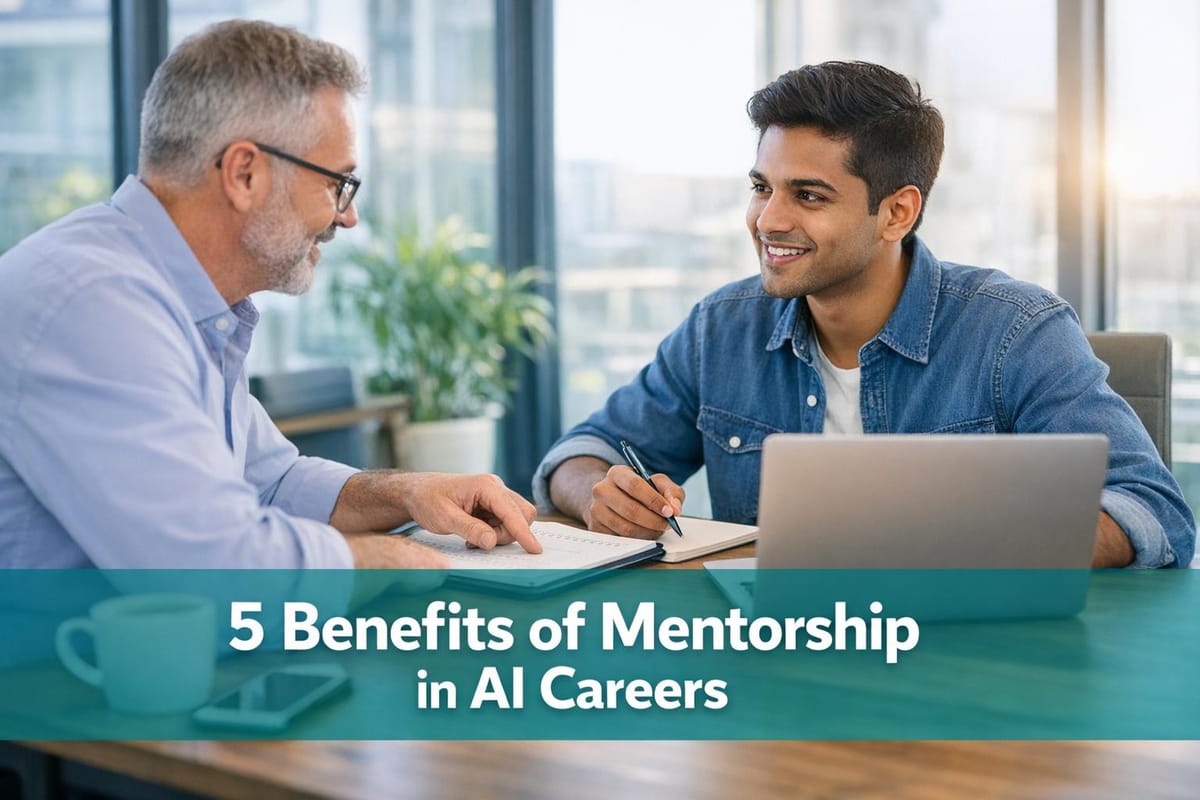
Mentorship is a game-changer for careers in AI. It accelerates growth, provides clarity, and bridges gaps that AI tools alone can't address. Here's why combining human mentorship with AI-powered tools is essential:
- Faster skill development: Mentors guide you on critical skills and real-world insights that online courses can't provide.
- Clear career direction: Mentors help you make informed decisions, leading to faster promotions and better pay.
- Expanded networks: Mentors introduce you to influential professionals and exclusive opportunities.
- Stronger portfolios: Hands-on guidance ensures your projects stand out to employers.
- Improved confidence: Mentors refine your communication and interview skills, preparing you for career-defining moments.
AI tools like scale.jobs complement mentorship by handling repetitive tasks like resume optimization and automating your job search, freeing you to focus on building relationships and growing your career. Together, mentorship and AI tools create a powerful combination for success in the fast-evolving AI industry.
5 Key Benefits of Mentorship in AI Careers with Statistics
Guiding data minds: how mentoring transforms careers for both sides
1. Faster Skill Development and Closing Skill Gaps
Relying solely on self-learning in AI can only take you so far. Sure, you can watch tutorials, complete online courses, and study documentation, but none of these will give you the real-world industry insights that come from someone who’s been through it all. A mentor doesn’t just teach you what’s popular right now - they help you focus on the critical skills that will shape your career.
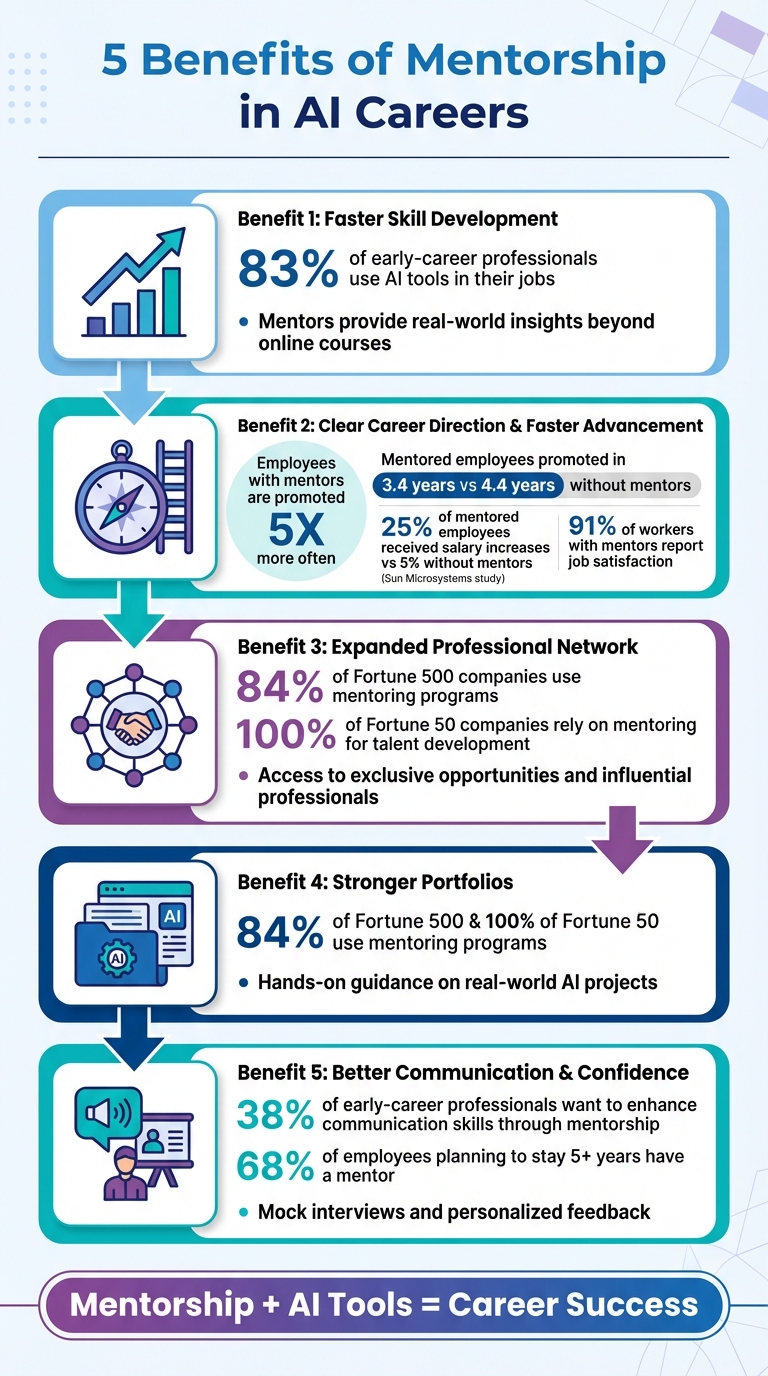
Here’s the situation: 83% of early-career professionals already use AI tools in their jobs, but these tools often automate routine tasks. While this streamlines work, it also limits opportunities to learn foundational skills on the job. Tasks like data analysis, report writing, and basic coding - once essential for building expertise - are now handled by AI. As a result, junior professionals miss out on developing soft skills like communication, problem-solving, and emotional intelligence. These aren’t things you can pick up from a YouTube tutorial. Mentors fill this gap by offering personalized, experience-based guidance that goes beyond the basics. They help you understand the "why" behind technical decisions, share the unspoken rules of your industry, and teach you how to navigate workplace dynamics - things you simply won’t find in an online course. While AI tools like Career Compass AI can answer technical questions around the clock, they can’t help you handle a tricky stakeholder meeting or decide when it’s time to shift your career focus.
This combination of mentorship and skill-building leads to faster and more focused career growth. Instead of wasting months trying to figure out which machine learning framework to master, a mentor with experience at your dream company can point you directly to the one that matters most.
Pairing AI tools with personalized mentorship takes this to the next level. Use AI to handle quick technical questions or use an AI resume builder, and save your mentor’s expertise for big-picture strategy and career advice. Platforms like scale.jobs blend AI efficiency with human mentorship seamlessly. Their free AI-powered resume checker and ATS tools take care of the technical details, while human recruiters provide tailored career guidance - giving you the best of both worlds.
2. Clear Career Direction and Faster Advancement
Navigating a career in AI without guidance can feel like stumbling through a maze. Should you dive into computer vision or focus on natural language processing? Is it time to lead a team or double down on your technical skills? These decisions can take years to figure out on your own, but a mentor can help you sort through them in months. They offer clarity, helping you balance immediate wins with long-term career goals. In a field as fast-moving and specialized as AI, having that kind of direction is invaluable.
The stats speak volumes: employees with mentors are promoted 5 times more often than those without one. On average, mentored employees see promotions after 3.4 years, compared to 4.4 years for those going it alone. And at Sun Microsystems, a five-year study revealed that 25% of mentored employees received salary increases, compared to just 5% of those without mentors. So, mentorship isn’t just about climbing the ladder faster - it’s about climbing it with better pay.
Mentors also bring a perspective you won’t find in job descriptions or generic online advice. They help you see how your specific role fits into larger business goals and market trends. Plus, they share the unspoken rules - like navigating office politics or avoiding common career pitfalls - that no course or training program will teach you. Armed with this insight, you can make smarter moves and avoid costly mistakes. Platforms like scale.jobs take this a step further by combining expert mentorship with job search tools to streamline your career growth.
Why scale.jobs Stands Out
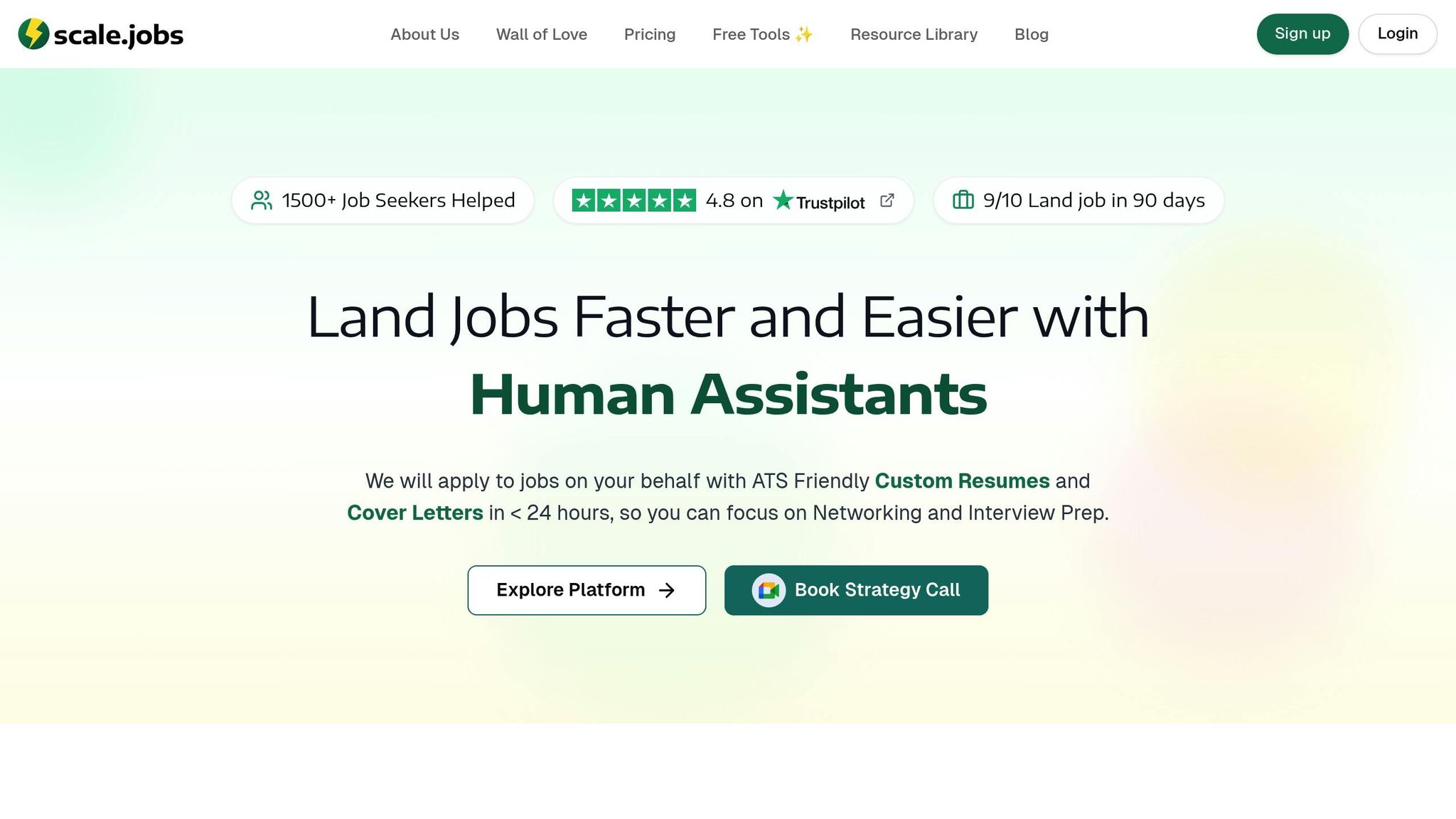
Unlike platforms such as LazyApply, which focus solely on automating applications, scale.jobs offers a more comprehensive solution. Here’s what sets it apart:
- Free ATS-compliant resume builder and job application tracker to keep you organized.
- AI Assistant Pro to create tailored resumes and cover letters for just $9/month during its launch offer.
- Reverse recruiter services with human assistants who handle applications for you, including real-time WhatsApp updates and proof-of-work screenshots.
- Saves you 20+ hours per week, giving you more time to network and connect with your mentor.
By handling the repetitive tasks of job searching, scale.jobs frees you up to focus on what really matters - building relationships and sharpening your skills. The reverse recruiter service even submits applications on your behalf, keeping you updated every step of the way.
The results? Mentorship paired with tools like these leads to real satisfaction. In fact, 91% of workers with a mentor report being happy in their jobs. With someone in your corner to help you avoid missteps, set SMART goals (Specific, Measurable, Achievable, Relevant, and Time-bound), and bridge the "AI generation gap" between junior and senior roles, you’re not just moving up - you’re shaping a career you’re excited about.
3. Expanded Professional Network and Job Opportunities
Mentorship doesn’t just help you sharpen your skills - it also connects you to the right people. In the field of AI, having a strong network can be just as important as technical know-how. Mentors often provide access to exclusive opportunities and introduce you to influential industry professionals who can open doors that might otherwise stay closed.
Here’s a telling statistic: 84% of Fortune 500 companies use mentoring programs to strengthen internal talent networks, and every single Fortune 50 company relies on mentoring for talent development. Kristen Howe from SHRM highlights this perfectly, saying mentors "can build rapport, share wisdom, spot problems, instill confidence and open doors for talented staff on the rise." A personal introduction from a mentor often carries far more weight than sending in a cold application.
Beyond introductions, mentors also help you refine your networking skills. They can guide you on how to approach senior professionals, navigate industry events, and build meaningful connections. While AI tools can assist in identifying key players within organizations, the human touch of a mentor is unmatched when it comes to making strategic introductions or advocating for you during critical moments like promotions.
A strong network doesn’t just enhance your career - it can be the key to unlocking opportunities you didn’t even know existed. Tools like scale.jobs can complement mentorship by automating mundane tasks like job applications, freeing up your time to focus on attending events and forming genuine relationships. With services like reverse recruiting and real-time updates via WhatsApp, you can dedicate more energy to building connections that matter.
Ultimately, a mentor’s introduction can do more than just help you meet the right people - it can position you within an ecosystem that keeps you informed about trends, job openings, and potential collaborations. That kind of access can make all the difference between landing your dream role and being overlooked.
4. Hands-On Project Experience and Stronger Portfolios
In today’s competitive AI job market, a strong portfolio often carries more weight than credentials alone. This is where mentors make a huge difference. They help you choose and complete projects that genuinely grab an employer's attention. From data collection and cleaning to model development and deployment, mentors guide you through the entire AI workflow, ensuring your portfolio highlights tangible results.
The stats speak for themselves: 84% of Fortune 500 companies and all Fortune 50 companies use mentoring programs to cultivate talent. Mentors help you avoid common portfolio missteps by sharing best practices in data handling and model selection. They also keep you updated on the frameworks employers are looking for - like TensorFlow or PyTorch.
But it’s not just about technical know-how. Mentors also teach you how to document your work and explain results to non-technical audiences. Employers want to see that you can turn complex model outputs into actionable insights. A good mentor will encourage you to document both the technical hurdles you’ve overcome (like debugging a tricky data pipeline) and the soft skills you’ve honed (like presenting findings to a team). These become valuable talking points during interviews.
Pro Tip: When shadowing or collaborating with a mentor, don’t just sit back and watch - ask for meaningful tasks. Whether it’s contributing to coding or tackling data analysis, hands-on involvement is key. Set specific goals for yourself, such as building a PyTorch-based recommendation system or improving a model’s accuracy by a set percentage. This ensures your projects are not only completed but also stand out as "portfolio-ready."
While tools like scale.jobs offer automated resume tailoring and job application assistance through their AI Assistant Pro, mentors provide something technology can’t: the human touch. They guide you in selecting impactful projects and help you understand the reasoning behind technical decisions. This kind of experience shapes a portfolio that reflects real-world exposure and sets you apart in a crowded field of AI job seekers. Combining technical expertise with the ability to present your work effectively becomes a cornerstone of your career growth.
5. Better Confidence, Communication, and Interview Performance
Landing an AI role is about more than just technical skills - you need the confidence to present yourself well and the ability to explain complex ideas in a way that resonates with others. This is where mentorship makes a real difference. Sure, AI tools can help draft interview scripts or suggest answers, but they can’t offer the emotional support and personalized feedback that only a mentor can provide.
A mentor creates a safe environment where you can ask questions without fear of judgment, admit what you don’t know, and practice challenging conversations without the stress of formal evaluations. They guide you in refining how you communicate, helping you move from simply stating, “Here’s what the model says,” to confidently explaining, “Here’s why this data is crucial for achieving our business goals.” This coaching often leads to practical exercises, like mock interviews, that sharpen your communication skills.
Mock interviews are a cornerstone of mentorship. They push you to tackle technical questions - like breaking down the architecture of a neural network - and behavioral scenarios, such as resolving a disagreement with a teammate. Unlike AI coaching, mentors can catch subtle mistakes and help you adjust your approach. They can also guide you through role-playing situations like salary negotiations or discussions about technical challenges, helping you refine your delivery in ways that canned AI responses simply can’t. You can also browse exclusive offers from our partners for additional interview prep resources.
While AI tools handle repetitive tasks, mentors step in to address the gaps in more nuanced skills, such as decision-making and strategic communication. This is critical because as AI automates routine work, foundational skills like explaining your decisions to stakeholders become even more important. In fact, 38% of early-career professionals have expressed a desire to enhance their communication skills through mentorship, understanding that technical expertise alone isn’t enough if you can’t clearly convey the value of your work.
Pro Tip: Don’t settle for vague feedback during mentorship sessions. Ask your mentor for targeted advice on tasks like presenting a data pipeline to executives or explaining model limitations to a product manager. Keeping a journal of insights from shadowing your mentor can be a game-changer, offering a go-to resource for improving your professional communication and interview readiness.
Conclusion
Mentorship in AI careers isn't just an optional perk - it's a key driver of growth. It accelerates skill development, clarifies career paths, expands professional networks, and hones communication abilities. A study by Sun Microsystems found that 25% of mentored employees experienced salary growth, compared to just 5% of those without mentors. This highlights the value of combining human guidance with the capabilities of AI tools.
The strongest approach blends human mentorship with AI-powered assistance. AI can handle repetitive, data-driven tasks 24/7, allowing human mentors to focus on offering empathy, intuition, and nuanced advice - qualities technology can't replicate.
This is where platforms like scale.jobs come into play. While human mentors provide strategic guidance and open doors to networking opportunities, scale.jobs offers AI-driven tools to optimize your resume, craft tailored cover letters, and prepare for interviews. On top of that, its Human Assistant service can manually manage applications, saving you over 20 hours a week. With this combination, you can focus on building relationships and preparing for career-defining opportunities.
The AI industry evolves rapidly, and 68% of employees planning to stay with their organization for more than five years have a mentor to guide them through these changes. It's this blend of technology and personal mentorship that turns good AI professionals into outstanding ones.
Take action today. Reach out to a potential mentor in your network - someone whose work you admire - and send them a personalized message about a specific project of theirs that resonates with you. Pair their insights with AI tools to handle the details, and you'll be setting yourself up for the kind of career growth that pays dividends for years to come.
FAQs
How can mentorship help you grow your skills in an AI career?
Mentorship plays a crucial role in advancing skills in AI careers by offering personalized guidance from seasoned experts. A good mentor doesn’t just share knowledge - they help pinpoint areas for improvement, provide tailored advice, and impart practical wisdom that speeds up the learning process. With their real-world experience and constructive feedback, mentors equip mentees with the tools and confidence needed to navigate complex problems effectively.
Beyond skill development, mentorship also supports professional growth. It can lead to valuable networking opportunities, help build meaningful industry connections, and provide career guidance. This blend of mentorship and expertise enables mentees to reach their goals more efficiently while staying competitive in the ever-changing AI landscape.
How does mentorship help AI professionals build stronger networks?
Mentorship plays a key role in helping AI professionals grow their networks by building strong, trust-based relationships. A good mentor can introduce you to valuable contacts - whether they’re peers, industry experts, or collaborators from research labs, startups, or professional organizations. These are connections that might otherwise be hard to reach.
Mentorship often includes activities like regular meetings, working together on projects, or attending industry events side by side. These interactions naturally lead to new introductions and referrals. On top of that, AI-powered mentorship platforms make it even easier by pairing mentees with mentors whose skills and connections align with their career aspirations. This opens up access to a wider range of professional opportunities.
How can mentorship and AI tools work together to boost your AI career?
Mentorship and AI tools work hand-in-hand to create a powerful blend for advancing careers in AI. On one side, AI tools bring data-driven insights, assess skill gaps, and automate tasks like drafting résumés or building personalized learning plans. On the other, mentors provide the human element - offering guidance, emotional support, and wisdom drawn from real-world experience. Together, they form a well-rounded strategy to tackle career hurdles.
AI tools can play a pivotal role by pairing mentees with mentors whose expertise aligns with their career goals. They can pinpoint areas for growth and handle repetitive tasks like job applications, freeing up mentors to focus on what matters most - giving tailored advice, sharing industry knowledge, and creating networking opportunities. By blending AI's precision with the personal connection of mentorship, professionals can achieve career growth that's not just faster but also deeply impactful.