
Automate Your Job Search: Complete Guide to Job Application Automation Tools
Automate form-filling, resume tailoring, ATS optimization, and tracking; compare top tools and human-assisted services to save time and increase interview rates.

Searching for jobs can be exhausting, especially when you're stuck repeating the same tasks like filling out forms, uploading resumes, and tracking applications. Job application automation tools simplify this process, saving you time and energy. These tools handle repetitive tasks, optimize your resume for hiring systems, and help you stay organized with features like dashboards, job matching, and follow-up reminders.
Here’s what you need to know:
- What They Do: Automate tasks like form-filling, resume tailoring, and application tracking.
- Key Features: Resume optimization, job matching, application dashboards, and follow-up reminders.
- Top Tools: Scale.jobs (human-assisted, tailored applications), LinkedIn Easy Apply (quick submissions), Jobscan (resume optimization), Huntr (application tracking), and more.
- Best Use Cases: Automate high-volume applications, personalize for mid-level and senior roles, and track progress to refine your strategy.
- Why It Matters: Automation saves hours of manual work, reduces errors, and helps you focus on networking and interviews.
Quick Tip: Tools like Scale.jobs combine automation with human assistance, ensuring accuracy and customization while avoiding bot flags. Flat-rate pricing and real-time updates make it a standout option.
Automation doesn’t replace your effort - it amplifies it. By using these tools wisely, you can streamline your job search and focus on what truly matters: landing the right role.
Automate Your Job Search Using AI (Indeed, LinkedIn, ZipRecruiter)
What Job Application Automation Tools Do
Automation tools take the hassle out of repetitive job-application tasks. Essentially, they act like digital assistants, handling everything from filling out application forms to tracking where you've applied and reminding you when to follow up.
Think of them as a bridge between you and the countless job boards, company career pages, and application systems out there. Instead of re-entering your information for every job, these tools store your details once and reuse them across multiple applications. They can also analyze job descriptions, suggest resume optimizations, and send reminders to keep you on track. By cutting down on administrative tasks, they free up your time to focus on more strategic parts of your job search.
Main Features of Automation Tools
Most job application automation tools come with a set of features designed to tackle the most frustrating parts of job hunting. One standout feature is resume customization. These tools scan job descriptions for relevant keywords and requirements, then recommend tweaks to make your resume align with what employers are looking for. For example, platforms like Jobscan compare your resume to job postings, improving its compatibility with applicant tracking systems (ATS).
Another key feature is application tracking. Tools like Huntr and scale.jobs provide dashboards that organize all your job applications in one place. You can view the status of each application, take notes about the company, and track deadlines. This eliminates the chance of accidentally applying for the same job twice or forgetting to follow up with a recruiter.
Job matching algorithms are also a big help. They sift through thousands of listings to suggest positions that align with your skills, experience, and preferences, saving you time and effort.
Automated follow-up reminders are another handy tool. These features let you set reminders to check in with recruiters or hiring managers after a specific number of days, keeping you engaged in the process without the need for manual tracking.
Scale.jobs takes these features a step further by combining automation with human expertise. Instead of relying solely on algorithms, scale.jobs employs trained assistants to manually submit applications, ensuring they meet ATS requirements. They also provide dedicated WhatsApp support, share proof-of-work screenshots, and help you avoid bot-detection issues that fully automated tools often encounter.
How These Tools Connect with Job Boards
The way automation tools integrate with job boards depends on the platform. Some tools use API connections with major sites like LinkedIn, Indeed, and Glassdoor. This allows them to pull job listings, submit applications, and update your profile directly, without requiring you to visit each site. LinkedIn Easy Apply is a great example - it’s built into the LinkedIn platform, making the process seamless.
Other tools rely on browser extensions or web scraping to auto-fill your information across various sites.
Company career sites present more challenges because each has its own application system. Platforms like Workday, Greenhouse, Lever, and Taleo have unique forms that can be tricky for fully automated tools to navigate. These systems often require human judgment to fill out correctly, and automation tools can struggle with bot-detection algorithms. Scale.jobs addresses this by using a human-powered approach, where trained assistants manage these complex forms to ensure accuracy and avoid detection issues.
The level of integration also affects how much control you have over the process. Tools with deep API connections can often auto-submit applications for you, while browser extensions usually require you to review and confirm each submission. Scale.jobs offers a balanced solution: human assistants handle the submissions, but you stay in the loop with real-time WhatsApp updates and proof-of-work screenshots.
Another important factor is data security. Connecting an automation tool to platforms like LinkedIn or Indeed means granting access to your profile and activity. Reputable tools use encryption and follow strict data protection protocols, but it’s always wise to review their privacy policies. Scale.jobs takes a cautious approach by operating on a one-time payment model, avoiding recurring access to your accounts. Once your campaign ends, so does their access - unless you choose to re-engage.
Next, we’ll dive into the specific features that make these tools a game-changer for job seekers.
Best Job Application Automation Tools Compared
Let’s break down some of the top tools in the job application automation space and see how they compare. The market offers a range of options to simplify your job search, but how do they stack up against scale.jobs? This platform takes a human-powered approach, combining ATS-optimized documents, real-time WhatsApp support, proof-of-work transparency, and a straightforward one-time payment model.
LinkedIn Easy Apply: Streamlined Submissions
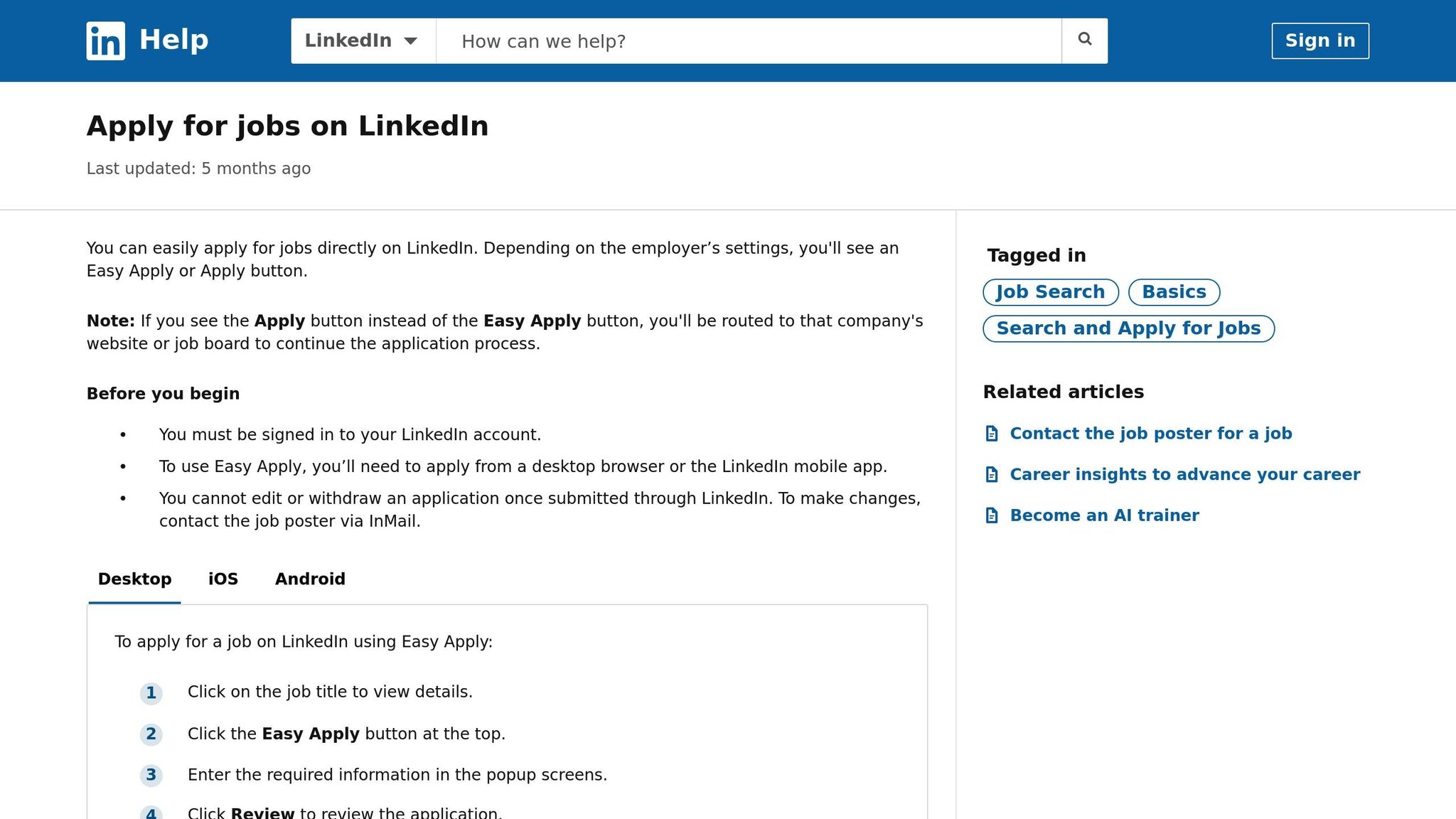
LinkedIn Easy Apply is a one-click feature that simplifies the application process. While it’s convenient, it doesn’t allow much room for customization or tracking. If you’re looking for tailored resumes and cover letters for each job, you’ll need to look elsewhere.
Jobscan: Optimizing Resumes for ATS
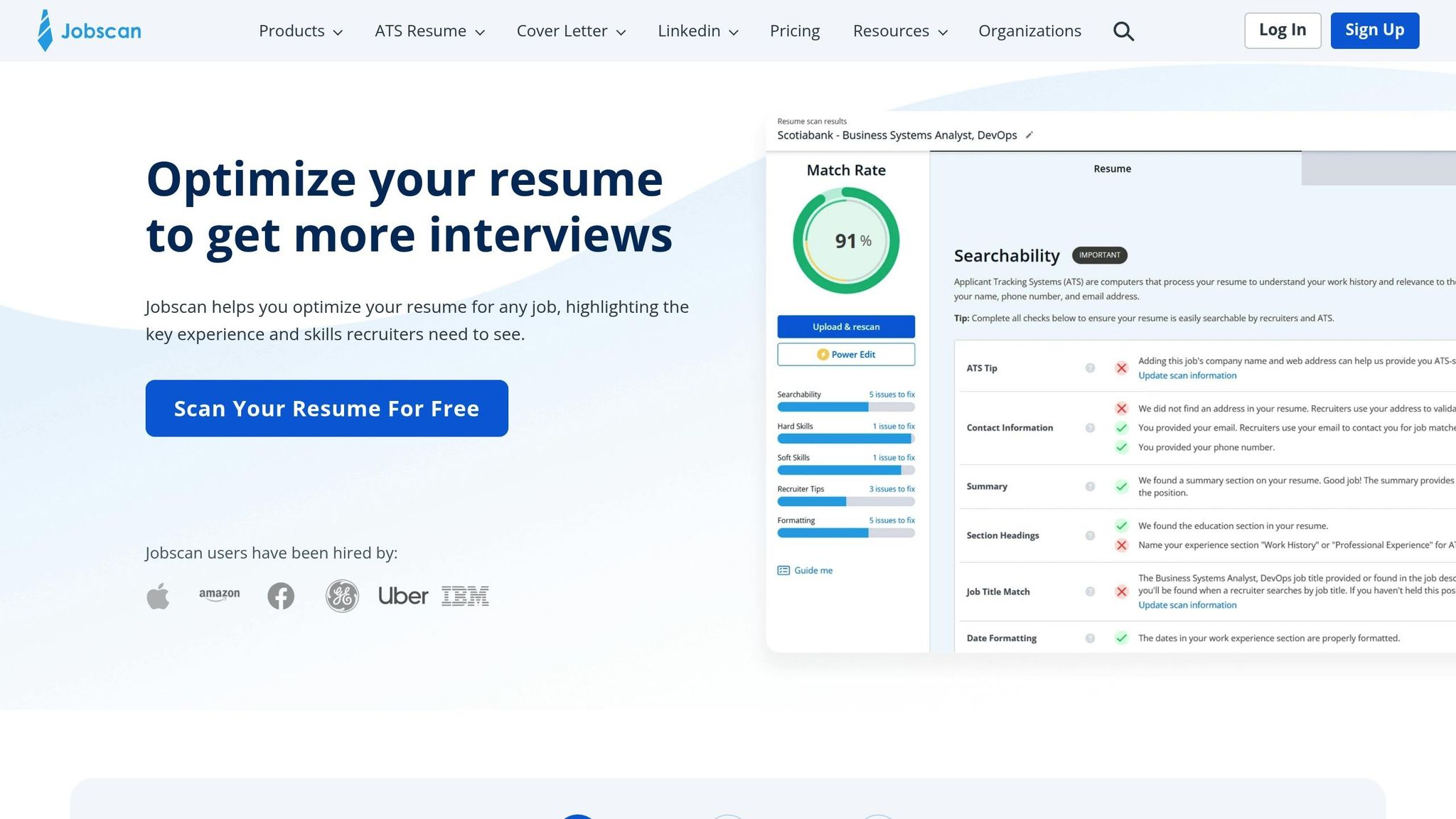
Jobscan focuses on making your resume ATS-friendly. It compares your resume to job descriptions, giving you a match rate score and recommending a 75% match for better results. With 99% of Fortune 500 companies using ATS software, this tool highlights missing skills, job titles, or education requirements to help boost your chances. Users have reported striking improvements, like one veteran who went from zero responses to a 62% response rate. Jobscan claims to triple interview opportunities while cutting down job search time. It also offers a free ATS-friendly resume builder and a Chrome extension for quick scans. However, Jobscan stops at optimization - you’ll still need to manually submit applications.
Huntr: Organizing Your Job Search
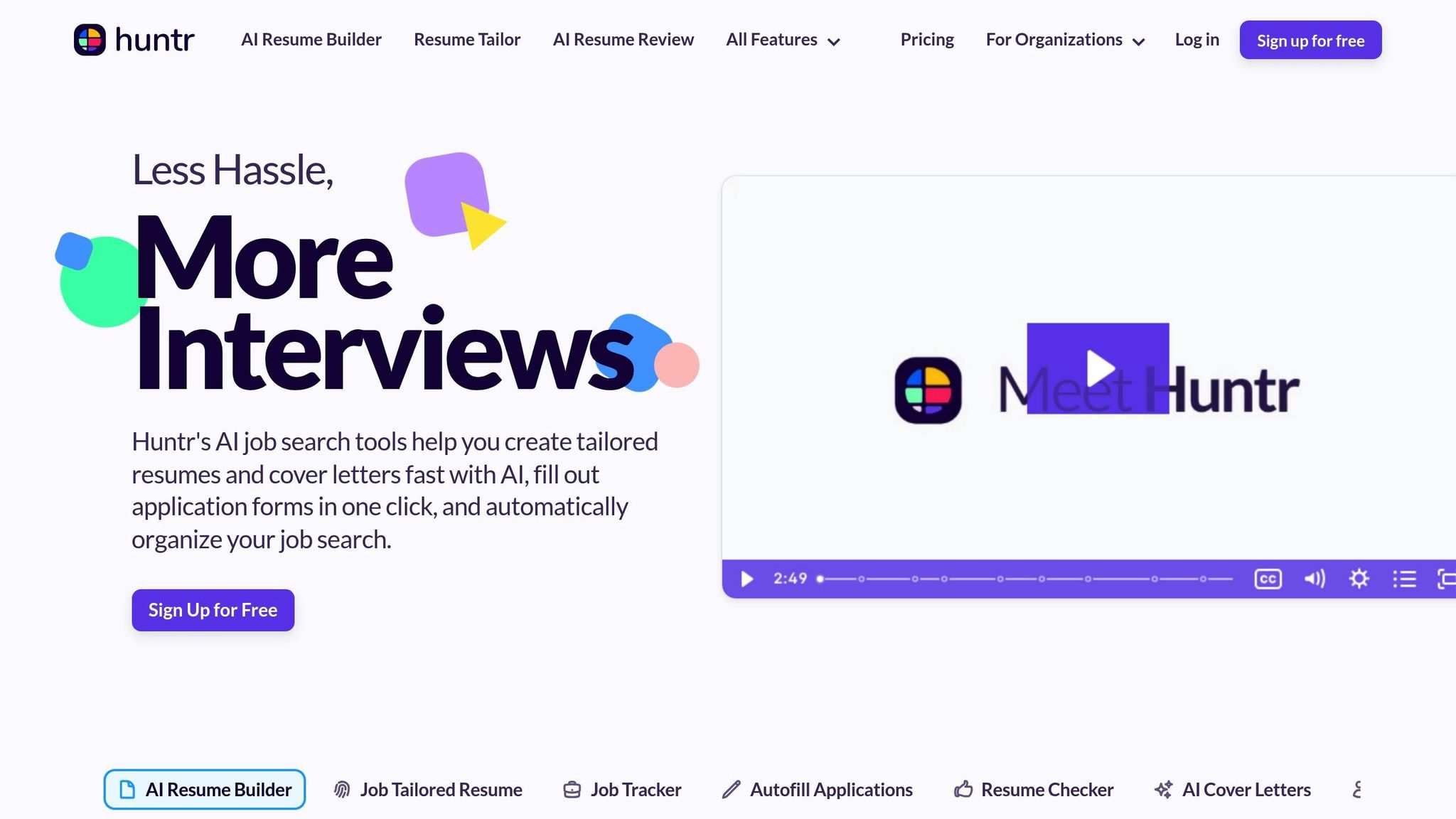
Huntr is all about keeping your job search organized. Its visual dashboard lets you track applications, take notes, set follow-up reminders, and see your entire pipeline at a glance. While it’s great for staying on top of your search, it doesn’t automate the submission process.
Scale.jobs vs Competitors – What Sets It Apart?
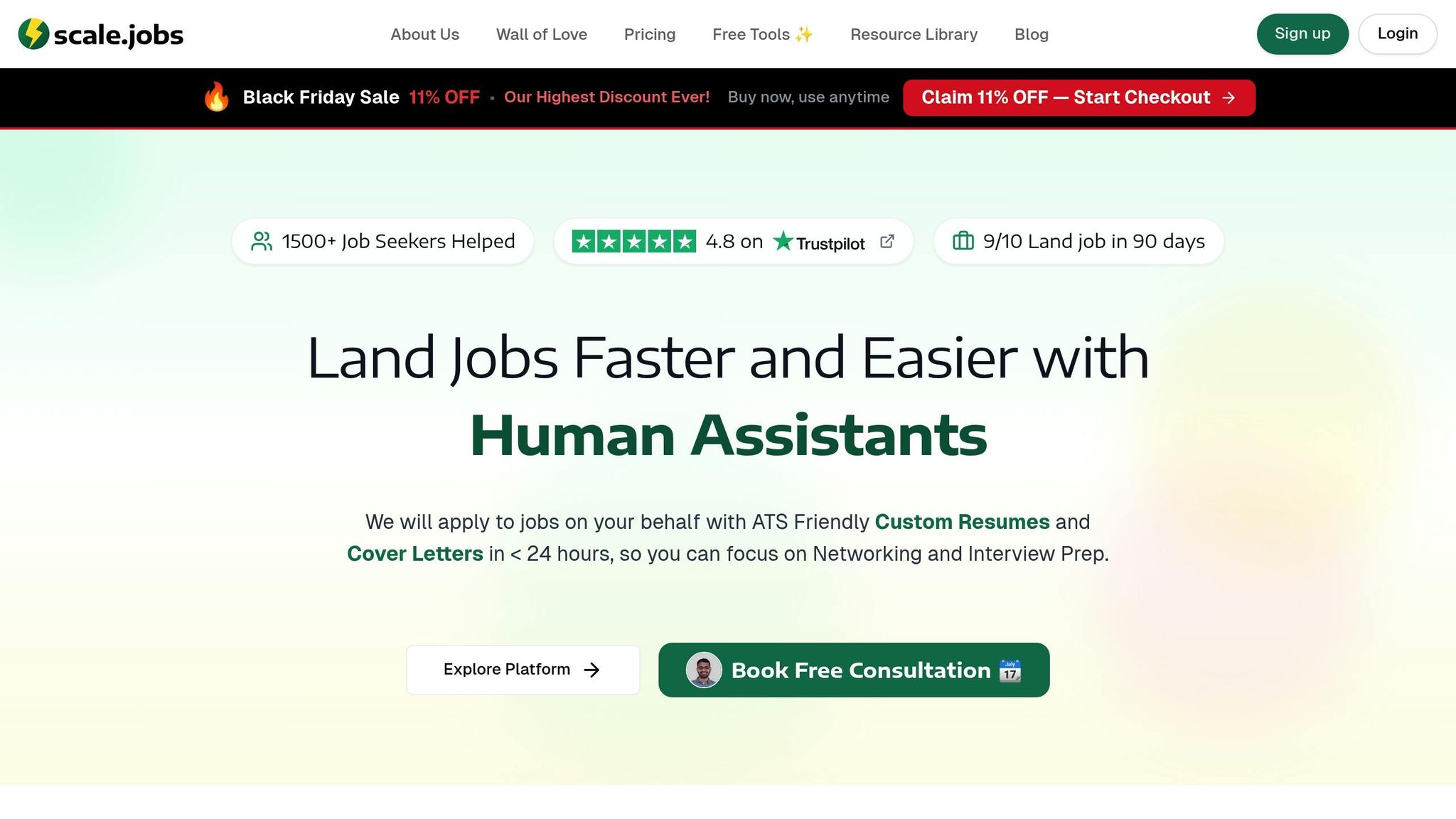
LazyApply vs scale.jobs: Why Human-Powered Wins
LazyApply automates submissions but often sends out generic applications, which lack the personal touch needed to stand out. Scale.jobs takes a different approach, relying on trained human assistants to manually submit tailored applications. Here’s what makes scale.jobs stand out:
- No bot flags: Every submission is handled manually, avoiding the risks of automated systems.
- Tailored documents: Resumes and cover letters are customized for each job.
- Proof-of-work transparency: You’ll get time-stamped screenshots of submitted applications and real-time updates via WhatsApp.
- Flat-fee pricing: A one-time payment (e.g., $199 for 250 applications) avoids recurring costs.
- Quick turnaround: Custom resumes and cover letters are ready within 24 hours.
This human-driven process ensures accuracy and personalization, giving you a competitive edge.
LoopCV vs scale.jobs: The Case for Personalization
LoopCV automates submissions using a one-size-fits-all resume, which doesn’t allow for customization. Scale.jobs, on the other hand, offers a more personalized service with features like:
- WhatsApp support: Stay connected with your human assistants for updates and strategy tweaks.
- Wide compatibility: Handles applications across corporate ATS platforms and niche job boards.
- Refunds for unused credits: If you land a job early, you’ll get your unused credits back.
- Thoughtful responses to screening questions: Human assistants craft answers tailored to each company’s requirements.
This level of personalization ensures your applications reflect your unique qualifications.
Jobscan vs scale.jobs: A Complete Solution
Jobscan is excellent for optimizing resumes, but it doesn’t handle submissions. On average, manual submission can take 10–15 hours per week. Scale.jobs takes it further by offering an end-to-end service:
- Complete package: From resume optimization to application submission, scale.jobs saves you time and effort.
- Transparent pricing: Flat-rate campaigns (e.g., $199 to $1,099) eliminate subscription fatigue.
- Live tracking: Monitor your submissions in real time with proof-of-work screenshots.
Here’s a quick comparison of key features:
| Feature | Scale.jobs | LazyApply | LoopCV | Jobscan | Huntr |
|---|---|---|---|---|---|
| Human-assisted applications | ✓ | ✗ | ✗ |
How to Use Job Search Automation Tools
To make the most of job search automation tools, begin by setting them up properly, decide when to automate versus personalize, and keep an eye on your results to refine your strategy.
Setting Up Your Automation Tools
Start with the basics: upload your ATS-optimized resume and a well-crafted master cover letter. These documents will act as the foundation for any customization, whether handled by a human assistant or an automated system. During the setup process, you'll also define your job search criteria. Be specific about job titles, industries, locations, and salary expectations - clear guidelines lead to better results, while vague criteria waste time and resources.
For tools like scale.jobs, human assistants use your criteria to search across multiple platforms, including job boards, corporate ATS systems like Workday and Greenhouse, and niche boards that other services might miss. For automated platforms like LoopCV or LazyApply, you'll set filters directly in their dashboards.
Next, configure your communication preferences. For example, you can opt for real-time WhatsApp updates to track submissions and responses. Also, upload any additional materials - like portfolios, writing samples, certifications, or project links - that could strengthen your applications. With scale.jobs, human assistants decide when to include these materials based on specific job requirements. Automated systems, on the other hand, typically lack this level of judgment.
Once your tools are set up, decide which applications need full personalization and which can be automated.
When to Automate and When to Personalize
Not all applications require the same level of effort. Knowing when to automate and when to personalize can save you time while improving your chances.
- High-volume, entry-level roles: Automate these applications using standardized materials. Platforms like scale.jobs can add minor personal touches as needed, ensuring applications are submitted correctly and avoid being flagged by bots.
- Mid-level positions in your field: Use a hybrid approach. These roles require some customization, but not hours of effort per application. This is where scale.jobs excels, with human assistants tailoring resumes and cover letters to match job descriptions, incorporating relevant keywords, and answering screening questions - all within 24 hours.
- Senior or specialized roles: For executive positions or niche jobs, full personalization is critical. These applications should include research on the company, tailored examples of how your experience aligns with their needs, and possibly a networking strategy. Even when using scale.jobs, review and refine submissions to ensure they align with the role's demands. Use WhatsApp to communicate specific achievements or points you'd like to highlight.
- Dream jobs at target companies: For roles you've been eyeing for months, automation alone won't cut it. Submit these applications yourself or work closely with your scale.jobs assistant to perfect every detail. Follow up with networking efforts, such as reaching out to employees or requesting informational interviews.
Screening questions also dictate your approach. Yes/no or dropdown questions can be automated, but open-ended prompts like "Why do you want to work here?" require thoughtful, personalized answers. Human assistants at scale.jobs excel at crafting responses tailored to your background and the company's needs, unlike automated platforms that may generate generic or unhelpful answers.
Once you've decided on your application strategy, track your progress to ensure you're on the right path.
Monitoring Results and Making Adjustments
Tracking your application metrics is essential for refining your approach. Many job seekers fail to analyze their results, leading to repeated mistakes. Here's how to stay on track:
- Monitor response rates: Aim for a 5–15% response rate. Strong materials should yield callbacks within 3–5 days. With scale.jobs, you can use the dashboard to see where your applications went, when they were submitted, and which ones got responses. This helps identify trends - for example, certain job titles or industries might generate better results, or applications submitted earlier in the week might perform better.
- Focus on effective platforms: If you're getting more interviews from direct applications on company career pages compared to aggregator sites like Indeed, adjust your strategy. Human assistants on scale.jobs can prioritize these higher-success channels.
- Review rejection patterns: If you're consistently rejected at the screening stage, your resume might not be ATS-friendly or may lack key skills. If you're getting interviews but not advancing, your interview preparation might need improvement. Scale.jobs offers unlimited AI-assisted interview prep in their Pro tier to help you practice.
- Fine-tune your targeting: If you're overqualified, you'll be seen as a flight risk. If underqualified, you won't pass the initial screening. Focus on roles where you meet 70–80% of the requirements for the best balance of competitiveness and growth potential.
- Calculate cost-per-interview: Evaluate the return on investment. For example, if you spend $299 on scale.jobs' Standard plan (500 applications with two human assistants) and get 15 interviews, your cost-per-interview is about $20. Compare that to the time you'd spend applying manually - if each application takes 20 minutes and your time is worth $25/hour, 500 applications would cost you over $4,000 in time alone.
- Experiment with resume versions: If your response rate is low, try different resume formats or emphasize different skills. Scale.jobs' AI Assistant Pro allows unlimited base resumes, so you can test what works best.
- Set weekly reviews: Spend 30 minutes each Friday reviewing your dashboard. Note which applications generated responses and plan any adjustments for the next week. If you're using scale.jobs, message your assistant to tweak your strategy - like focusing on remote roles or expanding your search radius.
- Request refunds for unused credits: If you land a job before using all your application credits, scale.jobs offers refunds for unused submissions - a rare perk in this industry.
The key isn't just to apply for more jobs - it's to apply smarter. By analyzing your metrics and adjusting your approach, you'll improve your chances of landing interviews while saving time. Automation handles the repetitive tasks, but your strategic input ensures you're moving closer to your career goals.
Conclusion
Job search automation isn’t about handing over control - it’s about reclaiming your time and energy for the tasks that truly make a difference. Did you know that manual job applications can eat up more than 20 hours a week on repetitive tasks? By automating the tedious parts, you free yourself up to focus on strategic moves that advance your career.
The right tools can make all the difference. For example, ATS-optimized resumes boost your chances of clearing initial screenings. Application trackers help you stay organized, so no opportunity slips through the cracks. Automated submissions ensure your applications consistently reach hiring managers. However, while bots can lead to generic submissions that get flagged, going fully manual often leaves you burnt out and overwhelmed.
Scale.jobs offers a smarter, balanced solution:
- Human-assisted, personalized applications
- One-time flat fee with refunds for unused credits
- Real-time WhatsApp updates and proof-of-work for full transparency
- Custom resumes and cover letters delivered within 24 hours
- No bot flags or generic templates
This approach lets you work smarter, not harder.
Whether you’re new to the job market or a seasoned professional, automation can give you the edge. Start with Scale.jobs’ free tools to try out the platform. Need more tailored support? Their AI Assistant Pro plan is just $9/month (limited launch offer) and provides unlimited customized resumes and cover letters. For a fully hands-off experience, human assistant plans start at $199 for 250 applications.
The job market moves fast. Spending weeks on manual applications means your competition is getting ahead while you’re stuck in the grind. Automation helps you reclaim that time, so you can focus on what really lands jobs - networking, preparing for interviews, and building your personal brand. The tools are ready for you. It’s time to take the leap and gain your competitive edge.
FAQs
How do job application automation tools ensure the security of my personal information?
When you use job application automation tools, your personal information is often protected through various security measures. These typically include encryption to keep your data secure while it's being transmitted, secure storage systems to block unauthorized access, and adherence to data protection laws such as GDPR or CCPA.
To pick the right tool, focus on ones with transparent privacy policies and clear explanations of how your data will be used. Features like two-factor authentication add an extra layer of security. It's also wise to check user reviews and ensure the tool comes from a trusted provider to reduce any risks to your personal information.
How can I effectively balance automation and personalization in job applications?
To find the right mix of automation and personalization in your job applications, focus on tools that save time while still allowing you to tailor your materials for each role. Start by building a basic resume and cover letter template using automation tools. From there, customize these documents for each position, emphasizing the skills and experiences that align with the job description. AI-powered tools can help you fine-tune your resume by incorporating relevant keywords, improving your chances of getting through applicant tracking systems (ATS). While automating application submissions can be a time-saver, don’t skip the step of sending personalized follow-up messages to recruiters or hiring managers - it’s a great way to make a lasting impression. Lastly, always review and tweak any automated content to ensure it genuinely represents your qualifications and personal voice.
How can I evaluate if job application automation tools are helping me improve my job search?
To evaluate how well job application automation tools are working for you, focus on tracking a few key metrics. Begin by noting the number of applications you send out, the interview invitations you receive, and how often employers respond. Compare these numbers from before and after you started using the tools to spot any changes or improvements.
Another important factor is the time you're saving. Look at how much less effort you're spending on repetitive tasks like tailoring your resume or keeping track of applications. If these tools are cutting down on manual work, keeping you organized, and boosting your overall success rate, they’re likely making a difference. Use the data you gather to fine-tune your strategy and get the most out of these tools.