
ATS Resume Score: How to Check Yours Free Before Applying
An ATS-friendly resume alone won't win interviews; make sure it parses correctly, matches job keywords, and shows measurable impact.


Applicant Tracking Systems (ATS) determine whether your resume reaches a recruiter. If your resume isn’t formatted correctly or lacks relevant keywords, it may never be seen. Tools like Jobscan, Resume Worded, and ATSGrade help you evaluate and enhance your ATS score for free. These tools identify keyword gaps, common formatting issues, and measurable achievements, ensuring your resume aligns with job descriptions. Aim for a match rate of 75% or higher to improve your chances. For those applying to many jobs, services like scale.jobs offer tailored resumes and handle submissions for you, saving time and effort.
Quick Overview:
- Jobscan: Focuses on job-specific keyword alignment; free plan offers 5 scans/month.
- Resume Worded: Analyzes 30+ factors, emphasizing measurable achievements.
- ATSGrade: Highlights parsing issues like formatting errors.
- scale.jobs: Provides end-to-end resume writing and application services for high-volume applicants.
Choose the right tool based on your job search needs, whether you're refining a few resumes or managing multiple applications.
How to Check Your ATS Resume Score for Free
Step 1: Upload Your Resume to Free ATS Checkers
Start by selecting a tool that aligns with your goals. Jobscan is a great choice if you're targeting a specific job description. It evaluates your resume against the job posting, providing a "match rate" that highlights key hard and soft skills, along with essential keywords. Simply upload your resume as a PDF or Word file and paste the job description into the platform. With the free plan, you get about 5 scans per month, which is enough to test a few applications.
If you're more interested in understanding how an ATS reads your resume's structure, try ATSGrade. It simulates ATS parsing, showing how your formatting and text are extracted. This can help you identify potential issues, like tables or columns, that might confuse the system. For a more comprehensive tool, JobShinobi offers a 7-day free trial of its Pro features, which include ATS analysis, a LaTeX-based resume builder, and job matching that pulls requirements directly from job postings.
Once you've uploaded your resume, take a close look at the scan results to pinpoint keyword gaps and formatting problems.
Step 2: Read and Interpret Your Score
Pay attention to two main outputs: match rate percentages and formatting flags. The match rate measures how well your resume aligns with the job's keywords. For a strong application, aim for a score of 75% or higher on free scans. A lower score may indicate missing critical skills or industry-specific terms.
Formatting flags are equally important. They reveal whether the ATS can correctly parse your resume and extract essential details like contact information and work history. Tools like ATSGrade use a detailed evaluation system to highlight issues, while other platforms flag missing metrics or problematic soft skills. For example, phrases like "team player" or "strong communication skills" might trigger warnings unless they're backed by specific achievements.
Use these details to refine your resume before submitting it.
Step 3: Apply the Feedback to Your Resume
Start by fixing any parsing errors. If the tool shows that your contact information or job titles aren't being read correctly, simplify your formatting. Avoid using tables, text boxes, or intricate headers, and opt for a clean, single-column layout to ensure ATS compatibility.
Next, address keyword gaps. Add missing hard skills directly into your experience section, but go beyond just listing them. Rewrite bullet points to show how you’ve applied these skills, incorporating measurable outcomes wherever possible. For instance, instead of saying you "managed a team", specify that you "led a team of 10 to achieve a 20% increase in productivity." Tools often highlight the lack of quantifiable impact as a major weakness, so include numbers and metrics to strengthen your resume. If you're still struggling, consider working with a professional who specializes in ATS-optimized resumes.
This free evaluation process is a great starting point for exploring tools like Jobscan, Resumeworded, and Scale.jobs, which will be discussed in more detail later.
3 tools to check your ATS resume score for free!
Jobscan vs Resumeworded: Which ATS Checker Should You Use?
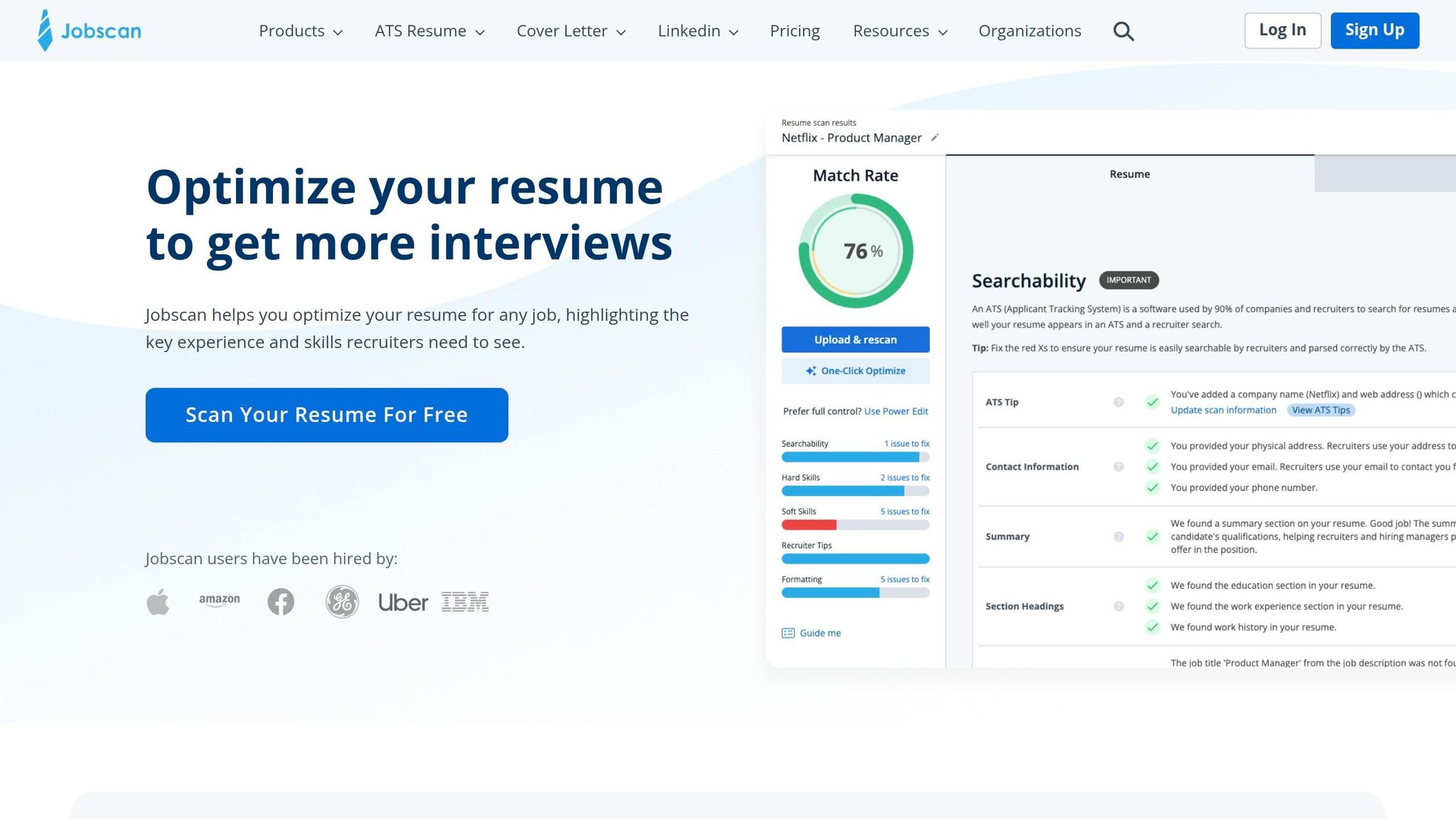
When it comes to improving your ATS resume score, choosing the right tool can make a big difference. Jobscan emphasizes job-specific keyword alignment, while Resume Worded hones in on overall resume quality and hiring manager preferences. On the other hand, scale.jobs takes things a step further by offering tailored resume creation and direct application submissions. Knowing these distinctions can help you avoid wasting time on irrelevant metrics and focus on what truly matters.
Jobscan: Strengths and Limitations
Jobscan stands out for its focus on job-specific keyword matching. By analyzing a job description and your resume, it generates a Match Rate to show how well your resume aligns with the job. Aiming for a score of 75% or higher is recommended before submitting an application. Jobscan also identifies the ATS (Applicant Tracking System) a company uses - such as Workday, Greenhouse, or Taleo - and provides formatting tips to ensure your resume parses correctly.
However, Jobscan has its drawbacks. It treats all keywords equally, often encouraging users to include exact phrases without considering their context. This can lead to keyword-stuffing, where soft skills are listed rather than demonstrated through achievements. Additionally, the free plan limits users to 5 scans per month, which may not suffice for those applying to multiple positions. Moreover, Jobscan provides feedback but leaves the task of rewriting and submitting resumes entirely up to you.
Resumeworded: Strengths and Limitations
Resume Worded takes a broader view by analyzing 30+ factors that hiring managers prioritize - such as measurable achievements, career growth, ATS compatibility, and active language usage. Its "smart keyword weighting" differentiates between essential qualifications and preferred skills, ensuring your resume reflects what matters most. The platform also flags common errors, like listing soft skills instead of showcasing them through accomplishments. As Resume Worded explains:
"Jobscan identifies missing keywords and recommends adding them... Resume Worded catches issues that hurt your credibility: soft skills listed instead of demonstrated."
The "Magic Target" feature allows users to adapt their experience for new roles in just 2–3 minutes, making it particularly helpful for career changers. However, like Jobscan, Resume Worded stops at providing feedback. For job seekers applying to numerous positions, the need to revise and submit each resume manually can slow progress.
Next, let’s explore how scale.jobs simplifies the process by combining feedback with action.
Why scale.jobs Stands Out for Active Job Seekers
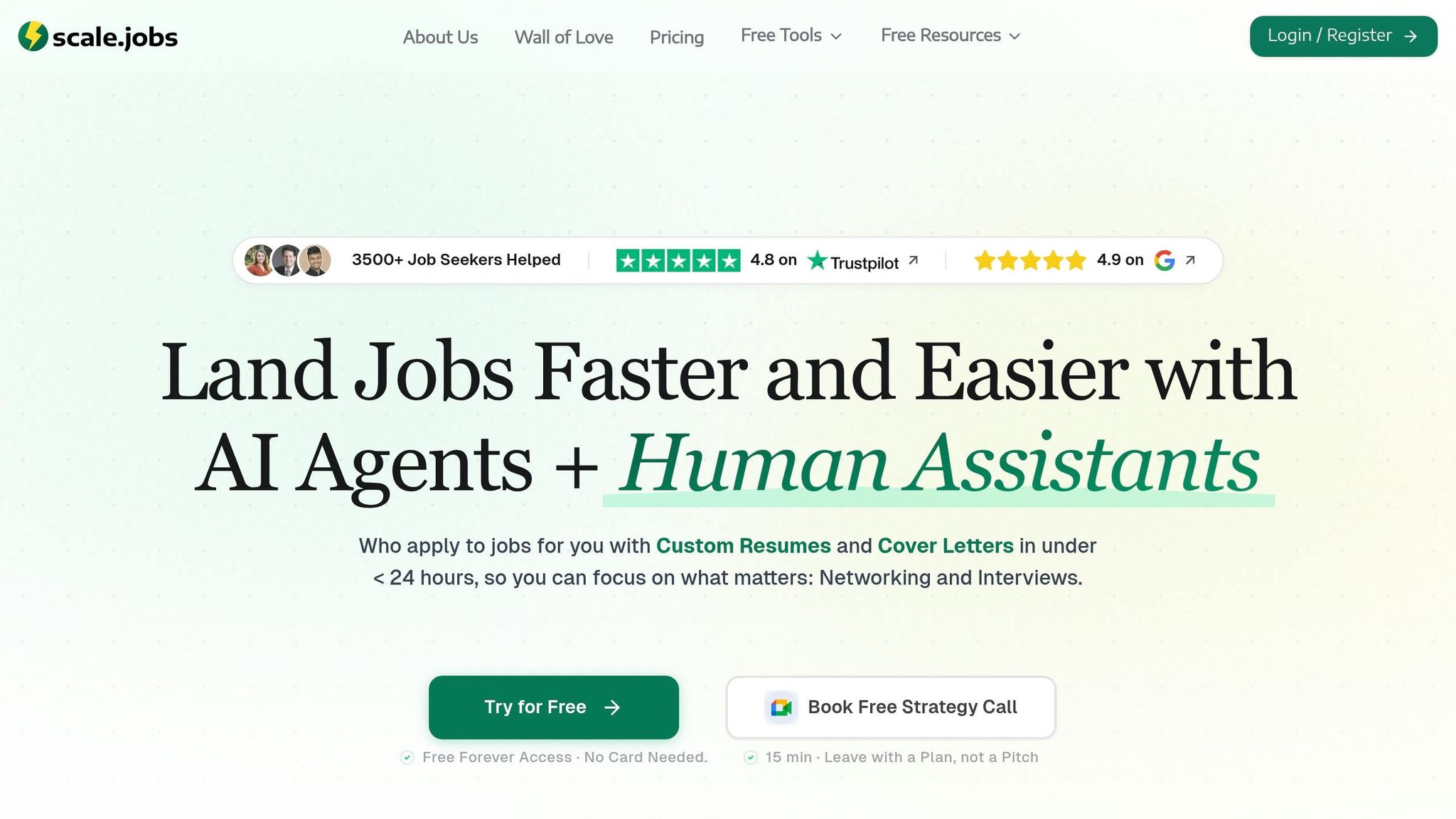
While Jobscan and Resume Worded excel at diagnostics, scale.jobs goes further by turning insights into action. Instead of requiring users to manually adjust their resumes and handle submissions, scale.jobs offers a fully integrated service. Trained assistants create custom resumes tailored to each job posting and handle the entire application process. Users receive time-stamped proof-of-work screenshots via WhatsApp, ensuring transparency.
Here’s how scale.jobs outperforms both tools for active job seekers:
- Human-written customization: Professionals tailor your resume using the keyword logic from Resume Worded and the ATS formatting insights from Jobscan.
- End-to-end application submission: Assistants handle every detail, from filling out forms to navigating application portals, saving you hours of effort.
- ATS-ready documents: Resumes are formatted to pass parsing checks, avoiding pitfalls like tables, columns, or unnecessary soft skills.
- Flat-fee pricing: Pay once for a set number of applications ($199 for 250, $299 for 500, $399 for 1,000), with refunds for unused credits. No recurring fees.
- Transparent updates: Real-time notifications and proof-of-work screenshots replace the uncertainty of automated tools.
Feature-by-Feature Comparison
| Feature | Jobscan | Resume Worded | scale.jobs |
|---|---|---|---|
| Human involvement | None - automated keyword analysis | None - automated feedback engine | Human assistants manage everything |
| Resume customization depth | Keyword suggestions only | Feedback on 30+ factors | Full rewrites for each job posting |
| ATS handling | System-specific formatting tips | Parsing accuracy checks | ATS-optimized resumes for each job |
| Application execution | Manual submissions by user | Manual submissions by user | Assistants handle all submissions |
| Transparency | Match rate percentage | Score breakdown | Time-stamped proof via WhatsApp |
| Pricing model | Free (5 scans/month), subscription | Free tier, subscription | One-time payment, refundable credits |
Who Should Use Jobscan or Resume Worded
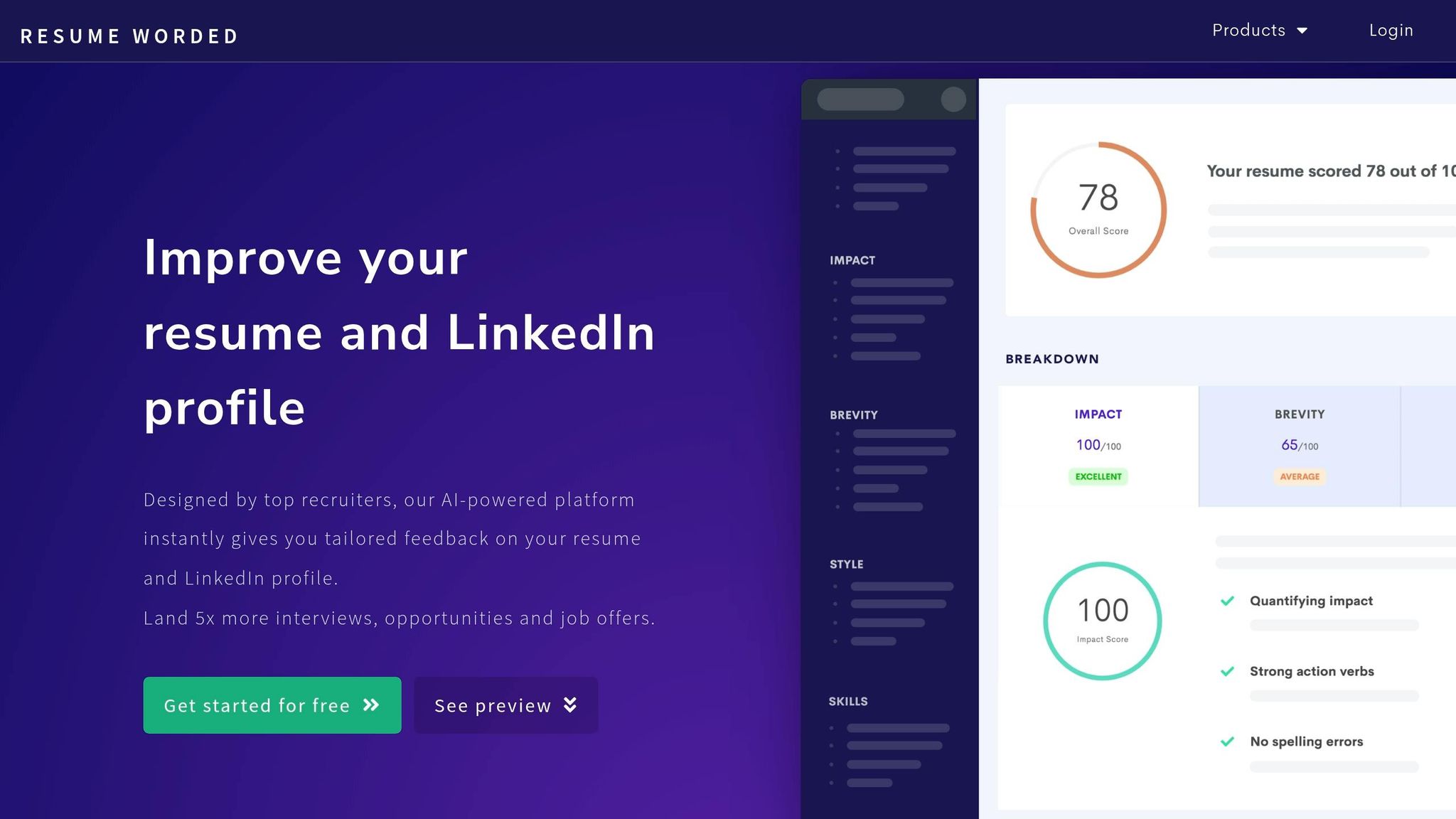
- Jobscan: Ideal for job seekers focusing on a few specific roles who need quick keyword alignment. The free plan’s 5 scans per month work well for selective applicants who prefer to handle their own submissions.
- Resume Worded: Best for those refining a base resume or transitioning to a new industry. It’s perfect for users who want detailed feedback and have the time to implement changes themselves.
Who Should Choose scale.jobs
Choose scale.jobs if you’re actively applying to numerous roles and want to maximize efficiency without sacrificing quality. This service is tailored for candidates who’d rather focus on networking and interview preparation than spend hours tweaking resumes and filling out applications. With its resume writing and application services, scale.jobs simplifies the entire process, from optimization to submission.
Feature Comparison: Jobscan vs Resume Worded vs scale.jobs
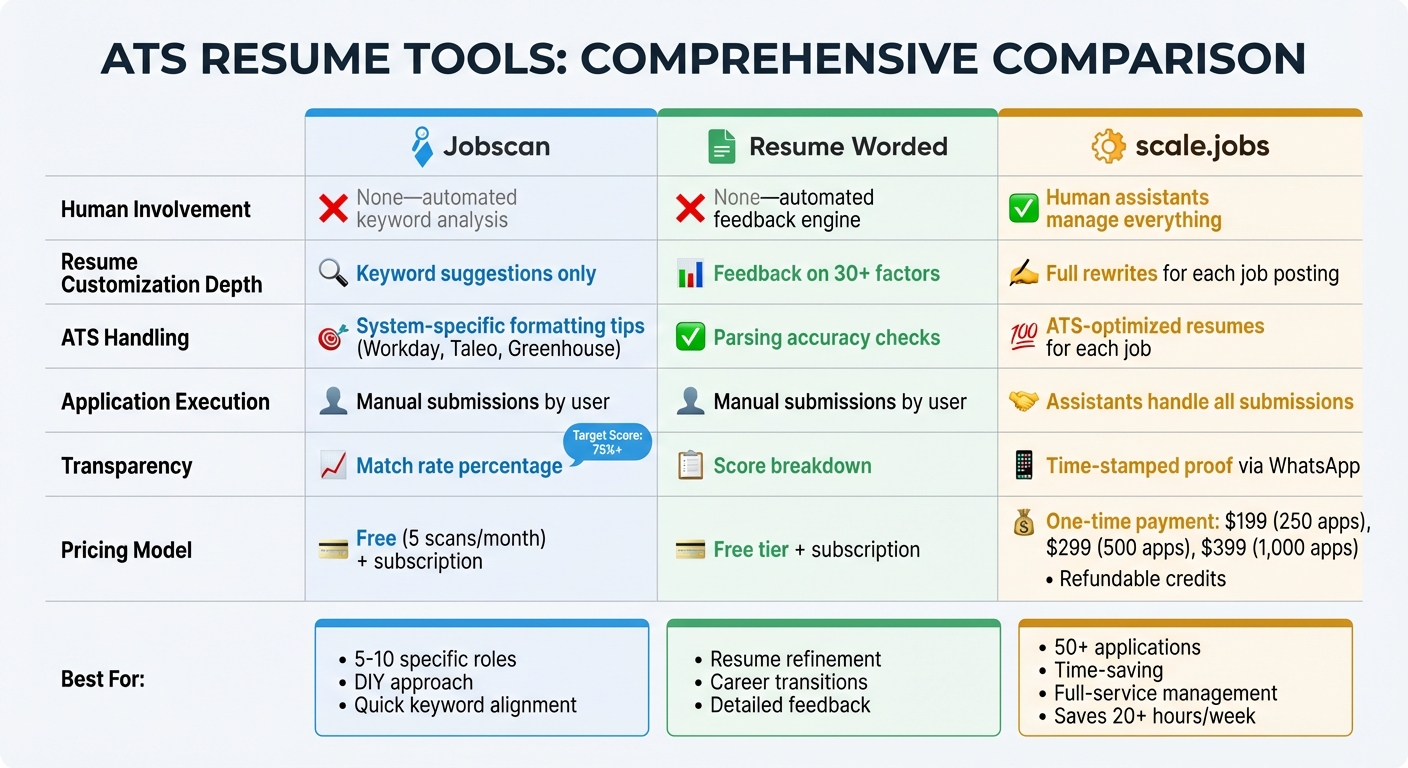
Jobscan vs Resume Worded vs scale.jobs: Complete ATS Tool Comparison
Feature-by-Feature Breakdown
Here’s how Jobscan, Resume Worded, and scale.jobs stack up across six important features. Each offers a unique way to tackle ATS optimization, making it essential to understand their differences to choose the right fit for your job search.
| Feature | Jobscan | Resume Worded | scale.jobs |
|---|---|---|---|
| Human involvement | Fully automated | Fully automated | Human assistants write and submit every application |
| Resume customization depth | Identifies missing keywords; user adds them manually | Evaluates 30+ factors; reframes bullet points quickly | Fully customized resumes written for each job posting |
| ATS handling | Identifies specific ATS (Workday, Taleo, Greenhouse); flags formatting issues like tables or columns | Highlights ATS parsing with section recognition | ATS-optimized formatting applied by trained assistants for every submission |
| Application execution method | User submits manually after reviewing feedback | User submits manually after applying suggestions | Human assistants manage form entry, uploads, and submissions |
| Transparency and proof of work | Match Rate percentage (aim for 75%+ score) | Score breakdown across 30+ factors; parsing preview | Time-stamped screenshots via WhatsApp; live application dashboard |
| Pricing model | Free plan (5 scans/month); subscription for unlimited scans | Free "Score My Resume" tool; subscription for advanced features | One-time payment: $199 (250 apps), $299 (500 apps), $399 (1,000 apps); refunds for unused credits |
Key Takeaways
Each platform offers a distinct workflow and set of features. Here's how these differences can influence your job search.
Jobscan shines in identifying ATS types and pointing out formatting errors that could cause parsing issues. However, as Resume Worded points out:
"Jobscan: Basic keyword matching. Recommends adding soft skills from job descriptions (hiring managers view this as a red flag - they want to see these demonstrated through accomplishments, not listed)."
Resume Worded takes a deeper dive by analyzing over 1.2 million resumes and incorporating direct feedback from hiring managers. Its ability to prioritize essential qualifications over secondary skills makes it a step up in diagnostics. However, both Jobscan and Resume Worded require you to rewrite and manually submit your applications, which can be time-consuming.
scale.jobs, on the other hand, combines the best of both worlds - integrating ATS-specific insights from Jobscan and the advanced resume analysis of Resume Worded. But it doesn’t stop there. Trained human assistants handle the heavy lifting, creating tailored, ATS-friendly resumes and managing the entire submission process. Real-time WhatsApp updates and a live dashboard ensure complete transparency and save job seekers significant time - up to 20+ hours per week. This makes it ideal for those juggling multiple applications or wanting to focus on networking and interview preparation instead of tedious form-filling.
The flat-fee pricing model also stands out. Instead of recurring subscriptions, you pay once for a set number of applications. If you land a job before using all your credits, you receive a refund for the unused portion. This structure aligns the service’s success with your own, ensuring accountability and clear value.
When deciding between these tools, consider your specific needs: whether you prefer a do-it-yourself approach with diagnostic tools or a fully managed service like scale.jobs that handles both optimization and execution.
Who Should Use Each Platform?
When Jobscan or Resumeworded Make Sense
Jobscan and Resume Worded are ideal for job seekers focusing on 5–10 specific roles and willing to take a hands-on approach to their applications. These platforms are best suited for those who enjoy fine-tuning their resumes, identifying keyword gaps, and tailoring their documents for each job manually.
Jobscan stands out by pinpointing the exact ATS (Applicant Tracking System) a company uses - whether it's Workday, Greenhouse, or Taleo - and offering formatting tips to ensure your resume aligns with that system. This is especially useful if you're targeting a select group of companies and want to ensure your resume is compatible with their software. On the other hand, Resume Worded dives deeper with its 30+ factor analysis, evaluating elements like career progression, quantified achievements, and LinkedIn profile alignment. Its "Magic Target" feature allows you to adjust bullet points efficiently, taking just 2–3 minutes per application, making it a great choice for targeted tweaks without overhauling your entire resume.
These platforms are most effective if you plan to refine your resume once and reuse the updated version across applications. They are also budget-friendly, with pricing tiers ranging from $19–$49/month. If you have the time and prefer a DIY approach to your job search, these tools provide great insights and actionable feedback.
For those who find manual resume updates overwhelming, however, the next option offers a more streamlined solution.
When scale.jobs Makes More Sense
If you're applying to 50+ jobs and need a more automated yet personalized solution, scale.jobs offers a hands-off approach by leveraging human assistants to manage the entire application process. This platform is a practical choice for job seekers who are balancing a full-time job, dealing with visa requirements, or simply lack the bandwidth to dedicate 20+ hours per week to job applications.
With scale.jobs, trained virtual assistants handle every aspect of your applications - from customizing resumes to submitting them through ATS platforms. These assistants ensure that each application is formatted correctly and tailored to the specific job, minimizing errors that could occur with automated tools. Additionally, the platform provides real-time updates via WhatsApp and time-stamped screenshots, offering transparency that sets it apart from other services.
The pricing is straightforward: $199 for 250 applications, $299 for 500, or $399 for 1,000, with no recurring subscriptions. If you land a job before using all your credits, the unused portion is refunded, making it a risk-free investment.
This service is especially beneficial for recent graduates, professionals navigating layoffs, or immigrants managing H1B or visa timelines. By delegating the repetitive tasks of resume submission, you can focus on activities that matter most - like networking, interview preparation, or collaborating with a job search coach to refine your strategy. With scale.jobs, you can maximize your application volume without compromising on quality or burning out during your job search.
Decision Summary: Pick the Right ATS Tool for Your Job Search
If you're focusing on 5–10 specific roles and enjoy fine-tuning your resume yourself, free ATS tools like Jobscan or Resume Worded can be a solid choice. These platforms help you identify missing keywords, fix formatting issues, and ensure your resume works seamlessly with ATS like Workday or Greenhouse. For instance, Resume Worded’s 30+ factor analysis highlights areas like missing metrics, weak action verbs, or overly passive language - common pitfalls that could hurt your chances. Similarly, Jobscan’s Match Rate feature helps you aim for a 75% compatibility score before submission. Both tools allow you to tweak bullet points and keywords in just 2–3 minutes per application, making them efficient for targeted job applications.
That said, these free tools are primarily focused on keyword optimization and formatting. They don’t provide strategic reframing of your experience or handle the actual application process. As Resume Worded points out:
"Adding soft skills are a red flag - hiring managers want to see these demonstrated through accomplishments, not listed."
Automated tools also struggle to differentiate between what truly matters to recruiters versus what just matches a job description. If you’re applying to 50+ jobs, juggling visa deadlines, or managing a full-time job, manually revising resumes can become overwhelming.
Why scale.jobs Is a Better Fit for High-Volume Applications
To address these challenges, scale.jobs offers a solution that combines human expertise with end-to-end application management, standing out from tools like Jobscan and Resume Worded:
- Human assistants tailor each resume to match job requirements, catching subtle details that automated tools miss.
- Full ATS submission services, including time-stamped proof-of-work screenshots sent via WhatsApp.
- Transparent pricing: A one-time payment ($199 for 250 applications, $299 for 500, $399 for 1,000) with refundable credits for unused applications - no recurring fees.
- Strategic reframing of your experience to highlight what recruiters value, beyond just keyword matching.
- Saves over 20 hours per week by handling the application process for you, allowing you to focus on networking or interview prep.
With scale.jobs, trained professionals customize your resume for each job, manually submit applications to avoid bot flags, and provide real-time updates. This human touch ensures critical nuances - like emphasizing client-facing experience in a project management role - aren’t overlooked, giving you an edge over automated tools.
When Jobscan or Resume Worded Makes Sense
Choose Jobscan or Resume Worded if:
- You’re applying to 5–10 specific roles and want to manage every resume edit yourself.
- You have the time to manually submit applications.
- You’re looking to refine a base resume and reuse it across applications.
- DIY optimization fits your budget at $19–$49 per month.
When to Opt for scale.jobs
Go with scale.jobs if:
- You’re applying to 50+ roles and need to maintain quality without spending hours on manual edits.
- You’d rather focus on networking and interview preparation than on repetitive application tasks.
- You’re managing visa timelines (like H1B or work permits) and need speed and precision.
- You’re balancing a full-time job or dealing with a recent layoff, leaving you with limited time.
- You want human oversight to ensure your resume aligns with recruiter expectations.
If your resume needs foundational improvements, consider comparing professional resume writing services to strengthen your documents before launching a high-volume application campaign.
When to Switch to scale.jobs
You should consider moving from free ATS tools to scale.jobs if:
- You’re applying to 50+ jobs, and manual customization is eating up more than 20 hours per week.
- You need to save time for networking, interview prep, or managing other responsibilities.
- You’re facing visa deadlines, where quick and accurate applications are critical for your legal status.
- Your response rate is under 5%, even with keyword optimization, signaling deeper issues with your resume or strategy.
- You want proof of work, with time-stamped updates and real-time communication through WhatsApp for every application.
This service is tailored for high-volume applicants who want to maximize their callback rates without sacrificing hours on manual adjustments. Use free ATS tools to identify and fix initial resume flaws, then switch to scale.jobs for human-powered execution that saves time and boosts your chances of success.
FAQs
Can a high ATS score still fail to get recruiter calls?
Even with a high ATS score, there’s no guarantee that recruiters will reach out. While an ATS-friendly resume can help you get past initial screenings, it might still miss the mark if it isn’t customized for the specific role, lacks visual appeal, or doesn’t grab the attention of human recruiters. To make your resume truly effective, focus on tailoring it to the job description and presenting it in a way that is both professional and eye-catching.
How can I tailor one resume for multiple jobs without rewriting everything?
Start by creating a core resume that captures your most important skills, accomplishments, and professional experiences. Think of this as your master document - a comprehensive version of your resume that serves as the foundation for tailoring applications.
How to Customize Your Resume for Each Job
- Highlight Relevant Skills and Achievements: Focus on the qualifications and successes most aligned with the job you're applying for. Pull these details from your master resume and showcase them prominently.
- Match Keywords from Job Descriptions: Carefully review the job posting and incorporate the same phrases or terms used. This helps ensure your resume is compatible with Applicant Tracking Systems (ATS) often used by employers.
- Reorganize Bullet Points: Rearrange your achievements or responsibilities in order of relevance to the specific role. This allows hiring managers to immediately see why you're a strong fit.
Use Tools for Efficiency
Consider using tools like an AI resume builder or templates designed for quick edits. These can help you make targeted changes without starting from scratch, ensuring your resume remains polished and professional.
By maintaining a core resume and making strategic adjustments, you can create an ATS-friendly, job-specific resume without the hassle of extensive rewrites. This approach not only saves time but also increases your chances of landing interviews for roles that excite you.
For more personalized help, consider working with a job search virtual assistant or a job search coach to refine your applications further.
What resume formatting mistakes most often break ATS parsing?
When it comes to creating a resume that works well with Applicant Tracking Systems (ATS), certain formatting choices can cause issues. For example, using tables, graphics, or text boxes can confuse ATS software, making it hard for the system to read your information correctly. Similarly, overly complex layouts, inconsistent section headers, or non-standard fonts can disrupt keyword detection and parsing. To avoid these problems, opt for a straightforward, clean design that prioritizes simplicity and readability.