
Why ATS-Optimized Resumes Alone Are Not Enough Anymore
Passing ATS is only step one—recruiters scan resumes in 6–7 seconds. Pair ATS-friendly format with measurable achievements, work samples, and networking.


In 2026, simply optimizing your resume for ATS (Applicant Tracking Systems) is no longer sufficient to secure interviews. While ATS systems help filter applications, the real challenge lies in impressing human recruiters who spend only 6–7 seconds scanning resumes. To stand out, your resume must balance ATS compatibility with a clear narrative of your career achievements.
Key takeaways:
- Passing ATS is just step one: 75% of resumes still go unnoticed even after clearing ATS filters.
- Human recruiters prioritize impact: Focus on measurable results and storytelling over generic keywords.
- Networking matters: 60–70% of executive roles are filled through referrals, not public job boards.
- Work samples are expected: Include links to portfolios or projects, or use an AI resume builder to highlight your skills.
Tools like scale.jobs combine ATS optimization with personalized human support, ensuring your applications are tailored and submitted effectively. This approach bridges the gap between passing automated filters and connecting with recruiters, making it a smarter choice for today’s competitive job market.
Finally… Here’s How to Beat the ATS Without a Perfect Resume
Where ATS-Only Strategies Fall Short
Relying solely on ATS optimization might seem like a surefire way to secure interviews, but the process is far more nuanced. While passing ATS filters is important, many resumes that make it through still fail to leave a lasting impression on hiring managers. This gap highlights why an ATS-driven approach often misses the mark.
Lack of Personal Connection
Resumes tailored exclusively for ATS readability often lose the human element. By focusing on keywords and formatting rules, you risk stripping your resume of the compelling narrative that inspires hiring managers to take notice. For example, terms like "cross-functional collaboration" or "stakeholder management" might help your resume rank on tools like Jobscan or Rezi, but they don’t stand out in a crowded field of similar applications. Once your resume lands in front of a recruiter, it needs to do more than just list competencies - it must show how you've applied those skills to solve tangible challenges. Automated tools such as LazyApply can flood recruiters with applications, but without personalization, they rarely convert into interviews. Beyond keyword optimization, creating a resume with a personal touch is key to capturing recruiter interest.
The Risks of Over-Optimization
Focusing too heavily on ATS optimization can backfire, making your resume feel robotic and uninspired. Overloading it with keyword variations or adhering to rigid templates designed for ATS compatibility can strip away its uniqueness. Additionally, some formatting choices meant to improve ATS performance - like using tables, text boxes, or multi-column layouts - can cause technical issues. These elements often confuse ATS software, resulting in poorly parsed resumes. A simple plain text test - where you open your resume in a text editor to check for coherence - can reveal if ATS systems will struggle to read it. If the text appears jumbled or incomplete, your resume may be at risk of rejection, no matter how optimized the content is.
Missing Opportunities That Require Human Involvement
ATS optimization also overlooks critical steps in the job search process that depend on human interaction and strategic effort. Many niche roles, startup positions, and executive-level opportunities require more than just a well-optimized resume. Custom cover letters, tailored portfolios, or direct networking play a significant role in securing these positions. For instance, between 60% and 70% of executive-level jobs are filled through referrals or direct outreach rather than public job boards. While services like Rezi.ai can expedite initial screenings, they aren't equipped to craft personalized cover letters, develop project portfolios that highlight your strengths, or manage follow-up strategies that turn generic applications into meaningful connections. Over-reliance on ATS tools can leave these vital aspects of the job search unaddressed, ultimately limiting your chances of success.
Why Human-Centered Methods Matter in 2026
While optimizing for ATS (Applicant Tracking Systems) gets your application through the initial screening, it's the human element that ultimately secures interviews. By 2026, recruiters are looking for more than just keyword-heavy resumes - they're searching for clear evidence of impact, a consistent career trajectory, and a strong demonstration of your unique contributions. Striking the balance between an ATS-friendly format and a compelling, human-centered narrative is where many applicants fall short.
Building a Career Story That Connects
Recruiters want to see a story - patterns of growth, problem-solving, and alignment with the role. A resume that merely lists job duties or responsibilities risks blending in with hundreds of others. Instead of vague phrases like "Managed cross-functional teams", provide context and measurable results. For example, explain how your leadership improved efficiency or solved a specific problem. Highlighting outcomes, such as "Led a cross-functional team to reduce project timelines by 15%", makes your value immediately clear to hiring managers.
This approach also sets the stage for showcasing work samples that back up your narrative.
Using Work Samples and Project Links
Your achievements speak louder when paired with tangible proof. This is especially true for roles in technical, creative, or project-based fields. In fact, nearly half (47%) of employers are less likely to contact candidates if they can't find them online. Including work samples or project links in your resume is no longer optional - it's expected.
Make these links easy to find by labeling them clearly (e.g., "Portfolio" or "GitHub") and placing them near your contact information. For printed or PDF resumes, consider adding a QR code near the header. Ensure the code is at least one inch square with proper margins so it scans easily on mobile devices.
Always provide context for your links. Instead of a generic "View my portfolio", offer a brief description of the project, your role, and the results. For example: "Redesigned e-commerce checkout process, boosting conversion rates by 23% - case study available at [yourname.com/checkout]." This approach gives recruiters a snapshot of your work and builds anticipation for what they'll see.
How Networking Bypasses ATS Systems
While a strong resume and work samples grab attention, using effective networking strategies is often the key to ensuring your application gets reviewed by a human. With the average job posting receiving over 250 applications and only four to six candidates typically being interviewed, referrals and direct connections can make a huge difference.
Connecting with employees or hiring managers at your target company can help your application stand out. After applying, engage with the company on social media or reach out on LinkedIn to show your interest. A polite follow-up message a few days later can push your resume back to the top of the pile. Just make sure your LinkedIn profile aligns with your resume - any inconsistencies could raise concerns.
For roles that rely heavily on human judgment - like executive positions, specialized roles, or startup opportunities - networking is critical. Studies show that 60% to 70% of executive-level jobs are filled through referrals or direct outreach rather than public job postings. Relying solely on ATS-optimized applications without building personal connections could mean missing out on these high-value opportunities. To manage both networking and application volume, services like Scale.jobs combine ATS optimization with human-led application strategies, allowing you to focus on building relationships while ensuring your applications are polished and effective.
How scale.jobs Combines ATS Optimization with Human Support
Scale.jobs vs Jobscan vs LazyApply vs Rezi: Job Application Service Comparison
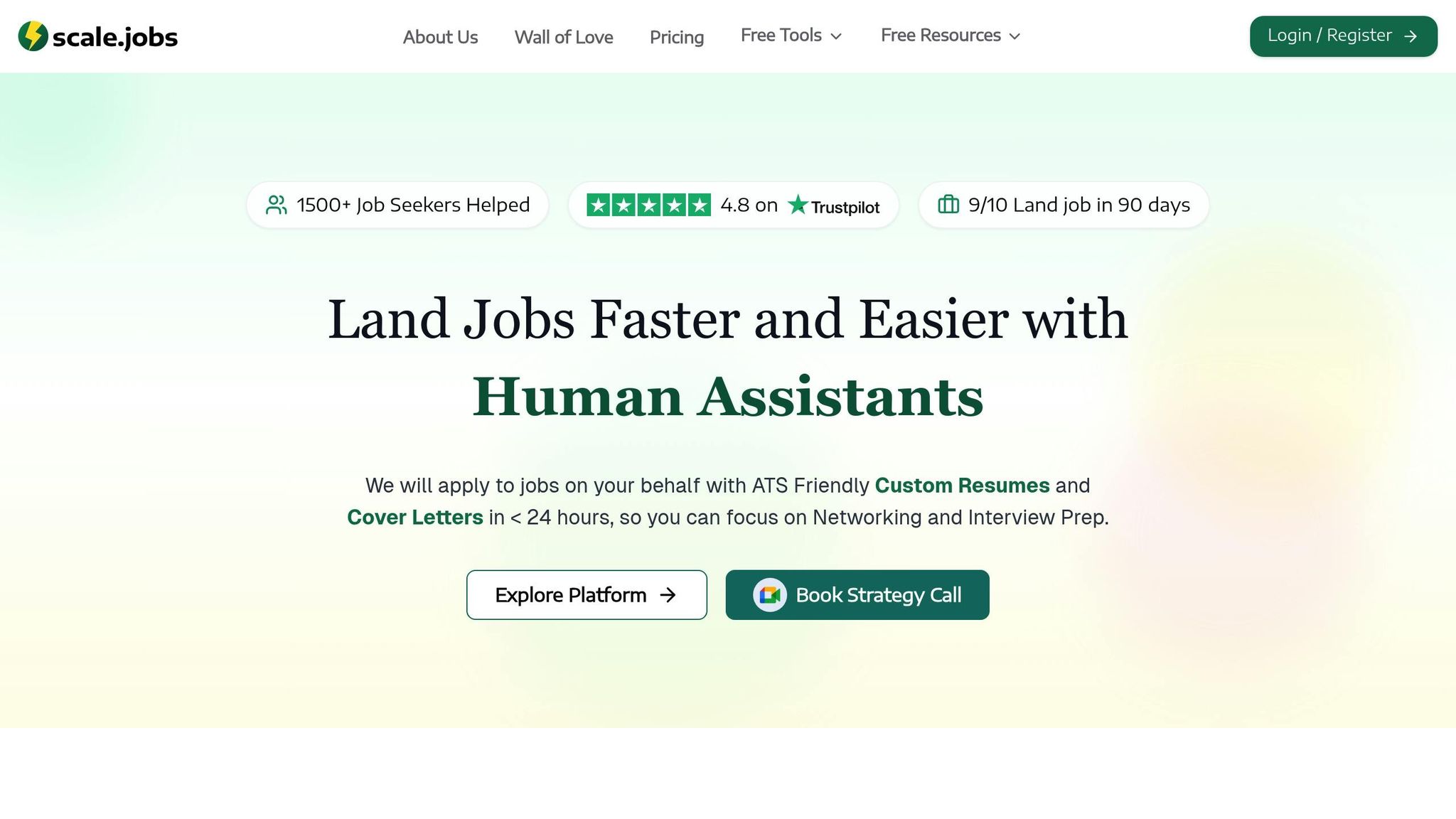
Scale.jobs takes a unique approach by blending ATS optimization with personalized support, creating a seamless application process for job seekers.
For many, the job application process often feels like a choice between two extremes: relying on automated tools that lack a personal touch or spending hours tailoring each application manually. Scale.jobs eliminates this dilemma by combining ATS-compliant documents with the assistance of real people who manage the entire submission process. This approach not only ensures your resume passes automated filters but also highlights your career story effectively - all without requiring extra effort from you.
Human-Managed Resume Customization
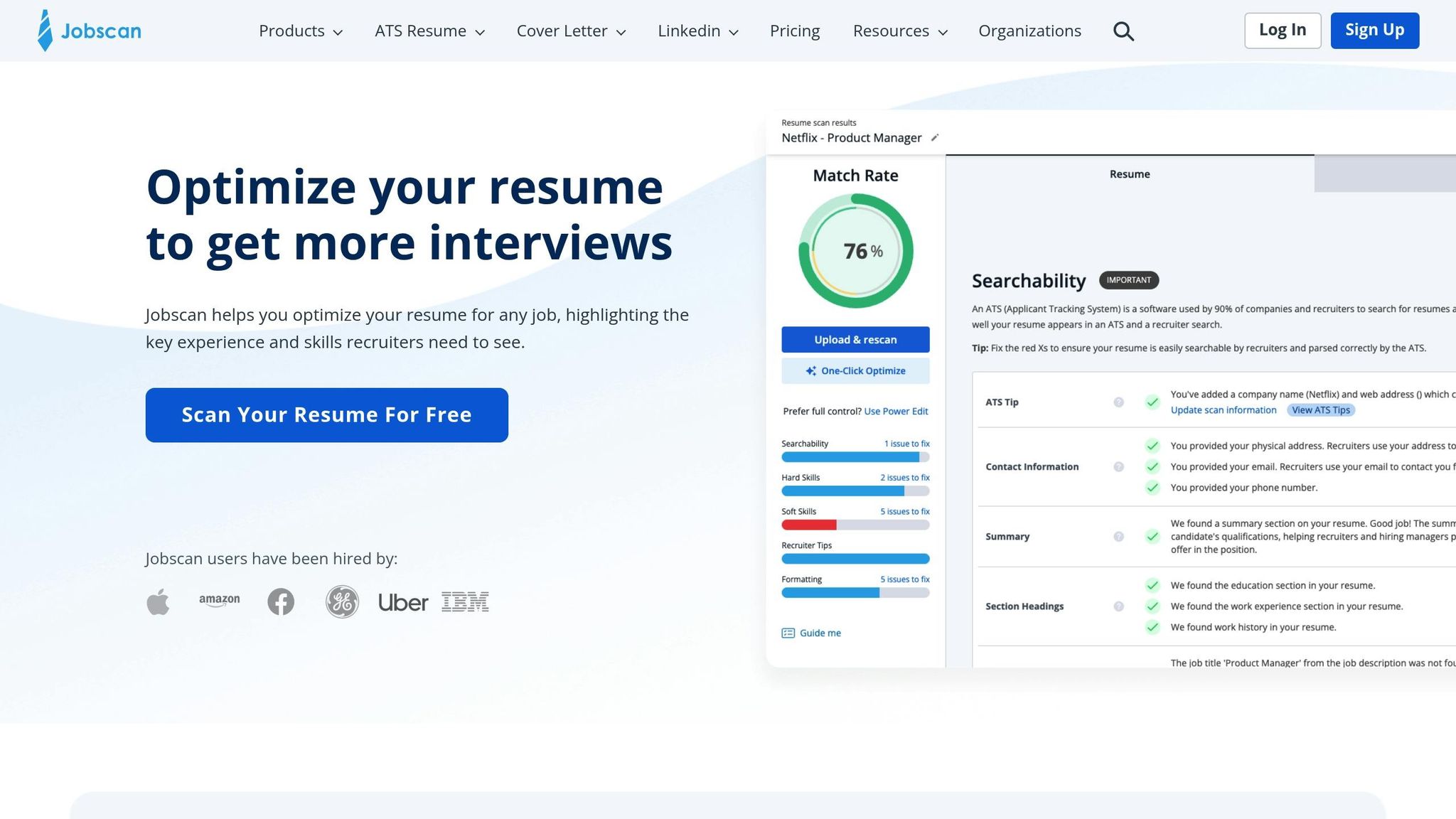
At the heart of scale.jobs’ service is a balance between technology and human expertise. It starts with an ATS-friendly resume, which is then customized by a dedicated virtual assistant for each job you apply to. Unlike tools such as Rezi.ai, which rely solely on AI templates, or Jobscan.co, which focuses on keyword analysis, scale.jobs adds a human touch. Your assistant refines the language, emphasizes achievements, and incorporates storytelling techniques to make your resume appealing to both ATS systems and hiring managers. With a turnaround time of just 24 hours per customization, you can keep up the pace of your applications without compromising on quality.
Real-Time Proof of Work for Every Application
Transparency is a core feature of scale.jobs. After every application is submitted, you receive a timestamped screenshot via WhatsApp. This includes details like the confirmation page, portal interface, and submission specifics. Competitors like LazyApply.com provide limited logs, and Jobscan.co offers no proof of submission, leaving users unsure if their applications were completed. Scale.jobs’ real-time updates ensure you’re always in the loop and can easily communicate with your assistant for any changes or clarifications.
One-Time Payment Model and Service Bundles
Scale.jobs offers a straightforward, flat-fee pricing model, avoiding the recurring subscription fees common with competitors. The Basic plan, priced at $199, covers 250 applications with one assistant. The Standard ($299) and Premium ($399) plans scale up to 500 and 1,000 applications, respectively, with two assistants. For those seeking a comprehensive package, the Ultimate Bundle ($1,099) includes a personal recruiter, resume review, and LinkedIn makeover for 1,000 applications. Unlike Jobscan.co ($49.95/month) or LazyApply.com (starting at $99/month), scale.jobs’ one-time fee provides clear cost predictability, and any unused application credits are refundable.
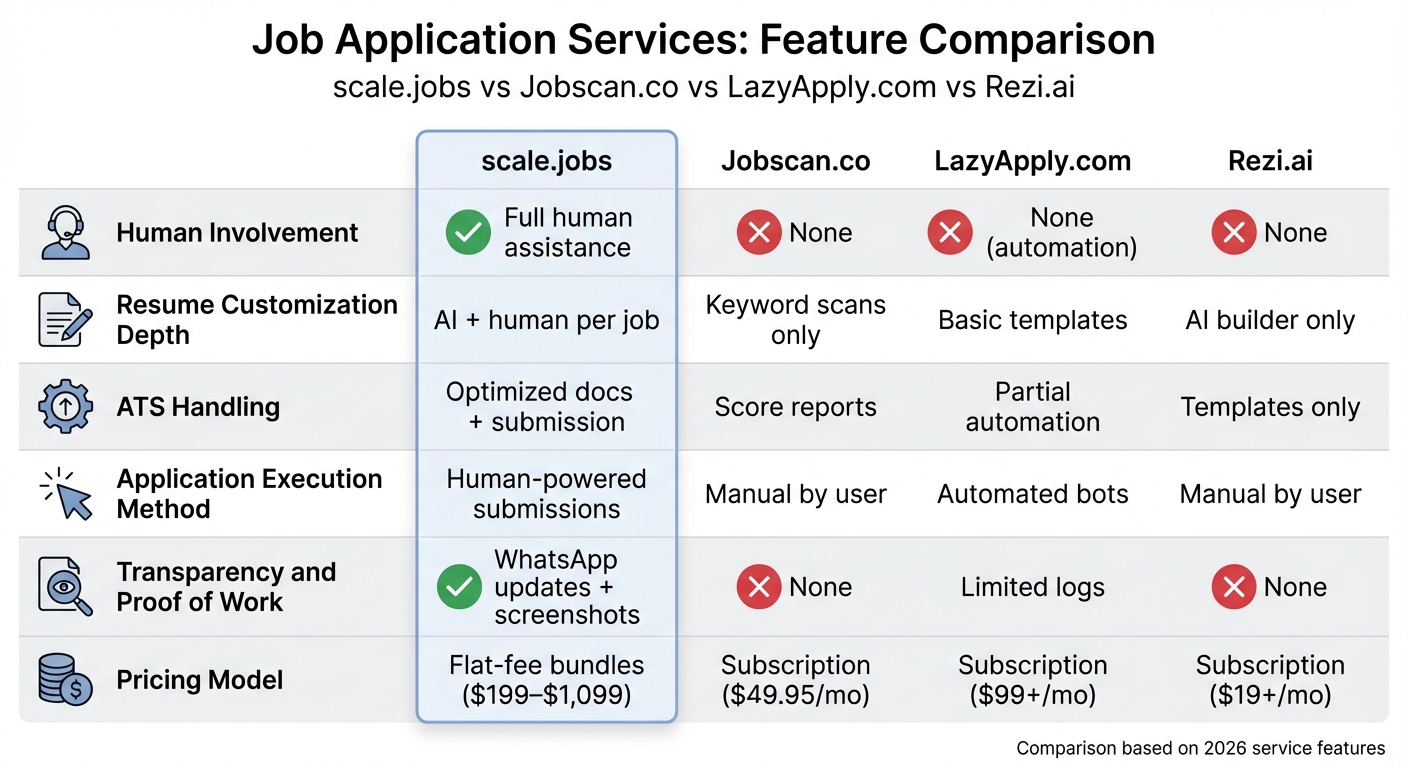
Comparison Table: scale.jobs vs Jobscan.co, LazyApply.com, and Rezi.ai
| Feature | scale.jobs | Jobscan.co | LazyApply.com | Rezi.ai |
|---|---|---|---|---|
| Human involvement | Full human assistance | None | None (automation) | None |
| Resume customization depth | AI + human per job | Keyword scans only | Basic templates | AI builder only |
| ATS handling | Optimized docs + submission | Score reports | Partial automation | Templates only |
| Application execution method | Human-powered submissions | Manual by user | Automated bots | Manual by user |
| Transparency and proof of work | WhatsApp updates + screenshots | None | Limited logs | None |
| Pricing model | Flat-fee bundles ($199–$1,099) | Subscription ($49.95/mo) | Subscription ($99+/mo) | Subscription ($19+/mo) |
Why scale.jobs Outshines Competitors
The comparison table highlights the standout features of scale.jobs, and here’s how it outperforms its competitors:
- Compared to Rezi.ai: While Rezi.ai focuses on AI-generated templates, scale.jobs combines ATS-friendly formatting with human insight, creating a more personalized and compelling resume.
- Compared to Jobscan.co: Jobscan.co provides keyword analysis but lacks the human element and submission management that scale.jobs offers.
- Compared to LazyApply.com: LazyApply.com’s automated bots may save time but provide minimal transparency. Scale.jobs, on the other hand, ensures every submission is verified with real-time updates and screenshots.
- Cost-Effectiveness: With a flat-fee model, scale.jobs eliminates the unpredictability of monthly subscriptions, offering a clear return on investment.
Who Should Use Jobscan.co
Jobscan.co is ideal for those who prefer a DIY approach. It’s best suited for job seekers who want to refine their resumes using keyword analysis and manage their applications manually. If you’re applying to a moderate number of positions and want full control, this might be a good fit.
Who Should Use LazyApply.com
LazyApply.com is designed for users who prioritize speed and volume over personalization. It’s a good option for those willing to accept the risks of generic applications and potential account flags in exchange for automated submissions.
Who Should Use Rezi.ai
Rezi.ai caters to individuals looking for quick, AI-generated resume templates. If you’re comfortable managing your own applications and need an ATS-friendly document without additional support, this tool could work for you.
Who Should Choose scale.jobs
Scale.jobs is the go-to option for professionals applying to 250 or more jobs weekly. It’s perfect for those who want confirmation of every submission, appreciate a mix of ATS optimization and human input, and need a service that saves time while maintaining quality. If you’ve faced rejection due to automated tools or flagged accounts, or if you’re looking for a solution that combines storytelling with ATS compliance, scale.jobs provides a comprehensive, one-time fee service that addresses these challenges effectively.
Switch to scale.jobs If...
You Need to Submit 250+ Applications Per Week
When you're applying to over 250 jobs weekly, automated tools for job searching often stumble on complex portals, custom forms, or multi-step submission processes. Unlike services like LazyApply.com, scale.jobs assigns skilled virtual assistants who manually handle every detail. They ensure all fields are accurately filled, the right documents are attached, and submissions are tailored to the portal's requirements. The Basic plan, priced at $199 for 250 applications, offers the volume you need without the errors often caused by automated systems.
Automated Tools Have Led to Rejections or Account Flags
If you've experienced warnings about suspicious activity or faster-than-usual rejections, it might be due to bot detection systems flagging automated submissions. Many applicant tracking systems (ATS) are designed to identify and block such patterns. scale.jobs minimizes this risk by having a human assistant manually complete and submit each application. This avoids the rapid, bot-like behavior that can trigger spam flags, ensuring your applications are handled with care and processed normally.
Recurring Subscription Fees Don't Fit Your Budget
Services like Jobscan.co, LazyApply.com, and Rezi.ai often rely on recurring subscription models, which can quickly add up during a lengthy job search. In contrast, scale.jobs offers a straightforward, one-time payment structure: $199 for 250 applications, $299 for 500, or $399 for 1,000. There are no auto-renewals, hidden charges, or ongoing fees. Plus, if you don't use all your application credits, you can request a refund. This predictable pricing makes it a smart choice for those keeping an eye on their budget.
You Want Proof That Applications Were Actually Submitted
One common frustration with automated platforms is the lack of clear confirmation that your applications were submitted. Many services provide only generic logs or dashboards, leaving you in the dark. With scale.jobs, you receive timestamped WhatsApp screenshots of each submission, including the confirmation page and portal details. This transparency is unmatched by platforms like Jobscan.co, which doesn't handle submissions, or LazyApply.com, which provides limited visibility. For those needing verified proof for visa or benefit requirements, scale.jobs also offers professional resume writing services, complete with submission evidence. Learn more here. These features highlight why scale.jobs stands out in scenarios where reliability and accountability matter most.
Conclusion: Combining ATS Optimization with Human Support
Getting your resume past applicant tracking systems (ATS) is only half the battle. With 97.8% of Fortune 500 companies relying on ATS and up to 75% of resumes filtered out before human eyes ever see them, keyword optimization and formatting are essential. However, when 77% of applicants worry about ATS rejection and only 6% feel confident their resumes are carefully reviewed, it’s clear that clearing the ATS is just the first hurdle. The real challenge lies in making a lasting impression once your application reaches a hiring manager.
In 2026, the key to success is standing out after passing the ATS filter. Automated tools like LazyApply.com may risk spam detection and lack the personal touch, while keyword scanners such as Jobscan.co leave applicants to handle submissions on their own. Neither option fully bridges the gap between ATS compliance and the human review process. This is where scale.jobs stands apart, offering a unique blend of machine precision and human support.
scale.jobs combines ATS-optimized resumes with manual application submissions, ensuring your applications bypass bot detection. Each submission is documented with timestamped WhatsApp screenshots, giving you verified records of your efforts. Additionally, their 24/7 support ensures help is always available, and their flat-fee pricing model avoids recurring costs while offering refundable credits for unused services.
For job seekers who value both technical accuracy and human oversight, scale.jobs provides a comprehensive solution. They even offer professional resume writing services to further refine your application materials.
The most effective job search strategy in 2026 doesn’t force you to choose between ATS optimization and human involvement - it combines both. By integrating advanced technology with personalized assistance, scale.jobs transforms the job application process and helps you stand out in a competitive market.
FAQs
How do I balance ATS keywords with a strong career story?
Balancing ATS keywords with a compelling career story means crafting a resume that speaks to both technology and human readers. Start by identifying relevant keywords directly from the job description - these are often found in the skills, qualifications, and responsibilities sections. Naturally weave these terms into areas like your skills and experience sections to ensure they align with ATS requirements without feeling forced.
At the same time, focus on storytelling to bring your career journey to life. Use specific, measurable achievements to showcase your growth and impact. For example, instead of saying, "Managed a team", you could say, "Led a team of 10, increasing project efficiency by 20% over six months." This approach demonstrates not just what you did, but the value you brought.
For the best results, consider leveraging an AI resume builder to identify the right keywords, then refine your resume with a human touch. This combination ensures your application is ATS-friendly while still making a strong impression on recruiters. For more personalized help, a job search coach or a virtual assistant for job seekers can guide you through the process.
What work samples should I link on my resume for my role?
When selecting work samples, focus on those that effectively showcase your skills, accomplishments, and experience directly related to the job you're targeting. These could include project portfolios, case studies, design pieces, writing samples, or relevant certifications. Emphasize before-and-after results, detailed project achievements, or measurable impacts to demonstrate your value. Make sure to align these examples with the specific requirements of the role, as this helps highlight your expertise and ensures your application resonates with the job description. This tailored approach can strengthen your resume and boost your chances of landing an interview.
How can I network effectively after applying?
Networking plays a crucial role in improving your odds in a competitive job market. Aim to connect with at least one new professional each month and prioritize meaningful follow-ups, such as casual coffee meetings or virtual chats. Platforms like LinkedIn are invaluable - use them to send personalized messages to hiring managers, engage thoughtfully with industry-related content, and establish genuine rapport. These proactive steps can open doors to referrals or mentorship opportunities, effectively complementing your application and ATS-optimized resume.