Why AI Job Apply is a Trap: When Automation Replaces Thinking
High-volume AI job applications often produce generic, error-prone submissions and risk ATS rejection; hybrid human+AI services improve interview rates.


AI-powered job applications promise speed, but they often fall short in delivering results. Tools like LazyApply, Simplify.jobs, and Rezi.ai allow job seekers to apply to hundreds of positions with minimal effort. However, this automation-first approach often leads to generic, impersonal applications that recruiters quickly reject.
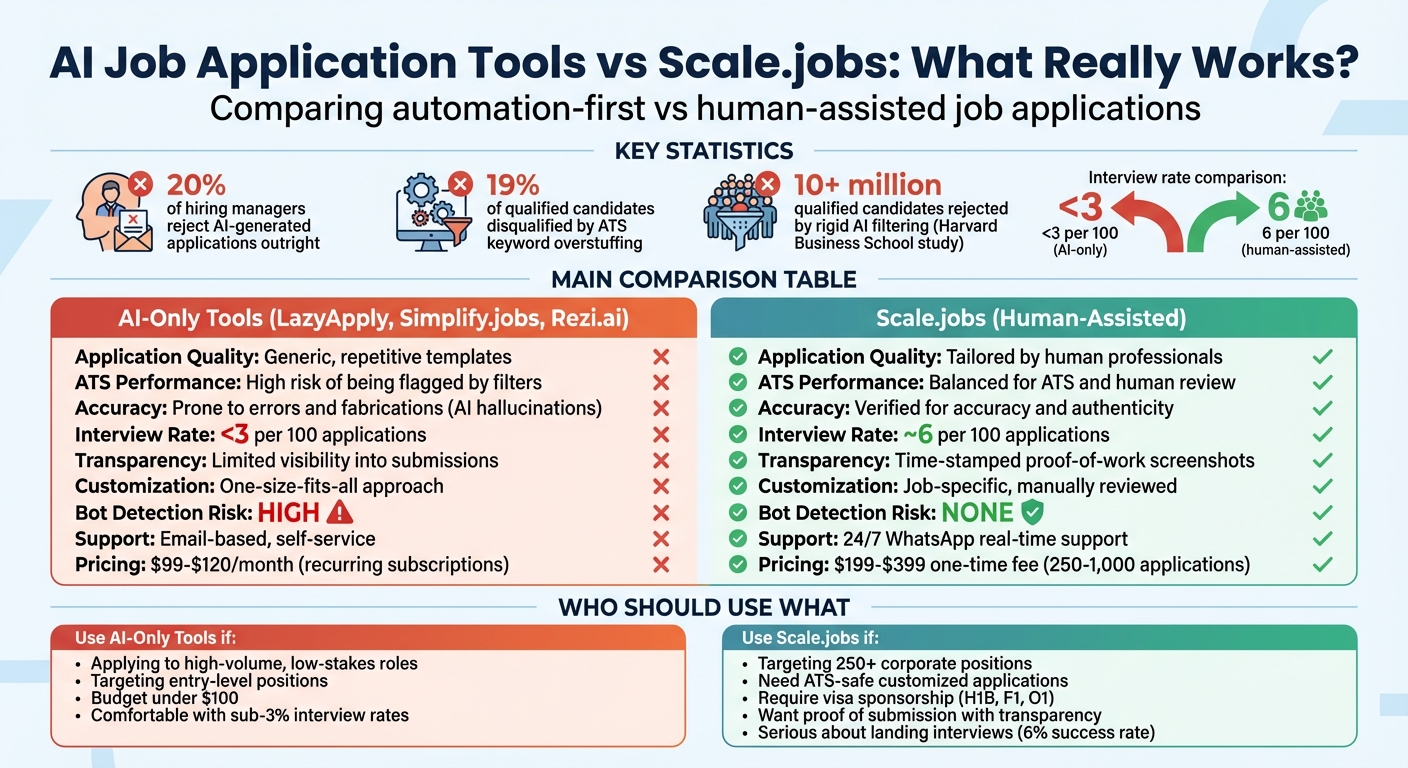
Here’s the issue: 20% of hiring managers now reject AI-generated applications outright, citing overused buzzwords and lack of authenticity. Applicant Tracking Systems (ATS) also filter out applications when keywords are overstuffed or misaligned with context, disqualifying 19% of qualified candidates. This creates a frustrating cycle where high-volume submissions fail to stand out, leaving applicants with lower interview rates.
The solution? A hybrid approach like scale.jobs, which combines AI efficiency with human expertise. By tailoring resumes and cover letters to specific roles, manually completing applications, and offering proof of submission, scale.jobs helps candidates bypass ATS filters and catch recruiters’ attention. Unlike fully automated platforms, this approach delivers higher interview rates (6 per 100 applications) while avoiding the pitfalls of automation.
If you’re serious about landing interviews, relying solely on AI tools may not be the best strategy. Instead, consider a job application assistance service that prioritizes quality and personalization over sheer volume.
AI Job Application Tools vs Scale.jobs: Feature Comparison and Interview Success Rates
Why AI-Only Job Applications Don't Work
AI Creates Generic Applications That Get Rejected
AI resume builders often generate resumes that look polished but lack individuality. By pulling from the same datasets and templates, these tools produce applications that recruiters describe as a "sea of sameness." While the formatting and grammar may appear flawless, the content often feels impersonal and forgettable. Worse, many advanced Applicant Tracking Systems (ATS) now use "copycat filters" to detect resumes that mimic job descriptions too closely. If your resume's keyword overlap exceeds 90%, it may be flagged as bot-generated and rejected outright.
This issue isn't just theoretical. A Harvard Business School study revealed that rigid AI filtering systems have led to the rejection of over 10 million qualified candidates in the U.S. alone. These systems inadvertently create a lose-lose situation: employers miss out on skilled candidates, and job seekers face repeated rejections. The problem intensifies when AI fails to highlight what makes a candidate distinctive, leaving applications devoid of the personal touch that resonates with hiring managers.
AI Can't Match Your Skills to Job Requirements
One of AI's biggest limitations is its inability to understand the "how" and "why" behind your accomplishments. While AI might recognize that a job description values "project management", it can't explain how you successfully led a cross-functional team or navigated a challenging budget scenario. This lack of depth weakens your application, especially when competing against candidates who take the time to align their experiences with the company's specific needs.
Another concern is hallucinations, where AI fabricates details to fit a job posting. For instance, it might falsely claim you have expertise in software you've never used or inflate a title from "Coordinator" to "Manager." These inaccuracies can lead to embarrassing moments during interviews when you can't substantiate your claims. Real-world examples highlight these risks: Amazon discontinued an AI recruitment tool after discovering it discriminated against female candidates, and iTutor Group paid $365,000 to settle claims that its AI unfairly rejected older applicants.
Such errors expose the critical flaws of relying solely on AI, underscoring the importance of human oversight.
Real Cases: When AI Automation Backfired
AI-driven hiring systems have caused tangible harm to job seekers. The cases of Amazon and iTutor Group demonstrate how unchecked automation can introduce bias and errors that human reviewers would easily catch. For job seekers, the consequences are clear: those relying solely on AI-generated applications often report interview rates below 3 per 100 applications, compared to 6 per 100 when human input is included.
If your applications seem to vanish without a trace, consider a hybrid approach. Services like resume writing services combine the efficiency of AI with the expertise of human professionals. For example, scale.jobs uses AI to identify relevant keywords but ensures that resumes and cover letters are tailored by trained experts. This approach eliminates errors, avoids over-optimization, and creates applications that appeal to both ATS systems and human reviewers. Plus, they provide proof-of-work screenshots, giving you full transparency into where your applications are submitted and why they're effective.
The limitations of AI-only applications highlight the value of blending technology with human expertise, as demonstrated by platforms like scale.jobs.
| Feature | AI-Only Tools | scale.jobs (Human-Assisted) |
|---|---|---|
| Application Quality | Generic, repetitive | Tailored by human professionals |
| ATS Performance | Risk of being flagged by filters | Balanced for ATS and human review |
| Accuracy | Prone to errors and fabrications | Verified for accuracy and authenticity |
| Interview Rate | <3 per 100 applications | ~6 per 100 applications |
| Transparency | Limited visibility | Proof-of-work screenshots provided |
LazyApply vs scale.jobs: Speed vs Quality
What LazyApply Does Well
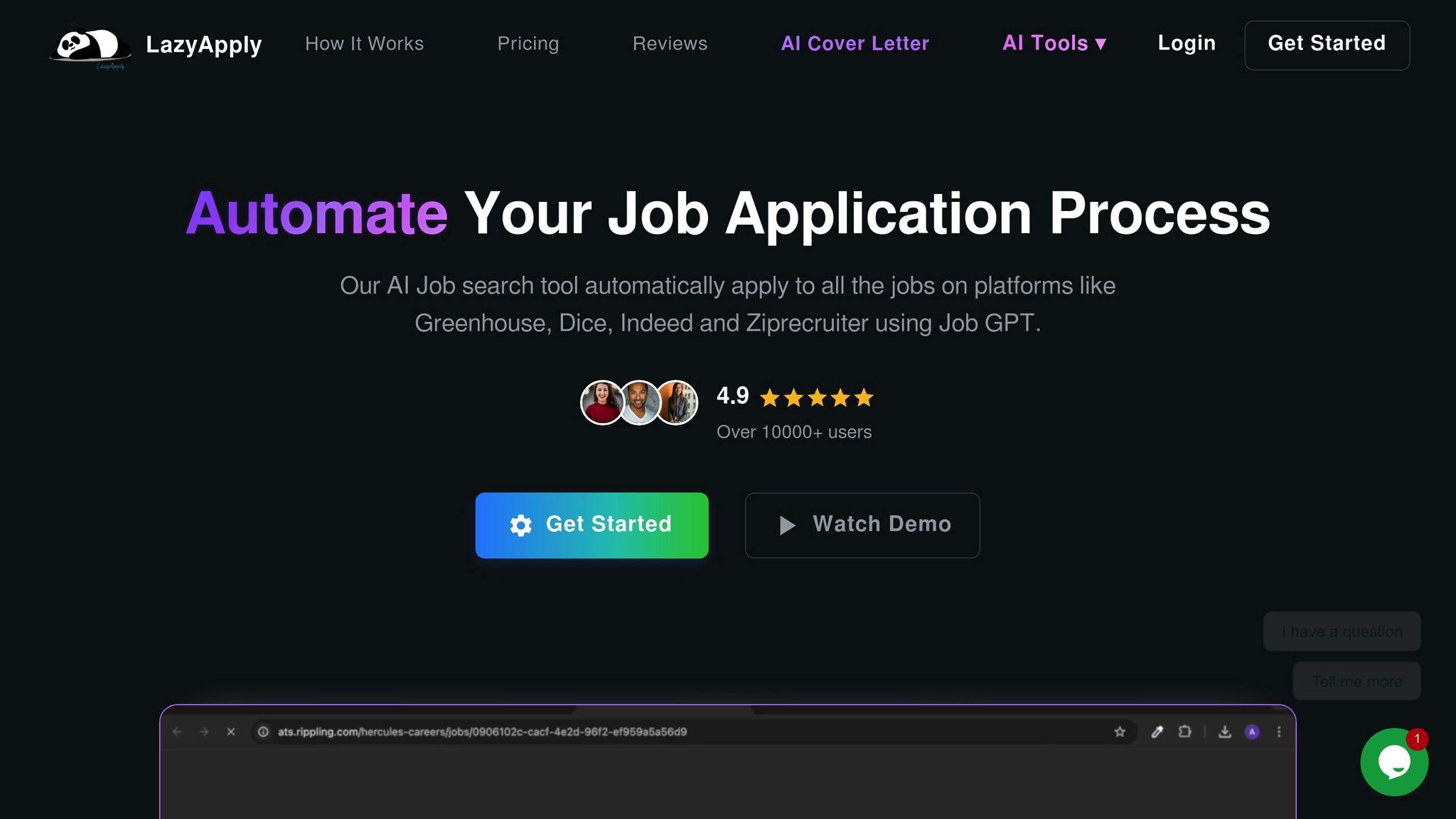
LazyApply simplifies the job application process by automating form-filling on platforms like LinkedIn and Indeed. With just one resume upload, users can apply to over 100 jobs daily. This speed is particularly appealing for recent graduates or those trying to get their foot in the door quickly. Starting at $99 for lifetime access to its basic plans, it's an affordable option for job seekers on a budget who need to apply to a high volume of roles. For entry-level positions where personalization might not be as crucial, LazyApply saves considerable time by cutting out repetitive tasks. However, when attention to detail and customized applications are necessary, scale.jobs offers a more tailored solution.
Where scale.jobs Beats LazyApply
While LazyApply prioritizes speed, it often overlooks the importance of quality and customization, which can lead to generic applications that struggle to stand out. scale.jobs addresses these shortcomings with a more thoughtful and manual approach, offering several key advantages:
Human review ensures tailored applications. Unlike LazyApply’s automated templates, scale.jobs uses trained virtual assistants to match resumes to job descriptions carefully. This avoids the keyword stuffing and unnatural phrasing that can trigger ATS (Applicant Tracking System) filters.
ATS-friendly customization. scale.jobs balances the use of keywords with natural language, ensuring applications pass ATS checks without appearing overly optimized. Each resume reflects the candidate's actual experience, rather than relying on generic, AI-generated content.
Proof-of-work screenshots for transparency. scale.jobs provides timestamped screenshots of every submission, so users know exactly where and how their applications were sent. LazyApply’s bulk submissions, on the other hand, can leave users wondering if their resumes were formatted correctly or even received.
Real-time WhatsApp support. scale.jobs offers 24/7 WhatsApp support for immediate feedback and adjustments. Whether you need to tweak a resume or respond to recruiter requests, this feature provides a level of flexibility that LazyApply’s email-based support lacks.
No risk of bot detection. scale.jobs uses manual submissions that mimic human behavior, eliminating the risk of automated patterns being flagged by platforms. LazyApply’s automation, however, increases the likelihood of restrictions or bans.
For those targeting competitive positions or roles that require precision, scale.jobs stands out. Its human-verified approach and ATS optimization result in higher success rates, with interview rates of around 6 per 100 applications, compared to LazyApply’s sub-3% rate.
| Feature | LazyApply | scale.jobs |
|---|---|---|
| Application Speed | 100+ per day | 10–20 tailored per day |
| Customization | Generic AI templates | Human-verified, job-specific |
| ATS Handling | Keyword-heavy, risky | Balanced, natural integration |
| Support | Email tickets | Real-time WhatsApp |
| Bot Detection Risk | High (automated patterns) | None (manual submissions) |
| Transparency | Basic analytics | Time-stamped screenshots |
| Pricing | $99 lifetime (basic) | $199–$399 one-time bundles |
Who Should Use LazyApply vs scale.jobs
The choice between LazyApply and scale.jobs ultimately depends on your job search priorities.
LazyApply is ideal for those applying to a high volume of roles, particularly in less competitive industries or startups using platforms like Greenhouse or Lever. If you’re okay with a sub-3% interview rate and need to apply to 100+ positions quickly with minimal effort, LazyApply fits the bill.
scale.jobs is better suited for job seekers targeting competitive roles, such as positions at Fortune 500 companies or roles requiring visa sponsorship (H1B, F1, O1). It’s also a strong choice for career changers or those applying to jobs on platforms like Workday or iCIMS, which handle over 50% of U.S. job applications and often reject bot-driven submissions. With interview rates of 6 per 100 applications, scale.jobs justifies its higher cost by offering a human-assisted, quality-focused approach that ensures your applications are seen by recruiters.
If you're serious about landing interviews and need precision in your applications, scale.jobs delivers the attention to detail that LazyApply simply cannot match. For more support with tailored applications, consider using a job application service that prioritizes quality over quantity.
Simplify.jobs vs Scale.jobs: One-Click vs Custom Execution
What Simplify.jobs Does Well
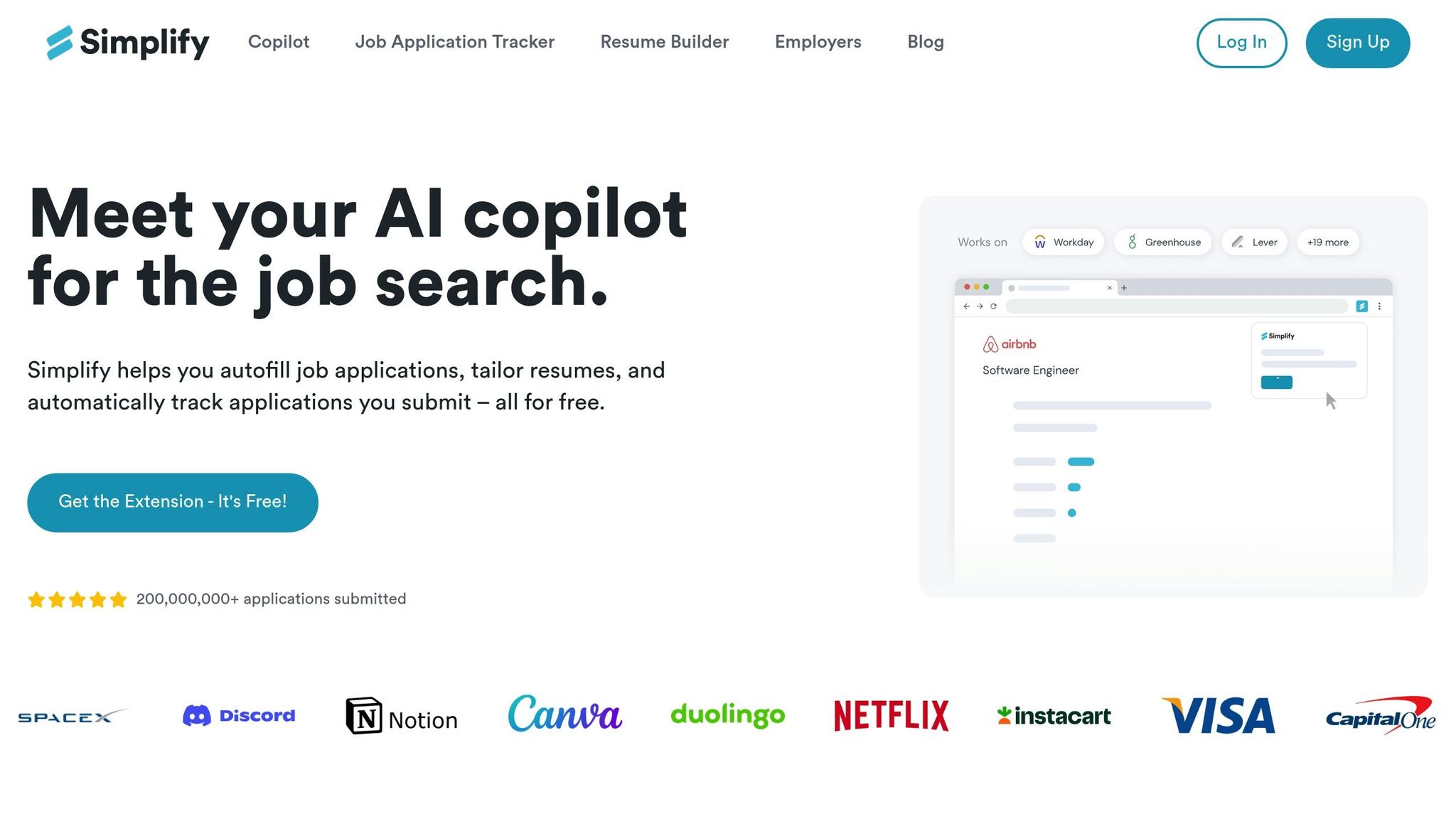
Simplify.jobs focuses on making tech job applications faster and easier. Using a Chrome extension, it auto-fills standardized forms on platforms like Greenhouse and Lever. This tool is particularly useful for software engineers and product managers applying to multiple tech startup roles with similar application processes. It eliminates the need for repetitive data entry, saving users time. The extension also integrates smoothly with LinkedIn and other tech-focused job boards, making it a convenient option for roles with straightforward form requirements. However, for applications needing a more personalized touch, Scale.jobs stands out with its custom, human-driven approach.
Where Scale.jobs Beats Simplify.jobs
While Simplify.jobs prioritizes speed through automation, Scale.jobs offers a more personalized and thorough application process. It excels in handling complex applications that require detailed responses, specific documentation, or tailored materials. Here's how Scale.jobs sets itself apart:
- Manual Handling of Complex Forms: Scale.jobs employs trained virtual assistants to manually complete every application field, including open-ended questions about visa status, salary expectations, and career objectives. In contrast, Simplify.jobs’ AI-based responses can lack the specificity needed for certain roles or company cultures.
- Custom Resumes for Each Job: Scale.jobs ensures each application is paired with a resume tailored to the role, emphasizing relevant experience and keywords to improve chances of passing Applicant Tracking Systems (ATS). Simplify.jobs, on the other hand, uses a single resume for all applications, which might not align with specific job requirements.
- Broader Platform Compatibility: Scale.jobs supports applications across a wider range of platforms, including Workday, iCIMS, Taleo, and niche job boards, where automated tools like Simplify.jobs may not work effectively or could be flagged.
- Transparent Pricing: Scale.jobs charges a one-time flat fee, ranging from $199 to $399 for 250–1,000 applications. This contrasts with Simplify.jobs’ recurring monthly subscription model, which can become costly over extended periods.
- Submission Proof: Scale.jobs provides time-stamped screenshots of every submission via WhatsApp, ensuring transparency and accuracy. Simplify.jobs tracks application counts through its dashboard but doesn’t verify the quality or specifics of each submission.
This comparison highlights the importance of human oversight in ensuring high-quality job applications.
| Feature | Simplify.jobs | Scale.jobs |
|---|---|---|
| Primary Method | AI-powered browser extension | Human virtual assistants |
| Application Scope | Limited to supported platforms | Broad compatibility (Workday, iCIMS, niche boards) |
| Content Quality | AI-generated (generalized) | Human-written, tailored responses |
| Proof of Work | Dashboard tracking | Time-stamped screenshots |
| Pricing Model | Monthly subscription | One-time flat fee |
| Support | Self-service / Email | 24/7 WhatsApp support |
Who Should Use Simplify.jobs vs Scale.jobs
Simplify.jobs is a great choice for tech professionals who need to apply to a large number of roles on standardized platforms quickly. If you're targeting startup positions on systems like Greenhouse or Lever and don’t require much customization, Simplify.jobs offers a fast and efficient solution.
Scale.jobs, on the other hand, is ideal for job seekers targeting more diverse industries, applying to roles with specific requirements (like visa authorizations), or submitting applications on platforms where automation might not work reliably. If you're aiming for competitive positions at larger companies or need to bypass ATS filters with tailored applications, Scale.jobs provides a human-powered approach that ensures quality and precision. This comparison helps clarify when it might be time to consider switching to Scale.jobs for your job application needs.
Rezi.ai vs Scale.jobs: DIY Tools vs Done-For-You Service
What Rezi.ai Does Well
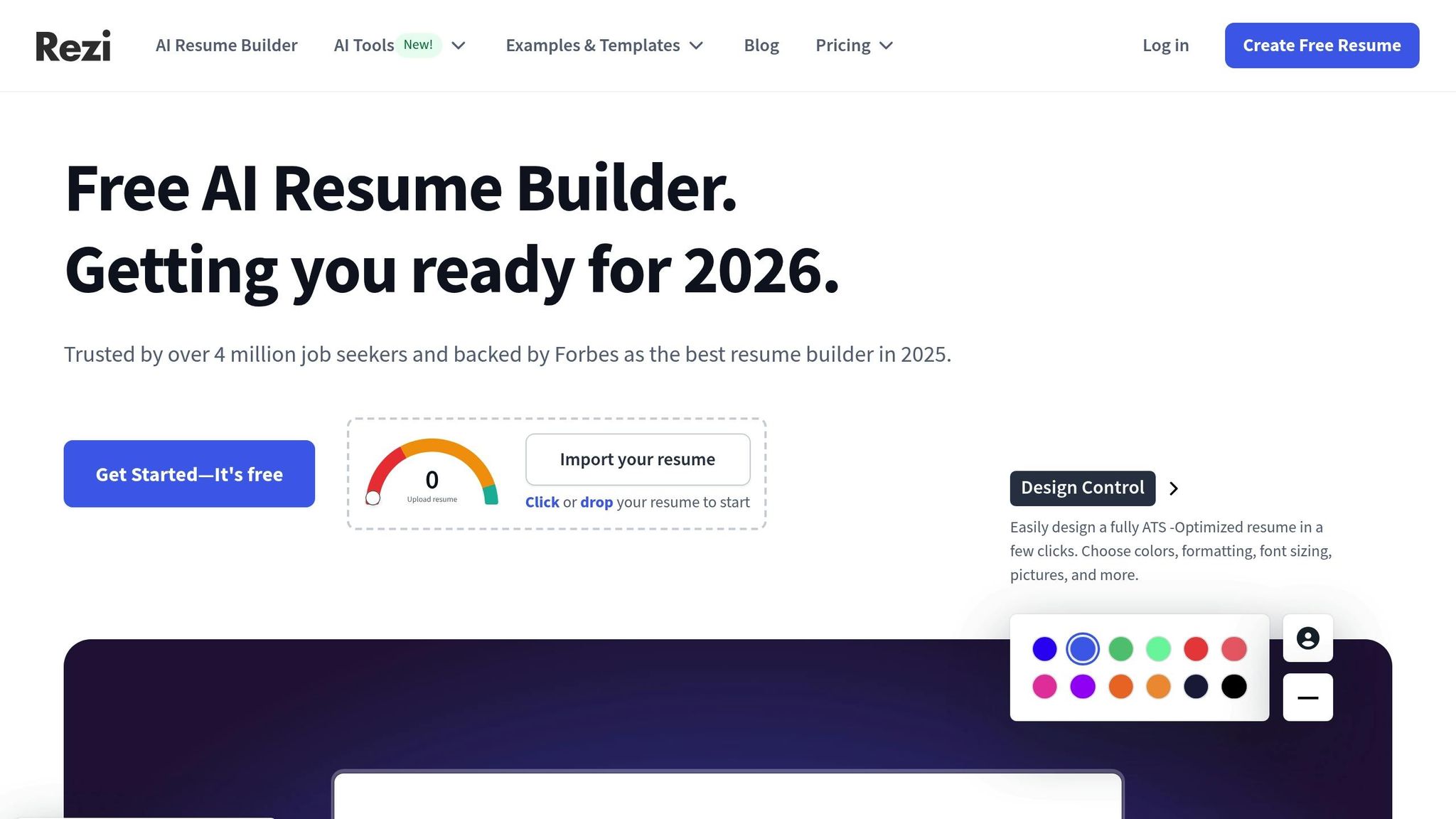
Rezi.ai provides an AI-powered resume-building platform tailored for those who prefer a hands-on approach. Its pre-designed templates and AI-driven content suggestions enable users to craft polished resumes in no time. This tool is particularly appealing to job seekers who like to oversee every detail of their application materials. With its instant resume generation, Rezi.ai allows users to quickly create documents and start applying for jobs almost immediately. It's a practical choice for budget-conscious individuals who are comfortable managing the process themselves. However, while Rezi.ai focuses on empowering users to handle their job applications, scale.jobs offers a done-for-you service, taking the workload off your shoulders and allowing you to dedicate more time to interview preparation.
Where Scale.jobs Beats Rezi.ai
The key distinction lies in the level of involvement. Rezi.ai equips you with tools, but scale.jobs takes care of the entire application process. Here's how scale.jobs stands out:
-
Human-Assisted Application Process
Scale.jobs assigns trained human assistants to customize each resume and oversee the application process. This saves you time and lets you concentrate on networking and preparing for interviews. In contrast, Rezi.ai leaves the final submission steps to you. -
ATS-Friendly Resumes Without Clutter
While Rezi.ai's templates are visually appealing, some designs may not align well with Applicant Tracking Systems (ATS). Scale.jobs ensures resumes are machine-readable and optimized to pass ATS filters while still being recruiter-friendly - a crucial feature since most employers use automated screening tools. -
Transparent Proof of Work
Scale.jobs provides time-stamped screenshots of every application submitted, shared via WhatsApp. This transparency offers peace of mind and clear evidence of progress. With Rezi.ai, tracking applications is entirely your responsibility. -
Custom Resumes Delivered Within 24 Hours
Scale.jobs delivers tailored resumes for specific roles within a day. While Rezi.ai generates resumes instantly, users are tasked with refining and submitting them independently. -
One-Time Flat Fee
Scale.jobs offers a flat fee ranging from $199 to $399, covering high-volume campaigns of 250 to 1,000 applications. This eliminates recurring subscription costs, which can add up over time with Rezi.ai's subscription-based pricing model.
| Feature | Rezi.ai | Scale.jobs |
|---|---|---|
| Primary Task | DIY resume building | Focus on interview prep while assistants apply |
| Application Execution | Self-managed | Human-assisted submission |
| Customization | AI-generated templates | Human-tailored for specific roles |
| ATS Handling | Visual templates (may clash) | Machine-readable and recruiter-friendly |
| Support | Self-service help desk | 24/7 WhatsApp assistant |
| Pricing | Subscription-based | One-time flat fee |
Who Should Use Rezi.ai vs Scale.jobs
This breakdown highlights which service suits different needs and preferences.
- Go with Rezi.ai if you enjoy taking charge of your resume creation and application process. It’s an excellent option for early-career professionals or those with the time to manage their job search independently. With immediate access to templates and AI tools, Rezi.ai helps you refine your documents at a low cost.
- Opt for Scale.jobs if you need a hands-off, high-efficiency service. This is ideal for busy professionals, individuals managing visa-related challenges, or those targeting competitive roles where personalized applications make a difference. By outsourcing the repetitive tasks, Scale.jobs frees up your time for networking and interview prep. For more information, explore their resume writing examples and application support.
How scale.jobs Combines AI and Human Work
What You Get with scale.jobs
Scale.jobs takes a smart approach by blending the efficiency of AI with the precision of human expertise. Instead of relying solely on automation, it uses AI for tasks like keyword analysis and initial application drafts, while human assistants step in to refine and manually submit applications. This hybrid model ensures applications avoid bot-detection pitfalls common with fully automated tools, all while maintaining the speed required for high-volume job searches.
Here’s what the service includes:
- ATS-optimized resumes that balance keyword usage with readability
- Custom cover letters tailored to each specific role
- Manual form completion to bypass bot-detection systems
- 24/7 WhatsApp support, offering real-time updates and transparency
- Flat-rate pricing, starting at $199 for 250 applications, with refunds for unused credits processed within 48 hours
Human assistants play a crucial role by refining application drafts to highlight important projects, explain career transitions, and align your actual experience with job requirements - details that automated systems often overlook. To learn more, check out their professional resume writing and application support.
How scale.jobs Handles ATS and Transparency Concerns
To ensure applications pass Applicant Tracking Systems (ATS) like Taleo or Workday, scale.jobs combines manual review with AI insights. This process ensures that keywords are naturally integrated, formatting remains machine-readable, and the content appeals to recruiters.
Transparency is another key focus. You’ll receive WhatsApp updates with submission details, including screenshots of job portal interfaces, so you can verify progress and request adjustments during the campaign. This proof-of-work system eliminates the uncertainty often associated with automated tools, giving you confidence that your applications are not only sent but also optimized for success. By combining human oversight with AI-driven efficiency, scale.jobs sets itself apart from fully automated competitors.
Switch to scale.jobs If You Need...
When scale.jobs Makes More Sense
Sometimes, automated tools just don’t cut it. That’s where scale.jobs steps in, offering a solution that balances efficiency with personalization.
If you're applying to 250+ roles and find manual customization overwhelming, scale.jobs is a better choice than fully automated platforms like LazyApply or Simplify.jobs. Automated tools often churn out generic applications, which 61% of hiring managers see as unconvincing. Scale.jobs addresses this by using trained human assistants to tailor resumes and cover letters for each role, ensuring your applications stand out while maintaining the necessary volume.
Worried about automated submissions being flagged as spam? Many job portals detect and reject automated applications, and nearly one in four recruiters disqualify candidates for relying on AI-generated materials. Scale.jobs minimizes this risk by manually completing forms and verifying submissions, ensuring your applications bypass spam filters and land directly with recruiters.
Need proof your applications were submitted correctly? Unlike opaque AI tools, scale.jobs provides time-stamped WhatsApp screenshots, showing exactly when and where each application was sent. This transparency is invaluable for tracking progress and planning follow-ups, especially when managing hundreds of applications.
Budget-conscious? The one-time payment model is ideal for those avoiding recurring subscription fees. Instead of paying $30–$120 monthly for tools with uncertain outcomes, scale.jobs offers 250 applications for $199, with unused credits refunded within 48 hours. This straightforward pricing aligns costs with results, offering peace of mind during your job search.
For corporate positions at companies using systems like Taleo or Workday, scale.jobs combines AI-driven keyword optimization with human oversight. This ensures your applications are ATS-friendly and avoids common formatting errors, increasing your chances of passing initial screenings.
Switch to scale.jobs if you:
- Are applying to 250+ jobs and need personalized applications
- Suspect bot detection is causing rejections
- Want clear, time-stamped proof of application submissions
- Prefer a one-time fee over ongoing subscription costs
- Need ATS-friendly resumes with a human touch
For those seeking both scale and quality without the hassle of subscriptions, scale.jobs offers resume writing and application support tailored to your needs. By blending human expertise with AI precision, scale.jobs ensures your applications meet recruiter expectations while maintaining efficiency and transparency.
Why AI is ruining the job market
Decision Summary: AI Tools vs Scale.jobs
While AI tools can quickly generate a high volume of job applications, they often lack the personal touch needed to make a strong impression. Here's a breakdown of why relying solely on AI tools can fall short and how Scale.jobs provides a more effective alternative.
AI-only job application tools focus on speed but often produce generic content that fails to resonate with recruiters. A blind test conducted in November 2024, involving 403 hiring managers, found human-written resumes were preferred by an 8% margin. For instance, when a sales director candidate used AI to claim "2+ years of Salesforce experience" they didn’t have, the interview ended immediately upon discovery - highlighting how automation without oversight can harm credibility.
The issue isn’t AI itself but over-reliance on it. Tools like LazyApply and Simplify.jobs are great for volume but struggle with personalization. These tools often trigger ATS spam filters or generate cover letters that recruiters can identify as generic in under 20 seconds (33.5% of recruiters reported spotting them that quickly). Job seekers relying exclusively on AI tools experience longer searches, averaging 3.3 months compared to 2.9 months for those using tailored applications.
Scale.jobs bridges this gap by combining the efficiency of AI with the judgment of trained professionals. Virtual assistants at Scale.jobs customize resumes and cover letters to align with job requirements, handle complex portals like Workday and iCIMS, and provide timestamped WhatsApp screenshots to confirm every submission. This hybrid approach avoids the pitfalls of keyword stuffing and generic outputs, ensuring applications are both efficient and effective.
Why Scale.jobs Outperforms AI-Only Tools
- Personalized Applications: Human assistants tailor resumes and cover letters to fit specific roles.
- ATS Compatibility: Resumes are optimized for ATS without relying on excessive keyword use.
- Cost-Effective: A one-time $199 fee eliminates recurring monthly costs.
- Real-Time Support: 24/7 WhatsApp updates keep you informed throughout the process.
- Proof of Submission: Screenshots validate that every application was submitted successfully.
This approach ensures your applications are not only accurate but also stand out in a competitive job market.
Who Benefits from AI-Only Tools
AI tools are suitable for casual job seekers testing the market or applying to low-stakes roles. However, users should be prepared to heavily edit the outputs before submission to avoid generic or inaccurate results.
Who Should Choose Scale.jobs
Scale.jobs is ideal for job seekers targeting 250+ corporate positions, those who need ATS-safe and customized applications without the manual effort, and individuals who value proof that their applications were submitted correctly. With a one-time fee of $199, it’s a cost-effective solution for those navigating competitive industries where authenticity and precision are critical. Learn more about professional resume writing and application support to enhance your job search.
Ultimately, the decision comes down to your priorities. AI tools offer convenience but may prolong your job search due to generic outputs and missed callbacks. Scale.jobs focuses on delivering tailored, ATS-friendly applications that reflect your skills and stand out to recruiters, saving you time and increasing your chances of landing interviews.
FAQs
How can I tell if my applications are being flagged as AI-generated or spam?
If you notice certain patterns in your job applications, it might be a sign they’re being flagged as AI-generated or spam. Watch out for generic phrases that lack personalization, an inconsistent tone that doesn’t align with the role, or overly polished content that feels unnatural. Formatting issues and repetitive language can also raise red flags. Additionally, if you're experiencing quick rejections or significantly fewer responses than expected, recruiters may be identifying your submissions as AI-driven. Being mindful of these indicators can help ensure your applications get the attention they deserve.
What’s the best way to balance speed and personalization when applying at high volume?
To manage high-volume job applications effectively while still delivering a personal touch, consider a hybrid strategy. This approach blends automation for repetitive tasks with human oversight to ensure quality and relevance. Automation can streamline processes like formatting and keyword optimization, while human review ensures resumes are tailored, ATS-compatible, and appealing to recruiters. By combining these elements, you can reduce errors, boost callback rates, and avoid sending out generic applications - helping you stand out in a competitive job market.
How do I verify my applications were submitted correctly on ATS portals like Workday?
To check the status of your application on Workday, log into your account and navigate to the "Job Applications" section. Here, you can find updates like "In Progress" or "Under Review." Double-check that your resume and other details are correctly uploaded, and review any confirmation emails you’ve received. This step helps ensure your application was submitted without any issues.