
AI Job Apply Tools vs Human Assistants: What Actually Works in 2026
Human-guided applications often beat mass AI applying for mid/senior roles—use automation for volume, and human services for ATS success and complex cases.


In 2026, the job application process is caught between speed and precision. Fully automated tools like LazyApply and Sonara.ai offer quick, high-volume submissions but often fail to navigate advanced applicant tracking systems (ATS). On the other hand, human-assisted services like scale.jobs focus on tailored, ATS-compliant applications, significantly improving callback rates for competitive roles.
Here’s the key takeaway: If you're targeting entry-level or high-turnover positions, AI-driven platforms may suffice. But for mid-to-senior roles, career shifts, or visa sponsorships, human-assisted services like scale.jobs deliver better results by prioritizing quality over quantity.
Quick Overview:
- LazyApply/Sonara.ai: Ideal for high-volume, entry-level applications. Limited customization and higher risk of ATS rejection.
- scale.jobs: Best for competitive roles requiring personalized resumes and cover letters. Offers human oversight, manual submissions, and proof of work.
If your applications are being flagged as spam or you're struggling with low response rates, switching to a service like scale.jobs can save time and boost your chances of landing interviews.
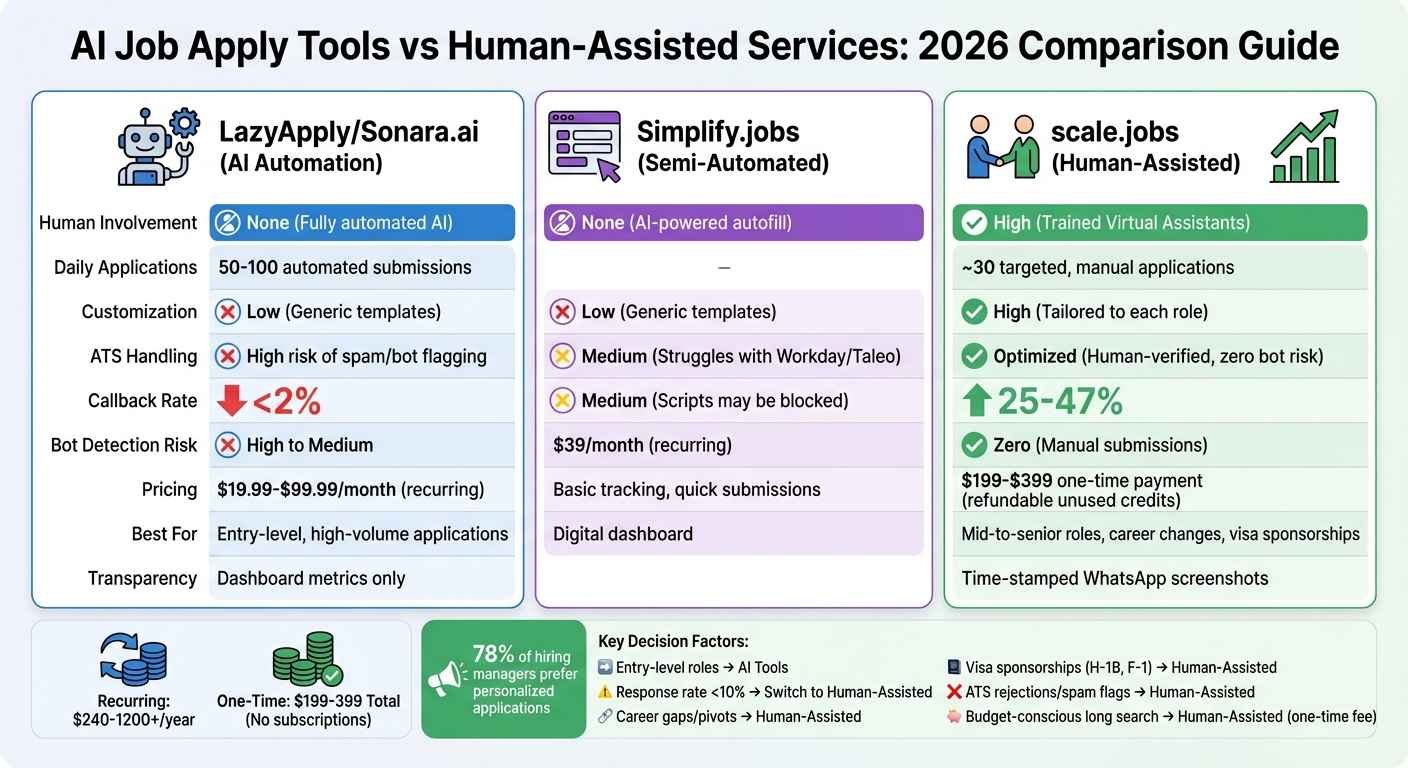
AI Job Application Tools vs Human-Assisted Services Comparison 2026
Job Search Challenge: Applying With and Without AI Tools | Indeed
LazyApply vs scale.jobs: Speed vs Customization
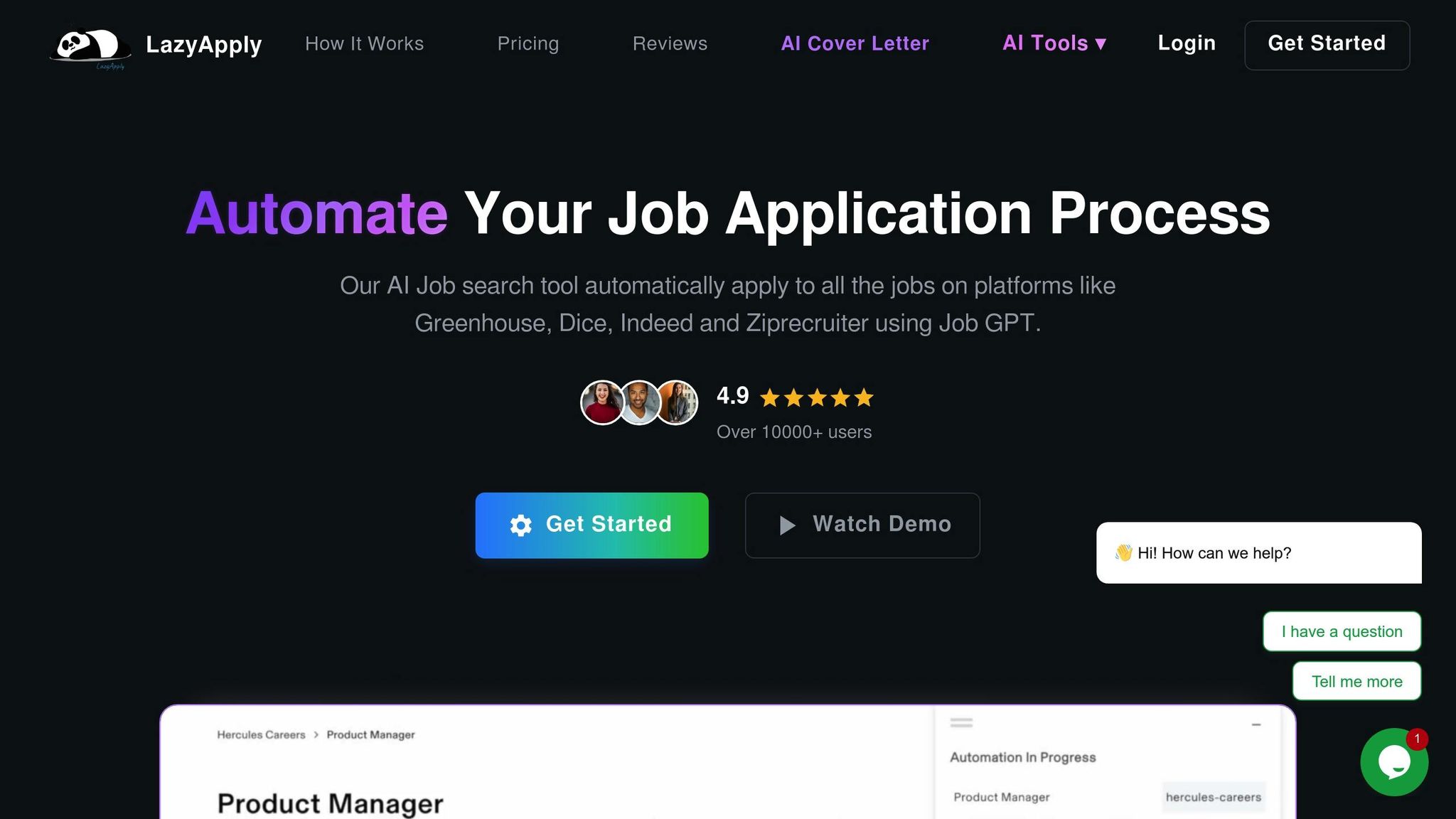
LazyApply streamlines the job application process by automating form submissions across various job boards using a Chrome extension. While this speeds up the process, its bulk automation often results in generic applications that modern ATS software can flag as automated or bot-like.
On the other hand, scale.jobs takes a more personalized approach. Human virtual assistants handle each application manually, creating ATS-friendly resumes and tailored cover letters for every role. With real-time WhatsApp updates and proof-of-work screenshots, users know exactly what’s submitted and when. This hands-on method bypasses bot-detection filters and ensures applications have a human touch - because they’re written by humans.
LazyApply Strengths
LazyApply shines when volume is the main concern. It automates repetitive tasks, saving time for job seekers who focus on high-volume, less competitive roles. Its straightforward pricing makes it an appealing choice for those on a budget who prioritize speed over precision.
Why scale.jobs Stands Out
The combination of human oversight and ATS optimization gives scale.jobs a distinct edge. While LazyApply focuses on quantity, scale.jobs prioritizes quality. Its approach includes manual formatting checks, keyword alignment with job descriptions, and ensuring every application passes ATS parsing. Users report callback rates ranging from 25–47%, significantly higher than LazyApply’s sub-2% response rate from generic submissions.
Here are three standout features of scale.jobs:
- Tailored applications: Each submission is customized to the specific job description, avoiding reliance on generic templates.
- Proof-of-work via WhatsApp: Every application is verified with time-stamped screenshots, removing the uncertainty of automated tools.
- Flat-fee pricing: Pay once for 250, 500, or 1,000 applications, with unused credits refunded - no subscriptions required.
LazyApply’s reliance on AI-generated text, such as its "Job GPT", often struggles with ATS filters. In contrast, scale.jobs employs human-powered resume writing services to ensure applications meet ATS standards and avoid detection issues.
Who Should Choose LazyApply or scale.jobs?
LazyApply is ideal for entry-level roles, testing responses across industries, or when speed is the primary concern. It’s best suited for situations where the focus is on completing a high number of applications quickly, rather than on their quality.
scale.jobs is the better choice for competitive roles, career changes, or visa-sponsored positions where personalization is essential. Mid-to-senior level professionals benefit the most from its tailored applications, ATS-optimized documents, human oversight, and transparent, one-time payment model.
Comparison Table
| Feature | LazyApply | scale.jobs |
|---|---|---|
| Human Involvement | None | High (Trained VAs) |
| Customization Depth | Low (Generic templates) | High (Tailored to each role) |
| ATS Handling | Basic (High bot-flagging risk) | Optimized (Human-verified) |
| Execution Method | Automated Chrome extension | Human virtual assistants |
| Transparency | Limited (Dashboard only) | High (WhatsApp screenshots) |
| Pricing Model | Lifetime subscription | One-time flat fee (Refundable) |
| Typical Callback Rate | <2% | 25–47% |
Up next, we’ll see how scale.jobs measures up against Simplify.jobs, examining how they balance quick application processes with comprehensive support.
Simplify.jobs vs scale.jobs: Quick Apply vs Full-Service Support
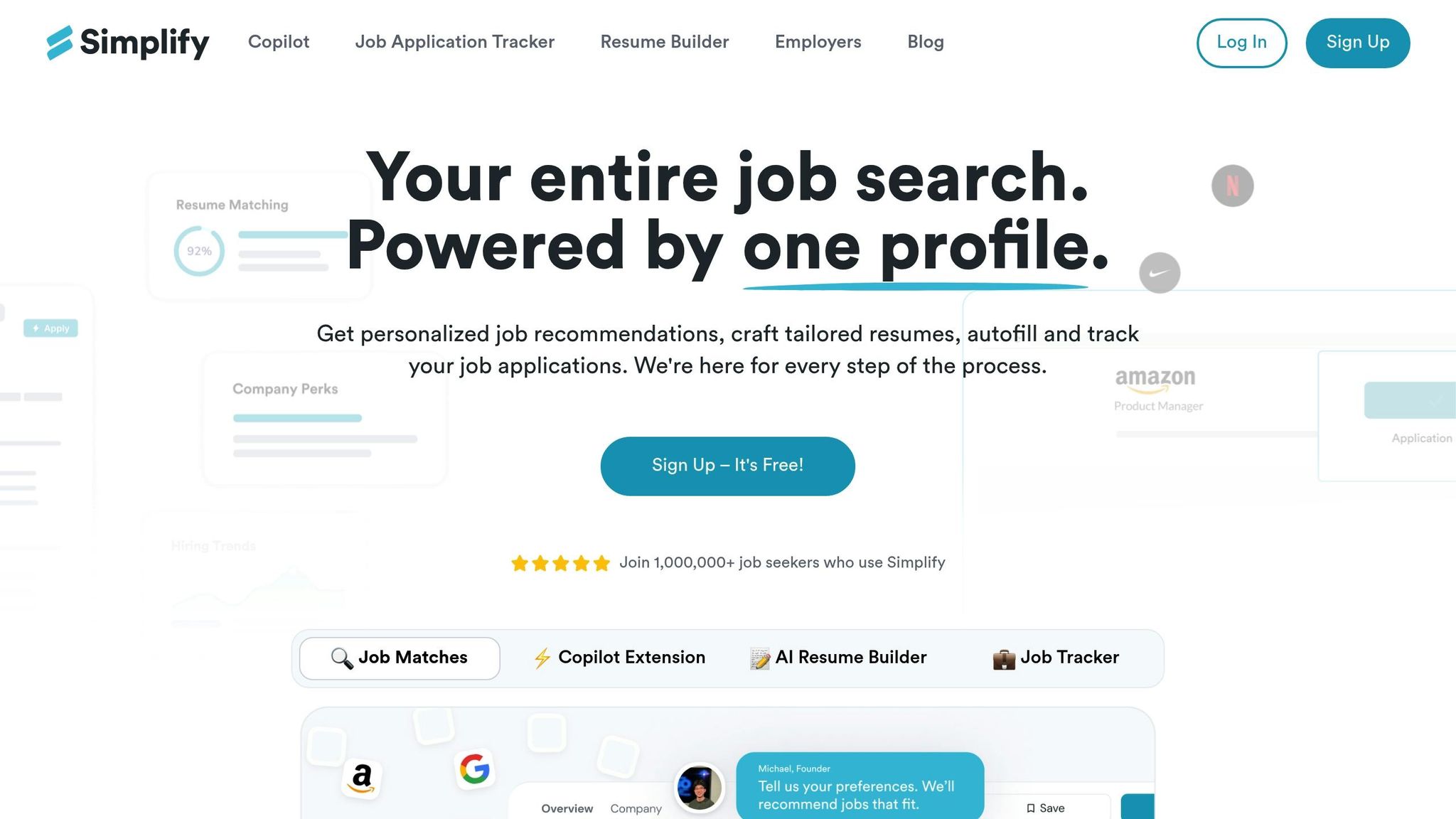
Simplify.jobs simplifies the application process with a browser extension that autofills forms using stored profile data, allowing one-click submissions. It also tracks your progress through a digital dashboard. However, this semi-automated method relies on AI-generated templates and stored information, which means customization is limited. Additionally, ATS systems like Workday or Taleo often block or reject these script-based submissions, causing potential setbacks.
In contrast, scale.jobs takes a human-centered approach. Virtual assistants manage the entire application process, from creating job-specific resumes and cover letters to manually submitting applications on job portals. This eliminates the risks of automation flags. Users also receive time-stamped WhatsApp screenshots as proof of submission, ensuring transparency and accuracy.
While Simplify.jobs prioritizes speed and basic tracking, scale.jobs focuses on personalization and precision.
Simplify.jobs Strengths
Simplify.jobs is ideal for basic tracking and quick submissions. Its free tier is particularly appealing to students and those just starting their careers. The dashboard offers a centralized view of application statuses, while the one-click autofill feature saves time on repetitive tasks for straightforward roles.
Why scale.jobs Stands Out
The personalized touch sets scale.jobs apart. Unlike Simplify.jobs’ reliance on generic templates, scale.jobs customizes every application to match the job description. Resumes are designed to pass ATS systems, keywords are tailored to employer requirements, and cover letters are crafted with role-specific details. This level of customization is especially helpful for visa-sponsored roles, career changers, or those re-entering the workforce after layoffs.
Here are three key reasons why scale.jobs outperforms Simplify.jobs:
- Avoid bot-detection issues with manual submissions that bypass automation filters and script blockers.
- Full-service application management handled by dedicated virtual assistants - from creating documents to submitting applications.
- Specialized support for visa applications and career shifts, including expert resume writing that aligns with unique requirements.
Simplify.jobs charges a recurring $39/month, which can add up over time. In contrast, scale.jobs offers a one-time fee of $199–$399 for 250–1,000 applications, with refunds for unused credits. For those who need more than basic autofill, the flat-fee model provides better value and eliminates subscription fatigue.
Who Should Use Simplify.jobs vs scale.jobs
Choose Simplify.jobs if you're targeting entry-level roles or high-volume applications where speed matters more than personalization. It’s also a good option for tracking applications across multiple boards when you're managing the process yourself.
Opt for scale.jobs if you're applying for mid-to-senior roles, visa-sponsored positions, or competitive jobs that demand tailored, ATS-friendly documents. For career changers, those needing proof of submission, or anyone looking to save 20+ hours a week for networking and interview prep, the hands-on approach of scale.jobs delivers better outcomes.
Comparison Table
| Feature | Simplify.jobs | scale.jobs |
|---|---|---|
| Human Involvement | None (AI-powered autofill) | High (Dedicated Virtual Assistants) |
| Customization Depth | Low (Generic templates) | High (Tailored to specific job descriptions) |
| ATS Handling | Medium (Struggles with Workday/Taleo) | High (Professionally optimized) |
| Execution Method | User-triggered browser extension | Fully managed end-to-end service |
| Bot Detection Risk | Medium (Scripts may be blocked) | Zero (Manual submissions) |
| Transparency | Digital dashboard | Transparent proof-of-work via WhatsApp |
| Pricing Model | $39/month recurring | $199–$399 one-time payment |
| Support | Generic customer service | Dedicated 24/7 WhatsApp support |
Next, we’ll compare scale.jobs with Sonara.ai to highlight how human oversight creates better results for job seekers who prioritize quality over quantity.
Sonara.ai vs scale.jobs: AI Automation vs Human Control
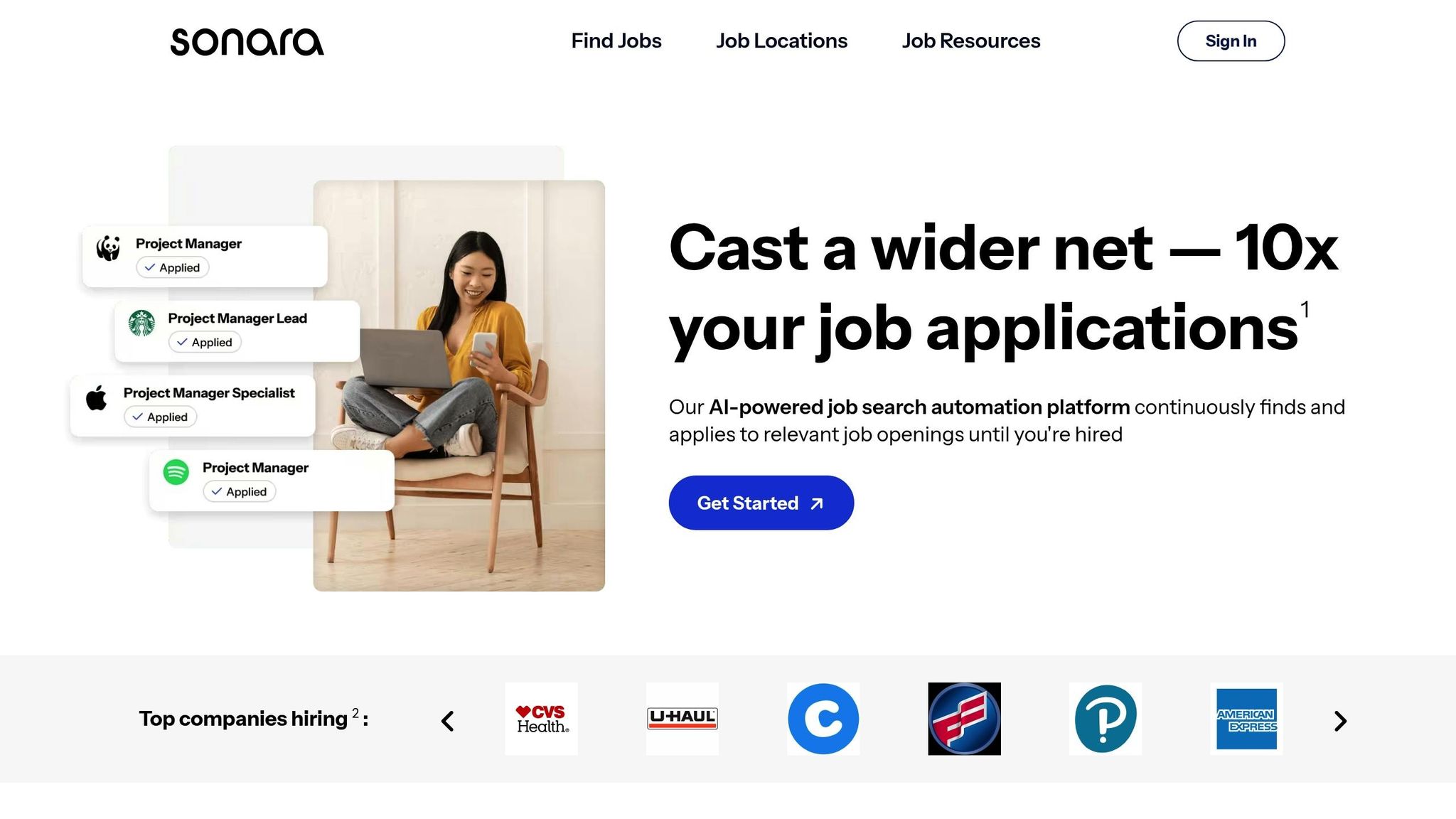
Sonara.ai operates as a fully automated job application platform, scanning over 50 job boards daily and submitting between 50 and 100 applications based on keyword matching and user profile data. Once preferences are set, the AI handles everything autonomously. However, this high-volume, template-based approach often triggers spam filters in applicant tracking systems (ATS) and bot-detection mechanisms, especially on platforms like Workday and Taleo, which actively block automated scripts.
scale.jobs takes a more personalized route. It employs human virtual assistants to manually submit around 30 applications daily, tailoring resumes and cover letters for each specific role. This manual process eliminates the risk of bot detection and ensures that every application clears ATS screening. Additionally, users receive time-stamped WhatsApp screenshots as proof of submission, offering transparency that automated tools can't provide.
The primary difference lies in the approach: Sonara.ai focuses on quantity, while scale.jobs prioritizes quality. Sonara.ai's system struggles with nuanced situations like career changes, employment gaps, or visa requirements (e.g., H-1B or F-1 sponsorships). In contrast, scale.jobs' human assistants can address these complexities through personalized applications and cover letters. Below, we explore how these two platforms differ and why the human touch can make a significant impact.
Sonara.ai Strengths
Sonara.ai is ideal for passive job seekers who want constant activity across job boards. The AI continuously scans and applies for jobs without requiring daily user input. This hands-off approach works well for entry-level candidates or those seeking remote positions where broad application volume outweighs the need for deep customization. The platform’s subscription model, ranging from $19.99 to $99.99 per month, ensures consistent activity. Users can also track their job search progress through a centralized dashboard that provides application metrics and updates.
Why scale.jobs Stands Out
The human element is what sets scale.jobs apart. While Sonara.ai relies on keyword-driven templates that can appear generic, scale.jobs ensures every application is tailored to the role, making them more appealing to hiring managers. Here’s why scale.jobs excels:
- No risk of bot detection: Applications are manually completed by trained virtual assistants, bypassing the spam flags that automated submissions often trigger.
- Handles complex situations: Whether it’s career transitions, employment gaps, or visa sponsorships, scale.jobs crafts applications that address these challenges effectively.
- Transparent proof of submission: Users receive verified, time-stamped screenshots for every application, unlike Sonara.ai’s dashboard, which only provides estimates.
- Cost-effective pricing: With a one-time fee of $199–$399 for 250–1,000 applications, unused credits are refunded, avoiding recurring subscription costs.
- Fast turnaround: Custom resumes and cover letters are delivered within 24 hours and are compatible with any job portal, including those that block automation.
For professionals targeting competitive roles or companies with advanced ATS systems, the manual, human-driven approach significantly improves the chances of success compared to automated high-volume submissions.
Who Should Use Sonara.ai vs scale.jobs
The choice between these two platforms depends largely on your career stage and job search goals.
- Sonara.ai is best for entry-level candidates or passive job seekers exploring multiple remote opportunities. It’s suited for straightforward roles where volume is more important than customization, even if it results in higher rejection rates.
- scale.jobs is ideal for mid-to-senior professionals aiming for competitive roles, particularly when dealing with career transitions, employment gaps, or visa sponsorships. It’s also a great fit for anyone who has faced repeated rejections from automated tools and needs a more personalized approach. The service saves users over 20 hours a week, allowing them to focus on networking and interview preparation.
Comparison Table
| Feature | Sonara.ai | scale.jobs |
|---|---|---|
| Human Involvement | None (Fully automated AI) | High (Dedicated Virtual Assistants) |
| Daily Application Volume | 50–100 automated submissions | ~30 targeted, manual applications |
| Customization Depth | Low (Keyword-based templates) | High (Job-specific, human-written) |
| ATS Handling | High risk of spam/bot flagging | Zero bot risk; manual entry verified |
| Execution Method | Automated AI agent | Human VAs with manual form completion |
| Complexity Handling | Poor (Struggles with gaps/pivots) | Excellent (Handles transitions/visas) |
| Transparency | Dashboard metrics/estimates | Time-stamped WhatsApp screenshots |
| Pricing Model | $19.99–$99.99/month recurring | $199–$399 one-time payment |
| Support | Email/chat support | 24/7 WhatsApp with dedicated VAs |
Next, we’ll explore specific scenarios where shifting from AI automation to human assistance can make a tangible difference in your job search strategy.
Switch to scale.jobs If...
Key Scenarios for Switching
Sometimes, relying solely on AI-driven tools for job applications can backfire, especially when precision and personalization are crucial. If you've sent out hundreds of applications through platforms like LazyApply or Sonara.ai without securing interviews, the issue might not be with the number of applications but with how they present your qualifications. AI tools are fast, but they often miss the subtleties hiring managers value. Here’s when switching to scale.jobs makes sense:
You’re consistently rejected by ATS or flagged as spam. If your applications are frequently rejected by applicant tracking systems (ATS) on platforms like LinkedIn or Workday, it could be that your current tool is being flagged as spam. Signs of this include instant rejections, account warnings, or your applications not appearing in employer dashboards. Unlike automated systems, scale.jobs uses trained human assistants to manually complete applications, reducing the risk of bot-related flags and ensuring your submissions are properly reviewed.
Your career path requires a nuanced approach. If you need to address employment gaps, career changes, or visa sponsorships (like H‑1B or F‑1 OPT), automated tools may not be able to tell your story effectively. With scale.jobs, human assistants create tailored resumes and cover letters, ensuring your unique circumstances are clearly and professionally communicated. This kind of personalization is especially helpful when navigating industry pivots or sponsorship requirements. Learn more about their human-powered services.
Your current tool lacks transparency. Many AI tools only provide vague dashboard updates without clear confirmation of submissions. scale.jobs, on the other hand, offers time-stamped WhatsApp screenshots for every application, so you know exactly what was submitted and how it appears to employers. This is particularly valuable for navigating complex portals like Workday or Taleo, where submission accuracy matters.
You’re tired of recurring subscription fees. Subscription-based tools, with monthly fees ranging from $19.99 to $99.99, can quickly become expensive over a prolonged job search. scale.jobs offers a one-time payment model ($199–$399 for 250–1,000 applications) with pro-rata refunds for unused credits. For example, if you land a job after 400 applications in a 1,000-application package, you’d get a refund for 70% of the remaining credits. This approach provides cost predictability and flexibility, something subscription-based tools can’t match.
These scenarios highlight why switching to scale.jobs can be a smarter choice for job seekers looking for personalized, transparent, and cost-effective application services.
Decision Summary: AI Tools vs Human Assistance
Choosing between AI tools and human-assisted services depends largely on your career stage and the competitiveness of the roles you're targeting. For entry-level positions or high-turnover roles - like retail management, customer service, or junior sales - AI tools such as LazyApply or Simplify.jobs can quickly help you submit over 100 applications. However, if your response rate remains below 10% or you’re facing frequent ATS rejections, the problem likely lies in the quality of your applications rather than the quantity.
Automated tools excel at handling volume but often miss the nuanced details required for more competitive roles. For instance, in comparisons like LazyApply vs. Sonara.ai, automation struggles to deliver the personalized touch that hiring managers value. With 78% of hiring managers citing personalized applications as a sign of genuine interest, generic, cookie-cutter submissions can be a disadvantage. Platforms like scale.jobs address this by using trained human assistants to craft ATS-friendly resumes and tailored applications. These services focus on role-specific narratives, addressing challenges like employment gaps or career transitions - areas where automation often falls short. If you're sending out a high volume of applications but not landing interviews, switching to human-powered services can enhance your chances by ensuring your applications demonstrate a strong fit rather than just meeting keyword requirements.
Cost is another factor to consider. While AI tools typically charge monthly fees ranging from $20 to $100, scale.jobs offers a one-time payment between $199 and $399, with pro-rata refunds for unused credits. This pricing structure provides a clear alternative for those looking to balance speed, quality, and cost without the burden of recurring subscriptions.
For those seeking a middle ground, a hybrid approach can work well. Use AI resume builders or tools like Jobscan to optimize your resume for ATS keyword matching, and then rely on human experts for role-specific customization. Monitor your metrics closely - if interview invitations don’t improve, it may be time to shift key applications to human-reviewed submissions. As employers increasingly adopt semantic AI to screen for overly automated content, combining speed with authenticity becomes more critical.
Consider transitioning to human-assisted services if you experience:
- Response rates below 10%, even with high application volume
- Frequent ATS rejections or being flagged as spam
- Complex career situations, such as employment gaps, career pivots, or visa requirements
- Rising costs from recurring AI tool subscriptions
FAQs
How can I tell if my applications are getting blocked by ATS or bot filters?
When trying to determine if your job applications are being filtered out by ATS (Applicant Tracking Systems) or bot filters, pay close attention to response rates and rejection trends. Resumes that are generic or not customized - especially those generated by basic automated tools - are more likely to get flagged. On the other hand, applications that are thoughtfully tailored and optimized for ATS, with a personal touch, often perform better because they align more effectively with the requirements of these systems.
What parts of the application process benefit most from human review?
Human input plays an essential role in creating tailored resumes and cover letters, especially for senior-level positions or when navigating career changes. This personalized approach ensures that applications are not only customized to the job but also compatible with Applicant Tracking Systems (ATS), boosting the chances of securing callbacks. Key focuses include aligning the content with specific job requirements and addressing any unique career hurdles effectively.
When is a hybrid workflow better than fully relying on human-assisted applying?
A hybrid workflow, which merges AI automation with human oversight, strikes the perfect balance when both speed and personalization are priorities. This method allows for handling a high volume of applications while ensuring resumes are tailored and ATS-friendly. It's particularly useful for competitive or specialized roles, where standing out is crucial. By combining the strengths of automation with the precision of human customization, this approach enhances efficiency and improves response rates, avoiding the downsides of relying solely on one method.