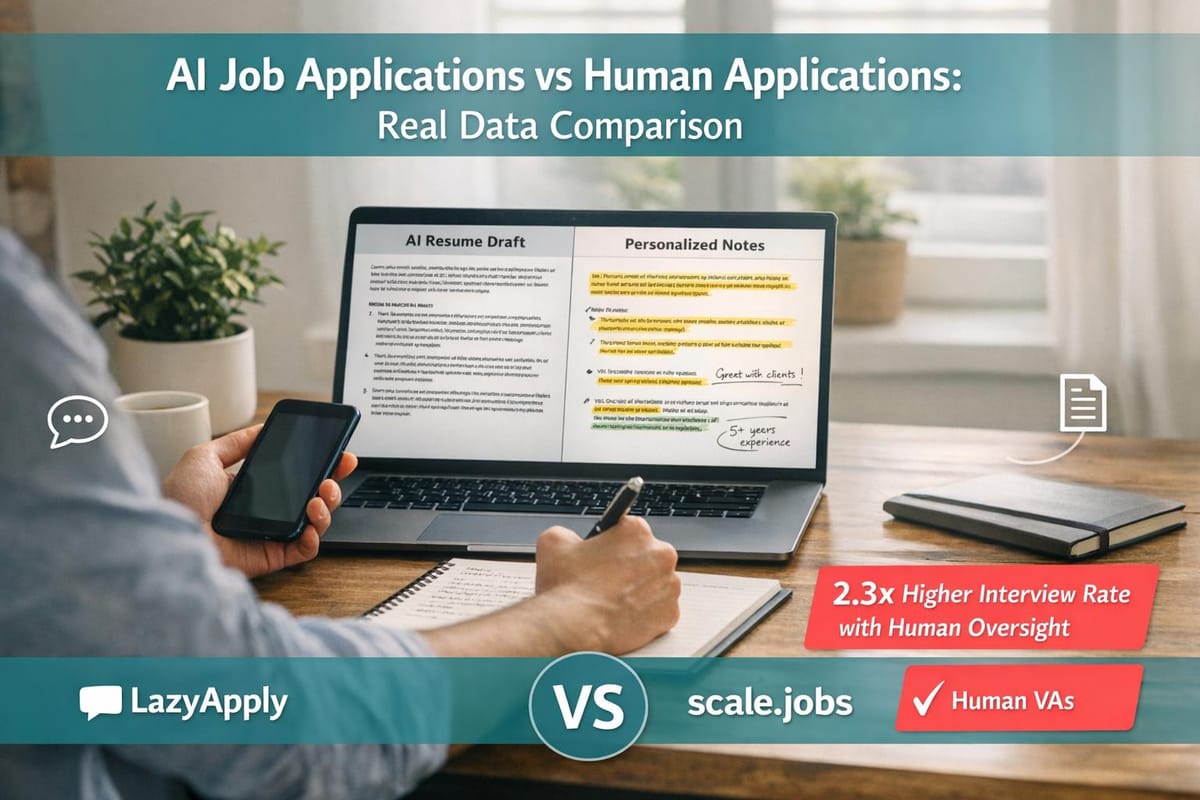
AI Job Applications vs Human Applications: Real Data Comparison
Real hiring data shows AI improves resumes but personalization and human oversight drive far better interview rates and outcomes.

The 2026 job market is competitive, with rising unemployment and increased reliance on AI tools for job applications. While AI tools can enhance efficiency and improve outcomes, their effectiveness depends on how they are used. Key insights include:
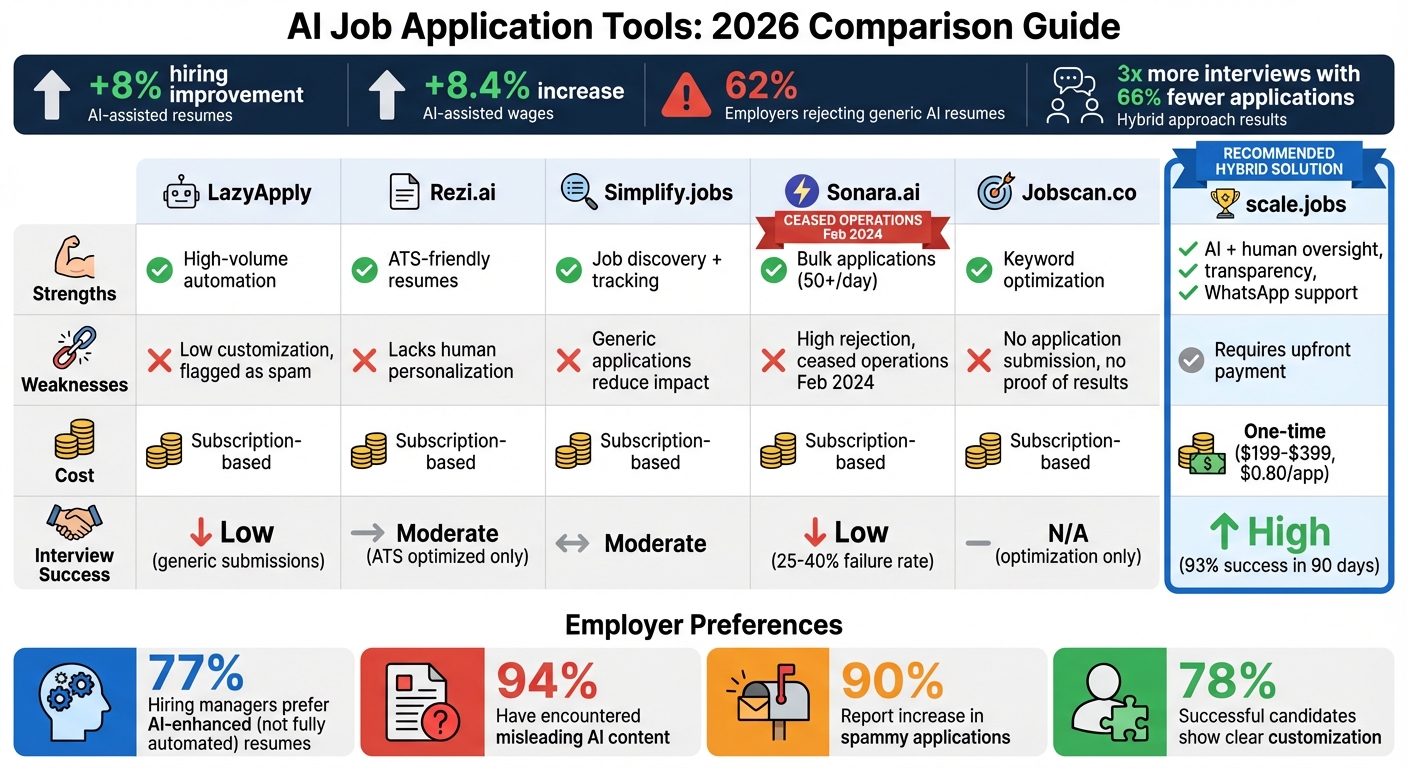
- AI-assisted resumes improve hiring chances by 8% and boost wages by 8.4%.
- 62% of employers reject generic AI-generated resumes, favoring targeted and personalized applications.
- Hybrid approaches (AI + human oversight) yield three times more interviews with fewer applications.
- Tools like LazyApply and Sonara.ai focus on high-volume automation, but lack of customization often leads to low interview rates.
- Platforms like scale.jobs combine AI optimization with human expertise, offering better outcomes through tailored applications and transparency.
Quick Comparison
| Tool | Strengths | Weaknesses | Cost Model |
|---|---|---|---|
| LazyApply | High-volume automation | Low customization, flagged as spam | Subscription-based |
| Rezi.ai | ATS-friendly resumes | Lacks human input for personalization | Subscription-based |
| Simplify.jobs | Job discovery + tracking | Generic applications reduce impact | Subscription-based |
| Sonara.ai | Bulk applications (50+/day) | High rejection due to generic submissions | Subscription-based |
| Jobscan.co | Keyword optimization | No application submission or proof of results | Subscription-based |
| scale.jobs | AI + human oversight, transparency | Requires one-time payment upfront | One-time payment |
Conclusion
AI tools save time and improve application quality, but personalization is key. For best results, use platforms like scale.jobs, which combine AI precision with human review, ensuring tailored applications that stand out. This hybrid approach not only increases interview rates but also builds trust with employers.
AI Job Application Tools Comparison: Features, Costs, and Success Rates
Job Search Challenge: Applying With and Without AI Tools | Indeed
1. LazyApply
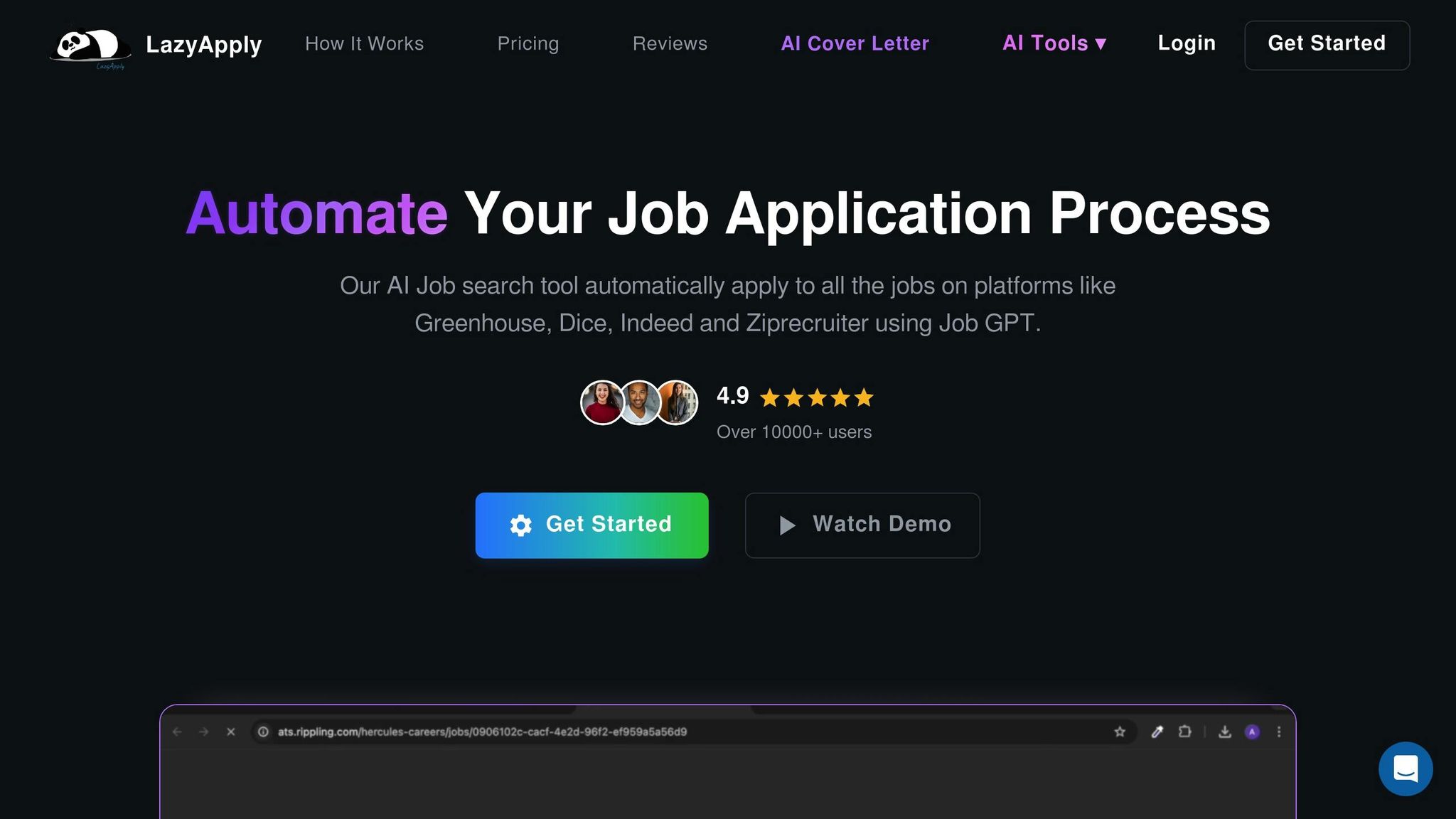
LazyApply is designed to streamline your job search by automating the application process across multiple platforms. It promotes itself as a tool that saves time by submitting applications to numerous positions daily without requiring manual effort. But how well does it actually perform? Let’s take a closer look at its impact on job search outcomes.
Interview Call Rates
Using algorithms to assist with resume writing can improve hiring chances by 8% compared to resumes created entirely by hand. However, bulk submissions without tailoring applications to specific roles can hurt your chances of landing interviews. The lack of personalization often means that the sheer volume of applications doesn’t translate into meaningful results.
Employer Preferences
Employers tend to favor candidates who demonstrate genuine interest in the role. In fact, 77% of hiring managers are more likely to interview candidates who use AI tools thoughtfully to enhance their resumes rather than relying solely on mass automation. Tailored applications that align with the job requirements and company culture often stand out far more than generic submissions.
Efficiency and Value
LazyApply’s subscription model might seem appealing for its ability to rapidly send out a large number of applications. However, the lack of customization can diminish its overall effectiveness, making it less valuable in the long run. Tools like scale.jobs take a different approach, focusing on precision and thoughtful application strategies rather than sheer volume. This targeted method often leads to better outcomes and less wasted effort.
Transparency
One of the key concerns with LazyApply is the limited insight into what’s actually being submitted on your behalf. Research shows that 94% of hiring managers have encountered misleading or inaccurate AI-generated content, and 65% believe such content should be flagged. This lack of transparency can harm your professional reputation. On the other hand, scale.jobs offers detailed proof-of-work, ensuring candidates know exactly what’s being done to support their job search. This level of clarity helps build trust and protects your personal brand.
2. Rezi.ai
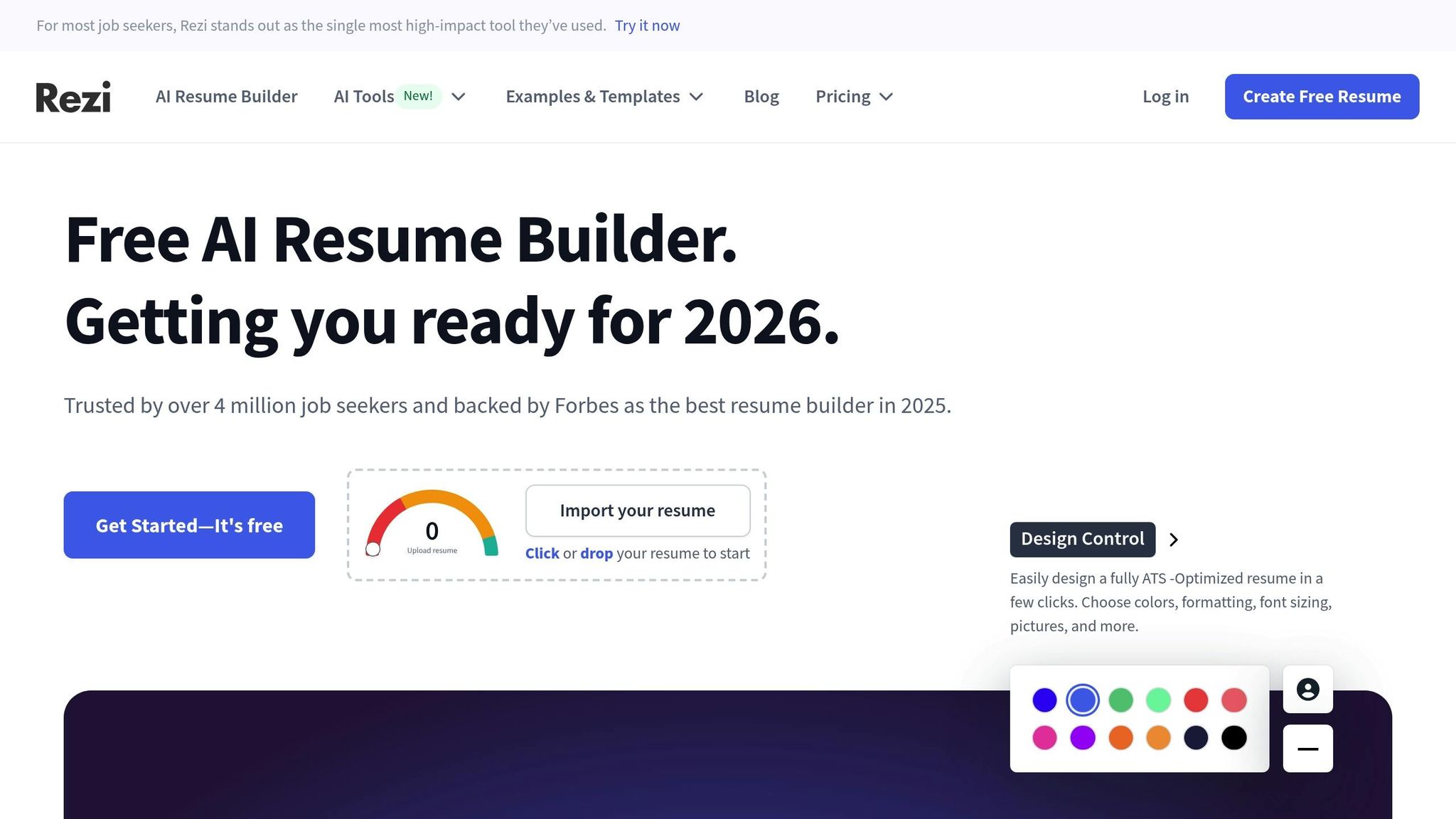
Rezi.ai is an AI resume builder designed to create ATS-friendly resumes that stand out in the hiring process. By generating keyword-rich bullet points tailored to specific job titles, it helps job seekers craft resumes that align with ATS criteria. While this automation streamlines the process, research suggests that resumes are most effective when they balance AI-driven optimization with a personal touch.
Interview Call Rates
Data reveals that job seekers using AI writing tools for their resumes are 8% more likely to be hired than those who don’t[1]. This improvement stems from AI’s ability to eliminate common errors that could hurt a candidate's chances. However, this advantage holds only when the resume combines algorithmic precision with personalized content that resonates with hiring managers. In comparison, platforms like scale.jobs go a step further by integrating human expertise to craft resumes that not only meet ATS requirements but also tell a compelling story about the candidate.
While AI can boost interview call rates, passing the ATS is a critical first step in the process.
ATS Pass Rates
Rezi.ai leverages machine learning to optimize keywords for specific industries and job postings, increasing the chances of passing ATS filters. Its formatting algorithms ensure compliance with ATS technical standards. However, passing the ATS is just the beginning. Resumes that combine ATS optimization with personalized storytelling are far more likely to leave a lasting impression on employers. This is where scale.jobs excels, offering a blend of AI and human input, along with features like a one-time payment model and ongoing WhatsApp support for continuous improvement throughout the job search.
While ATS compatibility is crucial, the clarity and authenticity of your application also play a significant role in building trust with employers.
Transparency
Employers appreciate AI-assisted resumes only when they retain a personal and authentic tone. Unfortunately, many automated tools fail to explain how specific keywords or phrases are chosen. In contrast, scale.jobs emphasizes transparency by providing detailed proof-of-work documentation. This documentation explains the reasoning behind every element of your resume, helping you maintain your professional reputation while giving you clear insights into the strategy behind your job applications.
Why scale.jobs stands out compared to Rezi.ai:
- Expert human oversight combined with precise ATS optimization ensures resumes pass filters and connect with hiring managers.
- Dedicated WhatsApp support and a one-time payment structure eliminate the hassle of recurring fees.
- Proof-of-work documentation builds employer trust and safeguards your professional reputation.
[1] Based on peer-reviewed research on the impact of algorithmic writing tools on hiring outcomes.
3. Simplify.jobs
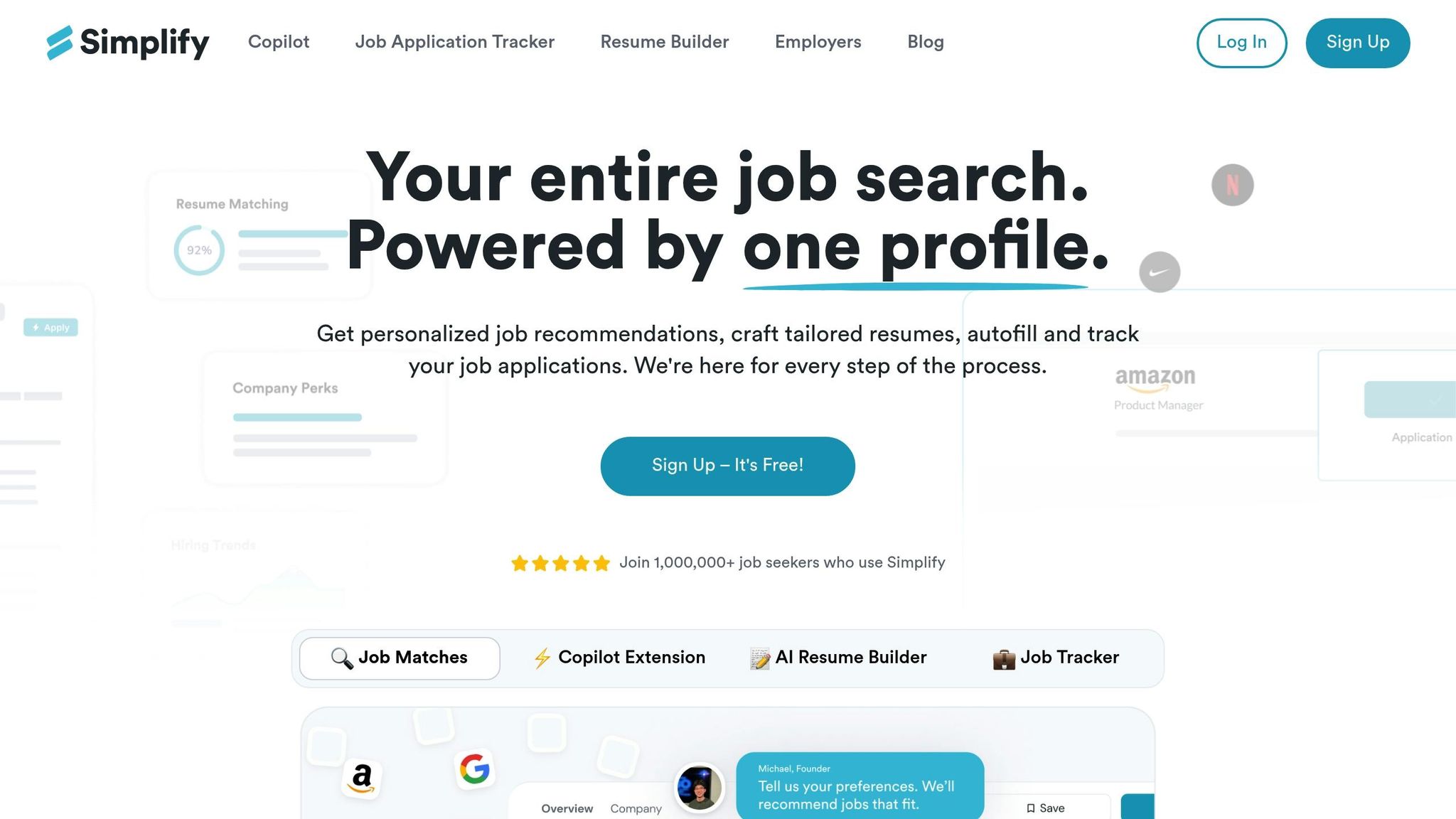
Simplify.jobs streamlines the job search process by automating job discovery, resume adjustments, and application tracking. By merging job discovery with communication tracking, it appeals to job seekers aiming to make their application process more efficient. However, the success of AI-generated applications heavily relies on tailoring each submission to the specific job. Let’s break down some key factors that set Simplify.jobs apart from scale.jobs.
Interview Call Rates
Studies show that resumes enhanced with AI can boost hiring outcomes by 8% compared to those without AI assistance. Employers often prefer the polished language AI tools can provide, as they help eliminate common technical errors found in manually written resumes. That said, when AI-generated applications lack a personal touch, hiring managers may view them as impersonal or generic, potentially reducing their impact.
Cost Per Application
Simplify.jobs combines job matching, resume optimization, and application tracking in its service. On the other hand, scale.jobs operates with a one-time payment model, focusing on human-crafted applications. This approach eliminates recurring fees while ensuring authenticity in every submission.
Transparency
Simplify.jobs offers users a personalized dashboard to monitor their job applications and interview progress, giving a clear overview of their job search pipeline. This level of clarity is crucial in a competitive market where employers value both transparency and authenticity. In comparison, scale.jobs provides detailed proof-of-work documentation, offering users a complete breakdown of their application strategy.
Here’s how scale.jobs stands out in comparison to Simplify.jobs:
- Human expertise ensures every application combines ATS optimization with a compelling narrative.
- One-time payment model avoids the need for ongoing fees.
- WhatsApp support delivers real-time, personalized guidance.
- Proof-of-work documentation provides full visibility into the application process.
- Expert-crafted materials blend human insight with ATS requirements, creating resumes and cover letters that appeal to both algorithms and hiring managers.
4. Sonara.ai
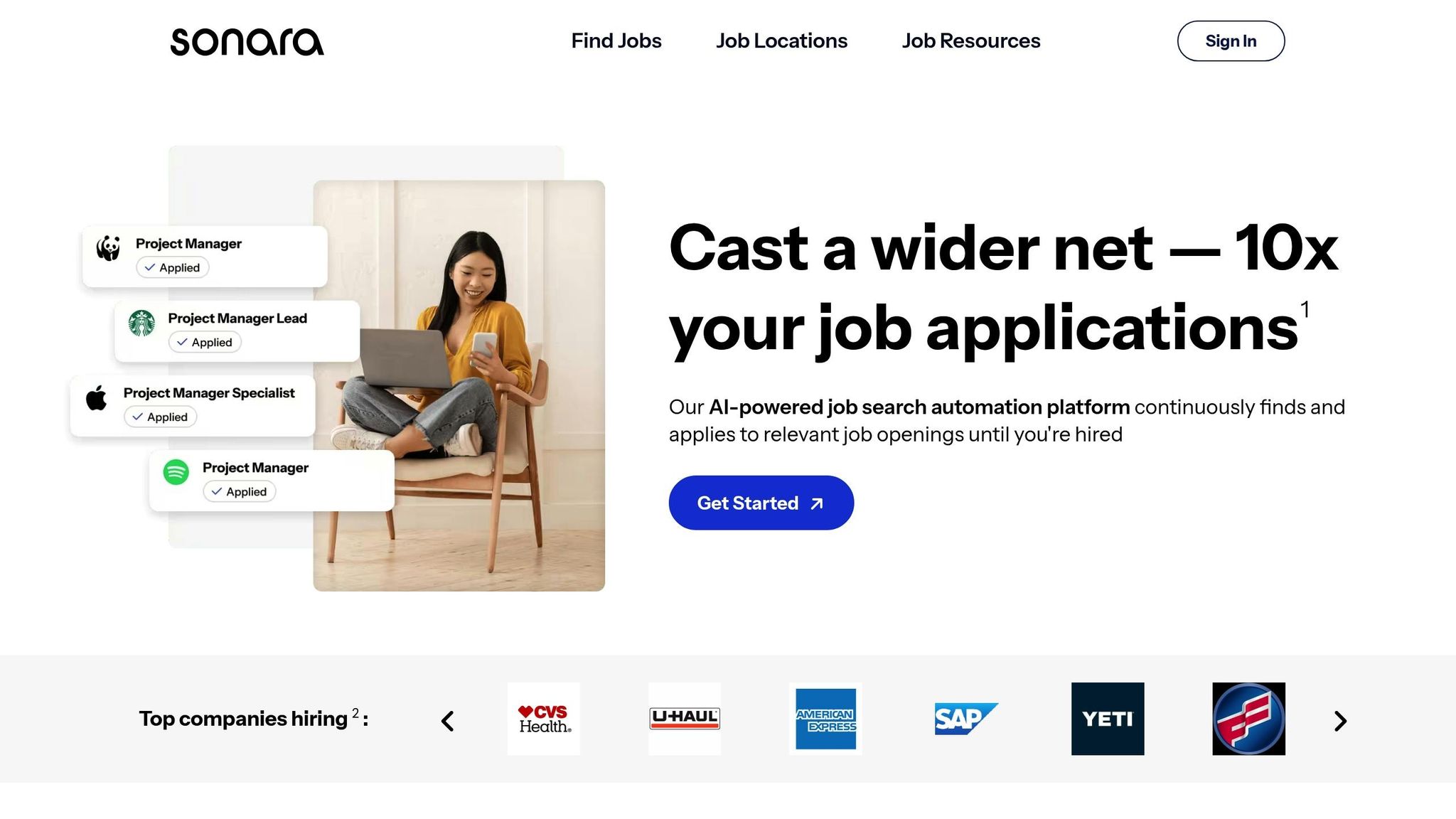
Sonara.ai takes a high-volume approach to job applications, submitting over 50 applications daily on behalf of users - well beyond the 5–10 applications typically handled manually. However, after ceasing operations in February 2024 due to financial troubles, the platform was acquired by BOLD LLC (the company behind Zety and My Perfect Resume) and relaunched. This shift has raised questions about its future reliability.
Interview Call Rates
While automating a large number of applications might seem like a good strategy to increase opportunities, it has its downsides. 90% of hiring managers report a rise in what they describe as "spammy" applications, and only 78% of successful candidates demonstrate clear customization in their submissions. Over-reliance on generic, bulk applications often results in fewer callbacks, as hiring teams prioritize tailored efforts.
Transparency
One of Sonara.ai's major drawbacks is its lack of pre-submission review. This leads to a 25–40% failure rate, as flaws in applications are often discovered only after they’ve been rejected. In comparison, scale.jobs provides WhatsApp updates with submission screenshots, ensuring users receive immediate and verifiable updates on their applications.
Cost Per Application
Sonara.ai operates on a subscription model, requiring recurring payments for its bulk automation services. On the other hand, scale.jobs offers a one-time fee for applications that are carefully crafted by professionals and optimized for ATS systems. This difference underscores the limitations of Sonara.ai’s automated system when compared to the more focused, human-driven approach.
Why scale.jobs Wins
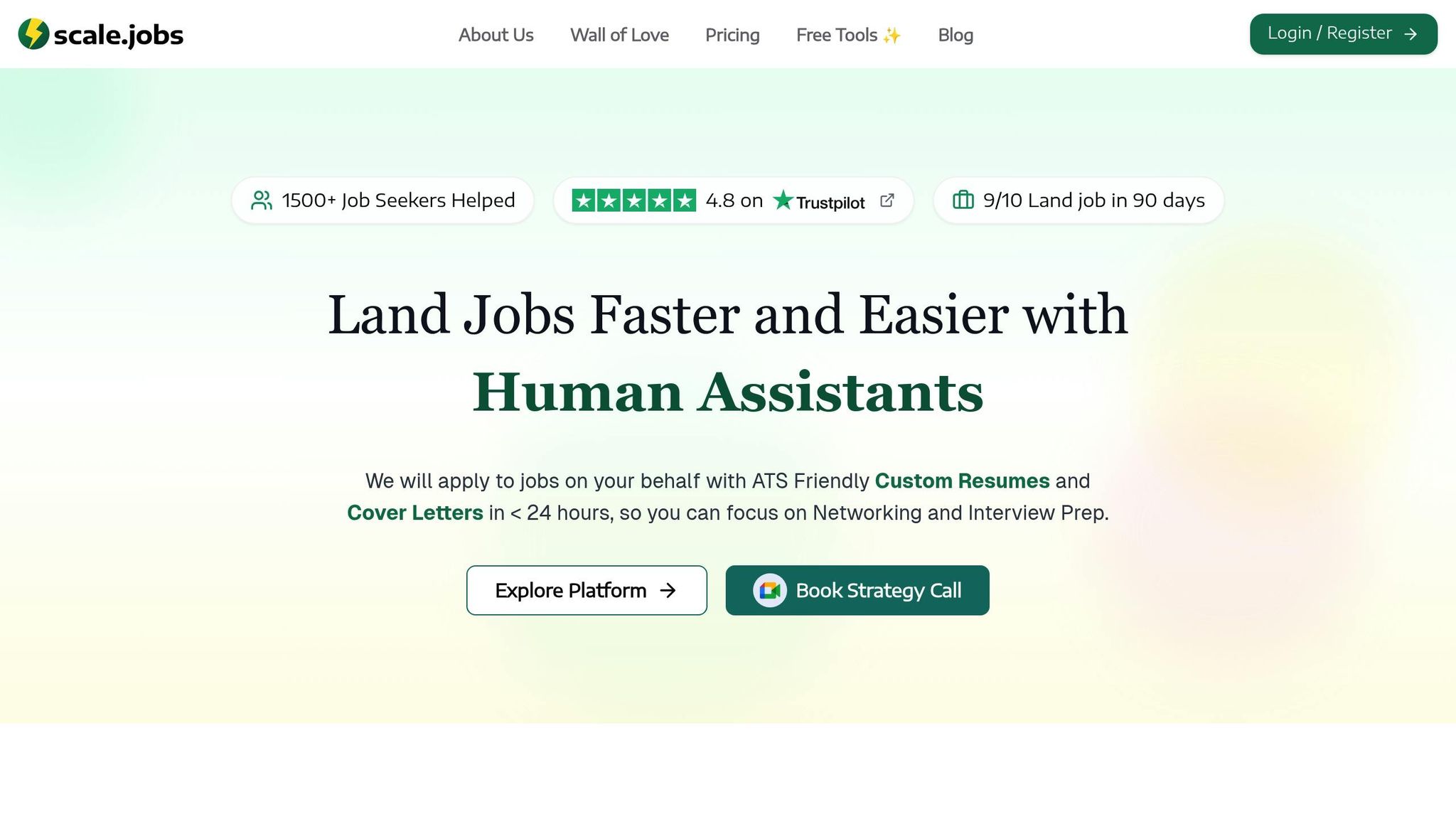
- Human Expertise: Every application is personalized to meet ATS standards and appeal to hiring managers.
- Real-Time Support: Dedicated WhatsApp assistance connects users with real people for guidance.
- Transparent Process: Users receive clear documentation showing exactly what was submitted and the rationale behind it.
- One-Time Payment: No subscription fees - just a single payment for a premium service.
- Proven Outcomes: With a 93% success rate within 90 days, scale.jobs consistently delivers results that automated systems can’t match.
5. Jobscan.co
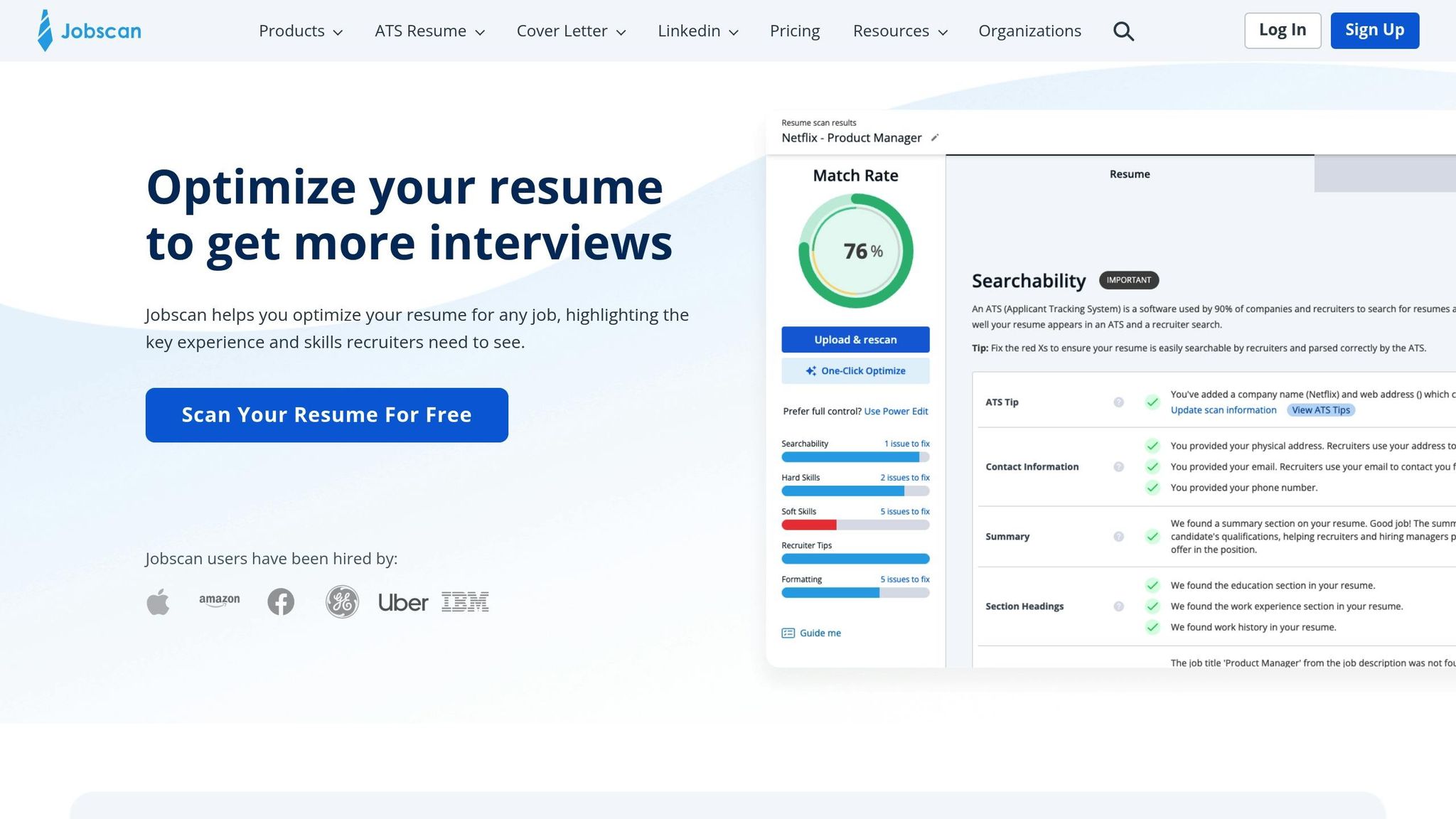
Jobscan.co is a platform designed to help job seekers optimize their resumes for Applicant Tracking Systems (ATS). By comparing your resume to specific job descriptions, it identifies missing keywords and skills, provides a match rate score, and suggests improvements to enhance compatibility with ATS filters. However, users are responsible for manually applying these changes, uploading resumes, and tracking their job applications.
ATS Pass Rates
Jobscan.co excels at pinpointing keyword gaps and skill mismatches. According to research, job seekers using algorithmic tools like this are 8% more likely to secure a job compared to those who don’t. That said, while the platform offers helpful recommendations, it doesn’t guarantee that these adjustments will lead to better results in actual job applications.
Transparency
The platform is transparent in showing which keywords your resume lacks and how it aligns with job requirements. This clarity helps you focus on areas needing improvement. However, Jobscan.co stops short of submitting applications or providing evidence that its suggestions lead to interview invitations. It’s up to you to take the next steps and follow up with potential employers.
Cost Per Application
Jobscan.co operates on a subscription model, charging a monthly fee for its keyword analysis features. While this gives you access to its tools, you’ll still need to handle all application submissions yourself. This approach contrasts with scale.jobs, which offers a full-service model. With scale.jobs, you make a one-time payment for a premium service that includes professional resume optimization, application submissions, and updates via WhatsApp, complete with proof of submission for added transparency.
Why scale.jobs Wins
Here’s why scale.jobs stands out as a more comprehensive option compared to Jobscan.co:
- Expert Support: Skilled professionals create applications tailored for both ATS systems and hiring managers, going beyond keyword matching.
- End-to-End Service: Applications are submitted on your behalf, with submission proof provided - removing the hassle and uncertainty.
- Personalized Assistance: Real-time WhatsApp support connects you with experts who understand your career aspirations.
- One-Time Fee: Unlike Jobscan.co’s recurring subscription costs, scale.jobs offers its full service for a single payment.
[1] Jobscan.co RAG Data
6. scale.jobs
scale.jobs stands out in a crowded field by blending advanced technology with human expertise, creating a service that merges AI-powered resume optimization with the tailored job application assistance from trained assistants. This hybrid approach ensures that your job applications are both efficient and tailored, addressing the challenges of impersonal AI tools while saving you the hassle of manual submissions. It’s a smart solution for today’s competitive job market.
ATS Pass Rates
scale.jobs leverages Natural Language Processing (NLP) to fine-tune your resume for Applicant Tracking Systems (ATS). Unlike basic keyword-matching tools, this platform goes deeper to align your resume with job descriptions in a way that feels natural and engaging. Studies reveal that users of AI-enhanced platforms can land nearly three times more interviews while sending out only a third of the applications. With human oversight added to the mix, scale.jobs ensures your resume not only passes ATS filters but also resonates with hiring managers.
Interview Call Rates
AI-driven tools have already been shown to improve hiring rates by 8% compared to traditional methods. scale.jobs takes it a step further by having human assistants review AI-generated content to ensure it aligns with employer expectations. This extra layer of scrutiny ensures that your applications make it past automated systems and get noticed by decision-makers, significantly improving your chances of landing interviews.
Transparency
Transparency is a hallmark of scale.jobs. The platform provides real-time updates via WhatsApp, complete with time-stamped screenshots of every application submitted. This level of detail reassures users and eliminates the mystery often associated with automated services, offering a clear view of your application progress.
Cost Per Application
scale.jobs also shines in affordability. Its flat-fee pricing starts at $199 for 250 applications, breaking down to just $0.80 per application. Unlike subscription-based models, you pay once and can even get refunds for unused credits. For those with larger needs, the Standard plan at $299 covers 500 applications, while the Premium plan at $399 handles 1,000 applications - further lowering the cost per submission. Additionally, the AI Assistant Pro tier is available for just $9/month during its launch phase, significantly undercutting competitors who charge between $19 and $49 monthly for similar services.
Why scale.jobs Wins
- Hybrid Approach: Combines AI-powered resume optimization with human oversight, delivering a personalized and effective application process.
- Improved Interview Chances: Integrates AI and manual checks to ensure your application stands out and reaches hiring managers.
- Unmatched Transparency: Real-time WhatsApp updates and proof screenshots keep you informed every step of the way.
- Affordable Pricing: Flat-fee plans eliminate recurring charges and offer some of the lowest per-application rates in the market.
scale.jobs redefines how job seekers approach applications, making it a top choice for those looking to maximize their chances of success without breaking the bank.
Strengths and Weaknesses
When it comes to job applications, the choice between AI-generated, human-crafted, and hybrid approaches involves clear trade-offs. By understanding these differences, you can select the strategy that aligns best with your goals and resources.
AI-generated applications excel in speed and volume, allowing you to submit hundreds of applications within minutes. However, this efficiency often comes at the cost of personalization. Many employers quickly dismiss generic submissions, making these high-volume efforts less effective. While the low cost per application might seem appealing, the lack of tailored content can mean your resume fails to stand out, reducing your chances of securing interviews.
On the other hand, human-crafted applications offer a personal touch and full control over every detail. This approach can significantly improve the quality of your submissions, but it demands a substantial time investment - averaging 28 hours per interview. While these applications may feel more authentic, the time spent crafting each one could be better utilized for networking strategies or exploring other opportunities. Additionally, the lower overall interview rates for manual submissions can make this method less efficient.
Hybrid strategies, which combine AI tools with human oversight, strike a balance between efficiency and personalization. For instance, a NovoHire study on Jobflow Premium users (January–May 2025) revealed that candidates using AI-optimized resumes secured three times more interviews while submitting 66% fewer applications. Similarly, MIT research highlights that thoughtful use of AI not only increases hiring rates but can also lead to higher salaries. Importantly, 77% of hiring managers prefer candidates who use AI as a complement to their efforts, enhancing rather than replacing the personal touch.
Transparency is another advantage of hybrid methods. With 78% of companies actively checking for AI-generated content, it’s crucial that your application reflects genuine effort. Some platforms now address this by offering features like proof-of-work and real-time updates, ensuring employers can see the authenticity behind your submissions.
Among hybrid solutions, scale.jobs stands out for blending AI efficiency with human insight. As Keith Spencer from Resume Now points out, "Employers are not rejecting AI outright, but they are rejecting laziness." The key to success lies in pairing AI’s capabilities with thoughtful human involvement, ensuring your applications showcase your qualifications and genuine interest in the role.
Conclusion
Looking at the comparisons above, it’s clear that a balanced, hybrid approach is the way forward. Relying solely on AI-generated or manual job applications just doesn’t cut it in 2026. While algorithmic assistance has modestly improved hiring rates and boosted wages by 8.4% compared to manual methods, it’s not without flaws. For instance, 62% of employers dismiss AI-generated resumes that lack personalization, and 90% of hiring managers have reported an increase in low-quality, spam-like applications from job search automation systems.
Between January and May 2025, job seekers who used a hybrid strategy landed three times more interviews while submitting only a third of the applications, saving themselves 74 hours over just 2.25 months. This data underscores a simple truth: well-crafted, tailored applications consistently outperform generic, high-volume submissions.
"If you take two identical workers with the same skills and background, the one with the better-written resume is more likely to get hired."
This insight from Emma van Inwegen, a PhD student at MIT Sloan, aligns perfectly with the data. While AI can handle technical details and improve structure, it’s the human touch that brings the personalization and authenticity employers look for. This approach is exactly what scale.jobs offers, meeting the demands of today’s competitive job market.
For anyone navigating the job search in 2026, scale.jobs strikes the perfect balance. Unlike LazyApply’s mass application methods, which risk being flagged as spam, or Rezi.ai’s overly generic templates, scale.jobs combines AI-driven precision with human expertise. Every application is hand-submitted by trained assistants, ensuring quality and avoiding the pitfalls of automation. Here’s what sets scale.jobs apart:
- Human-powered applications that steer clear of spammy, automated submissions.
- ATS-optimized resumes blending AI precision with personalized human insight.
- Fast turnaround - applications are completed within 24 hours, with real-time WhatsApp updates and proof-of-work screenshots for transparency.
- Affordable pricing - a one-time payment with no recurring subscriptions or hidden fees.
In today’s crowded job market, success comes from combining the speed and efficiency of AI with the nuance and care of human insight. This approach not only helps job seekers stand out but also frees up their time to focus on networking and preparing for interviews.
FAQs
Do AI-generated resumes improve your chances of getting hired compared to human-written ones?
AI-generated resumes can streamline parts of your job application process, especially when it comes to optimizing for ATS (Applicant Tracking Systems). However, they often lack the personal touch and contextual depth that come from a human-crafted resume. A resume written by a person can better emphasize your unique skills, align your experiences with specific job requirements, and demonstrate the effort you’ve put into tailoring it - qualities that tend to leave a stronger impression on employers.
While AI tools are great for saving time, resumes shaped by human expertise often achieve better results in critical areas like interview invitations and hiring outcomes. By blending the efficiency of AI with the nuanced insights of human input, you can create a resume that truly sets you apart in today’s competitive job market.
What are the advantages of combining AI tools with human expertise for job applications?
Using a mix of AI tools and human expertise brings a range of advantages to the job application process. AI can take care of time-consuming tasks like crafting ATS-friendly resumes and cover letters, ensuring they meet the technical requirements and improve the chances of getting through automated screenings. Meanwhile, human involvement ensures that these documents remain personal, authentic, and reflective of your unique skills and experiences.
This approach also improves how candidates are matched with employers. While AI efficiently manages repetitive tasks, humans can pick up on nuanced employer preferences, offer personalized advice, and bring a level of empathy that strengthens connections. By combining these strengths, the process becomes not only faster but also more tailored to what today’s employers are looking for in potential hires.
Why does personalization matter in AI-assisted job applications?
Personalization plays a key role in making job applications more effective, especially when using AI tools. A tailored application not only helps candidates stand out but also shows employers that the applicant has a genuine interest in the role. Companies value applications that demonstrate an understanding of their specific needs and the position’s requirements, as these often signal a stronger alignment and commitment. In fact, studies have repeatedly shown that resumes and cover letters customized for a particular job lead to higher interview rates and quicker hiring decisions.
AI-powered tools designed for job applications can make this process more efficient by emphasizing a candidate’s unique skills and experiences in a way that feels relevant and authentic. In contrast, generic applications that lack personalization tend to fall flat with hiring managers, often failing to make a strong impression. By blending AI’s speed and precision with thoughtful customization, job seekers can craft applications that not only meet but exceed employer expectations, greatly improving their chances of securing interviews.