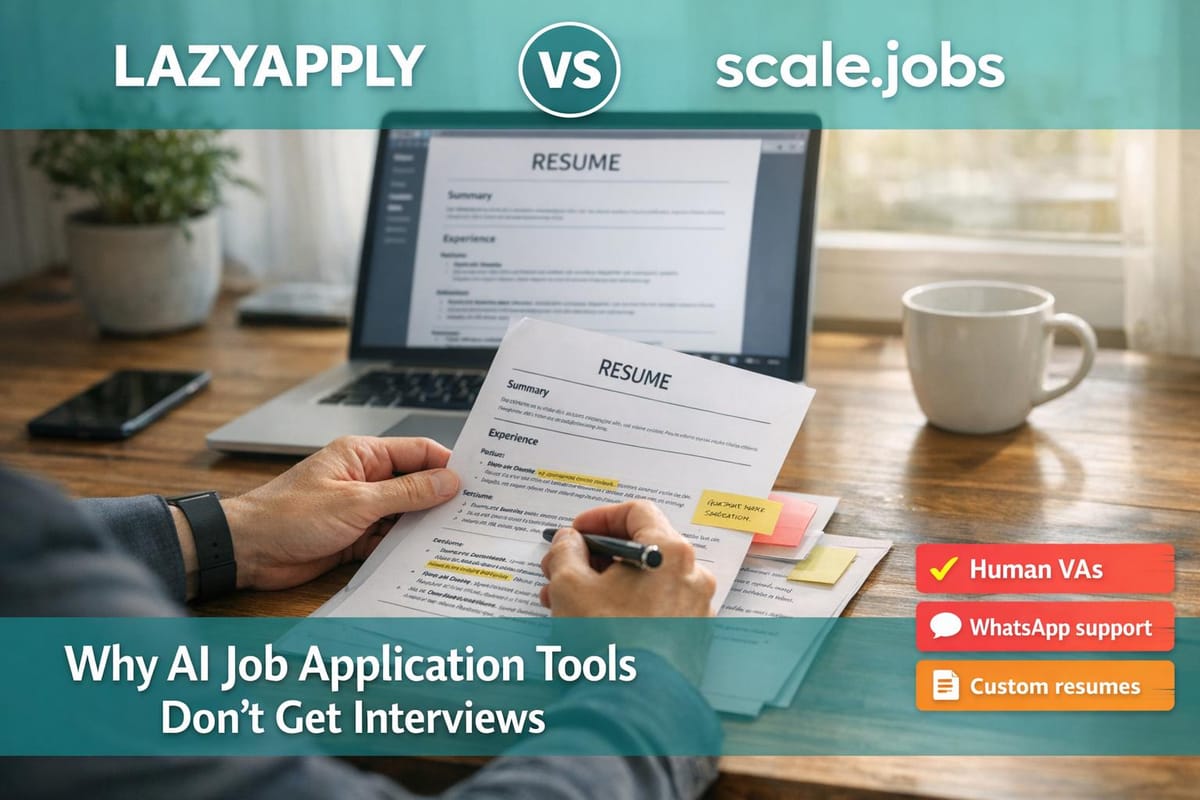
Why AI Job Application Tools Don’t Get Interviews
Automation speeds applications but often creates generic, error-prone resumes; combining human review with AI leads to more interviews.

AI job application tools promise speed and efficiency, but they often fail to deliver results. While automation can help streamline repetitive tasks, such as tailoring resumes or optimizing for ATS, these tools frequently lack the personal touch and accuracy needed to stand out to recruiters. For example, a 2024 case study revealed that AI-powered job bots achieved only a 6% callback rate from 126 applications. Common issues include generic keyword stuffing, outdated data, and errors that make applications feel robotic and impersonal.
Recruiters are increasingly adept at identifying AI-generated resumes, which often lack context and individuality. Instead of showcasing unique achievements, these tools rely on templates and buzzwords, leading to missed opportunities. Fully automated systems also struggle with nuanced job requirements, sometimes fabricating details or misinterpreting criteria, which can harm credibility.
The solution? A hybrid approach that combines technology with human expertise. Platforms like scale.jobs use trained virtual assistants to craft tailored, accurate applications, ensuring higher success rates. By blending AI tools with human oversight, they address the limitations of automation while maintaining authenticity. Whether you're applying for full-time jobs or part-time jobs near you, a personalized strategy is key to landing interviews.
Key Takeaways:
- AI tools often fail due to generic content, outdated data, and technical errors.
- Recruiters value resumes with context, specifics, and individuality.
- Hybrid services like scale.jobs outperform fully automated tools by combining human input with ATS optimization.
For job seekers, the right approach matters. Whether you're using an AI resume builder, virtual assistants for job searches, or job application service, ensure your applications reflect your skills and experiences accurately.
Main Problems with AI Job Application Tools
Generic Keyword Matching
AI tools often reduce job applications to a keyword-matching exercise, cramming resumes with terms lifted directly from job descriptions. The result? Documents that feel robotic and indistinguishable from one another. Recruiters estimate that nearly half of the resumes they review are clearly AI-generated, riddled with empty buzzwords like "dynamic", "innovative", and "cross-functional." As recruiter Steve Levy puts it:
Every sentence is grammatically correct, evenly spaced, and emotionally vacant.
This overemphasis on keywords can work against you. While over 75% of companies use AI-powered Applicant Tracking Systems (ATS) to screen resumes, these systems are designed to spot patterns. Resumes that mirror job descriptions too closely might be flagged as inauthentic, while those with too few relevant keywords risk outright rejection. Striking the right balance - around 80–90% keyword alignment - is critical, but most AI tools struggle to hit this target.
Outdated training data is another major flaw. Many AI models rely on older resume samples, which means they often include outdated industry jargon or prioritize qualifications that no longer carry weight. This can lead to resumes that highlight irrelevant skills or, worse, raise red flags for modern recruiters.
The focus on keywords also undermines the ability to tailor applications, which is explored further below.
No Real Personalization
AI-generated resumes often lack a personal touch, leaving them feeling generic and uninspired. These tools churn out documents with the same structure, tone, and boilerplate achievement statements, making them interchangeable. Recruiter Desiree Goldey highlights this issue:
You're not portraying yourself with any authenticity. You become this robot and nobody is going to hire a robot.
Personalization matters, and the numbers back it up. Customized resumes generate nearly twice as many interviews compared to generic, mass-produced submissions - 6 interviews per 100 applications versus fewer than 3. AI tools, however, focus on listing tasks rather than showcasing the unique impact of your work with real-life examples. This creates what some experts call the "resume illusion": a polished document that might pass the ATS filter but leaves you unprepared for interviews when you can’t back up the claims it makes.
This lack of personalization also hinders the ability to address nuanced job requirements, as detailed next.
Can't Handle Complex Job Requirements
AI tools struggle to navigate the complexities of certain job criteria, often misinterpreting nuanced language. For example, an AI might confuse "competitive environment" with "environmental reporting" in an ecology-related job posting. In a 2018 experiment, journalist Hilke Schellmann demonstrated this flaw by answering every question in a one-way video interview AI with the phrase "I love teamwork" in German - for an English-speaking role. Shockingly, the system still rated her as 73% qualified. As Schellmann observed:
Clearly these tools can't actually distinguish if somebody is a qualified applicant or not.
AI can also "hallucinate" details, inventing work histories, fake job titles, or fabricated degrees. These errors often lead to inconsistencies between your resume and LinkedIn profile, which recruiters can easily spot. Such mistakes aren’t rare - they’re systemic flaws that can harm your credibility.
Technical errors compound these issues. AI-generated applications frequently include incorrect personal details, exaggerate language skills, or even attach outdated cover letters. They may also pull information from old profiles you thought you’d updated. For roles requiring specific certifications or technical expertise, AI tools rely solely on keyword proximity, failing to verify whether you actually meet the qualifications. This can leave you exposed during the hiring process.
JOB SEEKERS: Stop Using AI Resume Tools Wrong - Learn This Critical Tip & Get More Interviews
AI Tool Comparisons: Where They Fall Short and How scale.jobs Stands Out
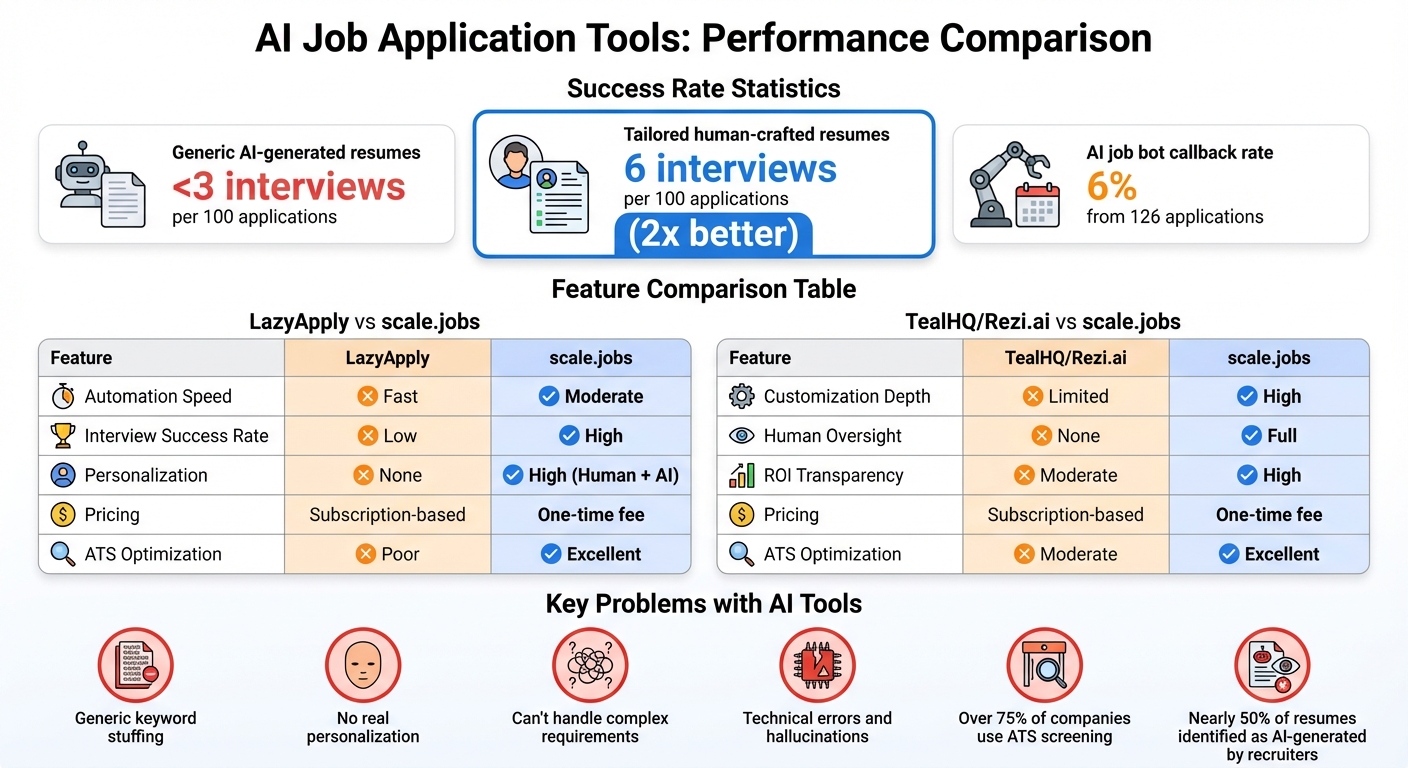
AI Job Application Tools vs Human-Assisted Services: Success Rates and Features Comparison
Examining the limitations of popular AI tools reveals how scale.jobs outperforms its competitors by addressing their shortcomings.
LazyApply vs. scale.jobs
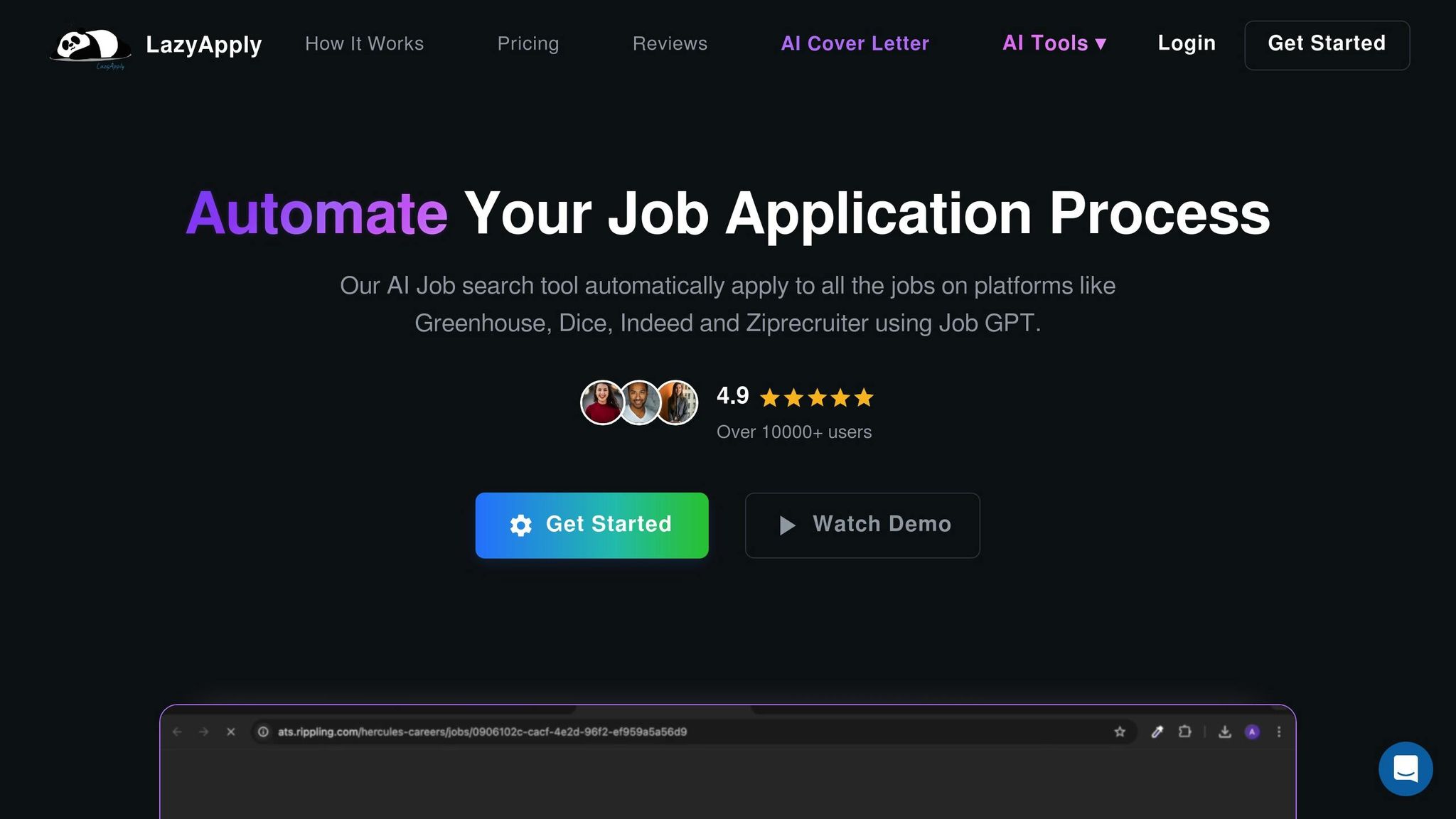
LazyApply emphasizes speed, sending out hundreds of applications in minutes, but this mass approach often backfires. Recruiters quickly identify bot-generated submissions, leading many companies to automatically reject applications flagged for automation, a common issue with AI auto-apply companies.
scale.jobs, on the other hand, relies on human virtual assistants to bypass these issues. Each application is carefully personalized, with resumes and cover letters tailored to the specific job. Every form field is manually completed, ensuring authenticity. Plus, users receive real-time updates via WhatsApp and time-stamped proof-of-work screenshots, providing transparency throughout the process.
| Feature | LazyApply | scale.jobs |
|---|---|---|
| Automation Speed | Fast | Moderate |
| Interview Success Rate | Low | High |
| Personalization | None | High (Human + AI) |
| Pricing | Subscription-based | One-time fee |
| ATS Optimization | Poor | Excellent |
Simplify.jobs vs. scale.jobs
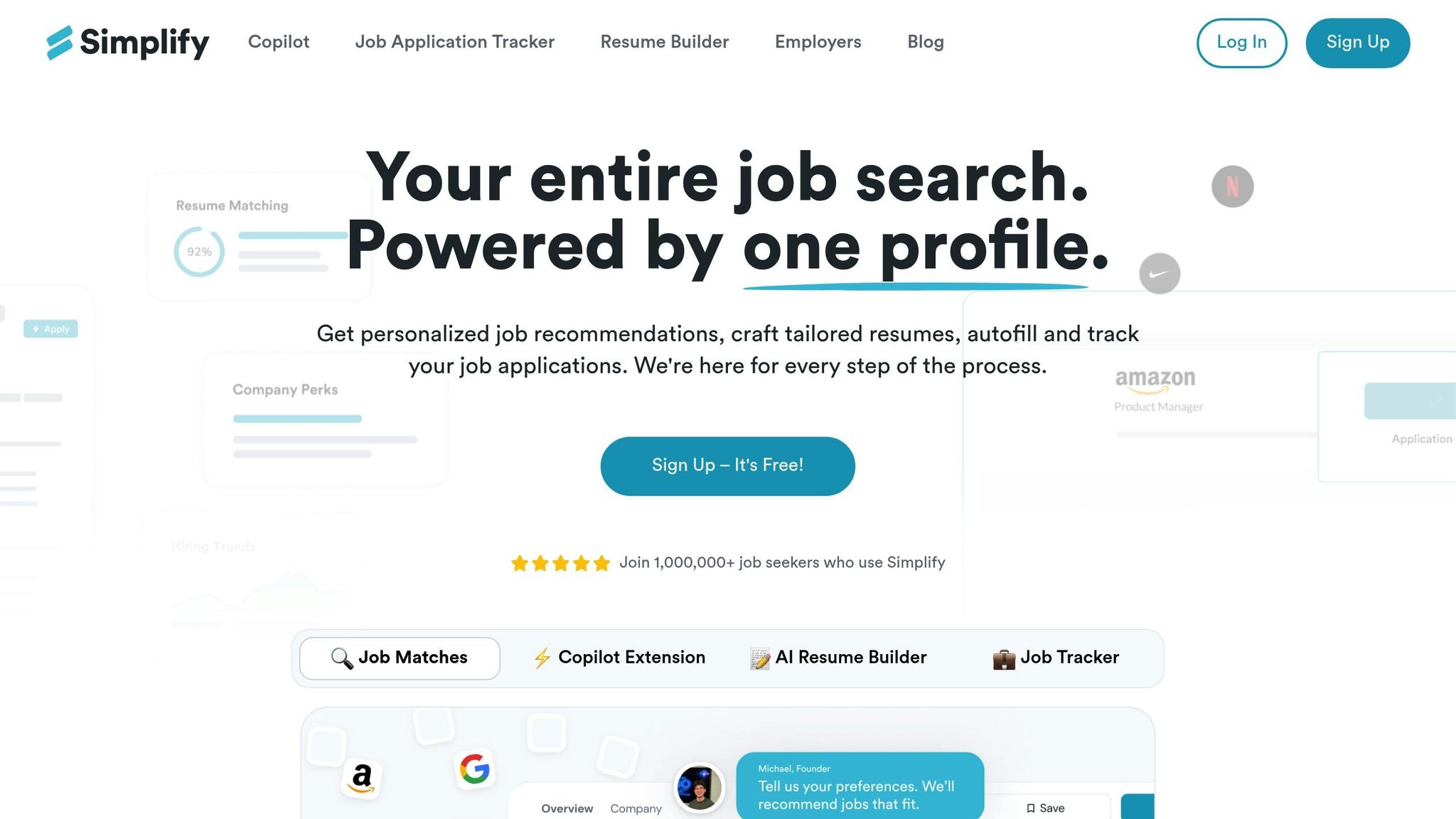
Simplify.jobs simplifies the application process with one-click submissions but sacrifices contextual relevance. It cannot address career gaps, explain career pivots, or highlight how your unique skills align with a role. As Adam Karpiak, co-founder of Karpiak Consulting, explains:
AI doesn't understand context. It doesn't know how you got results or what made your impact unique.
scale.jobs takes a different approach, offering human-assisted, tailored applications. This includes ATS-optimized resumes, real-time WhatsApp updates, transparent proof-of-work, and a straightforward one-time fee structure. Unused credits are even eligible for refunds, eliminating the risk of hidden subscription renewals.
TealHQ and Rezi.ai: Templates vs. Human Expertise
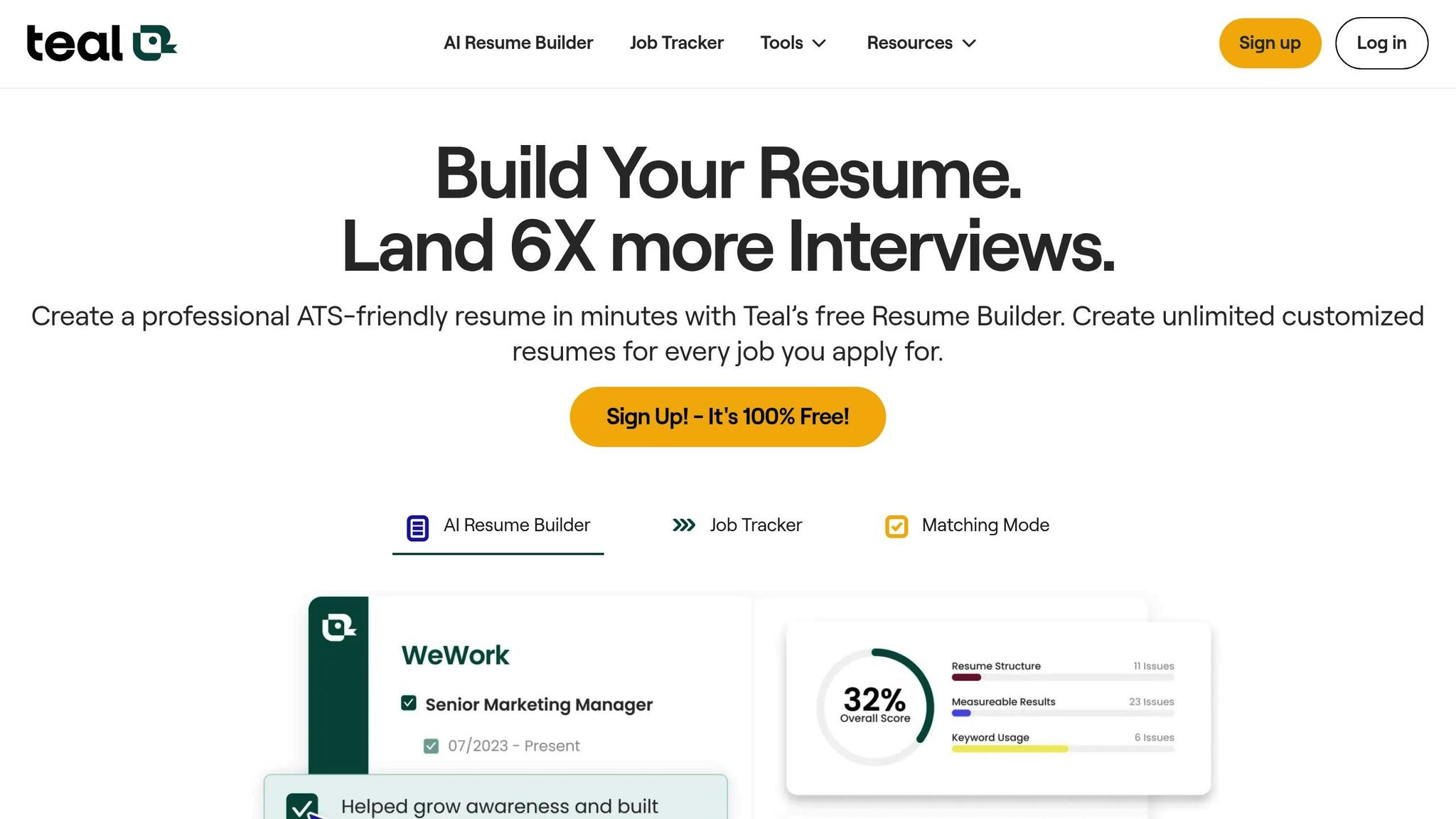
TealHQ and Rezi.ai rely heavily on pre-designed templates, resulting in resumes that are polished but lack individuality. While these tools offer some optimization, they fall short of providing the human insight needed to verify details, highlight unique achievements, or avoid generic buzzwords. Sofia Mishina, Talent Acquisition Director at AI Digital, highlights the issue:
I see resumes that are perfectly formatted and perfectly forgettable - the same buzzwords, same tone, no proof of work.
scale.jobs ensures every document undergoes thorough human review. This process catches AI-generated errors and transforms resumes into compelling narratives. The results speak for themselves: tailored resumes from scale.jobs generate around six interview opportunities per 100 applications, compared to fewer than three with generic submissions.
| Feature | TealHQ/Rezi.ai | scale.jobs |
|---|---|---|
| Customization Depth | Limited | High |
| Human Oversight | None | Full |
| ROI Transparency | Moderate | High |
| Pricing | Subscription-based | One-time fee |
| ATS Optimization | Moderate | Excellent |
Why Human Help Works Better: The scale.jobs Approach
When it comes to navigating the job application process, scale.jobs combines human expertise with smart tools to address the gaps left by fully automated systems. Here's how their approach sets them apart.
Trained Human Virtual Assistants
scale.jobs employs skilled virtual assistants (VAs) who personally handle every aspect of your job applications. These VAs manually fill out forms, avoiding the pitfalls of automated systems that often trigger bot-detection algorithms. They also take the time to tailor your resume for each role using an AI resume builder and craft personalized cover letters that highlight your achievements. As Adam Karpiak, co-founder of Karpiak Consulting, explains:
Humans connect with details. Instead of 'managed a team,' say what kind of team, what you achieved and what changed because of your work. That's what recruiters remember.
This human touch eliminates the errors and inconsistencies often found in AI-generated documents, such as fabricated skills or mismatched details. The result? A higher likelihood of landing interviews compared to generic, automated submissions. Additionally, VAs strategically align your application with an 80% to 90% keyword match - avoiding over-optimization that could lead to rejection by Applicant Tracking Systems (ATS) while still meeting algorithmic requirements.
Complete Job Search Toolkit
scale.jobs doesn't just stop at applications - they offer a range of free tools to support your entire job search journey. These include:
- ATS Resume Checker: Instantly scans your resume for formatting issues and missing keywords, offering practical suggestions for improvement.
- Cover Letter Generator: Helps you draft compelling, role-specific introductions.
- Job Application Tracker: Keeps all your submissions organized in one easy-to-use dashboard.
- Additional Tools: Features like a Salary Predictor, Interview Questions Predictor, and Portfolio Website Generator give you insights and resources to prepare for every stage of the process.
By combining these tools with their human assistant service, scale.jobs offers the flexibility to handle tasks on your own or rely on expert help when needed. Whether you're fine-tuning your resume or managing hundreds of applications, you'll have everything you need to stay organized and competitive.
Clear Pricing with No Hidden Fees
scale.jobs keeps its pricing straightforward: $199 for 250 applications, $299 for 500, or $399 for 1,000. There are no recurring subscriptions, surprise charges, or hidden fees. Plus, any unused credits are fully refundable.
Each application comes with detailed updates via WhatsApp and time-stamped proof-of-work, showing exactly when and where your VA submitted your materials. This level of transparency sets them apart from subscription-based services that often lack visibility into their processes. You'll have full control over every step, from resume tweaks to cover letter drafts to application submissions, ensuring accountability throughout your job search.
Conclusion: Pick the Right Tools to Get More Interviews
AI job application tools can offer speed, but they often fall short when it comes to standing out. With so many candidates relying on automated systems, applications start to look the same. The result? Recruiters quickly overlook them. Statistics show that generic, AI-generated resumes lead to fewer than 3 interviews per 100 applications, while tailored, human-crafted submissions double those results with 6 interviews per 100 applications. This highlights the importance of a personalized approach in today’s competitive job market.
The real issue isn’t the use of AI - it’s using it without human involvement. Tools like LazyApply can churn out hundreds of applications daily, but they often come with glaring errors. Imagine claiming fluency in a language you don’t know or sending cover letters addressed to the wrong companies - these mistakes happen all too often with fully automated systems. Recruiters are inundated with "polished but forgettable" resumes that fail to demonstrate real accomplishments or individuality.
This is where scale.jobs strikes a balance by blending technology with human expertise. Their trained assistants manually craft every application, ensuring accuracy and personalization. From ATS-friendly resumes tailored to specific roles to custom cover letters that showcase your achievements, scale.jobs avoids the pitfalls of automation. They even hand-fill application forms to eliminate common errors. With transparent pricing starting at $199 for 250 applications, WhatsApp updates, and time-stamped proof-of-work, you’ll always know where your applications stand.
Make the smart choice for your job search. Opt for a strategy that combines technology and human insight to reflect your unique skills and experiences. With scale.jobs, you’re not just another application in the pile - you’re a candidate worth noticing. Try it today and experience the impact of human-powered applications.
FAQs
Why don’t AI job application tools help you get interviews?
AI-powered tools designed for job applications often miss the mark because they focus too much on generic keyword matching, lack personalization, and struggle to address specific job requirements. This can lead to resumes that come across as impersonal, fail to grab attention, or even get flagged by recruiters as AI-generated.
What these tools lack is the ability to interpret the subtle nuances in job descriptions or effectively highlight what makes you stand out. To achieve better outcomes, it's worth investing time in customizing your resume, incorporating proof-of-work examples, and using human-assisted strategies to leave a lasting impression on recruiters. These steps can help bridge the gap where AI tools fall short.
How can combining AI tools with human expertise improve your job applications?
Using a mix of AI tools and human expertise can greatly improve your chances of securing interviews. AI tools are excellent for handling repetitive tasks like keyword optimization and initial resume screening. However, they often fall short when it comes to evaluating soft skills, understanding nuanced job requirements, or assessing how well you might align with a company's values - areas that recruiters pay close attention to.
Adding human insight into the process ensures your application stands out. For instance, human experts can fine-tune your resume to meet ATS (Applicant Tracking System) standards, craft personalized and engaging cover letters, and emphasize work examples that resonate with recruiters. This tailored approach makes your application both efficient and more appealing.
By combining the speed and precision of AI with the personalization and creativity of human expertise, you get the best of both worlds. This strategy not only optimizes your application but also makes it more memorable and impactful for hiring managers.
Why do AI job application tools often fail to secure interviews?
AI-driven job application tools often miss the mark because they focus heavily on generic keyword matching, which can make resumes feel detached and uninspired. While these tools might produce grammatically polished documents, they often fail to convey the personal enthusiasm or alignment with the job that recruiters value.
Another challenge is that AI-generated resumes can appear overly mechanical or formulaic, raising concerns for hiring managers. These resumes may not address the specific, nuanced requirements of a job posting, potentially causing you to miss out on interview opportunities.
To stand out, consider complementing AI tools with human-guided approaches - such as creating customized resumes, providing tangible examples of your work, and seeking input from experts. These strategies can help ensure your application feels genuine and resonates with potential employers.