
Complete Guide to Passing Job Interviews: 28 Top Answers
Discover 28 expert answers to common job interview questions. Learn how to reduce nerves, impress hiring managers, and ace your interview with confidence.

Discover 28 expert answers to common job interview questions. Learn how to reduce nerves, impress hiring managers, and ace your interview with confidence.

Master six job-search skills: ATS-friendly resumes, targeted applications, networking, interview prep and tracking to boost interview rates.

Compare five top AI certifications, who they suit, time/cost, and how projects plus ATS-optimized resumes speed hiring.
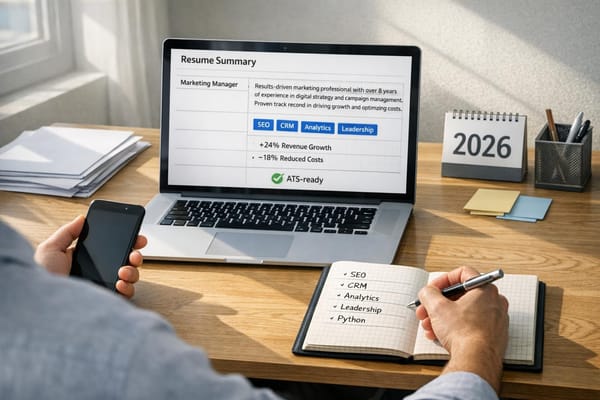
Craft a 40–75 word resume summary with exact job titles, 3–7 keywords, measurable achievements, and ATS-safe plain formatting.

Word (.docx) is best for ATS portals; PDFs suit direct recruiter emails—learn parsing pitfalls and how to make resumes ATS-friendly.
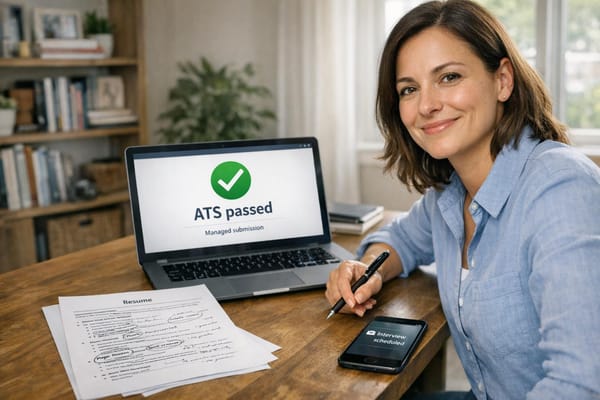
Human-tailored resumes and managed submissions outperform templates at passing ATS and scaling high-volume job searches.
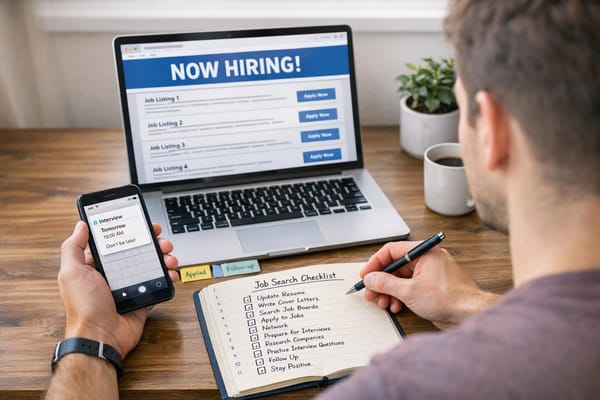
Target roles actively hiring, tailor ATS-friendly resumes, use targeted job boards and networking, track applications, and prep for interviews.

ATS checkers can block unoptimized resumes—learn scoring, common formatting mistakes, and when to use DIY tools vs managed services.

Passing ATS isn't enough — your resume must show measurable impact, clear career progression, and be tailored for human reviewers.

Compare human+AI, DIY, and automated job platforms to see which best optimizes resumes for ATS and high-volume searches.

Master your next job interview with these top 10 common questions and expert answers to impress hiring managers.
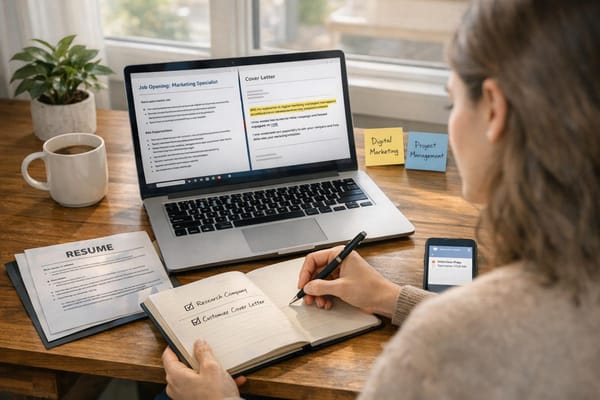
Learn how to write a strong cover letter that highlights skills, aligns with job roles, and impresses employers.